Overview
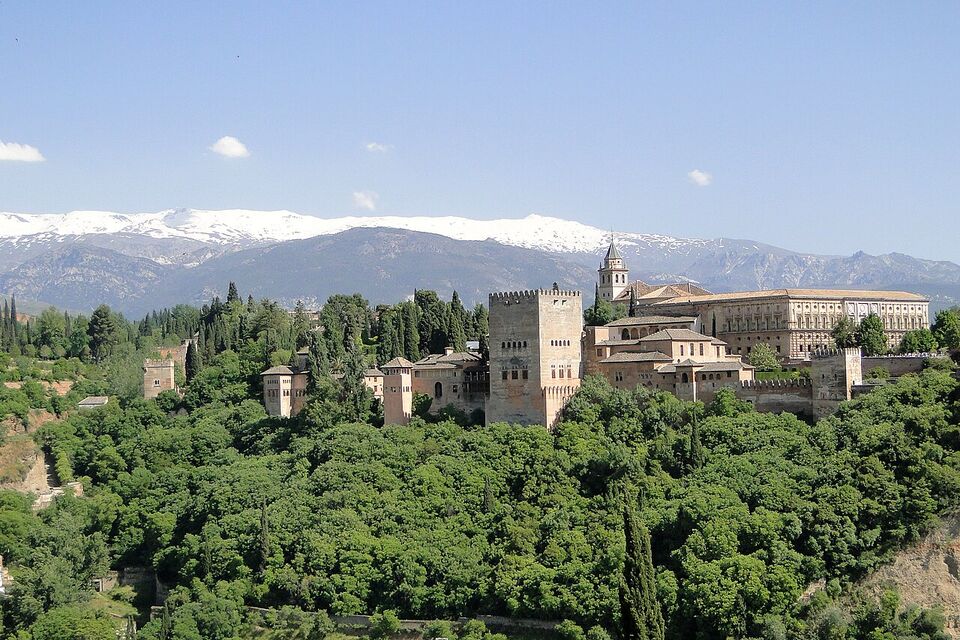
Granada was the last Muslim kingdom in Western Europe. The Nasrid dynasty ruled it for about 250 years, until Isabella and Ferdinand took the city on January 2, 1492, the same year Columbus sailed with their backing. What the Nasrids left behind, above all the Alhambra palace complex on its hill, is the finest Islamic architecture in Europe.
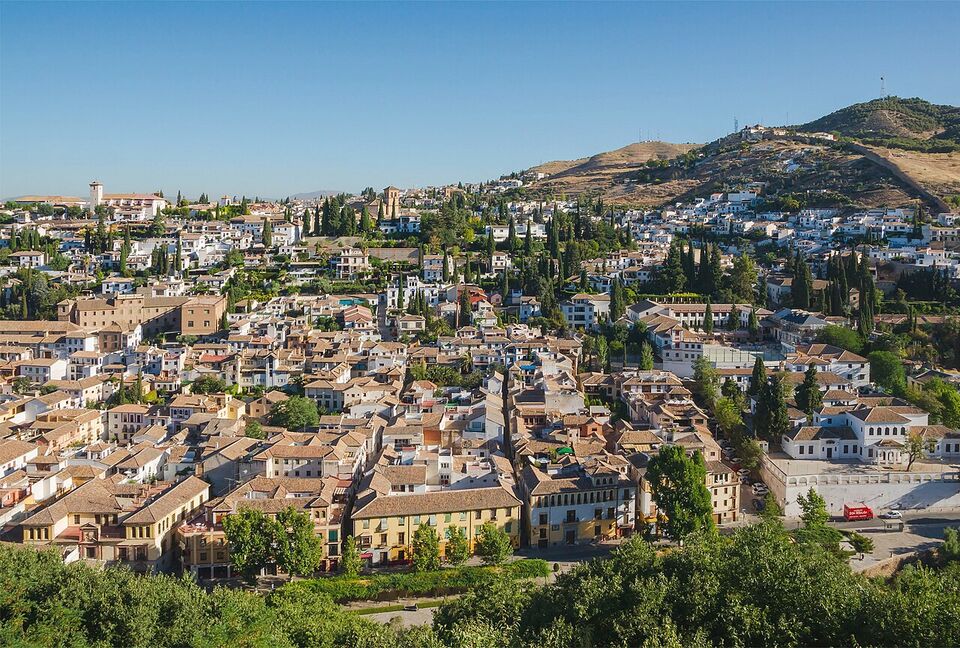
The rest of the city holds its own. Across the Darro valley, the whitewashed Albaicín climbs a hill of lanes and walled gardens, and above it the cave houses of Sacromonte cut into the slope. Down in the flat modern center you get a university town of about 230,000 people, with student bars where a drink still comes with a free plate of food.
Granada sits at about 2,400 feet (740 m) under the Sierra Nevada, mainland Spain's highest range. That gives it real winters, ski slopes 45 minutes away and the beaches of the Costa Tropical about an hour south. Most Americans give it one night and regret it. Two nights is the minimum; three lets you breathe.
It fits naturally into an Andalusia loop with Seville, Córdoba and Málaga; see the Andalusia road trip and sample itineraries for routes.
The Alhambra
The Alhambra is a walled city on the Sabika hill: a fortress (the Alcazaba), three linked royal palaces (the Nasrid Palaces), a Renaissance palace that Emperor Charles V dropped into the middle, and the Generalife, the sultans' summer estate with its terraced gardens. Plan 3 to 4 hours for a full visit, more if you like to sit in gardens.
What you see
- Nasrid Palaces (Palacios Nazaríes): the reason people come. The Mexuar, the Comares Palace with the Court of the Myrtles and the Hall of the Ambassadors, and the Palace of the Lions with its twelve-lion fountain and honeycombed muqarnas (stalactite-like vaulting) ceilings. Entry is at a fixed time printed on your ticket.
- Alcazaba: the oldest part, a fortress with the Torre de la Vela, whose top terrace gives the best view over the Albaicín and the city.
- Palace of Charles V: a square Renaissance block with a round courtyard. It holds the Alhambra Museum (Islamic art) and the Fine Arts Museum.
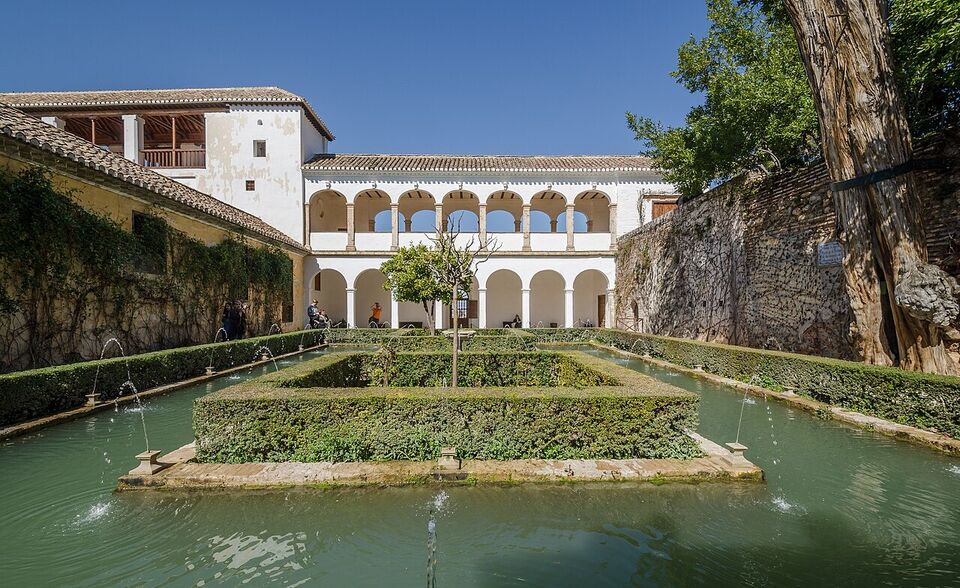
- Generalife: gardens, water channels and a small palace on the hill above, a 10 to 15 minute walk from the main complex.
Tickets in short
The standard ticket, Alhambra General, covers everything above. It costs €21 (about $24) at the ticket office or €22.27 (about $25) online, children under 12 are free but need their own ticket, and every ticket carries the visitor's name and ID number. Buy only at the official shop, tickets.alhambra-patronato.es. From spring through fall, daytime tickets often sell out weeks ahead. Our full guide to Alhambra tickets covers every ticket type, timing, the night visits and what to do when your date is gone.
Watch out
The Nasrid Palaces time is strict. Staff turn away people who arrive late, and there is no refund. From the main entrance pavilion to the palaces is about a 20-minute walk, so be at the gate at least 30 minutes before your slot, with your passport.
Getting up the hill
You can walk from Plaza Nueva up the Cuesta de Gomérez, a steep wooded lane, in about 20 to 30 minutes. The small red city minibuses (the C30 from the center and the C32 linking the Alhambra with the Albaicín) save your legs. A taxi from the center takes about 10 minutes. Wear real shoes: the visit itself covers 2 to 3 miles (3 to 5 km) of paths, slopes and stairs.
The Albaicín and Sacromonte
The Albaicín is the old Moorish quarter, a UNESCO World Heritage site with the Alhambra. It is a maze of cobbled lanes, steps and cármenes (houses with walled gardens, a Granada word). Walk up from Plaza Nueva along the Carrera del Darro, the riverside street under the Alhambra, to the Paseo de los Tristes, then climb into the lanes.
- Mirador de San Nicolás: the famous terrace view of the Alhambra with the Sierra Nevada behind. Go at sunset and expect a crowd, buskers and pickpockets. The Mirador de San Cristóbal and the lanes around San Miguel Bajo are calmer.
- El Bañuelo: 11th-century Arab baths on the Carrera del Darro, with star-shaped skylights. It is one of the "Andalusian monuments" included in the Dobla de Oro Alhambra ticket.
- Calderería Nueva: the steep lane of teterías (Moroccan-style tea houses) and shops between the center and the Albaicín.
Sacromonte, east of the Albaicín, is where Granada's Roma (gitano) community lived in caves dug into the hillside. Some caves are still homes, some are flamenco venues, and the Sacromonte Caves Museum explains how they worked. At the top, the Abbey of Sacromonte has catacombs and a view back over the valley.
Insider tip
Walk the Albaicín downhill. Take the C32 or C34 minibus (or a taxi) to the top near San Nicolás or San Cristóbal, then wander down to the Darro. Your knees and your temper will thank you, especially in summer heat.
The center: Cathedral, Royal Chapel and the old silk market
The flat center around the Cathedral is where the Christian city was built after 1492. The sights are close together and take half a day.
- Royal Chapel (Capilla Real): the burial place of Isabella and Ferdinand, with their daughter Juana and her husband Philip. You can see the plain lead coffins in the crypt below the marble tombs. Separate ticket from the Cathedral.
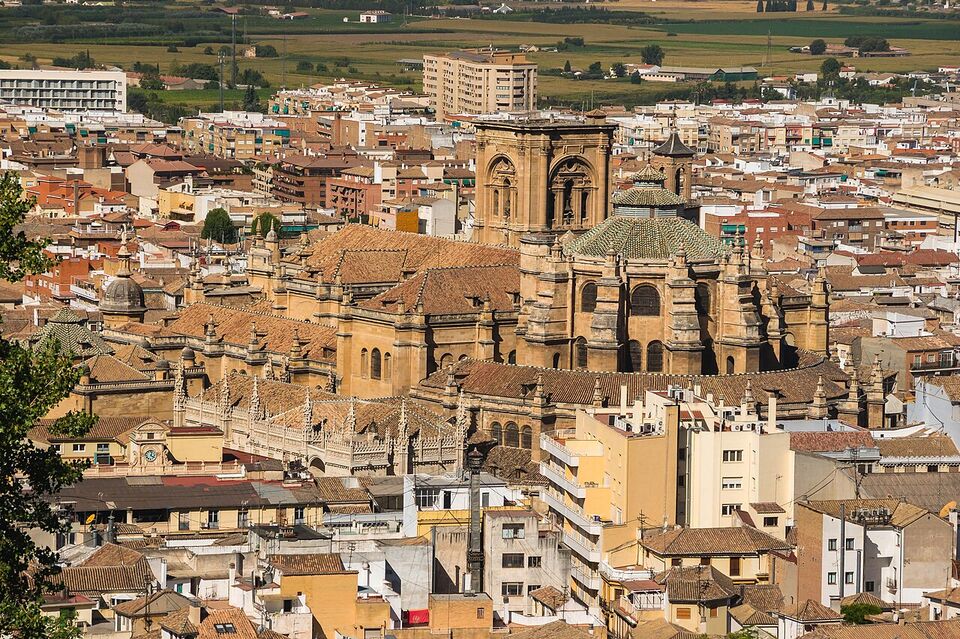
- Cathedral: a huge white Renaissance interior, begun in the 1520s on the site of the main mosque.
- Alcaicería: the rebuilt lanes of the old silk market, now souvenir stalls selling lamps, ceramics and inlaid boxes.
- Corral del Carbón: a 14th-century Nasrid inn for merchants, with a carved horseshoe gateway, near Puerta Real.
- Monastery of San Jerónimo and the Cartuja (Charterhouse): two lesser-visited monuments with some of the most extravagant Baroque interiors in Spain.
Further out, the Huerta de San Vicente was the summer house of the poet Federico García Lorca, Granada's most famous son, who was killed by Nationalist forces near the city in 1936. The Realejo, south of the Alhambra hill, was the Jewish quarter before the 1492 expulsion; today it is a lived-in neighborhood with street art and good bars.
Watch out
Around the Cathedral and the Royal Chapel, women may press a sprig of rosemary into your hand and offer to read your palm, then demand money. Keep walking, say no, gracias, and keep your hands to yourself.
Free tapas and eating in Granada
Granada keeps a custom most of Spain has dropped: in traditional bars, every drink you order comes with a free tapa (small plate). Order a caña (small draft beer), a glass of wine or a soft drink and something arrives: a little stew, fried fish, a slice of tortilla, a mini burger. In many bars the tapa gets better with each round. A drink with its tapa usually costs about €3 to €4 (about $3.50 to $4.50), so three or four rounds in two bars make a cheap dinner.
Different from home
You do not choose the free tapa in most bars; it comes with the drink. If you want something specific, order a ración (full plate to share) or a media ración (half plate). Eat standing at the bar if the tables are full; nobody minds. The bar keeps a running tab and you pay at the end.
Where to go
- Calle Navas and the streets off Plaza del Carmen: the classic tapas strip near city hall. Busy, touristy at the edges, still good.
- The Realejo and Campo del Príncipe: neighborhood bars with terraces under the Alhambra hill.
- Calle Elvira and Plaza Nueva: old-style bars and fried-fish places; the area gets louder late at night.
- Pedro Antonio de Alarcón: student bars where the tapas are biggest and the prices lowest.
- The Albaicín: restaurants in cármenes with Alhambra views. You pay for the view, often $$$; book a terrace table for sunset.
What to order
Try habas con jamón (broad beans with ham), remojón granadino (orange, salt cod and olive salad), tortilla del Sacromonte (an omelet traditionally made with offal), berenjenas fritas con miel de caña (fried eggplant with cane molasses) and the cured ham of Trevélez from the Alpujarras. For dessert, piononos are small syrup-soaked cakes from the nearby town of Santa Fe. North African influence runs deep: you will find good tagines and mint tea in the Albaicín.
Lunch is from about 2 to 4 p.m. and dinner rarely before 9 p.m. A menú del día (set lunch with two courses, bread, a drink and dessert) runs about €13 to €18 (about $15 to $20) on weekdays. See our Spanish food guide for meal times and ordering.
Flamenco in Sacromonte
Granada's own flamenco style is the zambra, performed in whitewashed caves in Sacromonte, with the audience a few feet from the dancers on chairs around the walls. The caves are small, hot and intimate, and shows usually run about an hour. Tickets typically cost €25 to €40 (about $28 to $45), more with dinner or a transfer.
Quality varies. Cave shows aimed at tour groups can be thin; the better venues list their performers and keep the audience small. The city also has tablaos (flamenco venues) in the center and peñas (members' clubs) that open some nights to the public, which is where you see flamenco performed for people who know it. Our flamenco guide explains how to tell them apart.
Insider tip
Book a cave show directly with the venue rather than through a hotel desk or a street tout, and check whether the price includes the transfer up the hill. If it does not, take the C34 minibus or a taxi; the walk back down after midnight is dark and steep.
Where to stay
Your choice comes down to atmosphere or convenience. Hotels in the Albaicín put you in the most beautiful streets but on steep hills with no car access. The center is flat, near the bus and taxi routes and the tapas bars. Staying on the Alhambra hill is quiet and magical at night, but far from everything else.
Albaicín
Small hotels in converted cármenes and old mansions, some with Alhambra views from the terrace. Expect cobbles and stairs: taxis can drop you near some, not all. Ideal for couples on a second trip.
Center and Plaza Nueva
The practical choice: flat, walkable, near the Alhambra minibuses and the airport bus. The streets right off Plaza Nueva are lively and can be noisy on weekend nights; ask for an inside room.
Realejo
A real neighborhood with good bars, a short (steep) walk to the Alhambra and 10 minutes on foot to the Cathedral. Often better value than the center.
Alhambra hill
The Parador de Granada occupies a former convent inside the Alhambra walls, where Isabella and Ferdinand were first buried; it books out months ahead. A few older hotels sit just below the walls, on the wooded slopes of the hill.
Prices jump during Holy Week and the Corpus Christi fair, and on long weekends. Read our where to stay in Spain guide for the rules on tourist apartments; book only licensed ones, whose registration number appears in the listing.
Getting there and getting around
By train
Renfe runs direct high-speed trains from Madrid's Atocha or Chamartín stations to Granada in about 3 hours 15 minutes to 3 hours 45 minutes; book on renfe.com. There are direct trains to Córdoba (about 1 hr 30 min) and Seville (about 2 hr 30 min to 3 hr), and connections to Málaga via Antequera. Granada's station is about a 25-minute walk or a short bus or taxi ride from the Cathedral. See getting around Spain for how to book Spanish trains.
Watch out
After a fatal collision near Urda (Toledo) on October 28, 2026, high-speed trains between Madrid and Andalusia were suspended; Renfe stopped selling tickets on the route until December 13, 2026, though service may return sooner. Check Renfe, Iryo and Ouigo before you plan, and consider flying to Granada or Málaga or taking a long-distance bus in the meantime. It follows a hard year for the line: a fatal derailment near Adamuz (Córdoba) in January stopped trains for weeks and left temporary speed limits near Córdoba that were still in place in October, and a landslide near Álora closed the Málaga branch until the end of April.
By bus
Alsa buses link Granada with Málaga and its airport (about 1 hr 30 min to 2 hr), Seville (about 3 hr), Córdoba, Jaén and the Alpujarras villages. The bus station is north of the center; city buses connect it to Gran Vía.
By air
Granada's small airport (Federico García Lorca Granada-Jaén, GRX), about 10 miles (17 km) west, has flights to Madrid, Barcelona and a few European cities, with no US nonstops. Most Americans fly into Madrid or Málaga. Málaga airport is the better international gateway: about 1 hr 30 min by direct bus or car.
In town
Walk, and use the red minibuses for the hills: the C30 (center to the Alhambra), C31 and C32 (the Albaicín), and C34 (Sacromonte). Tap a contactless card or buy a single ticket from the driver. Taxis are reasonably priced and worth it for luggage.
Different from home
Do not drive into the center. Much of it, including the Albaicín, is restricted to residents, buses and taxis, enforced by cameras, and Granada also runs a low-emission zone (zona de bajas emisiones). Fines arrive at the rental company, which forwards them with a fee. If your hotel is inside the restricted area, ask it to register your plate in advance, or park in a public garage on the edge and walk. Our driving guide explains the zones.
Day trips from Granada
Sierra Nevada
Europe's southernmost ski resort, at Pradollano, about 20 miles (32 km) from the city, with a season that usually runs from late November or December into April. In summer, the high trails lead toward Mulhacén, mainland Spain's highest peak at 11,413 feet (3,479 m). See outdoors in Spain.
The Alpujarras
Pampaneira, Bubión and Capileira stack up the Poqueira gorge on the south side of the Sierra Nevada, with flat-roofed Berber-style houses, walking trails and hams curing in Trevélez. Best with a car and an overnight.
Guadix
A town where thousands of people still live in whitewashed cave homes dug into the clay hills, with a sturdy cathedral and a cave museum.
Córdoba
Doable as a long day trip, better as an overnight on the way to Seville. See Córdoba.
The Costa Tropical
Granada's own coast, with pebbly beaches, subtropical fruit farms and Moorish hilltop towns. Nerja and the eastern Costa del Sol lie just beyond.
Sample days
- Day 1
The Alhambra
Book a morning Nasrid Palaces slot (8:30 to 10 a.m. are the calmest). Arrive early, see the Alcazaba first, then the palaces at your time, the Palace of Charles V and the Generalife last. Lunch in the Realejo after 2 p.m., a siesta, then free tapas on Calle Navas in the evening.
- Day 2
The Albaicín and Sacromonte
Royal Chapel and Cathedral when they open, a walk through the Alcaicería, then the Carrera del Darro and El Bañuelo. Climb into the Albaicín for lunch, visit the Sacromonte Caves Museum, and be at San Nicolás or San Cristóbal for sunset. Finish with a cave flamenco show.
- Day 3
Out of town
Drive or take a tour to the Alpujarras, or ski or hike the Sierra Nevada in season. If you prefer to stay, see San Jerónimo, the Cartuja and Lorca's Huerta de San Vicente, then book a night visit to the Nasrid Palaces.
When to go
Spring (March to May) is the best season: mild days around 65 to 77°F (18 to 25°C), snow still on the peaks, orange blossom in the patios. October and November are nearly as good, with fewer people. July and August are hot and dry, regularly reaching 95°F (35°C) or more, so see the Alhambra early and rest in the afternoon. Winter is quiet and cheap, with crisp days in the mid-50s°F (about 13°C) and nights near freezing; bring a warm layer because many old buildings are poorly heated.
Dates to know:
- January 2: Día de la Toma, marking the 1492 surrender, with a ceremony at city hall.
- Holy Week: March 21–28, 2027 (Easter is March 28). Processions climb through the Albaicín; hotels fill and prices rise.
- May 3: Día de la Cruz, when neighborhoods decorate crosses with flowers.
- Corpus Christi fair: late May 2027 (Corpus Christi falls on May 27), Granada's big week-long fair.
- Granada International Festival of Music and Dance: June and July, with concerts in Alhambra venues; check the program when it is announced.
The Alhambra opens every day except December 25 and January 1, from 8:30 a.m. to 8 p.m. from April 1 to October 14 and 8:30 a.m. to 6 p.m. the rest of the year, with night visits on selected evenings. See when to go to Spain for the seasons nationwide.
Safety and practical tips
The US State Department rates Spain at Level 2, "Exercise increased caution," because of terrorism and civil unrest, the same level as much of Western Europe. In Granada the realistic risks are petty: pickpockets at the Mirador de San Nicolás and around Plaza Nueva, bag snatching on terraces, and the rosemary scam. Keep your phone off café tables and your bag zipped. Read our safety guide for the details and health guide for summer heat.
- Carry your passport on your Alhambra day: the ID check is real.
- Many small shops and some monuments close from about 2 to 5 p.m., and some on Sunday afternoons or Mondays; check hours before you go.
- Tap water is safe to drink. Bring a bottle to the Alhambra: drinking straight from its fountains is not allowed.
- Tipping is small: round up at bars, leave 5 to 10 percent for good service at a sit-down dinner. See money in Spain.
- Emergency number: 112.
What trips people up
- Arriving without Alhambra tickets. The single biggest Granada mistake. If your dates are sold out, see the alternatives on our Alhambra tickets page before you change your trip.
- Buying tickets on a lookalike site. Several sites with "Alhambra" in the name are private resellers or information sites. The only official online shop is tickets.alhambra-patronato.es.
- Missing the Nasrid Palaces slot. Leave time for security, the walk and finding the gate.
- Only one night. You see the Alhambra and miss the city. Give it two.
- Underestimating the hills. The Albaicín is steep and slippery when wet. Use the minibuses and walk downhill.
- Driving into the restricted center. Camera fines follow you home through the rental company.
- Expecting summer evenings to cool off fast. In July it can still be 85°F (29°C) at 10 p.m.
Add it to a route in the trip builder, or ask us to plan the hotels, trains and guides for you.