Overview
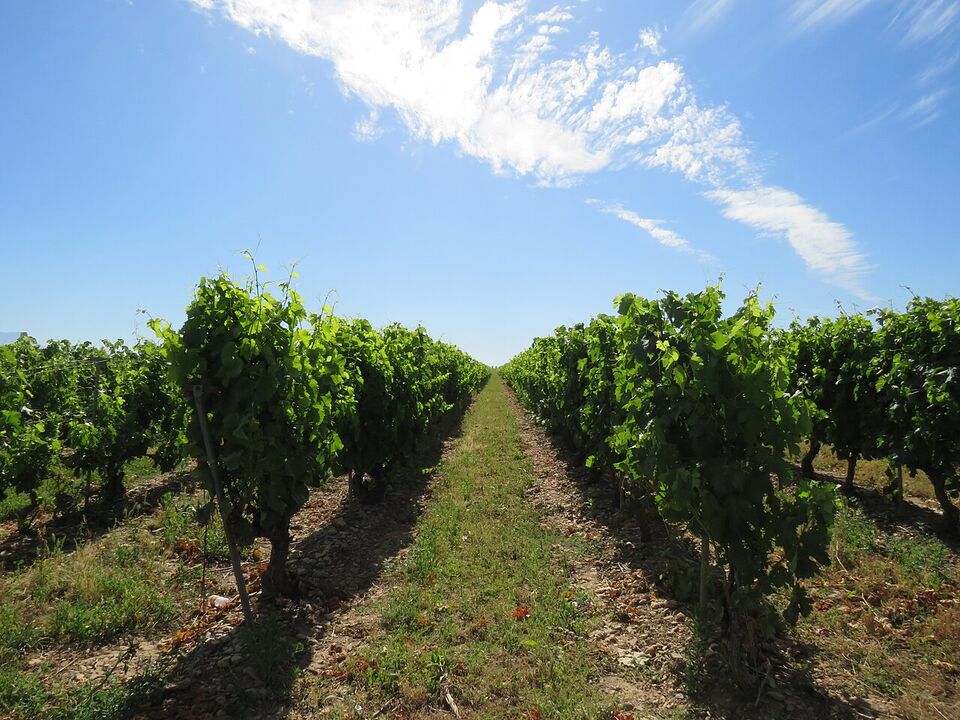
Just south of the Basque Country, the Ebro River valley holds two of Spain's most rewarding small regions. La Rioja is Spain's most famous wine region: rolling vineyards under the Sierra de Cantabria, medieval hill towns with cellars dug under their streets, and wineries from 19th-century stone cathedrals of wine to Frank Gehry's ribbons of colored titanium. Navarra (Navarre), the old Kingdom of Navarre, runs from the green Pyrenees to an empty semi-desert, with Pamplona in the middle.
Most Americans know Pamplona for one thing, the running of the bulls at San Fermín, made famous by Ernest Hemingway's The Sun Also Rises. The festival is real, wild and a once-in-a-lifetime spectacle, but it is nine days a year. The rest of the time, Pamplona is a calm, prosperous walled city with excellent pintxos, and an easy stop on the way between San Sebastián, Rioja and Madrid.
The wine country straddles three regions. Most of the Rioja wine area is in the region of La Rioja, but the Rioja Alavesa, north of the Ebro, belongs to the Basque Country, and a slice of the east is in Navarra. You will cross these lines without noticing, except for the change in road signs. For the wines themselves, see our Spanish wine guide.
Different from home
Spain's drunk-driving limit is 0.5 grams per liter of blood (0.25 mg/l of breath), much stricter than the usual US limit of 0.08 percent, and lower still for drivers with less than two years' experience. Police run roadside breath tests, including on wine-country roads. Book a tour, hire a driver, or have one person stick to spitting.
Rioja wine country
Rioja reds are mostly Tempranillo, often blended with Garnacha, Graciano and Mazuelo. White Rioja, mostly from the Viura grape, ranges from crisp to deeply oxidative. The wine area is divided into three zones: Rioja Alta (west, around Haro), Rioja Alavesa (north bank, around Laguardia) and Rioja Oriental (east, warmer and lower).
Reading a Rioja label
| Term on the label | What it means for reds |
|---|---|
| Genérico or Joven | Young wine with little or no oak aging; the bar wine |
| Crianza | At least two years of aging, at least one in oak barrels |
| Reserva | At least three years of aging, at least one in oak |
| Gran Reserva | At least five years of aging, at least two in oak; traditionally made only in good years |
In recent years Rioja has also added labels for single-village wines and single-vineyard wines (Viñedo Singular), as many producers shift focus from barrel time to place.
Haro and the Barrio de la Estación
Haro, the capital of Rioja Alta, grew rich in the 1800s when phylloxera destroyed French vineyards and Bordeaux merchants came south by rail. The wineries they and their Spanish rivals built beside the train station form the Barrio de la Estación, probably the greatest concentration of historic wineries in the world, including López de Heredia, La Rioja Alta, Muga, CVNE, Roda and Bodegas Bilbaínas, all within a few minutes' walk. Most offer tours and tastings by reservation; book on each winery's website.
On June 29, Haro holds its Batalla del Vino (Wine Battle), when thousands of people dressed in white climb to a hilltop chapel and soak each other with red wine from buckets, bottles and sprayers.
Laguardia and the Rioja Alavesa
Laguardia, a walled hilltop town in the Basque province of Álava, sits over a warren of old cellars, some of which you can visit. It has a Gothic church with a painted portico and views across the vineyards to the Ebro. Nearby are some of Rioja's most photographed wineries: Santiago Calatrava's wave-roofed Ysios just outside Laguardia, and the Marqués de Riscal "City of Wine" in Elciego, where Gehry's hotel opened in 2006 beside one of Rioja's oldest wineries. Small villages such as Labastida and Samaniego have family wineries that are easy to visit.
Note that the Rioja Alavesa is in the Basque Country, where towns can charge a tourist tax from January 1, 2027 under new provincial rules, so a stay there may carry one. Check with your lodging, and see the Basque Country page.
Monasteries and villages
- San Millán de la Cogolla: two monasteries, Suso (carved into the hillside) and Yuso, form a UNESCO World Heritage Site. Yuso's library held some of the earliest known written words in Spanish and Basque. Visits are guided and timed; check the schedule.
- Santo Domingo de la Calzada: a Camino town whose cathedral keeps a live hen and rooster in a Gothic coop, in memory of a medieval miracle story.
- Briones: a hilltop village with the Vivanco Museum of Wine Culture, the best place to learn the history of wine and see its art.
- Ezcaray: a mountain village at the foot of the Sierra de la Demanda, known for blanket weaving and a strong restaurant scene.
Visiting wineries
- Book ahead. Most wineries (bodegas) take visitors only on scheduled tours, especially in English. Book online a week or more ahead, longer in September and October.
- Expect to pay. Tours with a tasting usually carry a fee, often more for older vintages or food pairings. Many wineries deduct some of it if you buy wine.
- Plan two or three visits a day, one in the morning and one or two after lunch. A tour typically takes 1 to 2 hours.
- Check closing days. Many wineries close Sunday afternoons and Mondays, and some close for part of the harvest or in winter.
- Arrange shipping. Some wineries ship to the US; otherwise pack bottles in checked luggage. See shopping and US customs for limits.
Save money
Rioja is one of the best-value great wine regions in the world. A good Crianza in a Logroño bar costs a few euros a glass, and wines that cost $40 or more in a US restaurant are a fraction of that at the winery. Many villages also have cooperatives (cooperativas) selling local wine by the bottle at very low prices.
Logroño
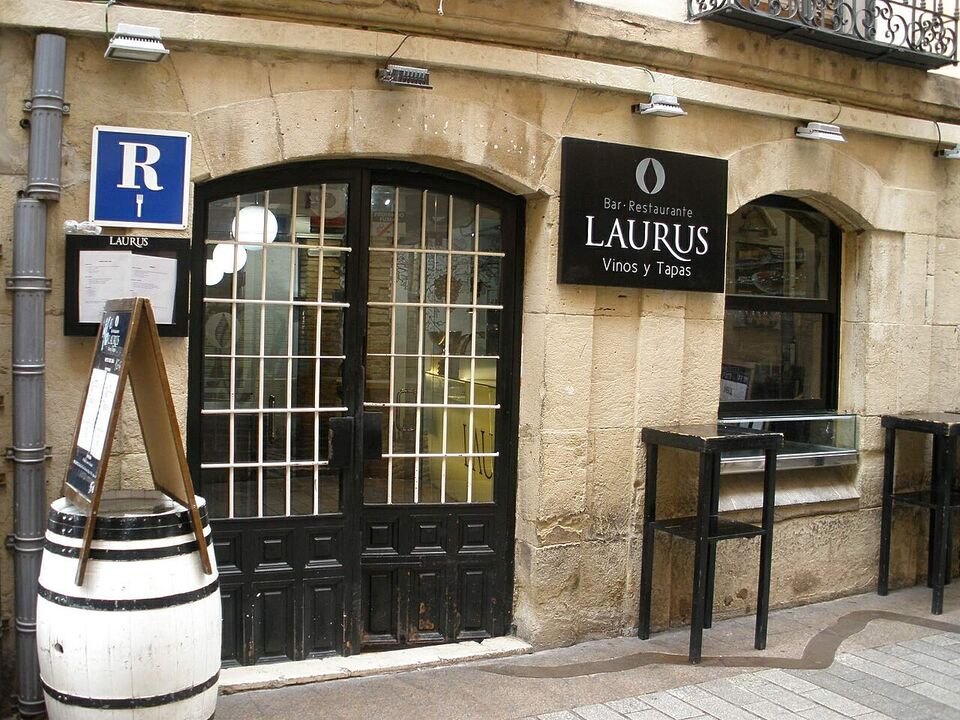
Logroño, the capital of La Rioja, is a small, friendly city on the Ebro and on the Camino de Santiago. It is the best base for Rioja without a car, since tours pick up here and buses run to Haro and Laguardia.
The reason to stay a night is Calle Laurel and the neighboring Calle San Juan: two short streets in the old town lined with tapas bars, each known for one specialty, such as grilled mushrooms stacked on bread, fried pig's ear, or spicy potatoes. The local custom is to order that one dish and a glass of Rioja, then move on to the next bar. It is busiest from about 8 to 11 p.m., especially Thursday to Saturday.
In late September, Logroño celebrates the harvest with the Fiestas de San Mateo, a week of grape stomping, wine and concerts around September 21.
Insider tip
If you stay in Logroño, go out for tapas twice: once early, around 8 p.m., when you can get a spot at the bar and ask what each place is known for, and once later to watch the street fill. Thursday is the local favorite night, busy but less frantic than Saturday.
Pamplona (Iruña)
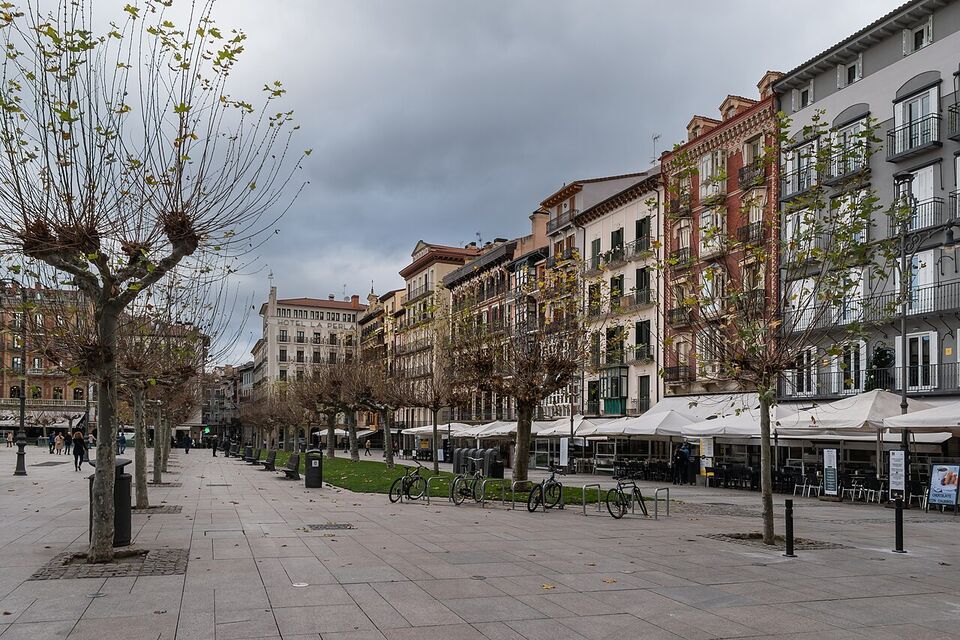
Pamplona (Iruña in Basque) is the capital of Navarra, a city of about 200,000 people with a well-preserved ring of 16th-century walls, a star-shaped citadel turned into a park, and a compact old town. It is also the first big city on the Camino Francés after the Pyrenees.
- Plaza del Castillo: the main square, lined with cafés, including the Café Iruña, open since 1888 and a Hemingway haunt.
- Calle Estafeta: the old-town street the bulls run down, full of pintxo bars the rest of the year.
- The cathedral: a plain facade over a fine Gothic cloister and a museum of Navarrese religious art.
- The walls and citadel: walk the ramparts for views of the river and the mountains.
- Pintxos: Pamplona's bars compete in an annual pintxo week, and the standard is high. Look for local vegetables, chistorra (a thin Navarrese sausage) and anchovies.
San Fermín and the running of the bulls
San Fermín runs from July 6 to July 14 every year. It starts with the chupinazo, a rocket fired from the town hall balcony at noon on July 6, when the square erupts in wine and the whole city ties on red scarves over white clothes. It ends at midnight on July 14 with the candlelit Pobre de mí ("poor me") song. In between there are processions, giant figures (gigantes), concerts, fireworks and nonstop street parties.
The encierro
Each morning from July 7 to 14, at 8 a.m., six fighting bulls and steers run a fenced route through the old town, from the corrals near Santo Domingo through the town hall square and down Calle Estafeta to the bullring, a little over half a mile (about 850 m). A run usually lasts 2 to 4 minutes. That evening, the same bulls are killed in the bullfight. Animal-rights groups protest the festival every year, and many Spaniards oppose bullfighting.
Running
- You must be 18 or older; minors may not even stand on the course. Runners enter well before 8 a.m., and police close the route beforehand and remove anyone who looks drunk or unfit.
- The city's rules ban running drunk or impaired, filming or photographing from the course, carrying objects that get in the way, wearing unsuitable shoes, hiding in doorways before the release, calling or touching the bulls, running behind them, and stopping in the path.
- Injuries happen every year, mostly from falls and the crowd, and gorings occur in most years. Deaths are rare but have happened. If you have not watched several runs, read the official guidance on sanfermin.com and seriously consider watching instead.
Watching
- From a balcony: the best and safest view. Private balconies along the route rent for the morning; book through an established company or your hotel, months ahead.
- From the double fence: free, but spots fill by about 6 a.m. and the view is partial.
- In the bullring: tickets for the arrival of the run and the shows after it are sold for each morning.
- On TV: every bar shows it live, and Spanish TV broadcasts the runs.
Watch out
San Fermín crowds are enormous and many people drink for days. Pickpocketing rises, and sexual assault has been a serious problem at the festival, prompting city consent campaigns and assistance points. Stay with friends, watch your drink, keep valuables in a front pocket and agree on a meeting point. Hotel prices rise many times over, and rooms book up a year ahead; staying in a nearby town and taking the bus in is common. Emergencies: 112.
More on Spain's festivals, including the other bull-running festivals, on our festivals page.
The rest of Navarra
Olite
The Royal Palace of the Kings of Navarre, a 15th-century castle of towers and battlements that looks drawn by a child, restored and open for visits. The town has wine cellars and a parador in part of the old palace.
Bardenas Reales
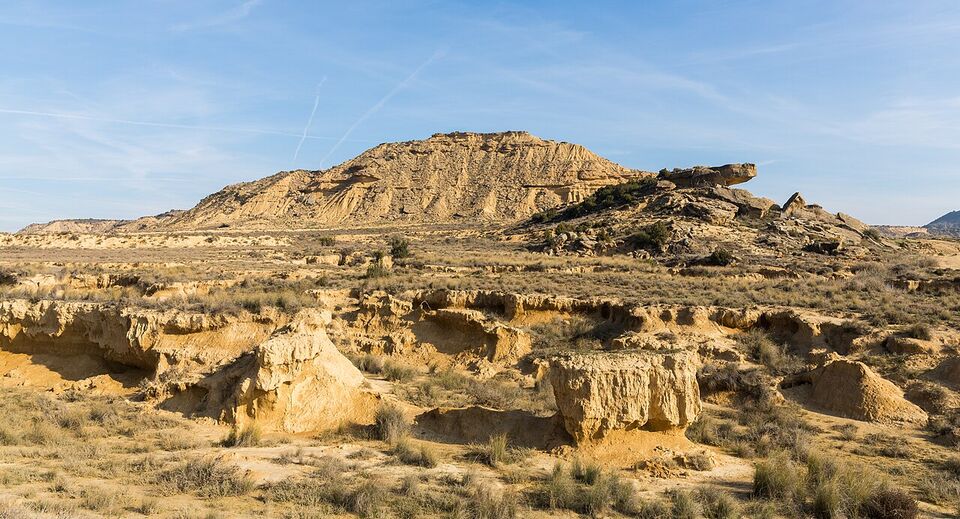
A semi-desert of eroded clay and sandstone badlands, a UNESCO biosphere reserve, with the famous Castildetierra rock spire. You drive or cycle on marked dirt tracks during daylight hours; part of the area is a military range. Start at the visitor center and check opening hours and track closures.
Roncesvalles and the Pyrenees
The monastery village where the Camino Francés enters Spain from France, and the pass of the Song of Roland. Nearby, the Irati Forest is one of Europe's largest beech and fir forests, spectacular in October.
The Camino towns
Puente la Reina, with its Romanesque bridge, and Estella, with its churches and palaces, are classic stops on the Camino. See our Camino guide.
Javier and Leyre
The castle where St. Francis Xavier was born, and the medieval monastery of Leyre above a reservoir, where monks still sing Gregorian chant at services.
Food and drink
The Ebro valley is Spain's vegetable garden, and both regions take produce very seriously.
- Vegetables of the Ribera: white asparagus, artichokes from Tudela, piquillo peppers from Lodosa (roasted over wood and peeled by hand), and pochas (fresh white beans) in late summer.
- Patatas a la riojana: potato and chorizo stew, the classic Rioja lunch.
- Lamb chops grilled over vine cuttings (chuletillas al sarmiento): the traditional winery meal.
- Cheeses: Roncal (a hard sheep's cheese from the Pyrenees) and Idiazabal.
- Drinks: Rioja, of course, plus Navarra's rosé and Garnacha reds, and pacharán (patxaran), a sloe-berry liqueur served after dinner.
As everywhere in Spain, lunch is the main meal, from about 2 to 4 p.m., and dinner starts at 9 p.m. Many restaurants in small wine villages serve lunch only on weekdays, so check before you count on dinner there. See our Spanish food guide.
Getting there and around
Arriving
- From the US: the most convenient airport is Bilbao, which has a seasonal United nonstop from Newark in summer. From Bilbao it is about 1 hour 30 minutes by road to Logroño and less to Haro or Laguardia, and about 2 hours to Pamplona. Madrid is the alternative, then the train. See our flights page.
- By train from Madrid: Renfe trains reach Pamplona and Logroño in roughly 3 hours to 3 hours 30 minutes, with a few direct trains a day. Book on renfe.com.
- By bus: frequent buses link Logroño, Pamplona, Bilbao, Vitoria and San Sebastián; San Sebastián to Pamplona is about 1 hour 15 minutes.
Getting around
For wine country, a rental car gives the most freedom, but someone has to drive. Logroño-based day tours and private drivers are the sensible alternative, and some tours focus on the Haro station district. Pamplona's old town is best on foot; leave the car in a garage. Navarra's sights (Olite, the Bardenas, the Pyrenees) need a car or a tour. See our driving guide and getting around Spain.
Where to stay
Logroño city hotels
Simple, good-value hotels near the old town. Walk to Calle Laurel and catch tours and buses.
Wine hotels
Hotels inside or beside wineries, from the Gehry building at Marqués de Riscal in Elciego to smaller estate hotels. Romantic, but you will need a car or taxis.
Village inns
Small hotels and rural houses in the wine villages, quiet at night and within walking distance of cellars.
Pamplona old town
Stay inside the walls near Plaza del Castillo. The Gran Hotel La Perla on the square, where Hemingway stayed, is the classic choice.
Parador de Olite
A parador in part of the medieval palace, a good base for the Bardenas Reales. Book at paradores.es.
When to visit
This is inland Spain with a continental climate: hot summers, cold winters, less rain than the coast.
- September and October: the harvest (vendimia), gold and red vineyards, the San Mateo festival in Logroño. The best time for wine trips, and the busiest, so book wineries and rooms early.
- May and June: green vines, mild weather, the Haro wine battle on June 29.
- July and August: hot, with highs often in the high 80s°F (about 30°C) or more. San Fermín dominates Pamplona in early July. Some wineries reduce tours in August.
- November to March: cold, often foggy, quiet and cheap. Bars and many wineries stay open, and Pamplona and Logroño feel local.
See when to go and our monthly pages for November, December and January.
Sample itinerary
- Day 1
Logroño
Arrive from Bilbao or Madrid. Walk the old town and the Ebro, then tapas on Calle Laurel.
- Day 2
Haro and Rioja Alta
Two winery visits in Haro's station district, lunch in town, then the Vivanco museum in Briones.
- Day 3
Rioja Alavesa
Laguardia's cellars and church, a winery visit near Elciego or Laguardia, sunset over the vineyards.
- Day 4
San Millán and Santo Domingo
The monasteries of Suso and Yuso, the cathedral of Santo Domingo de la Calzada, then on to Pamplona.
- Day 5
Pamplona and Olite
The walls, Plaza del Castillo and pintxos on Estafeta; Olite's castle in the afternoon, or the Bardenas Reales if you have another day.
Then head north to San Sebastián, about 1 hour 15 minutes from Pamplona, or west to Burgos and Castile. See our planning page.
Good to know
- Sundays: shops close, many wineries close in the afternoon, and village restaurants may only serve lunch.
- Shipping wine home: US rules and state laws limit what you can bring and ship. See shopping and US customs.
- Language: Spanish throughout; Basque is co-official in northern Navarra and in the Rioja Alavesa, and signs are bilingual there.
- Safety: crime is low outside San Fermín. The State Department rates Spain Level 2, "Exercise increased caution"; see our safety page.
- Camino walkers: Pamplona, Logroño and Santo Domingo are all on the Camino Francés, and spring and fall are busy with pilgrims. See the Camino guide.
Add it to a route in the trip builder, or ask us to plan the hotels, trains and guides for you.