Why a little Spanish goes a long way
You can get through Madrid, Barcelona or Seville with English alone, especially in hotels, big museums and anywhere that sees lots of tourists. But step into a neighborhood bar, a village bakery, a pharmacy or a market stall and English thins out fast, particularly with people over 50. A few dozen words change the experience: staff relax, you get the dish the regulars are eating, and you can read the sign that says the bus does not run on holidays.
If you learned Spanish in a US school, it was probably Latin American Spanish, and it will serve you well. Spaniards understand it perfectly, and they are used to hearing it. The differences are mostly a lisp-like "th" sound, the plural "you all" (vosotros), and a handful of everyday words: a car is a coche in Spain, a cell phone is a móvil, and a computer is an ordenador.
The phrases below use the Spain version. The "Say it" column is a rough English respelling, with the stressed syllable in capitals. For greetings, gestures and the customs behind them, see etiquette.
Pronunciation in five minutes
Spanish is spelled the way it sounds, so once you know a few rules you can read any menu or station name aloud. The vowels never change: a as in "father", e as in "bet", i as in "machine", o as in "go" (shorter), u as in "rule".
- C before e or i, and Z: a "th" as in "think" in most of Spain: gracias is GRAH-thyahs, Zaragoza is thah-rah-GOH-thah. In much of Andalusia and the Canary Islands, as in Latin America, it is an "s". Either is correct.
- J, and G before e or i: a raspy "h" from the back of the throat: jamón (hah-MOHN), Gijón (hee-HOHN).
- H: always silent. Hola is OH-lah; horchata is or-CHAH-tah.
- LL and Y: both like the "y" in "yes": paella is pah-EH-yah, Sevilla is seh-BEE-yah.
- Ñ: like "ny" in "canyon": España (ehs-PAH-nyah), caña (KAH-nyah).
- R and RR: a single r is a quick tap, like the "dd" in "ladder"; rr and an r at the start of a word are rolled.
- B and V: sound the same, a soft "b". Vino is BEE-noh.
- Stress: words ending in a vowel, n or s stress the second-to-last syllable (tortilla, tor-TEE-yah); others stress the last (Madrid, mah-DREED). An accent mark overrides both: Málaga (MAH-lah-gah), Córdoba (KOR-doh-bah).
Insider tip
Andalusians famously soften or drop the s at the end of syllables, so dos cervezas can sound like "doh therbeh-ah". If you struggle to understand people in Seville or Cádiz, it is not your Spanish. Ask them to slow down: más despacio, por favor.
Greetings and courtesy
| English | Spanish | Say it |
|---|---|---|
| Hello | Hola | OH-lah |
| Good morning (until about 2 pm) | Buenos días | BWEH-nohs DEE-ahs |
| Good afternoon / evening | Buenas tardes | BWEH-nahs TAR-dehs |
| Good evening / good night (after dark) | Buenas noches | BWEH-nahs NOH-chehs |
| Hi (any time, casual) | Buenas | BWEH-nahs |
| Goodbye | Adiós | ah-DYOHS |
| See you later (the usual goodbye, even to strangers) | Hasta luego | AHS-tah LWEH-goh |
| Please | Por favor | por fah-BOR |
| Thank you / thank you very much | Gracias / muchas gracias | GRAH-thyahs / MOO-chahs GRAH-thyahs |
| You're welcome | De nada | deh NAH-dah |
| Excuse me (to get attention or pass) | Perdona / perdone (formal) | pehr-DOH-nah / pehr-DOH-neh |
| Sorry | Perdón / lo siento | pehr-DOHN / loh SYEHN-toh |
| Yes / no | Sí / no | see / noh |
| OK, fine, got it | Vale | BAH-leh |
| How are you? | ¿Qué tal? | keh TAHL |
| Nice to meet you | Encantado (man) / encantada (woman) | ehn-kahn-TAH-doh / ehn-kahn-TAH-dah |
| My name is... | Me llamo... | meh YAH-moh |
| I'm from the United States | Soy de Estados Unidos | soy deh ehs-TAH-dohs oo-NEE-dohs |
| Do you speak English? | ¿Habla inglés? | AH-blah een-GLEHS |
| I don't speak much Spanish | Hablo poco español | AH-bloh POH-koh ehs-pah-NYOL |
| I don't understand | No entiendo | noh ehn-TYEHN-doh |
| More slowly, please | Más despacio, por favor | mahs dehs-PAH-thyoh |
| May I? (before a photo, a seat) | ¿Puedo? | PWEH-doh |
Different from home
Spaniards say por favor less than Americans say "please", and requests can sound blunt to US ears: ponme una caña literally means "put me a beer". It is normal and friendly, and nobody will think you rude for adding "please". They also say gracias constantly, and hasta luego to everyone when they leave a shop.
At the bar and the restaurant
Spanish bars run on short, confident orders. Catch the bartender's eye, say what you want, and you will usually pay at the end. For how meals work, see Spanish food and eating in Madrid.
| English | Spanish | Say it |
|---|---|---|
| A table for two, please | Una mesa para dos, por favor | OO-nah MEH-sah PAH-rah dohs |
| Do you have a table? (walk-in) | ¿Tienen mesa? | TYEH-nehn MEH-sah |
| I have a reservation | Tengo una reserva | TEHN-goh OO-nah reh-SEHR-bah |
| The menu, please | La carta, por favor | lah KAR-tah |
| Is there a set lunch? | ¿Hay menú del día? | eye meh-NOO dehl DEE-ah |
| What do you recommend? | ¿Qué me recomienda? | keh meh reh-koh-MYEHN-dah |
| Can I have... (the normal way to order) | ¿Me pone...? / Ponme... | meh POH-neh / POHN-meh |
| A small draft beer | Una caña | OO-nah KAH-nyah |
| A glass of red / white wine | Una copa de tinto / de blanco | KOH-pah deh TEEN-toh / BLAHN-koh |
| Tap water | Agua del grifo | AH-gwah dehl GREE-foh |
| Sparkling / still water | Agua con gas / sin gas | kohn gahs / seen gahs |
| Another one, please | Otra, por favor | OH-trah |
| What's in it? | ¿Qué lleva? | keh YEH-bah |
| I'm allergic to nuts / shellfish | Soy alérgico (alérgica) a los frutos secos / al marisco | soy ah-LEHR-hee-koh ah lohs FROO-tohs SEH-kohs / ahl mah-REES-koh |
| Gluten-free | Sin gluten | seen GLOO-tehn |
| I'm vegetarian / vegan | Soy vegetariano (-a) / vegano (-a) | soy beh-heh-tah-RYAH-noh / beh-GAH-noh |
| Does it have ham or meat? | ¿Lleva jamón o carne? | YEH-bah hah-MOHN oh KAR-neh |
| To take away | Para llevar | PAH-rah yeh-BAR |
| The check, please | La cuenta, por favor | lah KWEHN-tah |
| Can I pay by card? | ¿Puedo pagar con tarjeta? | PWEH-doh pah-GAR kohn tar-HEH-tah |
| Where is the restroom? | ¿Dónde están los servicios? | DOHN-deh ehs-TAHN lohs sehr-BEE-thyohs |
| Cheers | Salud | sah-LOOD |
Watch out
Ham turns up everywhere in Spanish cooking: in croquettes, on vegetables, in lentil stews and in "vegetable" sandwiches. Vegetarians should ask ¿lleva jamón? every time. EU law requires restaurants and cafés to give allergen information for the dishes they serve, so ask for the allergen list (la carta de alérgenos) if you have a serious allergy.
Coffee and drinks
| Order | What you get | Say it |
|---|---|---|
| Café solo | A single espresso | kah-FEH SOH-loh |
| Cortado | Espresso with a splash of milk | kor-TAH-doh |
| Café con leche | Espresso with plenty of hot milk, Spain's breakfast coffee | kah-FEH kohn LEH-cheh |
| Café americano | Espresso topped up with hot water, the closest thing to US drip | ah-meh-ree-KAH-noh |
| Descafeinado de máquina | Decaf made in the machine (otherwise you may get a packet of instant) | dehs-kah-feh-ee-NAH-doh deh MAH-kee-nah |
| Con leche de avena | With oat milk, now common in cities | deh ah-BEH-nah |
| Tinto de verano | Red wine with lemon soda over ice | TEEN-toh deh beh-RAH-noh |
| Clara | Beer with lemon soda (a shandy) | KLAH-rah |
| Un vermut | Sweet vermouth on ice with orange, a weekend pre-lunch ritual | behr-MOOT |
| Una sin | A non-alcoholic beer | OO-nah seen |
Menu words
Menus in tourist areas usually have English translations, often odd ones. These are the words worth knowing in Spanish. For regional specialties, see food and wine.
| Spanish | English | Note |
|---|---|---|
| Menú del día | Set lunch | Weekday lunch: first course, main, dessert or coffee, bread and a drink |
| Primero / segundo / postre | First course / main / dessert | The three parts of the menú |
| Tapa / pincho | Small bite | Pintxo in the Basque Country, often on bread with a toothpick |
| Ración / media ración | Full / half sharing plate | A half portion is ideal for trying more dishes |
| A la plancha | Griddled | The default for fish, squid and vegetables |
| Frito / rebozado | Fried / battered | Pescaíto frito is Andalusia's fried fish |
| Asado / al horno | Roasted / baked | Castile's specialty: roast lamb and suckling pig |
| Guiso / estofado | Stew | Often the best dish on a menú |
| Jamón ibérico / jamón serrano | Cured ham from Iberian pigs / from white pigs | Ibérico de bellota is acorn-fed and the priciest |
| Embutidos | Cured sausages | Chorizo, salchichón, lomo |
| Tortilla española | Potato omelet | Not a flatbread; sometimes with onion (con cebolla) |
| Patatas bravas | Fried potatoes with spicy sauce | Mildly spicy at most |
| Croquetas | Croquettes | Usually ham, chicken or salt cod |
| Pimientos de Padrón | Fried small green peppers | Most are mild; the odd one is hot |
| Gambas al ajillo | Shrimp in sizzling garlic oil | Mop up the oil with bread |
| Pulpo a la gallega | Galician-style octopus | With paprika, olive oil and salt |
| Boquerones | Fresh anchovies | Fried, or marinated in vinegar (en vinagre) |
| Bacalao / merluza | Salt cod / hake | Hake is the most common fish in Spain |
| Cochinillo / cordero | Suckling pig / lamb | Segovia and Castile |
| Chuletón | Large bone-in rib steak for sharing | Basque and Castilian grills, priced by weight |
| Ternera / cerdo / pollo | Beef or veal / pork / chicken | Ternera is usually young beef |
| Poco hecho / al punto / muy hecho | Rare / medium / well done | Spaniards like steak rare |
| Gazpacho / salmorejo | Cold tomato soups | Salmorejo is thicker, from Córdoba |
| Cocido | Chickpea and meat stew | Madrid's winter dish, served in courses |
| Arroz / paella | Rice / paella | Usually for two or more; can take 20–30 minutes |
| Churros con chocolate | Fried dough with thick hot chocolate | Breakfast or late night, rarely dessert |
| Pan / cubierto | Bread / cover charge | Can appear on the bill; decline if you don't want it |
| IVA incluido | Sales tax (VAT) included | Menu prices normally include it |
Trains, buses and taxis
Most of your Spanish travel days will run on trains. Station screens and announcements are bilingual in big stations, but smaller ones and buses are not. See getting around Spain.
| English | Spanish | Say it |
|---|---|---|
| A ticket to Seville | Un billete para Sevilla | oon bee-YEH-teh PAH-rah seh-BEE-yah |
| One way / round trip | Ida / ida y vuelta | EE-dah / EE-dah ee BWEHL-tah |
| What time does the train leave? | ¿A qué hora sale el tren? | ah keh OH-rah SAH-leh ehl trehn |
| Which platform? | ¿De qué vía sale? | deh keh BEE-ah SAH-leh |
| Does this train stop in...? | ¿Este tren para en...? | EHS-teh trehn PAH-rah ehn |
| Is this seat free? | ¿Está libre? | ehs-TAH LEE-breh |
| Where is the bus stop? | ¿Dónde está la parada? | DOHN-deh ehs-TAH lah pah-RAH-dah |
| To this address, please | A esta dirección, por favor | ah EHS-tah dee-rehk-THYOHN |
| How much to the airport? | ¿Cuánto cuesta al aeropuerto? | KWAHN-toh KWEHS-tah ahl ah-eh-roh-PWEHR-toh |
Station and transit signs
- Salidas / Llegadas: departures / arrivals
- Vía or andén: track or platform
- Taquilla: ticket office; máquina de billetes is a ticket machine
- Coche and plaza: train car and seat number on your ticket
- Cercanías: commuter trains (Rodalies in Catalonia)
- Control de acceso: the security and ticket check before long-distance platforms; arrive 20–30 minutes early
- Retraso / suprimido: delayed / canceled
- Transbordo or correspondencia: transfer or connection, on the metro
- Consigna: left-luggage lockers
- Libre: on a taxi's green light, available
Everyday signs
| Sign | Meaning |
|---|---|
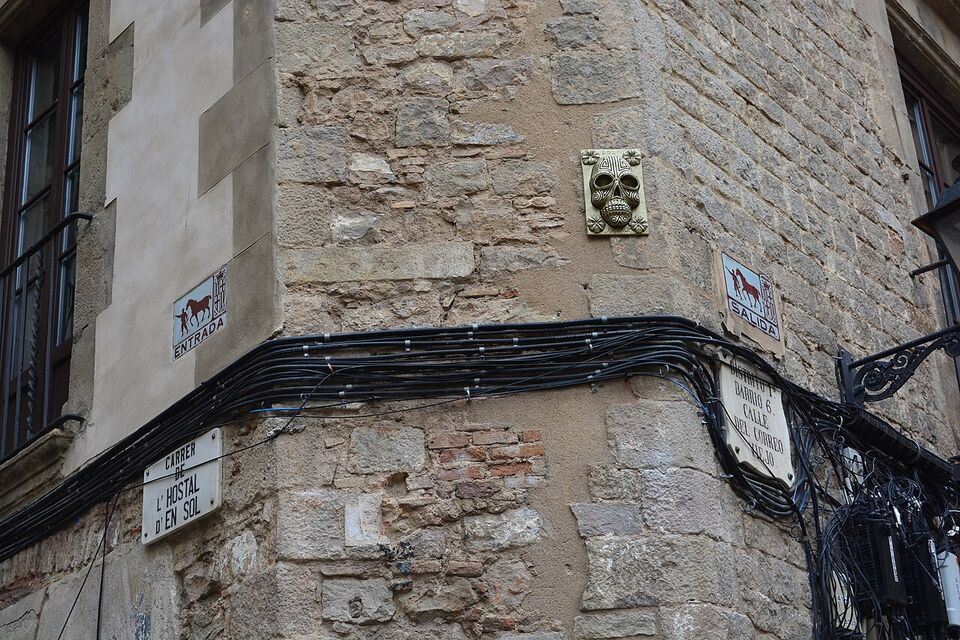
| Entrada / Salida | Entrance / exit |
| Abierto / Cerrado | Open / closed |
| Empujar / Tirar | Push / pull (tirar also means "throw away", so don't be confused by the trash can) |
| Aseos / Servicios | Restrooms |
| Caballeros / Señoras (or Damas) | Men / women |
| Prohibido el paso | No entry |
| Prohibido fumar | No smoking |
| Horario | Opening hours |
| Laborables / Festivos | Working days (check whether Saturday is included) / Sundays and public holidays |
| Cerrado por vacaciones | Closed for vacation, often in August |
| Completo | Full, sold out, no vacancy |
| Rebajas | Sales (January and July) |
| Farmacia de guardia | Duty pharmacy, open nights and holidays |
| Agua no potable | Not drinking water |
Insider tip
On Spanish timetables, laborables means working days, sometimes with Saturday included and sometimes with its own sábados column, while festivos means Sundays plus public holidays. Buses and trains often run a reduced Sunday schedule on holidays too, so check the date against our festival and holiday calendar.
Road signs and the gas station
Driving in Spain is straightforward on the highways and testing in old town centers. Speeds are in km/h: 120 km/h (75 mph) is the usual motorway limit. See driving in Spain.
- Ceda el paso: yield
- Autopista (AP-) and peaje: motorway and toll; many former toll roads became free when concessions ended
- Autovía (A-): a toll-free divided highway
- Salida: exit; desvío, detour; obras, roadworks
- ZBE (zona de bajas emisiones): low-emission zone; rental cars generally have the right sticker, but check
- Zona azul / ORA: paid on-street parking with time limits; zona verde in Madrid is mainly for residents
- Aparcamiento or parking: parking garage
- Gasolinera: gas station; sin plomo 95 is regular unleaded, gasóleo or diésel is diesel
- Lleno, por favor: fill it up (most stations are self-service, and some require paying first)
Watch out
At many Spanish stations the green nozzle is gasoline and the black one is diesel, roughly the reverse of what you may know from home, and colors vary. Read the label on the pump: putting gasóleo in a gasoline rental car (or the reverse) is an expensive mistake that insurance often excludes.
Shopping and markets
| English | Spanish | Say it |
|---|---|---|
| How much is it? | ¿Cuánto cuesta? | KWAHN-toh KWEHS-tah |
| Who's last in line? | ¿Quién es el último? | kyehn ehs ehl OOL-tee-moh |
| I'm just looking | Solo estoy mirando | SOH-loh ehs-TOY mee-RAHN-doh |
| Do you have it in another size? | ¿Lo tiene en otra talla? | loh TYEH-neh ehn OH-trah TAH-yah |
| I'll take it | Me lo llevo | meh loh YEH-boh |
| A quarter kilo, please (about half a pound) | Un cuarto de kilo, por favor | oon KWAR-toh deh KEE-loh |
| A bag, please | Una bolsa, por favor | OO-nah BOHL-sah |
| Tax-free form, please | El formulario de tax free, por favor | ehl for-moo-LAH-ryoh |
Plastic bags cost a few cents, so carry your own. For VAT refunds, sales seasons and what you can bring home, see shopping and US customs.
Emergencies, health and police
Call 112 for police, fire or ambulance from any phone; operators can answer in English. Our safety and health pages have the details.
| English | Spanish | Say it |
|---|---|---|
| Help | Socorro / ayuda | soh-KOH-rroh / ah-YOO-dah |
| Call an ambulance | Llame a una ambulancia | YAH-meh ah OO-nah ahm-boo-LAHN-thyah |
| Call the police | Llame a la policía | YAH-meh ah lah poh-lee-THEE-ah |
| I need a doctor | Necesito un médico | neh-theh-SEE-toh oon MEH-dee-koh |
| Emergency room | Urgencias | oor-HEHN-thyahs |
| It hurts here | Me duele aquí | meh DWEH-leh ah-KEE |
| Where is a pharmacy? | ¿Dónde hay una farmacia? | DOHN-deh eye OO-nah far-MAH-thyah |
| I've been robbed | Me han robado | meh ahn roh-BAH-doh |
| I've lost my passport | He perdido el pasaporte | eh pehr-DEE-doh ehl pah-sah-POR-teh |
| Police station | Comisaría | koh-mee-sah-REE-ah |
| I want to file a report | Quiero poner una denuncia | KYEH-roh poh-NEHR OO-nah deh-NOON-thyah |
To claim on travel insurance after a theft, you need a police report (denuncia). In most of Spain that means the Policía Nacional; in Catalonia it is the Mossos d'Esquadra, and in the Basque Country the Ertzaintza. Pharmacies are marked with a green cross, and pharmacists give useful advice for minor problems.
Numbers, prices, days and time
| Number | Spanish | Say it |
|---|---|---|
| 1 / 2 / 3 | uno / dos / tres | OO-noh / dohs / trehs |
| 4 / 5 / 6 | cuatro / cinco / seis | KWAH-troh / THEEN-koh / says |
| 7 / 8 / 9 / 10 | siete / ocho / nueve / diez | SYEH-teh / OH-choh / NWEH-beh / dyehth |
| 15 / 20 / 30 | quince / veinte / treinta | KEEN-theh / BAYN-teh / TRAYN-tah |
| 50 / 100 / 1,000 | cincuenta / cien / mil | theen-KWEHN-tah / thyehn / meel |
- Prices: Spain writes a decimal comma: €12,50 is twelve euros fifty, said doce con cincuenta. A period marks thousands: 1.500 is fifteen hundred.
- Days: lunes, martes, miércoles, jueves, viernes, sábado, domingo (Monday to Sunday). The week starts on Monday on calendars.
- Dates: day first. 6/1 is January 6, not June 1.
- Time: timetables use the 24-hour clock (21:30 is 9:30 pm). Mediodía is midday, but lunch is at 2; la tarde runs until about 9 pm; la madrugada is the small hours.
- Useful words: hoy (today), mañana (tomorrow, or morning), ayer (yesterday), ahora (now), ahora mismo (right now, though it can mean "soon").
Different from home
Spain uses the metric system and the euro, so menus price octopus by the kilo and markets sell cheese by the 100 grams (about 3.5 oz). A kilo is 2.2 pounds. Our converters handle the math.
A little Catalan, Basque and Galician
Roughly two in five Spaniards live in regions with a second official language. Everyone there speaks Spanish too, but signs, menus and announcements may come first in the regional language, and a word or two of it earns real goodwill. See etiquette for why it matters.
Catalan (Barcelona, Catalonia, Valencia region, Balearic Islands)
| English | Catalan | Say it |
|---|---|---|
| Good morning | Bon dia | bohn DEE-ah |
| Good afternoon / evening | Bona tarda | BOH-nah TAR-dah |
| Good night | Bona nit | BOH-nah NEET |
| Please | Si us plau | sees PLOW |
| Thank you | Gràcies (or merci) | GRAH-see-uhs / mehr-SEE |
| Goodbye | Adéu | ah-DEH-oo |
| Exit / closed / open | Sortida / tancat / obert | sor-TEE-dah / tahn-KAHT / oo-BEHRT |
| Street / square / beach | Carrer / plaça / platja | kah-RREH / PLAH-sah / PLAHD-juh |
Basque (San Sebastián, Bilbao, the Basque Country and northern Navarra)
| English | Basque | Say it |
|---|---|---|
| Hello | Kaixo | KAI-shoh |
| Good morning | Egun on | EH-goon ohn |
| Please | Mesedez | meh-SEH-dehs |
| Thank you very much | Eskerrik asko | ehs-KEH-rreek AHS-koh |
| Goodbye | Agur | ah-GOOR |
| Cheers | Topa | TOH-pah |
| Welcome (on signs) | Ongi etorri | OHN-gee eh-TOH-rree |
| Entrance / exit | Sarrera / irteera | sah-RREH-rah / eer-teh-EH-rah |
Galician (Santiago de Compostela, A Coruña, Vigo)
| English | Galician | Say it |
|---|---|---|
| Good morning | Bo día | boh DEE-ah |
| Good evening | Boas noites | BOH-ahs NOY-tehs |
| Thank you | Grazas | GRAH-thahs |
| Goodbye | Adeus | ah-DEH-oos |
| Street / beach / exit | Rúa / praia / saída | ROO-ah / PRY-ah / sah-EE-dah |
Pilgrims on the Camino de Santiago will see Galician on every waymark in the final stretch, and bo camiño (have a good Camino) is the greeting you will hear.
Words you will hear everywhere
- Vale: OK, sure, agreed. Spaniards use it dozens of times a day.
- Venga: come on, go on, or "right then, bye". Often doubled: venga, venga.
- Guay: cool, great.
- Tío / tía: literally uncle or aunt, used like "dude" between friends.
- ¿Qué pasa?: what's up?
- Ostras: a mild "wow" or "oh no".
- Hombre: "man", said to men and women alike for emphasis.
- Puente: literally "bridge", a long weekend when a holiday falls on a Tuesday or Thursday and people take the day in between off. Expect crowded trains and roads.
You will also hear plenty of swearing in casual conversation, on TV and from grandmothers. It carries much less weight than in English, but it is still best left to native speakers.
How to practice before you go
- Start four to six weeks out. Ten minutes a day with a free app such as Duolingo, or the free audio lessons many public libraries offer through their apps, gets you through greetings, numbers and ordering.
- Choose Spain Spanish where you can. Some courses let you pick European Spanish; it helps you hear the "th" and vosotros.
- Download an offline translator. Google Translate and similar apps let you download Spanish, Catalan and Galician for offline use, and the camera mode reads menus. Basque support is more limited, so download it ahead if offered.
- Watch Spanish TV. Spanish series on the big streaming platforms, with Spanish subtitles, train your ear to the accent faster than anything else.
- Practice the respellings aloud. Saying agua del grifo and la cuenta a few times before your first night makes them come out naturally in a noisy bar.
Need help planning? Our planning guide and trip planning service can help you build the trip around the places you want to see.
Add it to a route in the trip builder, or ask us to plan the hotels, trains and guides for you.