Overview
The Balearic Islands sit in the Mediterranean about 100 to 200 miles (160 to 320 km) off Spain's east coast. There are four main islands, and they are more different from one another than most Americans expect. Mallorca is the big one, with a real capital city, a mountain range and hundreds of beaches. Menorca is quieter and greener, a UNESCO Biosphere Reserve with protected coves. Ibiza is famous for its clubs but has a beautiful walled old town and calm northern coast. Formentera is small, flat and all about the water.
The islands are Catalan-speaking, and you will see place names in Catalan first: platja (beach), cala (cove), carrer (street). Palma's cathedral is La Seu; Menorca's capital is Maó (Mahón in Spanish). Locals appreciate a bon dia (good morning) as much as a buenos días.
The islands are also at the center of Spain's debate over mass tourism. Expect a nightly tourist tax, tighter rules on holiday rentals and, in summer, the chance of protests in Palma. None of it should stop you from going, but it changes how to plan well.
Choosing an island
| Island | Best for | Feel | Base |
|---|---|---|---|
| Mallorca | Variety: city, mountains, hiking, beaches, food, families | Busy in summer, big and varied | Palma, Sóller, Pollença, Alcúdia or a rural finca |
| Menorca | Quiet coves, walking, families, couples | Low-rise, calm, protected | Ciutadella or Maó |
| Ibiza | Nightlife, but also boutique hotels and coves in the north | Glamorous, pricey in summer | Ibiza Town, Santa Eulària or the north |
| Formentera | Turquoise water, cycling, doing nothing | Laid-back, expensive, small | Es Pujols or Sant Francesc |
For a first visit of a week, choose Mallorca, or split it between Mallorca and Menorca. If you want Ibiza's beaches without its clubs, stay in the north of the island and add a day or two on Formentera.
Mallorca
Palma
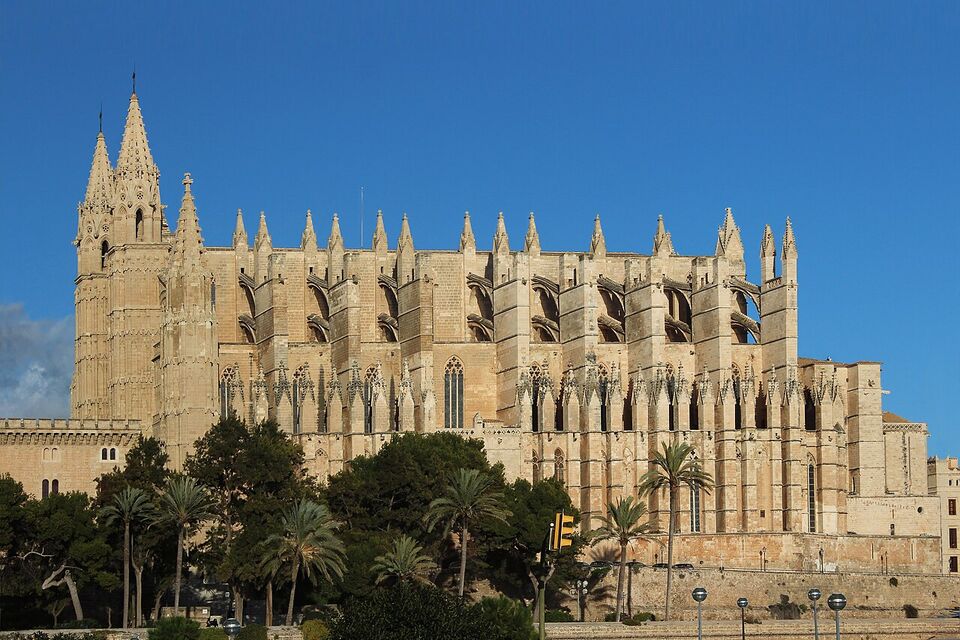
Palma is a real city of about 430,000 people, and it deserves at least a full day. The Gothic cathedral, La Seu, rises straight from the seafront, its interior remodeled in part by Gaudí in the early 1900s and with a ceramic chapel by the Mallorcan artist Miquel Barceló. Next door, the Almudaina is a royal palace built on a Moorish fortress. Behind them, the old town is a maze of courtyards (patis), bakeries and churches.
Beyond the center, Bellver Castle is a rare round Gothic castle on a wooded hill with views over the bay, and the Fundació Miró Mallorca preserves the studios where Joan Miró worked for the last decades of his life. In the evening, the Santa Catalina neighborhood and its market are the place for tapas and wine bars.
Insider tip
Try an ensaïmada, Mallorca's spiral pastry dusted with sugar, for breakfast. Bakeries sell them in sizes up to a family-size round in a hexagonal box, which travelers carry home as hand luggage on the plane. Also look for sobrassada, a soft, spreadable cured sausage colored with paprika.
The Serra de Tramuntana
The mountains along Mallorca's northwest coast are a UNESCO World Heritage cultural landscape, with stone-terraced olive groves, monasteries and villages of honey-colored stone. A drive along the coast road from Andratx to Pollença takes a full day with stops. Highlights:
- Valldemossa, where Chopin and George Sand spent a cold winter in 1838–1839 in the Carthusian monastery.
- Deià, a hillside village long popular with artists and writers, with a rocky cove below.
- Sóller and its port, in a valley of orange groves.
- Sa Calobra and the Torrent de Pareis, reached by a famous switchback road; busy in summer with tour buses.
- Cap de Formentor, the dramatic northern tip. In recent summers, the road to the lighthouse has been closed to private cars during the day, with a shuttle bus from Port de Pollença. Check the current year's dates before you go.
Hikers can walk sections of the GR 221, the Dry Stone Route, which crosses the range over several days with mountain refuges (refugis) to sleep in. Spring and fall are best; in July and August, midday heat makes long hikes unpleasant. See the outdoors in Spain.
The Sóller train
The wooden electric train from Palma to Sóller, running since 1912, crosses the mountains through 13 tunnels. A one-way ticket is €23 (about $26) and a return €30 (about $34); the old tram from Sóller down to the port costs €10 (about $11) each way, and there is a combined Palma to Port de Sóller return for €40 (about $45). Buy at trendesoller.com or the stations. A popular plan: train out, tram to the port for lunch, and the much cheaper bus back to Palma.
Beaches and coves
Mallorca's best swimming is in its coves: Caló des Moro and Cala Mondragó in the southeast, the long sandy Es Trenc in the south, and the calm bays of Alcúdia and Pollença in the north, ideal for children. The popular southeast coves fill by mid-morning in summer, and parking is limited. Arrive early, or go in June or September.
Watch out
Respect the flags: red means no swimming, yellow means caution. Jellyfish can appear in summer, and lifeguards fly a jellyfish flag when they do. Some coves have no lifeguards at all, and a few have strong currents after storms. See safety.
Inland Mallorca
The flat center of the island, Es Pla, is farm country with market towns, windmills and wineries around Binissalem. Weekly markets rotate between towns, with Sineu's Wednesday market among the oldest. Rural hotels in restored possessions (old manor farms) make a quiet base.
Menorca
Menorca is about half the size of Mallorca and far less developed. The whole island has been a UNESCO Biosphere Reserve since 1993, and in 2023 its prehistoric Talayotic sites, stone towers and T-shaped monuments built about 3,000 years ago, were added to the World Heritage list.
- Ciutadella, in the west, is the old capital, with a cathedral, palaces and a narrow harbor lined with restaurants. Its June festival of Sant Joan involves horses rearing through crowds in the streets.
- Maó (Mahón), the capital, sits on one of the longest natural harbors in the Mediterranean, with Georgian-era houses from the British occupation of the 1700s. Take a harbor boat tour.
- The Camí de Cavalls is a footpath that circles the whole island, about 115 miles (185 km), in 20 stages. Short sections link coves that cars cannot reach.
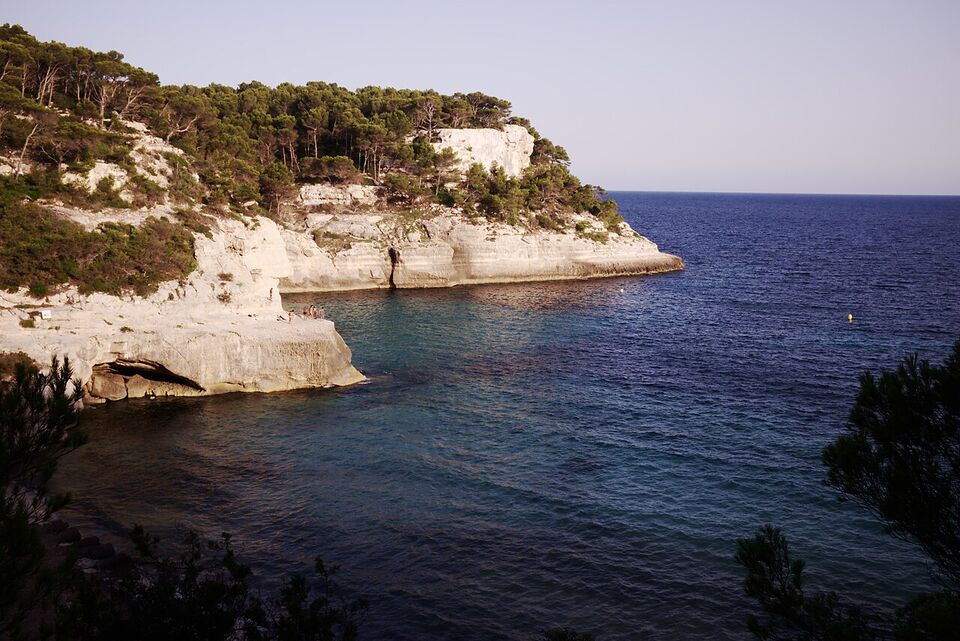
- Coves such as Cala Macarella, Cala Turqueta and Cala Mitjana have pale sand and clear water. In summer, access roads to some popular coves have limited parking, with paid lots that fill early and shuttle buses from towns.
Menorca's food is simple and good: caldereta de llagosta (spiny lobster stew, expensive), Mahón cheese, and gin from the British era, mixed with lemon soda as a pomada.
Ibiza and Formentera
Ibiza
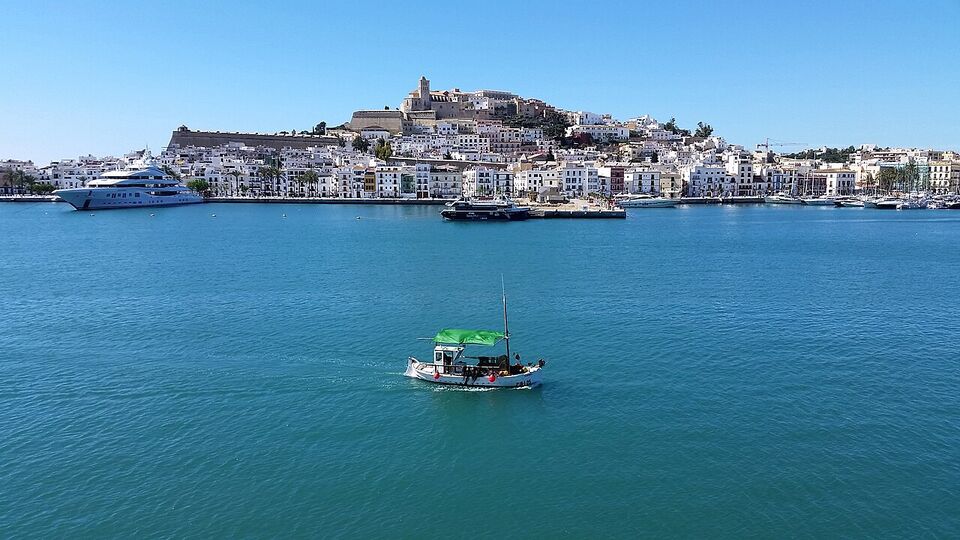
Ibiza (Eivissa in Catalan) is two places. From June to early October the big clubs around Sant Antoni and Platja d'en Bossa draw international DJs and tickets can run high. The rest of the island is quieter: Dalt Vila, the walled upper town of Ibiza Town, is a UNESCO site, along with the island's seagrass meadows, which keep the water so clear. The north, around Sant Joan and Portinatx, has pine-backed coves and rural hotels.
Ibiza has also been the strictest island on illegal holiday rentals and rogue party boats, with heavy fines. Book only licensed accommodation. Some areas of Sant Antoni and Mallorca's Magaluf and Playa de Palma have rules limiting late-night alcohol sales and drinking in the street.
Formentera
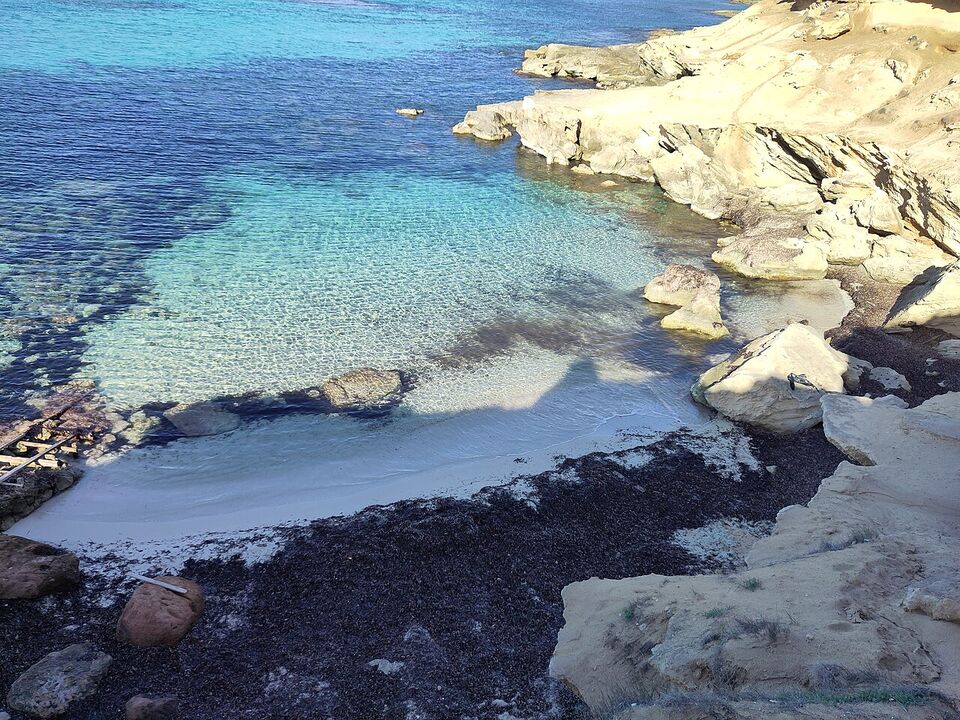
Formentera is reached only by ferry from Ibiza Town, about 30 minutes on a fast boat. It has no airport and few big hotels, and its beaches, especially Ses Illetes, have the clearest water in the Balearics. The island limits the number of vehicles that can enter in summer, and most visitors rent bikes or e-bikes. It is pricey; plan a day trip or two nights rather than a week on a tight budget.
The tourist tax and rental rules
The Balearics charge a sustainable tourism tax (impost de turisme sostenible, often called the ecotasa) on every night in tourist accommodation. It is paid at the hotel or rental, usually at check-in or check-out, and should appear as a separate line on your bill. Children under 16 are exempt, and the rate halves from the ninth night of a stay at the same property.
| Accommodation | May–October, per adult per night | November–April |
|---|---|---|
| 5-star, luxury, 4-star superior | €4 (about $4.50) | €1 (about $1.10) |
| 4-star and 3-star superior | €3 (about $3.40) | €0.75 |
| 1- to 3-star hotels, holiday rentals, rural hotels | €2 (about $2.25) | €0.50 |
| Hostels, guesthouses, campsites | €1 (about $1.10) | €0.25 |
| Cruise passengers (non-Balearic home port) | €2 (about $2.25) | Check the current rate |
All rates add 10% VAT. A couple spending a week in a 4-star hotel in July pays 2 × 7 × €3 = €42, plus VAT, about $52. The regional government has discussed raising peak-season rates; check the current figure when you book. For the full picture of Spain's tourist taxes, see money.
Different from home
The tax is rarely included in the price you see on booking sites, even when the rest of your stay is prepaid. Expect to pay it in person. Unlike US hotel taxes, it is charged per person, not per room.
Holiday rentals are tightly regulated. Every legal rental must display a tourist license number in its listing; Palma has stopped granting new holiday-rental licenses in apartment buildings, Ibiza fines owners of illegal rentals heavily, and Spain's consumer ministry ordered tens of thousands of unlicensed listings taken down nationwide in 2025. An unlicensed rental can be canceled at short notice. See where to stay.
Overtourism and protests
In 2024 and 2025, tens of thousands of residents marched in Palma under slogans calling for less tourism, angry about housing costs, traffic and crowded beaches. A few small groups have squirted water pistols at tourists or occupied beaches. The protests are aimed at policy, not individual visitors, and have been peaceful.
What it means for you: avoid driving into Palma or the Tramuntana on protest days, as roads can close; follow the State Department, whose Spain advisory is at Level 2 ("exercise increased caution") because of terrorism and civil unrest, and stay clear of demonstrations; and travel in a way locals welcome. Stay in licensed places, shop and eat in local businesses, go in shoulder season, and take the bus or train where you can.
Getting there
Flights
Palma de Mallorca Airport (PMI) is one of Spain's busiest, with flights to most European cities. United flies a seasonal nonstop from Newark; for 2027 it has announced daily flights from June 21, 2027, up from four a week, so check the season's start date when you book. Otherwise connect through Madrid, Barcelona or a European hub. Flights from Madrid or Barcelona take about an hour and can be very cheap if booked early. Menorca (MAH) and Ibiza (IBZ) have mostly seasonal and European service. See flights.
From PMI, the A1 airport bus runs to the center of Palma in about 15 to 20 minutes, and taxis wait outside arrivals.
Ferries
Ferries connect the islands with Barcelona, Valencia and Dénia (near Alicante), and the islands with each other. The main operators are Baleària and Trasmed; Barcelona to Palma takes about 7 to 8 hours, with overnight sailings and cabins. Fast ferries link Mallorca with Menorca (Alcúdia to Ciutadella) and Ibiza, and Ibiza with Formentera. Book cars on board early in summer. Check schedules at balearia.com.
Save money
Island-hopping by plane is often cheaper and faster than by ferry unless you are taking a car. Book flights between Palma and Ibiza or Menorca as early as you can for July and August.
Getting around
On Mallorca, the TIB bus network covers most towns from Palma's Estació Intermodal, and a few rail lines run inland. Still, a rental car is the best way to reach coves and mountain villages. Book early for summer; small cars handle mountain roads and tiny parking spaces better. Palma's center has a low-emission zone, so leave the car at the hotel or a garage. The speed limit on main roads is usually 90 km/h (56 mph) and up to 120 km/h (75 mph) on Mallorca's short motorways. See driving.
On Menorca, a car is nearly essential for exploring coves, though summer buses link the main beaches. On Ibiza, buses connect towns and beaches in summer. On Formentera, rent a bike.
When to go
- June and September: the sweet spot. The sea is warm, around 73–79°F (23–26°C), and crowds are thinner than in July and August.
- July and August: hot, often over 90°F (32°C), with Europe's school holidays filling every beach and ferry. Prices peak.
- October: warm sea, quieter, still mostly open.
- November to March: mild days around 59–63°F (15–17°C), cheap rooms and low tax, but resort areas shut down. Palma and Sóller stay alive, and late January to February brings almond blossom across Mallorca. Good for hiking and cycling.
The islands are on the same time as mainland Spain. More details in when to go.
Where to stay
- Palma for a city base with restaurants and museums; boutique hotels in old-town palaces are $$$ in summer.
- Sóller or Pollença for mountains, walking and calm evenings.
- Alcúdia and the northern bays for families, with shallow water and big resort hotels $$.
- Rural agroturismes (farm stays) across Mallorca and Menorca: a pool and quiet, but you need a car.
- Ciutadella on Menorca for character; small hotels in town are often $$.
- Ibiza is the priciest island in summer; even modest hotels can reach $$$.
Remember the tourist tax on top. For more, see where to stay in Spain.
A cruise day in Palma
Many Mediterranean cruises call at Palma. Ships dock at the port west of the center; walking to the cathedral is possible from closer berths, and shuttle buses run from farther ones. With a day, see La Seu and the old town in the morning, then either take the Sóller train (book in advance for a specific time) or relax at a beach close to town. Leave a buffer: traffic on the ring road can be slow. See cruises.
Practical tips
- Book early for summer: rental cars, ferries with vehicles and good hotels all sell out.
- Bring reef shoes for rocky coves and sea urchins.
- Sun and heat: in July and August, plan beach time before 11 a.m. or after 4 p.m.; drink water. See health.
- Wildfires: in summer, follow local alerts and fire bans in the mountains.
- Tipping is modest, as on the mainland. See money.
- Combining the islands with Barcelona or Valencia is easy by plane or ferry. See planning your trip.
Add it to a route in the trip builder, or ask us to plan the hotels, trains and guides for you.