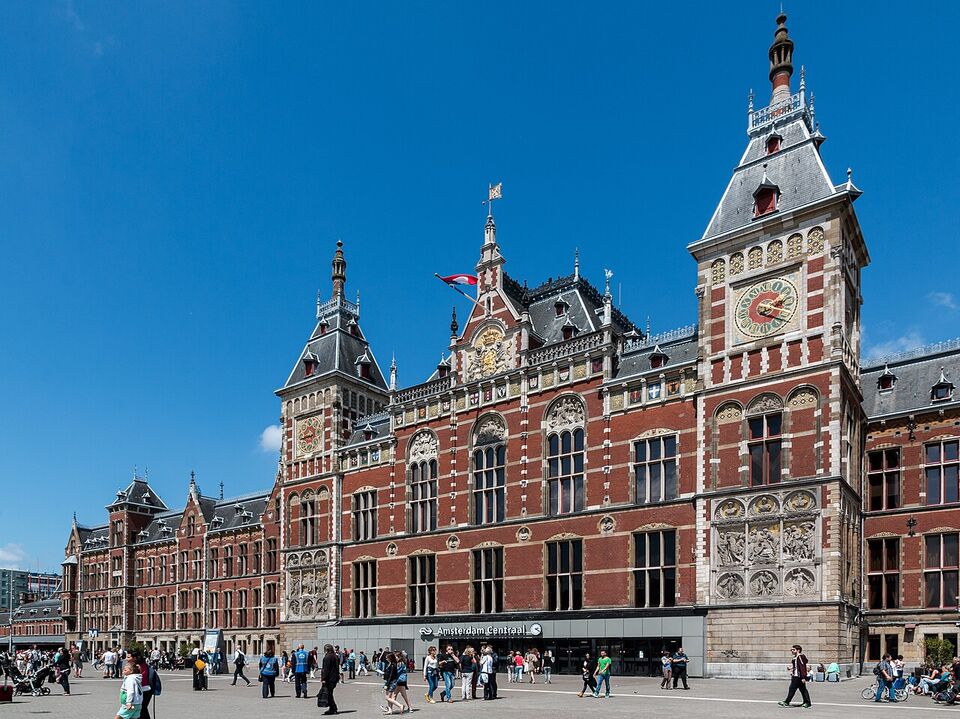
Amsterdam at a glance
Amsterdam rewards a short, well-planned visit. Plan on three full days, base yourself in or near the canal ring, book three or four timed tickets before you leave home, and use your feet, trams and the free IJ ferries rather than a car. Almost everything first-time visitors want sits inside an area you can cross on foot in about an hour.
The city is small for a capital: the historic center is a half-moon of canals laid out in the 17th century, with the main train station at its flat edge. Most of the big museums sit just south of the canals, and the lively residential neighborhoods (the Jordaan, De Pijp, Oost) sit just outside them. Once you understand that shape, the rest is easy.
This page is the hub for our Amsterdam guide. It explains the layout, compares the areas, suggests how many days to spend, lists the mistakes first-timers make, and points you to the detailed pages on things to do, neighborhoods, museums, the Anne Frank House and day trips. All prices are as of mid-November 2026, and every one comes with a place to check before you go.
How the canal ring is laid out
Picture a horseshoe opening toward the water. Amsterdam Centraal, the train station, sits on the harbor side of the IJ (the broad waterway behind the station). From there, the main street Damrak runs south to the Dam, the city's central square, and continues as pedestrian shopping streets. Everything fans out from that line.
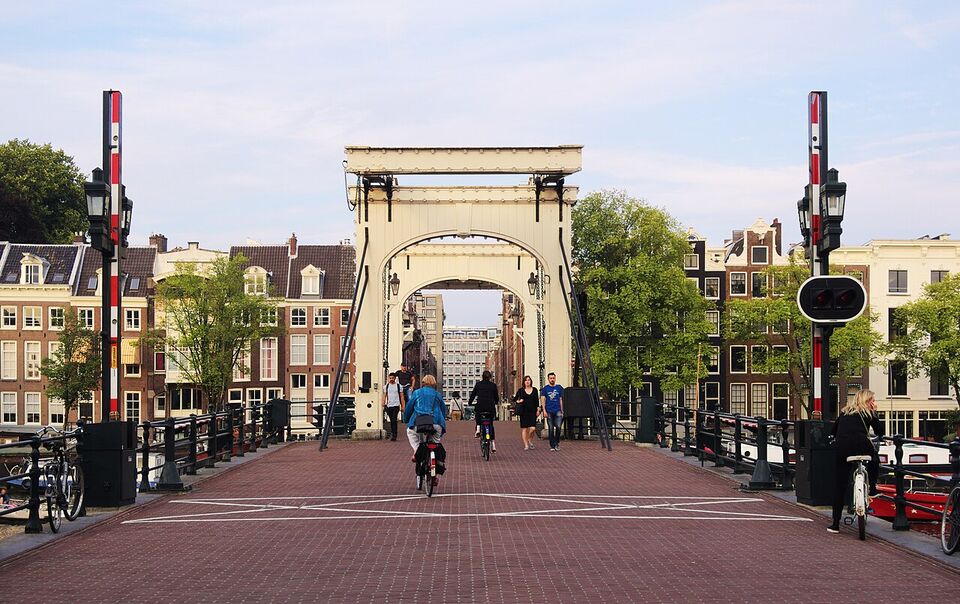
The oldest part of town, De Wallen (the Old Centre or Red Light District), lies just east of Damrak. West of Damrak the pattern changes to a series of curved canals. Starting from the center and moving outward, they are the Singel (the original moat), then the Herengracht ("gentlemen's canal"), the Keizersgracht ("emperor's canal") and the Prinsengracht ("prince's canal"). The last three form the 17th-century Canal Ring that UNESCO listed as a World Heritage Site in 2010. Beyond them is the Singelgracht, an outer ring of water that marks the edge of the historic city.
Here is a simple map in words:
- North edge: Centraal Station, the harbor and the IJ. Free ferries leave from behind the station to Amsterdam-Noord.
- Center: Damrak and the Dam, with the Royal Palace. East of it, De Wallen. West of it, the Nine Streets and the Spui square.
- West of the canal ring: the Jordaan, a former working-class district of narrow lanes and small canals.
- South of the canal ring: Leidseplein (nightlife), then the Museum Quarter with Museumplein and the Vondelpark behind it.
- Southeast: De Pijp, a dense residential area with the Albert Cuyp Market, and Rembrandtplein and the Amstel river on the way there.
- East: the Plantage (the zoo and the Hortus botanical garden), then Oost with its parks and multicultural streets.
- Across the IJ: Amsterdam-Noord, reached by ferry, with the A'DAM Tower and the NDSM wharf.
House numbers run along each canal rather than across the ring, so an address like Prinsengracht 263 can sit a long walk from the Dam. Use a map app and look for the nearest cross-street or bridge.
The main areas compared
Where you sleep shapes your trip more than which hotel you pick. The table gives the short version; the neighborhoods page goes into detail on each area, with walking routes and noise warnings.
| Area | Feel | Best for | Getting around |
|---|---|---|---|
| Canal Ring | Elegant gabled houses, quiet side streets, many small hotels | First-timers, couples, scenery | Walk to the Dam in 10 to 20 minutes; trams on the main cross-streets |
| Jordaan | Small lanes, cafés, galleries, a local-neighborhood feel | Slow wandering, restaurants | Walkable to the center; few trams inside the area |
| Museum Quarter | Wide streets, embassies, upscale shops, Vondelpark | Museum trips, families, a quieter base | Frequent trams to Centraal and the Dam |
| De Pijp | Busy, mixed, plenty of cafés and the Albert Cuyp Market | Eating out, longer stays | Tram plus the North/South metro line to Centraal |
| Old Centre (Centrum) | Crowded, historic, very touristy, loud at night | Short stays near the train | Everything on foot; Centraal is the hub |
| Oost | Parks, markets, everyday Amsterdam | Budget stays, return visits | Trams to the center; allow 15 to 25 minutes |
| Noord | Converted warehouses, creative spaces, big skies | Different views, bike riders | Free ferry across the IJ; no tram service in most of Noord |
If you only remember one rule: pick the quiet end of the Canal Ring or the Museum Quarter for a calm first trip, and De Pijp or the Jordaan if you want to feel like a resident. Stay in the Old Centre only for the convenience of being steps from the station.
How many days to spend
For a first visit, three full days is the sweet spot. It fits a canal cruise, one or two big museums, an afternoon in the Jordaan or De Pijp, and one longer excursion without turning the trip into a checklist.
| Time | What fits | What to skip |
|---|---|---|
| One day | Canal cruise, Dam Square, one museum, an evening walk | Day trips, second museum |
| Two days | Two museums, canal ring walk, a market, a neighborhood meal | Day trips unless you start early |
| Three days | The above plus the Jordaan, Vondelpark and a half-day or full-day trip | Little; this is the comfortable pace |
| Four to five days | Add Zaanse Schans, Haarlem, Utrecht or the tulip fields in season | Nothing, but pace yourself |
If you arrive on a morning flight from the U.S., expect to feel tired by mid-afternoon. A long walk in daylight helps reset your body clock more than a nap, and Amsterdam is easy to walk. Save your timed museum tickets for day two or three if you can.
Our trip builder turns these day counts into a rough budget, and the page on when to go explains how weather and crowds change by season. The day trips page covers what is worth leaving the city for.
Mistakes first-timers make
Walking in the bike lane
Amsterdam's bike lanes are not a sidewalk extension. They are busy traffic lanes, usually marked with red asphalt and white bicycle symbols, and cyclists ride fast and rarely brake. Step out of one only when you have looked both ways, twice. The same goes for the small wheeled scooters and e-bikes that use them.
If you ride yourself, follow the basics from the city's own cycling page: stay on the bike lane on the right, use front and back lights after dark (they are required by law), do not ride on footpaths or shopping streets, and lock your bike to a fixed object. A bike left outside a rack can be removed and costs €25 (about $28) to reclaim. See our cycling guide before you rent.
Misreading the trams
Trams are quiet, fast and cannot swerve. Stay off the tracks, watch for bells, and never step off the curb without looking along the rails in both directions. Tram tracks are also the main hazard for bicycle wheels, so cross them at close to a right angle.
Pay by checking in and out with a contactless card or phone (OVpay) on every tram, bus and metro. GVB caps its fares at €10.50 (about $12) per day this way. American Express cards are not accepted for OVpay, so carry a Visa or Mastercard. Our getting around page has the details, including the day tickets.
Eating at tourist traps
The streets nearest Centraal and Damrak, and the squares around Leidseplein and Rembrandtplein, are full of restaurants that sell mostly to people who will not return. Signs that a place caters to passing trade include laminated photo menus in six languages, staff calling to you from the sidewalk, and a large menu that covers every cuisine. A short menu, mostly Dutch-speaking guests and reservations written on a board are better signs.
Walk two or three streets away from the main squares, or choose a neighborhood like the Jordaan or De Pijp, and your options improve and prices often drop. Check our food page for local dishes, and book dinner for weekends. Service is included in prices in the Netherlands; rounding up or leaving a few euros for good table service is a courtesy, not an obligation.
Turning up without tickets
The Anne Frank House sells timed tickets online only, with no sales at the door. The Rijksmuseum and Van Gogh Museum require a booked start time too. Showing up and hoping rarely works in high season. See the next section for what to book and when.
Cash-only habits
Most places in Amsterdam take cards, and some refuse cash, so carry a contactless card. The Anne Frank House accepts bank and credit cards only, and Mauritshuis in The Hague is cashless. Keep a few euros for small markets, public toilets and tips, and tell your bank you are traveling.
Different from home
Dutch ground floors are often a step or two above the street, doors on canal houses open into narrow hallways, and the stairs inside are steep. If you have a heavy suitcase or a mobility need, ask your hotel about lifts and stairs before you book. We cover this in more detail on the where to stay page.
What to book ahead
Book these as soon as you know your dates. Everything else in the city can be arranged in the days before you go.
| Item | Price (adult) | How to book |
|---|---|---|
| Anne Frank House | €16.50 (about $18), €17.00 (about $19) from 2027 | Online only, timed slot; tickets for visits six weeks ahead are released each Tuesday at 10:00 Dutch time |
| Rijksmuseum | €25 (about $28), €26.50 (about $30) from 2027; free for ages 18 and under | Timed slot required; open daily 9:00-17:00 |
| Van Gogh Museum | €25 (about $28), €26 (about $29) from January 1, 2027; free under 18 | Timed slot; no door sales; buy only at tickets.vangoghmuseum.com or named resellers |
| Royal Palace | €13.50 (about $15) | Check the opening calendar first; the palace is closed on some days |
| Heineken Experience | From €24.95 (about $28) | Book a date online |
| A'DAM Lookout | From €16.50 (about $18) | €2 (about $2.20) off online |
The Anne Frank House needs special planning. Tickets for any given day appear exactly six weeks earlier, every Tuesday at 10:00 Dutch time. For example, the release on Tuesday, November 17, 2026 covers Tuesday, December 29, 2026. Set an alarm; slots for popular days disappear quickly. Our Anne Frank House page explains the whole process, and museums compares the others.
If you plan to see several museums, check the I amsterdam City Card. It covers 70 or more museums and attractions, a canal cruise and a 24-hour bike rental, and the Total Experience version includes public transport. The Van Gogh Museum is not part of it, and the Anne Frank House gives no discount. Our money page and the budget page show how to work out whether a card pays off for your plans.
For seasonal events, book hotels first: King's Day (April 27, 2027), the Amsterdam Dance Event (October 20-24, 2027), and the Amsterdam Light Festival (November 26, 2026 to January 17, 2027) all fill rooms. See festivals for dates.
Getting around
You will walk more than you expect, so bring comfortable shoes with grip for wet cobbles and brick. The historic center is flat, and between sights you can use trams, the metro, buses, ferries or a bicycle.
From the airport
From Schiphol, take the NS train to Amsterdam Centraal. It runs often, takes 14 to 17 minutes and costs about €5.50 (about $6) per person. Use a contactless card to avoid a €1.60 (about $1.80) surcharge on single-use paper tickets. Taxis are the priciest option; ask for a fare before you ride. See Schiphol for the other options, including the Amsterdam Travel Ticket.
Trams, metro and ferries
The tram network is the easiest way to reach the Museum Quarter, De Pijp and Oost. The metro is quicker to outer districts. The city's ferries across the IJ to Amsterdam-Noord are free for pedestrians, cyclists and mopeds, and the short Centraal-Buiksloterweg crossing runs every few minutes and through the night. Tram service is limited in most of Noord.
The Amsterdam & Region Travel Ticket costs €23 (about $26) for one day, €34 (about $38) for two and €44 (about $49) for three, and also covers NS trains within the Amsterdam area. GVB's own tickets run from €3.40 (about $3.80) for one hour to €10.00 (about $11) for 24 hours. If you mostly walk, paying per ride with a contactless card is cheaper.
Bikes
Bike rental averages about €10 (about $11) a day, often from three hours. Cycling is the local way to travel, but first-timers sometimes find the traffic stressful. If you are not a confident urban rider, walking and trams are safer. Our cycling page covers routes, rules and parking.
Insider tip
Use the free ferry behind Centraal for a quick, car-free view of the harbor and the A'DAM Tower. You can even take it as an evening outing: the Centraal-Buiksloterweg crossing runs through the night, so there is no need to plan around a timetable.
Tourist tax and visitor rules
Amsterdam charges a tourist tax on overnight stays. In 2026 it is 12.5% of the room price excluding VAT, added on top of your rate. The city council passed its 2027 budget on November 12, 2026, which raises the tax to 16% in 2027, with further steps planned toward 20% in later years. The exact start day in 2027 has not been reported, so check amsterdam.nl or ask your hotel when you book.
On top of that, hotel rooms carry 21% VAT since January 1, 2026 (it was 9%). As an example, a room listed at €150 (about $168) including VAT works out to roughly €15.50 (about $17) in tourist tax per night in 2026, so the room costs about €165.50 (about $185) a night. That is an illustration, not a quote. Your hotel's invoice shows the real amount. For more, see where to stay.
Amsterdam received a record 21 million tourists in 2025 and the city has said it wants to ease the pressure on its busiest neighborhoods. A day-visitor tax is only being studied, and the city plans to close its sea-cruise terminal east of Centraal with no date announced. These are plans, not rules you need to follow now. What does apply to every visitor:
- Smoking cannabis on the street in the Red Light District area (the Burgwallen Oude-Zijde) has been banned since May 25, 2023, with a €100 (about $112) fine. Cannabis is tolerated, not legal; see coffee shops for the law.
- The city restricts guided tours past the windows in the Red Light District, and photographing the people there is a serious breach of respect. See our Red Light District page.
- If you rent a private apartment, use a licensed host. Short-term rental is tightly limited in Amsterdam.
Watch out
City rules about tourism, cannabis, rentals and cruise ships change often. Check amsterdam.nl and iamsterdam.com in the weeks before you travel, and treat anything older than a few months as possibly out of date.
Safety in a line
Amsterdam is generally safe for visitors: keep your bag zipped and in front of you on trams, in train stations and in crowded squares; lock your hotel room; call 112 for emergencies. The U.S. State Department rates the Netherlands at Level 2 ("exercise increased caution") as of November 2026, because of terrorism. See safety for numbers, scams and what to do if something goes wrong.
Where to go next in the Amsterdam guide
Things to do
Our things to do page covers sights beyond the museums, with timing, tickets and a two-day plan.
Neighborhoods
The neighborhoods page compares areas and tells you who should stay where.
Museums
Compare prices, passes and booking rules on the museums page. For the Anne Frank House, see its dedicated guide.
Red Light District
The Red Light District page explains the area's history, visitor rules and quieter alternatives.
Day trips
See day trips for what fits in a day, plus windmills and tulips for seasonal outings.
Where to stay
The where to stay page compares lodging types, taxes and bases beyond Amsterdam.
A simple first-visit plan
Use this as a skeleton and swap days to match your museum bookings. It assumes a late-morning arrival and a hotel in the Canal Ring or Museum Quarter.
- Day 1
Orientation by foot and water
Drop your bags, walk from the Dam along the Singel and the Herengracht, then through the Nine Streets for lunch. Take a canal cruise in the late afternoon or early evening, when the light is gentler. Go to bed early.
- Day 2
Museums and the park
Take your booked Rijksmuseum slot early, then walk across Museumplein to the Vondelpark for a break. Book the Van Gogh Museum for the afternoon, or save it for a separate morning if you want a slower pace.
- Day 3
History and neighborhoods
Visit the Anne Frank House at your booked time, wander the Jordaan, and have dinner in De Pijp after browsing the Albert Cuyp Market. See the things to do page for more options.
- Optional
A fourth day out of town
Go to Zaanse Schans by train (about 20 minutes), spend a day in Haarlem, or visit the bulb fields between roughly late March and early May, depending on the weather. Keukenhof is open March 18 to May 9, 2027; reports say entry is by time slot, so book on keukenhof.nl.
Save money
Amsterdam is expensive for hotels, so look at neighborhoods slightly outside the canal ring, such as Oost or the area near Sloterdijk, and consider staying in Haarlem. Walk when you can, buy a card only if you will use it, and note that the Rijksmuseum and Van Gogh Museum are free for children and teenagers.
Add it to a route in the trip builder, or ask us to plan the hotels, trains and guides for you.