The short answer on tickets
The Anne Frank House sells tickets only on its own website, annefrank.org, for a fixed date and time. Nothing is sold at the museum, including for children and for people with a Museumkaart or other discount card. Every Tuesday at 10 a.m. Amsterdam time, all tickets for a visit six weeks later are released, and the museum says demand is greater than the number of places.
That makes the planning rule simple: decide your dates early, count back six weeks to the Tuesday before, and book at release. If you are already inside that six-week window, check the site for any dates still open, because a day that looks sold out can differ from the next one.
This page explains what the visit is like, how the tickets work, what to do if you are shut out, and how to combine the visit with a quiet walk. For the wider picture of museum tickets in the city, see our Amsterdam museums guide.
What the Anne Frank House is
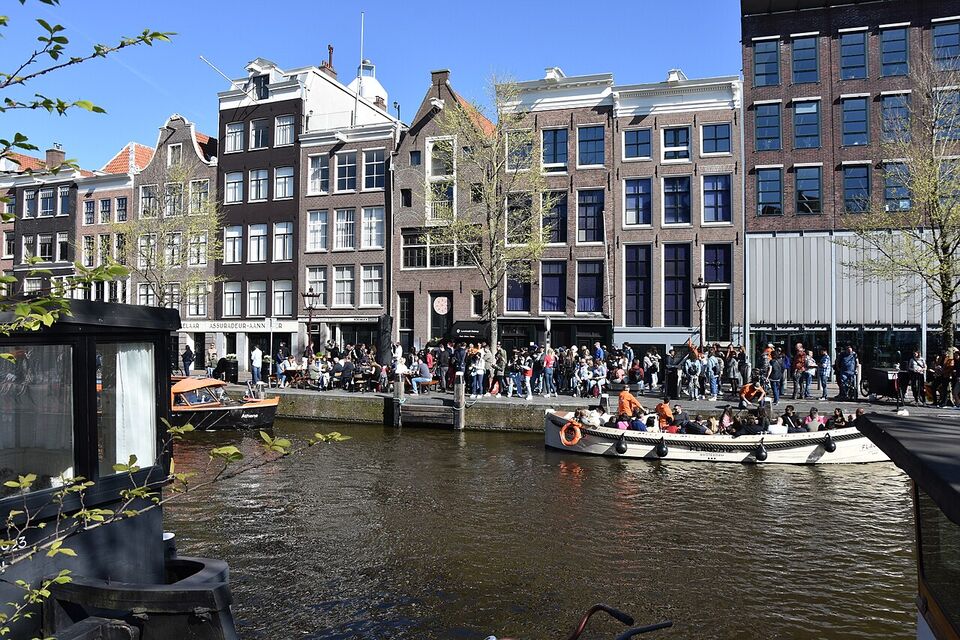
The Anne Frank House is the canal house on the Prinsengracht where Anne Frank, her family and four other people hid from the Nazi occupiers during World War II. They lived in the hidden rooms at the back of the building, which became known as the Secret Annex (in Dutch, the Achterhuis). Anne's diary was published in 1947. The museum, at Prinsengracht 263-267, opened on May 3, 1960, and the entrance is around the corner at Westermarkt 20.
The museum preserves the Secret Annex and uses the buildings at the front for an exhibition about Anne's life and times. It also has a space about persecution and discrimination more broadly. In 2024 it recorded more than 1.2 million visitors, according to Wikipedia, which is one reason the tickets are rationed.
As of November 13, 2026, the museum's site was also promoting a Margot Frank programme for the 100th birthday of Anne's sister. If that interests you, look on annefrank.org for what is on.
What to expect on the visit
The visit is quiet, and most people move through it slowly and without much talking. The route takes you through the museum rooms at the front of the house and then into the Secret Annex itself. Photography is not allowed anywhere in the museum, which protects the original items and keeps the rooms calm for other visitors.
- Duration. The museum says an average visit takes about an hour. Only your start time is fixed, and you can take as long as you need once you are inside.
- No guided tours. The museum does not run them. There is an audio tour in nine languages: Dutch, English, French, German, Hebrew, Italian, Japanese, Portuguese and Spanish. You can also book an introductory program (see below).
- Stairs. The house has steep stairs and a high step. See the accessibility section.
- Pace. The rooms are narrow, and the museum runs on timed entries. Expect to move at the speed of the people ahead of you.
The introductory program
At booking you can choose a museum visit or a museum visit with an introductory program. The program takes 30 minutes and gives the history of Anne Frank in the context of the Second World War. It is offered in English and Dutch, and after it you visit the museum yourself. The museum visit is included in the program booking, so you do not buy a separate ticket.
The program cannot be added to a ticket you have already bought, so decide before you pay. We did not find a price for the program on the pages we could read, so check the booking page.
Emotional weight and children
The visit is about people who hid from persecution, and most of them did not survive. Many visitors find it affecting even when they know the story well. Plan a gentle hour afterward rather than a tight schedule, and do not stack the visit between two timed tickets elsewhere.
The museum sells tickets for children of every age: ages 0-9 pay €1 (about $1.10) and ages 10-17 pay €7 (about $8). We did not find an official minimum age. As a judgment rather than a rule, the museum suits children who have already read about Anne Frank or been prepared by a parent, which is often from around ages 10 to 12. It is a poor fit for restless toddlers because of the stairs, the narrow rooms and the quiet. Parents know their own children best. If you want to prepare, the museum's site has an Anne Frank video series and online and 3D tours that you can look at together before you go.
How ticketing works
Prices in 2026
| Ticket | 2026 price | From 2027 |
|---|---|---|
| Adult | €16.50 (about $18), including a €1 booking fee | €17 (about $19) |
| Ages 10-17 | €7 (about $8) | Check the site |
| Ages 0-9 | €1 (about $1.10) | Check the site |
| Museumkaart or ICOM card | €1 (about $1.10), the booking fee only | Check the site |
| European Youth Card (EYC) | €7 (about $8) | Check the site |
| I amsterdam City Card, student cards | No discount | No discount listed |
Payment is by bank or credit card only. A Museumkaart holder still has to book online for a specific date and time and pays the booking fee. The introductory program has its own price on the booking page.
The weekly release rule
The museum's wording is: every Tuesday at 10 a.m. CET, all tickets become available for a visit six weeks later. We read that as meaning each Tuesday opens the visit date six weeks ahead. Confirm which dates are open on the booking calendar.
| Release Tuesday | Visit date six weeks later |
|---|---|
| November 17, 2026 | Tuesday, December 29, 2026 |
| November 24, 2026 | Tuesday, January 5, 2027 |
| December 1, 2026 | Tuesday, January 12, 2027 |
| December 8, 2026 | Tuesday, January 19, 2027 |
These dates are our arithmetic from the museum's rule, not a published schedule.
What 10 a.m. means from the US
The release is at 10 a.m. in Amsterdam. For most of the year that is 4 a.m. Eastern, 3 a.m. Central, 2 a.m. Mountain and 1 a.m. Pacific. In the few weeks when the US and Europe change clocks on different dates (for example, late October to early November, and again for part of March), the gap shrinks by an hour, so the release is at 5 a.m. Eastern. Set an alarm and test your card and login beforehand.
Booking rules to know before you pay
- No refunds or changes. Tickets cannot be exchanged or refunded, not even for transport problems, a negative travel advisory or personal reasons.
- Non-transferable. A ticket is valid only for its date and time.
- Several tickets in one name is fine. You do not need separate names, but you yourself must be there for the visit.
- You cannot add tickets later. If you need another ticket, check the site for availability on your day.
- Missing confirmation. Check your spam folder first. If your account was not charged, you have not bought a ticket. For a visit on another day, use the museum's contact form with your name and date.
Insider tip
The museum is open until 10 p.m. every day, so evening slots are worth checking when daytime ones are gone. Look at evening times and at weekdays first. Have your party size, dates and payment card ready before 10 a.m. Amsterdam time on release day.
Planning around the visit
Because the slot is fixed and the museum is a short walk from several other things, a simple way to plan is to book the Anne Frank House first and build the day around it. A morning slot leaves the afternoon free for the Museumplein area, which is about a 20-minute walk away according to the Rijksmuseum. An evening slot works well because the museum is open until 10 p.m., but eat first and leave the rest of the evening unplanned.
If you are traveling with others who also want tickets, buy them in the same booking so you enter together. You cannot add tickets to an order later, and you cannot move a ticket to another person.
If you cannot get a ticket
The museum is small and demand is high. Its FAQ says plainly that if no tickets are available on a chosen date, the day is sold out, and that there is no ticket sale at the museum. Here is what to do instead of turning up and hoping.
- Try other dates and times. Look at all open slots, late evenings and other weekdays. Rearranging a day in Amsterdam is easier than rearranging a flight.
- Return on release Tuesdays. The calendar moves forward every week, so a date that is not yet open will be on its own Tuesday.
- Consider the museum visit with the introductory program. It is a separate booking option. We could not confirm whether its places are held apart from standard tickets, so check it on the booking page.
- Do not expect a waiting list. We found no official waiting list or cancellation list on the pages we read. Because tickets are not refunded, the museum has little reason to run one. If you see a list offered elsewhere, treat it with suspicion.
- Use the museum's online material. The site lists online and 3D tours, an Anne Frank video series and the story of the Secret Annex and its people. These are a poor substitute for being in the rooms, but they are free and official.
- Visit the surroundings. The Westerkerk and the Westermarkt are next door (see below), and several museums in Amsterdam tell connected parts of the story.
Related museums in Amsterdam
These are listed by the City Card, the Museumkaart or both, so check each one's own site for hours and current exhibitions:
- The Resistance Museum (Verzetsmuseum), on the Dutch resistance during the occupation.
- The National Holocaust Museum.
- The Jewish Museum and the Portuguese Synagogue, in the old Jewish quarter near the Rembrandt House.
In Haarlem, a short train ride away, the Ten Boom house is another wartime hiding place. See our Haarlem guide and check its hours before you plan a trip around it.
Beware resellers and fake sites
The museum states on its ticket page that tickets are available only through its own website. That sentence is the whole defense against scams: if a site, a "partner," a tour or a person offers entry the museum does not sell, you are not buying a ticket the museum issued.
- Type annefrank.org yourself or use the link on this page, rather than clicking an advertisement.
- Expect a booking fee of €1 (about $1.10) inside the price, not a large surcharge.
- Be wary of any site that shows dates the official calendar says are sold out.
- Be wary of social-media sellers, resale boards and street offers. A ticket is tied to a date and time and the buyer must be present, so a stranger's ticket may not work.
- Be skeptical of tour packages that promise "skip-the-line Anne Frank entry": the museum runs no guided tours of its own and says its tickets are sold only on its site.
The Van Gogh Museum has warned of a look-alike ticket site that took money from visitors, and the same kind of copycat can target any sold-out sight. See our safety guide for general scam advice.
Watch out
If you paid on a site that is not annefrank.org, contact your card issuer at once, and check whether a confirmation email actually came from the museum. Do not send more money to anyone who offers to "fix" a missing ticket.
On the day
Getting there
The museum is at Prinsengracht 263-267, with the entrance at Westermarkt 20. It is about a 20-minute walk from Amsterdam Centraal, or a 10-minute walk from Dam Square. Trams 13 and 17 stop at Westermarkt. The nearest car parks include the IJDock Q-Park, per the museum. For how to ride the trams, see our getting-around guide.
Bags, coats and what to leave behind
- Only bags smaller than an A4 sheet of paper can be carried inside.
- A free cloakroom takes coats, bags and strollers.
- There is no room for large backpacks, suitcases or other large items. Leave luggage at your hotel or deposit it at the drop & go at Amsterdam Central Station, or you may not be let in.
Arrive a little early
Your start time is fixed, so arrive a few minutes before it. Bring your ticket on your phone or printed. We did not find an official instruction on how early to arrive, so follow the instructions in your confirmation email.
Hours and closing dates
The museum is open daily from 9 a.m. to 10 p.m. Exceptions listed on the ticket page: January 1 (noon to 10 p.m.); April 27, King's Day, and May 4 (9 a.m. to 5 p.m.); December 25 and December 31 (9 a.m. to 5 p.m.); October 10, 2027 (9 a.m. to 5 p.m.); and November 6, 2027 (9 a.m. to 6:30 p.m.). The museum is closed on October 11, 2027, for Yom Kippur.
Accessibility
The museum says the house has steep stairs and a high step, and asks visitors who find stairs difficult to check what to expect before they come. The original building is a 17th-century canal house, so the narrow staircases are part of the story and cannot be changed easily. We did not find step-free details on the pages we read. Before booking, read the museum's accessibility page on annefrank.org, and write to the museum through its contact form if you have specific needs. Because tickets cannot be refunded, settle accessibility questions first. For general access advice, see our Amsterdam sights guide.
Combine the visit with a quiet walk
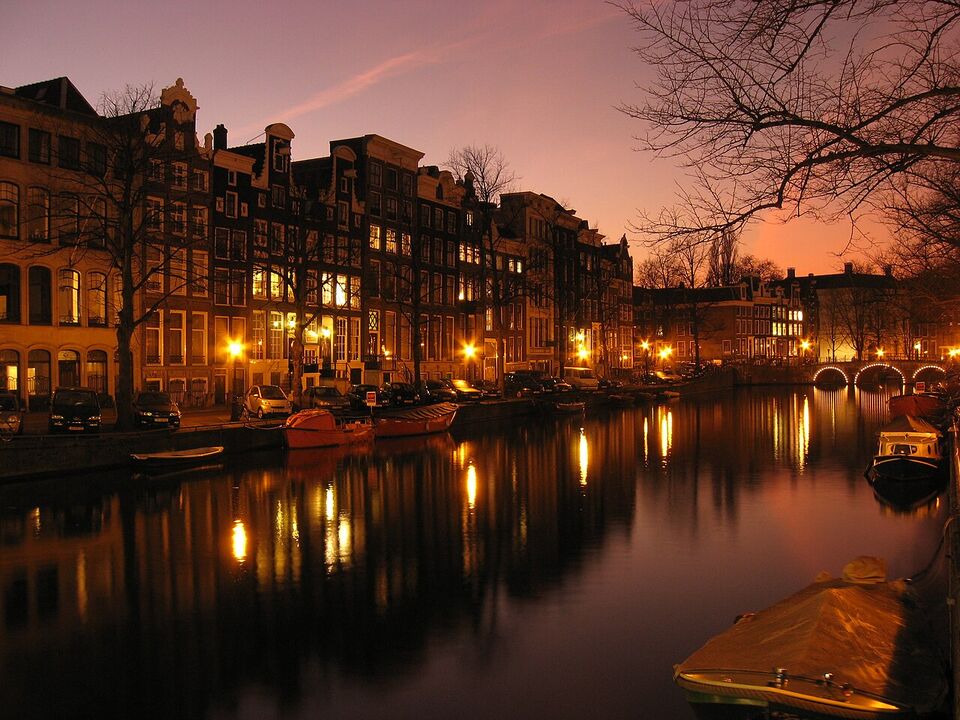
The museum sits at the edge of the Jordaan, a former working-class district of small streets and canals west of the main canal ring. After the visit, a slow walk helps many people. You do not need a plan: you will find cafes and benches within a few minutes.
The Westerkerk and the Westermarkt
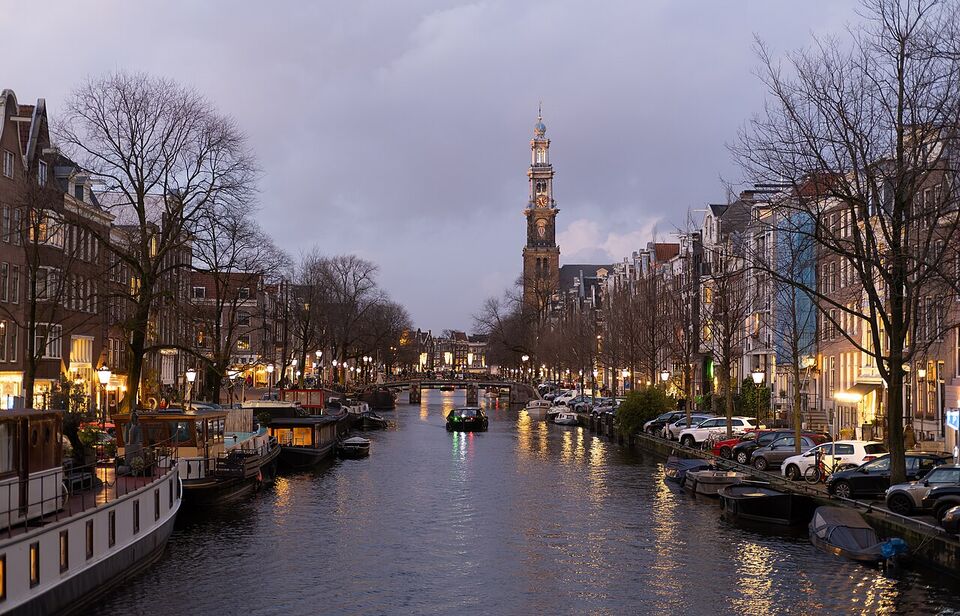
The Westerkerk, one of the city's best-known churches, stands beside the museum and was designed by Hendrick de Keyser. Amsterdam's events calendar lists free lunchtime concerts in the Westerkerk from 1 p.m. to 1:30 p.m. through December 23, 2026. Check the days and any changes before you go.
Cafes and a small route
Look for a bruin café (a brown cafe, an old-fashioned pub) or a coffee bar for a break. A Dutch appeltaart (apple pie) with coffee is a traditional choice. We name no cafes because we have not confirmed which are open in 2026.
A simple loop is to head north along the Prinsengracht into the Jordaan, turn into the quieter side streets, and look for open hofje gates (courtyards of small houses built around a garden). Enter only where a gate is open and signs allow it, since people live there. Return along a canal. A longer plan for the district is in our neighborhoods guide.
Mistakes to avoid
- Planning the trip first and tickets second. Book the date when the Tuesday release opens, then fit the rest around it.
- Showing up without a ticket. The museum does not sell them on site.
- Buying from anyone but annefrank.org.
- Assuming a Museumkaart or City Card means free walk-in entry. A booked slot is required, and the City Card gives no discount.
- Bringing a large backpack or suitcase.
- Expecting to take photos.
- Booking something timed right after the visit. Leave breathing room.
- Counting on a refund. There are none.
Add it to a route in the trip builder, or ask us to plan the hotels, trains and guides for you.