The short version
Public transport in the Netherlands is the easiest way to get between cities and, in Amsterdam, around town. Trains run often, you do not reserve seats on domestic routes, and for most visitors the simplest payment is a contactless bank card or phone tapped at the gate. You tap in at the start, tap out at the end, and the fare comes off your card the next day.
This page covers how the system works, which ticket to choose, how to avoid the mistakes that cost Americans money (mostly forgetting to check out), a table of key rail journeys from Amsterdam, and how Amsterdam's trams, metro, buses and ferries fit together. For how to get from the airport, see our Schiphol transfers guide; for bikes, which are a form of transport here in their own right, see cycling in the Netherlands.
All prices below are the 2026 prices unless we say otherwise. NS raises fares every January 1, and the next rise is an average of 4.7% from January 2027, so fares you see in 2027 will be a little higher. The official sources to check before you go are ns.nl for trains, gvb.nl for Amsterdam trams, buses and metro, and 9292.nl for door-to-door trip planning.
How the Dutch rail system works
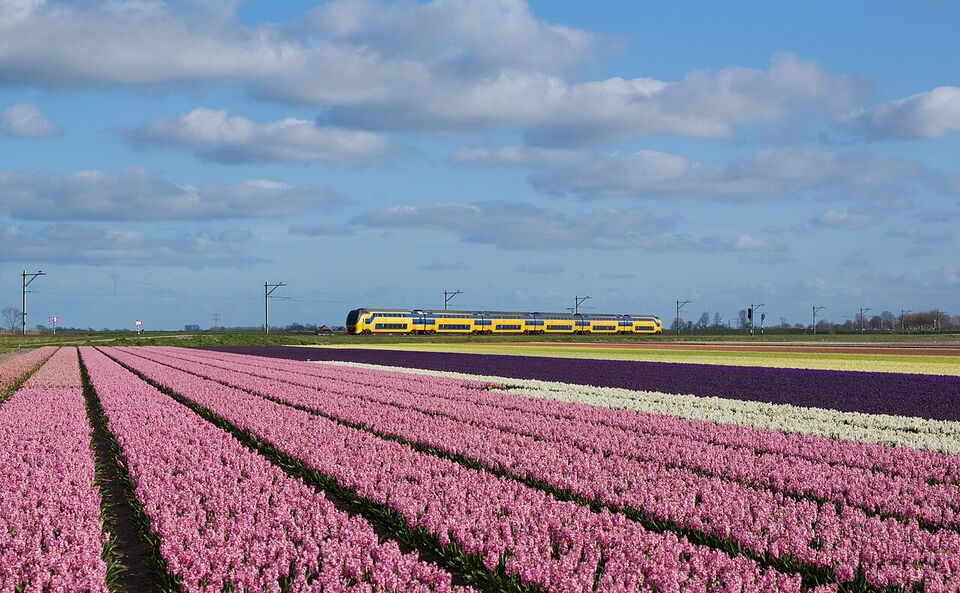
NS (Nederlandse Spoorwegen) runs the main national network. There are two kinds of domestic train you will see on the departure boards. Intercity trains connect the big cities and stop rarely. Sprinter trains are the slower, stop-everywhere local service. In practice, a busy route like Amsterdam to Haarlem or Utrecht has several trains an hour, so you rarely need to plan around a single departure.
Domestic trains have no seat reservations. You buy or tap for a ticket for your route and sit in any free seat in your class. Fares depend on distance, not on how early you book or what time you travel, with a few exceptions (off-peak discounts for residents, special deals, and some supplements, covered below). Other rail operators run regional lines, and you will see their names at stations, but the same payment methods generally work across them.
Use the NS app or 9292.nl to see real departure times, platform changes and delays. Platform changes happen more often than Americans expect, and the signs update right up to departure. The station departure boards are in Dutch and English at the main stations.
Different from home
Unlike Amtrak, Dutch domestic trains have no reserved seats, no checked-baggage service and no ticket check at the door: you tap through a gate, board anywhere, and a conductor may scan your card or ticket onboard. There is no "buy a ticket cheaper by booking early" system on ordinary trips, so the price you see at the station is the price.
Choosing how to pay: OVpay, OV-chipkaart, NS app or paper
There are four ways to pay for the Dutch train, and one is clearly the best for most visitors.
OVpay (contactless card or phone)
OVpay lets you check in and check out with the contactless card or phone you already carry. It accepts contactless Maestro, V PAY, Mastercard and Visa debit and credit cards (including ICS-issued cards), plus Apple Pay and Google Wallet. American Express is not accepted. The fare is charged to your card the following day, and several trips on one day are usually combined into one transaction. OVpay works for second class only, so if you want first class you need another option.
Before you rely on it, call your bank. Ask about foreign-transaction fees (a no-fee travel card is ideal) and confirm your card is contactless. Always tap with the same card or device at the start and the end of the trip. Carrying two contactless cards in one wallet can make the reader pick the wrong one, so tap the card itself, or use a phone, rather than the whole wallet.
OV-chipkaart (the plastic card)
The OV-chipkaart is the national smart card, and the anonymous version can be bought at stations. It was the standard before OVpay arrived. A 2026 secondary source reports the empty card costs about €7.50 (about $8.40) and needs a minimum balance to travel by train. For a short visit it is usually not worth the hassle, and the people who run the system are gradually moving toward newer products. Choose it only if your bank card does not work with OVpay.
NS app and e-tickets
NS sells e-tickets and mobile tickets for specific journeys through its website and app. They avoid the single-use surcharge and let you buy first class. They are bought in euros, are personal, and are generally non-refundable once bought, so buy them for a trip you are sure about. If you plan to ride a few times, OVpay is simpler because you do not need to decide in advance.
Single-use paper-style ticket
You can still buy a disposable chip ticket at a machine or service desk. In 2026 this adds a €1.60 (about $1.80) surcharge to the fare. It exists for people with no other option, and it is the most expensive way to pay. Ticket machines take cards and euro coins but not banknotes, so do not count on feeding them cash. Service desks at big stations take cards and cash.
| Method | Best for | Watch out for |
|---|---|---|
| OVpay (contactless card or phone) | Most visitors; trains, trams, buses and metro | Second class only; Amex not accepted; you must check out |
| NS e-ticket or app | A planned trip, first class, or no OVpay card | Bought in euros; generally non-refundable |
| OV-chipkaart (anonymous) | Backup if your card does not work | Card purchase cost and minimum balance; not worth it for short stays |
| Single-use ticket | Emergencies | €1.60 (about $1.80) surcharge in 2026 |
Under the table: prices for the OV-chipkaart and the minimum balance come from a secondary source and may change, so check ns.nl before you buy one.
Checking in and out: the rules and the expensive mistake
The gates at Dutch stations are how the system knows where you traveled. You tap on the reader (or at the gate) when you enter, and again when you leave your final station. At smaller stations without gates there are free-standing poles with readers, and that is where visitors most often forget.
- Check in once at the start. If you change trains within the rail network, you do not check out and in again at each change, only when you leave the station system or switch to a different operator.
- Check out at the final station. If you forget, you can be charged the full maximum fare. In 2026 that is €33.30 (about $37), the same as the highest one-way fare, though you can ask for a refund afterward.
- If you check in and out at the same station within 60 minutes, you pay nothing.
- The minimum one-way fare is €3.00 (about $3.40) and the maximum is €33.30 (about $37).
- When you change between rail operators or from NS to a tram or bus, tap out and in again.
Watch out
Forgetting to check out is the single most common (and most avoidable) charge for visitors. Make it a habit: tap out before you pick up your bags. If it happens, use the OVpay or NS customer-service pages to claim the difference back with your card details, and do it soon after the trip while you remember the route. The refund is a manual claim, not automatic.
GVB trams and buses in Amsterdam add a small separate penalty if the system cannot match a check-in to a check-out, reported as about €4 (about $4.50) in 2026. Be careful to tap out at each tram or bus when you leave it, including when you change vehicles.
First class or second class?
Most Dutch intercity trains have first-class and second-class sections. Second class is clean, comfortable and perfectly fine for any ride. First class is a calmer carriage with more space, mostly useful on busy commuter hours and for long journeys. A secondary source puts the first-class premium at about 80% over a second-class fare on weekdays, but we could not confirm it from NS, so check ns.nl.
Important: OVpay works in second class only. If you sit in first class with a second-class OVpay trip, you can be fined by the conductor. To ride first class, buy an NS first-class e-ticket in the app or on the website, or ask at a service desk.
Peak and off-peak
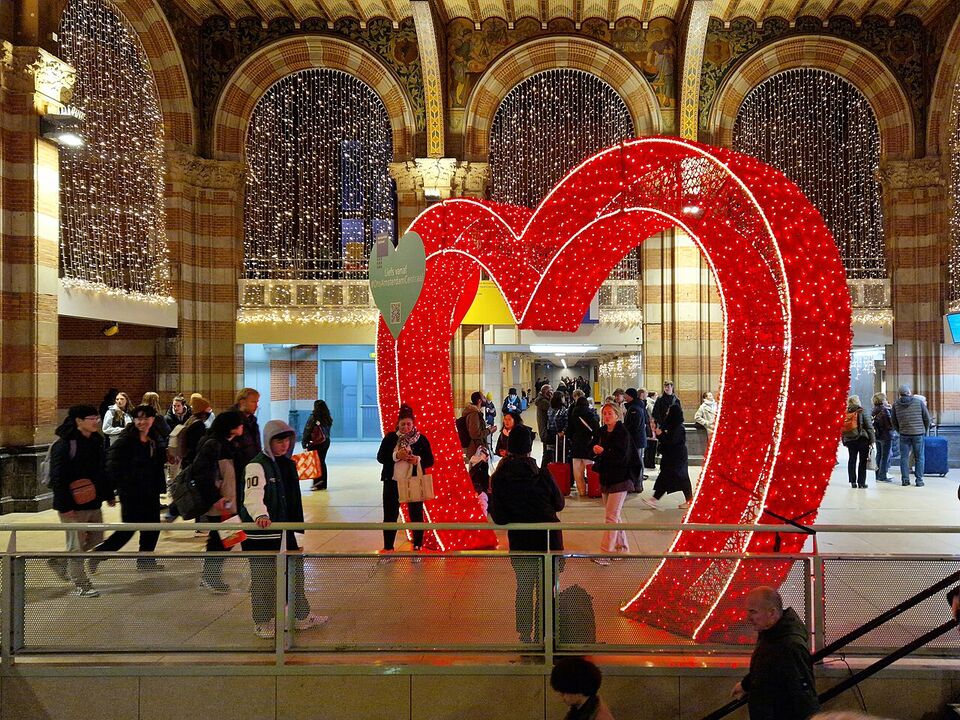
For visitors, peak hours matter in three ways. Trains are fullest on weekday mornings and late afternoons, roughly 6:30 to 9 a.m. and 4 to 6:30 p.m., and you may need to stand with luggage. Residents with a discount card get no discount in those hours, though that does not affect you as a visitor paying the standard fare. And bikes are not allowed on trains in the weekday rush hours (see below).
NS has said it plans "Prijs Tijd Deals" for 2027, with discounts of up to 80% on uncrowded trains. Details were not published when we checked in November 2026, so look in the NS app if you are traveling on a weekday outside rush hour and want to save. If your plan is flexible, ride between about 9:30 a.m. and 3:30 p.m. for the calmest trains.
Key routes from Amsterdam
All of these leave from Amsterdam Centraal unless noted. Times are rough guides, not timetables, because they vary by train type, time of day and works. We could confirm only a few precisely, so for the rest we send you to the NS app. Always check the NS app or 9292.nl for your actual departure.
| Route | Typical journey | Notes |
|---|---|---|
| Schiphol Airport | 14-17 minutes | About €5.50 (about $6); several trains an hour; see our Schiphol guide |
| Haarlem | 15-20 minutes | Around eight trains an hour; see Haarlem |
| Leiden | Check the NS app for times | Frequent direct trains; see Leiden |
| Utrecht | Check the NS app for times | Frequent; see Utrecht |
| The Hague | About an hour by direct train | Trains run to The Hague Centraal and Hollands Spoor; see The Hague |
| Delft | Check the NS app for times | Frequent trains between Delft, Rotterdam and The Hague; see Delft |
| Rotterdam | Check the NS app for times | Intercity Direct is faster but needs a supplement; see Rotterdam |
| Maastricht | Check the NS app for times | One of the longest domestic rides; see Maastricht |
| Zaanse Schans | About 20 minutes to Zaanse Schans station | Then a short walk; see windmills |
| Giethoorn | Train toward Steenwijk, then onward; check the route | Allow extra time; check the NS app and giethoorn.com; see Giethoorn |
These are not live timetables. For anything you need to be on time for, check 9292.nl or the NS app the day before and again that morning. Some of these journeys are cheaper by NS than you expect: the fare is set by distance, so Amsterdam to Rotterdam costs more than Amsterdam to Haarlem but is still modest compared with American commuter rail.
The Intercity Direct supplement
Some fast trains run on the high-speed line between Schiphol and Rotterdam. The Intercity Direct (Amersfoort, Amsterdam Zuid, Schiphol, Rotterdam, Breda) needs a €3.20 (about $3.60) supplement in 2026 for the Schiphol-Rotterdam stretch, rising to €3.40 (about $3.80) in January 2027. It does not stop at Amsterdam Centraal, so if you are leaving from Centraal you would take a different train. If you want to avoid the supplement, take an ordinary intercity via Leiden and The Hague instead. The journey takes longer but costs less.
Amsterdam: trams, metro, buses and ferries
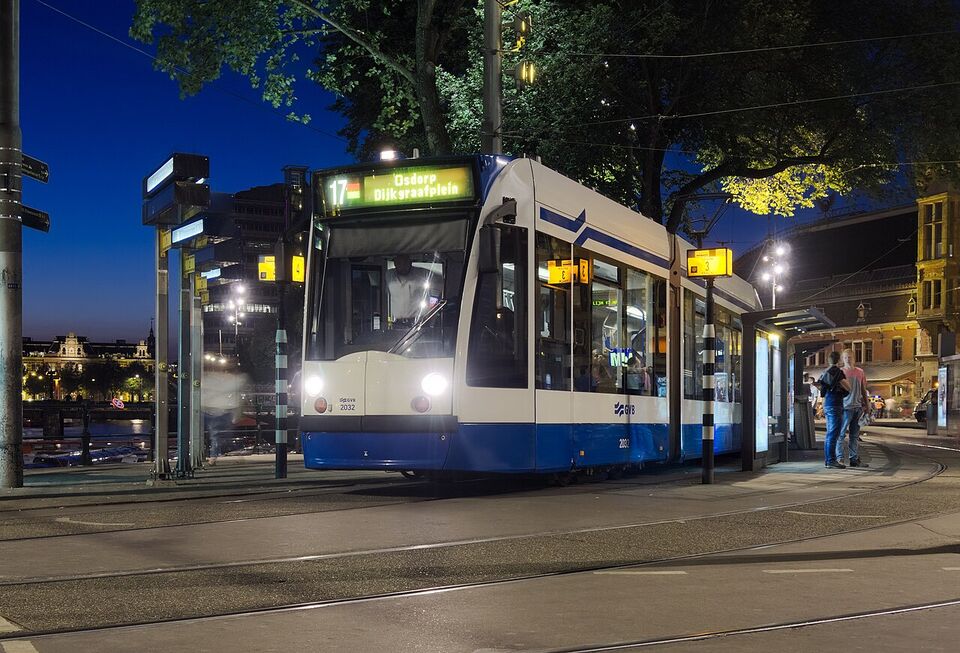
Inside Amsterdam, GVB runs the trams, buses, metro and the free ferries. Trams are the most useful for visitors because they run through the canal ring and the museum area, with many routes starting at Centraal. The metro is the fastest way to reach outer districts like Zuidoost, Amstelveen and Noord. Buses fill the gaps. Every traveler aged 4 or over needs their own ticket or tap, and children 3 and under travel free.
The ferries
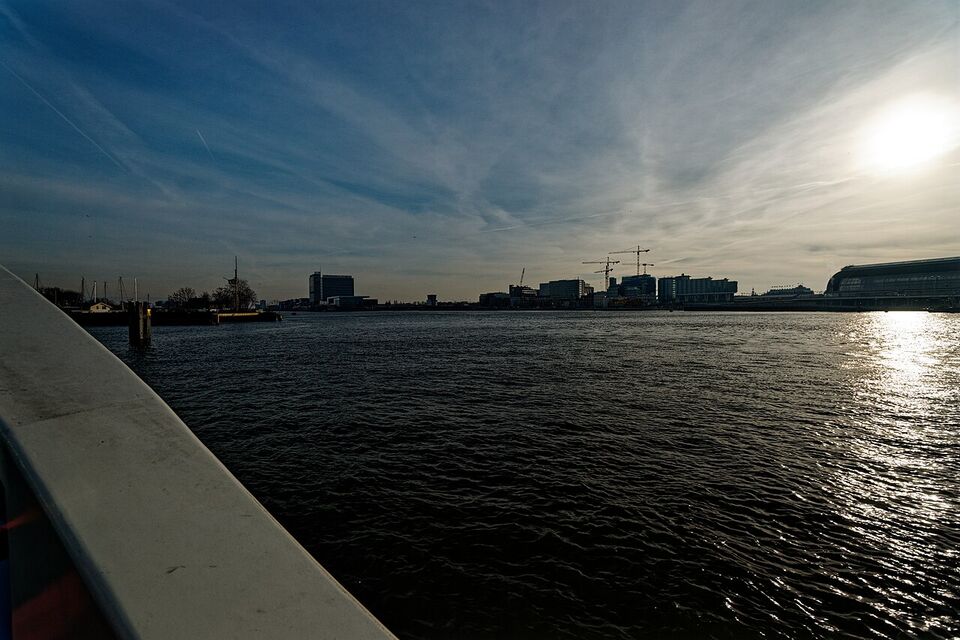
The GVB ferries across the IJ are free for pedestrians, cyclists and mopeds. The Centraal to Buiksloterweg crossing runs every few minutes and through the night, which is handy for reaching Noord. The free F3 ferry to the A'DAM Tower runs every 5 minutes at all hours. There are also routes to NDSM and IJplein. You do not need a ticket for them.
Daily cap versus day tickets
With OVpay, GVB Max caps your GVB fares at €10.50 (about $12) per day, no matter how many trips you make. Otherwise OVpay on GVB charges about €1.16 (about $1.30) to board plus about €0.217 (about $0.24) per kilometer, so a short hop is cheap. Compare that with a GVB day ticket: the 24-hour ticket is €10.00 (about $11), 48 hours €16.00 (about $18), 72 hours €21.50 (about $24), and longer tickets up to seven days. A child ticket for ages 4-11 is €5.00 (about $6) for 24 hours. These ticket prices come from a secondary source, so confirm them on gvb.nl.
The math is simple. If you will ride a few times a day for several days, a multi-day GVB ticket usually works out cheaper than paying per trip with the cap. If you will ride only once or twice, just tap with OVpay and let the fare work itself out. The €10.00 (about $11) 24-hour ticket and the €10.50 (about $12) cap are two different things: the cap is the most OVpay will ever charge you in a day.
| Option | Price | Covers |
|---|---|---|
| OVpay with GVB Max | Capped at €10.50 (about $12) a day | All GVB trams, buses and metro |
| GVB 1-hour ticket | About €3.40 (about $3.80) | Transfers within 60 minutes |
| GVB 24-hour ticket | About €10 (about $11) | All GVB lines, day and night |
| GVB 48-hour ticket | About €16 (about $18) | All GVB lines |
| GVB 72-hour ticket | About €21.50 (about $24) | All GVB lines |
| Amsterdam & Region Travel Ticket, 1 day | €23 (about $26) | GVB, regional buses and NS trains in the area |
GVB tickets are not valid on NS trains, and they do not work on the airport train. If you want one pass that covers the airport train and city transit, see the next section.
Save money
If you plan to see several paid attractions, price the I amsterdam City Card against a transit ticket plus individual tickets. The Total Experience version includes public transport, while the Explorer version does not. The Van Gogh Museum is not part of it and the Anne Frank House gives no discount to City Card holders. See our Amsterdam guide and budget page to run the numbers.
Regional tickets and day passes
If you are staying in Amsterdam and making day trips, a regional ticket can replace a lot of tapping.
- Amsterdam & Region Travel Ticket: €23 (about $26) for one day, €34 (about $38) for two, €44 (about $49) for three. A "day" runs from midnight to 4 a.m. the next day, and the ticket starts on your first check-in. It works on GVB, Connexxion, AllGo and EBS (including night buses) and on NS trains within the Amsterdam area. In tulip season (March to May) it also works on the Qbuzz bus 858 from Schiphol to Keukenhof; see tulips and Keukenhof.
- Amsterdam Travel Ticket: about €20 (about $22) for one day, €27 (about $30) for two, €34 (about $38) for three. It combines the Schiphol to Amsterdam train with GVB. It makes sense on arrival day if you will use the city transit a lot.
- Holland Travel Ticket: a one-day ticket for most public transport in the whole country, reported at about €79 (about $88) in 2026, or about €54 (about $60) off-peak for travel after 9 a.m. on weekdays. It pays off only on a day when you travel far, for example a long day trip to Maastricht. Check ns.nl for the current price.
A good rule of thumb: for a standard day trip from Amsterdam to Haarlem or Utrecht, ordinary OVpay fares are cheap enough that a day pass is unnecessary. A regional ticket pays when you hop between several places in one day.
Buses, regional operators, taxis and rideshare
Outside the big cities, buses and regional trains are run by a patchwork of companies. You do not need to learn their names. The NS app, 9292.nl and Google Maps show the right bus and platform, and OVpay generally works on all of them, tapping in when you board and out when you leave. Buses also use the card readers near the doors. You can also buy a ticket from the driver on many buses, but card-only payment is common, so do not count on cash.
Taxis are the priciest option. The official Amsterdam tourism page gives no set fares, so ask for the fare or use a metered, licensed cab and check that the meter is running. Rideshare apps such as Uber operate in the big cities, and fares vary by time. We could not confirm current prices for either, so we do not give numbers. In central Amsterdam the tram, bike or your feet are usually quicker than a car anyway.
Taxis make sense when you have heavy bags and a hotel not near a station, late at night after the last tram, or with a group splitting a fare. For anything else, public transport is usually better value.
Night transport
Dutch trains do not run all night on every line, but Amsterdam has a network of night buses, which a secondary source reports at eleven lines starting around 12:30 a.m. A single ride is reported at about €5.70 (about $6.40), payable by OVpay, a chip card or the GVB app. The Amsterdam & Region Travel Ticket includes night buses. The Centraal to Buiksloterweg ferry runs through the night, and the A'DAM ferry runs around the clock.
Last trains and first trains vary by line and weekday, so check 9292.nl for the exact time before you plan a late evening in another city. A common mistake is going out to a dinner in Haarlem or Utrecht and finding the last convenient train earlier than expected. Plan your way back before you sit down, and keep a taxi or rideshare app as a backup. For personal safety on public transport, see our safety guide.
Luggage, bikes and accessibility
Luggage
There are no luggage fees on Dutch trains, but there is also no luggage service: you carry your own bags and lift them on. Trains have overhead racks and space near the doors. At rush hours the aisles fill up, so avoid arriving at Centraal with a huge suitcase between 7:30 and 9 a.m. if you can. Stations have lockers at some of the larger hubs. Trams are narrow and steps can be steep, so pack light for the city. Our packing guide covers what to bring.
Bikes on trains
You need a separate bicycle ticket, and bikes are not allowed on trains during the weekday rush hours (reported as before 9 a.m. and from 4 to 6:30 p.m.), though they are fine at weekends, on public holidays and in July and August. A secondary source reports the day ticket at about €8.50 (about $9.50); check ns.nl. Folding bikes ride free. Look for the bike sign on the carriage. If you are renting, see the cycling page, including the OV-fiets rental bikes at stations.
Accessibility
NS offers a travel-assistance service for riders who need help boarding, and the I amsterdam site points to NS and GVB pages on accessibility. Not every tram stop or tram type has a ramp, and GVB route folders mark which stops and services are accessible. Newer metro stations have lifts, but older ones may not. Call or check ahead for the specific route, and book NS assistance in advance rather than turning up at the last minute.
International trains in brief
From Amsterdam you can reach London, Brussels, Paris, Cologne, Berlin and Frankfurt by train. Eurostar runs London St Pancras to Amsterdam Centraal in 3 hours 52 minutes and to Rotterdam in 3 hours 13 minutes; the return from Amsterdam takes 4 hours 9 minutes. NS International lists "from" fares (examples reported on its home page: Brussels from about €25, Paris from about €35, Cologne from about €20) but these are promotional prices that move often. They are not fixed fares. For routes beyond the Netherlands, see beyond the Netherlands, and for flights see flights to the Netherlands.
Common mistakes, and a checklist
- Tap out at the end of every rail, tram and bus ride.
- Use the same card or phone to tap in and out, and do not tap a whole wallet.
- Do not use American Express or a card that is not contactless for OVpay; carry a backup.
- Sit in second class unless you bought a first-class ticket.
- Check the platform on the board again before you board.
- Check the weekend and holiday timetable, because works and holidays reduce service.
- Keep one ticket per traveler aged 4 or over: no sharing a card between people.
- Put your bag in your sight on busy trains and trams, and keep valuables close in crowds.
Also note: ticket inspectors do check, and traveling without a valid ticket can lead to a fine. A secondary source puts a standard fine at about €70 (about $78), but that can change. The easy way to avoid it is to tap properly each time. For more on costs, see our money guide and the trip-planning page.
Add it to a route in the trip builder, or ask us to plan the hotels, trains and guides for you.