The short answer
The Netherlands sits in the middle of one of the best-connected rail regions in the world, and adding a neighbor takes less planning than most people expect. From Amsterdam or Rotterdam you can reach Antwerp, Brussels, Cologne and Paris by international train, London on a direct Eurostar, and Bruges usually with a change. Inside the Schengen area there is no routine border check, and the stations are in the middle of the city.
The question is not whether you can, but how much to cram in. A good rule is one extra city for every three or four days, and one country for every week. A trip that tries to cover Amsterdam, Brussels, Bruges, Cologne and Paris in eight days will spend most of its time on platforms. This page helps you choose, compares the options in a table, and explains booking, borders and a realistic week. For the Dutch side of the plan, start with plan your trip.
Different from home
American intercity trains are slow and infrequent, so it is easy to underestimate European rail. The high-speed trains here run city center to city center, often several times a day, with no check-in line or long airport process. For distances of a few hours, they are usually the simplest option.
Where you can go: the options compared
This table compares the usual add-ons from Amsterdam or Rotterdam. We give the effort in plain terms because journey times and fares change with each December timetable. The fares are "from" prices that NS International showed on its home page (the departure city was not stated), and they move often, so treat them as a guide to scale. Always check the live price and time on the operator's site for your date.
| Destination | Time and effort | "From" fare (one way) | Good as |
|---|---|---|---|
| Antwerp | Short ride; easy as a day trip (check the planner for direct trains) | About €20-21 (about $22-24); from €12 (about $13) from Rotterdam on an NS offer | Day trip or one night |
| Brussels | Check the current journey time and whether your train is direct | From €25 (about $28) | Overnight, or a long day trip |
| Bruges | Usually one change in Belgium (check the route on the Belgian railway's planner) | Depends on the route | One night from Brussels or Antwerp |
| Cologne | From 2 h 37 min on NS International's listing | From €20 (about $22) | One or two nights |
| Düsseldorf | Check the planner for time and whether the train is direct | From €20 (about $22) | Day trip or a night |
| Paris | High-speed train; a long ride, so check the planner for the time | From €35 (about $39) | Two or more nights |
| London | Eurostar: 3 h 13 min from Rotterdam, 3 h 52 min from Amsterdam | Return from €88 (about $99) | Three nights or more |
| Berlin, Frankfurt | Long day; Frankfurt from about 3 h 53 min | From €38 (about $43) | Only on a longer trip |
Journey times and the number of daily trains depend on the route and the date, so look up your day on NS International (for Belgium, Germany and Paris) and Eurostar (for London). The Belgian and German railways (SNCB and Deutsche Bahn) have their own planners, which are useful for local legs such as the ride to Bruges.
Belgium: Antwerp, Brussels and Bruges
Belgium is the easiest neighbor to add. It uses the euro, English is widely understood in the tourist centers, and the main cities sit on the rail line south of Rotterdam. Dutch is spoken in Flanders (Antwerp and Bruges), and Brussels uses both French and Dutch, so signs and station announcements may come in two or three languages. Plan the order by where you will end your trip.
Antwerp
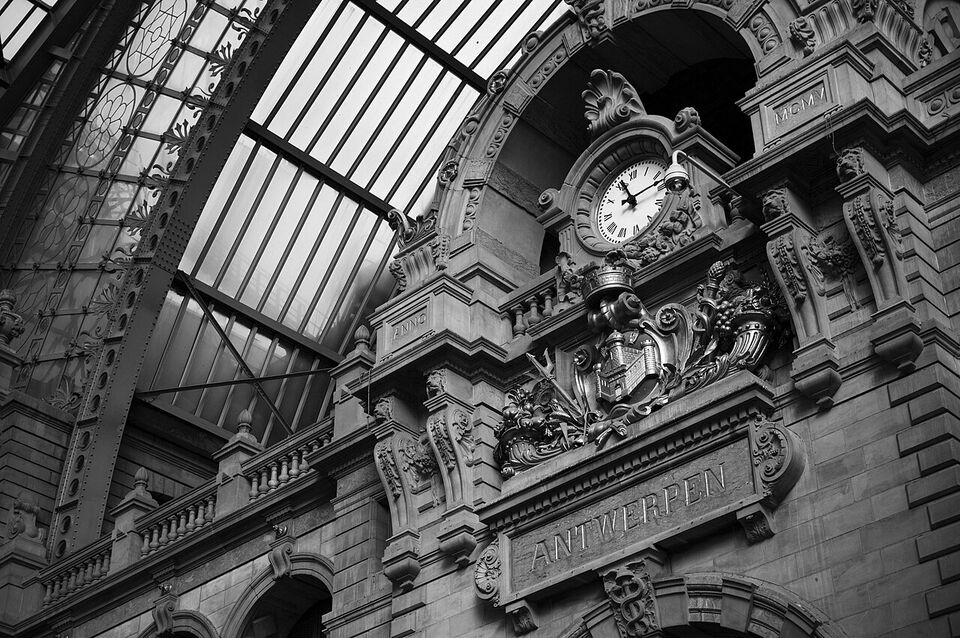
Antwerp is a good first step. It is a port city with a big station, a compact center and a lively shopping and café scene, and it is the shortest ride from Rotterdam. NS International advertised discounted Antwerp tickets from Rotterdam starting at €12 (about $13) as of mid-November 2026. Antwerp works as a day trip from either Amsterdam or Rotterdam, and a night there lets you see the old center after the crowds thin.
Brussels
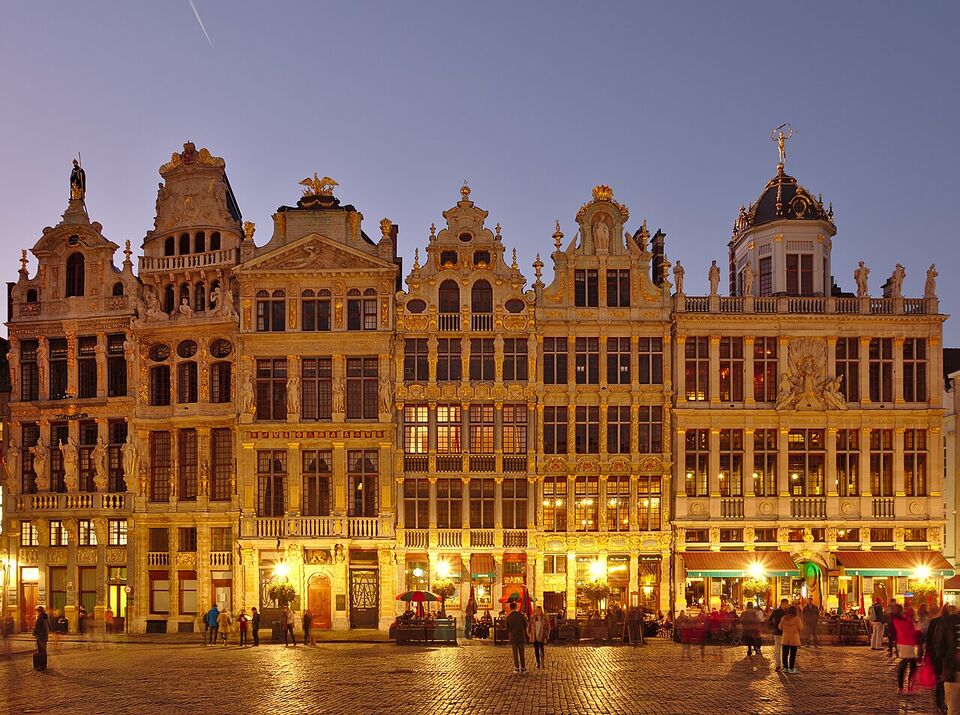
Brussels is the capital of Belgium and a seat of European institutions. Most visitors come for the old center and the Grand Place, museums, food and a city that feels different from the Dutch cities. A day trip is possible but long. One night gives you an evening and a morning. Trains arrive at Brussels-Midi (Zuid), the big international station, and from there it is a short ride to the center. Brussels stations are busy, so keep valuables close and your bags in sight.
Bruges
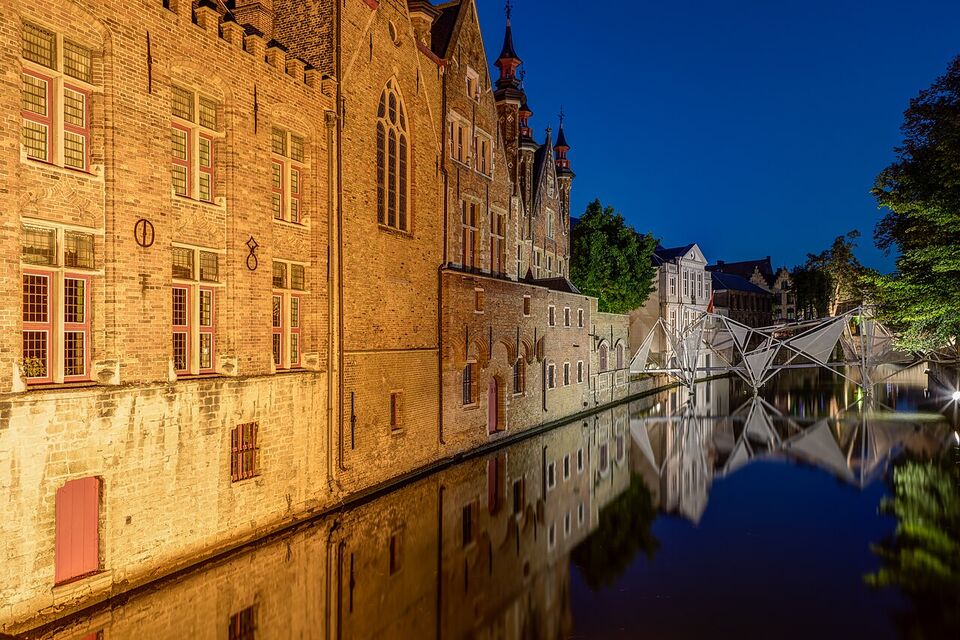
Bruges is a small medieval canal city that draws large day-trip crowds. From the Netherlands it usually means one change in Belgium, often at Brussels or Antwerp, though the best routing varies, so check a planner. It is best with a night in town, because the streets are calmer in the early morning and evening. If you only have a day, base yourself in Brussels or Antwerp and go from there.
Insider tip
Pair Belgium and the Netherlands by going one way in a circle. For example, fly into Amsterdam, take the train to Antwerp and Brussels, and fly home from Brussels. Check whether your airline allows an open-jaw ticket, which uses different airports for arrival and departure. It saves a day of backtracking.
Germany: Cologne and Düsseldorf
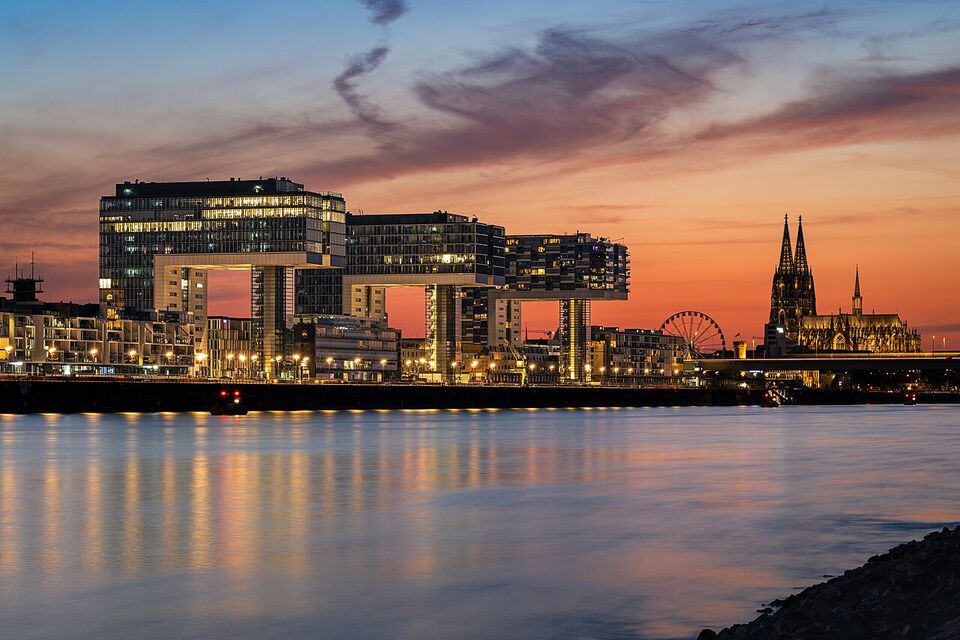
Cologne and Düsseldorf are the nearest German cities by train from Amsterdam. NS International lists Cologne from 2 hours 37 minutes and fares from about €20 (about $22), and Düsseldorf at a similar fare. Cologne is built around its large cathedral beside the main station, which makes it easy to see in a few hours. Düsseldorf is a fashion and business city on the Rhine, with a lively old town. NS International also promotes direct trains to selected German cities and Christmas-market trips in winter.
Beyond the Rhine cities, Berlin and Frankfurt are listed from €38 (about $43), and Frankfurt from 3 hours 53 minutes, but they are long additions for a Netherlands trip. If you are heading deep into Germany, consider a separate itinerary or a flight. Our day trips page covers journeys inside the Netherlands, where most visitors spend their time.
Paris and London
Paris
NS International sells Paris tickets from the Netherlands, with fares listed from about €35 (about $39) one way. Check the journey time on the planner; it is a long ride, not a quick hop. Book a seat, bring food, and keep your passport handy. Because Paris is in the Schengen area, the days you spend there count toward the same short-stay limit as days in the Netherlands.
London by Eurostar
Eurostar runs direct trains between London St Pancras and Amsterdam Centraal, via Rotterdam. Its own page lists 3 hours 52 minutes from London to Amsterdam, 3 hours 13 minutes from London to Rotterdam, 4 hours 9 minutes from Amsterdam to London, and 3 hours 30 minutes from Rotterdam to London. NS International listed London return fares from €88 (about $99). If the direct train does not suit your return time, Eurostar's page says you can take a train from Amsterdam Centraal or Rotterdam Centraal to Brussels-Midi/Zuid and change there to a Eurostar to London. In Brussels you then go through security and have your passport checked before boarding.
The UK is not in the Schengen area and has its own entry rules for Americans, so check them on the UK government site before you book. The border check at the Dutch station (or in Brussels) is a real passport check, and it takes time, so build it into your timing.
High-speed train booking basics
- Use the operator's site. NS International and Eurostar sell tickets directly. Resellers add fees, and some copy official sites. Check the address before you pay.
- Expect to reserve a seat. International high-speed trains normally require a booking, unlike Dutch domestic trains, where you generally just tap in and board. If you book a flexible fare, the price is higher; cheaper fares are less flexible.
- Prices rise as the train fills. The "from" fares are the cheapest, early-booking price. Look at tickets as soon as sales open for your date, and compare a few trains, because early morning and late evening departures are often cheaper. We have not confirmed how far ahead sales open for each route, so check the operator.
- Carry your passport and ticket. A phone ticket is usually fine, but have a backup, and check whether the operator requires you to be at the station early for security and passport control on trains that leave the Schengen area.
- Know the domestic add-ons. On Dutch domestic trains, the Intercity Direct between Schiphol and Rotterdam needs a €3.20 (about $3.60) supplement, rising to €3.40 (about $3.80) in January 2027, and it does not stop at Amsterdam Centraal. This is separate from international tickets, so check which train your ticket covers.
- Bikes and luggage. NS International has rules for taking bicycles on international trains and for luggage. Check them before you try to bring a rental bike, which you should not take abroad anyway.
- Passes. A rail pass can help on a long multi-country trip, but for a few point-to-point rides single tickets are often cheaper. Compare the total before you buy a pass.
Watch out
NS fares go up an average of 4.7% in January 2027, and timetables change in December. If you book months ahead, recheck your trains close to the date. Also, the HSL surcharge on domestic high-speed routes is separate from your international ticket.
Stations, luggage and timing
Big European stations are easy to use once you know the pattern. Look for the departure board, find your platform number and arrive with a few minutes to spare. For international trains, allow extra time at stations with security or passport checks, such as Brussels for the Eurostar to London. Carry less luggage than you would on a plane: you will lift your own bags into racks and up stairs, and some older stations have few lifts.
Stations are also where petty theft happens, as in any busy city. Keep your bag zipped and in front of you, and do not leave luggage unattended while you buy a coffee. If you arrive in a new city with a late hotel check-in, many stations have lockers or left-luggage services, but their availability and prices vary, so check the station's website.
When you plan a leg, think about the time you will lose on each end, not just the ride. A morning departure from Amsterdam Centraal gives you the afternoon in Antwerp or Brussels, and an evening return leaves you tired. If you want a night out, stay over. Consider the holiday calendar as well: Christmas-market weekends in Cologne and Belgium fill the trains in December, and Dutch long weekends such as Ascension in May do the same.
Fly or ride the train
For most pairs of cities in this region, the train wins. It leaves from the city center, has no airport transfer, and avoids long security lines. A flight from Schiphol means getting to the airport early, going through security, flying and then transferring into the city on the other end. For Antwerp, Brussels, Cologne and Düsseldorf, a flight rarely makes sense. For Paris, the train is competitive for most travelers, though you should compare the total journey time and price for your date, including airport time.
Flights start to make sense when the distance is long, such as Berlin, Prague, Vienna, Italy or Spain, and when the airfare is lower than the train. For a big country-hopping trip, the cheapest plan may be to fly into one city and out of another, using the train only for the short links. Our flights page covers Schiphol and the other airports, and the Schiphol guide explains how to get to and from the airport.
Think about the whole day, not just the ride. A three-hour train that leaves at 10 a.m. and arrives at 1 p.m. in the center is often easier than a 1.5-hour flight that needs a 2.5-hour buffer on each end.
Borders: the Schengen point
The Netherlands, Belgium, Germany and France are all in the Schengen area. There are no routine passport checks when you cross between them by train, and the train does not stop at a border. You will not get a stamp, and you do not need to go through EES again, because you registered at your first entry. The new border system applies where you enter or leave the area.
That does not mean you can leave your passport in the hotel safe. Carry it. Officers can check ID on trains and at stations, some Schengen countries have at times reintroduced temporary checks, and hotels will ask for your passport details when you check in. A photo of the passport page on your phone is a backup, not a replacement.
The key point is the day count. All your days in Schengen countries add up toward one short-stay limit, so a trip that mixes the Netherlands, Belgium, Germany and France is counted together. For a trip of a couple of weeks that is not an issue. For a longer stay, count carefully and read the entry rules. The UK and Ireland are outside Schengen, so you have a border check coming and going and the days there do not count.
Splitting a trip and what is realistic in a week
The most common mistake is trying to see everything and sleeping in a different bed every night. Each hotel change costs half a day. A better plan is two bases, each with at least three nights, and day trips from each. Keep an extra buffer on the day you fly home.
| Trip | Plan | Why it works |
|---|---|---|
| Eight days: Netherlands and Belgium | Four nights Amsterdam, a day trip to Haarlem or Utrecht, then two nights in Antwerp or Brussels, one night to finish | One border-free move and a calm finish; fly home from Brussels or return by train |
| Ten days: Netherlands, Belgium and Cologne | Amsterdam, Antwerp or Brussels, Cologne, and back by train | A one-way line with three bases; three or four nights in the Netherlands |
| Nine days: Netherlands and Paris | Five nights in the Netherlands, then train to Paris for the rest | One long ride, then no more moving |
| Seven days, one country | Stay in the Netherlands and use day trips | Often the best trip; see regions and day trips |
If you have only a week, think hard about whether a second country is worth a travel day. For a first visit, a week in the Netherlands alone is full: Amsterdam, a couple of day trips and perhaps tulips or windmills. A Belgium add-on works better once you have ten days or more, or if you are returning for a second visit. If you want help putting days in order, try the trip builder, and check the by-interest page for ideas that match what you like.
Time of year matters too. In winter, short days limit sightseeing and Christmas markets pull crowds to Cologne and Belgium; in summer, trains and cities are busier. See when to go for the seasons.
Save money
Book international trains early and compare departure times. Move on a weekday if your dates are flexible. Avoid paying twice: if you bought an Amsterdam transit ticket for the day you leave, you may not need it. Belgium and much of Germany use the euro too, so your card habits carry over, but check your card's foreign-transaction fees before you go; our money page explains.
Add it to a route in the trip builder, or ask us to plan the hotels, trains and guides for you.