Maastricht in brief
Maastricht is the capital of Limburg, the long finger of the Netherlands that reaches down between Belgium and Germany. It is a city of about 120,000 people on the river Meuse (Maas in Dutch), and it feels distinctly different from the Randstad: church-lined squares, outdoor terraces, a food culture that takes pleasure seriously and a Catholic history that shows in the architecture.
For most Americans it is a second-week stop. From Amsterdam it is the longest regular train ride in this guide, roughly two and a half hours, so it works best as an overnight rather than a rush. Our destinations overview shows how far south it sits, and our Belgium and beyond guide covers how easy it is to continue across the border to Liège, Aachen or further.
The city is known to many people only for the Maastricht Treaty of 1992, which led to the European Union as we know it and the euro. The treaty makes for a good conversation starter, but the real attraction is the old center: about a day of walking among gates, bastions, bookshops and cafes.
Different from home
There is no border post between the Netherlands and Belgium or Germany. You will simply notice the road signs and shop languages change. Because Maastricht sits right on the Belgian border, you can drive or take a train into another country without stopping, but always carry your passport.
The Vrijthof and the Sint Servaas bridge
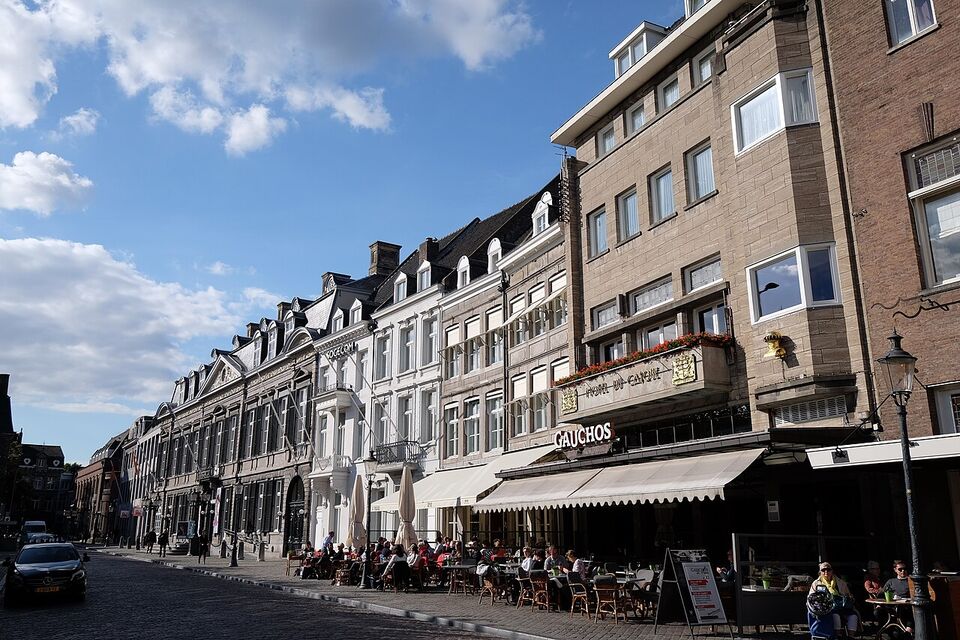
The Vrijthof is the biggest square in the old center and the best place to start. Two large churches face it: the Basilica of Saint Servatius, built on the site where, according to legend, the saint was buried after he died in Maastricht in 384, and Saint John's church. The square has terraces in warm weather, and it is the setting for the Christmas market.
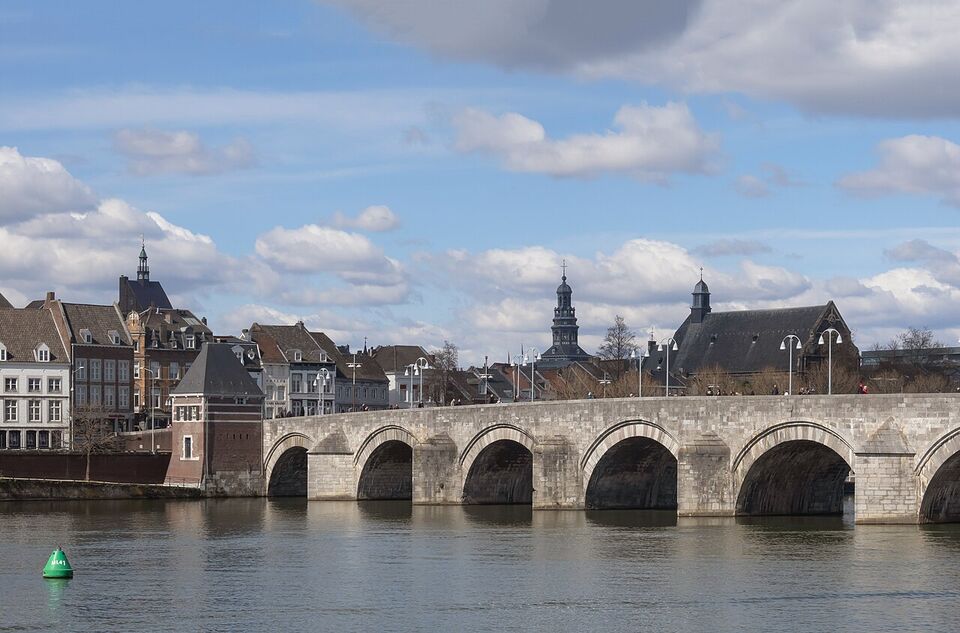
The Sint Servaasbrug (Saint Servatius Bridge) crosses the Meuse and is the city's best-known landmark. The first stone bridge here was Roman. The old Roman bridge collapsed in 1275 under the weight of a procession, and the replacement, built slightly to the north, is the one you see today. It is a good place for a river view at the start or end of a day. Across the bridge is the Wyck district.
Other squares worth a stroll: the Markt, with a 17th-century town hall designed by Pieter Post; and Onze Lieve Vrouweplein, a tree-lined square with pavement cafes and the Basilica of Our Lady, a mostly Romanesque church that is one of the most important in the country. Most of the old center is pedestrian-only, so you can cross from square to square on foot in minutes.
The bookstore in a church
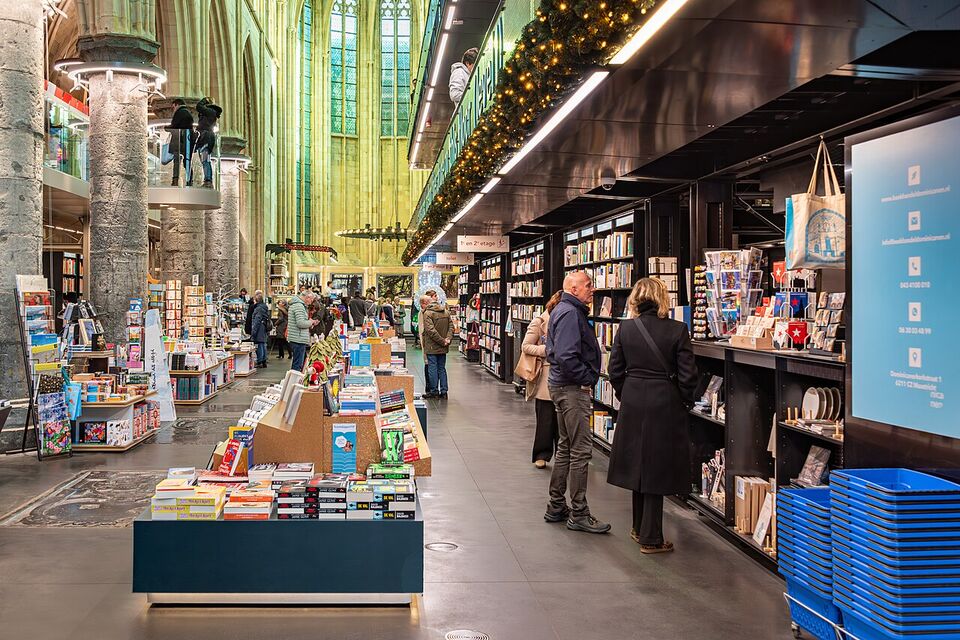
The Dominican church is a 13th-century church that was converted into a bookstore (Boekhandel Dominicanen). The books now fill the old church. In 2008 the British newspaper The Guardian called it the most beautiful bookshop in the world, and it has been on tourist lists ever since.
It is free to walk in and browse. Even if you buy nothing, the building is the draw. Opening hours were not confirmed for this guide, so check the shop's own site, especially on Sundays and holidays. Go early or late in the day to avoid the crowds.
Insider tip
Come first thing in the morning, when it is quiet, and remember to look up at the vaults, not only at the shelves.
City walls, gates and fortifications
Because Maastricht lay on a strategic river crossing, it has been besieged many times, and the fortifications it left behind are still there. The Helpoort (Hell's Gate), built around 1230, is described as the oldest city gate in the Netherlands. Stretches of the first and second medieval walls and several towers survive.
The later fortifications, the Hoge Fronten (the "high fronts"), date to the 17th and 18th centuries. These are bastions, dry moats and earthworks that you can walk around on the edge of town. Fort Sint-Pieter is an early 18th-century fortress on the slopes of Sint-Pietersberg (Saint Peter's Mount) and offers guided tours and views over the city. Fort Willem I is a 19th-century fort on the Caberg hill.
Under the fortifications is a network of brick and limestone tunnels called the Casemates, which run for around 14 km (9 miles). Guided tours are available. Times and prices were not confirmed for this guide, so check the operator's site before you plan the day.
The Sint-Pietersberg caves
South of the city, the hill called Sint-Pietersberg is honeycombed with man-made tunnels, dug over centuries as limestone quarries. The Caves of Maastricht (Grotten Sint-Pietersberg) are visited on guided tours only, and you cannot wander in on your own. Underground it is cool, so bring a warm layer.
We could not confirm current tour times, prices or languages for this guide. The city's tourism site points to a separate tour operator for bookings, so look there for English-language tours and book ahead, especially at weekends and during school holidays. Do not enter the tunnels without a guide: the network is large and easy to get lost in.
The hill also has the ENCI quarry, a former quarry that is now a nature reserve with lakes and a staircase with viewing platforms, and Slavante, a 19th-century former gentlemen's club on the slope that is now a popular spot with a panorama of the Meuse valley. Both are on the Saint Peter's Mount side of town and can be combined with the fort.
Food and a Burgundian feel
The Dutch use the word bourgondisch (Burgundian) for a love of good food, wine and long meals, and Limburg is where the word fits best. The south has a different table from Amsterdam: more wine bars, French and Belgian influence, and a calmer pace of eating. Many visitors find Maastricht dinners longer and more relaxed than elsewhere in the country.
A few things to look for:
- Vlaai: the Limburg fruit pie, usually sold in bakeries by the slice or whole. A good coffee-time treat.
- Terrace lunches on the squares: the Vrijthof, Onze Lieve Vrouweplein and the Markt all have cafes with outdoor seating.
- Wine bars and Belgian-style beer cafes: a good way to spend an evening without a full dinner.
We do not name individual restaurants. Choose by atmosphere: terraces on the squares for people-watching, side streets for quieter meals. Service is included in restaurant prices, and rounding up or leaving a few euros for good table service is a common courtesy, not an obligation. See our food guide and drinks guide for Dutch dishes and cafe habits, and our money guide for cards and cash.
Museums and the modern side
Maastricht has more than the old stones. The Bonnefanten Museum sits on the east bank of the Meuse in the Wyck-Céramique district, a modern quarter built on the site of an old pottery factory. Its landmark tower is easy to spot from the bridge. The museum shows medieval art among other collections, and it takes part in the Museumkaart system. Admission and hours were not confirmed for this guide.
The Treasury of the Basilica of Saint Servatius holds the shrine, key and crosier of Saint Servatius, along with reliquaries and medieval objects. The Treasury of the Basilica of Our Lady holds religious art and textiles. The Derlon Museumkelder is a small exhibit of Roman remains in the basement of a hotel, and the Natural History Museum exhibits fossils from the nearby quarries, including skeletons of mosasaurs. Check each site's hours and prices before you go.
Maastricht also hosts TEFAF, a prestigious art fair. Dates for 2027 were not confirmed for this guide; check TEFAF's own site if you want to attend or avoid it.
Belgium and Germany next door
Maastricht has an international border within its city limits. Most of it is with the Flemish region of Belgium, and a small part to the south touches Wallonia. Both Belgium and Germany are in the Schengen area, so there are no regular border checks. You will probably cross without noticing.
Handy side trips by train:
- Liege (Liège) in Belgium: the Belgian railway runs south from Maastricht, and the regional train RE 18 (the Drielandentrein, or three-country train) connects Liege with Maastricht, Valkenburg and Aachen.
- Aachen in Germany: reached by the RE 18 via Heerlen. The old direct railway to Aachen closed in the 1980s.
- Valkenburg: a short train hop from Maastricht, with several trains an hour, known for its cave Christmas markets in winter.
Hasselt in Belgium used to be on a rail line from Maastricht, but that line closed in 1954, so check 9292.nl for the options. Our Belgium and beyond guide covers longer trips, including Brussels, Antwerp, Bruges and Cologne.
Bring your passport on any cross-border outing. Under the new EU entry system, EES, which has been fully in use since April 10, 2026, your first entry into the Schengen area is recorded with a photo and fingerprints, so you should not need to repeat it when you cross between Schengen countries. Our entry rules guide explains the details, including the planned ETIAS, which has not started as of mid-November 2026.
Cannabis rules in the border region
This is a note about the law, not about where to go. In the Netherlands it is against the law to possess, sell or produce drugs, but the government has a policy of toleration. It does not prosecute people for possessing up to 5 grams of cannabis, and it does not prosecute licensed coffee shops that follow strict rules: no sales to minors, no advertising, no sales of more than 5 grams in one transaction.
In the southern border region the rules are tighter. Since January 1, 2013, a national toleration rule says only residents of the Netherlands may enter coffee shops and buy cannabis. The government says enforcement differs by municipality. Maastricht was the first city to adopt such a measure: it introduced a "weed passport" in 2005, and in December 2010 the Court of Justice of the European Union said the city was within its rights. The residents rule has been applied in the southern provinces of Limburg, North Brabant and Zeeland, so a visitor should expect to be turned away.
Do not take cannabis across any border. Coffee shops are an adult-only business: you must be 18. For the national picture, including Amsterdam's rules, see our cannabis rules guide. We have not verified current Maastricht municipal rules, so ask at the tourist office or check the city's website if you have questions.
Magical Maastricht and Valkenburg at Christmas
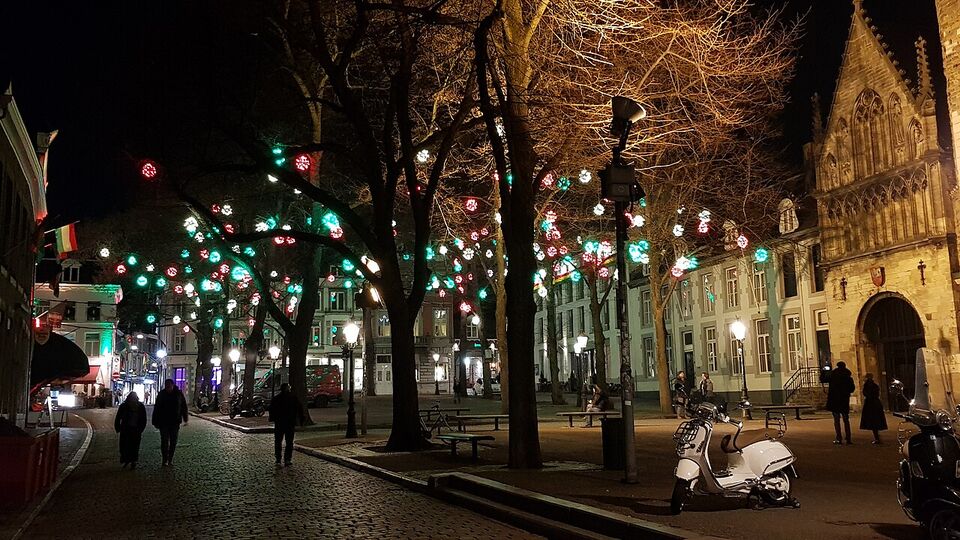
Maastricht's Christmas market, called Magical Maastricht, fills the Vrijthof between the two churches. For 2026 it runs from November 27 to December 27, with an ice rink and a big wheel among the stalls, according to an events aggregator that cites the organizers. Of the Dutch Christmas markets, it is one of the very few that stays open on Christmas Day, from 11 a.m. to 6 p.m. Confirm dates and hours with the organizer before you book travel, since these change.
A short train hop away, Valkenburg runs Christmas markets inside caves. The cave markets run from November 13 to December 30, 2026, closed on Christmas Day, with timed tickets, and each cave visit takes about an hour and a half. The above-ground Christmas Town runs from November 13, 2026 to January 3, 2027. Each cave needs its own ticket, sold online by time slot, and the caves are cool and damp, so dress warmly and leave large bags behind.
Both markets are busy on December weekends. If you are planning a December trip, see our December guide and the festivals guide, and book your hotel early.
Getting there from Amsterdam and Schiphol
Maastricht sits in the far southeast. NS intercity trains run to Maastricht from Amsterdam, Utrecht, Den Bosch and Eindhoven. Plan roughly two and a half hours from Amsterdam Centraal, and check the NS app or 9292.nl for the day's times and changes. From Schiphol, expect at least one change; check the journey planner.
A secondary source (Amsterdam Tips) puts an Amsterdam-Maastricht day return at just over €66 (about $74); treat that as a rough guide. NS fares rise by an average of 4.7% in January 2027, so check the NS site for the current price when you travel. The check-in and check-out rules in our getting around guide apply: forgetting to check out can cost the maximum fare of €33.30 (about $37), refundable afterward.
By car
The A2 and A79 motorways serve the city, and from Amsterdam the drive takes around two and a half hours. Parking in the center is difficult at weekends and on holidays because of the number of visitors, and fees are deliberately high to push people toward public transport and park-and-ride lots. If you drive in, find a car park on the edge of the center and walk. See our driving guide for rules and fuel prices.
One night or a day trip?
A day trip from Amsterdam is possible but tiring. Plan about five hours on trains round trip, which leaves a reasonable window for the squares, the bookstore and a lunch, but not for the caves or the fortress. A single night changes the trip: you get the evening on the squares, the quiet of the old center after the day-trippers leave and a morning for the caves or the walls.
| Option | Time on trains | What fits | Best for |
|---|---|---|---|
| Day trip | About 5 hours round trip | The Vrijthof, the bookstore, a lunch and the bridge | People who are already in the south or who dislike changing hotels |
| One night | About 5 hours round trip | All of the above, plus the walls, one museum and an evening meal | Most visitors |
| Two nights | Same | Add the caves, a fort tour and a side trip to Valkenburg, Liege or Aachen | Food lovers and anyone doing Belgium or Germany next |
The train times in the table are approximate; check the NS app or 9292.nl for the real ones. If you only have time for one Dutch city outside the Randstad, Maastricht is the strongest choice for atmosphere, while Utrecht, Delft and Haarlem are easier to reach. Compare them in our day-trips guide.
Where to stay
Maastricht is compact, and almost anywhere in or near the old center is walkable. Choose by what you value:
- The old center near the Vrijthof and the Markt: the most atmospheric and the busiest on weekends. Usually $$ to $$$; room prices were not confirmed for this guide.
- Wyck, across the Sint Servaasbrug: a lively district beside the station, good for early trains. Often $$.
- The Jekerkwartier (Latin Quarter): a neighborhood of old houses beside the small river Jeker, with university buildings nearby. A quieter, more local base.
Hotel VAT is 21% nationally since January 2026, and the average Dutch municipal tourist tax is €4.54 (about $5) per night in 2026. Maastricht's own rate was not confirmed for this guide. Book early for the Christmas market weekends and for any large fair. Our where to stay guide covers hotels, apartments and tiers across the country, and our trip planning guide shows how Maastricht fits a two-week route.
Watch out
Maastricht is a long way from Schiphol. If you arrive on a morning flight and head straight south, you will be tired before you see the town. Many travelers do better to spend the first nights nearer the airport and travel south after the jet lag fades.
Add it to a route in the trip builder, or ask us to plan the hotels, trains and guides for you.