Should you drive at all?
For most first trips, the answer is no. The Netherlands has one of the best rail networks in Europe, and Amsterdam, Rotterdam, The Hague and Utrecht are small, flat and designed around trams and bikes. A car in a Dutch city is a cost and a headache: narrow streets, one-way systems, trams and cyclists everywhere, and expensive parking. Our trains and transit guide and cycling guide cover the alternatives.
A car does make sense in a handful of situations. This page covers when, the license and rental rules, the road rules that catch Americans out, low-emission zones, parking, fuel and charging, tolls, fines and border crossings. As with every page in this guide, check anything time-sensitive on the official sites we name.
Different from home
The roads feel familiar (right-hand traffic, left-hand steering wheel), but the system is not. Bikes get priority in ways American drivers do not expect, many junctions give way to traffic from the right, and speed enforcement by camera is heavy. Treat the first hour behind the wheel as a learning session, not a sightseeing drive.
When a car makes sense
Consider a car if your plans include several places that are awkward by public transport, or if you are traveling with young children or lots of gear.
- The Veluwe and Hoge Veluwe National Park: the park, the Kröller-Müller Museum and the forests around them are easiest by car or bike. The car entry fee is €9.80 (about $11) in 2026 and €10.15 (about $11) in 2027, in addition to the per-person fee. Parking outside the entrances is €4.90 (about $5) in 2026. See Hoge Veluwe.
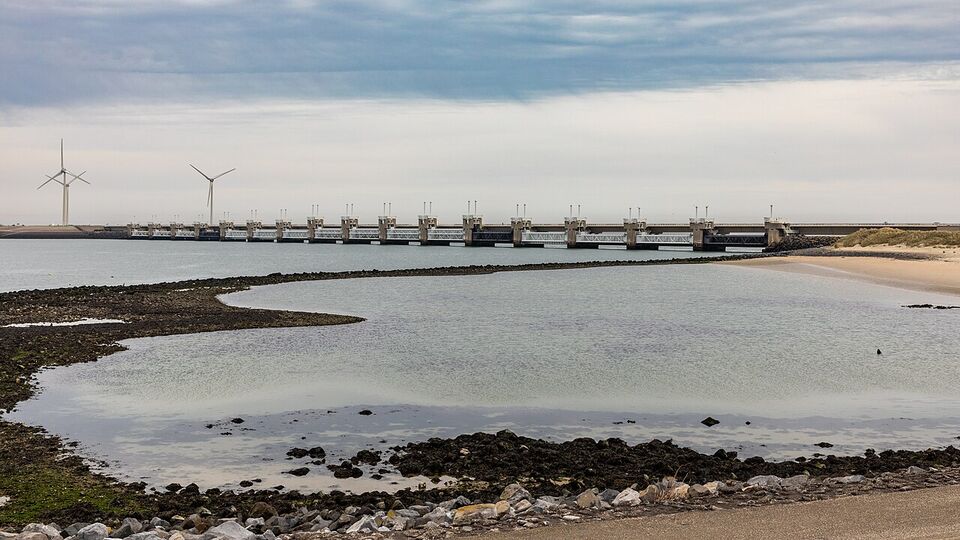
- Zeeland and the coast: the southwestern delta, with its sea barriers and small towns, is spread out and poorly served by trains.
- The south (Limburg, Brabant): rolling country, castles and small villages, though Maastricht itself is easy by train. See Maastricht.
- Castles and country estates: several are far from stations. Check each one's transit options first.
- Families with strollers and car seats, who may prefer a car for a few day trips and the train for the cities.
A smart pattern is to spend your city days car-free and rent a car only for the days you leave the cities, picking it up on the way out of town rather than at the airport or in the center. For a sample route, see our day trips guide.
License and International Driving Permit
A valid U.S. driver's license is accepted for a normal visit. The Dutch vehicle authority RDW says a foreign driving license in categories A, B, C, D or E needs no International Driving Permit, and for tourists the page sets no time limit; the 185-day limit that gets quoted applies to people who have moved to the Netherlands. That is the legal position, and the rental company's policy is a separate matter. Many rental firms still suggest an International Driving Permit (IDP) as a translation of your license. In the U.S., permits are inexpensive and issued by authorized organizations. Check your rental contract and the RDW page before you go, because rules for other European countries on your route may differ.
Carry your license, passport and rental papers in the car. Bring the physical card, since rental counters generally ask to see it.
Renting a car
You can rent at Schiphol and in the main cities. Prices change by season and demand, and we could not confirm current rates, minimum ages or insurance prices, so we do not quote figures here.
- Age: rental firms set minimum ages and many charge young-driver fees. Check the company's own page for the exact rule.
- Manual or automatic: manuals are more common in Europe than at home. Book an automatic early, and pay for it, if you are not comfortable with a stick shift.
- Insurance: your U.S. auto policy usually does not cover rentals abroad, and card benefits vary. Ask your credit card company in writing what it covers in the Netherlands, and ask the rental firm what the basic price includes (collision waiver, theft, third-party liability).
- Deposit: expect the firm to hold a deposit on a credit card. Use a credit card, not a debit card.
- Size: choose a small car. Dutch streets, car parks and village lanes are narrow, and a compact car is easier to park.
- Extras: ask about additional drivers, one-way fees, and cross-border permission if you plan to leave the country.
Insider tip
Photograph the car all around before you leave the lot, including wheels and bumpers, and note any existing scratches on the rental form. Return it with a full tank if required, and keep the fuel receipt. This protects you from damage claims weeks later.
Road rules that surprise Americans
Priority to the right
At many unmarked junctions in towns and villages, traffic coming from your right has priority. Look for signs: a priority road (yellow diamond), a stop sign, or the white triangle on the road that means "give way". If there is no sign or marking, assume traffic from the right goes first. This catches visitors in residential streets more than anywhere else.
Cyclists first
Cyclists have their own paths, signals and priorities. Before you turn right, check your right-hand side for bikes and mopeds, and expect riders to appear fast from either direction. Give way to cyclists on marked crossings, and do not stop in a bike lane. On a fietsstraat (cycle street), cars are "guests" and the speed limit is 30 km/h (19 mph). Dutch drivers are trained to look for bikes before a right turn, and you should do the same.
Roundabouts
Traffic already on a roundabout generally has priority over traffic entering, which is the same logic as in many U.S. states. Where a cycle lane runs around the roundabout, cars generally have to give way to cyclists both entering and exiting, but some roundabouts have separate cycle paths with their own priority signs. Read the signs and markings, and signal when you leave.
Speed limits
| Road type | Limit |
|---|---|
| Built-up areas | 50 km/h (31 mph) |
| Residential 30 zones | 30 km/h (19 mph) |
| Outside built-up areas | 80 km/h (50 mph) |
| Expressways | 100 km/h (62 mph) |
| Motorways | 100 km/h (62 mph) from 6 a.m. to 7 p.m., 130 km/h (81 mph) from 7 p.m. to 6 a.m.; some stretches allow 130 all day |
Signs override these defaults, and many roads have lower local limits. Since April 14, 2025, three motorway stretches allow 130 km/h all day. Speeds are posted in km/h, and your rental's speedometer should show both units. The limits above come from a secondary source, so verify them on the Dutch government site if you are unsure.
Speed cameras
Enforcement is extensive: fixed cameras in urban areas, radar on national roads and motorways, and average-speed checks on many motorway sections around the Randstad. Fixed average speed checks (trajectcontrole) measure your speed over a stretch, so slowing for one camera does not help. A small tolerance margin applies, but do not plan to rely on it. Fine amounts vary and we could not confirm them, so treat any fine as expensive.
Other points
- Always carry your documents. Seat belts are required.
- Do not handle a phone while driving; use a mount and hands-free navigation, and check the current rule and fine before you go.
- Dutch drivers drive close and fast on motorways and expect you to move over; keep right unless passing.
- Trams and buses often have priority. Yield to trams.
For emergencies, the number is 112. If your rental has a roadside assistance number, save it in your phone before you drive off.
Low-emission zones
Some Dutch city centers have environmental zones (milieuzones) that limit older, more polluting vehicles. They can apply to foreign cars. Rules depend on the fuel and the emissions class of the car, and cities decide for themselves. We could not confirm the current rules from an official page, so we do not describe the classes here.
What to do: ask your rental company whether the car you are given may enter city-center zones, and check the plate on the official milieuzones.nl site if you plan to drive into a city. Also look for the zone signs at the edge of the zone. Most rental cars are recent and compliant, but do not assume. A car that is not allowed in can lead to a fine. Zero-emission rules for trucks and vans do not concern most tourists.
Parking and park-and-ride
Parking is the biggest cost of driving in a Dutch city. Central Amsterdam parking is expensive, and we could not confirm the official street or garage tariffs, so we give no figures. The most useful advice is to avoid it.
- Use park-and-ride (P+R). Amsterdam has P+R sites on the edge of town, and the I amsterdam site has a page on them. They usually combine cheap parking with a public transport ticket into the center. Check the current price and rules on the official page before you go.
- Park at your hotel only if it has parking, and ask the price. City-center hotels often have none or charge a lot.
- Street parking is typically paid, and many cities use the license plate rather than a ticket on the dash. Look for the pay machine or app and read the signs for the hours.
- Never park on a bike lane or tram track. You can be fined or towed.
At attractions, the parking costs we could confirm are:
| Place | Parking | Notes |
|---|---|---|
| Zaanse Schans | €15.00 (about $17) a day | Card only; no ATM on site |
| Kinderdijk | €9.75 (about $11) per car | Only with an entrance ticket; in the low season the entrance car park is used, so check |
| Efteling | €15 (about $17) per car | Park in the official lot |
| Hoge Veluwe | Car entry €9.80 (about $11), parking outside entrances €4.90 (about $5) | 2026 prices; entrances are card only |
| Keukenhof | About €10-14 (about $11-16) | 2026 price from a local guide; the park is reported to be cashless |
Under the table: these are the prices we found for 2026. Hoge Veluwe rises to €10.15 (about $11) and €5.10 (about $6) in 2027. Keukenhof's 2027 parking price is not yet announced. For Kinderdijk, the high-season rule (16 March to 1 November) uses a remote car park with a shuttle, and the low-season rule (2 November to mid-March) uses the entrance car park at Nederwaard 1. See windmills and tulips for the sights.
Fuel and charging
Fuel is priced by the liter and is expensive by American standards. The national advisory price of Euro 95 (E10) petrol was €2.64 per liter on October 20, 2026 (about $2.96 a liter, or roughly $11.20 a US gallon), and diesel was €2.69 per liter (about $3.01). A record €2.73 per liter (about $3.06) was set on September 28, 2026. Prices move weekly, so treat these as a guide. Small local stations are often cheaper than motorway stations.
Ask your rental company which fuel the car takes. Putting diesel in a petrol car, or the reverse, is an expensive mistake. Pay at the pump with a chip-and-PIN card where possible, and ask whether your card needs a PIN. Unattended pumps may not accept U.S. cards without a PIN, so keep some alternative payment ready.
Electric rental cars are available, and charging points are common in the Netherlands. We have no confirmed prices or network details, so check with the rental firm about the charging card or app and who pays. Fast chargers are on major motorways, but hotel and city charging may be harder to find than you expect.
Tolls, fines and cross-border trips
The Netherlands has no general motorway toll system, unlike France or Italy. A small number of crossings, such as some tunnels, may charge a fee. We could not confirm the current list, so check your route in a navigation app that shows tolls before you go.
Traffic fines are usually sent to the car's registered owner, which for a rental is the rental company. The firm can pass the fine to you, often with an administrative fee, weeks after you get home. Pay close attention to speed limits and signs, and keep your rental agreement.
The Netherlands is in the Schengen Area, so there are normally no routine border checks driving to Belgium or Germany, though you should carry your passport. You must tell the rental company if you plan to leave the country, since some firms restrict cross-border trips or charge a fee. Rules for the other country (speed limits, low-emission zones, vignettes) differ from Dutch ones. When you first enter the area, the Entry/Exit System is in use at the external borders; see entry requirements. For longer onward trips, see beyond the Netherlands.
A practical plan: a car for two days
The cheapest way to combine the cities and the countryside is to split the trip. Spend your first days in Amsterdam or another city without a car, using the train, trams and bikes. Then pick up a rental on the morning you leave town, ideally from an office near a station on the edge of the city rather than in the center. Drive to the Veluwe, Zeeland or the south, stay a night or two, and return the car before you go back into a city.
- Before you book: decide which days truly need a car, and price a one-way rental against a return to the pickup point. Compare the total with train fares and a taxi at either end.
- At pickup: check the fuel type, the transmission, the roadside number and whether the car may enter low-emission zones. Take photos of the car.
- On the road: use a navigation app set to avoid tolls if you prefer, keep to the right, and give yourself extra time for the first drive. Download offline maps in case coverage drops.
- At the destination: park where the sight tells you to, using card payment, and read the signs about hours.
- At return: refuel to the level the contract requires, keep the receipt, and photograph the car again.
Navigation apps work well in the Netherlands, and the roads are well signed in English for the main destinations. Place names on signs are in Dutch, so The Hague appears as Den Haag. Keep your phone mounted rather than in your hand. If you are tired after a long flight, do not pick up a rental car at Schiphol on the same day. Take the train to your first stop (see Schiphol transfers) and collect the car when you are rested.
Common mistakes
- Driving into a city center. Park outside and take transit in.
- Ignoring priority to the right at unmarked junctions.
- Turning right without checking for bikes and mopeds.
- Stopping or parking in a bike lane or on tram tracks.
- Speeding "just a little", then getting an average-speed ticket.
- Using the wrong fuel.
- Booking a car for the whole trip when you need it for two days.
- Skipping the rental inspection photos.
Watch out
The mistake of driving into a city center is expensive and stressful. Amsterdam's center is a maze of canals, one-way streets and tram lanes, and a rental car there is more trouble than it is worth. If your hotel is in the center, ask about parking before you rent, or arrive by train and rent later.
For help deciding how long to stay and where to go, see the trip planning guide and the budget page.
Add it to a route in the trip builder, or ask us to plan the hotels, trains and guides for you.