What to eat in the Netherlands, in short
Dutch food is simple, fresh and built around bread, dairy, potatoes, fish and a strong Indonesian influence. You will not find a single grand national dish. You will find a set of small, cheap, satisfying things to eat on the move, and some very good meals from the former colonies and from the many cultures that arrived after them.
If you only have a few days, the short list is: a stroopwafel warm from a market stall, a portion of bitterballen with mustard at a café, a pancake the size of a plate, a slice of aged Gouda, a plate of fries with mayonnaise, and one evening of Indonesian food. Add herring if you are curious. This page walks through each of these, then covers the habits that catch Americans out: early dinners, asking for the bill, paying by card and the tourist menus near train stations.
Prices on this page are rough ranges so you can budget. They are estimates, not quotes, and menus change, so treat the figure on the board in front of you as the real one. For a trip-wide budget see the budget calculator and the money guide.
Different from home
There is no automatic check, no refill culture and no tip percentage on the bill. Service is already in the price, the table is yours for the evening and you will usually have to ask when you want to pay. It feels slow at first and relaxed once you expect it.
Street food and snacks
Herring (haring)
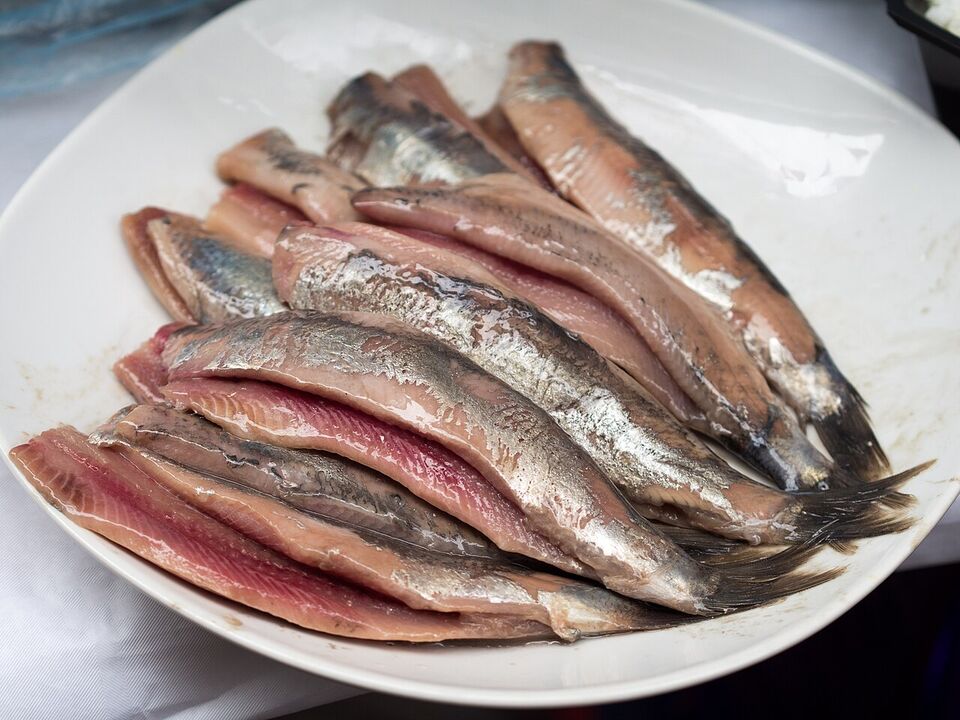
Herring is the snack the Netherlands is known for. The fish is lightly cured and sold from stands and fish shops, usually already cleaned. The classic way to eat it is raw, by the tail, with chopped raw onion and sliced pickles, tipping your head back. It tastes mild, salty and a little buttery, nothing like the sharp jarred herring you may have seen at home. Most stands also sell it as a broodje haring, a soft roll with the same onions and pickles, which is the easier first try.
The name to look for is Hollandse Nieuwe, the first catch of the season. The Dutch celebrate its arrival each spring with a festival called Vlaggetjesdag (Flag Day) at the port of Scheveningen near The Hague. The opening date changes every year and we have not confirmed this year's schedule, so if new-season herring matters to you, check with local tourist offices before you plan around it. At other times of year you will be eating herring from the regular season, which is also good and often cheaper.
Expect roughly €3.50 to €6 (about $4 to $7) at a stand, more in a bun or at a tourist spot. If you are pregnant or have a weakened immune system, ask your doctor before eating any raw fish.
Kibbeling and fish stalls
Kibbeling is the friendly alternative: chunks of battered, deep-fried white fish (traditionally cod, often a cheaper white fish) eaten from a paper tray with a garlic or herb sauce. Fish stalls at markets and harbors sell it, usually with fries. A portion is typically around €8 to €12 (about $9 to $13). Mussels with fries (mosselen met friet) are the other classic fish meal, tied to the Zeeland coast.
Fries, croquettes and the snack bar
A Dutch snackbar or cafetaria is a counter selling deep-fried food through a hatch or at a window. Friet or patat (fries) come in a paper cone, and the Dutch order them with mayonnaise rather than ketchup. A patatje oorlog (literally "war fries") adds mayonnaise, chopped raw onion and peanut sauce, a snack-bar fusion with Indonesian roots. A patatje pinda is just peanut sauce.
The frikandel is a long, skinless fried sausage that Americans often find mysterious. Ordered speciaal, it comes split with mayonnaise, curry ketchup and chopped onion. The kroket is a crisp cylinder with a creamy meat ragout inside, eaten with mustard, often in a bun as a broodje kroket. Snack bars also sell fried noodle and rice discs (bamischijf, nasischijf) and the kapsalon, a tray of fries topped with kebab meat, cheese and salad. In some towns you will also see walls of heated glass hatches where you pay and open a small door to take a croquette. None of this is health food, and none of it is expensive, usually a few euros per item.
Stroopwafels
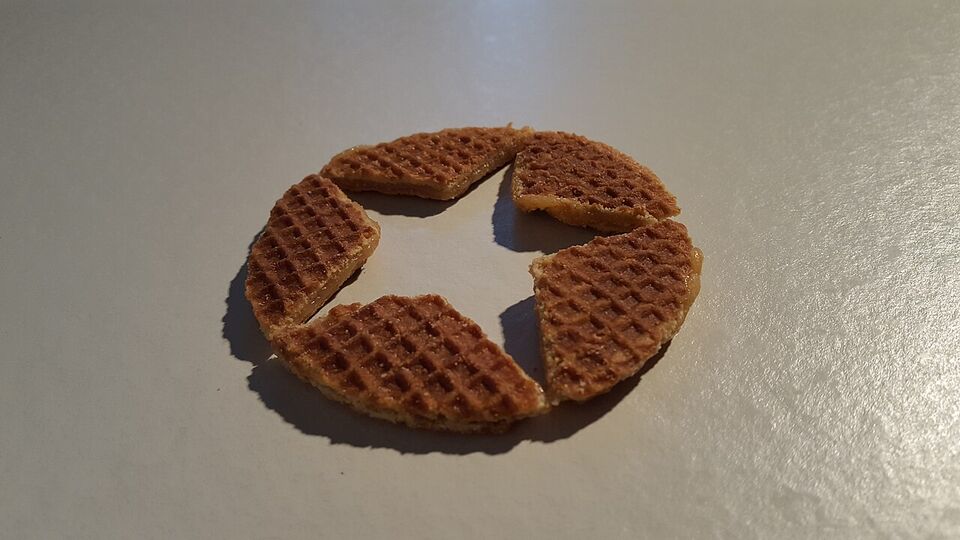
The stroopwafel is two thin waffle layers glued together with warm caramel syrup (stroop). The trick is to rest it on top of a hot cup of coffee or tea for a minute so the syrup softens. Packaged ones in the supermarket are fine and make good gifts. The better experience is a fresh one made in front of you at a market stall, warm and a little floppy, usually about €2 to €4 (about $2.20 to $4.50) each. Check customs rules before you pack food for the flight home: see the shopping and taking things home page.
Oliebollen and winter snacks
From around the late autumn through New Year's Eve, street vendors sell oliebollen, yeast-dough balls deep-fried and dusted with powdered sugar, sometimes with raisins or apple. They are the Dutch New Year's Eve tradition, and the stands are a sign that winter has started. In the weeks before Sinterklaas on December 5 you will also see pepernoten and kruidnoten (small spiced cookies), chocolate letters, marzipan and speculaas (spiced shortbread) in every shop. See the December guide and the festivals page.
Bitterballen and the borrel
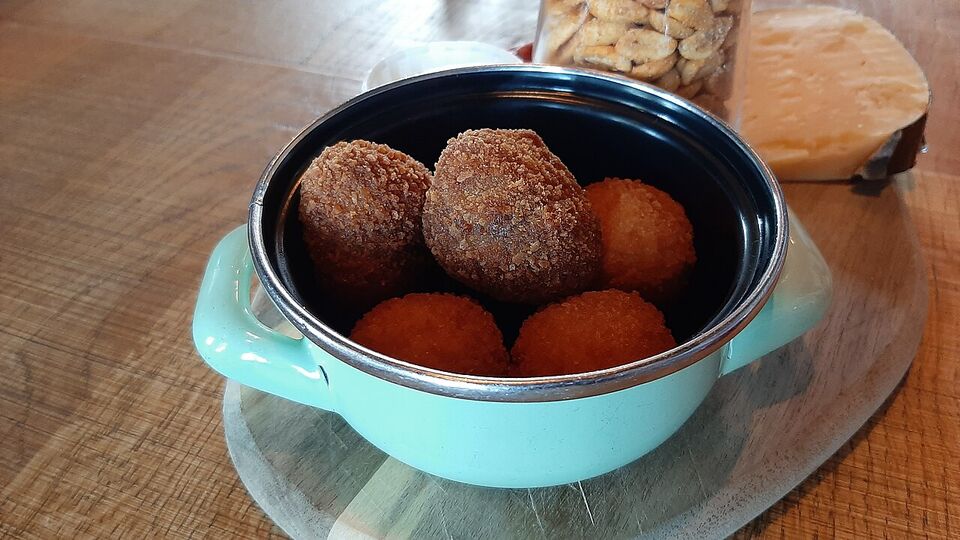
Bitterballen are small, round cousins of the kroket: a thick meat ragout inside a crunchy breadcrumb shell, served piping hot with a dab of mustard. They are the standard snack with a drink in a café and the centerpiece of the Dutch borrel, the early evening drinks hour. A portion usually runs six to eight pieces, around €8 to €12 (about $9 to $13). Be careful with the first bite: the middle is very hot.
Other typical borrel snacks include cheese cubes with mustard, kaasstengels (cheese sticks), spiced peanuts and vlammetjes (small fried spring rolls with a spicy filling). Many cafés offer a mixed board of fried snacks at a set price. Bitterballen are made with meat, so they are not vegetarian, though some places now offer a vegetable or plant-based version. For the drinks side of this tradition, see beer, jenever and cafés.
Pancakes, poffertjes and sweet things
Pannenkoeken
A Dutch pannenkoek is bigger and thinner than an American pancake, but not as thin as a French crêpe. It is baked in a pan with the toppings cooked into the batter: bacon, cheese, apple, raisins, ginger or banana. At home it is a weekend breakfast. In a pannenkoekenhuis (pancake restaurant) it is a full meal, sweet or savory, served with powdered sugar, cinnamon or stroop. Families love these places because of the huge menus and relaxed pace. Budget about €10 to €16 (about $11 to $18) per pancake.
Insider tip
Order one savory pancake with bacon and cheese and one sweet one with apple and cinnamon, then share. A single pancake is often more than one person can finish.
Poffertjes
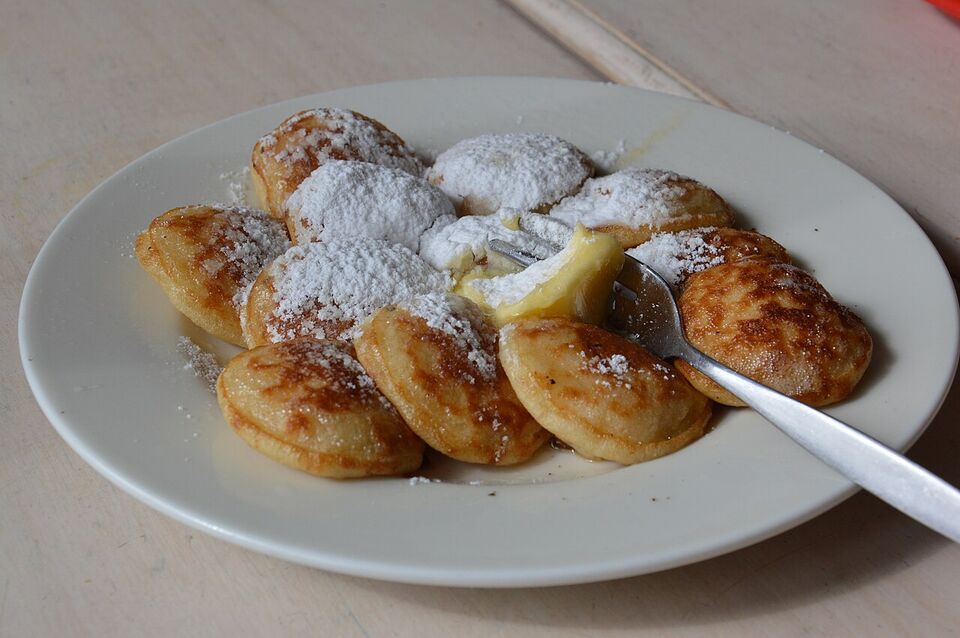
Poffertjes are tiny, puffy yeast-batter pancakes cooked in a special dimpled pan and served with butter and powdered sugar. You will find them at markets, fairs and Christmas markets in paper trays, and in restaurants as a dessert. They suit children and anyone who wants something sweet but small.
Apple pie and pastry
Dutch appeltaart comes in two main types: a lattice-top pie and a crumb-topped one (appelkruimeltaart). It is deeper and more cinnamon-forward than most American pies, made with tart apples, and usually served warm with a cloud of whipped cream (slagroom). A slice with coffee runs roughly €4.50 to €7 (about $5 to $8). In Limburg in the south, the local pastry is vlaai, a yeast-dough tart with fruit or rice filling, traditionally cut into eight slices.
Other sweets to know: drop (licorice, sweet or salty, and the Dutch eat more of it than almost anyone), hagelslag (chocolate sprinkles eaten on buttered bread at breakfast), boterkoek (butter cake) and gevulde koek (almond-filled cookie). Salty licorice is an acquired taste; try one piece before buying a bag.
Cheese and cheese markets
Cheese is part of breakfast and lunch rather than a course after dinner. Most Dutch cheese is semi-hard or hard, and the most useful thing for a visitor to learn is the age scale, because it sets the flavor.
| Dutch name | Meaning | Approximate age | Taste and texture |
|---|---|---|---|
| Jonge kaas | Young | About 4 weeks | Mild, creamy, soft |
| Jong belegen | Mildly aged | 8-10 weeks | Mild, soft |
| Belegen | Aged | 16-18 weeks | Fuller, semi-hard |
| Extra belegen | Extra aged | 7-8 months | Savory, semi-hard |
| Oude kaas | Old | 10-12 months | Rich, savory, hard |
| Overjarig | Very old | 1-2 years | Crumbly, salty crystals |
These age terms are not legally protected, so the label on a supermarket wedge tells you less than the taste. The term boerenkaas (farm cheese) is protected: it means cheese made on a farm from raw milk, and it tends to be more complex and varies from farm to farm. Some Dutch cheeses add spices to the curd, such as cumin in Leyden cheese or cloves in Frisian clove cheese. Gouda and Edam are the famous names. Many cheese shops let you taste before you buy, so ask for a sample (Mag ik proeven?).
Cheese markets
The traditional cheese markets are now mostly shows for visitors, and they run only in warm months. Alkmaar holds its market on Fridays from 10 a.m. to 12:30 p.m. on the Waagplein, from the first Friday in April to the first Friday in September (April 2 to September 3, 2027, by our calculation). Gouda's market is on Thursdays from 10 a.m. to 1 p.m., April through August, and Edam's is a Wednesday summer re-enactment in July and August. These details come from secondary sources, so confirm dates with the town tourist office before you plan a day around them. See day trips from Amsterdam for how to combine them.
Watch out
Cheese and other food bought abroad may be restricted when you return to the US. Check the current CBP and USDA rules before you buy, and keep cheese in its original sealed packaging in case an officer asks. Do not assume that vacuum-packed souvenirs are allowed.
Indonesian food and rijsttafel
Indonesian food is the most important influence on modern Dutch eating, a legacy of the colonial era and of the many people who came to the Netherlands after Indonesian independence. It is everyday food here, found in neighborhood takeaways and in table-service restaurants in every city, and for many visitors it is the best meal of the trip.
The showpiece is the rijsttafel (literally "rice table"): a spread of a dozen or more small dishes served with steamed rice. A typical table includes beef or chicken in coconut sauce, grilled skewers (saté) with peanut sauce, fried noodles (bami), fried rice (nasi goreng), vegetable dishes, fried banana (pisang goreng) and several levels of chili paste (sambal). It is a sharing meal, often priced per person with a minimum of two. Plan on roughly €30 to €50 (about $34 to $56) per person for a full table, less for a smaller sampler. Reserve for dinner, especially on weekends.
If you do not like heat, say so (niet pittig, not spicy) and ask for the sambal on the side. Vegetarians can usually put together a table from the vegetable, egg and tofu dishes, but ask whether shrimp paste or meat stock is used. For a lighter, cheaper version, order one dish with rice or noodles from a take-out counter, such as nasi or bami.
Surinamese food
Surinamese cooking came with immigrants from the former colony of Suriname and is especially visible in the bigger cities. Look for roti (flatbread served with curry, potato, vegetables and chicken), Surinamese-style noodles and fried rice, and sandwiches such as broodje bakkeljauw (salted cod) and broodje pom. It is hearty, usually good value and a useful option for groups with different tastes.
Breakfast, lunch and dinner
Breakfast and lunch
A traditional Dutch breakfast is bread with butter and a topping, often sweet: chocolate sprinkles (hagelslag), flakes (vlokken), jam, peanut butter or cheese, plus yogurt and fruit. Dutch bread is airy and often whole-grain, and a hotel buffet will usually offer cheese, cold cuts, boiled eggs, rolls and coffee. Weekend breakfast at home sometimes means pancakes. If you want a larger breakfast out, look for cafés that serve eggs and avocado toast, which are common in the big cities.
Lunch is traditionally cold and light: sandwiches (broodjes) with cheese, ham or roast beef, soup, or a salad. A typical sandwich at a bakery or café costs roughly €5 to €9 (about $6 to $10). The most popular sit-down lunch dish is the uitsmijter: slices of bread topped with ham, roast beef or cheese and two or three fried eggs. It is filling and good value, and it is easy to order a vegetarian version with cheese. Dutch people often eat lunch at their desks, so a quick bakery stop is normal.
Dinner
Dinner is the main hot meal and it starts early. Traditionally it begins around 6 p.m. or even earlier, and many restaurants open their kitchens at 5:30 or 6 p.m. Do not expect to find a table at 9 p.m. in a small town without a reservation, and check when the kitchen closes. In cities you can eat later, but the best tables are usually taken by 7 p.m. on weekends.
The old-fashioned Dutch dinner is meat, potatoes and a boiled vegetable. In winter, look for stamppot: potatoes mashed with vegetables, most famously curly kale (boerenkoolstamppot), served with smoked sausage (rookworst) and gravy. Hutspot pairs mashed potatoes, carrots and onions with a slow-cooked meat. Erwtensoep (also called snert) is a thick pea soup, so thick that a spoon should stand up in it. As of mid-November 2026 the season for these dishes has just begun, and many Dutch restaurants put them on the menu from mid-November until early spring (menus vary).
Eating out: reserving, the bill and paying
Reserve more often than you think
Good restaurants in Amsterdam, Utrecht, Rotterdam and The Hague fill on Friday and Saturday nights, and Indonesian restaurants and popular pancake houses can fill earlier. Reserve a few days ahead for weekends (a week or more in high season or for a large group) and book online or by phone. If you cancel, do it promptly: a few restaurants ask for a card number to hold the table.
Asking for the bill
Servers will not bring the check until you ask, because rushing you would be rude. Catch their eye and say De rekening, alstublieft (the bill, please), or make a writing motion in the air. Splitting a bill is normal. Say apart betalen (pay separately) when you order or before the bill comes, since some places can split by item and some cannot.
Tipping
Service is included in restaurant prices, so you do not need to add a percentage. Rounding up or leaving a few euros for good table service is a common courtesy, not an obligation. In a café you might round up the coffee to the next euro. Do not feel pressure to match American tipping. For more on this see Dutch etiquette and the money page.
Card payment quirks
Cards are widely used, but not everywhere in the way Americans expect. Several attractions and restaurants are cashless, so carry a contactless card, and keep a little cash for markets and small stalls. Some smaller shops and cafés prefer or only accept local debit cards; if a US credit card is refused, try a debit card or ask before you order. Tell your bank you are traveling, and check your card's foreign fees. In some places the card terminal is brought to your table (pinnen means paying by card).
Save money
Lunch is where the Dutch eat well for less: an uitsmijter, a soup and a roll, or a market sandwich costs much less than a dinner menu. Many restaurants also offer a fixed-price menu of two or three courses that is cheaper than ordering a la carte. Tap water is safe to drink; ask for kraanwater, and see the drinks guide for how that works.
Vegetarian, vegan and allergies
It is easy to eat vegetarian in the Netherlands, easier than in much of the US outside the big cities. Cities have vegetarian and vegan restaurants, plant-based options on mainstream menus, and plenty of Indian, Middle Eastern, Indonesian, Surinamese and Italian places with vegetable dishes. Smaller towns and traditional restaurants are less flexible, and the classic Dutch dishes (stamppot with sausage, pea soup, croquettes) are meat-based.
Say Ik ben vegetariër (I am vegetarian) or Ik eet geen vlees (I eat no meat), and ask whether soups and sauces use meat stock or bacon. For vegan diets, ask about butter, milk and egg, because the Dutch use dairy generously. Cheese sandwiches and fries with sauces are easy vegetarian fallback options.
Allergies
Dutch restaurants are accustomed to allergy questions, and EU rules generally expect food businesses to be able to tell you about the main allergens in what they serve (ask, and do not assume). The information may be on the menu, in a folder or given orally. Tell the server clearly at the start, not when the plate arrives: Ik ben allergisch voor noten (I am allergic to nuts), or the same with gluten, melk (milk), ei (egg) or schaaldieren (shellfish). Carry your medication and a short note in Dutch or English. If you have a serious allergy, call the restaurant in advance. Peanut sauce is common in Indonesian food and snack bars, so check it first. In an emergency call 112, and see the health page.
Markets and food halls
Markets are the best place for quick, cheap eating and for the fresh stroopwafel, herring, cheese and fruit. Amsterdam's open-air street markets, such as the long Albert Cuyp market in De Pijp, are best on weekday mornings and at lunch; days and hours vary by market, so check before you go. Saturday farmers' and organic markets are common in the Jordaan and in other cities. See Amsterdam neighborhoods.
Rotterdam's Markthal is a huge indoor hall of food stalls under an arched apartment block. The hall's website lists the following opening hours, and shops vary: Monday to Thursday 10 a.m. to 8 p.m., Friday 10 a.m. to 9 p.m., Saturday 10 a.m. to 8 p.m. and Sunday noon to 6 p.m. Entry is not ticketed, and it is a good first stop for lunch or a snack while you look at the architecture; see the Rotterdam guide. Amsterdam and other cities also have food halls in converted buildings, which are useful for groups with different tastes, but confirm hours and which stalls are open before you go.
Common mistakes
- Eating at tourist menus. Restaurants near big stations and the busiest squares often push laminated multilingual menus with photos and a "tourist menu" at a set price. They are rarely the best value. Walk two or three streets away and look for a short menu in Dutch with a few dishes.
- Waiting for the check. It will not arrive until you ask.
- Arriving late for dinner. Kitchens close earlier than in the US, and the best tables go early.
- Assuming everything takes cards. Carry a card and a little cash, and ask before you order.
- Treating "coffeeshop" as a cafe. In the Netherlands a coffeeshop is a licensed place that sells cannabis, not a place for a latte. Look for a koffiehuis, café or lunchroom. For the law, see the cannabis rules page.
- Skipping the pancake house because it looks like a kids' place. It is also where adults go for dinner.
What to try in each city
Amsterdam
Herring stands, stroopwafels at the street markets, bitterballen in a brown café and a long Indonesian dinner are the core. See Amsterdam and its neighborhoods for where to base yourself.
Rotterdam
The Markthal is the obvious first stop, with a mix of Dutch and international stalls. The city is a good place for a multicultural meal.
The Hague
The seaside district of Scheveningen is the herring festival's home. The city also has a long Indonesian connection and a local sweet, Haagse hopjes, a coffee-caramel candy. See The Hague.
Utrecht
The sunken canal wharves hold café and restaurant terraces, good for coffee, pastry and a borrel. See Utrecht.
Leiden
Hutspot is tied to the city's October 3 festival, and Leyden cheese is flavored with cumin. See Leiden.
Maastricht
The south has its own style: fruit vlaai, stews and a more Burgundian approach to food and wine. See Maastricht.
For Haarlem, Delft and the other short-trip towns, see Haarlem, Delft and the day trips page; each has a market square and cafés around it. Families with children will find tips on child-friendly eating in the families guide.
Rough costs at a glance
These ranges are estimates for planning. Prices vary by city and venue, and they rise on a regular schedule, so always check the menu.
| Item | Rough cost | Notes |
|---|---|---|
| Herring at a stand | €3.50-€6 (about $4-$7) | More in a bun or at a tourist spot |
| Fresh stroopwafel | €2-€4 (about $2.20-$4.50) | Market stalls; packaged ones cost less |
| Bitterballen, 6-8 pieces | €8-€12 (about $9-$13) | Usually served with mustard |
| Kibbeling portion | €8-€12 (about $9-$13) | Harbors and markets |
| Pancake | €10-€16 (about $11-$18) | A full meal |
| Sandwich or uitsmijter | €5-€12 (about $6-$13) | Cheaper at bakeries |
| Rijsttafel, per person | €30-€50 (about $34-$56) | Often two-person minimum |
| Dinner main course | €20-€32 (about $22-$36) | Higher in central Amsterdam |
A sensible daily food budget for one person eating a market lunch, a snack and a sit-down dinner is somewhere in the range of €45 to €80 (about $50 to $90), before drinks. If you are traveling as a group or with kids, a pancake house or Indonesian takeout keeps it lower. Hotels often include breakfast, but check the room rate and compare it with a bakery breakfast, covered in the where to stay guide.
Add it to a route in the trip builder, or ask us to plan the hotels, trains and guides for you.