Overview
The Red Light District is a small, old, crowded part of central Amsterdam where sex work is legal and regulated, and where thousands of people also live. Its Dutch name is De Wallen (the Quays), and most Amsterdammers use that name. A visit is allowed and needs no ticket, but it comes with rules that the city enforces, and a handful of them can cost you money or an awkward confrontation.
This page is a factual guide for adults planning a walk through. It explains what the area is, how legal sex work works, the rules for photos, alcohol, cannabis and tours, and what has changed. It also covers the parts of the old center that most visitors miss because they are watching the windows: a 700-year-old church, a Chinatown strip and a market square. For the wider picture of the city, see our Amsterdam guide and neighborhoods page.
The simplest summary of how to behave: treat it as a residential neighborhood and a workplace, not an attraction. Both descriptions are accurate, and they are how the city itself frames its requests to visitors.
What De Wallen is
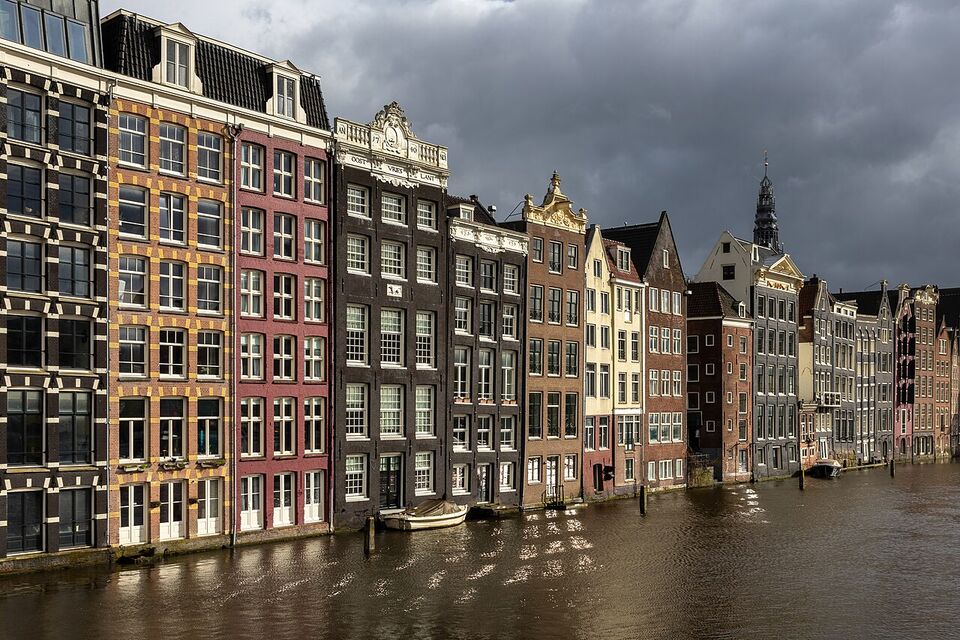
De Wallen is the oldest part of Amsterdam's center, built around the medieval harbor and the canals that grew from it. The Oude Kerk (Old Church) was consecrated in 1306, which gives a sense of how old the street plan is. Most of the lanes are narrow, many are one-way for traffic at busy times, and some canals are lined with bars, souvenir shops and small hotels as well as apartments and offices.
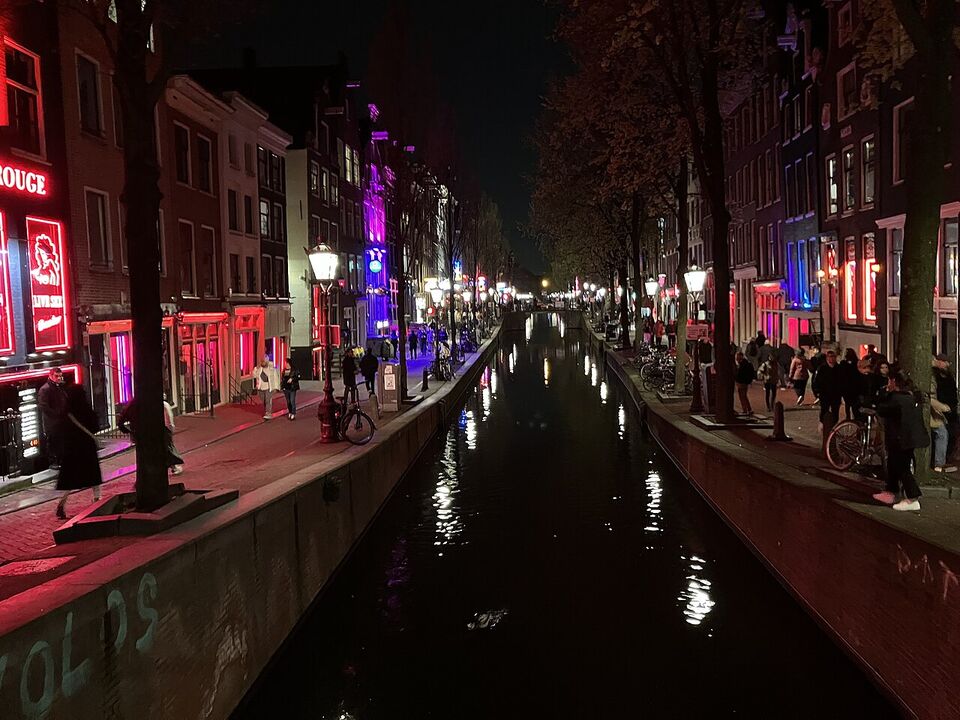
The "red light" part is a few streets and alleys with rows of windows, lit in red at night, where sex workers rent rooms to work from. The area around the Oudezijds Achterburgwal, a canal with a street on each side, is the best-known stretch. The windows are one layer of a mixed neighborhood: residents, churches, restaurants, offices and an older pub scene share the same few blocks.
The Netherlands is known for tolerance, but the policy is more precise than the reputation suggests. Prostitution between adults is legal and regulated; it is not unregulated. Visitors who treat the area as a free-for-all, because "everything is legal here," are the ones the city has been trying to discourage. The Dutch government's own pages on drugs, for example, say plainly that selling drugs remains a criminal offense that is only tolerated under conditions, and the same logic applies here: legal work does not mean any behavior is acceptable.
How legal sex work works
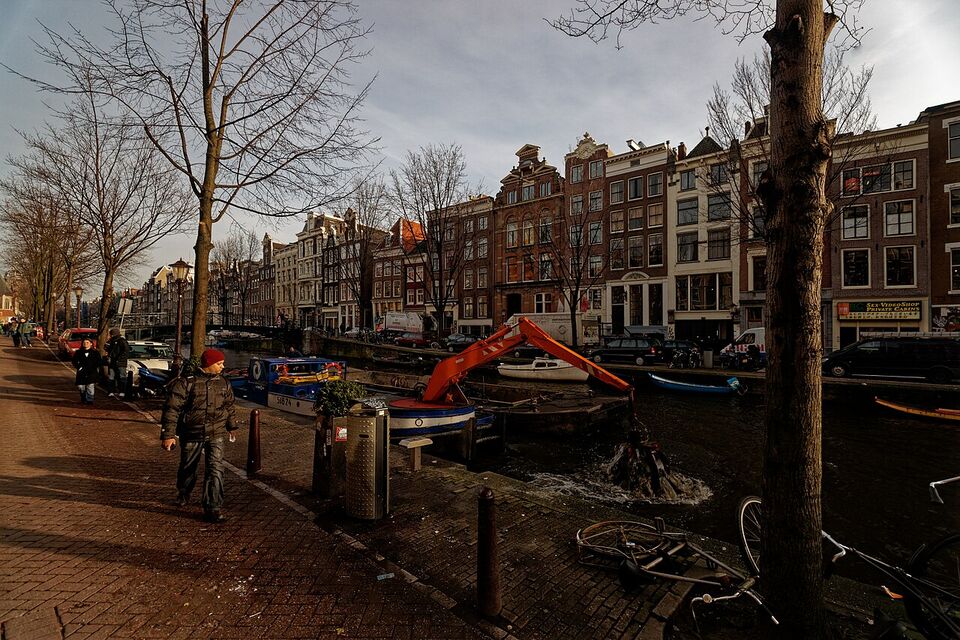
Sex work is a legal profession for adults in the Netherlands, and in Amsterdam it is regulated at the city level. Businesses that rent window rooms are licensed by the municipality, and the city has the power to close or restrict them. Workers in the windows are generally self-employed or work through a licensed operator, and they set their own prices and decide who they work with. Clients cannot demand anything a worker refuses.
The legal frame does not make the work free of exploitation or crime, and Amsterdam has publicly said it is trying to reduce both in the center. A major recent example is the city's long-running debate over moving some of the work out of the old center. Amsterdam's mayor, Femke Halsema, had pushed since 2019 for an "erotic center" near the RAI convention center so that fewer windows would operate in De Wallen. In June 2026, the new city coalition agreement dropped that plan, according to Dutch reporting, and said it would look instead at smaller options. As of mid-November 2026 the windows remain where they are; treat any plan as a plan, not a change in what you will find.
What this means for you as a visitor:
- The women, men and trans workers are at work. They are not part of a show, a statue garden or a photo stop.
- You are not required to look, pause or comment. Walking through at normal speed is entirely normal.
- Do not try to bargain, joke with workers, take pictures through the doors or make remarks to friends about the people in the windows.
- If you are curious about the work itself, there are educational ways to learn about it (see below).
Visitor rules that matter
The city has used a mix of rules and signs in the area, and several are aimed directly at visitors. Check the signs on the street, because municipal rules in this neighborhood have changed more than once in recent years.
Photos and video
Do not photograph or film the windows or the workers, and do not hold a phone up to film as you walk. Photographing sex workers has been described in Dutch news as prohibited, and a city councillor has called treating them as an attraction disrespectful. Look for signs in the area and follow them. In practice the enforcement that visitors meet is more personal: workers may knock on the glass, step out or call for help, and some will demand you delete a picture. Photographing the canal, the bridges and the buildings is fine as long as no worker is visible in the frame.
Group selfies are the common mistake. Check what is behind you before you raise a camera, and keep it down in the narrowest lanes.
Behavior and noise
Residents say the neighborhood is overwhelmed by noise, drunk crowds and nuisance on weekend nights. The city's response has included one-way systems, "hosts" who monitor the streets, temporary closures when it gets too crowded, and a "stay away" campaign aimed at young visitors expecting a party. The official message is simple: keep your voice down, do not shout, do not urinate in the street or the canals, and do not stand in doorways or block the lanes. Large groups are asked to keep moving.
A common tension: the neighborhood's streets double as the front doors of residents' homes. If you want a late evening, choose a bar, not the pavement outside someone's door.
Alcohol
Drinking alcohol on the street has been banned in the area, and local reporting in 2023 listed a crackdown on alcohol sales as part of a package of measures. Earlier closing times for bars and brothels were also part of the 2023 package. We do not give exact hours because the figures we found were proposals, so do not plan around a particular closing time; check the venue and the signs.
The practical points: drink inside a bar, not on the street; do not carry open drinks along the canals; and expect venues to close earlier than in other parts of the city.
Cannabis on the street
Smoking cannabis outdoors in the Burgwallen Oude-Zijde area, which covers De Wallen, has been banned since May 25, 2023. The fine is €100 (about $112) for tourists and residents alike, and signs in English and Dutch warn about it on streets such as the Oudezijds Achterburgwal. Smoking inside a licensed coffeeshop was not covered by the street ban. For the national rules, see our cannabis rules page. We give the law there, not tips.
Watch out
Street dealers in and around the area are widely reported to sell fake or mislabeled substances. Do not buy from the street, and do not follow anyone who offers a "special" place or a tour of a back room. Details are on our safety page.
Tours and what they can and cannot do
Tours of the Red Light District have been a flash point for the city. The city restricts guided tours that pass the windows of sex workers. A Dutch expat news report from February 2020 described the first bans and new rules for guides, but the details have changed over time and we could not confirm the current version on an official city page, so we give no fines, permit costs or hours. The practical lesson is the same.
- Do not expect a tour that stops at windows, stands outside them or lets you take photos of workers. The city has restricted exactly that.
- A walking tour of the wider old center, with the history of the harbor, the church and the Chinatown streets, may be offered. It is the guide's job to keep the group moving and quiet.
- A guide who offers to take you to the windows, or who promises to "show you" a particular business, is working against the city's wishes. A responsible operator will say what it does and does not do.
- Check that the operator explains what the tour covers and what it skips. If you are not sure, check amsterdam.nl or ask the Amsterdam tourist office before you pay.
If you are on a tour, it is still your responsibility to follow the street rules above: no photos of workers, no cannabis smoking, no noise.
Beyond the windows: the Oude Kerk, Chinatown and Nieuwmarkt
The reason to go in daylight is that the old center is one of Amsterdam's oldest and most interesting walks. A visit built around the buildings, not the windows, is easy and does not require any of the awkwardness.
Oude Kerk
The Old Church was consecrated in 1306 and stands in the middle of the district, with windows facing its walls. It is used as a church, a heritage site and an exhibition space, so opening times and tickets vary. Ask at the door or check the church's official site, and note that we have not confirmed current prices.
Chinatown and the Zeedijk
The Zeedijk and its side streets form the area's small Chinatown, a few minutes' walk from Centraal station, with Asian restaurants, grocery stores and a Buddhist temple. It borders the Red Light District, and the atmosphere shifts block by block. It is a practical place for lunch before or after a walk.
Nieuwmarkt
Nieuwmarkt is an open square dominated by the Waag, a medieval city-gate building turned into a cafe. The square is also where residents protested the demolition of old neighborhoods in the 1970s, an episode Dutch historians call the Nieuwmarkt riots. It is a good spot to sit, with fewer crowds than the windows.
Canals and bridges
The Oudezijds Voorburgwal and Achterburgwal canals, with their gabled houses and bridges, are among the prettiest in the center when seen in daylight. They are also where photographers most often point cameras at the wrong thing, so check the background.
Daytime versus night
The area changes character with the hour. In the morning and early afternoon it is a quiet residential and shopping area with delivery vans, cleaners, locals walking dogs and a few tour groups. The windows are mostly empty or have drawn curtains, and nothing about the street feels unusual to an adult visitor. This is the best time for the church, the canals and a photo of the buildings.
From the afternoon onward, more windows are staffed, bars fill up, and by evening the lanes are crowded. Friday and Saturday nights are the busiest and the most intoxicated, and the pavements can be so packed that you move at the speed of the crowd. This is also when pickpockets, street dealers and touts are most likely to be a problem, and the city has named nuisance and crime in the area as reasons for its rules.
Our suggestion for first-time visitors is a short daytime walk, a late-afternoon coffee on the edge of the area, and an early evening, not midnight, if you want to see it lit up. If you go at night, go with others, keep your drinks inside, and keep your route simple. The area is less comfortable when you are lost, drunk or alone.
Safety and pickpockets
The Red Light District is among the places in the Netherlands where visitors most often have things stolen. Tight crowds, nightlife and distraction are the combination pickpockets like. We found no official figures for this page, so treat this as general advice, not statistics.
- Carry only what you need. Use a front pocket or a zipped bag worn in front of you.
- Keep your phone in a pocket, not in your hand, while you walk through crowds and along the canal edges.
- Do not accept drinks or invitations from strangers, and do not follow anyone offering to show you a "private" bar or a backroom.
- If someone grabs your arm or blocks your path, stop and walk away; shout if necessary. In an emergency call 112. For non-urgent police matters in English, the national number is 0900-8844.
- Watch for fake or unlicensed street sellers of drugs. Do not buy.
For all-purpose precautions, emergency contacts and the State Department advisory, see our Safety in the Netherlands page. For a plan that includes a hotel safe, a money belt or card-first spending, see money and cards.
Different from home
In the United States, public drinking and street drug use are usually enforced as local nuisance offenses. In De Wallen, the city has written those rules into specific, signed street bans with a €100 (about $112) fine for outdoor cannabis smoking and an alcohol street ban. Do not assume "legal in the Netherlands" means "allowed on this street."
How the city asks visitors to behave
Amsterdam has been open about its problem with crowds in the old center. Local news reported a record 21 million tourists in the city in 2025, and the city has talked about limiting overnight stays and raising its tourist tax (see money). In De Wallen, the city's specific requests are short:
- Be quiet, especially after dark. People live and sleep here.
- Do not photograph or film the workers.
- Do not drink or smoke cannabis on the street.
- Do not leave rubbish, urinate in public or climb on bridges and railings.
- Move on. Do not stop in doorways, lanes or at windows.
- Do not come to the area only to get drunk; the city's "stay away" campaign has targeted that kind of visit.
The message is also about respect for the workers. A city councillor was quoted in 2020 saying it is not respectful to treat sex workers as a tourist attraction, and that is a good test for any behavior: would you do it outside someone's office or front door?
Families and kids
Honest advice: the Red Light District is legal, but it is not made for children, and many parents choose to go around it. In the day, the main sights are the church, canals and cafes, and a quick walk through with a school-age child may involve only a few questions. Windows can still be visible, shop displays can be explicit, and signs and nightlife venues are on view. At night it is crowded, loud and alcohol-heavy, and we would not suggest bringing young children.
If your hotel is nearby or your route from the station passes through, you can usually go around by the main streets or along the canals on the edge. Teenagers can be harder to plan for: a short, matter-of-fact conversation about what the area is and the rules (no photos, no pointing) is more useful than avoiding it. For a better plan for kids, see families and Amsterdam sights.
Learning more respectfully
If you want to understand the work and its history, an educational stop is more useful than a walk past the windows. The Prostitution Information Center (PIC) is a small organization in the district that has long offered information, talks and walks about the work and its legal framework. We have not confirmed its current hours, programs or prices, so check its official website before you go. Its purpose is education about sex work, not entertainment, and visitors are expected to behave accordingly.
The old center's history is also covered by Amsterdam's museums and by the Amsterdam city archive and local history walks that stay away from the windows. For a more general sense of the Dutch approach to tolerance and its limits, our etiquette page is a useful companion.
Practical details
- Getting there: De Wallen is a short walk from Amsterdam Centraal station, and many visitors cross it without meaning to. Check your route if you want to avoid the windows.
- Cash and cards: bring a contactless card; some places refuse cash. Beware of "ATM" or exchange offers from strangers.
- Toilets: public toilets are limited. Use a cafe, and buy a drink.
- Rules can change: check the signs in the street and amsterdam.nl before you go; the city has added and adjusted rules several times since 2020.
- Emergency: call 112. Dutch police non-emergency line in English: 0900-8844.
For nearby sights, evening plans and where to stay, see the Amsterdam guide.
Add it to a route in the trip builder, or ask us to plan the hotels, trains and guides for you.