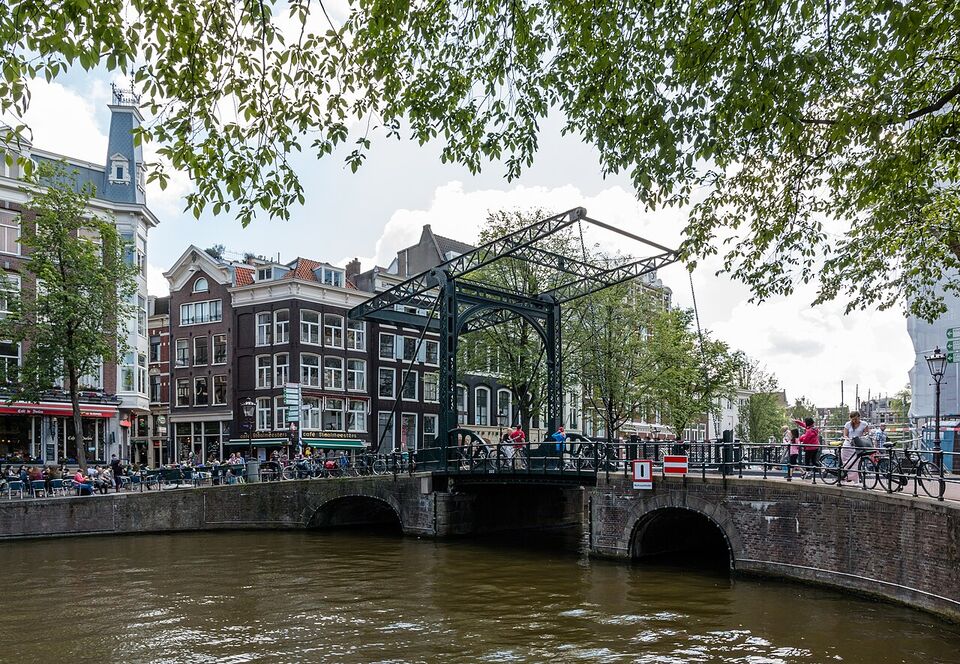
Why Americans should cycle in the Netherlands
The Netherlands is the most bike-friendly country most Americans will ever visit, and cycling is one of the best ways to see it. Roads have separate bike paths, most junctions give cyclists their own signals, and drivers are trained to look out for riders. Cycling is the second most common way of getting around, ahead of public transport, with about 27% of all trips nationwide made by bike and a higher share in cities such as Amsterdam (38%). The land is almost completely flat, so even a casual rider can cover a good distance.
It is also a very different system from the one you know at home. Cyclists here have rules, signals and priorities of their own, and the people around you ride fast, hold their lines and expect you to do the same. This page covers renting a bike, the rules, the mistakes tourists make, locks and parking, e-bikes, three scenic rides and a checklist. It pairs with our guides to trains and transit and Amsterdam.
For rules we cite the national and city sources where we could; the Dutch government's English-language pages at government.nl are the place to verify anything legal before you go.
Different from home
In the United States, a bike lane is a strip beside the road that cars wander into. In the Netherlands, a bike path is a proper traffic lane with its own rules, signals and enforcement, and drivers regularly yield to cyclists. The upside is real safety infrastructure. The catch is that you are expected to behave like a vehicle, not a pedestrian on wheels.
Bike types: city bike or rental with hand brakes
The classic Dutch bike is a heavy, upright, mudguarded city bike, often called an omafiets ("grandma bike"). Most have a back-pedal brake (a coaster brake): you stop by pedaling backward, and there is no lever on the handlebar. If you have never used one, practice in a quiet street before you head into traffic. Reaching for a lever that is not there, in front of a tram, is how visitors fall.
Many rental shops also offer bikes with hand brakes, which are the safer choice for most Americans. Ask for one when you book. Typical options include:
- City bike with back-pedal brake: the local standard. Cheap and sturdy, but the braking takes some getting used to.
- City bike with hand brakes: the same upright bike with levers like the ones at home. Ask for it by name.
- Bike with gears: useful if you ride into wind along the coast or dikes, since the wind (not hills) is the Dutch cyclist's enemy.
- E-bike: good for long rides, hills near Maastricht, or tired legs. More on this below.
- Cargo bike (bakfiets): the front-loaded family bike. See the kids section.
Check the seat height and the brakes before you leave the shop. Riding a bike that is too tall is a common cause of tourist crashes.
Where to rent, and how to choose
Bike rental is available across the country. The average price in Amsterdam is about €10 (about $11) a day, often with rentals available from 3 hours, according to the city's tourism site. Prices vary by shop and season, and we could not confirm a current price for any specific shop, so treat that as a guide and check each shop's website.
A rental shop
A shop is the best choice for most visitors. You get a bike chosen for you, a lock, and often a map and a helmet if you ask. Shops near Centraal and the museum quarter are used to tourists and speak English. Before you rent, ask:
- Does the price include a lock (and a second lock, if needed)?
- Can I get a bike with hand brakes?
- What is the deposit, and what happens if the bike is stolen? Theft is common, so ask whether the deposit or an insurance fee covers it.
- Is there a number to call if I have a flat tire?
- What are the return hours, and can I return to another location?
A plain bike with no loud tourist branding draws less attention than a brightly marked one, which is a reasonable preference if you are worried about theft. Also read the rental agreement: some shops charge steeply if a bike is lost or locked badly.
OV-fiets at train stations
OV-fiets is the national rental bike run by NS, with bikes at hundreds of stations and other transit hubs. It costs €4.80 (about $5) per 24-hour period in 2026, rising to €4.95 (about $6) in January 2027, according to NS. It is built for people who live in the Netherlands and work with the OV-chipkaart: a personal card and a free subscription are the normal way in, and we could not confirm that a visitor with only a foreign bank card can use it. If you plan to use one, check ns.nl first and have a fallback. For most visitors a rental shop is simpler.
Save money
For a day trip by train, the OV-fiets can be the cheapest bike when the system lets you use it, but a shop rental may be nearly as cheap and works without special accounts. The I amsterdam City Card includes a 24-hour bike rental in the full version. See budget to compare. Do not pay for a bike you will not ride.
At some attractions you can get a bike on the spot. Hoge Veluwe National Park has White Bikes available to use inside the park (see Hoge Veluwe), and a bike rental operates at the Keukenhof parking, though it does not offer e-bikes.
The rules of the road for cyclists
Dutch cycling rules are mostly common sense, but a few of them are different from the U.S. Learn these before your first ride.
Bike paths, lanes and the red surface
Many roads have a separate bike path beside them, and you should use it. Where a cycle path or lane exists, cyclists are generally obliged to use it. On-road bike lanes are marked by solid or dashed lines. Red asphalt is common because it is visible, though the color itself has no separate legal meaning. Where you see red, treat it as a bike space: do not stand or walk on it, and do not park a car or a scooter on it. A fietsstraat (cycle street) gives priority to bikes, with cars as "guests" and a 30 km/h (19 mph) limit.
Bike paths can be one-way or two-way. Follow the arrows painted on the surface and keep to the right. Where the path is wide enough to pass, pass on the left and ring your bell as a polite warning.
Right of way
Bicycles often have priority over turning cars, but the rule that matters most in practice is priority to the right at unmarked junctions: traffic coming from your right goes first, unless signs or markings say otherwise. Look for the shark-tooth triangles painted on the road, which mean you must yield. At roundabouts, where a cycle lane is bundled with the roundabout, cars generally have to yield to bikes on it. Some roundabouts have separate cycle paths with their own priority signs, so look for the signs instead of guessing.
Signals
Cyclist traffic lights are smaller or have a bicycle symbol. Stop at red unless a sign explicitly lets cyclists turn right on red, which some junctions do. Hold out your left or right arm to show a turn, and keep to a straight line so those behind you can predict your move. Do not weave.
Lights at night
Front and rear lights are required by law after dark. Rental bikes usually have them built in. Check that they work before you leave the shop, and do not cycle without them. Dusk falls early in autumn and winter: in mid-November the sun sets at about 4:50 p.m. (see our when to go guide for other months).
Phone use and alcohol
Dutch road rules restrict handheld phone use while riding, and riding while impaired by alcohol can lead to a fine or worse. We could not confirm the exact rules or fine amounts on an official page, so check government.nl before you go. The sensible rule is the same as at home: do not text, and do not ride after drinking. Evening canal-side drinking followed by a bike ride is a common source of tourist accidents, including falls into the water.
Helmets
Helmets are not required by law and are rarely worn by adult Dutch riders. The Cyclists' Union has argued that a compulsory helmet law would not help public health for everyday riding. That said, you are riding in an unfamiliar system, and many Americans reasonably want a helmet. Ask the rental shop, or bring your own folding model. Small children are often put in helmets by Dutch parents too.
Watch out
Where you have to use the bike path, you cannot ride on footpaths, shopping streets (unless signs allow) or motorways. Walking your bike through a pedestrian zone is allowed and expected. If you ride in a pedestrian-only street, you can be fined.
The pedestrian mistake: standing in the bike lane
Most injuries to tourists on bike paths happen to people on foot, not on bikes. Cyclists here ride quickly, and they do not expect a person to step off a curb into their lane. The most common mistakes are:
- Stepping off a tram stop straight into the bike lane without looking.
- Stopping to take a photo in the middle of a red lane.
- Walking in the bike lane because it looks like a sidewalk.
- Standing in the lane to wait for a group.
Treat the bike path like a road with traffic. Look both ways before crossing, listen for bells, and take the sidewalk when it exists. If someone rings a bell, step to the side promptly without turning around.
Locks, theft and parking
Bike theft is very common in the Netherlands. Locals advise using a sturdy built-in frame lock plus a chain or second lock through a fixed object such as a rack or railing. Lock the frame and at least one wheel. Never leave a bike unlocked "just for a minute", and never lock to a bridge railing or a tree, where it may be removed.
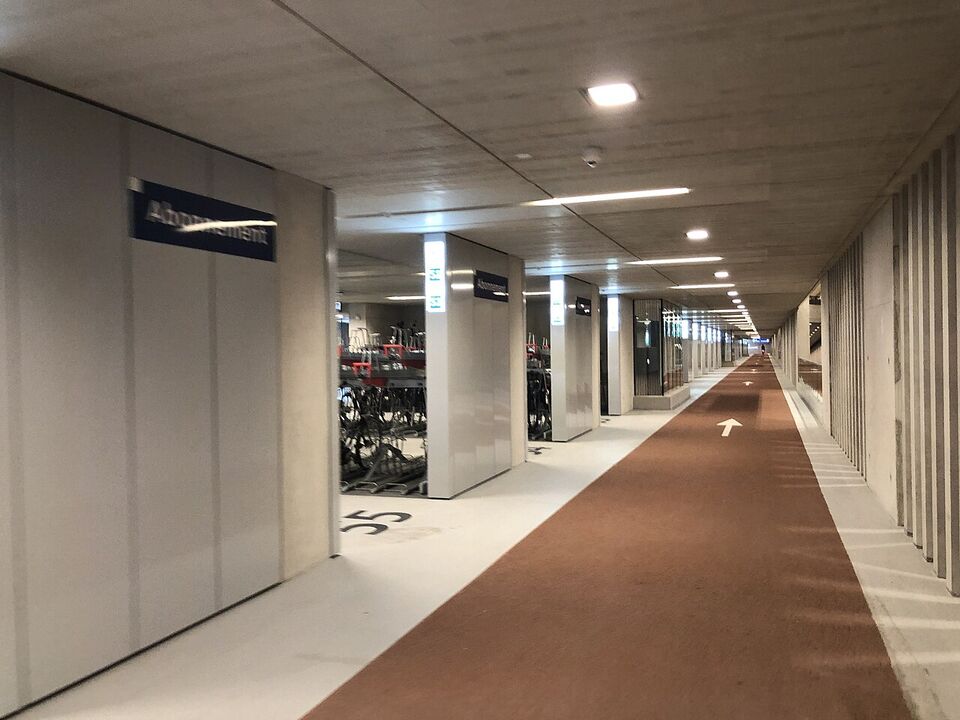
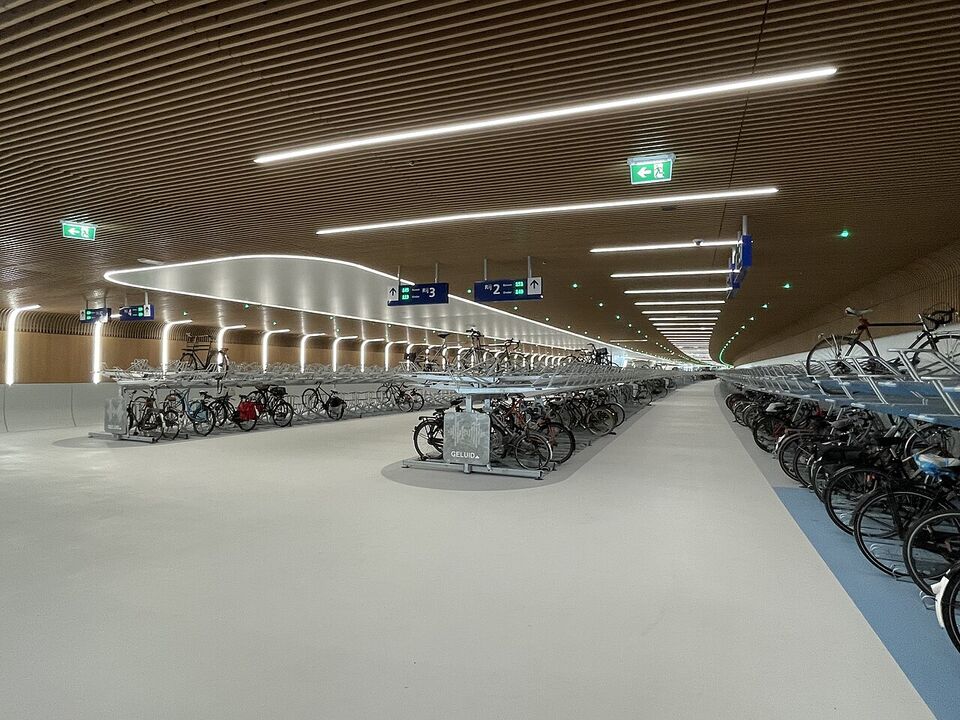
Parking rules matter too. Amsterdam and other cities remove bikes left outside the racks, and a reclaim fee of about €25 (about $28) is typical, according to the city's tourism site. Paid and free guarded bike garages exist near stations, and the stands at supermarkets and shops are the easiest place to park. Use them.
Do not buy a "cheap used bike" from a person on the street. Many of those bikes are stolen, and buying one can be a problem for you. If a rental bike is stolen, report it to the shop right away and to the police in the city where it happened, so you have paperwork. For the number to call in an emergency, see the safety guide.
One-way streets, trams and tracks
Many narrow streets in old city centers are one-way for cars but two-way for bikes, with a sign showing it. Look for the bike symbol beneath the one-way sign. Don't assume, though. If there is no sign, the street is one-way for you too.
Tram tracks are the hazard people talk about most. Wheels slide into the groove and the bike stops suddenly. Cross the tracks at as close to a right angle as you can (about 90 degrees), do not turn across them at a shallow angle, and slow down when the surface is wet. Trams cannot swerve, and they have priority. If a tram is behind you on the same lane, move aside at the next opportunity.
Ferries carry bikes. Across the IJ, the GVB ferries from Centraal are free for pedestrians and cyclists and run every few minutes. They are a quick way to reach Amsterdam Noord and the countryside to the north. For the rest of Amsterdam's transit, see trains and transit.
E-bikes and speed limits
E-bikes are popular and are a good idea if you want to cover distance or ride into the wind. Generally, bikes whose motor assists you up to about 25 km/h (15 mph) are treated as ordinary bikes and use the bike paths. Faster "speed pedelecs", which assist up to about 45 km/h (28 mph), are treated more like mopeds with their own rules. Many rental shops do not offer them, and a regular visitor does not need one. We could not confirm the exact current legal categories, so verify on government.nl before riding anything that is faster than an ordinary e-bike.
E-bikes are heavy and fast, and they take more skill to stop. Take the first few minutes slowly. Keep your speed in line with the people around you; a 30 km/h (19 mph) limit applies to cars on cycle streets, and common sense applies on crowded paths. In urban areas the built-up speed limit for cars is 50 km/h (31 mph).
Scenic rides worth planning
Amsterdam Waterland
Take the free ferry from Centraal to Buiksloterweg and ride north through polders, dikes and small villages. The countryside is quiet and flat, and there are cafes in the villages. Distances vary by route, so pick a loop and check a bike map.
Keukenhof and the bulb fields
In spring you can ride through the bulb fields near Keukenhof. Bulb fields usually bloom from around late March to early May, depending on the weather. Keukenhof itself is open 18 March to 9 May 2027, and you can rent a bike at its parking. You may view the fields from the road, but you may not enter them. Keep to the paths and do not step into a field for a photo. See tulips.
Kinderdijk
Take the WaterShuttle from Rotterdam (about 30 minutes) and bring your bike on board, then ride along the dikes between the mills. There are good cycle paths to the entrance zone, and you can park the bike while you visit the visitor center. See windmills for tickets.
Hoge Veluwe
Cycling here is a classic, with white bikes available to use inside the park. The park entrance is charged separately, and the Kröller-Müller museum requires its own ticket. See Hoge Veluwe.
In winter, wind and rain can make long rides miserable, and darkness comes early. A November or December ride is a short one. For seasonal planning, see our when to go guide.
Cycling with kids and cargo bikes
Families rent bakfietsen (cargo bikes) with a box on the front for small children, or bikes with child seats. These are heavy and unfamiliar for first-timers. Practice somewhere quiet first, and ask the shop to explain the stand and the seat belts. Many shops require that the adult rider be confident. A child over about eight or nine who can ride a regular bike may enjoy it more, but Dutch children are trained for years before riding on city roads, so be realistic about your child's skills.
Helmets for children are a sensible choice. Rental shops usually have child sizes, and some will lend a helmet. Avoid the busy central streets with young riders. Choose the park or a quiet route instead. See families for more planning tips.
Checklist before you ride
- Confirm the brake type (back-pedal or hand brakes) and test it in a quiet spot.
- Check that front and rear lights work, even in daylight.
- Adjust the seat so you can reach the ground comfortably.
- Take two locks if possible, and always lock the frame to a fixed object.
- Keep to the right, signal turns, and stop at red lights.
- Stay out of the bike lane on foot, and watch for tram tracks.
- Do not use a handheld phone, and do not ride after drinking.
- Check the rules on government.nl for anything that has changed.
With a little preparation, cycling is a highlight of a Dutch trip. For help picking a base and an itinerary, see our trip planning guide.
Add it to a route in the trip builder, or ask us to plan the hotels, trains and guides for you.