Overview
The Netherlands is a safe, orderly country for visitors, and most trips pass without trouble. The risks you are most likely to meet are the ones common to busy European cities: pickpockets, stolen bikes, scams aimed at tourists, and the accidents that come with canals, bikes and nightlife. This page covers those, plus the State Department advisory, emergency numbers, American consular help and advice for different kinds of travelers.
Everything here is dated to mid-November 2026. Advisories and local rules change, so check the sources named below before you travel. Related guides: health and medical care, cycling, etiquette, the Red Light District and cannabis rules.
The State Department advisory
As of November 2026, the State Department rates the Netherlands Level 2: "Exercise increased caution in the Netherlands due to terrorism." Level 2 is the second of four levels, and many popular European destinations sit there. We did not find an issue date on the advisory pages we could read, so we do not give one.
The U.S. Embassy's website also carries the Worldwide Caution, which says the Department of State advises Americans worldwide to exercise increased caution. That banner applies to every country and is not specific to the Netherlands.
What "terrorism" means for a visit
The advisory reflects the possibility of attacks in Europe and the Netherlands, which can happen with little or no warning and may target tourist locations, transport hubs, markets, shopping malls, restaurants, places of worship and public events. For a visitor, the practical meaning is awareness, not avoidance:
- Stay alert in crowded places and during large events, and follow instructions from police and local authorities.
- Know where the exits are in busy venues, and keep your phone charged.
- Enroll in STEP so that the embassy can send alerts (see below).
- Read the current advisory at travel.state.gov before you fly. Do not rely on a summary, including ours, for the exact wording on your travel date.
Crime reality: theft is the story
Violent crime against tourists is not what most visitors report. Theft and fraud are. We could not retrieve official crime statistics for this page, so the following is general advice based on what the city and consular sources repeatedly warn about, not a ranking.
Pickpockets
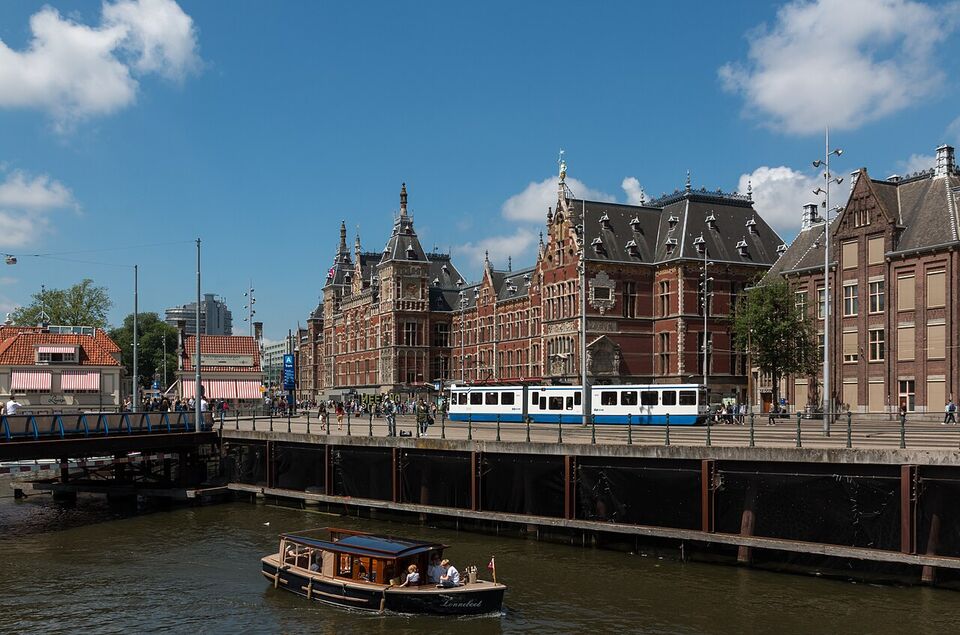
Pickpockets work crowded places where people are distracted: Amsterdam Centraal station and its tram stops, crowded trams and metro cars, the Dam, busy museum queues, markets and the narrow lanes of the old center. Typical methods are a bump or a question while a second person lifts a phone or wallet, or a bag opened at the bottom while you look at a map.
- Use a zipped bag, worn in front, and keep a phone in a front pocket rather than the back pocket or the top of an open bag.
- Do not leave phones, cameras or bags on a cafe table or on the back of a chair, especially on terraces.
- Be most careful when boarding and leaving trams, trains and escalators, and in station crowds on arrival after a long flight.
- Split your cash and cards between pockets, and keep a copy of your passport photo page separate from the passport.
Bike theft
Bicycles are everywhere, and bike theft is very common in the Netherlands, according to reference sources on Dutch cycling. If you rent a bike, use the lock that comes with it, lock the frame to something fixed, not just the wheel, and avoid leaving it in a quiet spot at night. A bike left outside the racks may be removed by the city: the fee to reclaim one in Amsterdam is €25 (about $28), according to the city's cycling page. Our cycling guide covers rental and the rules of the road.
Phone snatching
Phone snatching by riders on scooters or bikes is a reported pattern in Dutch cities. A rider comes alongside, grabs a phone held in the hand, and is gone. You can lower the risk by not walking with your phone in your hand beside the road, not using it at a curb, and keeping it away from the side nearest traffic. If it happens, do not chase; report it to the police and your carrier, and use your phone's remote lock.
Scams to know
- Fake petition or survey: someone with a clipboard asks you to sign for a cause while a second person works your pockets, or asks for a donation. Say no and keep moving.
- Fake tickets and tours: unofficial sellers offer museum tickets, canal cruises or "skip the line" access on the street or online. Buy from the attraction's own site or a named reseller, and check the exact date and time. See our museums page for how timed tickets work.
- Taxi and ride issues: taxis are the priciest transport option. Ask for the fare before you ride, use a licensed taxi or a ride app, and avoid unmarked cars that approach you at the airport or station. Trains and trams cover most trips for far less.
- Card and ATM tricks: use machines inside banks, cover the keypad, and watch for devices on the card slot.
- Friendly strangers: be wary of anyone who approaches to "help" with a ticket machine or a phone and then wants money or access to your card.
Insider tip
Pay with a contactless card or phone wallet where you can. It means fewer bills in your pocket, a faster transaction and an easier time freezing a lost card. Some places refuse cash, so see our money page.
Nightlife, alcohol and street drugs
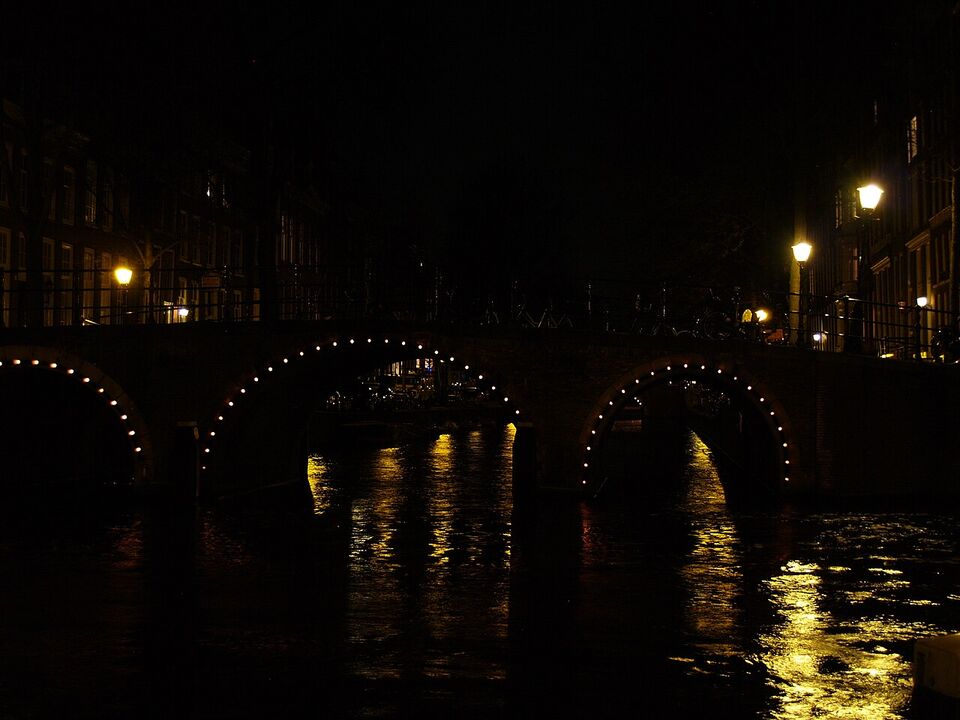
Amsterdam's center is busy late at night, and the city has been open about the problems that come with party tourism. Weekend nights in the old center and around the main squares are the most crowded and the most intoxicated, and that is when theft and fights are most common.
- Stay with your group, and agree on a meeting point and a way home before you go out.
- Watch your drink and do not accept drinks from strangers.
- Decide your route back in advance. Night trams and buses run on a reduced pattern, and the Amsterdam & Region Travel Ticket is valid on night buses (see the getting around page).
- Keep alcohol inside the bar. Street drinking is banned in the Red Light District area.
Street dealers
Do not buy drugs from the street. Dealers in the center are widely reported to sell fake or mislabeled substances, and buying from them can mean robbery, a scam or a health emergency. The law and city rules on cannabis are on our cannabis page. Hard drugs are illegal, and the toleration policy does not cover them. Smoking cannabis on the street in De Wallen carries a €100 (about $112) fine.
Water, canals and bikes
Canals have no railings in most places, and people do fall in, especially at night, after drinking, or while looking at a phone. The water is cold for much of the year, the sides are steep, and getting out can be hard. Keep away from the edge when you have been drinking, do not sit with your legs over the quay late at night and do not swim in canals.
Drunk cycling is a related risk. We have not confirmed an official fine, but riding after drinking is unsafe and can be penalized, and cyclists are involved in many accidents in central Amsterdam. If you cannot walk straight, walk the bike or take a tram.
Bike lanes and traffic
For many Americans, the bike lanes are the biggest surprise. Bicycles, e-bikes and scooters move fast and expect people to stay out of the red-paved lanes.
- Do not stand or walk in the bike lane, and look both ways, then again, before you cross. Bikes do not always stop.
- Watch for trams: their rails can catch a bike wheel, so cross rails at an angle.
- If you cycle, use the lane on the right, use front and back lights after dark as required by law, and do not ride on footpaths or in shopping streets. Helmets are not compulsory.
Stations, trams and getting around safely
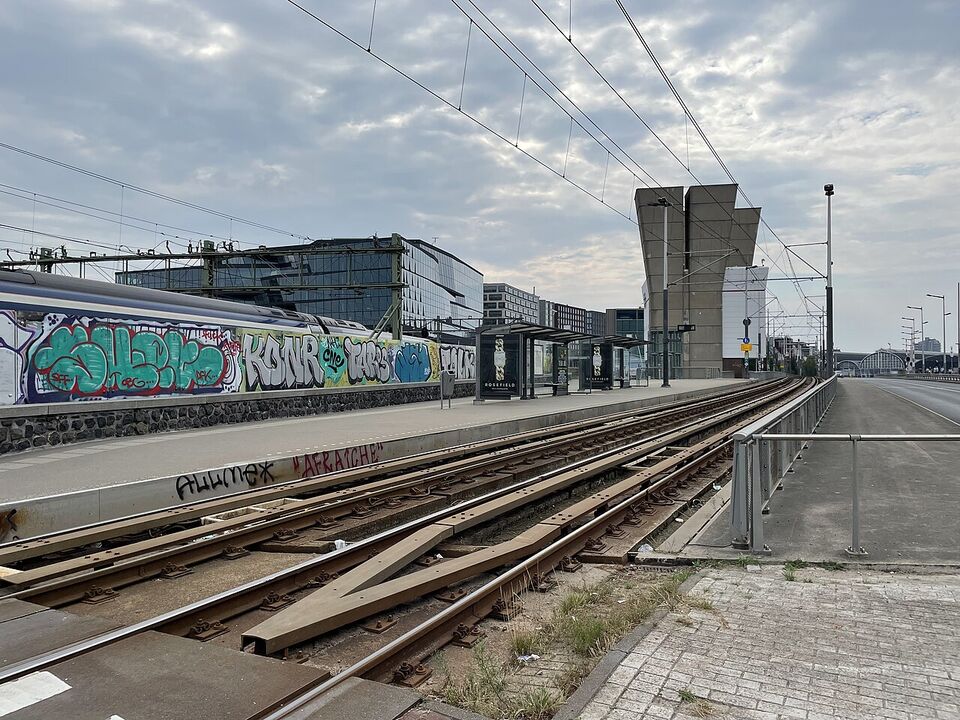
Most incidents on public transport are thefts, not assaults. Amsterdam Centraal, Schiphol and other large stations are crowded at arrival times, and thieves look for people who are tired, carrying luggage or reading a departure board. Keep your bags in view, keep one hand on your luggage while you check the board, and be careful when a stranger offers to help you with a ticket machine or a heavy bag.
Trams and trains are well lit and well used, and late-evening service is common in the big cities. Sit near the driver or in a carriage with other people at night. Check in and out with a contactless card or your OVpay method, and do not hand your card to a stranger to "help" at a gate. If a gate does not open or a stranger crowds you at the turnstile, step back and use another. Our getting around guide explains fares and check-in rules.
Hotels, rentals and luggage
Use the room safe for your passport and spare cards, and do not leave valuables visible in a parked car, including a rental. Cars with bags visible inside are an easy target in any busy tourist area. If you are staying in a rental apartment, check that the lock works and do not post your travel dates and address on social media. Amsterdam limits short-term rentals, so confirm that a host's listing is legitimate before you pay; see where to stay.
If something goes wrong
- Get to a safe place, and call 112 if anyone is hurt or in danger.
- For theft, file a police report at a police station or through the non-emergency line, 0900-8844. Ask for a copy of the report.
- Freeze or cancel cards, and use your phone's lock and tracking tools.
- If your passport is lost or stolen, contact the U.S. Consulate General in Amsterdam, which handles all consular services in the Netherlands.
- Contact your insurer's assistance line, and keep every receipt.
- Tell family or friends where you are, and update them when you are safe.
Americans who need assistance can also call the State Department 24/7 at +1-202-501-4444 from abroad.
Emergency numbers and help
Save these before you arrive.
| Need | Number | Notes |
|---|---|---|
| Police, fire, ambulance | 112 | Free from any phone; operators can handle English |
| Police, non-emergency | 0900-8844 | English-language line; for reporting theft and other non-urgent crime |
| U.S. citizen emergency | +31 (0)70 310-2209, then press 3 | Alternate +1 301 985 8808 |
| State Department, 24/7 | +1-202-501-4444 from abroad | +1-888-407-4747 from the U.S. and Canada |
If you are the victim of theft, report it to the police as soon as you can; you will need the report for an insurance claim. Cancel cards right away, and contact the consulate if your passport is lost or stolen.
The US Embassy and the Amsterdam consulate
The U.S. Embassy is at John Adams Park 1, 2244 BZ Wassenaar, near The Hague, phone +31 70 310-2209. For most travelers, the more useful office is the U.S. Consulate General in Amsterdam, at Museumplein 19, 1071 DJ Amsterdam, which provides all consular services in the Netherlands for American citizens, according to the embassy's website. That includes help with lost passports and emergencies. Check the embassy site at nl.usembassy.gov for appointment rules and hours, because these change.
Enroll in STEP
The Smart Traveler Enrollment Program (STEP) is free. It sends you security updates for the country and helps the embassy reach you in an emergency. The embassy website offers enrollment, and it takes a few minutes online before you leave.
Travel insurance and documents
Buy travel insurance that covers medical care and evacuation, trip interruption and lost belongings. Medicare and many US health plans generally do not cover care abroad (see our health page), so a policy is more important than it may seem. Before you buy, read the exclusions for rented bicycles, alcohol-related injury and activities like cycling.
- Passport: keep it in a secure place, and take a photo of the photo page.
- Cards: bring two cards from different networks and keep them in separate places.
- Insurance: save the policy number and the 24-hour assistance number offline.
- Phone: set up a passcode and remote lock, and have a charged battery pack.
- Entry: check the border rules, including the new biometric system, on our entry page.
Solo, women and LGBTQ+ travelers
Solo travelers
The Netherlands is an easy country for solo travel: transport is reliable, English is widely spoken, and eating alone is normal. The same big-city precautions apply. Tell someone your plan, keep your phone charged, and be extra careful after drinking, in quiet streets and at night.
Women
Most women travel in the Netherlands without difficulty. Catcalling and unwanted attention do happen, mostly in nightlife areas, and the usual advice applies: stay in well-lit areas, book rides through a licensed service, watch your drink, and do not hesitate to enter a shop or call for help. In an emergency, call 112.
LGBTQ+ travelers
The Netherlands was the first country to legalize same-sex marriage, in 2001, and Amsterdam is a well-known destination for LGBTQ+ travelers; the city hosted WorldPride from July 25 to August 8, 2026. Visible affection is common in city centers. As anywhere, attitudes vary by area and incidents can occur, particularly late at night or in more rural places. The I amsterdam site lists LGBTQI+ resources. If you are harassed or attacked, report it to the police and ask them to record it as discrimination.
Children and families
Children are welcome almost everywhere, and Dutch cities are well designed for strollers and walking. The main safety issues are traffic and canals.
- Teach children to stay out of the bike lanes, and hold hands near the street and the water.
- Choose a hotel room away from open canals or an unprotected balcony, or ask for a higher floor.
- Take extra care in crowds, at stations and in nightlife areas; agree a meeting spot and write your number on a card in a child's pocket.
- Plan the day around meals, rest and indoor options for rain. Our families page has more.
For parents, the Red Light District and its nightlife are not designed for children; see our page on the area.
Weather, the North Sea and fireworks
Weather is a safety issue because it is cold, wet and windy for much of the year. Winter days can be dark by late afternoon and pavements can be slippery. Dress in layers and carry a rain jacket. Our when to go page has monthly details.
North Sea beaches
The North Sea is cold and has currents and changing tides. Beaches at Zandvoort, Scheveningen and other resorts usually have lifeguards in season, but conditions can change fast, and the water temperature can shock even strong swimmers. Swim only in marked areas, follow flag signs and lifeguard instructions, keep children close, and do not swim after drinking. Check local conditions on the day. Out of season, assume there is no lifeguard.
New Year's Eve fireworks
Consumer fireworks are banned nationwide from August 1, 2026, in time for New Year's Eve 2026. Mayors can grant exemptions only to local associations or foundations, with set safety distances. On New Year's Eve 2025-26, 1,239 people were treated for firework injuries, up 7 percent on the year before, according to VeiligheidNL as reported by DutchNews in November 2026. If you are in a city that night, expect crowds and noise, stay clear of anyone setting off illegal fireworks, and keep pets and children away from windows.
Add it to a route in the trip builder, or ask us to plan the hotels, trains and guides for you.