Flying to the Netherlands from the US
Almost every American who flies to the Netherlands lands at Amsterdam Schiphol (airport code AMS). It is a large hub, served by US airlines and by KLM, the Dutch national carrier, and it has a railway station directly under the terminal. For most trips, nonstop or one-stop to Schiphol is the right answer.
The flight is an overnight one for most travelers. You board in the afternoon or evening, sleep or try to, and land the next morning. That fits a first day that starts with the train into the city, but it often means arriving before your hotel room is ready. We cover the arrival step by step on the Schiphol transfers page, and on how to plan the rest of the trip on the planning page.
A word on how current this page is. Airlines change routes and schedules every season, and some routes run only part of the year. The lists below come from an airport listing and news reports as of mid-November 2026, and we could not confirm every route from an airline site. Treat them as a starting point and confirm on the airline's website before you book.
Nonstop flights by airline and city
A secondary airport listing (Wikipedia's Schiphol page, retrieved in November 2026) shows these US cities served from Amsterdam. Cities in italics below are seasonal, and a city on this list is not a guarantee that a flight runs on your dates. We name no newly announced routes, so check each airline for those.
| Airline | US cities listed | Notes |
|---|---|---|
| Delta | Atlanta, Boston, Detroit, Minneapolis/St. Paul, New York JFK, Salt Lake City, Seattle | Delta and KLM are partners and often sell the same flight under two codes |
| United | Chicago O'Hare, Houston, Newark, Washington Dulles; San Francisco (seasonal) | United plans an A321XLR to Amsterdam from Dulles starting December 1; planned, so verify |
| American | Philadelphia; Dallas/Fort Worth (seasonal) | Check aa.com for current routes |
| JetBlue | Boston (seasonal) | Seasonal, so check your dates |
| KLM | Atlanta, Austin, Boston, Chicago, Houston, Las Vegas, Los Angeles, Miami, New York JFK, Portland (Oregon), San Diego, San Francisco, Washington Dulles; Minneapolis/St. Paul (seasonal) | KLM adds West Coast and Sun Belt cities that US airlines do not |
The listing also shows that the busiest US routes by passengers in 2025 were New York JFK, Atlanta, Minneapolis/St. Paul, Detroit and Boston, which tells you where there are the most flights and the most competition.
If your home airport is not on the list, you will connect, usually through a US hub on the same airline, or through a European hub. That adds time but often lowers the price. Airline partnerships often let you book one ticket from a smaller city to Amsterdam with a single connection.
Insider tip
Search by city name (for example "Amsterdam") rather than only by the airport code AMS, and use the fare calendar on the airline's own site. Add nearby US departure airports to the search: a two-hour drive to a hub can save a connection and a lot of money.
Flight times and schedule patterns
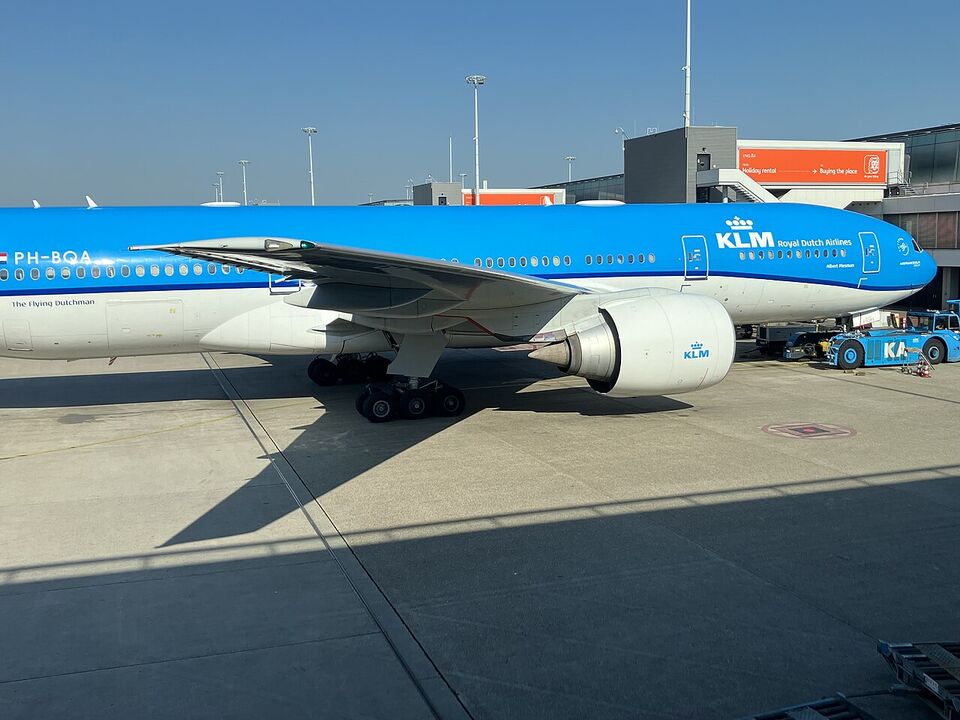
As a rough guide, nonstop flights to Amsterdam take about 7 to 8 hours from the East Coast, 8 to 9 from the Midwest and South, and 10 to 11 from the West Coast; exact times differ by airline and season, so read the schedule when you book. Flights from the East Coast are shorter than flights from the West Coast, and the trip home can take longer than the trip out.
The pattern is that departures leave the US in the afternoon or evening and reach Schiphol in the morning or around midday, local time. Amsterdam is 6 hours ahead of New York for most of the year, so an overnight flight lands in the morning or around midday local time. The return flights tend to leave in the morning or at midday and land in the US the same afternoon or evening, which makes the last day easy to plan.
Arrival times and the 11 p.m. to 7 a.m. night window
Some early-morning arrivals touch the night period that the Schiphol rules count as 11 p.m. to 7 a.m. Night flights are limited under the planned cap, so airlines schedule within it. In practice that matters to you only if your flight is retimed, so check your confirmation emails and the airline's app in the days before you fly.
Different from home
Because the flight is overnight and you arrive in the morning, hotel check-in is often in the afternoon. Ask whether your hotel will hold your bags, or plan a first day around the train, a canal walk and a light lunch. We suggest not booking a timed museum slot for the morning you land.
When to book and what drives prices
We did not find a source with current fare data, so this section is general advice rather than a price list. Transatlantic fares are generally lower in the colder months outside Christmas and New Year, and higher in summer and during the tulip season, which at Keukenhof runs from March 18 to May 9, 2027. King's Day on Tuesday, April 27, 2027 and the days around it are busy and expensive in Amsterdam, and hotels as well as flights tighten up. The when to go page covers weather and crowds by month.
A useful rule is to start watching fares several months ahead and buy when you see a price you are comfortable with, rather than waiting for a drop. For peak dates such as late March to May, summer and the December holidays, book earlier. Flexibility helps: shifting your departure by a day or two, or flying midweek, can change the price noticeably.
- Use fare alerts or the airline's fare calendar to see price swings by day.
- Check the fare type. Basic economy fares often limit seat choice, checked bags and changes.
- Compare a nonstop with a one-stop itinerary, and the total including bags.
- Consider flying open-jaw, into Amsterdam and out of another city. See the next section.
- Use a card with no foreign-transaction fee, and if a booking page offers to charge in dollars or euros, compare the totals before you confirm.
For trip costs beyond the flight, try the budget calculator.
Schiphol, other airports and open-jaw trips
Schiphol is the practical choice for almost everyone. It has the widest choice of US flights and a station directly under the terminal, with trains to Amsterdam, Utrecht, The Hague and Rotterdam. A few other airports are worth knowing.
Brussels
Brussels can be cheaper on some dates, and it suits trips that include Belgium. Direct Eurocity Direct trains link Brussels with Schiphol, with up to 16 services a day according to a secondary listing, and NS International advertises Brussels from about €25 (about $28), which is a promotional fare and moves around.
Eindhoven and Rotterdam The Hague
These smaller airports mainly serve European routes, and we could not confirm US nonstops. They are useful if you arrive from another European city, not for an Atlantic crossing. Rotterdam The Hague Airport is closer to those two cities than Schiphol.
Paris, London and other hubs
An open-jaw ticket flies you into one city and home from another. Eurostar trains run direct between London and Amsterdam in about 3 hours 52 minutes, and Amsterdam to London in 4 hours 9 minutes, according to Eurostar. NS International lists Paris from about €35 (about $39) one way.
If you are adding Belgium or Germany, open-jaw saves you backtracking: fly into Amsterdam, take the train to Brussels or Cologne, and fly home from there. Our Belgium and beyond page gives the route options. Check one-way fares carefully, because a one-way flight can cost more than half a round trip, and check how baggage rules differ on a split ticket.
Choosing between airlines
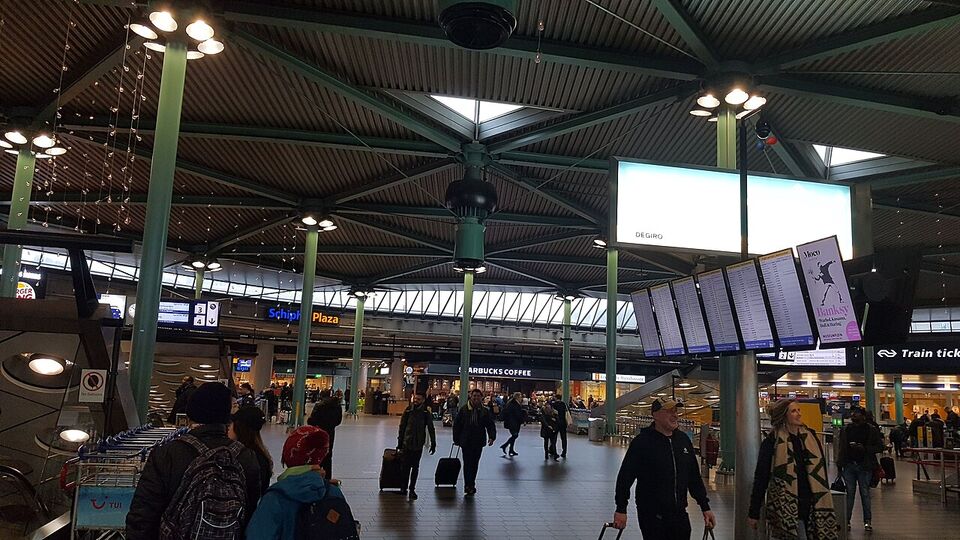
When several airlines fly your route, price is only one factor. Think about which one gets you to Amsterdam at a useful hour, which one has the most daily flights if something goes wrong, and which loyalty program you already use. A route with several flights a day gives you backup options if a flight is canceled, while a single daily flight leaves you waiting for the next day.
- Nonstop from your own city: usually the simplest, even if it costs a little more, because there is no connection to miss.
- A US carrier versus KLM: on shared routes you may see the same flight sold by two airlines. Compare the fare rules, bag allowance and seat selection, because they can differ even when the plane is the same.
- Frequent-flyer miles: award seats to Europe are limited in summer and around school holidays, so search early if you plan to use miles.
- Families and longer stays: a morning arrival suits children who sleep on the plane, but check how early the first train and your hotel check-in are. The families page has more.
Whatever you pick, keep your confirmation and the airline's contact details offline. If a flight is canceled, the airline's app is usually the fastest way to rebook, and a call to the airline from your phone wallet or eSIM line is the backup. The phones, data and power page explains how to stay reachable abroad.
Connecting through Europe
Connections through a European hub, such as London, Paris, Frankfurt or Reykjavik, can be cheaper than a nonstop, and they open up cities with no direct flight to the US. Icelandair is listed at Schiphol for connections through Reykjavik. The trade-offs are time, the risk of a missed connection and, in some cases, passport control at the connecting airport.
The key rule is about the Schengen area, a group of European countries without passport checks between them. If you connect in a Schengen country, such as Germany or France, you clear immigration there, and your arrival in the Netherlands is like a domestic flight. If you connect in the United Kingdom, which is not in Schengen and has its own rules, you still clear Dutch controls on arrival at Schiphol. Check the entry and transit rules for every country on your itinerary, and see our entry rules page for the Netherlands.
Allow enough time for a connection: if you must change terminals or clear security again, give yourself at least a couple of hours, and book both flights on one ticket so the airline rebooks you if you miss the second.
Baggage and carry-on
US airlines on Atlantic routes include a checked bag on some fares and charge for it on others, so read the fare rules before you pick the cheapest ticket. KLM's rules may differ from Delta's even on a shared flight, so check the carrier that operates your flight. Keep your carry-on to the size and weight the airline lists, because European airlines can be stricter than US ones.
- Liquids: European security usually limits liquids in carry-on bags to small containers in a clear bag. Rules and scanners vary by airport, so check the airline and the airport before you pack.
- Power banks and lithium batteries: keep them in your carry-on, not your checked bag, and check the airline's limit.
- Souvenirs: cheese, stroopwafels and flower bulbs are popular, but customs rules apply. See the shopping page.
- Medications: carry them in the original packaging in your hand luggage and read the health page.
Travel light if you can. Dutch trains have steps, platforms can be crowded, and canal-house stairs are steep and narrow, so a carry-on and a backpack beat two large suitcases.
Beating jet lag
Amsterdam is 6 hours ahead of New York most of the year, 7 ahead of Chicago, 8 ahead of Denver and 9 ahead of Los Angeles. The US and Europe change clocks on different dates, so the gap shrinks to 5 hours from New York for a few weeks in spring and autumn. Coming from the East Coast, you lose a night's sleep, and the first day is the hardest.
- Move your sleep a little earlier for a few days before you fly, if you can.
- Set your watch to Amsterdam time when you board and try to sleep when it is night there.
- Drink water, go easy on alcohol and caffeine on the plane.
- When you land, get outside. Daylight is the strongest signal to your body clock.
- Stay awake until early evening local time. A short nap of 20 to 30 minutes is better than a long one.
- Keep the first day light: a walk along the canals and an early dinner.
Winter days are short: about 8 hours 49 minutes of daylight in mid-November and about 7 hours 44 minutes in mid-December, so use the morning light. If you are visiting in summer, daylight lasts past 10 p.m. in June and can keep you awake.
Schiphol, the flight cap and delays
Schiphol is under a long legal fight over noise and flight numbers. A new Airport Traffic Decree, backed by a parliamentary majority on September 29, 2026, sets a cap of 478,000 flights a year, of which no more than 27,000 may fly at night. The cabinet wanted it in force on November 1, 2026, but we could not confirm that it took effect, and environmental groups are preparing lawsuits. An earlier decree with the same cap was annulled by the Council of State on March 11, 2026.
What it means for you is modest. Schiphol handled 477,552 flights in 2025, so a 478,000 cap keeps traffic near last year's level, not far below it. For travelers the practical effect is small. We suggest checking your airline's app, allowing extra time at the airport, and verifying the latest status on the Schiphol site before you travel. The status of the decree is a question to confirm closer to your date.
Watch out
Delays happen at any big hub, from weather, strikes and busy security queues. Build slack into your first and last days: do not book a non-refundable tour for the morning you land or a tight train for the day you fly home, and keep key documents in your hand luggage.
Arriving, leaving and flying home
When you land, you follow the signs to passport control. The EU's Entry/Exit System (EES), which registers non-EU visitors with a facial image and four fingerprints on a first entry, has been fully in use at external borders since April 10, 2026. A first crossing takes longer, later ones are lighter, and queues vary by airport and time of day. ETIAS, a separate online travel authorization, had not started as of mid-November 2026; check travel-europe.europa.eu before you go.
After the border, you collect bags and walk into the arrivals hall, with the train station directly below. The next step by step is on the Schiphol page. For departures, arrive early: most airlines advise about three hours for long-haul flights from a big hub, but check your airline's advice, and allow extra for check-in, security and passport control.
Flying home
On the way back, you go through US Customs and Border Protection (CBP) when you land. Most travelers declare what they bought on a form or kiosk, and the personal duty-free exemption was $800 per person on CBP's latest page, which includes one liter of alcohol. Bring receipts for expensive items. Global Entry members and others with expedited programs may use kiosks, and other travelers use Mobile Passport Control or the usual lines. Confirm your options on cbp.gov, because processes change.
Food and plant products need special care. Check CBP and USDA rules before you buy bulbs, cheese or other food to bring home; the shopping page collects the details we could confirm. For other practical questions, see the FAQ.
Add it to a route in the trip builder, or ask us to plan the hotels, trains and guides for you.