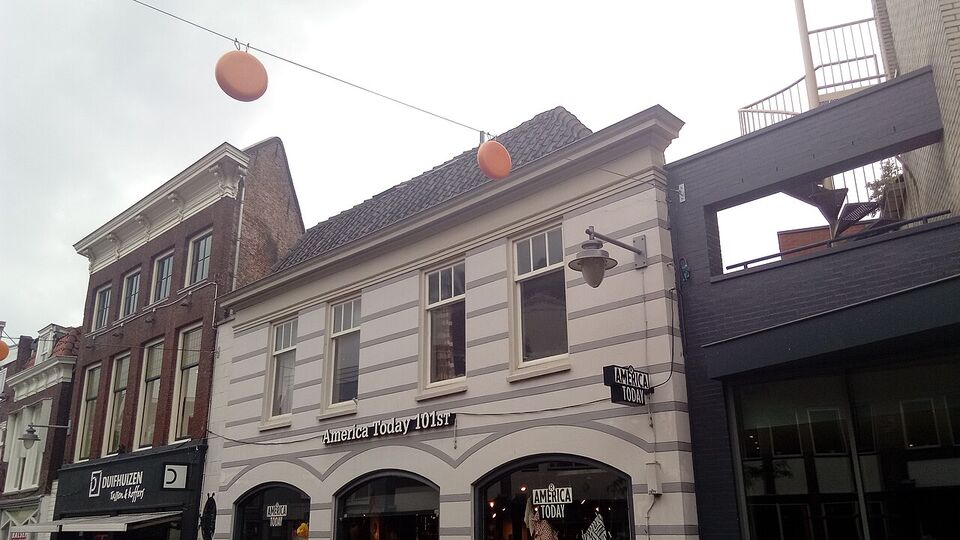
What to buy, and what to check first
Dutch shopping for visitors comes down to a short list: cheese, stroopwafels, chocolate sprinkles, genuine Delft Blue, jenever, bulbs, and a handful of design objects. This page covers what is worth buying, how to spot a fake, how to shop for tulip bulbs responsibly, markets and department stores, opening hours, the VAT refund for non-EU visitors, the limits on what you can bring into the United States, and whether to ship or carry.
Most of the rules about taking things home are set by U.S. Customs and Border Protection (CBP) and the U.S. Department of Agriculture (USDA), not by Dutch shops. Where we could not confirm a current rule, we say so and point you to the official site. Shopkeepers are not a substitute for the government page. For general money matters see our money guide, and for what to pack for the return, see packing.
Watch out
The two purchases most likely to cause trouble at U.S. customs are plant material (bulbs, cuttings, seeds) and food (cheese, meat, bakery goods). Read the CBP and USDA pages before you buy, declare everything on your customs form, and keep receipts. Do not rely on a shop's assurance that "this is fine to take to America".
Cheese
Dutch cheese is a good gift because it is made to travel and is widely sold in vacuum-sealed wedges. A hard cheese such as aged Gouda keeps well, does not leak, and travels in a bag far better than a soft cheese. Look for packs with a clear label and a sealed wrapper rather than a loose piece wrapped at the counter.
Some names are protected under EU rules, which is a useful guide to authenticity. Noord-Hollandse Gouda has a protected designation of origin, and boerenkaas (farmhouse cheese, made from the milk of the farm's own cows) has a protected status as a traditional specialty. If a label says either, that tells you something about how it was made.
Where to buy: good cheese shops in the old centers of Amsterdam, Haarlem and Delft will vacuum-seal on request, and supermarkets sell sealed wedges at lower prices. You can also visit a cheese market, which is as much a show as a sale. The Alkmaar market runs on Fridays from 10 a.m. to 12:30 p.m. on the Waagplein from the first Friday in April to the first Friday in September (so April 2 to September 3, 2027). Gouda holds a market on Thursdays from 10 a.m. to 1 p.m., April to August, and Edam's is a Wednesday re-enactment in July and August. These are tourist-oriented, and you should check the dates before you travel.
Whether you may bring cheese into the United States is a customs question, not a shop question. We could not confirm the current rules, so check the CBP and USDA pages, declare the cheese, and keep it sealed and labeled in your bag. If the rules change or you are unsure, eat it in the hotel instead. See food for tasting ideas.
Stroopwafels and chocolate sprinkles
The stroopwafel is a thin waffle cookie sandwiched with caramel syrup. Fresh ones from a market stall, warm and soft, are a treat and a small experience in themselves. Packaged ones travel better, so for gifts choose sealed packs from a supermarket or a bakery. Put them in your carry-on, not under heavy items, since they can crack. Gouda is especially known for stroopwafels.
Hagelslag (chocolate sprinkles) is the Dutch breakfast topping: you put it on buttered bread. It comes in boxes in supermarkets and is among the cheapest and lightest gifts you can bring. Look for the milk and dark chocolate varieties. Other Dutch sweets and snacks to look out for in supermarkets include licorice (the Dutch are among the biggest licorice eaters in the world, and it ranges from sweet to very salty, so taste before you buy a bag), butter cookies and almond-filled pastries. All packaged, sealed sweets are generally easy to carry, but declare any food on your customs form if the form asks.
Delft Blue: genuine or imitation
Delft Blue is the blue-and-white pottery named after the city of Delft, which made its tin-glazed earthenware in imitation of imported Chinese porcelain in the 17th century. The product you will see most in souvenir shops is not always made in Delft or painted by hand. There are three broad categories:
- Hand-painted originals from established makers in Delft, with a painter's marks and a certificate.
- Printed or transfer-decorated pieces with a blue-and-white look, often made abroad.
- Cheap souvenirs, including tiles, miniature clogs and windmills, which may be fine as gifts but are not heirlooms.
How to check. Turn the piece over. Royal Delft, the oldest Delftware factory in the Netherlands (since 1653), says that its ceramics come with a certificate of authenticity, and describes pieces as signed, numbered and hand-painted, and its site has a page explaining its date letters and hallmarks. So the base is where you look: a factory mark, a date or code, and a painter's initials suggest a hand-painted piece, while a plain, uniform stamp or a sticker suggests mass production. Brushwork on a hand-painted piece is slightly uneven, with lines varying in thickness, while a transfer pattern is perfectly identical across many pieces. Ask the seller who made it and where, and ask for the certificate.
In Delft itself you can visit Royal Delft. As listed on its site in November 2026, the museum is open daily from 9:30 a.m. to 5 p.m., the flagship store and brasserie are open Monday to Friday, 9 a.m. to 5 p.m., and a brand store in the Market is open daily from 10 a.m. to 6 p.m. Hours change, so check before you go. The site also lists the United States among its shipping destinations. See Delft for the town, and art for the Golden Age background.
Insider tip
Pick one good piece rather than several cheap ones. A single hand-painted tile or small plate from a known maker is worth more as a keepsake than a box of printed souvenirs, and it is easier to pack. Wrap it in clothes in the middle of your suitcase, not on the edge.
Tulips and bulbs: what can legally come home
Bulbs are among the most tempting buys and the most regulated. Plant material can carry pests and diseases, and the rules for bringing it into the United States are set by CBP and USDA APHIS. We could not load the current APHIS pages and the Dutch customs pages, so we do not describe permit or certificate requirements here. What we can say:
- Check the CBP and USDA APHIS rules for travelers before you buy any bulbs, plants, seeds or cuttings.
- Ask the seller what documents come with the bulbs and whether the pack is prepared for travel to the United States. A bag that says "export" is not the same as the paperwork you may need.
- Declare all plant material on your customs form. Failing to declare agricultural items can lead to penalties.
- Do not dig up bulbs or flowers from fields. Bulb fields are working farmland, so look from the road or the path and do not walk into them.
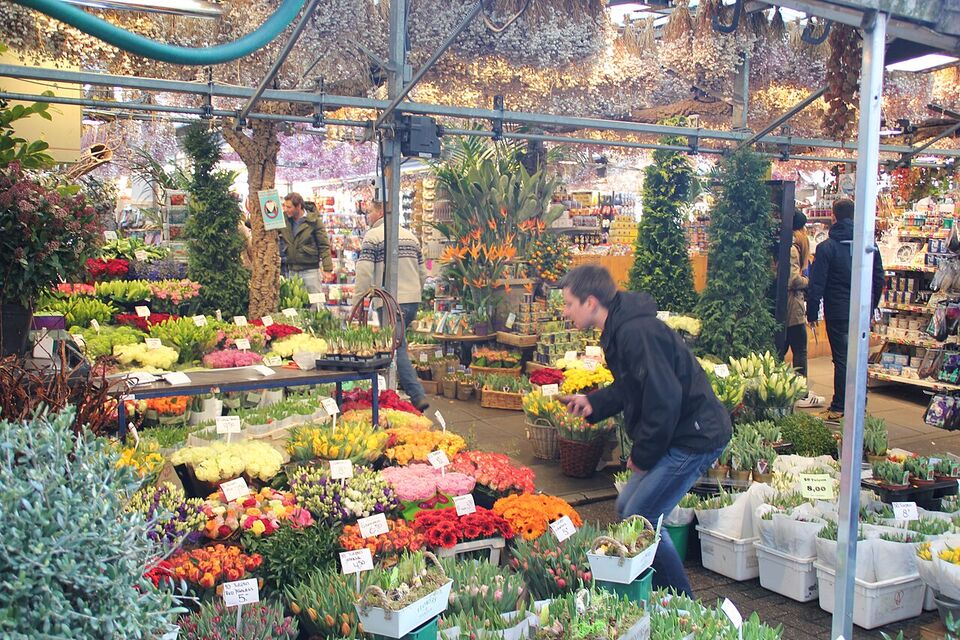
If the paperwork looks too complicated, the practical alternative is to buy cut flowers to enjoy during your stay, or to order bulbs from a U.S. supplier after you get home. Bulbs bloom in the Netherlands from around late March to early May depending on the weather. Keukenhof is cashless, so bring a card; see tulips and Keukenhof for the season. Amsterdam's floating flower market on the Singel sells bulbs and souvenirs, and the same rules apply to anything you buy there.
Jenever, chocolate, clogs and design
Jenever
Jenever (also spelled genever) is the juniper-flavored spirit that is the ancestor of gin, and its name is protected under EU rules. It comes in "young" and "aged" styles, and tasting rooms in Amsterdam and other cities pour it in small tulip-shaped glasses. Buy a bottle in a liquor shop or at the airport shop after security. Remember the U.S. limit: CBP's latest page lists one American liter (33.8 fluid ounces) of alcohol inside the $800 personal exemption. Pack bottles in checked luggage, wrapped well. See drinks.
Chocolate and sweets
Chocolate bars, filled chocolates and licorice are easy gifts, and supermarkets stock Dutch brands at lower prices than tourist shops. Check that chocolate will not melt in a hot bag in summer.
Wooden clogs
Klompen (wooden clogs) are souvenirs now, not everyday shoes, though some farmers and gardeners still wear them. A pair is bulky and heavy in a suitcase, so consider a miniature pair as a keepsake. If you buy full-size ones for use, check the fit, since wooden shoes do not stretch. A demonstration at a clog workshop, such as the ones at Zaanse Schans, is more interesting than the shop itself; see windmills.
Dutch design
For a more modern gift, look at Dutch design: small ceramics, glassware, textiles, stationery, and museum-shop objects. Museum shops are good for art books, prints and postcards, and in some cases you do not need an entry ticket to enter the shop; for example, the Mauritshuis says its shop is in the foyer with the same hours as the museum and needs no ticket. The Rijksmuseum, the Van Gogh Museum and the Stedelijk all have shops, and the Mauritshuis, notably, is cashless, so bring a card.
Markets and department stores
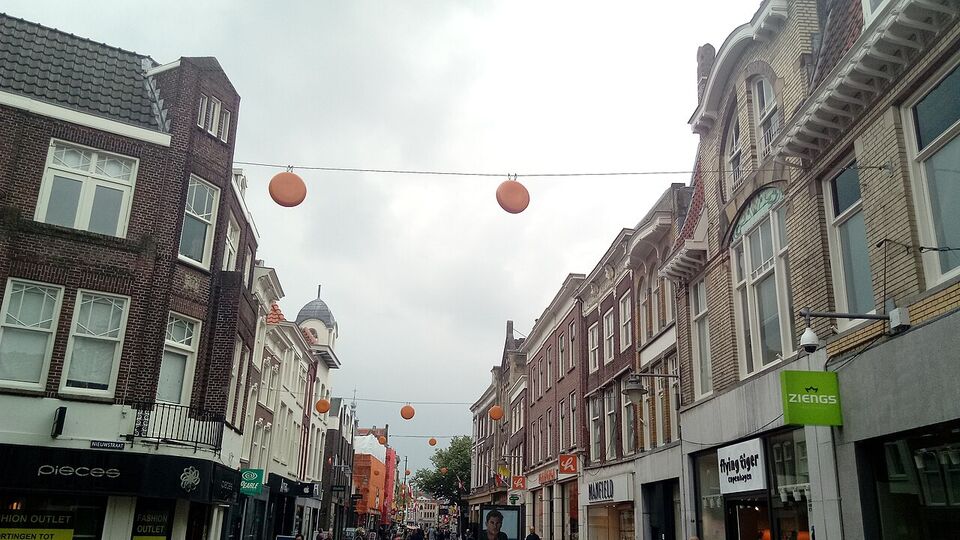
Markets are a good place to see everyday Dutch life and to buy cheese, stroopwafels, flowers and small gifts. Amsterdam's best-known street market is the Albert Cuyp Market in De Pijp, and the Waterlooplein and Noordermarkt are other well-known markets. We could not confirm current market days and hours, so check the city site. In Rotterdam, the Markthal is a food hall with shops and stalls, open Monday to Thursday 10 a.m. to 8 p.m., Friday 10 a.m. to 9 p.m., Saturday 10 a.m. to 8 p.m. and Sunday noon to 6 p.m., though individual shops vary. See Rotterdam.
Department stores such as De Bijenkorf and the variety chain HEMA are useful for design, kitchenware and simple gifts at fair prices. We have not confirmed current hours, so check their websites. Supermarkets, especially the large chains, are the cheapest place for sprinkles, cookies, cheese and chocolate. Big-city centers also have shopping streets that are busy at weekends, particularly Saturdays.
Different from home
Price tags in the Netherlands include VAT (BTW), so the number on the shelf is what you pay, and there is no sales tax added at the register as in most U.S. states. Cards are the default, and some places, including Keukenhof, the Mauritshuis and the Anne Frank House, refuse cash. Carry a contactless card, and keep a little cash as a backup in markets.
Opening hours, Sundays and Mondays
Dutch shopping hours have loosened, but they still differ from the American habit of long hours seven days a week. In big cities such as Amsterdam, Rotterdam and Utrecht, many shops open on Sundays, often from around noon until the early evening, as the Markthal's Sunday hours show. In smaller towns, some shops close on Sundays, and many close early on one weekday evening. Some shops open late on Monday mornings. Evening and weekend hours vary by town, so look up the specific shop.
Holidays matter too. On public holidays, such as King's Day (April 27, 2027) and Christmas Day (December 25) many shops and services close or run reduced hours. We could not confirm supermarket hours for December 25-26 and December 31, so check ahead if you travel then. See our month guides for December and January for seasonal timing.
VAT refund for non-EU visitors
If you live outside the European Union, you may be able to get the VAT (the Dutch BTW) refunded on some goods you buy and carry home in your luggage. The system works through tax-free shopping forms issued by shops that take part. We could not load the Dutch Tax and Customs page that explains the rules, so treat the outline below as a guide and check the official source before you shop.
- Check that the shop offers tax-free shopping. Look for a sign or ask. Not all shops do, and shops usually set a minimum purchase per receipt.
- Ask for the form at the till, with your passport, and make sure the shop fills it out correctly. Keep the receipt and the unused goods.
- Get the form validated by customs when you leave the EU, normally at the airport before you check the bag with the goods in it. If your last EU airport is not Schiphol, the customs stamp usually comes at that last EU airport. Allow extra time for this step.
- Claim the refund through the operator named on the form, by card credit or cash at a refund desk, as the form describes. Refund companies usually take a fee, so you get back less than the full VAT.
Rules for who qualifies, the minimum spend, the time limit and how the stamp works are set by the Dutch authorities and can change. Check belastingdienst.nl and douane.nl, and ask the shop to show you how it works. For many small purchases the refund is not worth the queue, so reserve it for larger items. See also our entry requirements page for airport procedures, and Schiphol for the departure process.
Save money
Do the arithmetic before you shop for a refund: the net amount after the refund company's fee may be small on a modest purchase. For souvenirs, cheese and sweets, supermarkets and markets will usually save you more than the paperwork does. See budget.
US customs limits
When you return to the United States, you fill out a declaration and answer for everything you bring. As of CBP's latest page we found (last modified May 14, 2024), the personal duty-free exemption for returning residents is $800 per person, usable once every 31 days, and one American liter (33.8 fluid ounces) of alcohol falls inside it. Because that page is dated, check cbp.gov for the current allowance, including limits on tobacco and any rules for items you are mailing.
Other points to keep in mind:
- Declare everything you bought abroad, including gifts, and keep your receipts.
- Declare food and plant items even if you believe they are allowed.
- If you are carrying a large amount of cash, check cbp.gov for the reporting rule; we could not confirm it from the page we read.
- Families traveling together may be able to declare as a group; check the CBP rules.
- Do not bring cannabis home.
Ship or carry?
Carry the small, valuable and fragile things: Delft Blue, art, a bottle of jenever (wrapped, in checked luggage), sealed food gifts. Carry-on is better for fragile ceramics, though liquids over the usual security limits must go in checked bags. Weigh your bag at the hotel, because airline baggage limits vary by ticket.
Ship the large or heavy: framed art, a set of dishes, or several pieces of pottery. Some makers will ship directly. Royal Delft, for example, lists the United States as a shipping destination, with shipping from Delft in two working days. Ask any seller about the total cost, insurance, tracking, and who pays any U.S. import charges. A low item price can hide a high shipping and duty cost, and a package that arrives late is harder to fix than a bag you carried yourself. Keep the receipt and the tracking number.
Whichever you choose, buy gifts near the end of your trip, so you carry them for less time, and leave room in the bag. For flights home, see flights, and for planning the rest of your trip, see our trip planning guide.
Add it to a route in the trip builder, or ask us to plan the hotels, trains and guides for you.