Start with how long you have
The Netherlands is small, flat and well connected, so a trip is mostly a question of how many nights you want to spend in Amsterdam and how many day trips you want to add. Most Americans do best with a base city, a handful of timed museum tickets and a train pass in their phone, not a moving suitcase.
Here is how the days tend to work out:
| Time | What fits | Who it suits |
|---|---|---|
| 2 to 3 days | Amsterdam only: one big museum, the Anne Frank House if you booked it, the canals, a bike ride or a walk through the Jordaan | A stopover, a long weekend, or a trip that is mostly somewhere else in Europe |
| 4 to 5 days | Amsterdam for two or three days, then one or two day trips (Haarlem, Utrecht, Zaanse Schans or Delft) | First-timers who want a sense of the country |
| 7 days | Amsterdam plus Delft and The Hague, Rotterdam, and Kinderdijk or the tulip fields in spring | Art, architecture and history fans; families who like variety |
| 10 to 14 days | A second base in the east or south (Utrecht, Hoge Veluwe, Maastricht), or a side trip to Belgium | Repeat visitors, or anyone who also wants slow days |
The short answer for a first trip: five nights is a comfortable minimum if you want more than the highlights. Three nights works, but expect to choose between museums and day trips, not do both. On a longer trip, put the extra nights into a second base, not more Amsterdam. Our guide to Amsterdam covers what the city itself can fill, and day trips lists the easy ones.
Insider tip
Jet lag is the hidden cost of a short trip. Flights from the US usually land in the morning, which tempts people to start sightseeing at noon. Plan an easy first day (a canal walk, an early dinner) and put timed tickets from day two onward.
Choosing a base
You do not need to change hotels to see the Netherlands. The rail network is dense, trains run often, and nearly every city in the Randstad (the ring of cities around the middle of the country) is a short ride from the others. Pick a base for the feel you want in the evening, since that is when you will be there.
| Base | Best for | Trade-offs | Day trips from here |
|---|---|---|---|
| Amsterdam | First trips, museums, the airport train, nightlife | Busiest and priciest; heavy bike and tourist traffic; a rising tourist tax | Haarlem, Zaanse Schans, Leiden, Utrecht, Delft, The Hague, Rotterdam |
| Haarlem | Quieter evenings, a small old center, an easy beach day | Fewer hotels; you commute to Amsterdam for the big museums | Amsterdam, Leiden, Keukenhof in season |
| Utrecht | Canals with a student feel, central rail hub | Fewer headline sights of its own; busy station area | Amsterdam, Hoge Veluwe, Rotterdam, Delft |
| Rotterdam | Modern architecture, food halls, a big-city energy different from Amsterdam | Less of the postcard Dutch look; some sights are spread out | Delft, The Hague, Kinderdijk, Amsterdam |
| The Hague or Delft | Mauritshuis, government quarter and the beach (The Hague); a compact, pretty old town (Delft) | Fewer evening options; Delft is small and quiet | Rotterdam, Leiden, Amsterdam; Keukenhof in season |
Some practical points. Delft trains to Rotterdam and The Hague run as often as every five minutes, which makes it a good low-key base for a family. Haarlem has about eight trains an hour to Amsterdam, and the ride takes 15 to 20 minutes. For other connections, check journey times on the NS journey planner or 9292.nl, since timetables change each December.
If you only want one base, Amsterdam is the practical choice. If you have been before, or you hate crowds, Haarlem and Utrecht let you sleep somewhere calm and still reach Amsterdam by train in a short ride. Our where to stay guide goes through neighborhoods in more detail.
Hotel, apartment or houseboat
Three kinds of lodging suit most travelers. We give price tiers ($ under $120 a night for a double, $$ $120 to $300, $$$ over $300) because rates move with the season. In central Amsterdam in high season, expect most hotels to fall in the $$ and $$$ tiers, with $ options mostly in hostels, smaller towns or outlying areas. These tiers are our estimate, not a quoted rate, so check current prices when you book.
Hotels
Hotels are the simplest choice for a short stay. Dutch canal-house hotels are often narrow, with steep, twisty stairs and small rooms, and many have no elevator. If you have mobility needs or heavy luggage, ask before booking whether there is a lift and what floor your room is on. Larger chain hotels near stations and the Zuid and RAI areas are easier on that score.
Apartments
An apartment helps with a family, a longer stay or a kitchen. In Amsterdam, the city's own tourism site says an owner may rent out a home for up to 30 days a year, and no more than four people may stay in a rental. Hosts must also pay the tourist tax. Treat a listing that offers a big group, or that wants cash on arrival, as a warning sign. Other cities set their own rules, which we have not confirmed, so ask the host about registration.
Houseboats
A moored houseboat is a memorable place to stay, and they come in styles from cozy to quite modern. They also come with quirks: narrow gangways, steep stairs, limited storage, and a few steps of walking from the street. Ask about heating in cooler months, where the boat is moored, and how you reach it with luggage. They are best for couples and for travelers who like an unusual stay and can handle stairs.
Save money
Hotel bills in the Netherlands carry two taxes on top of the room rate. VAT on hotel rooms has been 21% since January 1, 2026 (it was 9% before). Amsterdam adds a tourist tax of 12.5% of the room price (excluding VAT) in 2026. As an example, a €150 (about $168) room with VAT included works out to about €15.50 (about $17) a night in tourist tax. Amsterdam's council passed a budget on November 12, 2026 that raises the tax to 16% from 2027, with later steps planned. Check whether the price you see includes taxes. Staying in Haarlem, Utrecht or Delft can ease the bill, though each city sets its own tourist tax, and we have not confirmed the others.
Trains and bikes, not cars
For nearly every trip, the answer is trains plus bikes, with trams and buses inside cities. Rail connects the airport, the main cities and many smaller towns, and a car will mostly cost you time and money. Central Amsterdam parking is expensive, many old centers are tight or closed to cars, and you will not need a car for any sight in this guide's main routes.
- From Schiphol: the train to Amsterdam Centraal takes 14 to 17 minutes and costs about €5.50 (about $6) per person. A single-use ticket adds a €1.60 (about $1.80) surcharge; paying with OVpay (contactless card or phone) avoids it.
- Tickets: OVpay accepts contactless Visa, Mastercard, Maestro and V PAY, and Apple Pay and Google Wallet. American Express is not accepted. Tap in and tap out at the gates, or you can be charged a full fare of €33.30 (about $37), refundable afterwards. Our getting around page explains this step by step.
- In Amsterdam: a GVB 24-hour ticket costs €10 (about $11). The Amsterdam & Region Travel Ticket costs €23 (about $26) for one day, €34 (about $38) for two and €44 (about $49) for three, and it covers GVB and regional buses plus NS trains within the Amsterdam area.
- Bikes: Amsterdam bike rental averages about €10 (about $11) a day. See our cycling guide before you ride, because the bike lanes are fast and the rules are strict.
Different from home
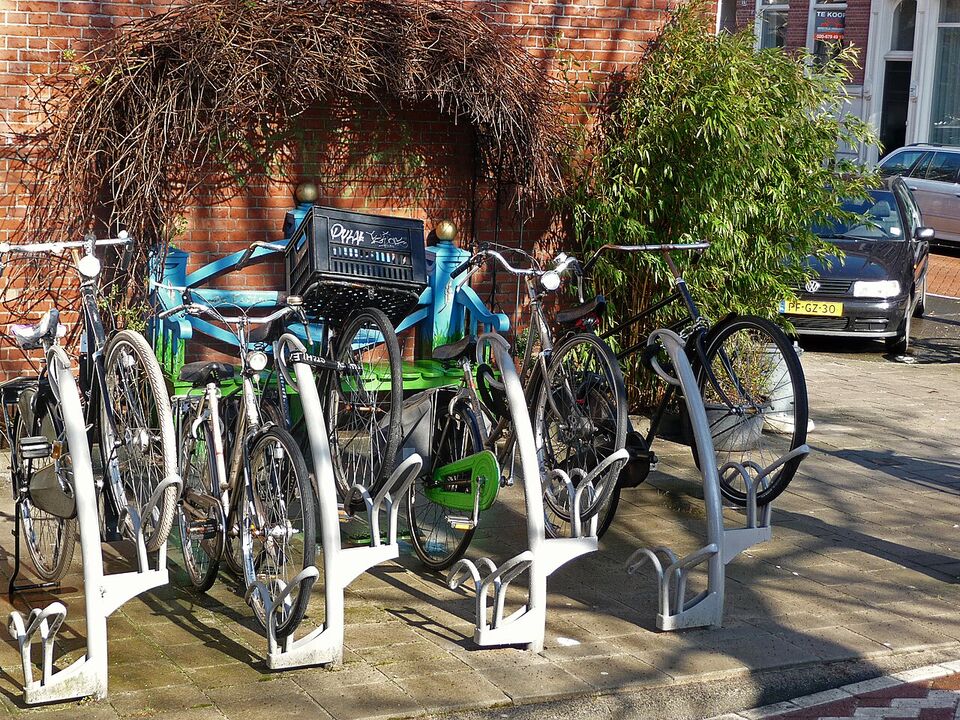
On Dutch streets, bikes are traffic. Use the bike lane on the right, use lights front and back after dark, and do not ride on footpaths or in shopping streets. A bike left outside racks can be removed and costs €25 (about $28) to reclaim. Helmets are not compulsory. If you are not used to city cycling, walking and trams are fine for most of Amsterdam.
If you do want a car, it makes sense for the countryside: the Hoge Veluwe, the north, Zeeland or a tour of small towns. Our driving guide covers the rules, fuel prices and parking. A valid US license is accepted for a normal visit, and many rental firms still suggest an International Driving Permit, so check yours with the rental company.
A first trip: seven days
This plan keeps one hotel in Amsterdam for the whole week and uses day trips by train. Swap days around to match your timed tickets and the weather. In tulip season, replace a day trip with Keukenhof.
- Day 1
Arrive and settle in
Take the train from Schiphol to Amsterdam Centraal, drop your bags, and walk the canal belt for an hour or two. Eat early, sleep early, and keep the first day free of tickets.
- Day 2
Museum quarter
Book the Rijksmuseum for a morning start (adults €25 (about $28); every visitor needs a booked start time). Walk through the museum garden, which is free, and spend the afternoon in the Vondelpark or at the Van Gogh Museum, which also requires a booked start time (adults €25 (about $28)). See our museums guide for choosing between them.
- Day 3
Anne Frank House and the canals
Visit the Anne Frank House at the slot you booked weeks ago (adults €16.50 (about $18), about an hour inside, no photography). Afterwards take a canal cruise or wander the Jordaan. Read our Anne Frank House page for how the ticket release works.
- Day 4
Haarlem or Zaanse Schans
Haarlem is 15 to 20 minutes by train and has a compact old center. The village of Zaanse Schans is about 20 minutes from Amsterdam by train, free to walk around, with windmills and small museums that charge separately.
- Day 5
Delft and The Hague
Spend the morning in Delft's old center and the afternoon at the Mauritshuis in The Hague (adults €21 (about $24), cashless, timed slot online). Both are an easy train ride from Amsterdam.
- Day 6
Rotterdam and Kinderdijk
See the Markthal and the Cube Houses in Rotterdam, then take the WaterShuttle to the Kinderdijk windmills (about 30 minutes; adults €21 (about $24)). It is a long day, so choose one half-day from each if you tire easily.
- Day 7
Slow morning and departure
Leave a buffer for the train to Schiphol and for passport control. A last stroll, a market, or a morning at a museum you skipped fits here.
A repeat trip: five days
If you have seen Amsterdam, spend your time elsewhere. This plan uses two bases and avoids doubling back.
- Day 1
Arrive and go to Utrecht
Take the train from Schiphol to Utrecht, check in, and walk the canals. The Dom Tower staircase tour costs €13.50 (about $15) and is easier if you book ahead; bags are not allowed up, and lockers are free.
- Day 2
Hoge Veluwe and Kröller-Müller
The national park and its art museum are a long day out, best planned with bikes inside the park. Park entry is €13.85 (about $16) for adults in 2026, and museum admission is not included. Entrances and the tea house take cards only. See the Hoge Veluwe page.
- Day 3
Move to Rotterdam
Switch bases by train, then explore the architecture and the harbor. Stay two nights if you like cities with an industrial edge.
- Day 4
Leiden or The Hague
The Rijksmuseum van Oudheden (adults €14 (about $16)) in Leiden is a strong choice, or pair the Mauritshuis with the beach at Scheveningen.
- Day 5
Return to Schiphol
Allow extra time before a flight. Border checks and security can take a while, especially if you are leaving the Schengen area for a long-haul flight.
More ideas, sorted by interest, are in our by-interest guide, and the trip builder helps you put days in order.
What to book, and when
Dutch tourism is busiest around tulip season, summer weekends and around Christmas, and the most popular museums sell timed slots. Work backward from the thing that sells out first.
- Flights, three to six months out. See flights to the Netherlands for airlines and airports. Several US airlines fly nonstop to Amsterdam; check current schedules.
- The Anne Frank House, about six weeks before your visit. Tickets are sold only on the official website, for a timed slot, with no sales at the door. Each Tuesday at 10 a.m. Central European Time, all tickets for a visit six weeks later are released. For example, tickets for Tuesday, December 29, 2026 go on sale on Tuesday, November 17, 2026. Set a reminder, and be ready on the minute.
- Hotels, as soon as dates are firm. For April, King's Day weekend (April 27, 2027) and the weeks around Easter (March 28, 2027), book early. If your plans can change, choose a rate with free cancellation.
- Rijksmuseum and Van Gogh Museum, a few weeks ahead. Both require a booked start time for every visitor, and the Van Gogh Museum does not sell tickets at the door. Use the museum's own site, because lookalike resellers charge more.
- Keukenhof, once 2027 tickets go on sale. Prices for 2027 were not announced when we checked; the 2026 adult price was about €21.50 (about $24).
- Trains: no need to book domestic trains ahead. Dutch domestic trains generally do not use seat reservations. International trains do: see Belgium and beyond.
- Everything else, 1 to 3 days ahead: canal cruises, restaurants, bike rental and small museums.
Watch out
Many "official" ticket sites are resellers with extra fees. The Anne Frank House sells only through annefrank.org, and Van Gogh Museum tickets are sold at tickets.vangoghmuseum.com. Reseller prices can be a few euros higher. Always check that the web address matches the museum's.
Tulips and the calendar
If tulips are the point of your trip, they decide your dates. Keukenhof, the big garden in Lisse, is open from Thursday, March 18 to Sunday, May 9, 2027, from 8 a.m. to 7 p.m. daily, including Sundays and holidays; the last entry is at 6:15 p.m. The bulb fields outside usually bloom from around late March to early May, depending on the weather, and that is hard to predict months ahead.
Two good ways to plan: pick late March to mid-April for the garden itself, when it has hyacinths and daffodils plus early tulips, or aim for the second half of April if you want the outdoor fields. In the tulip season, the Amsterdam & Region Travel Ticket works on Qbuzz bus 858 from Schiphol to Keukenhof. Keukenhof is crowded, and the park counted more than 1.4 million visitors in 2026, so go early on a weekday if you can.
Our tulips guide covers the fields, the garden and the bus. The wider seasonal picture is in when to go, and holidays such as King's Day are listed in the festivals guide.
Money and phones in brief
The Netherlands uses the euro, and for planning we use €1 = US$1.12. Cards are the norm: carry a contactless Visa or Mastercard and a bit of cash. Some places refuse cash, including the Anne Frank House (bank or credit cards only), the Mauritshuis (cashless), and the Hoge Veluwe entrances. Full details, including tipping and ATM tips, are on our money page.
For your phone, a prepaid Dutch SIM or eSIM is cheap: one KPN prepaid SIM listing was €4.99 (about $6) including €10 (about $11) of credit. One third-party guide listed Verizon's TravelPass at about $10 for each day of use abroad, so ask your carrier about day passes before you go. Bring a plug adapter and check that your chargers are dual-voltage. See phones, data and power for the details.
Entry rules and the new EES fingerprint registration are on the entry page, and what to pack for the weather is in the packing guide. For a budget, our budget page adds up daily costs.
Planning checklist
- Choose your dates around tulips, King's Day or school holidays using when to go.
- Check your passport and read the entry rules, including EES and ETIAS.
- Book flights, then the Anne Frank House and your main museum slots.
- Book a base: where to stay compares neighborhoods and cities.
- Plan day trips: day trips and regions show where to go next.
- Decide on Belgium or Germany: Belgium and beyond.
- Set up cards, phone and adapters: money and connected.
- Read about safety and emergency numbers on the safety page. The State Department advisory for the Netherlands was Level 2 ("Exercise increased caution in the Netherlands due to terrorism") as of November 2026; enrolling in the Smart Traveler Enrollment Program (STEP) is free.
This page gives you the frame. The detail lives in the other guides, so use the links above to fill in each piece, and recheck prices and rules shortly before you go, because several of them change on January 1.
Add it to a route in the trip builder, or ask us to plan the hotels, trains and guides for you.