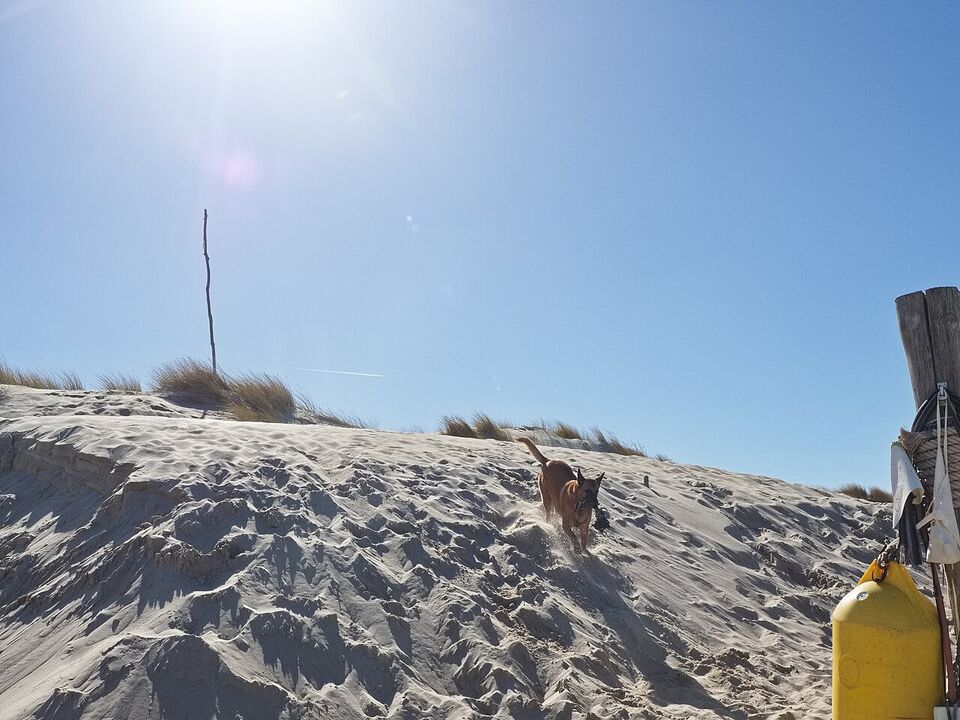
Overview: can you bring a dog or cat?
Yes, you can bring a pet from the US to the Netherlands, but the paperwork takes planning. The rules are set by the EU and applied by the Dutch food and consumer safety authority (NVWA), and the US side is handled by the Animal and Plant Health Inspection Service (APHIS) of the Department of Agriculture. Airlines add their own rules on top. This page walks through the steps in order, then covers what changes once you arrive: trains, hotels, restaurants, museums, parks and beaches, and the rules for coming home.
Two cautions apply to the whole page. First, pet import rules change, and several details below could not be verified on official pages as of November 2026. Second, the penalties for a mistake are real: a pet with the wrong paperwork can be refused entry or held. Treat this page as a map, and treat the official pages as the rules. For the trip around your pet, see Entry Rules for Americans (EES) and Flights to the Netherlands.
If travel with a pet sounds like more trouble than it is worth, skip to the section on alternatives. A good pet sitter or boarding kennel is often the better choice for a short trip.
The rules for a dog or cat from the US
The NVWA says that for travel from outside the EU, the import requirements depend on whether the country you come from counts as low risk or high risk for rabies. Check the NVWA's "Travelling from third countries" page to see how the United States is classified before you start. The USDA's APHIS publishes the US side of the process. According to the APHIS page we reached (it shows no date, so confirm it is current):
- Microchip: your pet needs a working microchip, and it must be implanted before the rabies vaccination. Ask your vet to scan the chip at every visit.
- Rabies vaccination: a primary vaccination is valid for one year. You must wait at least 21 days (or the vaccine's own immunity period, if longer) after a primary shot before the pet can travel.
- Health certificate: an accredited US veterinarian completes an EU health certificate and submits it through APHIS's online system (VEHCS). The certificate is valid 30 days after it is issued, and APHIS must endorse it within 10 days of your arrival in the EU. Ask your vet to count the days with you.
- Number of pets: the "non-commercial" route applies to five or fewer pets.
- New certificates: APHIS says new certificates are required from October 2026, with old ones endorsed through September 30, 2026 still accepted for that period. Make sure your vet uses the current form.
Two points we could not confirm: whether a rabies titer test is required for pets from the US (the APHIS page we reached does not say), and which airport entry point or entry procedure the Netherlands requires for pets from outside the EU. Ask the NVWA and your airline, and confirm that your arrival airport accepts pets. Do not assume.
Watch out
The order matters. The microchip comes before the rabies shot, the wait of at least 21 days comes after it, and the endorsement window is short. A pet vaccinated before it was microchipped, or a certificate endorsed too early, can be treated as invalid. Build the timeline backward from your flight date.
A simple timeline
- Three months or more before: call your airline about pet rules and space, and look up the NVWA and APHIS pages. Book a vet who is USDA-accredited.
- Two months before: confirm or implant the microchip, then give the rabies vaccination if it is not valid already.
- Four to six weeks before: make sure at least 21 days have passed since a primary rabies shot, and ask your vet to start the health certificate in VEHCS.
- The week before: take the certificate through the APHIS endorsement step within the window, and keep the originals in your carry-on, not in checked luggage.
- Flight day: carry the paperwork, the carrier and your pet's usual food. Allow extra time at the airport.
Flying with a pet
Airline rules vary, and we did not verify any airline's current policy. Ask each airline whether pets travel in the cabin, as checked baggage or as cargo, what the fee is, how many pets they allow per flight, and what size carrier is accepted. Cabin carriers are usually limited to small pets that fit under the seat. Some airlines restrict flat-faced (brachycephalic) breeds or stop pet carriage in extreme heat or cold. Book early, because pet spaces are limited, and get the policy in writing.
Think about the animal. A long transatlantic flight is stressful, and an older pet or one with health problems may be better off at home. Talk to your vet about whether your pet should fly at all, and about sedation, which many airlines and vets discourage. Practice with the carrier for weeks beforehand so it feels familiar. A comfortable, well-ventilated, airline-compliant carrier matters more than any gadget.
For a trip that starts at Schiphol, see Schiphol Airport Transfers for the airport layout and Flights to the Netherlands for flight planning.
Pets on trains, trams and in cars
On NS trains, a dog needs its own ticket. A secondary source lists a dog day ticket (dagkaart hond) at €3.70 (about $4.10), sold in the same formats as other NS tickets. NS's own page should be checked for the current price, for rules about carriers and muzzles, and for whether small animals in a closed carrier travel differently. Look at ns.nl before you travel. City trams, buses and metros are run by local operators such as GVB in Amsterdam, and we did not verify their pet rules, so check the operator's site.
If you drive, a rental company may have its own rules about pets in the car. Ask about cleaning fees. Never leave a pet in a parked car in warm weather. Our Driving in the Netherlands page covers renting a car, and Trains and Transit in the Netherlands covers trains and transit.

Hotels, restaurants and attractions
Hotels set their own pet policies. Some accept dogs for a fee, others do not allow pets at all, and a few limit the size or number of pets. Ask before you book, and ask in writing about the fee, the room type and whether the animal may be left alone in the room. Short-term rental hosts set their own rules, too. Do not name a hotel as pet-friendly unless you have confirmed it for your dates. See Where to Stay in the Netherlands for how to choose a base.
Restaurants and cafes vary by venue. Some welcome a well-behaved dog, particularly on a terrace, but the policy is the owner's, so ask before you sit down. Do not assume.
Attractions are stricter. The Mauritshuis admits service dogs but no other pets. Delft's Old and New Churches do not allow pets, and assistance dogs are welcome. Zaanse Schans welcomes leashed dogs, but not in all locations: dogs are not allowed in some of the museums. At Keukenhof, a secondary report of the park's rules says one dog per person is allowed on a leash and dogs must stay out of the pavilions and restaurants. Check keukenhof.nl for the current rules before the March 18 to May 9, 2027 season.
Plan to alternate: a morning walk in a park, a few hours for an indoor sight when the dog can rest at your hotel if it is allowed, then an afternoon outside. If the dog cannot be left alone, choose outdoor sights.
Leashes, parks and beaches
Expect leash rules in cities and in many parks, and look for signs at the entrances. Rules differ by municipality, and we did not verify them for any city. Keep your dog under control near bike lanes, where cyclists are fast and quiet. Pick up after your dog, and carry bags. Dutch streets are busy, and a dog that is calm at home may be startled by bells, trams and crowds. Keep the leash short on narrow canal paths and cobbled streets. Water is close by, and canal edges often have no railings.
Many Dutch beaches restrict dogs during the summer season. The limits differ by municipality and beach, with some beaches closed to dogs in summer and others offering dog-friendly stretches. Check the local municipality or beach operator's site for the dates and the zone. The country's national parks also post their own rules. In the Hoge Veluwe, for example, ask the park before you bring a dog, because we did not verify its policy.
Service animals
Service dogs are widely accepted. The Mauritshuis, Delft's churches and the Leiden Rijksmuseum van Oudheden state that they welcome assistance or guide dogs, and the I amsterdam events calendar includes a "service dog allowed" filter. Entering the Netherlands with a service animal is a separate question: we did not verify whether service animals follow the same import rules as pets, so check the NVWA and APHIS pages, and ask your airline about its service animal paperwork well ahead. Our Health and Medical Care page covers other trip-planning needs.
Returning home to the US
Do not leave the return trip until the last minute. The CDC has rules for dogs entering the United States, and the requirements depend on factors such as the dog's age, microchip, vaccination status and the countries it has recently been in. Some requirements may need paperwork filed before you travel or arrival at a particular airport. We could not fetch the CDC page as of November 2026, so we give no details. Read the CDC's dog import page before you book your outbound flight, because a missed requirement on the way home can be harder to fix from abroad than one at home.
Cats face different rules from dogs, and your destination state may add its own requirements. Check with the CDC, the USDA and your state veterinarian. Also check your airline's rules for the return flight, which may differ from the outbound flight. Keep your pet's records together, including the rabies certificate and microchip number, and carry copies.
Alternatives to bringing your pet
If the rules, the cost or your pet's health make travel hard, leave your animal at home. A trusted friend or relative, a professional pet sitter who comes to your house, or a boarding kennel are all options. A sitter lets your pet stay in familiar surroundings. Ask for references, meet the sitter before you go, and leave your vet's number and written instructions. For a trip shorter than a week or two, a sitter is often simpler and less stressful for the animal than a transatlantic flight.
If you do bring your pet, find a local veterinarian (dierenarts) near your base before you arrive, in case of illness. Emergency number 112 is for people; ask your hotel or the vet how to reach an emergency animal clinic. For a longer stay with a pet, see Long Stays in the Netherlands.
Add it to a route in the trip builder, or ask us to plan the hotels, trains and guides for you.