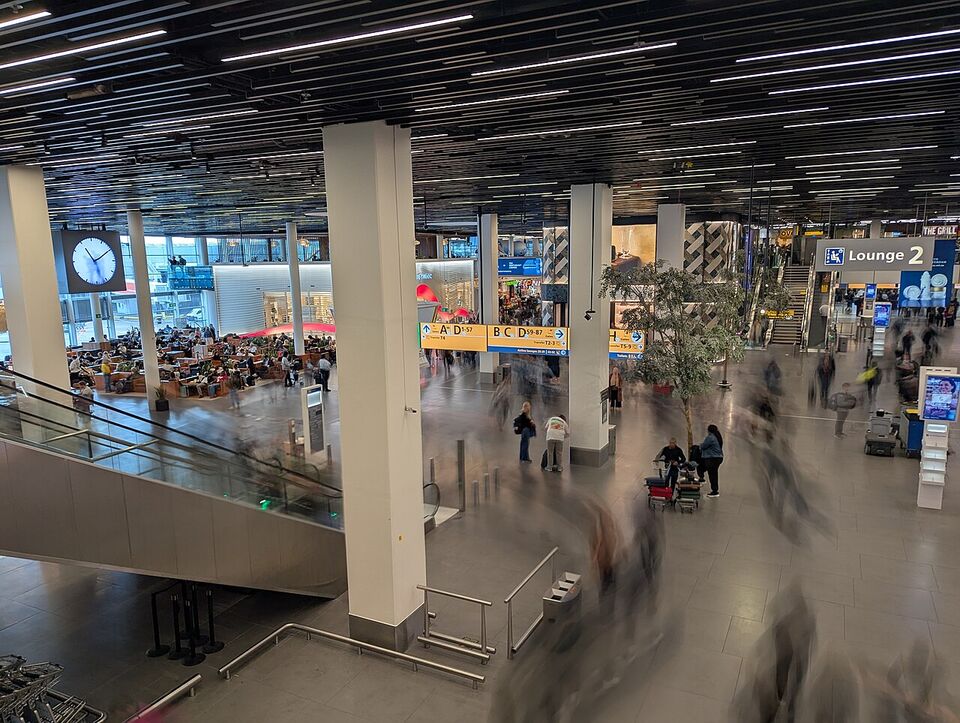
The short answer
Americans do not need a visa to visit the Netherlands as tourists. You enter the country on a valid US passport, you go through Dutch passport control at the first point you arrive in the Schengen area (usually Schiphol), and since April 10, 2026 you are registered in the EU's new Entry/Exit System (EES) the first time you arrive. ETIAS, the separate online travel authorization for visa-exempt travelers, has not started as of mid-November 2026, so you do not need it for a trip now.
This page walks through the steps in the order you will meet them: your passport, the day-count rule for the Schengen area, EES at the airport, the ETIAS situation, arrival at Schiphol, customs on the way in and on the way home, and how not to get caught by fake websites. Rules here change more often than prices do, so use the official links to confirm before you fly. The final authority is always the EU's official travel site, travel-europe.europa.eu.
Different from home
Entering the Netherlands means entering the Schengen area, a group of European countries with no routine border checks among them. You clear passport control once, at the first country you enter, and your stay is counted across all Schengen countries. A week in the Netherlands and a week in Belgium count together.
Your passport
You need a US passport book. A passport card is not a substitute for flying. Check the passport's expiry date well before you book flights, because many travelers find a problem only when they reach the airport.
The usual rule of thumb for Schengen entry is that your passport should be valid for at least three months beyond the day you plan to leave, and that it should have been issued within the previous ten years. We have not confirmed those exact numbers on an official page, so treat them as the minimum to aim for, and check the passport rules for the Netherlands and the airline's own requirements on the official EU site or the Dutch government's pages (netherlandsworldwide.nl) before you fly. Airlines can refuse to board you if your passport does not meet a destination's rules, and they check at the gate.
- Look at the expiry date, and renew early if it is under a year away and your trip is long.
- Check that the passport is in good condition: torn pages or a damaged chip can cause trouble.
- Carry a photocopy or photo of the photo page, kept separately, in case of loss.
- Make sure each family member, including children and babies, has their own passport.
If you lose your passport in the Netherlands, contact the US Consulate General in Amsterdam (Museumplein 19, 1071 DJ Amsterdam). All consular services in the Netherlands are provided there. See our safety page for the emergency numbers.
How long you can stay: the Schengen day count
The Netherlands is part of the Schengen area, which also includes Belgium, Germany, France, Italy, Spain and most other EU countries. For a short tourist stay, Americans are generally allowed to stay up to 90 days in any 180-day period, counted across the whole Schengen area, not country by country. That is how the rule is commonly described. We have not confirmed it on an official page here, so check the stay limit at travel-europe.europa.eu.
The practical points are these:
- The count is rolling. It looks back 180 days from any given day, so you cannot reset it by leaving for a weekend.
- Days in Belgium, Germany, France and any other Schengen country count toward the same total. If you spend two months in Spain and then plan six weeks in the Netherlands, you may be over the limit.
- Days in the UK, Ireland or other non-Schengen countries do not count. These are outside the Schengen area.
- With EES in place, the border system records your entries and exits, so the count is automatic and overstays are easy to spot. Overstaying can lead to fines, a ban on re-entry or trouble on later trips.
A typical two-week Netherlands trip, even with a side trip to Belgium or Germany, is far inside the limit. The rule matters for long trips, retirees spending a season in Europe, and remote workers. For stays longer than a short visit, see long stays, which covers the residence permit routes. Our page on Belgium and beyond also explains how to split a trip across countries.
Insider tip
If you plan several months in Europe, write down your entry date to the Schengen area and your planned exit date before you book, and count the days. EES records the same dates, so it is better to know your own count than to be surprised at the gate.
EES: fingerprints and a photo at the border
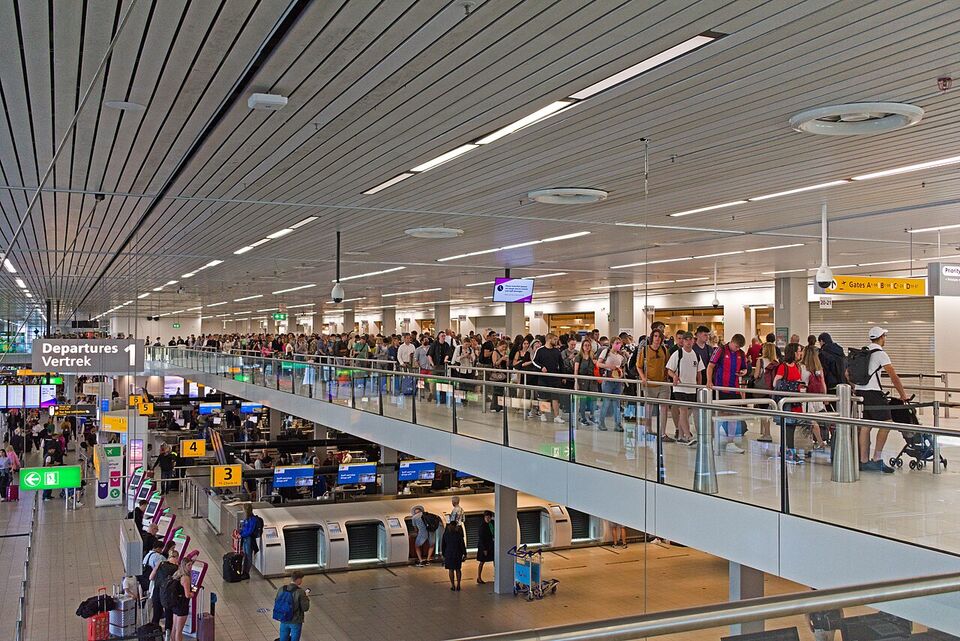
EES, the Entry/Exit System, is the biggest change to European travel for Americans in years. The EU says it has been fully operational at all Schengen external borders since April 10, 2026. It replaces passport stamping with a digital record of your entries and exits. At your first registration, officials collect a facial image and four fingerprints, along with your passport details. After that, later crossings are lighter checks. It is not a visa, it has no application and it costs nothing.
What to expect at Schiphol, step by step
- Follow the signs to passport control. If you arrive on a flight from outside Europe, you go to the non-EU lines (the signs will say which lanes are for non-EU passports), not the EU lanes.
- Use a kiosk, if there is one. At airports that have self-service kiosks, you scan your passport photo page, have your photo taken, and place your fingers on the reader. Airports differ. Some process everyone at the desk instead.
- Go to the border officer. At the desk, the officer checks your passport, may ask why you are visiting and where you are staying, and completes the registration or checks it against your record. At some airports a kiosk only pre-registers you, and the gate or officer admits you.
- Take your fingerprints on request. Place your fingers on the reader as instructed. The process on a good day takes under a minute at the kiosk, according to one expert's observation at another airport.
- Collect your passport and go to baggage claim. After passport control you are in the Netherlands.
Queues vary. EES works smoothly at some airports and slowly at others, and the system is flexible: border authorities have said biometric collection can be temporarily suspended when queues become too long, which means you may sometimes skip it. Do not count on that. Allow extra time on arrival, especially if you have a tight connection to a train or an onward flight, and keep your hotel details on your phone.
Children and families
We have not found an official rule for how EES treats children, including fingerprint requirements by age. Ask the border officer and check the EU's site before travel. Bring the whole family to the same line, keep passports ready, and expect extra time with small children. A calm, short answer to the officer's questions is the quickest way through.
Insider tip
Have your passport out and open to the photo page. Take off your glasses or hat if asked. Keep your fingers clean and dry, because wet or dirty hands can make fingerprints harder to read.
ETIAS: not required yet
ETIAS, the European Travel Information and Authorization System, is a planned online travel authorization for visa-exempt travelers to the Schengen area, similar in idea to the US ESTA. It is not a visa. ETIAS has not started as of mid-November 2026, so Americans do not need it for a trip now.
The status has shifted. The EU's own page from April 28, 2026 said ETIAS was scheduled to start in the last quarter of 2026, with the exact date to be announced. Press reports in July 2026 said the start had slipped to 2027, but we did not find an official EU statement confirming that. The honest summary is that ETIAS is planned for late 2026 or 2027. Before you fly, check travel-europe.europa.eu for the latest notice.
When it does start, the EU says authorization would last three years or until your passport expires, whichever comes first. Press reports put the fee at about €20 (about $22), but no official page we fetched gave an amount, so treat that as reported, not confirmed. You would apply online before you travel, and airlines would check it before boarding.
Watch out
Because ETIAS is not yet in operation, any website that sells you an "ETIAS" application as of mid-November 2026 is not offering an official service. Paid lookalike sites charge fees for forms that are free or do not yet exist. Use the official EU site, travel-europe.europa.eu, and never enter your passport details on a site you reached from an advertisement. When ETIAS does start, apply only through the official EU application.
Arriving at Schiphol, in order
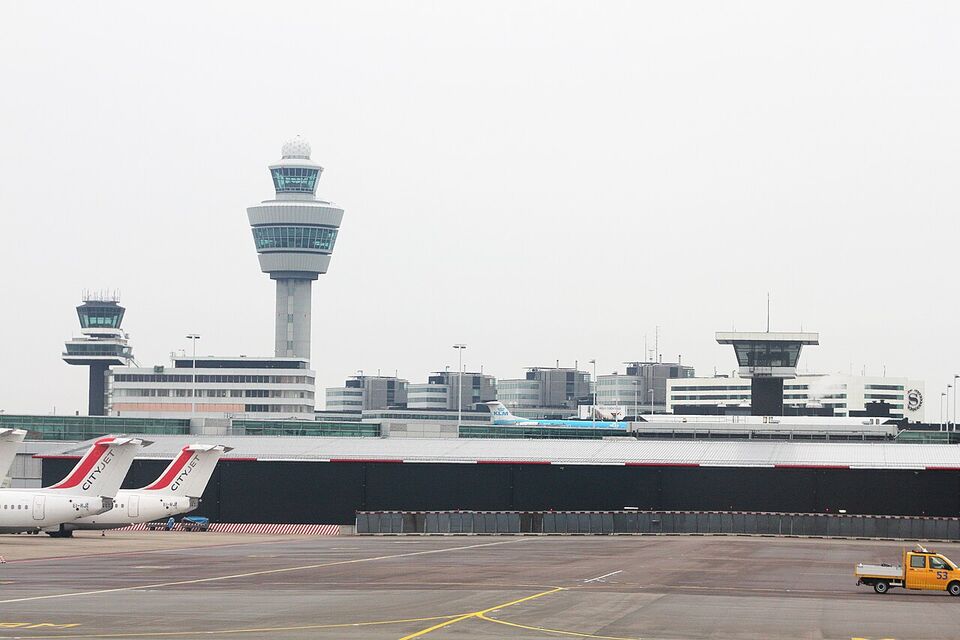
Schiphol is a large airport, but the arrival path is simple. Your flight lands, you walk to passport control, collect your bags, pass customs, and exit into the arrivals hall, where the train station sits under the same roof.
- Passport control. This is where EES registration happens if it is your first entry. If you connect through another Schengen airport, such as Paris or Frankfurt, you are checked there and arrive in the Netherlands as a domestic-style arrival, with no second passport check.
- Baggage claim. Look at the screens for your flight's belt.
- Customs. Most travelers walk through the "Nothing to declare" lane. If you carry more than the allowances below, you must declare.
- Arrivals hall. Buy a SIM, find an ATM, or go straight to the station. The train to Amsterdam Centraal takes 14 to 17 minutes and costs about €5.50 (about $6) per person. Tap in with a contactless card or phone to avoid the €1.60 (about $1.80) single-use ticket surcharge.
Our Schiphol guide covers transfers, taxis and the Intercity Direct train, which needs a supplement and does not stop at Amsterdam Centraal. If you are still booking flights, flights to the Netherlands lists the nonstops.
A note on Schiphol's flight limits. Parliament backed a new decree on September 29, 2026 that caps flights at 478,000 a year, and we did not find a source confirming that it has entered into force. For travelers the practical effect is small.
Customs: what you can bring in
Dutch customs rules for people arriving from outside the EU, as published by the Dutch Tax and Customs Administration, set these allowances for personal goods:
| Item | Allowance |
|---|---|
| Cigarettes | 200 (or 250 g of rolling tobacco, or 50 cigars) |
| Spirits | 1 liter |
| Beer | 16 liters |
| Wine | About a couple of liters; check douane.nl for the exact figure |
| Other goods bought outside the EU | Up to €430 (about $482) in total |
If you exceed these, you declare the goods and may pay duty. These allowances are for adults and for goods for personal use. Check the current rules at douane.nl, because the wine and spirits allowances can differ from the figures above.
Cash
Large sums of cash must be declared when you enter or leave the EU. The Dutch customs site lists amounts of €10,000 (about $11,200) or more. Cards and ATMs are easy in the Netherlands, so most visitors never come near the limit.
Cannabis and drugs
Cannabis is tolerated in licensed coffee shops under the Dutch toleration policy, with limits on age (18 and over) and quantity (5 grams), but it is not legal to take across a border. Do not carry it onto a plane, a train, or into another country, including Belgium and Germany. Airport security and border officers treat it as a drug offense. Our coffee shops page explains the Dutch rules.
If something goes wrong at the border
Most arrivals are routine, but it helps to know the common snags. If the officer asks about your plans, answer briefly: where you are staying, how long you will be in the country and when you fly home. Having a hotel booking and a return or onward ticket on your phone settles most questions. If a machine cannot read your fingerprints or your passport chip, staff will usually take over at a desk.
If you are refused entry, ask for the reason in writing and contact the US Consulate General in Amsterdam; do not argue at the desk. If you miss a connection because of a long line, tell your airline at the transfer desk rather than at the gate. If you arrive without a bag, report it at the baggage service desk in the hall before you leave the secure area. The same applies in reverse: allow a generous buffer on departure day, because Schiphol's passport control and security are also busy, especially in the morning wave of intercontinental flights.
Keep a note on your phone with the numbers that matter: 112 for emergencies, the Dutch police non-emergency line in English (0900-8844), and the US citizen emergency line (+31 70 310-2209, then press 3). The health page says what to do if you need a doctor.
Coming home: US customs
When you return to the US, US Customs and Border Protection allows a duty-free personal exemption of $800 for goods you bring back (it applies once every 31 days), and that includes one US liter (33.8 fluid ounces) of alcohol. That is from CBP's latest page, which was last updated in May 2024, so confirm the figure at cbp.gov before you go. Declare everything you bought abroad. Report large amounts of cash too, and check cbp.gov for the reporting rule.
Bulbs, plants, cheese and meat
Tulip bulbs are a popular souvenir, and they come with rules. US agriculture rules restrict plants, bulbs, soil, meat and many dairy products. We could not load the USDA APHIS and Dutch Customs pages, so we cannot give permit details. The safe advice is to check CBP and USDA rules before you buy bulbs, cheese or other food to bring home. Many shops at Keukenhof and the airport sell bulbs packaged for export, but ask whether they are accepted for entry into the US, and keep any paperwork. Sealed hard cheese is a common souvenir, but dairy and meat rules differ, so verify first.
Save money
On the first morning, skip the €1.60 (about $1.80) single-use ticket surcharge on the Schiphol train by tapping in and out with a contactless card or phone through OVpay. Amex is not accepted, so bring a Visa or Mastercard. Our money page covers cards and ATMs.
Staying safe and legal
The State Department advisory for the Netherlands was Level 2, "Exercise increased caution in the Netherlands due to terrorism," as of November 2026. The U.S. Embassy page also carries a worldwide caution banner and offers enrollment in the Smart Traveler Enrollment Program (STEP), which is free and lets the embassy contact you in an emergency. The emergency number in the Netherlands is 112. The U.S. Embassy is at John Adams Park 1, 2244 BZ Wassenaar, near The Hague, and its number is +31 70 310-2209; the consular services are provided by the Consulate General in Amsterdam.
Before you fly, review this short list:
- Confirm your passport's expiry date against the rules on the official EU site.
- Read the latest ETIAS and EES notices at travel-europe.europa.eu.
- Enroll in STEP and save the embassy and 112 numbers.
- Keep your hotel address and return flight details on your phone, in case the border officer asks.
For a longer visit, remote work or a move, a visa-free entry does not cover residence or work. See long stays for the Dutch-American Friendship Treaty route and other permits. For general trip steps, return to plan your trip, and for what to bring in the suitcase see the packing guide.
Add it to a route in the trip builder, or ask us to plan the hotels, trains and guides for you.