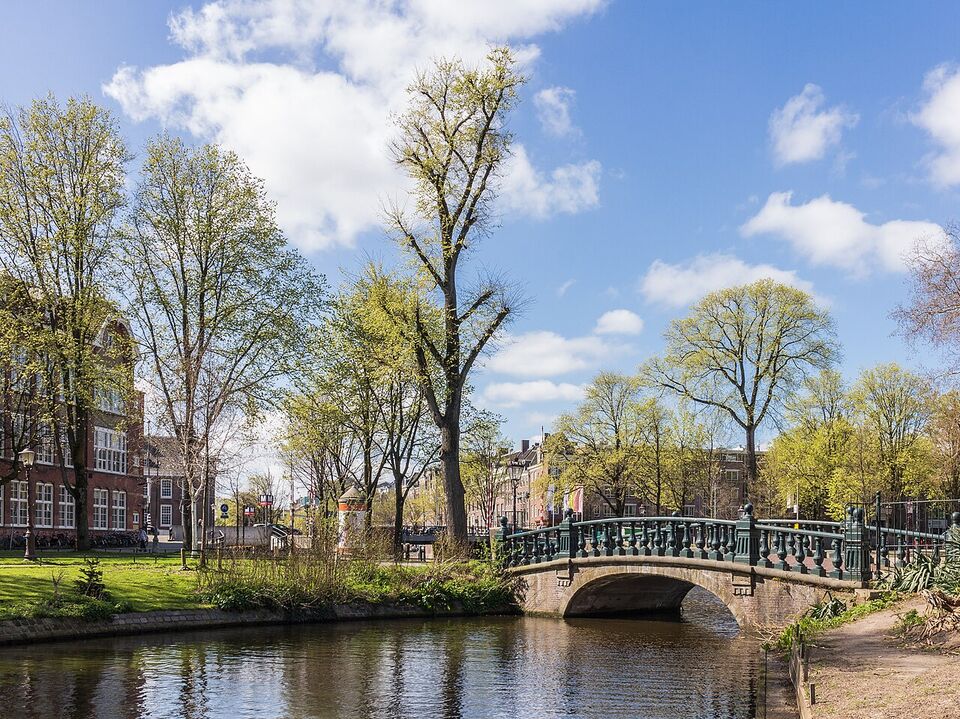
How to choose a neighborhood
Amsterdam is compact, so the "wrong" neighborhood is rarely far from the right one. Even so, the area where you sleep affects your noise level, your walking distances and how much you spend. Choose the Canal Ring or Museum Quarter for a first, calm visit; the Jordaan or De Pijp to feel like a resident; Oost or Noord to save money or see something different; the Old Centre only if you want to be close to the station.
The areas are close enough that you can mix them: sleep in one, eat in another and sightsee in a third. Trams, the metro and your own feet all work. This page compares the main neighborhoods, suggests short walking routes in each, and explains where hotels cluster and which streets get loud. If you are still deciding between cities, read the Amsterdam hub and where to stay in the Netherlands.
A word on prices. Hotel rooms in Amsterdam carry 21% VAT since January 1, 2026 and a tourist tax of 12.5% of the room price (before VAT) in 2026, rising to 16% from 2027. Those costs are the same in every area of the city. What changes by neighborhood is the room rate, the size of the room and the noise. We use price tiers in this guide: $ is under $120 a night for a double, $$ is $120 to $300 and $$$ is over $300. Exact rates vary by season, so check dates before you book.
Neighborhoods compared
| Neighborhood | Vibe | Best for | Access | Who should stay here |
|---|---|---|---|---|
| Canal Ring | Elegant, scenic, mostly quiet | Sightseeing on foot, couples | Walk to the Dam in 10 to 20 minutes; trams on main streets | First-timers who want atmosphere without nightlife noise |
| Jordaan | Small, intimate, café-filled | Strolling, galleries, restaurants | Walkable to the Dam and Anne Frank House; few trams inside | Travelers who like to walk and eat out |
| Museum Quarter | Spacious, polished, residential | Museums, Vondelpark, families | Frequent trams to Centraal; Rijksmuseum steps away | Museum-focused trips, families, quieter stays |
| De Pijp | Busy, varied, informal | Dining, the Albert Cuyp Market, longer stays | Trams and the North/South metro line | Return visitors, food lovers, groups |
| Nine Streets | Boutique shopping, small cafés | Browsing, a central but calm base | All on foot; trams on the edges | Couples, shoppers |
| Oost | Residential, multicultural, parks | Budget stays, markets, local feel | Trams and a metro; 15 to 25 minutes to the center | Travelers on a budget, longer stays |
| Noord | Industrial-chic, creative, spacious | Different views, cyclists, events | Free ferry; few trams; the metro links to the center | Return visitors, bike riders, festival goers |
| Centrum (Old Centre) | Historic, crowded, loud at night | Short stays near the station | Everything on foot; Centraal is the hub | Late arrivals, early departures, night owls |
Transit times in the table are approximate and depend on the hour; check the journey in 9292.nl or Google Maps before you commit. The getting around page explains how to pay.
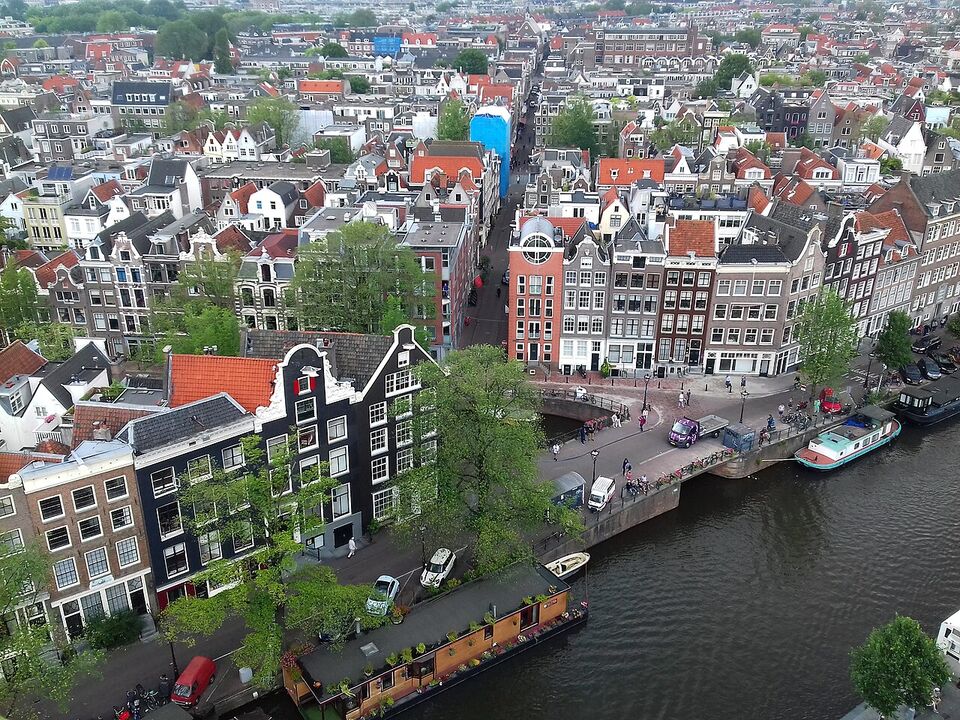
The Canal Ring
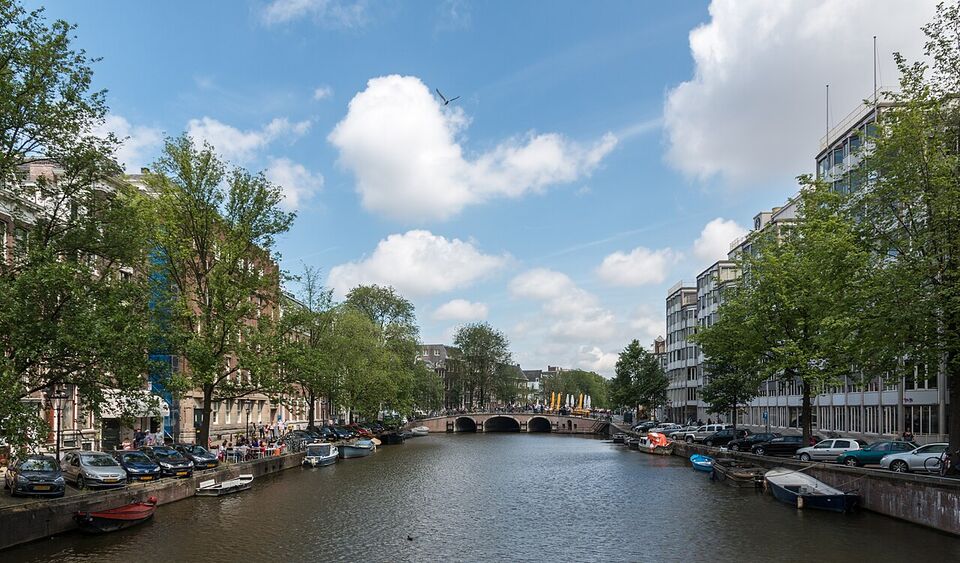
The Canal Ring (Grachtengordel) is the horseshoe of three main canals, the Herengracht, Keizersgracht and Prinsengracht, built in the 17th century and named a UNESCO World Heritage Site in 2010. It has the postcard views: tall gabled houses, humpbacked bridges and moored boats. Most of it is calm, though restaurant-heavy corners near Leidseplein and Rembrandtplein are lively.
Many hotels occupy converted canal houses, which means small rooms, steep stairs and, often, no lift. If you pick one, ask about stairs, noise and where the room faces. Rooms on the canal side are prettier; rooms at the back are often quieter.
Walking route (about 1 hour): start at the Dam, walk west along Raadhuisstraat to the Herengracht, turn south along the canal, cross to the Keizersgracht, continue to the Prinsengracht and finish at the Westerkerk, close to the Anne Frank House. Coffee in the Jordaan on the way back.
Who should stay here: first-timers and couples who want to walk everywhere. Noise: low to moderate; higher near Leidseplein and Rembrandtplein.
The Jordaan
The Jordaan lies just west of the Canal Ring. It began as a working-class district and is now one of the city's most sought-after residential areas, with narrow streets, small canals, galleries and cafés. It has fewer major sights than the Canal Ring, which is part of its appeal.
It is walkable to the Dam, the Anne Frank House and the Nine Streets, and tram service runs around the edges rather than through the middle. There are few large hotels. Stays here tend to be small guesthouses and apartments, so check the host is licensed (see where to stay).
Walking route (about 1 hour): start at the Westerkerk, walk north along Egelantiersgracht, then through the lanes toward Noordermarkt and back along the Prinsengracht. Look for the small hidden courtyards (hofjes) that open to the public on certain hours; check signs at the door.
Who should stay here: couples, food lovers and anyone who wants a village feel. Noise: low, with some café noise on warm evenings.
The Museum Quarter
The Museum Quarter (Oud-Zuid) is the polished district south of the canals. It has the Rijksmuseum, Van Gogh Museum and Stedelijk Museum around Museumplein, the Vondelpark, and wide streets with upscale shops and embassies. The U.S. Consulate General in Amsterdam is at Museumplein 19.
It is a good base for families and museum visitors because everything is within a short walk and the tram lines to Centraal are frequent. It is calmer than the Old Centre at night, though Leidseplein, the nightlife square on its northern edge, is close.
Walking route (about 1.5 hours): start at the Rijksmuseum, walk through the passage into Museumplein, past the Van Gogh Museum, then enter the Vondelpark through the gate at the western end. Loop through the park and return along Van Baerlestraat.
Who should stay here: museum-focused travelers, families and anyone who prefers an upscale, orderly setting. Noise: low, except near Leidseplein.
De Pijp
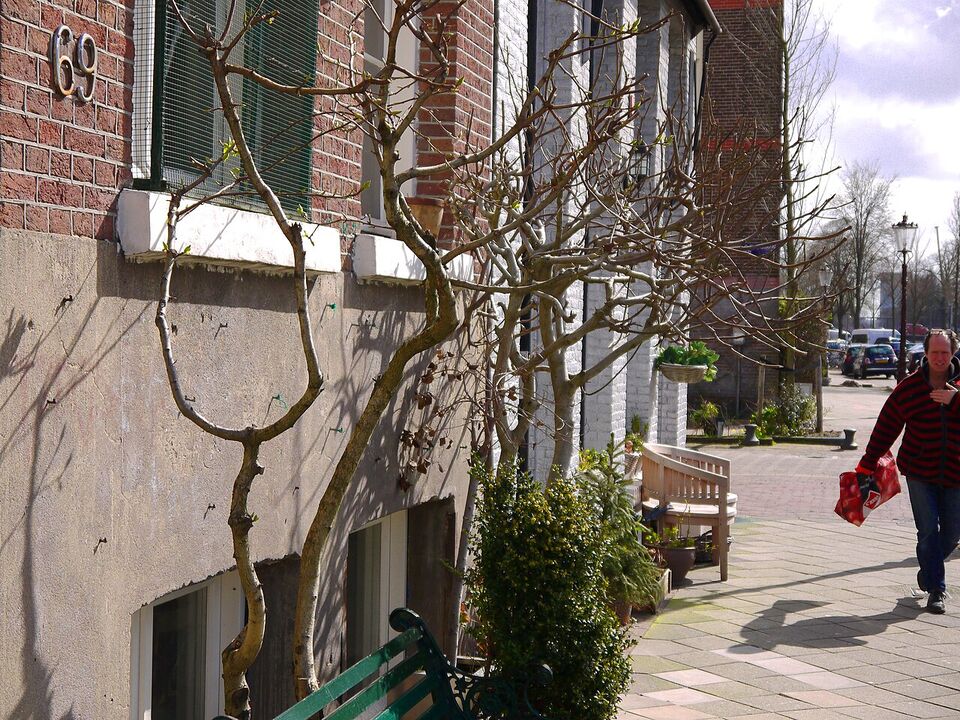
De Pijp is a dense, lively residential district southeast of the Canal Ring. It was once a working-class neighborhood and is now home to students, young professionals and families. Its heart is the Albert Cuyp Market, surrounded by cafés, bakeries and restaurants from many cuisines. The Sarphatipark gives locals a green space nearby.
Access is easy by tram and by the North/South metro line, which links De Pijp to Centraal. Hotels are fewer than in the Canal Ring, but apartments and small hotels are common. Nights can be noisy near bar-heavy streets.
Walking route (about 1 hour): from Ferdinand Bolstraat walk the length of the Albert Cuyp Market, turn toward the Sarphatipark, and return via Gerard Douplein or the Amstel river for a view of the canal-side houses.
Who should stay here: food lovers, groups and return visitors. Noise: moderate to high around the market streets in the evening.
The Nine Streets
The Nine Streets (De Negen Straatjes) are nine short cross-streets between the Prinsengracht and the Singel, known for independent boutiques, vintage shops and small cafés. They sit inside the Canal Ring but are worth listing separately because many visitors want to be near them.
It is among the most convenient places to stay, since you are within a short walk of the Dam, the Jordaan and the Spui. It is also touristy at the weekend, so expect crowds on Saturdays.
Walking route (about 45 minutes): start at the Singel, walk down Hartenstraat and Wolvenstraat, cross the Keizersgracht and Herengracht, and finish at Spui for a book market (on some days) or a coffee near the Begijnhof.
Who should stay here: couples and shoppers. Noise: low to moderate.
Oost
Amsterdam Oost (East) is a big, mixed borough. The Plantage, close to the center, has the zoo and the Hortus botanical garden. Further east are the Oosterpark, markets and everyday streets with Turkish, Surinamese and Moroccan shops and restaurants. It feels like a place where people live, not a place to visit.
Hotels here are often cheaper and bigger than in the Canal Ring, and transport is straightforward by tram or metro. A typical trip to the center takes 15 to 25 minutes, depending on where you start.
Walking route (about 1 hour): start at the Oosterpark, walk toward the Dapperbuurt and its street market (check the market days), and finish with coffee near the Amstel.
Who should stay here: budget-conscious travelers and longer stays. Noise: low to moderate.
Noord
Amsterdam-Noord sits across the IJ and is reached by the free GVB ferry. Its old shipyards have become studios, cafés and event spaces, especially around the NDSM wharf. The A'DAM Tower, with its observation deck and hotel, stands at the water's edge. Tram service is limited in most of Noord, though the North/South metro line links parts of the district to the center.
It feels more open and industrial than the old city, and the ferry gives it a pleasant commute. It suits cyclists and travelers who have been to Amsterdam before. If you plan to arrive late at night, check ferry and metro service times in advance. The Centraal-Buiksloterweg ferry runs through the night.
Walking route (about 1 hour): take the ferry from behind Centraal, walk along the IJpromenade past the EYE Film Museum and the A'DAM Tower, and continue along the water's edge toward the NDSM ferry stop.
Who should stay here: return visitors, bike riders and festival goers. Noise: low, except around events.
The Old Centre (Centrum)
The Old Centre, around Damrak, Nieuwmarkt and De Wallen, is the oldest part of Amsterdam and the busiest. It has the Royal Palace, Oude Kerk and the Red Light District, and is the first stretch visitors see after leaving Centraal.
It is convenient for short stays and late arrivals, since you can walk from the station to many hotels. It is also crowded, and nights can be loud. For the area's rules and history, see our Red Light District page; to see the sights beyond it, read the things to do page.
Walking route (about 45 minutes): start at Centraal, walk down Damrak to the Dam, turn east through the Oude Kerk area at a respectful pace, and finish at Nieuwmarkt, where cafés surround the old weigh house.
Who should stay here: travelers who prioritize convenience over quiet. Noise: high, particularly Thursday to Saturday.
Watch out
Smoking cannabis on the street in the Red Light District area has been banned since May 25, 2023, with a €100 (about $112) fine. Keep to the pavement, do not photograph people in windows, and follow the rules posted on signs in English and Dutch.
Lively or quiet
Match the neighborhood to your style. If you want a lively evening within a short walk of your room, choose De Pijp, the Old Centre, Leidseplein or Rembrandtplein. If you want a calm night, choose the Museum Quarter, the quieter parts of the Canal Ring, or the Jordaan.
| You want | Choose | Be aware |
|---|---|---|
| Quiet nights | Museum Quarter, residential Canal Ring, Jordaan | Fewer late-night restaurants |
| Restaurants on your doorstep | De Pijp, Jordaan, Nine Streets | Weekend crowds |
| Nightlife | Leidseplein, Rembrandtplein, De Pijp | Noise; pickpockets in busy bars |
| Short walk to Centraal | Old Centre, eastern Canal Ring | Crowds and noise |
| Lower prices | Oost, Noord, areas near Sloterdijk | Longer commutes |
Where hotels cluster
Large and mid-size hotels cluster in a few places: around Centraal Station and Damrak, in the Canal Ring, around Leidseplein and the Museum Quarter, in the southern business districts of Zuid and Sloterdijk, near the RAI conference center, and around Amsterdam ArenA in the southeast. Smaller guesthouses and bed-and-breakfasts fill the Jordaan and the Canal Ring.
Rooms are often small by American standards, and old houses have steep stairs and narrow entrances. If you have heavy luggage, ask whether there is a lift and where it stops. We give coping tips in where to stay.
The business areas have more modern buildings, larger rooms and sometimes air conditioning, but less atmosphere. Hotels near Sloterdijk have a fast train link to Centraal. Hotels near the Schiphol airport suit very early departures. See Schiphol for transfer options.
Late-night noise
Amsterdam is a living city, and many streets that look peaceful in the day fill at night. Noise comes from bars and restaurants closing, groups walking between venues, bikes on cobblestones, trams, church bells and delivery trucks. The worst corners are the Old Centre, Leidseplein, Rembrandtplein and the busiest streets of De Pijp.
To sleep well, ask for a room at the back of the building or on an upper floor, avoid rooms directly above a bar, and bring earplugs. Double glazing varies. Check recent reviews for "noise" before booking, and message the hotel to request a quiet room; most will note it.
Insider tip
If you arrive tired and want a quiet first night, choose the Museum Quarter or a Jordaan side street. If you are traveling in winter, the city is darker and quieter, but central streets still fill on weekends.
Choosing by type of trip
The same neighborhood can be perfect for one traveler and a poor fit for another. These are the patterns we see in how the areas work, not personal recommendations.
Couples and first-time visitors
The Canal Ring and the Nine Streets give you the postcard Amsterdam with a short walk to most sights. A room on an inner courtyard or a high floor keeps nights calm. If you want dinner options without a long walk, the Jordaan edge of the ring, near the Westerkerk and the Prinsengracht, is a good compromise.
Families
The Museum Quarter works because of the Vondelpark, the wide pavements and the short walk to the Rijksmuseum and Van Gogh Museum, which are free for children and teenagers. Apartments in De Pijp give you a kitchen and space, but check the stairs and the number of guests allowed by the city rules. Our families page covers family-friendly activities.
Budget travelers
Oost, Noord and the business districts offer lower room rates than the center, and the saving is often larger than the cost of a day ticket on public transport. Remember that tourist tax and VAT add to every price, so compare the final total, not the headline rate. The budget page shows how the totals add up.
Travelers with limited mobility
Canal houses have steep stairs and narrow doorways, cobbles are uneven, and many bridges are humped. Modern hotels in the business districts, near the RAI and in Zuid are more likely to have lifts and step-free access. The city's tourism site has a list of wheelchair-accessible hotels in Amsterdam; use it, and confirm the details with the hotel directly. Tram and metro accessibility also varies by stop, so check the route before you commit.
Late arrivals and early departures
If your flight lands late or you leave at dawn, a hotel near Centraal Station saves a taxi and a transfer. The train from Schiphol takes 14 to 17 minutes and costs about €5.50 (about $6). If you leave before the first trains of the morning, check service times or ask your hotel about a taxi. In that case a hotel at Schiphol itself may be simpler.
Booking tips by area
Rooms in the Canal Ring and the Museum Quarter sell out earliest, and prices rise sharply on busy dates: King's Day (April 27, 2027), the tulip season (Keukenhof runs March 18 to May 9, 2027), the Amsterdam Dance Event (October 20-24, 2027) and the Light Festival (November 26, 2026 to January 17, 2027). If your dates are flexible, shift a few days off the peak and the price often falls.
When you compare rooms, look at the final price with tax, the cancellation terms, the floor, whether breakfast is included and how far the nearest tram stop is. Check the exact address on a map. Two hotels with the same "Amsterdam center" label can be a 5-minute and a 25-minute walk from the station. If you rent an apartment, use a licensed host and verify the rules on amsterdam.nl; owners may rent out for only a limited number of days a year, and rentals for more than four people are not allowed.
Where to go next
Pair your base with a plan: the museums page shows what to book near the Museum Quarter, and the Anne Frank House sits at the edge of the Jordaan. For travel between neighborhoods, read getting around and cycling. If hotel prices push you beyond the city, Haarlem and Utrecht make good bases, and where to stay compares them.
Add it to a route in the trip builder, or ask us to plan the hotels, trains and guides for you.