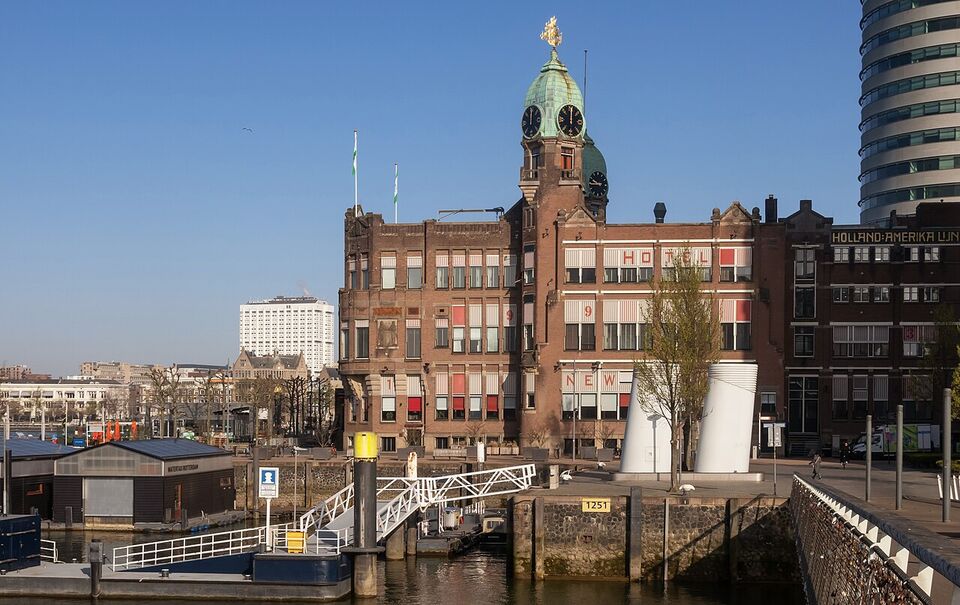
Choosing where to sleep
For a first visit, base yourself in Amsterdam, in or near the Canal Ring, and take day trips by train. If you are staying a week or more, split your stay: three or four nights in Amsterdam and the rest in Haarlem, Utrecht, Rotterdam or The Hague. The Netherlands is small and the rail network is dense, so almost any base works as long as you plan your train times.
The type of room matters as much as the place. Dutch hotels are often compact, in old buildings with steep stairs and few lifts. Breakfast is usually good but may be an extra charge, air conditioning is uncommon in older properties, and in Amsterdam VAT plus the tourist tax together add roughly a third to a room's pre-tax price. This page explains how to choose between cities and lodging types, what the taxes add, how to deal with luggage, how short-term rental rules look from a visitor's side, when to book and how to keep your room and your bike safe.
Prices are given as tiers rather than as exact rates, because hotel rates change daily and we have no official source for them. $ means under $120 a night for a double, $$ means $120 to $300, and $$$ means over $300. Treat the tiers as a guide to the market, not a promise, and compare live prices on the hotel's own site before you commit. Our Amsterdam neighborhoods page goes into detail on each area of the capital.
Amsterdam or another base?
Amsterdam is the obvious choice: it has the largest range of rooms, the best museum and restaurant options, and the airport link. The trade-offs are cost, crowds and tax. The city received a record 21 million tourists in 2025, and its council has said it wants to ease the pressure on its busiest areas, which is one reason for the rising tourist tax. If you want a calmer or cheaper stay, other cities are close.
| Base | Why stay | Trade-off | Train link |
|---|---|---|---|
| Amsterdam | Most sights, widest choice, easiest airport link | Highest prices, crowds, tourist tax | Schiphol to Centraal 14-17 minutes |
| Haarlem | Quiet old center, easy beach and bulb-field trips | Fewer big sights; quieter evenings | 15 to 20 minutes to Amsterdam, about eight trains an hour |
| Utrecht | Canals and a university-town feel, central rail hub | Fewer hotels than Amsterdam; busy on event weekends | A short direct train from Amsterdam; check 9292.nl or the NS app |
| Rotterdam | Modern architecture, Markthal, harbor, good value | Less traditional charm; further from Amsterdam sights | Trains to Amsterdam and Schiphol (check the NS app); Eurostar to London |
| The Hague | Mauritshuis, government quarter, Scheveningen beach | Spread out; some days are quiet | About an hour from Amsterdam by direct train |
| Delft | Small, pretty, a short hop between Rotterdam and The Hague | Few rooms; limited nightlife | Trains to Rotterdam and The Hague run as often as every five minutes |
Journey times other than the ones above are approximate; check 9292.nl or the NS app for your date. Read our pages on Haarlem, Utrecht, Rotterdam, The Hague and Delft before choosing.
A split-stay example
Seven nights could look like this: four in Amsterdam (including a Zaanse Schans or Haarlem day), two in Rotterdam or The Hague with Delft in between, and one near Schiphol before an early flight. A cheaper variant is three nights in Haarlem with Amsterdam as a day trip, then a night near the airport. Moving every two nights costs time, so avoid more than two bases in a week.
The regions page and the day trips page show how far you can go from each base.
Save money
Amsterdam's tourist tax is only part of the picture, but it is the part that is rising: from 12.5% of the room price in 2026 to 16% in 2027. Other Dutch cities set their own tourist tax and often have lower room rates than Amsterdam. Compare the full price, including taxes and the daily train fare, before you decide that the outer base is cheaper.
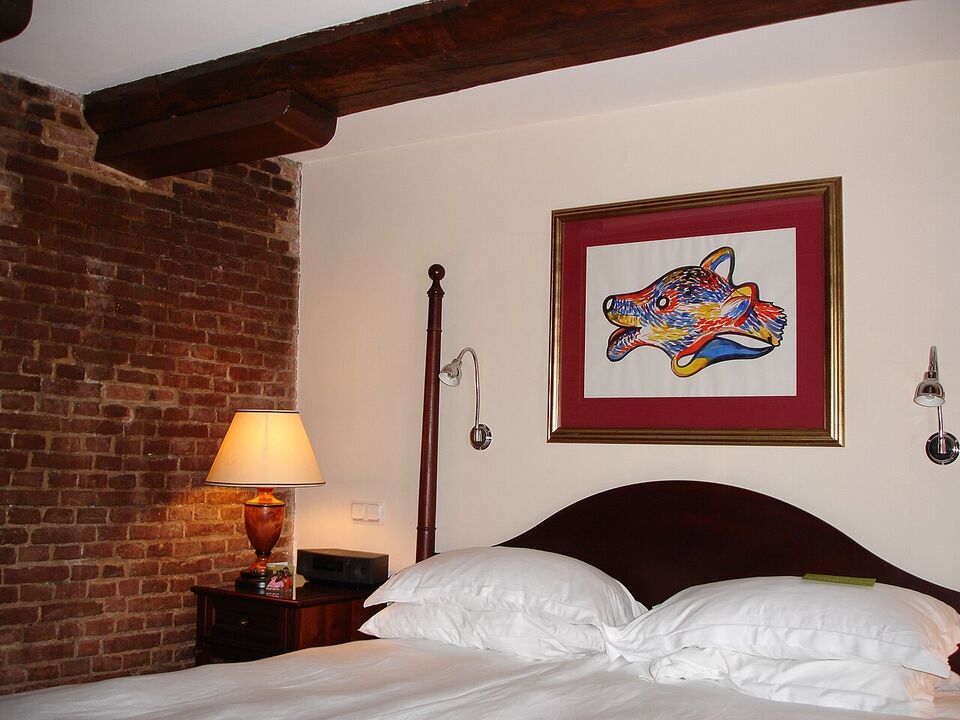
Hotels, apartments, houseboats and hostels
Hotels
Hotels range from international chains to tiny family-run places in canal houses. Business hotels are found near stations and the RAI conference center. Boutique hotels fill historic houses in the Canal Ring and the Jordaan. In general, chain hotels have larger rooms and lifts; canal-house hotels have charm and small rooms. Our tier labels $, $$ and $$$ apply to either.
The city's tourism site has lists of budget, family, luxury and wheelchair-accessible hotels, which are a useful starting point. For every option, read the room description, not just the photos: floor, size, bed type, whether there is a lift and whether the room faces the street.
Apartments
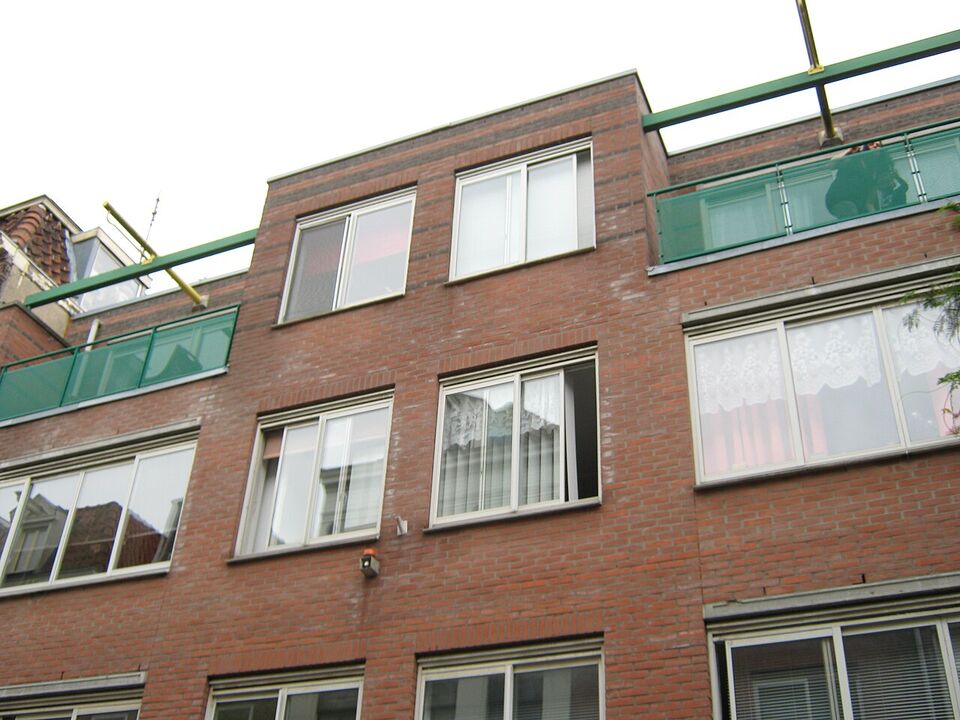
An apartment gives you space, a kitchen and, often, a better rate for a family or a group. It also puts you in a residential building where neighbors expect quiet. In Amsterdam, short-term rentals are tightly controlled. Owners may rent out their home for up to 30 days a year, rentals for more than four people are not allowed, and hosts must remit the tourist tax. A permit or registration step exists but we could not confirm its details, so ask the host for a registration number and check the rules on amsterdam.nl.
From a visitor's side, the practical advice is simple: book through a host who gives you a clear address, a registration number and the total price including tourist tax; avoid listings that ask you to pay off the platform or that discourage you from mentioning your stay to neighbors; and read recent reviews. If a listing seems to host more guests than the rules allow, it is a risk for you as well as for the host, because the city can shut it down at short notice.
Houseboats
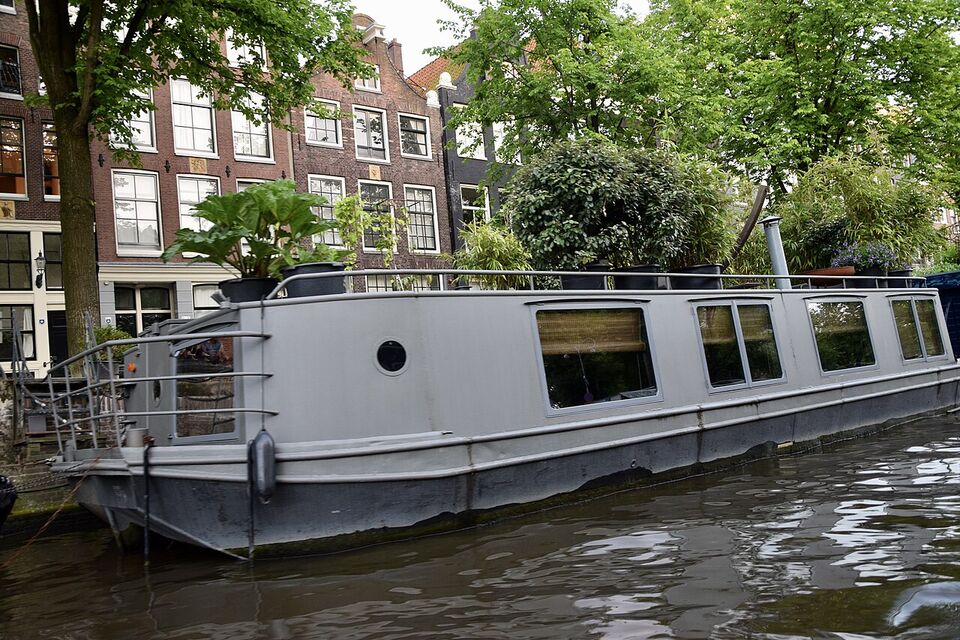
Amsterdam has houseboat bed-and-breakfasts and rentals on the canals, and a few larger floating hotels. They are a memorable way to stay, though they come with quirks: low ceilings, narrow stairs, a bit of movement and sometimes a gangway that is hard with luggage. Check the entry, the heating, noise from the quay and whether the boat is licensed for guests.
Hostels
Hostels are the cheapest option for solo travelers, and the larger ones offer private rooms as well as dorms. They cluster near the center and the Museum Quarter. Check what is included (sheets, lockers, breakfast), bring a padlock and read reviews for noise. A private room in a hostel can cost less than a budget hotel, but the tourist tax and VAT still apply.
Why rooms are small and stairs steep
Amsterdam's central canal houses were built in the 17th century on narrow plots, so the buildings are tall and thin. Their stairs are steep because the plots left little room for a wide staircase, and many hotels have been made out of two or three houses joined together. Elsewhere in the Netherlands the same story repeats in old town centers. Outside the old cores, modern hotels are more conventional.
For visitors the effect is practical: a "double room" may be a bed with little floor space around it, the bathroom may be tiny, and the only way to the room may be a staircase with no lift. These are not signs of a poor hotel, just a reflection of an old building.
Coping with luggage
- Pack one carry-on bag and one small bag per person if you can; a bag you can lift is easier than a wheelie on a steep staircase.
- Ask the hotel before you book: how many flights of stairs, is there a lift, and does it fit a standard suitcase?
- Request a ground-floor or lower-floor room if you have mobility concerns or heavy bags.
- Use luggage storage if your room is not ready; most hotels hold bags on arrival and after checkout.
- Take a train and a short walk, not a taxi through narrow lanes, if you pack light. If you must take a taxi, tell the driver your exact address and the nearest cross-street.
- Expect cobbles. Four-wheeled spinner cases are noisy and awkward on uneven pavements; a duffel or backpack is easier.
Different from home
A "first floor" in Dutch buildings is usually one flight up from the ground floor, and ground floors are often a step or two above the street. A hotel that says "no lift" really means it, and staircases can be much steeper and narrower than you may expect. Ask for photos of the stairs if you are unsure.
Breakfast, air conditioning and other room details
Breakfast
Many Dutch hotels serve a buffet with bread, cheese, cold cuts, eggs, yogurt and coffee. It is often listed as an add-on, and it can cost a noticeable amount per person. Compare the price with a nearby bakery or café, which may be cheaper and better. If you have dietary needs, ask in advance.
Air conditioning
Air conditioning is rare in older hotels and private homes. Amsterdam's mean daily high in July is about 73°F (22.5°C), so summers are usually mild, but heat waves occur and canal houses can hold heat on upper floors. If you are traveling in June to August, filter for air conditioning, or at least fans, and ask for a lower or north-facing room. Windows that open may let in street noise, so you may need to choose between heat and noise.
Heating, bathrooms and power
Winters are damp rather than severe, with average daytime highs in the low to mid 40s °F in December and January (Amsterdam's mean December high is 44°F (6.9°C)). Heating is standard, but old buildings can be drafty. Showers may be small and bathrooms compact. Bring a plug adapter and check that your chargers are dual-voltage.
What taxes add
Hotel prices in the Netherlands carry two taxes you should understand, and both have changed recently.
- VAT: on hotel rooms, VAT has been 21% since January 1, 2026 (it was 9% before). It is normally included in the listed price.
- Tourist tax: in Amsterdam it is 12.5% of the overnight price, calculated before VAT, and it is charged on top of the room rate. The City Council passed its 2027 budget on November 12, 2026, raising the tax to 16% in 2027, with plans for further one-point rises toward 20%. The exact start day in 2027 has not been reported, so ask your hotel which rate applies to your date.
As an illustration, a room listed at €150 (about $168) including VAT carries roughly €15.50 (about $17) a night in tourist tax in 2026, so the real cost is about €165.50 (about $185) a night. Over three nights, the tax is roughly €46.50 (about $52). The illustration is not a quote; your invoice shows the real figure. The combined burden of VAT and tourist tax is projected to be around 41% by 2031 if the plans go ahead.
Other Dutch municipalities set their own tourist tax. The average across the country is about €4.54 (about $5) a night in 2026, but we could not confirm individual city rates, so look at the booking page or ask the hotel. Some booking sites show prices without the tourist tax, so check the total on the final screen. See money for how to budget with euros.
Short-term rentals from a visitor's viewpoint
Short-term rental rules are strict in Amsterdam and can change. As a visitor you do not enforce them, but you can protect yourself:
- Choose a host who gives a registration or permit number and can explain it; verify the rules on amsterdam.nl.
- Keep the number of guests within the limit. Amsterdam does not allow rentals for more than four people.
- Ask whether the tourist tax is included in the quoted price. Hosts must remit it.
- Keep the confirmation, the address and the host's contact details offline in case your phone dies.
- Be quiet in the building. Neighbors report noise, and the city has been strict about nuisance.
- Have a backup plan. If an illegal listing is shut down, you may need a hotel at short notice.
The city's own rules for holiday rental are published at iamsterdam.com and amsterdam.nl; check them before you book, since limits and permits change from year to year.
When to book and how prices move
Hotel prices move with the calendar more than with the quality of the room. We do not have official rate data, so use these as general patterns and compare live prices.
| Period | What to expect | How far ahead |
|---|---|---|
| Late March to early May | Tulip season (Keukenhof runs March 18 to May 9, 2027), spring weather, King's Day on April 27, 2027 | Book several months ahead; King's Day weekend is the tightest |
| June to August | Warmest and longest days; crowds in the center and at Zaanse Schans | Book two to four months ahead; look for air conditioning |
| September to late October | Mild weather, events including the Amsterdam Dance Event (listed as October 20-24, 2027) | Book at least a couple of months ahead for event dates |
| Mid-November to January | Dark, damp, festive; the Amsterdam Light Festival runs November 26, 2026 to January 17, 2027 | Book a month or two ahead for the festival and around Christmas and New Year |
| January to early March | Quietest season, lower rates in many places | Often possible a few weeks ahead |
If your dates are flexible, shift your stay by a few days to avoid weekends and large events. Free cancellation rates are worth a small premium if your plans may change, and rates often go up as the date approaches. Look at the tax and the cancellation terms before you click "book". See when to go and festivals for dates, and budget for a full cost picture.
Accessibility
The Netherlands is flat, which helps, but old buildings are not designed for wheelchairs. Canal-house hotels often have steps at the entrance, narrow doors and steep stairs. Cobbles are uneven. Chain hotels near stations, the RAI and the business districts are more likely to have lifts, step-free entrances and adapted rooms. The city's tourism site has a list of wheelchair-accessible hotels in Amsterdam, but you should confirm details with the hotel: ask about door widths, the shower, the lift size and the route from the street.
Trains are the easiest way to move between cities. Check access at the stations you use and ask NS about assistance before you travel. For daily life in Amsterdam, trams, ferries and the metro offer different levels of access, so plan your routes in advance. See getting around for how the system works.
Keeping your room and your bike safe
The Netherlands is generally safe, but sensible habits help. Use the room safe for passports and spare cash, keep your window closed when you leave, and do not leave valuables in view. Carry a photocopy or photo of your passport, and keep the originals in the safe. Keep valuables close in crowds and on trams. See safety for emergency numbers and scams.
If you rent a bike, ask your hotel where to park it and lock it to a fixed object with the lock provided, not just to itself. A bike left in the wrong place can be removed, and reclaiming it costs €25 (about $28). Bikes need front and back lights after dark by law. If you stay in a houseboat or an apartment, ask about secure bike storage. Our cycling page has more.
Watch out
Fake ticket sites and fake booking pages exist. Book a room directly with the hotel or through a platform you know, check that the URL is correct, and never pay by bank transfer to a stranger. For attractions, use the official sites only.
A checklist before you book
- Compare the final price with VAT and tourist tax included, not the headline rate.
- Confirm the number of stairs, the lift and the room's floor.
- Ask about air conditioning if you travel from June to August.
- Check the cancellation terms and the deadline.
- Ask whether breakfast is included, and how much it costs if not.
- For apartments, ask for the registration number and confirm the guest limit.
- Save the address and phone number offline; Dutch street names are unfamiliar.
- Read the Amsterdam hub and the neighborhoods page to match the area to your plans.
Add it to a route in the trip builder, or ask us to plan the hotels, trains and guides for you.