Is Leiden worth a visit?
Yes, and it suits travelers who like a lived-in historic city more than a postcard. Leiden is a university town built around canals, with the Rapenburg canal at its heart, a long list of museums, a medieval castle mound and a windmill that has been turned into a museum. It has been a university city since 1575 and has been a major center of science for more than four centuries.
Leiden is also the best base for visitors who want the tulip fields without sleeping in Amsterdam. It sits between The Hague to the south and Haarlem to the north, and it is close to Schiphol. See our regional guide for how these towns fit together.
The city has a distinct story for American visitors: the Pilgrims who sailed on the Mayflower lived here before they left for North America. We cover that below, with the annual October celebration of Leiden's relief from siege, and with the museums and neighborhoods that make a one-day visit worthwhile.
Getting to Leiden
Leiden is about 25 miles (40 km) from Amsterdam and about 19 miles (31 km) from Schiphol. NS operates direct train services between Leiden Centraal and Schiphol, so you can reach the city from the airport without going into Amsterdam first. We did not retrieve official journey times, so check the NS app or 9292.nl for your day. As a rule, it is a short ride, and trains run often.
Leiden has three railway stations: Leiden Centraal, Leiden Lammenschans and De Vink. Almost all visitors use Leiden Centraal, which is a short walk from the old center (the National Museum of Antiquities describes itself as a 10-minute walk from the station). Local buses are operated by Qbuzz.
Paying for transit
The simplest way to pay is with a contactless Visa or Mastercard (or Apple Pay or Google Wallet) through OVpay. American Express is not accepted. Tap in at the gate and tap out at the end, because a forgotten check-out means a full €33.30 (about $37) charge that you must claim back. The minimum one-way fare is €3.00 (about $3.40) in 2026, and NS ticket prices rise by an average of 4.7% in January 2027. A paper single-use ticket adds a €1.60 (about $1.80) surcharge. See our guide to getting around the Netherlands for the full rundown, and our Schiphol guide for airport transfers.
Different from home
Dutch rail stations use gates that read your card on entry and again on exit. Tap in before you board and tap out when you arrive, and if a gate does not open, find a staff member or a help point instead of following someone through.
Canals and the Rapenburg
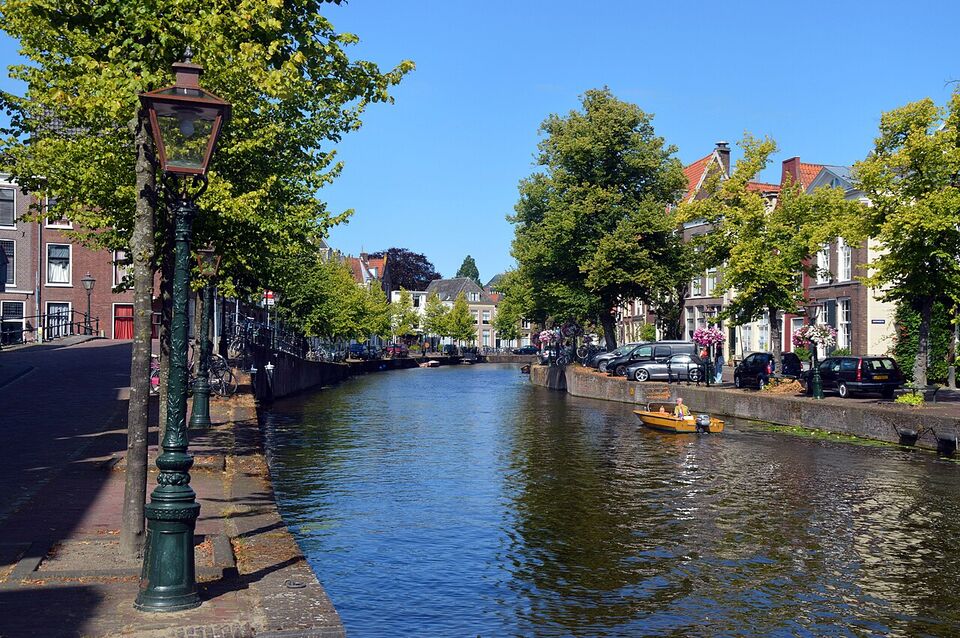
The city grew on an artificial mound, now called the Burcht, at the point where the Oude Rijn and Nieuwe Rijn (the Old and New Rhine) meet. Many small canals with tree-lined quays cross the center, and the best known is the Rapenburg, a broad canal lined with university buildings and old houses.
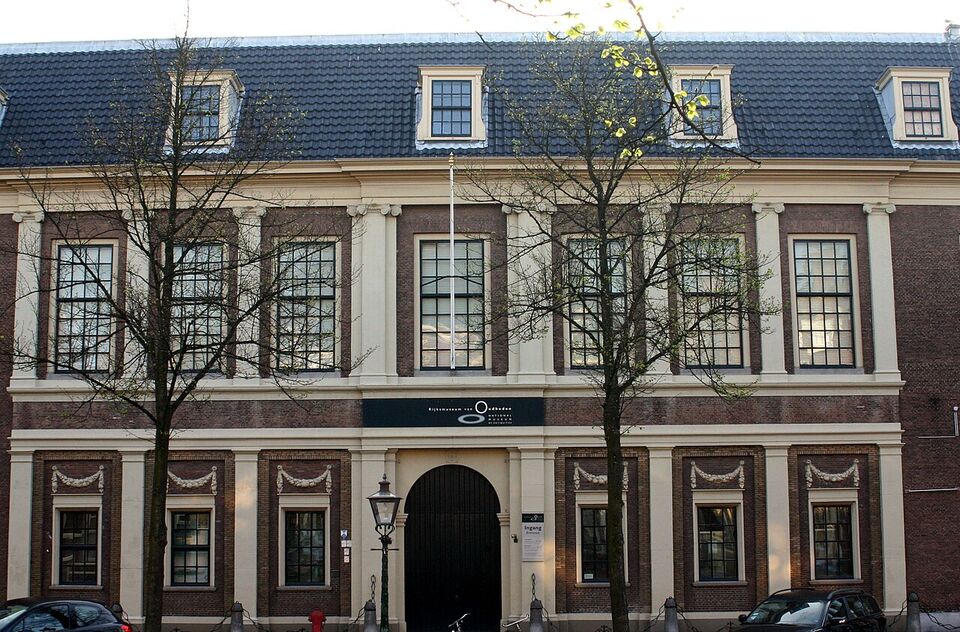
The Rapenburg is where the National Museum of Antiquities stands, at Rapenburg 28, and the Hortus Botanicus and other gardens lie on the west side of the center along the old Singel. Walk the Rapenburg in the morning when it is quiet, and cross the small bridges to see the canal from different angles. A wall-poem project, active since 1992, puts poems on walls across the city, so keep an eye out as you wander.
A good method is to walk without a plan between the main sights and let the canals set your route. The center is small and flat, and a full circuit takes about an hour at a steady pace. Bike lanes are busy, so stay out of them and listen for bells. Our cycling guide explains how Dutch bike lanes work.
The oldest university
Leiden University was founded in 1575 by William of Orange, as a reward for the city's defense during the Spanish siege of the year before. A tradition holds that the citizens were offered a choice between a university and an exemption from taxes, and chose the university. Together with Leiden's University of Applied Sciences, the city has about 35,000 students, and the university buildings are scattered through the center rather than gathered on a campus.
Notable scholars and scientists worked here, including Herman Boerhaave, who helped found modern medical teaching in the early 18th century. Today the university gives the city an international feel: students from around the world, bikes everywhere and a good supply of cafés and bookshops.
You can see most of the university by simply walking around, because its buildings are part of the streets. Some buildings are working university departments, so you may not be able to enter. We have not verified whether guided tours are offered, so check with the city's tourist information.
Museums in Leiden
National Museum of Antiquities (RMO)
The Netherlands' national archaeology museum, with collections from ancient Egypt, Rome and the Netherlands itself. It is open daily and has Thursday evening hours. Details below.
Hortus Botanicus
The botanical garden of the university, along the old Singel canal. Check the garden's own page for prices and seasonal hours, which we have not verified.
Museum De Valk
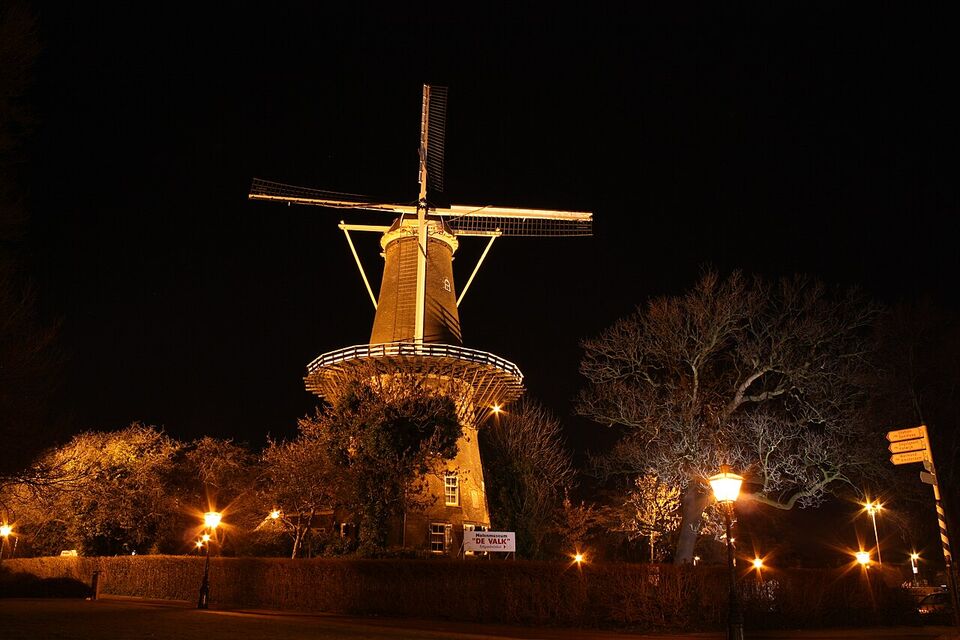
A corn-grinding windmill dating from 1743, now a museum. It is a good stop for anyone who wants to see inside a mill, and our windmill guide covers the larger sites. Check its page for hours and tickets.
Museum De Lakenhal
The municipal museum of art and history, in a building designed by Arent van 's Gravesande. Check its page for the current program and prices.
Naturalis
One of the largest natural history museums in the world, according to Wikipedia, in a recently renovated building. Check prices before you go.
Rijksmuseum Boerhaave
A museum of science and medicine history, named for Herman Boerhaave. Good for visitors with a scientific bent.
Leiden also has the National Museum of Ethnology, the Japan Museum Sieboldhuis, the Young Rembrandt Studio and the American Pilgrim Museum. We have not verified prices or hours for any museum other than the RMO, so check each museum's page. If you plan to visit several, consider whether a Museumkaart would pay off, as discussed in our museum guide. For a short trip, single tickets usually make more sense.
Rijksmuseum van Oudheden: tickets and hours
| Item | Details |
|---|---|
| Adult | €14 (about $16) |
| Up to age 18 | Free |
| CJP card holders 18 and older | €10 (about $11) |
| Museumkaart | Free |
| Daily hours | 10 a.m. to 5 p.m. |
| Thursday evenings | 7 p.m. to 10 p.m. (daytime only on December 24 and 31, 2026) |
| Closed | January 1, April 27, October 3 and December 25 |
As of mid-November 2026, the museum's page says the first floor cannot be reached by elevator because of a technical issue, but it can be reached by stairs. If anyone in your group uses a wheelchair, call ahead or check the page for updates. Photography is allowed without flash or tripods. Only small bags are allowed inside, lockers are available, and backpacks are not allowed.
Be aware that the museum is closed on October 3, the day of Leiden's biggest celebration. Plan a different stop that day.
Insider tip
Thursday evening opening gives you a quiet museum visit after a day trip. If you are arriving from Schiphol late in the afternoon, a 7 p.m. entry fits well with an early dinner in the center.
Rembrandt and the Golden Age
The painter Rembrandt was born and educated in Leiden, and the city was home to other painters including Jan Steen, Jan van Goyen and Lucas van Leyden. During the Dutch Golden Age, Leiden was the second-largest city in the region after Amsterdam, and its textile industry brought wealth. The Young Rembrandt Studio is one place to explore that early period. We do not make claims about where particular works are shown, so check each museum's collection page. For more on Dutch painting, see our art guide.
The Pilgrim Fathers in Leiden
Leiden is the place where the Pilgrims, and some of the settlers of New Amsterdam, lived and operated a printing press in the early 17th century, before they left for Massachusetts and New York. Two leaders of the Pilgrim community, William Brewster and William Bradford, are linked with the city, and Wikipedia notes that U.S. President George H. W. Bush was shown his Pilgrim ancestry during a visit to Leiden in 1989.
The American Pilgrim Museum is a small museum devoted to the story. We have not verified its opening days, which are limited at many small museums, so check before you go. Walking the old streets near the Pieterskerk gives a sense of the world the Pilgrims knew.
Pilgrim history in the Netherlands also touches Rotterdam. The Delfshaven district there is associated with the Pilgrims' departure, and we describe it in our Rotterdam guide.
The Burcht, De Valk and the city's fortifications
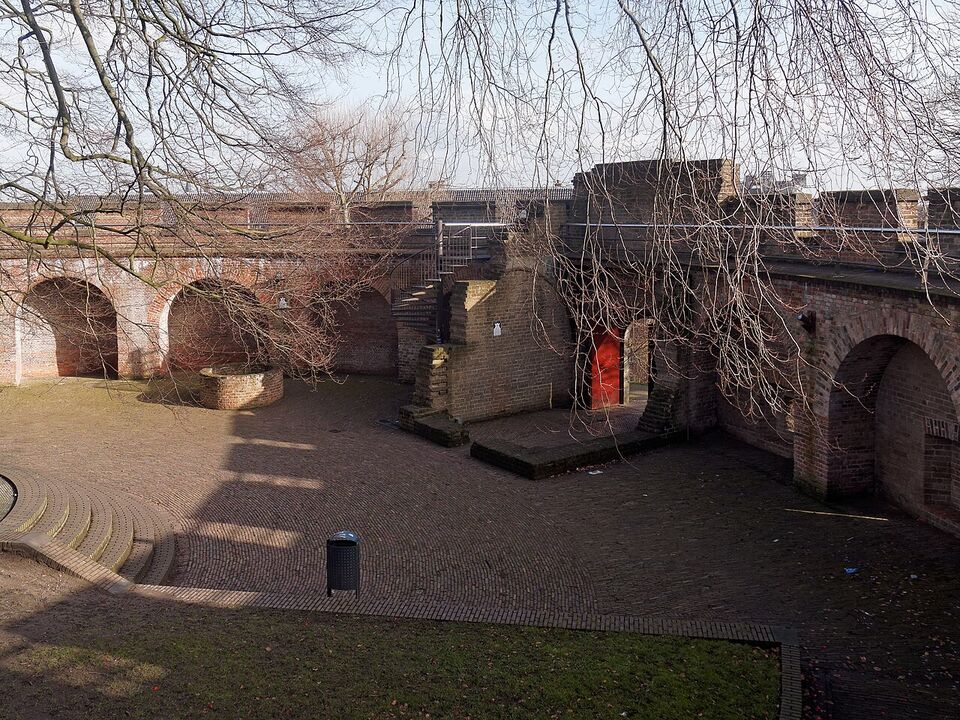
At the junction of the Oude Rijn and Nieuwe Rijn stands the Burcht, a circular tower on an earthen mound. The mound probably served as a refuge against high water before a wooden fortress was built on it in the 11th century, making it a motte-and-bailey castle. A walk up the mound gives a view over the roofs. Check the Burcht's page for access hours, which we have not verified.
Of Leiden's old city gates, only two remain: the Zijlpoort and the Morspoort, both from the end of the 17th century. The Stadstimmerwerf, the old city carpenter's yard built in 1612, is open to the public as an art gallery. The Pesthuis, a former plague hospital built between 1657 and 1661, was never used for its original purpose because the plague did not return to the Netherlands.
The relief of Leiden on 3 October
From May to October 1574, Spanish forces besieged Leiden during the Eighty Years' War. The siege ended when the dikes were cut, which let ships carry food to the starving city. The end of the siege is celebrated each year on October 3 and is simply called 3 Oktober.
The celebration typically runs for two to three days, with the evening of October 2 and the day of October 3 as the main events. It includes parades, a hutspot feast (a stew of potatoes, carrots and onions), historical reenactments and a funfair. In 2026, October 3 fell on a Saturday. In 2027, it falls on a Sunday. We have not verified the 2027 program, so check the city's events page before planning a visit around it.
Watch out
Expect crowds, closures and reduced hours on October 3. The Rijksmuseum van Oudheden is closed that day every year. Book hotels and trains early if you want to be in Leiden for the celebration, and keep your plans flexible. Our festivals guide lists other Dutch events.
Keukenhof from Leiden
Keukenhof, the spring flower garden in Lisse, is the main reason many travelers pass through Leiden. The 2027 season runs from Thursday, March 18, to Sunday, May 9, 2027. It is open from 8 a.m. to 7 p.m., including Sundays and holidays, and entry closes at 6:15 p.m. The address is Stationsweg 166a, Lisse. The garden is closed to the public outside the season, so it is not an option for a November trip.
A third-party guide lists Leiden as a departure point for a public KeukenhofBuzz bus (line 854) during the season. That guide lists combined bus-plus-admission tickets from Leiden at about €33.50 (about $38), which we could not confirm on keukenhof.nl, and says prior reservation is required. The 2026 adult admission was €21.50 (about $24), with children aged 4 to 17 at €10 (about $11) and under-4s free, but we found no confirmed 2027 prices. Always confirm bus times and prices on keukenhof.nl.
The bulb fields in the surrounding region usually bloom from around late March to early May, depending on the weather. Our tulip guide explains how to time a visit and how to see fields beyond the garden.
Where to eat in Leiden
A student city has plenty of cafés, and Leiden has many along its canals. Look for cafés with canal-side terraces, brown cafés (bruin cafés) with dark wood and local beer, and small bakeries. Typical dishes include pancakes, soups and sandwiches for lunch, and a plate of bitterballen in the evening. Leiden is also associated with Leidse kaas, a local cheese flavored with cumin; ask at a cheese shop if you are curious. For more on Dutch food, see our Dutch food guide.
Prices vary, and we do not give specific restaurant recommendations. A practical approach is to reserve ahead on weekends and in tulip season. Carry a contactless card, and check whether a place takes cards before you order.
One day in Leiden
- Morning
Canals and the Rapenburg
Arrive at Leiden Centraal by about 9:30 a.m. and walk to the Rapenburg. Wander the canals and look at the university buildings.
- Late morning
National Museum of Antiquities
Spend two to three hours at the RMO. If you prefer a lighter visit, pick one or two galleries.
- Lunch
A canal-side lunch
Eat in a café near the Rapenburg or the center.
- Afternoon
Burcht, De Valk or the Pilgrim story
Climb the Burcht, tour the windmill museum or visit the American Pilgrim Museum if it is open.
- Evening
Thursday late opening or dinner
On a Thursday, go back to the RMO for the evening hours. On other days, have dinner by the canals before heading back.
Combining Leiden with other towns
- Leiden and The Hague. The two cities are close, so you can see Leiden in the morning and The Hague for the Mauritshuis in the afternoon.
- Leiden and Delft. They are on the same corridor, so Delft makes a good second stop on a two-day trip.
- Leiden and Haarlem. Haarlem lies north of Leiden and is also a good canal-city stop, with Keukenhof not far away in season.
See our day trips guide for other ideas.
Where to stay in Leiden
Leiden is small enough that you can stay almost anywhere in the center. Hotels near Leiden Centraal are convenient for trains and for early departures to the airport. Rooms along the canals in the old center suit visitors who want an evening stroll. Hotel tiers: $ is under $120 a night for a double, $$ is $120 to $300 and $$$ is over $300. Check live prices.
Hotel room VAT rose from 9% to 21% on January 1, 2026, and municipalities add their own tourist tax, which averaged €4.54 (about $5) a night across the Netherlands in 2026. We do not have Leiden's own rate, so check the total before you book. Book early for the 3 October celebrations and for the Keukenhof season, when demand rises. Our where to stay guide has more tips on choosing a base.
Leiden works well as a first or last night near Schiphol because of the direct train. If you want a bigger city, see Amsterdam.
Practical tips
- Check the RMO elevator notice before you go if anyone needs step-free access.
- Plan around October 3 if you visit in autumn, and keep a backup plan.
- Carry a contactless Visa or Mastercard for trains and buses.
- Check opening days for the American Pilgrim Museum, the Hortus and De Valk, which we have not verified.
- For Keukenhof, reserve a ticket and bus in advance.
For emergencies in the Netherlands, call 112. More on staying safe is in our safety guide, and our trip-planning guide helps you fit Leiden into a longer trip.
Add it to a route in the trip builder, or ask us to plan the hotels, trains and guides for you.