Beyond the museums
Amsterdam's best experiences are often outdoors and cost little. This page covers what to do in the city that is not a museum: canal cruises, the Dam and Royal Palace, the Vondelpark, markets, the brewery tour, the view from the other side of the IJ, the free ferries and the quiet courtyard of the Begijnhof. For each we give the time you need, whether to book ahead and an official site to check hours and prices.
For the Rijksmuseum, Van Gogh Museum and others, see our museums page and the Anne Frank House guide. For the layout of the city, start with the Amsterdam hub. All prices here are as of mid-November 2026 and are worth confirming on the official sites before you go.
A sensible plan has one anchor per half-day and leaves gaps for wandering. Amsterdam is at its best at a walking pace, so do not try to fit all of this into one day. The two-day plan at the end shows one way to mix the pieces.
Canal cruises
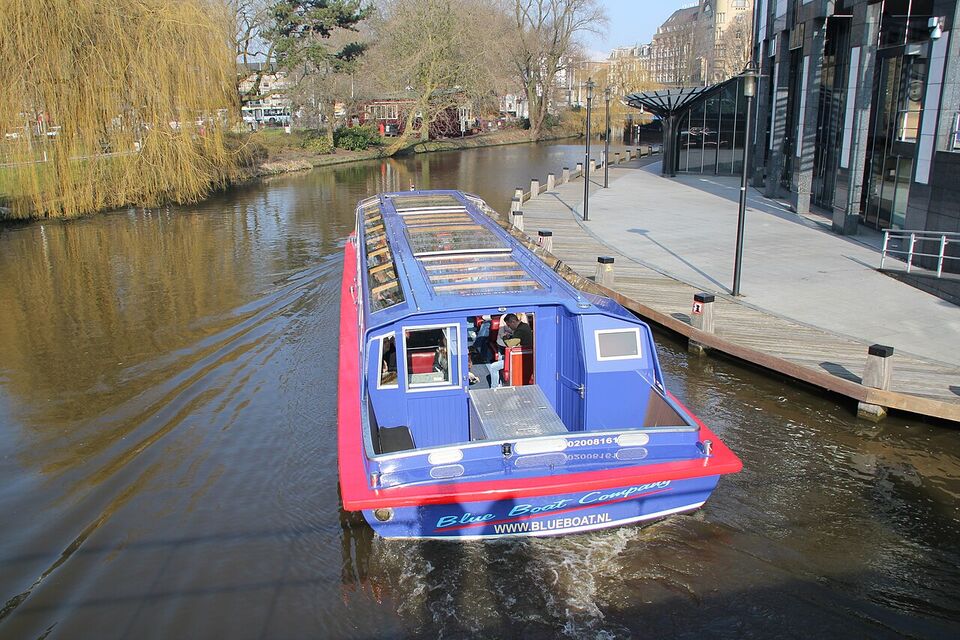
A canal cruise is the standard first-timer choice, and it earns its reputation: from the water you see the gabled houses, bridges and houseboats that are hard to appreciate from the street. You also cover several miles without walking. Cruises cluster around Centraal Station and the Damrak, the Rokin and Leidseplein.
What to compare
- Length: 60 to 90 minutes is typical. Longer is not better; after an hour most people start looking at their phones.
- Boat size: small, open boats feel more personal and reach narrower canals; large glass-roofed boats are warmer and drier but can feel crowded.
- Commentary: live guides are more flexible; recorded audio in multiple languages is dependable. Check the language you need before booking.
- Departure point: a boat leaving from Centraal or the Damrak sees the same canals as one from Leidseplein. Pick the one that is closest to your hotel.
- Extras: drinks, cheese or dinner packages cost more and rarely improve the sightseeing.
Prices and timing
Blue Boat lists the following per person, shown without tax on its page, so the price at checkout is the one to trust: City Canal Cruise (75 minutes) from about €26 (about $29) for adults and about €13.50 (about $15) for children; the Evening Cruise (90 minutes) from about €28 (about $31) adults, about €19.50 (about $22) children. Other operators have similar ranges, but we could not confirm their current prices, so compare them at the operator's own site.
If you plan to buy the I amsterdam City Card, note that it includes one canal cruise at the major operators, and holders can ride without booking. That makes the card more attractive if you will also use the museums and transport. The money page explains how to decide.
Day or evening?
Day cruises give better photographs and clearer views of building details. Evening cruises show lit bridges and illuminated canal houses, but in winter it is dark by about 5 p.m. and the city is cold on the water. In June, daylight lasts until about 10 p.m., so a late cruise is comfortable and still bright. If you can only do one, go in the late afternoon to catch both light conditions.
From November 26, 2026 to January 17, 2027, the Amsterdam Light Festival turns part of the canals into an outdoor gallery of 19 light artworks. A festival cruise is a way to see them from the water; Blue Boat's page lists a festival cruise from about €29.75 (about $33). Walking the route is free. Check amsterdamlightfestival.com for the route and opening night details.
Insider tip
A cruise is a good first-morning activity if you arrive early and your hotel room is not ready. Sitting down for an hour with someone else doing the navigating helps with jet lag, and you leave with a mental map of the canals.
Time needed: 1 to 1.5 hours. Ticketing: book ahead in July, August and on weekends, or check same-day availability. Check: blueboat.nl or the operator's site for hours and current prices.
Dam Square and the Royal Palace
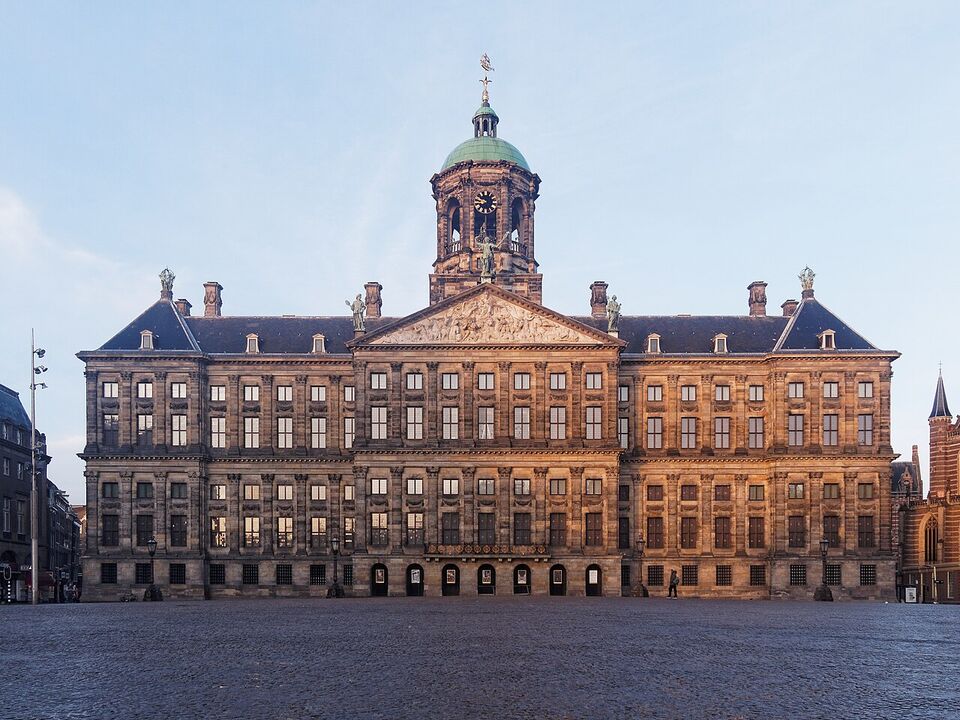
The Dam is the city's central square and the zero point of Amsterdam. It is open, busy and usually full of pigeons and street performers. On it stand the National Monument, a white stone memorial to the Second World War, and the Royal Palace, a large 17th-century building that began as the city hall.
The palace is a working royal venue, so its calendar changes. Its official page lists adult tickets at €13.50 (about $15) with an audio tour included, students at €9 (about $10), and free entry for ages 17 and under and for Museumkaart holders. It reports opening more than 230 days in 2026, from 10:00 on open days, but its page showed "now closed" on November 13, 2026, so always check the calendar before you walk over.
Time needed: 10 minutes for the square, about 1 hour for the palace. Ticketing: buy online; check closing days first. Check: paleisamsterdam.nl for the opening calendar.
The Nieuwe Kerk next door hosts exhibitions and events. We could not confirm its current hours or prices, so check them on the church's official site if it interests you. From the Dam, you can reach Centraal in about 10 minutes on foot (roughly 0.6 miles or 1 km), the Nine Streets in about 5 minutes, and the Begijnhof in about 5 to 10 minutes.
Vondelpark
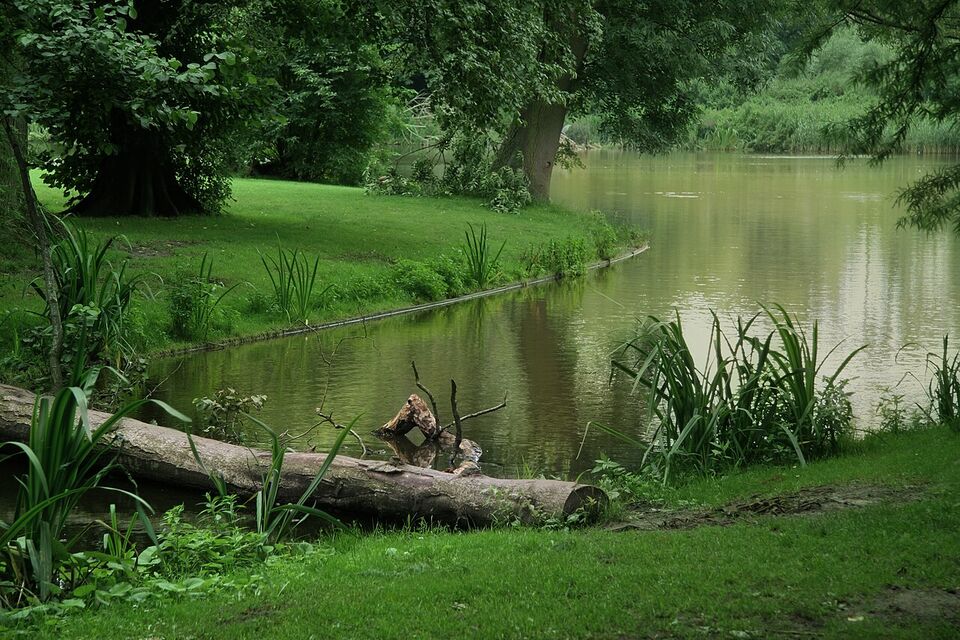
The Vondelpark is the city's best-known park, laid out in the 19th century and named after the Dutch writer Joost van den Vondel. It lies just behind the Museum Quarter and is free and open to everyone. Locals use it for jogging, picnics, cycling and weekend barbecues; visitors use it for a break between museum visits.
Walk or ride the main paths, look for the ponds and lawns, and stop at one of the cafés or the park's open-air theater if you are there in warm months. The park is large enough that you can lose the crowd within five minutes. Bring a light picnic, but keep your belongings close, particularly near the main entrance.
Time needed: 30 minutes to 2 hours. Ticketing: free, no booking. Check: amsterdam.nl for events and park rules. If you ride a rental bike, follow the posted signs and keep to the paths.
Markets
Albert Cuyp Market
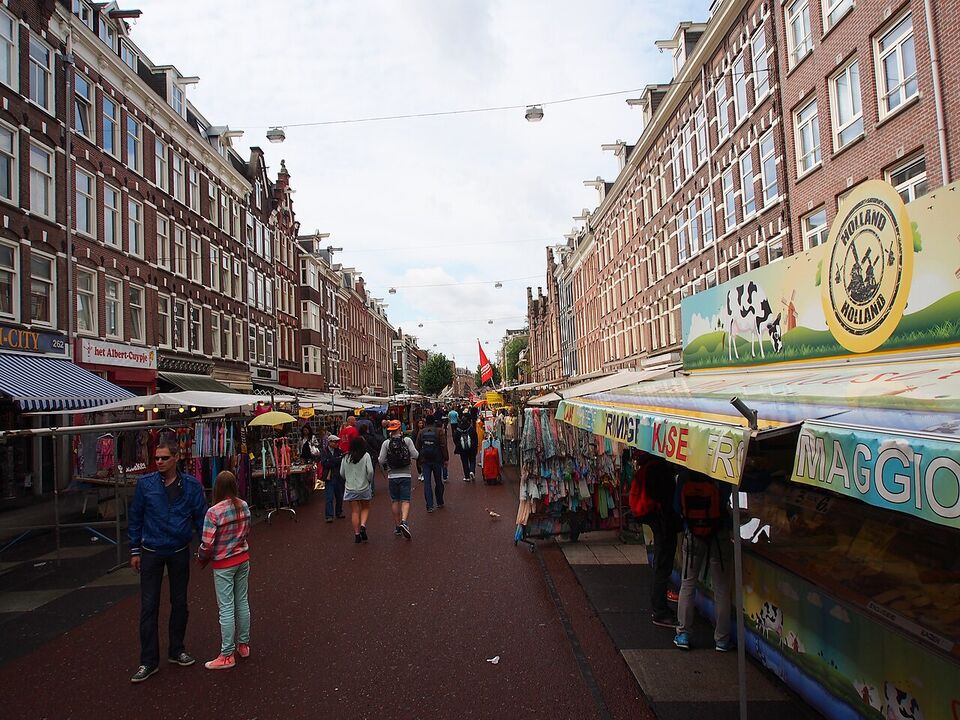
The Albert Cuyp Market runs along Albert Cuypstraat in De Pijp and is the city's best-known street market. It sells fresh produce, cheese, fish, flowers, clothing and snacks, including fresh stroopwafels (syrup waffles) made while you wait. Go with an empty stomach and a card plus a few coins, since some stalls prefer cash.
It operates on most days except Sundays, but days and hours can change by stall and season, so check the market's page on amsterdam.nl or the city's tourism site before you plan a visit around it. Mornings are quieter; early afternoons are busiest. The surrounding streets of De Pijp have cafés for a longer stop.
Time needed: 45 minutes to 1.5 hours. Ticketing: free to walk. Check: amsterdam.nl for the market schedule.
The flower market
The Bloemenmarkt (flower market) lies along the Singel canal, near Muntplein. Its stalls line the canal side and sell cut flowers, bulbs, seeds and souvenirs. It is free to walk through and takes about 15 minutes.
Many of the bulbs are labeled for export, but rules on bringing plants and bulbs into the United States are strict. Check CBP and USDA requirements before you buy anything to carry home. Tulip bulbs are also on sale at Keukenhof in spring; for tulip season planning see tulips. Treat souvenir stalls with the usual skepticism about prices, and buy from stalls that display clear labels.
Time needed: 15 to 30 minutes. Ticketing: none. Check: iamsterdam.com for current opening times.
Brewery tour
Amsterdam's best-known brewery attraction is the Heineken Experience, a self-guided visit in the company's former brewery near the Museum Quarter. Other brewery tours and tasting rooms exist in the city, and the format is similar: you learn about the brewing process, walk through displays and finish with a tasting.
Heineken's own page lists the self-guided Heineken Tour at €24.95 (about $28), the Tour plus Rooftop at €29.95 (about $34) with two drinks and a visit of about two hours, and a VIP guided tour with five beers at €65.00 (about $73). The Rooftop Bar on its own is €15.00 (about $17). The visit is for adults (18+), and combination tickets with a canal cruise or the Rijksmuseum are sold. It opens at 10:30, with closing varying by day.
It is a polished visit rather than a working brewery, so decide whether it fits your trip. It suits groups who like beer, a rainy afternoon or travelers who want a short, structured activity. If you prefer something smaller, look at independent brewery taprooms; verify their hours with the operator.
Time needed: 1.5 to 2 hours. Ticketing: book a date online; it saves queueing. Check: heinekenexperience.com.
The A'DAM Lookout and the IJ shore
Across the IJ behind Centraal, the A'DAM Tower has an observation deck, the A'DAM Lookout, at a height of about 328 feet (100 m). Tickets start at €16.50 (about $18), with €2 (about $2.20) off when you buy online. The site lists Monday to Thursday 11:00-19:00 and Friday to Sunday 11:00-21:00, with last entry an hour before closing. The deck has an indoor part, so views still work in poor weather. The "Over the Edge" swing is an extra and its price is not given here; check the operator's site.
The reason to include it is the setting. The ferry is free, the north shore has wide views back at the old city, and there is room to wander along the IJpromenade, past the EYE Film Museum. Combine it with an evening ferry ride back, or with a walk to the NDSM wharf by a different ferry.
Time needed: 1.5 to 3 hours with the ferry. Ticketing: book online for the discount; peak times are sunset and weekends. Check: adamlookout.com.
The free ferries
GVB runs ferries across the IJ from the quay behind Centraal. They are free for pedestrians, cyclists and mopeds. The best-served route is Centraal to Buiksloterweg, with several boats and a wait of only a few minutes; it also runs through the night. Other routes go to the NDSM wharf and to IJplein, a bit further east. The F3 ferry to the A'DAM Tower runs every five minutes, 24 hours a day.
The ferry is a cheap way to see the harbor and a good test of Amsterdam's public life, since it carries locals with bikes and groceries alongside visitors. You can ride across and straight back for the view, or explore Amsterdam-Noord, where the tram network is limited. See getting around for more on GVB.
Time needed: 10 minutes each way. Ticketing: none for pedestrians and cyclists. Check: gvb.nl for the route map and any service changes.
The Begijnhof
The Begijnhof is a quiet courtyard of old houses and a small garden near the Spui square, tucked behind a narrow entrance. It was a community for religious laywomen, the beguines, and still has a medieval feel despite being in the busiest part of town. Het Houten Huys, built around 1425, is one of only two surviving wooden buildings in the city. A church within the courtyard hosts English-language services under the Church of Scotland, which is the oldest English-language congregation in the world outside the United Kingdom.
People still live here, so keep your voice down, stay on the paths and do not look in windows. The courtyard may close to visitors at certain times or on some days, and the rules on visiting and filming are posted at the gate. Check I amsterdam for current guidance.
Time needed: 15 to 30 minutes. Ticketing: free. Check: iamsterdam.com.
Zaanse Schans
Zaanse Schans is a living-history village of windmills, small museums and craft workshops on the Zaan river, about 20 minutes by train from Amsterdam. It is the most common half-day trip and is packed in July and August. The village is free to walk around, per its official site. Windmills and several museums charge separately, and the municipality has discussed an entrance charge, so check zaanseschans.com before you go.
The "Ticket Zaanse Schans" combination ticket is €29.50 (about $33) for adults and €20 (about $22) for children aged 4 to 17, and it covers the Zaans Museum, the Verkade Experience, the Windmill Museum, the Weaver's House, Museum Zaanse Tijd, two open mills and a digital audio tour. Some museums are free with a Museumkaart or an I amsterdam City Card. Most attractions open around 9:00 to 17:00 and not all open daily. Parking costs €15 (about $17) a day, card only, and there is no ATM.
For more, read our windmills page and the day trips page.
Time needed: 3 to 5 hours including the train. Ticketing: optional; buy online if you want the combination ticket. Check: zaanseschans.nl and zaanseschans.com.
Other walks that cost nothing
The canal ring itself is the best free sight. Walk along the Herengracht, Keizersgracht and Prinsengracht, and cut across the Nine Streets for shop windows. The Jordaan is a good place to wander without a plan, since its lanes are narrow and its small canals less crowded than the main ones. The neighborhoods page suggests short walking routes for each area.
Many churches and courtyards are free to enter or have modest fees, but hours vary and some close for services. Check before making a special trip. Browse our festival calendar for free events during your dates, and see the budget page for ways to keep costs down.
Save money
The best free things to do are the ferries, the Vondelpark, the Begijnhof courtyard, the flower market and a walk along the canals. Pair them with a single paid highlight per day and you can enjoy Amsterdam without buying a full pass.
Rainy-day list
Amsterdam has rain on roughly one day in three. The KNMI normals show about 12 to 14 days a month with at least 1 mm (0.04 in) of rain from October to January, so have a plan.
- Museums: the Rijksmuseum (open daily 9:00-17:00), the Van Gogh Museum, the Rembrandt House (open daily from 10:00 except King's Day and December 25) and the NEMO Science Museum. Book timed tickets. See museums.
- A'DAM Lookout: the indoor observation deck has floor-to-ceiling windows and works in poor weather.
- Heineken Experience: a dry two-hour activity with a tasting at the end.
- A covered canal boat: glass-roofed boats keep you dry and still show the canals.
- A brown café: a bruin café (traditional pub with dark wood) is a good place to sit out a shower with a coffee or a beer.
- Shopping streets: the Nine Streets have small shops where you can browse between showers.
Watch out
Wet cobbles and tram tracks are slippery, and umbrellas are awkward on busy sidewalks and in bike lanes. A light waterproof jacket works better than an umbrella.
A two-day plan
This plan assumes you are staying in or near the Canal Ring and booked the museums separately. It keeps each day to one major paid activity and leaves time to wander.
- Day 1
Water, squares and courtyards
Morning: walk from Centraal to the Dam and see the Royal Palace if it is open. Late morning: the Begijnhof and the flower market on the Singel. Lunch in the Nine Streets. Afternoon: a canal cruise. Evening: dinner in the Jordaan.
- Day 2
Park, market and the far shore
Morning: the Albert Cuyp Market in De Pijp, then the Vondelpark. Lunch in the park or in De Pijp. Late afternoon: the free ferry to Amsterdam-Noord and the A'DAM Lookout at sunset (check timing), and the ferry back. A rainy morning is a good time to swap in the Heineken Experience.
If you have a third day, go to Zaanse Schans or add a museum. Read the Amsterdam hub for a three-day sequence, and the trip builder to turn the plan into a schedule. For families, see families.
Add it to a route in the trip builder, or ask us to plan the hotels, trains and guides for you.