February is one of the best months for a cheap, uncrowded Spain trip built around cities, food and flamenco, and it is the month for Carnival. Flights and hotels are still near their yearly lows, Seville and Málaga see sunny afternoons near 64°F (18°C), the almond trees flower in Mallorca and the Málaga hills, and the Jerez Flamenco Festival starts on February 19.
It is still winter. Mornings in Madrid and Granada are close to freezing, the north is wet, and the beach season has not started anywhere except, in a way, the Canary Islands. Carnival has no nationwide holiday attached, but in Cádiz and Santa Cruz de Tenerife it fills hotels and closes streets, so plan around it either way.
Weather by region
February is still cold on the interior plateau (Madrid, Toledo, Segovia, Salamanca, Burgos), with clear days and frosty nights, though the sun is stronger and the days are noticeably longer than in January. The Mediterranean coast and Andalusia are mild and mostly sunny, the Atlantic north is cool and rainy, and the Canary Islands stay close to 70°F (21°C).
| Place | Average high | Average low | Rainy days |
|---|---|---|---|
| Madrid | 54°F (12°C) | 39°F (4°C) | About 5 |
| Barcelona | 57°F (14°C) | 43°F (6°C) | About 4 |
| Seville | 64°F (18°C) | 46°F (8°C) | About 5 |
| Granada | 57°F (14°C) | 37°F (3°C) | About 5 |
| Málaga | 64°F (18°C) | 46°F (8°C) | About 5 |
| Valencia | 63°F (17°C) | 46°F (8°C) | About 4 |
| Bilbao | 57°F (14°C) | 41°F (5°C) | About 12 |
| Santa Cruz de Tenerife | 70°F (21°C) | 60°F (16°C) | About 3 |
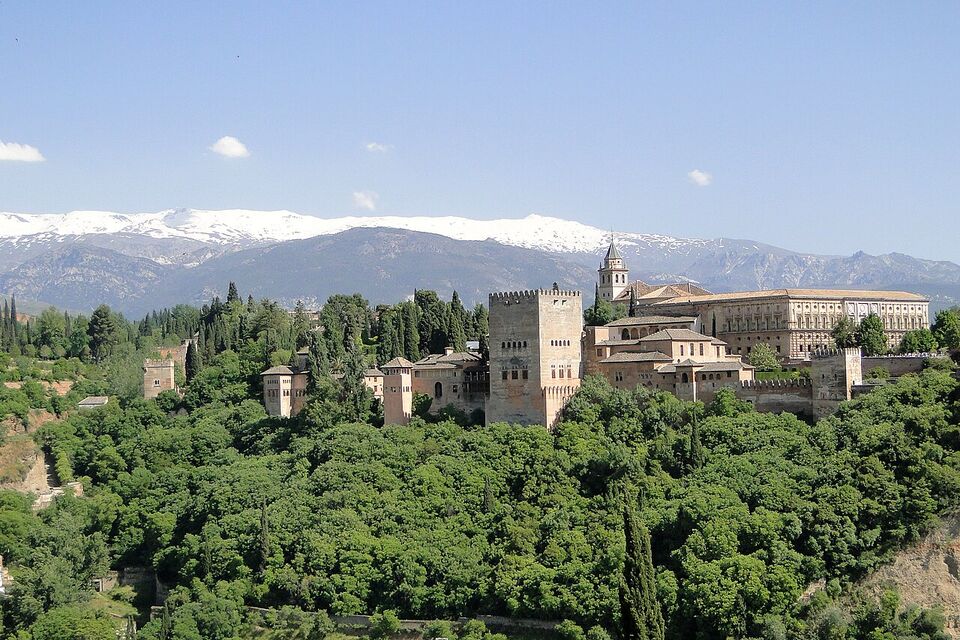
These are typical, rounded values based on the 1991–2020 averages that AEMET, Spain's weather agency, publishes; any single week can be several degrees warmer or colder, and February storms can bring a few days of heavy rain to Andalusia. Granada's nights are the coldest on the list, and the Sierra Nevada behind the Alhambra is usually still white. Old buildings and many restaurants are poorly heated, so a sweater indoors is normal. The Canary Islands are the warm option. See when to go for the full year.
What's on in February 2027
| Date | Event | Where |
|---|---|---|
| Expected around February 6–14 (confirm with the city) | Street Carnival in Cádiz: singing groups and costumes. The COAC contest at the Gran Teatro Falla opens January 8, with its final on February 5 | Cádiz |
| Around February 4–9 (confirm) | Carnival in Sitges, with costume parades | Sitges, near Barcelona |
| Monday and Tuesday, February 8–9 | Carnival Monday and Tuesday (Mardi Gras); the main parade days in many towns | Nationwide, strongest in Cádiz, Sitges and Galicia's villages |
| Wednesday, February 10 | Ash Wednesday: the burial of the sardine (entierro de la sardina) closes Carnival in many places | Madrid, Murcia, Barcelona area and others |
| February 19–28 (confirm) | Santa Cruz de Tenerife Carnival street party, rescheduled later than the Ash Wednesday calendar; the grand parade is reported for February 23 | Santa Cruz de Tenerife |
| February 19 to March 6 | Festival de Jerez, the great flamenco dance and song festival | Jerez de la Frontera |
| Late January to late February | Almond blossom, depending on the winter | Mallorca and Málaga province |
| Sunday, February 28 | Día de Andalucía, the regional holiday (see below) | Andalusia |
| Around March 1–4 (confirm) | Mobile World Congress, a very large trade fair that pushes up Barcelona hotel prices (see March) | Barcelona |
Carnival in Cádiz and Tenerife
Spanish Carnival is not Mardi Gras with beads and parade floats. It is a costume-and-satire festival, rooted in the days before Lent, and Spain's two great versions are Cádiz in Andalusia and Santa Cruz de Tenerife in the Canary Islands. The 2027 calendar is Carnival Monday and Tuesday on February 8–9, Ash Wednesday on February 10, Lent from then until Holy Week at the end of March.
Cádiz
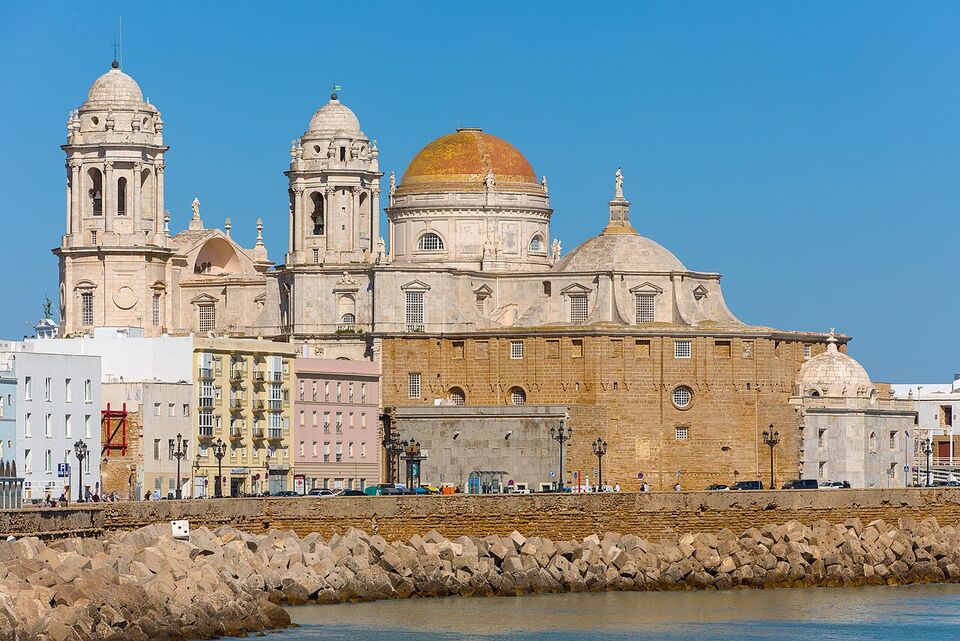
Cádiz's Carnival is about words. Costumed singing groups (chirigotas, comparsas, coros and cuartetos) compete in the Gran Teatro Falla in a contest known as the COAC, which opens on January 8 and ends with its final on February 5 (the city's 2027 calendar), and then take the songs to the street, where thousands of locals dress up as a group and sing sharp, funny verses about politicians and the news. The street carnival usually peaks around the weekend before Ash Wednesday and on Carnival Monday and Tuesday; we did not find the 2027 street program, so check the city's calendar before you book. Expect streets so full that you move with the crowd, and little sleep. Hotels in the old town fill and can cost several times their normal winter rate, so many visitors stay in Jerez, El Puerto de Santa María or Seville and come by regional train. See Andalusia.
Santa Cruz de Tenerife
Santa Cruz's Carnival is the Canary Islands' answer to Rio: a coronation gala for the Carnival queen, nights of salsa on open-air stages, a huge costume parade (the Coso Apoteósico) and the burial of the sardine to end it. Local news reports in 2026 said the city moved its 2027 Carnival later than the usual calendar, with the street party reported for about February 19–28 and the big parade for Tuesday, February 23. Because the dates have shifted and may shift again, confirm them on the city's official Carnival site before you book flights or a room. Las Palmas on Gran Canaria also holds a large Carnival. See the Canary Islands.
Elsewhere
Sitges, south of Barcelona, has one of Catalonia's liveliest Carnivals, usually around the same days as Carnival Monday and Tuesday. In Galicia, the rural Entroido (in villages such as Laza, Verín and Xinzo de Limia) is stranger and older, with masked figures, flour and water. Madrid and Barcelona do Carnival lightly. For a quiet trip, avoid Carnival week in Cádiz and Tenerife.
Insider tip
Go to Cádiz on a weekday evening in Carnival week rather than the busiest Saturday, and ask your hotel about the street program. In the old town, look for the groups singing at a corner with a crowd around them: that is the part locals come for. Keep a hand on your phone and wallet in the thick of it.
Almond blossom and winter food
From late January into late February, depending on how cold the winter was, almond trees turn whole hillsides white and pink. Mallorca's plains and the hills inland from Málaga are the best-known places to see it, and the peak is short, so there is no safe date to promise; ask a local tourist office a week before. It is a drive-or-hike sight, and a good excuse for lunch in a village.
Winter is also the season for hearty food. In Catalonia, calçots (grilled sweet spring onions dipped in romesco) are in season until spring. In Madrid, cocido (a chickpea and meat stew) is the lunch to order. Valencia's oranges are at their best, and artichokes are everywhere. Carnival brings fried sweets such as orejas (fried pastry ears) in Galicia and Castile. Winter menus lean on stews, grilled meat and seafood, and the menú del día is as good a deal as ever. See food.
Holidays and closures
- No nationwide holiday: there is no national day off in February, so shops, museums and trains run normal hours. Carnival Monday and Tuesday (February 8–9) are not national holidays, though some towns close schools and many bars stay open all night.
- Ash Wednesday, February 10: a normal working day. Some Carnival towns are quiet and tired that morning.
- Andalucía Day, February 28: this regional holiday falls on a Sunday in 2027. Regions sometimes move a Sunday holiday to the Monday, so check the Andalusian calendar for Monday, March 1 before planning a Monday visit to banks or shops.
- Sagrada Família: on November 1, 2026 its official ticket page said the basilica was temporarily closed to the public, with no reopening date given; check sagradafamilia.org before you plan around a visit.
- Islands: most resorts in Ibiza, Menorca and northern Mallorca are still closed until spring; Palma and the Canaries are open.
Different from home
Spain does not stop for Valentine's Day on February 14, a Sunday in 2027, but restaurants are busy that weekend. US Presidents' Day weekend, February 13–15, is not a holiday in Spain: shops and museums run normal hours. Carnival is also unlike Mardi Gras: it is mostly about costumes in groups and satirical songs, not beads.
Crowds and prices
February is part of the cheap season that runs from after Three Kings to mid-March. Transatlantic fares stay low, city hotels in Madrid, Seville, Granada and Barcelona are near their annual floor, and the Alhambra can usually be booked a week or two ahead. Fares edge up around US school breaks, so check mid-February and Presidents' Day weekend against the rest of the month. See flights and where to stay.
The exceptions are event spikes. Cádiz and Santa Cruz de Tenerife fill during Carnival; Jerez hotels rise during the flamenco festival; Barcelona fills when Mobile World Congress arrives in early March; ski resorts are full on weekends; and the Canary Islands are in high season, with northern Europeans escaping the cold. If a city is in the middle of a big event, book early or stay in a nearby town.
Save money
A week in Andalusia in February is still one of the best deals in Europe: $$ hotels in central Seville, Málaga or Granada at rates closer to $, free tapas with drinks in Granada, and a menú del día (set lunch) for around €12–16 (about $13–18). Most museums keep their free evening or weekend hours all winter. See budget.
Where to go, where to skip
Seville and Córdoba
Sunny afternoons, orange trees in fruit, and the Alcázar and Mezquita with short lines. See Seville and Córdoba.
Cádiz and Jerez
Carnival in Cádiz in the first half of the month, then the flamenco festival in Jerez from February 19, with sherry bodegas open year-round. See Andalusia and flamenco.
Granada and the Sierra Nevada
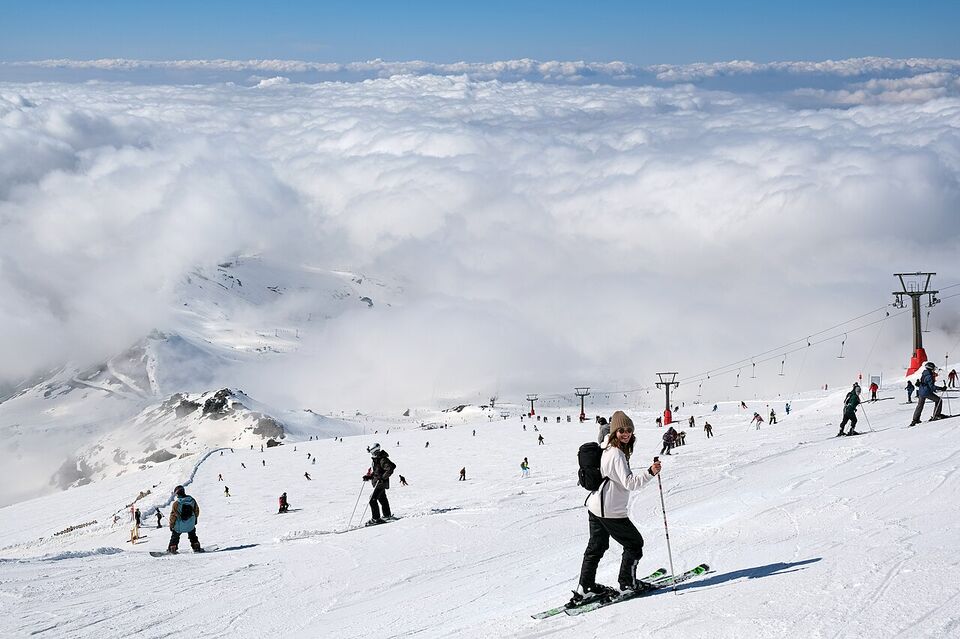
The palaces against snowy peaks, and skiing about 45 minutes away; cold nights, so book a heated room. Pyrenean resorts such as Baqueira-Beret are also in season. See Granada and outdoors.
Málaga and Valencia
The warmest mainland cities, with almond blossom in the Málaga hills. See Málaga and Valencia; Valencia's Fallas build-up starts in March.
Madrid
The Prado, the Thyssen and the Reina Sofía, cocido and churros with hot chocolate, and short lines. ARCO opens in early March. See Madrid sights.
Canary Islands
Days near 70°F (21°C), hiking on Tenerife and La Palma, and Carnival on Tenerife and Gran Canaria. High-season prices. See Canary Islands.
Skip or rethink
Balearic beach resorts and the Costa Brava are mostly closed. The sea is cold everywhere on the mainland. The north is rainy, so go there for food, not for views.
What to pack
- A warm coat, hat and gloves for Madrid, Castile and Granada; mornings are close to freezing.
- Layers you can strip off for sunny afternoons in Seville, Málaga and Valencia.
- A waterproof jacket for the Basque Country, Galicia and Cádiz in Carnival week.
- Waterproof shoes with grip. For Carnival, wear shoes you can stand in for hours and be glad to lose.
- A costume piece or a wig if you go to Cádiz, where visitors in costume fit right in.
- Light clothes and swimwear only for the Canaries.
- Type C/F plug adapters (230 volts). The packing page has the full list.
A sample week in February
- Day 1
Arrive in Madrid
Fly into Madrid and walk the old center, the Plaza Mayor and the Puerta del Sol. A first cocido or a plate of churros with hot chocolate. See Madrid.
- Day 2
Madrid museums
The Prado in the morning, lunch in the Barrio de las Letras, and the Reina Sofía for Picasso's Guernica. See Madrid sights.
- Day 3
To Seville
High-speed train to Seville, about 2 hours 30 minutes when the line is running normally (see the warning below). Walk Santa Cruz and Triana in the afternoon sun.
- Day 4
Seville
The Real Alcázar and the cathedral, then a flamenco show at night. See Seville and flamenco.
- Day 5
Jerez and Cádiz
Regional train south: a sherry bodega visit in Jerez, then Cádiz for the sea walk and the cathedral. In the right weeks, a Carnival night in Cádiz or a festival evening in Jerez.
- Day 6
Málaga
Train or bus to Málaga. The Picasso Museum and the Alcazaba, then fried fish by the sea at Pedregalejo. See Málaga.
- Day 7
Almond hills and home
If the trees are in flower, a half-day drive or tour into the hills inland from Málaga, then fly home from Málaga or by AVE and plane via Madrid.
The planning page has more routes; see also January and March.
Getting around this month
Trains and flights are lightly booked in February apart from Carnival weekends and the weekend of the Jerez Festival start. High-speed fares between Madrid, Barcelona, Seville, Málaga and Valencia are low, with AVE, Iryo and Ouigo competing on the main lines. Regional trains to Cádiz and Jerez are easy; on Carnival weekends, buy tickets a few days ahead. See getting around.
Watch out
After a fatal collision near Urda (Toledo province) on October 28, 2026, high-speed trains between Madrid and Andalusia were suspended; Renfe stopped selling tickets on the route until December 13, 2026, though service may return sooner, possibly with fewer trains while repairs continue. By February the schedule should be clearer, but check Renfe, Iryo and Ouigo for the current Madrid–Seville, Córdoba, Málaga and Granada timetables, which may be slower than usual, and consider flying or a long-distance bus if they are not running.
If you drive in the mountains, check the DGT road conditions: snow can close passes in Castile, Aragón and the Sierra Nevada, and chains may be required. On the mainland, Spain is 6 hours ahead of New York; the Canaries are 5 hours ahead. See driving.
Watch out
The State Department rates Spain at "exercise increased caution" (Level 2) because of terrorism and civil unrest, and notes that pickpocketing is very common. Carnival crowds in Cádiz and Tenerife are prime territory for pickpockets; keep valuables in a front pocket or a zipped bag. In an emergency, call 112. See safety.
Bottom line
Go in February if you want low prices, short lines, Andalusia's mild afternoons, Carnival in Cádiz or Tenerife, the Jerez Flamenco Festival, almond blossom or skiing. It is a good month for a first trip to Seville, Granada and Madrid on a budget, and a good month for the Canary Islands.
Pick another month if you want beaches outside the Canaries, warm evenings outside or the Balearic Islands. For the processions and bonfires, see Spain in March; for the cheapest weeks of the year, see Spain in January.
Add it to a route in the trip builder, or ask us to plan the hotels, trains and guides for you.