March 2027 is a month of two halves. The first two weeks are quiet, mild and fairly cheap, with sunny afternoons in Andalusia, the daily fireworks of Las Fallas building in Valencia, and ARCO, Madrid's contemporary art fair, from March 3 to 7. Then the year's big crowds arrive: Las Fallas peaks from March 15 to 19, and Holy Week runs from Palm Sunday, March 21, to Easter Sunday, March 28, which is early this year.
That makes March a great month if you book ahead and a frustrating one if you do not. Hotel rates in Valencia, Seville, Málaga and the Castilian processional cities jump to two to four times normal, trains sell out, and the clocks change twice, once in the US and once in Spain, so the time difference shifts. It is still too cold for the beach.
Weather by region
March is spring, and a changeable one. Andalusia and the Mediterranean coast reach the 60s and low 70s°F in the afternoon, Madrid and the plateau warm to the low 60s, and the north stays cool and wet. Mornings in Castile and Granada are still cold. The Canary Islands stay around 70°F (21°C) and above.
| Place | Average high | Average low | Rainy days |
|---|---|---|---|
| Madrid | 61°F (16°C) | 43°F (6°C) | About 5 |
| Barcelona | 61°F (16°C) | 46°F (8°C) | About 5 |
| Seville | 70°F (21°C) | 50°F (10°C) | About 5 |
| Granada | 64°F (18°C) | 41°F (5°C) | About 5 |
| Málaga | 66°F (19°C) | 50°F (10°C) | About 5 |
| Valencia | 66°F (19°C) | 50°F (10°C) | About 4 |
| Bilbao | 61°F (16°C) | 43°F (6°C) | About 12 |
| Santa Cruz de Tenerife | 72°F (22°C) | 61°F (16°C) | About 3 |
These are typical, rounded values based on the 1991–2020 averages that AEMET, Spain's weather agency, publishes; a single week can be wetter or much warmer. The sea is still cold. Holy Week is early in 2027, so expect cooler evenings than in an April Easter, and carry a light jacket for processions that last past midnight. See when to go for the full year.
What's on in March 2027
| Date | Event | Where |
|---|---|---|
| February 19 to March 6 | Festival de Jerez, the flamenco dance and song festival, in its last week | Jerez de la Frontera |
| From Monday, March 1 | Daily 2 p.m. mascletaes (firecracker shows) begin in the Plaza del Ayuntamiento | Valencia |
| Monday, March 1 | Día de les Illes Balears, the regional holiday | Balearic Islands |
| March 1–4 (confirm) | Mobile World Congress, which fills Barcelona hotels | Barcelona |
| March 3–7 | ARCOmadrid, the contemporary art fair; professional days March 3–5, public days from the afternoon of March 5 | Madrid, IFEMA |
| Monday, March 15 | The plantà: the fallas are in place and the official fiesta begins | Valencia |
| Wednesday–Thursday, March 17–18 | The Ofrenda, the flower offering to the Virgin; the Nit del Foc fireworks on March 18 | Valencia |
| Friday, March 19 | The cremà, the burning of the fallas, that night; San José and Father's Day | Valencia; San José is a regional holiday in some places |
| Sunday, March 21 to Sunday, March 28 | Semana Santa (Holy Week): Palm Sunday to Easter Sunday | Seville, Málaga, Granada, Valladolid, Zamora and every town |
| Thursday–Friday, March 25–26 | Holy Thursday, and Good Friday (a national holiday); the Madrugá in Seville is the night between them | Nationwide |
| Sunday, March 28 | Spain moves its clocks forward one hour at 2 a.m.; Easter Sunday | Nationwide |
| Monday, March 29 | Easter Monday, a holiday in some regions | Catalonia, Valencia region, Balearics, Basque Country and others |
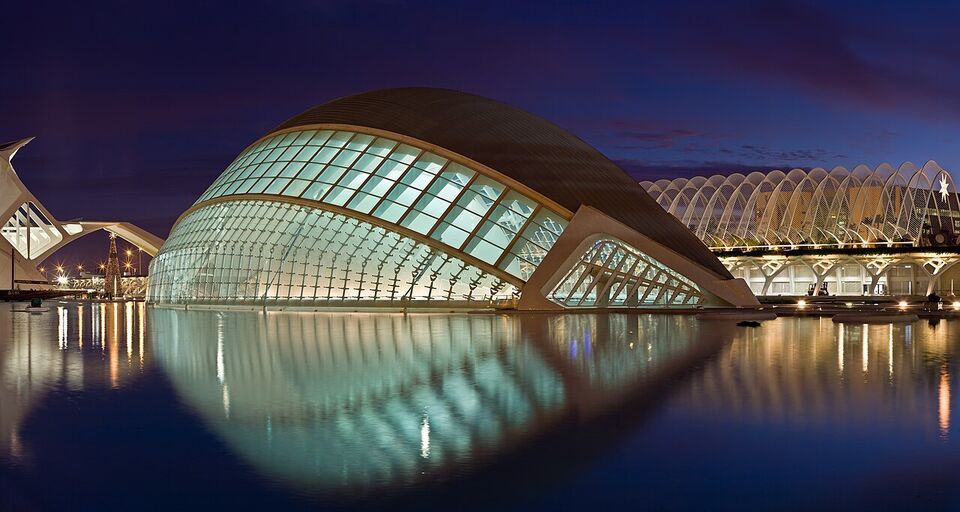
Las Fallas in Valencia
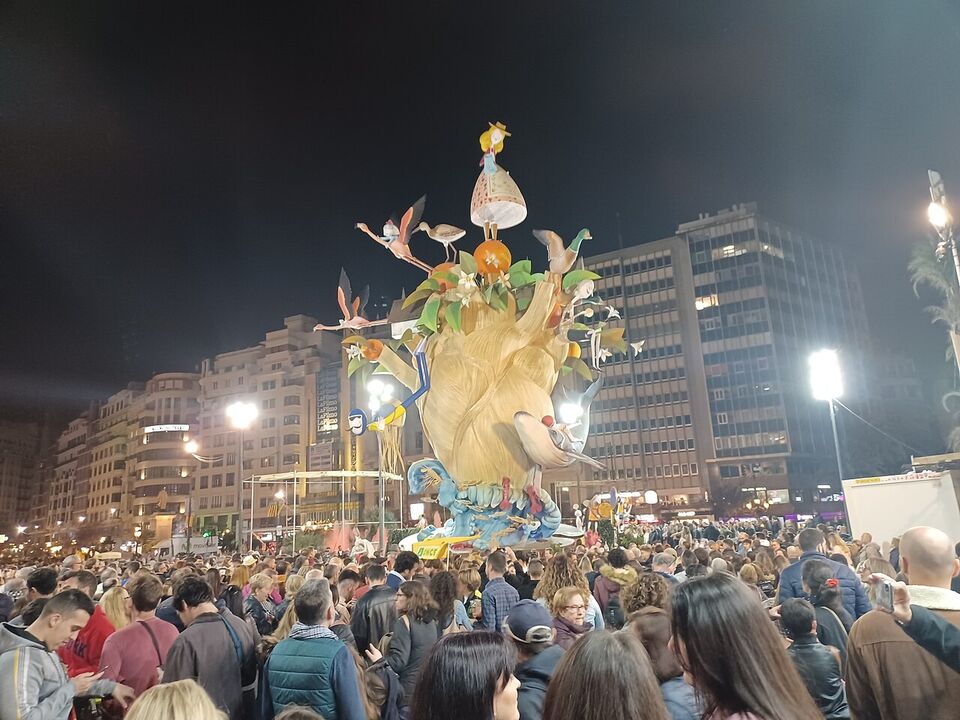
Every March, Valencia builds hundreds of giant satirical sculptures of wood, cardboard and polystyrene (fallas), some several stories high, mocking politicians, celebrities and the news, then burns nearly all of them on the night of March 19. UNESCO has listed the festival as intangible cultural heritage since 2016. It is loud, smoky, crowded and unforgettable, and it is built around a few moments you can plan for:
- The mascleta, March 1 to 19: every day at 2 p.m. in the Plaza del Ayuntamiento, a firecracker show built for noise and ground-shaking rhythm rather than light. Arrive early, and bring earplugs for children.
- The plantà, by March 15: the sculptures go up across the city, and walking between neighborhoods to see them is the main daytime activity.
- The Ofrenda, March 17 and 18: thousands of falleros in traditional dress carry flowers to the Plaza de la Virgen, where they are woven into a huge figure of the city's patron.
- The Nit del Foc, March 18: the biggest nighttime fireworks show.
- The cremà, night of March 19: the fallas burn, the children's ones first and the city hall's last, late at night. One figure each year is saved from the flames for the Fallas museum.
In 2027, March 19 falls on a Friday, so it is a long weekend for many Spaniards and Valencia's center is closed to traffic around the main sites. Holy Week starts two days after the cremà, so Fallas and Seville can be combined, once you have checked that the high-speed line is running or booked a flight. Expect Valencia hotel prices to spike for all of mid-March, and book dinners. The dates and schedule above are the festival's usual ones; the 2027 official program was not out when we checked in November 2026. Food to try: paella at a long lunch, and buñuelos de calabaza (pumpkin fritters) with thick hot chocolate. See Valencia and festivals.
Insider tip
If you want Fallas without the deepest crowds, come for a day or two between March 1 and 14: the mascletaes run daily, and hotel rates are lower. If you come for the big days, stay outside the center or in a coastal town and use the metro or the regional train.
Holy Week, March 21–28
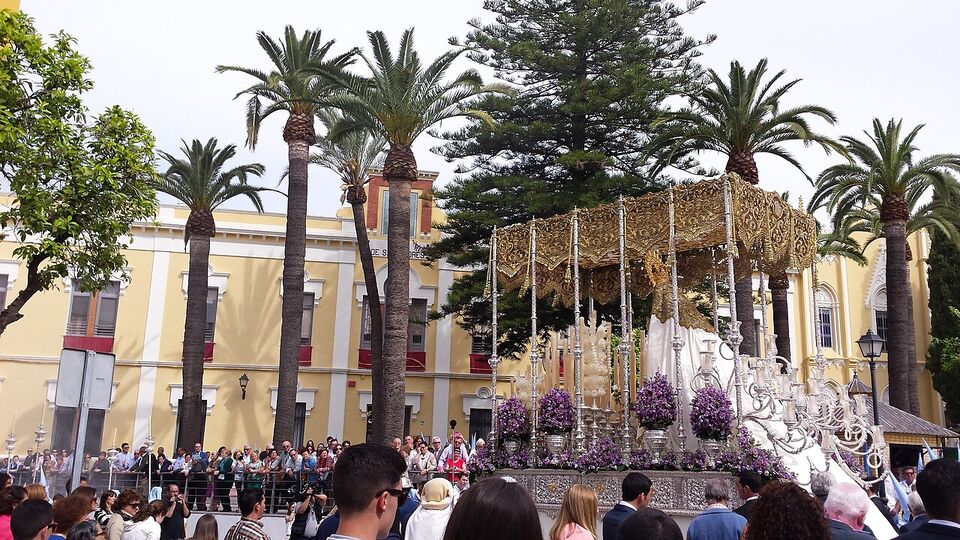
For one week before Easter, cities across Spain fill with processions organized by Catholic brotherhoods (hermandades or cofradías). Each carries one or two pasos, huge floats with carved and dressed figures of Christ or the Virgin Mary, behind penitents (nazarenos) in robes and tall pointed hoods, with bands playing slow marches. In 2027 Holy Week runs from Palm Sunday, March 21, to Easter Sunday, March 28, earlier than usual (in 2028, Easter falls on April 16).
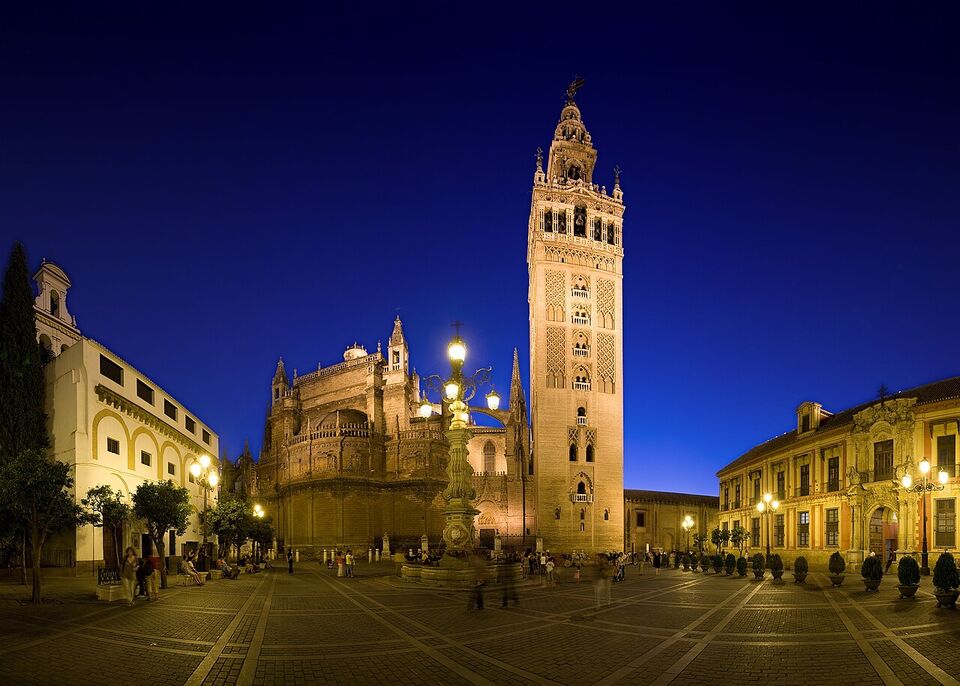
Seville has the most famous and most intense Holy Week, with some 60 brotherhoods walking from their churches to the cathedral and back. The heart of it is the Madrugá, the night of Holy Thursday into Good Friday (March 25–26), when the city's most revered images are out until morning. Málaga carries enormous thrones (tronos) through its old town and is livelier and easier to join as a visitor; Granada, Valladolid and Zamora have more solemn processions in cooler air. City tourism offices publish routes and times: pick two or three processions at quieter points rather than trying to reach the cathedral. See Seville, Málaga, Granada and Castile.
Different from home
The pointed hoods (capirotes) startle many Americans. They are a centuries-old Spanish penitential garment and have no connection to the Ku Klux Klan, which appeared long after. Spaniards are used to the question; just don't joke about it. The processions are religious services as well as sights: stay quiet and never cross one.
Watch out
Crowds in Seville's narrow streets are dense, and there have been moments of panic during the Madrugá in past years. Know where you are on the map, avoid pressing into the tightest lanes, and keep your phone and wallet zipped away. Hotel prices for Holy Week in Seville are among the highest of the year, and the best rooms go many months ahead; if you have not booked, consider staying in Córdoba or Jerez and taking a train.
The clock changes
Spain and the US change their clocks on different dates, so for two weeks the time difference shrinks by an hour. The US moves its clocks forward on Sunday, March 14, 2027. The EU, including Spain, moves its clocks forward at 2 a.m. on Sunday, March 28. Most of Canada and the Bahamas change with the US; Mexico (outside some border areas), Colombia, Costa Rica, the Dominican Republic, Jamaica, Japan, South Korea and India do not change clocks, so for them the gap with Spain grows by an hour on March 28.
| Dates | Mainland Spain vs New York | Canary Islands vs New York |
|---|---|---|
| Until Saturday, March 13 | 6 hours ahead | 5 hours ahead |
| Sunday, March 14 to Saturday, March 27 | 5 hours ahead | 4 hours ahead |
| From Sunday, March 28 | 6 hours ahead | 5 hours ahead |
Easter Sunday morning is one hour shorter than usual. If you have an early train, flight or tour that morning, set a second alarm; phones update on their own, but a watch or a hotel clock may not. After the change, Madrid's sunset moves to around 8:35 p.m., so evenings are suddenly long.
Holidays and closures
- Monday, March 1: Día de les Illes Balears is a holiday in the Balearic Islands. Andalucía Day falls on Sunday, February 28, and some regions move a Sunday holiday to the Monday; check Andalusia's calendar.
- Friday, March 19 (San José): a holiday in some regions, reported for Galicia and expected in the Valencia region, and not in others; the date is also Father's Day in Spain. We did not check every region, so confirm the regional list for where you are going.
- Holy Thursday, March 25: a holiday in most regions, but not Catalonia. Some shops and museums shorten their hours.
- Good Friday, March 26: a national holiday. Many shops and museums close, many restaurants shut or run special hours, and public transport usually follows a Sunday or reduced schedule.
- Easter Monday, March 29: usually a holiday in Catalonia, the Valencia region, the Balearics, the Basque Country, Navarra and some other regions, but a normal working day in Madrid and Andalusia; check the 2027 regional lists.
- Sagrada Família: on November 1, 2026 its official ticket page said the basilica was temporarily closed to the public, with no reopening date given; check sagradafamilia.org before you plan around a visit.
- Monuments in Holy Week: cathedrals change their visiting hours during processions. Book timed tickets such as the Alhambra for other days if you can.
Crowds and prices
The first two weeks of March are still in the cheap season: flights are reasonable, hotels in Madrid, Seville, Granada and Málaga are well below summer rates, and the Alhambra is bookable a few days ahead. Barcelona is the exception during Mobile World Congress, and Madrid during ARCO. From March 15, the picture changes. Valencia's hotels are full for Fallas, and from March 20 Seville, Málaga, Granada and the Castilian cities sell out for Holy Week; prices run two to four times normal, with minimum stays common. Many US spring breaks fall in March, which pushes up transatlantic fares, so book flights early. See flights and where to stay.
Save money
Come in the first ten days of March for the best value: $$ hotels in central Seville or Granada at rates closer to $, a menú del día (set lunch) for around €12–16 (about $13–18), and the Valencia mascletaes for free. For Holy Week, take a refundable rate and stay in a town an hour away by train. See budget.
Where to go, where to skip
Valencia
March 15–19 for the full festival, or March 1–14 for fireworks and quiet streets. See Valencia.
Seville and Málaga
The most famous processions, with the highest prices; Málaga is the easier of the two for first-timers. See Seville and Málaga.
Granada and Córdoba
Mild afternoons, Holy Week processions and the Alhambra against the last snow of the Sierra Nevada. See Granada and Córdoba.
Madrid
ARCO from March 3, the Prado and the Reina Sofía, and an easy base for day trips. See Madrid sights.
Castile
Valladolid, Zamora, Salamanca and Segovia hold processions in cool, clear air. See Castile.
Canary Islands
Days above 70°F (21°C), hiking on Tenerife and La Palma. See Canary Islands.
Skip or rethink
The sea is still cold and many Balearic resorts are closed. Seville in Holy Week is not a relaxed first visit.
What to pack
- Layers: warm mornings and evenings need a jacket, afternoons in Seville and Málaga a T-shirt.
- A light waterproof jacket for the changeable spring weather.
- Comfortable shoes for hours of standing at processions or walking between fallas.
- Earplugs for the mascletaes and fireworks, especially for children.
- Type C/F plug adapters (230 volts). The packing page has the full list.
A sample week in March
- Day 1
Arrive in Valencia
Fly into Valencia, drop your bags, and walk the old town to see the sculptures going up. See Valencia.
- Day 2
Fallas by day
The 2 p.m. mascleta in the Plaza del Ayuntamiento, then the City of Arts and Sciences or the Turia gardens.
- Day 3
The Ofrenda
Watch the flower procession in the Plaza de la Virgen on March 17 or 18. Dinner away from the center.
- Day 4
The Nit del Foc
March 18 fireworks at night. Sleep late on March 19, tour the fallas in daylight and see the first fires.
- Day 5
The cremà
Friday, March 19: the night of the burning. Plan for a very late night.
- Day 6
To Seville
Check the Madrid–Andalusia high-speed line, or look at flights or a bus. Arrive by Saturday, March 20, ahead of Palm Sunday.
- Day 7
Palm Sunday in Seville
March 21: palm-bearing processions, the Real Alcázar and the cathedral in the morning. See Seville.
The planning page has more routes; see also February.
Getting around this month
Trains and buses sell out for Fallas weekends and above all for Holy Week, around Thursday, March 25 and Monday, March 29, when Spain travels. Book as early as sales open and avoid the afternoon of March 25 and March 29 for long journeys. On Good Friday and Easter Sunday, public transport follows reduced schedules. See getting around.
Watch out
After a fatal collision near Urda (Toledo province) on October 28, 2026, high-speed trains between Madrid and Andalusia were suspended; Renfe stopped selling tickets on the route until December 13, 2026, though service may return sooner, possibly with fewer trains. Check Renfe, Iryo and Ouigo for the March timetables before you book a Holy Week trip to Seville, Málaga or Granada, and have a plan B: a flight or a long-distance bus.
If you drive, expect closed city centers during processions and scarce parking. See driving.
Watch out
The State Department rates Spain at "exercise increased caution" (Level 2) because of terrorism and civil unrest, and notes that pickpocketing is very common. The Fallas and Holy Week crowds are prime territory for pickpockets. Keep valuables in a front pocket or a zipped bag. In an emergency, call 112. See safety.
Bottom line
Go in March if you want Fallas, Holy Week or ARCO, and book early. For the best value, come in the first half and go to Andalusia, Madrid and Valencia before the Fallas crowds. For the full spectacle, plan Valencia for March 15–19 and a procession city for March 21–28.
Pick another month if you want empty streets or the lowest hotel prices during the middle and end of the month: see Spain in February, or wait for April or May, when Andalusia is warm and Holy Week is over. For the winter basics, see Spain in January.
Add it to a route in the trip builder, or ask us to plan the hotels, trains and guides for you.