The short answer
Adding Spain to a Portugal trip is easy on paper and slower in practice. There is no routine passport check at the border, flights are short, and Seville, Madrid, Santiago de Compostela and Salamanca each offer something Portugal does not. But Portugal and Spain are not linked by fast trains, and a "quick hop" often costs most of a day. Our rule is to add Spain only if you have more than about eight days, to give each Spanish stop at least two nights, and to treat every border crossing as a travel day.
The guide below explains how to cross by train, bus, car and plane, compares the main destinations by effort, and covers the Schengen basics, car-rental fees, tolls, the one-hour time difference and the language. It also covers Morocco as a category, since it is the one onward trip that leaves the Schengen area. If you have not planned your Portugal time yet, start with plan your trip.
Is it worth the extra days?
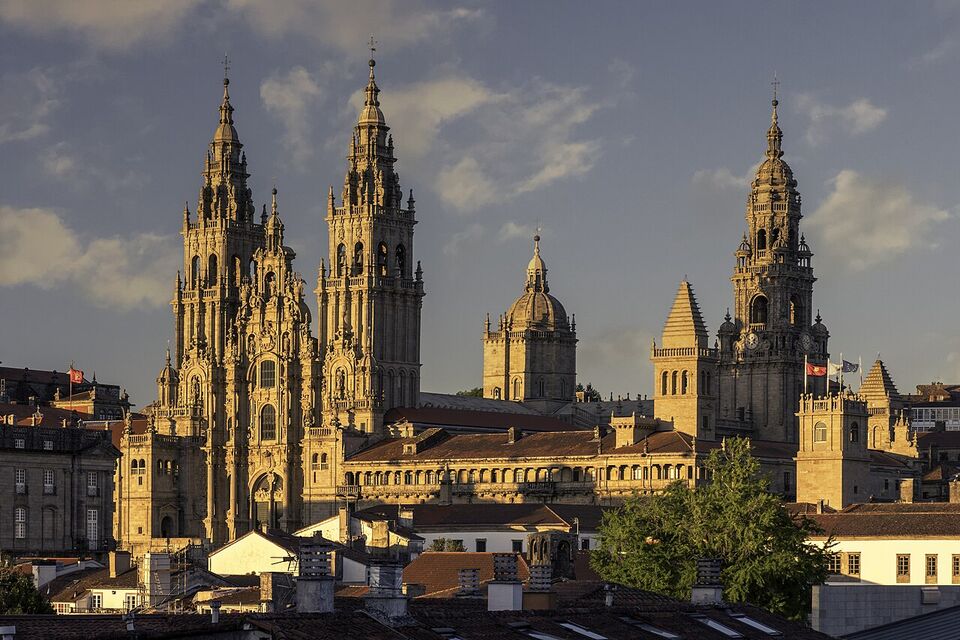
It is worth it when the extra place is a reason you came, not a bonus. Seville and Madrid are major destinations in their own right; Santiago de Compostela is the end of the Camino pilgrimage; Salamanca is a university city a day's drive from the Douro. If you are visiting Portugal for the first time, you will usually see more by staying: the country is narrow and long, and you can fill ten days with Lisbon, Sintra, Porto and the Douro valley.
A fair test: if the Spanish stop adds more than a day of transit at each end, ask whether you would rather use that time in Portugal. Another way to look at it: a week split between two countries leaves each one with a few days, and Americans often say the trip felt rushed (a pattern, not a statistic). If you want both, consider a longer trip, or Portugal on this trip and Spain on another.
Comparing the options
This table compares the main add-ons by effort. Times are approximate and depend on your starting point; check the operators for current schedules.
| Destination | Best way from Portugal | Rough travel time | Border and Schengen | Nights to allow |
|---|---|---|---|---|
| Seville | Car from the Algarve or Alentejo; flight or bus from Lisbon | About 3 hours from Faro by road; 5 to 6 hours from Lisbon by road | Land border, no routine checks; same 90-day count | 2 to 3 |
| Madrid | Flight from Lisbon or Porto | Flight about 1 hour 15 minutes; road 6 to 7 hours from Lisbon | Flying within Schengen: no passport control on arrival, though airlines may ask for ID | 3 to 4 |
| Galicia and Santiago de Compostela | Train or bus from Porto to Vigo or Tui; car | About 3 to 4 hours from Porto, depending on the link | Land border, no routine checks | 2 to 3 |
| Salamanca | Car from Porto or the Douro, via the A25 | About 250 miles (400 km) from Porto, roughly 4 to 5 hours | Land border at Vilar Formoso, no routine checks | 1 to 2 |
| Morocco | Flight to Marrakesh from Lisbon or Porto; ferry from southern Spain | A flight of a few hours; a ferry adds a day of Spanish travel | Leaves Schengen: exit and entry checks both ways; days outside do not count | 3 or more |
| Barcelona, Paris, London | Direct flight from Lisbon or Porto | About 2 to 3 hours in the air | Barcelona and Paris are in Schengen; London is not and has its own entry rules | 3 or more |
Road times are for an uncongested drive and are our estimates, not published figures. Add stops, and add the extra time of a rental pickup. Madrid is the most direct flight route: in 2024 it was Lisbon's busiest European route, with about 1.9 million passengers, served by Air Europa, easyJet, Iberia and TAP Air Portugal, and it was Porto's second busiest, with about 1.0 million passengers (Wikipedia, citing airport statistics). Flights between Lisbon and Seville also exist, and Porto has direct flights to Madrid, so schedules and fares change often.
How to cross the border
By train
There is no fast train between Portugal and Spain. A Lisbon-Madrid high-speed line appears in lists of future rail projects, not as an operating route. The classic night trains, the Lusitânia from Lisbon to Madrid and the Sud Expresso to the French border, are described in the past tense in the references we read, and we found no sign in November 2026 that either runs. Verify on cp.pt and renfe.com before you build a plan around one.
The one international service we can point to is CP's Celta, which links Porto and Vigo in Galicia. It was listed among CP's services in 2026 references, but we could not confirm the timetable or whether it is running on your dates, so check cp.pt. If it is not running, a bus replaces it (see below). Do not assume that you can buy a single ticket from Lisbon to a Spanish city; you may need separate tickets from CP and from Renfe, the Spanish operator, with a change at the border.
By bus
Buses are the cheapest and most flexible option. Long-distance coaches link Lisbon and Porto with Madrid, Seville and Galicia, and Porto airport has a bus to and from Vigo, running twice a day on weekdays and once a day at weekends according to the airport's listing. Operators, fares and times change, so check Rede Expressos, FlixBus and the Spanish operators directly. Journeys are long: expect roughly 7 to 9 hours from Lisbon to Madrid and 6 to 7 hours from Lisbon to Seville (our estimates), and book a seat in high season.
By car
A car gives you the most freedom, especially for Seville and Salamanca. Portugal and Spain both drive on the right, and you should bring your US license plus an International Driving Permit to be safe; check the rental company's rules (see driving and tolls). The A25 motorway from Aveiro to the Spanish border at Vilar Formoso has been toll-free since January 1, 2025, and the A22 along the Algarve is also toll-free, which makes the main routes to Salamanca and Seville cheaper than they were. Many other Portuguese motorways still charge; your rental's Via Verde device handles them. Ask the rental company whether the device also works on Spanish toll roads, since Spain has its own system and some stretches charge.
By plane
For Madrid, Barcelona and farther, flying is usually the most sensible choice. Check which terminal you use and add the time to reach the airport: a "1-hour flight" is a half-day door to door. See flights to Portugal for airports and Lisbon airport transfers.
Seville
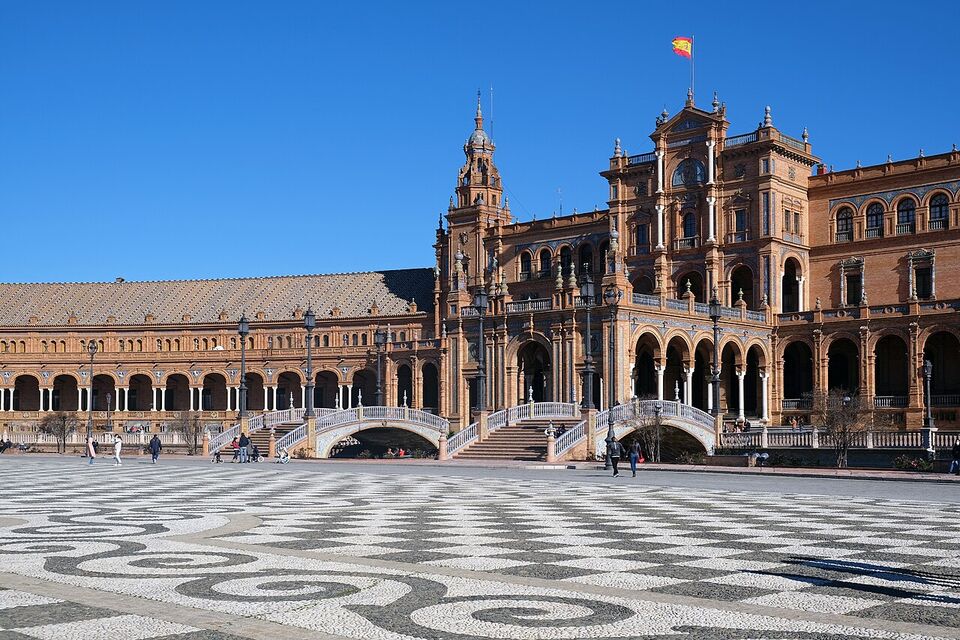
Seville is the easiest Spanish city to pair with the Algarve: from Faro it is about 130 miles (210 km) by road, roughly a three-hour drive. It is famous for its cathedral and Giralda tower, the Alcázar palace and flamenco, and it is very hot in July and August. Two nights are enough for the main sights. If you drive, return the car before entering the old center, which is hard to drive in. If you do not drive, buses connect the Algarve and Seville, and flights link Lisbon and Seville. Spanish dinner hours run later than Portuguese ones, and many restaurants do not open for dinner before about 8:30 p.m.
Madrid
Madrid is the usual add-on for people who want museums and a big capital. The Prado and Reina Sofía museums, the Royal Palace and the parks fill three days easily. Fly, since the road trip from Lisbon is about 390 miles (625 km). Open-jaw tickets (into Lisbon, out of Madrid, or the reverse) can save backtracking; compare prices and the cost of the flight between the two.

Galicia and Santiago de Compostela
Galicia, in northwest Spain, sits directly north of Porto and has its own language (Galician, which is close to Portuguese), a coast of estuaries and seafood-focused cooking. Vigo and Tui are the closest cities to the border. Santiago de Compostela is the end of the Camino de Santiago, the pilgrimage to the cathedral that holds the shrine of St. James. The Portuguese Way from Porto is a popular route: in 2025, the pilgrim office reported it as the second most used route, and of pilgrims starting in Porto, 55% went via Tui and 45% via Vigo (figures quoted on Wikipedia). Most people start in Tui. Whether you walk or just visit, give Santiago a night. For credentials, the 100 km rule and stages, see the Camino Portugués page.
Salamanca
Salamanca, a university city of golden sandstone, is about 250 miles (400 km) from Porto by road. It works as a night or two for drivers heading from the Douro valley to Madrid, and as a day trip on some Douro river cruises: AmaWaterways lists a Salamanca excursion on its Douro itineraries. Without a car, buses are the practical option. See the Douro valley and cruises.
Morocco: a different kind of trip
Morocco is a separate trip, not a side trip. It is outside the Schengen area, so your Portugal trip includes an exit from, and re-entry to, Schengen, with border checks each way. Days spent in Morocco do not count toward your 90 days in the Schengen area. The usual routes are a flight from Lisbon or Porto to Marrakesh or another city, or a ferry from southern Spain (such as Algeciras or Tarifa) to Tangier, which means getting to Spain first. Check travel.state.gov for Morocco's entry rules and advisory level before you commit, and check your travel insurance. We give no fares or schedules; this guide covers Portugal, and a Morocco stay deserves a separate plan of at least three nights.
Border, Schengen and the EES
Both countries belong to the Schengen area, which means there are no routine passport checks between them. The 90-in-180 rule is shared: your days in Portugal and Spain are added together with every other Schengen country. See entry rules for Americans for how to count.
- Carry your passport anyway. Governments can reintroduce temporary border checks at short notice, hotels may ask for ID, and airlines check it.
- EES registration happens once, at your first entry. If you land in Madrid and drive to Portugal, you register in Spain. If you land in Lisbon and take a bus to Seville, you registered in Lisbon. The EES biometric check applies at the airports of both countries, and queues can be long at peak times, so do not book a tight connection.
- Leaving Schengen: a flight to Morocco or the UK is a border exit, and a return flight means another entry check. The UK has its own entry rules for Americans, so check gov.uk.
- Hold the paperwork together. Keep your return ticket and your first hotel's address handy for the border officer.
Insider tip
On April 28, 2025, a power failure hit both Portugal and Spain at once, and the European grid operators' final report in March 2026 cited "a combination of many interacting factors." It is rare, but a cross-border day is the one where a dead card reader or halted train can cost you a connection. Carry some euros in cash and a paper or offline copy of your bookings.
Car rental: drop fees and tolls
Crossing the border with a rental car is where costs surprise people. These are the points to settle before you book.
- Permission: ask whether the rental company allows the car into Spain, and whether insurance covers it. Some require you to say so at pickup.
- One-way drop fee: if you pick up in Portugal and drop off in Spain (or the reverse), expect an international drop fee. We could not confirm typical amounts, and they can be high; get the total price in writing.
- Tolls: Portuguese rentals carry a Via Verde device, and the company bills you for tolls plus a service fee (Hertz lists €2.21 a day, about $2.48, up to €22.14, about $25, per rental; other companies differ). Whether the device works in Spain varies, so ask. Spain has many toll-free motorways and some paid ones.
- Fuel: on November 9, 2026, the Portuguese average was about €1.92 a liter for gasoline (about $8.15 a gallon) and about €2.14 for diesel (about $9.05 a gallon). Spanish prices differ; check at the pump.
- Return paperwork: keep your fuel receipts and the signed return slip.
Watch out
A one-way rental across the border can cost more than a flight. Compare the total cost, including the drop fee, the tolls and the fuel, against a flight and a second rental in Spain, before you decide.
One hour apart, and two languages
Mainland Portugal is on Western European Time (UTC+0, with UTC+1 in summer), which is 5 hours ahead of New York for most of the year. Mainland Spain is on Central European Time, one hour ahead of Portugal, so 6 hours ahead of New York in the same weeks. Both countries change clocks on the same EU dates, so the one-hour difference holds all year, but US and EU changes differ, so the gap with New York shifts to 4 hours (Portugal) and 5 hours (Spain) for about two weeks in March and about a week from late October to early November. The Azores are one hour behind Lisbon, which makes them two hours behind mainland Spain. Phones usually update by themselves, but a paper ticket or a watch will not, so check departure times against the local clock on each side of the border.
Portuguese is not Spanish. Written Portuguese looks familiar to Spanish readers, but the spoken language has different vowels and sounds, and many Spanish speakers find it hard to follow. Do not greet people in Portugal in Spanish. Start with bom dia (good morning), obrigado if you are a man or obrigada if you are a woman (thank you), and por favor (please); switch to gracias once you are across the border. See Portuguese phrases and Portuguese etiquette.
Sample combinations
Algarve and Seville (about 10 days)
- Spend three or four nights in Lisbon, then travel to Lagos or Faro for three nights.
- Pick up a rental car in Faro and drive to Seville (about three hours). Return the car there only if the drop fee is reasonable; otherwise return it in Faro and take a bus.
- Spend two nights in Seville, then fly home from Seville or from Faro.
Porto and Galicia (about 8 days)
- Spend three nights in Lisbon and take the train to Porto.
- Spend three nights in Porto, with a day in the Douro valley.
- Take a bus or the Celta (if running) to Vigo or Tui, then go on to Santiago de Compostela for two nights, and fly home from Santiago or return to Porto.
Lisbon and Madrid (about 7 days)
- Spend four nights in Lisbon, with a day trip to Sintra.
- Fly from Lisbon to Madrid, and spend three nights there.
- Fly home from Madrid. An open-jaw ticket avoids backtracking.
For how to weigh these against a Portugal-only trip, see Portugal's destinations and trains and buses in Portugal. For the Algarve, see the Algarve; for Porto, see Porto.
Add it to a route in the trip builder, or ask us to plan the hotels, trains and guides for you.