Overview
You can see a great deal of Portugal without renting a car. The main spine runs north to south: Porto, Aveiro, Coimbra and Lisbon are linked by frequent trains, and a second line runs south from Lisbon toward the Algarve. Long-distance buses cover places the trains do not reach, and Lisbon and Porto both have metro systems that cover most of what visitors want. The islands are a separate matter, because you fly to Madeira and the Azores.
The catch is that this is a small network with big gaps. Many inland towns have a train line that is slow or has been cut back, and some of the places Americans most want to see (the Douro side valleys, the Alentejo countryside, the west coast beaches) are far easier with wheels. Our driving guide covers when a car is worth it. This page covers everything else: how to buy tickets, which station to use, when a bus beats a train, and what to do when a strike or a delay gets in the way.
A word on prices and times. Fares change every January, timetables change a few times a year, and operators run promotions. We give you the structure, a handful of confirmed numbers and the places to check. Verify fares and timetables on cp.pt for trains and on the bus companies' sites before you commit.
The train network at a glance
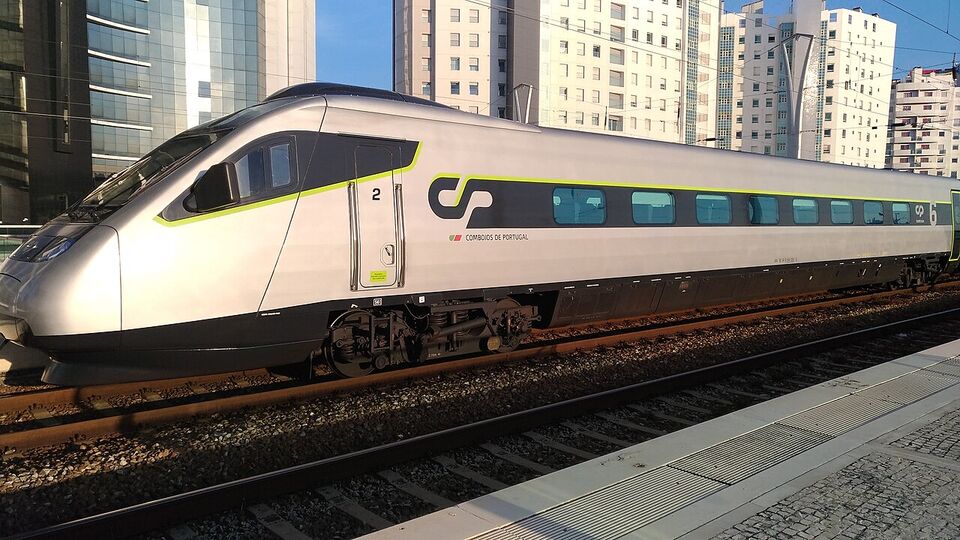
The national operator is CP (Comboios de Portugal). It sells several kinds of train, and the names matter because they decide the price, the speed and whether you need a reservation.
| Service | What it is | Good for |
|---|---|---|
| Alfa Pendular (AP) | The fastest, a tilting train with a top speed of 220 km/h (137 mph). Runs Braga, Porto, Coimbra, Lisbon and on to Faro | Lisbon-Porto, Lisbon-Coimbra, Lisbon-Faro |
| Intercidades (IC) | Fast intercity trains, up to 200 km/h (124 mph), with fewer stops than regional trains. Reaches Guimarães, Évora and other destinations | Lisbon to Évora, Guarda and Covilhã; cheaper alternative on the main line |
| Regional and Interregional | Slower trains stopping at most stations | Short trips, the Douro line, smaller towns |
| Urban and suburban (CP Lisboa, CP Porto) | Commuter lines around the two cities | Sintra, Cascais, Setúbal side, Porto suburbs |
Speeds are from the Wikipedia article on CP, so treat them as a guide to the difference between train types, not a promise for any one journey. Actual journey times depend on the stopping pattern, so always check the timetable.
Two practical points. First, the rail network uses a wider gauge than most of Europe (the Iberian gauge), which is one reason there is no through train to France. Second, Portugal has no high-speed line in the French or Spanish sense. The Alfa Pendular is fast for what the track allows, not a bullet train.
Booking CP tickets and what an assigned seat means
You can buy tickets on cp.pt, in the CP app, at station counters and at ticket machines. Online or in the app is best for long-distance trains, because you pick the train and the seat, and you avoid a queue at the counter.
Assigned seats
On Alfa Pendular and Intercidades trains, a ticket is for one specific train on one specific day, and it comes with a seat number. That differs from what many Americans expect from a rail pass or a regional commuter ticket, where you can hop on any train. If you miss the train, you cannot simply catch the next one on the same ticket. The company has rules for changes and refunds that depend on the fare type, and these rules can change, so read the fare conditions at checkout.
Regional and suburban trains are generally not reserved. You buy a ticket for the journey and sit anywhere free.
Fares and how early to book
Alfa Pendular and Intercidades fares depend on the date, the time of day, the class and how early you buy. We do not print a fare here because the official price tables were not readable when we checked, and CP raises prices at the start of each year. A short promotion in May 2026 offered very low Lisbon-Porto and Lisbon-Faro fares for a limited number of seats, but that was a one-off and is over. Do not plan around a promo.
For a sensible rule: book early for travel on Fridays, Sundays, holiday weekends and in summer, when popular trains fill. For a midweek morning in winter you can often buy the day before. Check cp.pt for the current fare, and look at both comfort and second-class options.
Different from home
Many Americans expect to hop on a later train if they miss one. On Portugal's long-distance trains the ticket is generally tied to one train and one seat. Check the departure time and the station name on your confirmation, because Lisbon and Porto each have more than one station.
Lisbon to Porto, and the Algarve line
Lisbon-Porto
This is the busiest rail link in the country. The Alfa Pendular takes about 2 hours 45 minutes. In the timetable in force since July 19, 2026, for example, train 180 leaves Porto Campanhã at 5:40 a.m. and reaches Lisbon Oriente at 8:22 a.m., and train 184 leaves Porto Campanhã at 2:40 p.m. and arrives at Oriente at 5:22 p.m. (about 2 hours 42 minutes). Trains run in both directions through the day. Timetables change, so check cp.pt for your date.
Most Lisbon-Porto trains stop at Coimbra (the station for the city is Coimbra-B on the main line, with a short local train into the center) and some at Aveiro. If you want to break the journey, see our guides to Coimbra and Porto. Which Lisbon station a train uses (Oriente or Santa Apolónia) depends on the service, so check your ticket.
Lisbon to the Algarve
The Algarve is reached from Lisbon by a long line that runs south through the Alentejo. Intercidades and some Alfa Pendular trains serve Faro; the trip takes about 3 hours, and we are giving that as an approximate figure, so check cp.pt. Lagos is farther west along the Algarve line, and some services run through while others need a change, so read the itinerary carefully when you book. The Algarve's own train line is a slow local railway, and for beaches away from the line you will want a bus, a taxi or a car. Our Algarve guide and Lagos page show where trains help and where they do not.
Faro airport has no rail link. The nearest train station is in Faro, 3.5 miles (5.7 km) away, and buses 14 and 16 run daily between the airport and Faro bus station. For the airport in Lisbon, see our Lisbon airport guide.
The main stations
Both big cities have several stations, and arriving at the wrong one is the most common rail mistake. This is how the main ones are used, from CP and Wikipedia.
Santa Apolónia
A terminus for trains to the north and for the line to Spain. It is next to a metro station on the blue line. Not every Porto train uses it, so check your ticket.
Oriente (Gare do Oriente)
The big interchange for trains to the north and to the Algarve, with metro, buses and the airport link nearby. The Metro takes about 10 minutes from the airport station to Oriente.
Rossio and Cais do Sodré
Rossio is the central station for local trains to Sintra. Cais do Sodré is for the Cascais line and the ferry to Cacilhas. Both are in the walkable center.
Porto Campanhã
Porto's main station, used by the Alfa Pendular and Intercidades. It is on the metro and on local lines; most long-distance travelers arrive here rather than in the center.
Porto São Bento
A central terminus for local trains, trains toward Braga and Guimarães, and the Douro line. Its tiled hall is worth a look even if you are not catching a train.
Porto's two stations are linked by short local trains. A first-time visitor arriving on the Alfa Pendular steps off at Campanhã and takes a short train or the metro to São Bento.
Buses: Rede Expressos, FlixBus and regional operators
Buses are the other half of public transport in Portugal. The main long-distance operator is Rede Expressos, which runs coaches between cities across the whole country and sells tickets on its website and app. FlixBus also runs routes and sells online. Each region has local and intermunicipal operators, such as VAMUS in the Algarve and the Carris Metropolitana network around Lisbon. Fares for the bus companies were not available to us when we wrote this page, so check Rede Expressos and FlixBus before you plan.
When the bus beats the train
- Where there is no train. Many places in the Alentejo, the interior and the Algarve's western end are served better by bus than rail.
- When the train stops far from town. Some stations are outside the town they are named for. A coach to the center may save a taxi.
- When timing matters. A bus may leave at a better hour, especially in the evening or on a day with few trains.
- Price. On some corridors, a bus costs less than a flexible train fare. On others the fast train is cheaper if you book early. Compare both on the day you travel.
When the train wins
For Lisbon-Porto, Lisbon-Coimbra and any journey where comfort and speed matter, the train usually wins. It runs city center to city center, has a bathroom and space for luggage, and avoids road traffic.
Insider tip
Bus stations in Portuguese towns are often not near the center. Look up the exact stop before you buy, and note whether the coach leaves from a terminal or a roadside stop. In Lisbon, long-distance coaches use more than one terminal, so match the address on your ticket.
Comparing the big routes
This table shows rough times and the effort involved, to help you decide. The Lisbon-Porto time is from the CP timetable; the others are approximate figures that we could not confirm against a current timetable, so check them before you go.
| Route | Train (about) | Bus (about) | Effort and notes |
|---|---|---|---|
| Lisbon-Porto | 2 hours 45 minutes (Alfa Pendular) | Roughly 3 to 3.5 hours | Train is easiest; book ahead for peak days |
| Lisbon-Coimbra | Around 1.5 to 2 hours | Around 2.5 hours | Train station for the city is a short local hop from Coimbra-B |
| Porto-Coimbra | Around 1.25 to 1.5 hours | Around 1.5 to 2 hours | Both work; train is more comfortable |
| Lisbon-Faro | Around 3 hours | Around 3.5 to 4 hours | Train is faster; the bus drops you in the center |
| Lisbon-Sintra | Around 40 minutes | Not usual | Frequent trains from Oriente, Rossio and Entrecampos |
| Porto-Braga or Guimarães | Around 1 hour to 1 hour 10 minutes | Similar | Frequent; see our Braga and Guimarães guide |
| Lisbon-Évora | About 1.5 hours (Intercidades) | Around 1.5 to 2 hours | Direct buses are convenient; see Évora and the Alentejo |
Door to door, add time for getting to the station, buying a ticket and a 15-minute margin. A direct 3-hour bus that leaves from your end of town can beat a 2-hour train that needs two connections.
City cards: navegante, Andante and contactless
Lisbon
Lisbon's transit system is run jointly by the Metro, Carris (buses, trams and the remaining funicular), CP's suburban trains and the ferry operator. The rechargeable card for visitors is the navegante occasional card (older guides call it the Viva Viagem card). It costs €0.50 (about $0.56), lasts one year and is topped up in stations and at machines. You can load single trips or a 24-hour ticket.
| Ticket (Metro, valid from January 1, 2026) | Price | Notes |
|---|---|---|
| Single Metro trip | €1.92 (about $2.15) | Paid with a navegante occasional card |
| Single Metro trip, contactless card | €1.72 (about $1.93) | Tap your bank card at the gate |
| Carris/Metro 24-hour ticket | €7.25 (about $8.12) | Covers the Metro and Carris during the validity period |
| Navegante occasional card itself | €0.50 (about $0.56) | Valid one year; reusable |
A single trip on a Carris bus is about €2 (about $2.24), and we do not give a tram 28 fare because we could not confirm it. Check carris.pt for current fares. Children up to age 3 ride the Metro free. The Metro runs every day from 6:30 a.m. to 1 a.m. (the last train leaves the terminals at 1 a.m.).
Contactless bank cards open the Metro gates, but they do not work on buses, trams or trains. If you plan to ride buses and trams, get a card. Our Lisbon guide covers the neighborhoods, and the sights guide tells you which tram or Metro stop to use.
Watch out
Do not plan a day around Lisbon's historic lifts and funiculars. The Glória, Bica and Lavra funiculars and the Santa Justa Lift have carried no passengers since the Glória derailment in September 2025. The Graça funicular is running (usually daily 7 a.m. to 9 p.m.), but Carris listed a temporary closure on November 11, 2026, so check same-day status. Some tourist passes still list the lift.
Porto
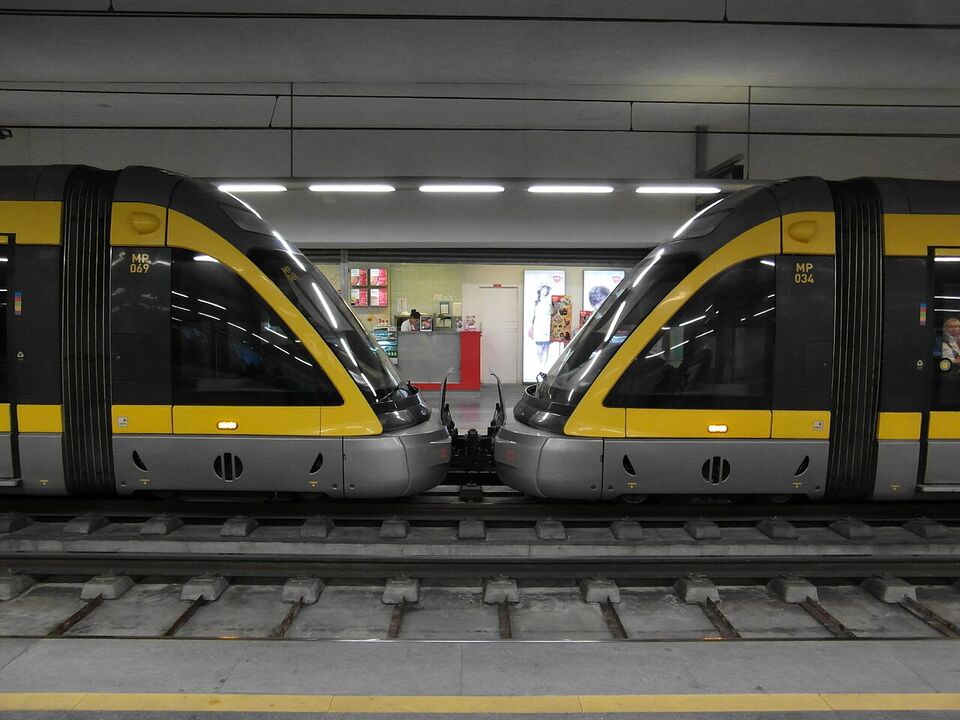
Porto's system uses the Andante ticketing, which covers the Metro, STCP buses and CP's suburban trains within zones. You buy a rechargeable blue Andante card at machines in stations, load trips or a 24-hour ticket and validate it at the platform or on board before every ride. The Metro has a tourist ticket for 24 hours or longer, and some readers accept contactless bank cards. An app (Anda) is also available. A card works across operators within the zones you have paid for, so count the zones for your trip. These Porto details come from a secondary source, so confirm them at metrodoporto.pt before you travel. The Metro's Aeroporto station (line E) is directly connected to the terminal and links to Trindade in the center. See our Porto guide for the neighborhoods.
Other cities (Coimbra, Braga, Faro and others) have local buses with their own tickets, and fares are small. Pay the driver or use the town's app if there is one. Keep a few coins for small-town buses.
Ferries across the Tagus
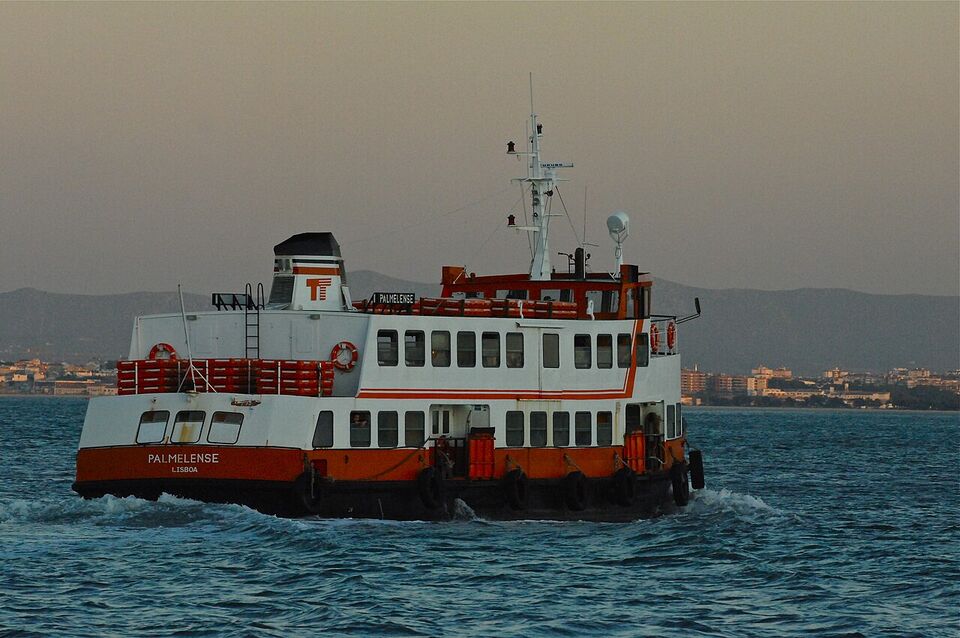
The Tagus (Tejo) river is part of Lisbon's transport network. Ferries run from Cais do Sodré to Cacilhas, on the south bank, and to other points such as Seixal and Barreiro. The Cais do Sodré-Cacilhas crossing is short and offers a river view of the city; from Cacilhas you can walk the waterfront, and the Cristo Rei statue is a bus or taxi ride farther on. Fares and hours for the ferries were not confirmed when we wrote this page. Verify the last boat before you stay out. Check the operator's website (Transtejo) for fares and which cards it accepts.
Elsewhere, river boats on the Douro are mainly tourist cruises, not commuter transport; they are covered in the Douro Valley guide.
Domestic flights and the islands
Madeira and the Azores are not reachable by train or road. You fly (or, for some Azores islands, take an inter-island ferry in season). The airlines that fly between the mainland and the islands include TAP Air Portugal and Azores Airlines. Schedules, seasonal routes and fares change, so check the airline websites and compare a flight with a long bus-and-train route.
- Madeira. Flights land at Funchal. The island is on mainland time, which is 5 hours ahead of New York most of the year. See the Madeira guide.
- The Azores. Flights go to Ponta Delgada on São Miguel and to other islands. The Azores are one hour behind Lisbon (4 hours ahead of New York most of the year). Some nonstop flights from the US are seasonal, and many travelers connect through Lisbon or Porto. Inter-island flights and ferries are covered in the Azores guide.
Our flights guide covers flights from the US. Remember that the US and the EU change clocks on different dates, so the gap with New York is 4 hours for about two weeks in March and from late October to early November.
The airports at Lisbon, Porto, Faro, Funchal and Ponta Delgada handle EES biometric registration for non-EU visitors on first entry, and queues at Lisbon have been long at times, so allow extra time on arrival. Our entry guide explains the rules.
Strikes and disruption: check the latest
Strikes in transport are a regular feature of Portuguese life. They are usually announced in advance, and they may be partial, for example a reduced service at certain hours. Lisbon's Metro had a 24-hour strike on October 14, 2026, and partial strikes on October 28 and 30, 2026. We found no December dates, but strikes are possible at any time.
Weather can disrupt too. Storm Charles hit Portugal around November 11, 2026, suspending public events in Lisbon and closing some services elsewhere. Rail works also change routes: for example, rail service on the Linha do Oeste between Torres Vedras and Caldas da Rainha is due to resume on November 15, 2026, per the town of Óbidos.
How to protect your trip
- Check the operator's site and app on the day before and the morning of any important train, especially one that connects to a flight.
- Do not book a non-refundable train on the same day as a flight home. Leave a night.
- Have a backup: a bus ticket, a taxi budget or a flexible fare.
- On holidays (December 25 and January 1 especially) expect reduced service on trains and buses; operator timetables for holiday periods were not found, so check them.
Save money
Skip the taxi from the train station if there is a Metro or a bus. In Lisbon and Porto, the Metro is the fastest way between the main stations and the airport. Keep taxis for late nights, heavy luggage and places the public network does not serve. Prices for taxis and rideshare apps change, so check the app for a quote before you ride.
A simple plan for a first trip
- Day 1
Arrive in Lisbon
Take the Metro from the airport. Buy a navegante occasional card and a 24-hour ticket if you will ride buses or trams too.
- Day 4
Lisbon to Coimbra or Porto
Book an Alfa Pendular or Intercidades seat a week or two ahead. Travel from Oriente or the station named on your ticket.
- Day 6 or later
Porto, then north or the Douro
Use São Bento for local trains to Braga and Guimarães and the Douro line. Our trip-planning guide shows how to fit this into one to three weeks.
Before you go
- Look up your exact departure station for each train; Lisbon and Porto each have several.
- Book Alfa Pendular and Intercidades trains early for Fridays, Sundays, holidays and summer.
- Download the CP app and the apps for Metro, Carris and the bus companies you will use.
- Carry a contactless card for the Lisbon Metro and a rechargeable transit card for everything else.
- Check strikes, weather alerts and engineering works the day before you travel.
- Read the frequently asked questions and the packing guide if you are still planning.
Add it to a route in the trip builder, or ask us to plan the hotels, trains and guides for you.