Overview: why Lagos
Lagos is the main town of the western Algarve, a walled old center beside a marina, with golden cliffs and small beaches within easy reach. It combines a lively social scene with real history, and it is the best base for travelers who want the coast without a car. West of Lagos, the road leads to quieter villages, then to Sagres and Cabo de São Vicente, where Portugal's mainland meets the Atlantic.
This page covers the old town, the Ponta da Piedade cliffs, the beaches, the history that visitors should know about, Sagres and the cape, the coastal trails, nightlife and quiet, and how to arrive. It is a companion to our main Algarve guide, which compares all bases along the coast.
The old town
Lagos' historic center sits behind 16th-century walls near the harbor and the river. The streets are pedestrian-friendly, with white houses, tiled facades, small squares and plenty of restaurants. It is easy to see the main sights in a few hours: the Church of Santo António, with an ornate gold interior; the city walls and the fortress at the marina; and the central squares. Entry details and hours for each sight change, so confirm them locally.
The town is busy in summer and calmer in winter. The old center can feel noisy at night on the main bar streets, so check the location of your lodging. If you want to sleep early, ask for a room away from the nightlife area.
Ponta da Piedade
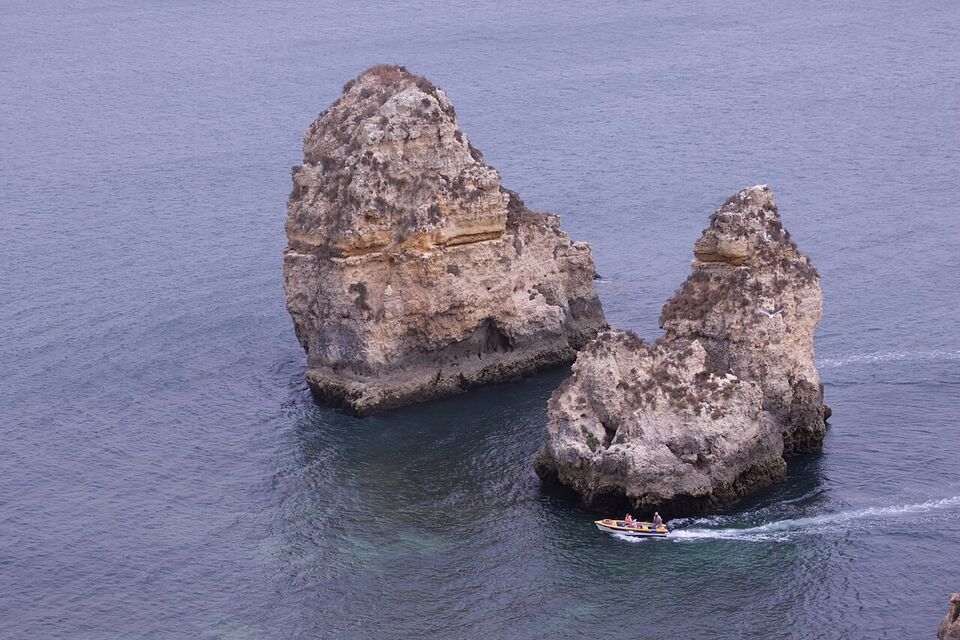
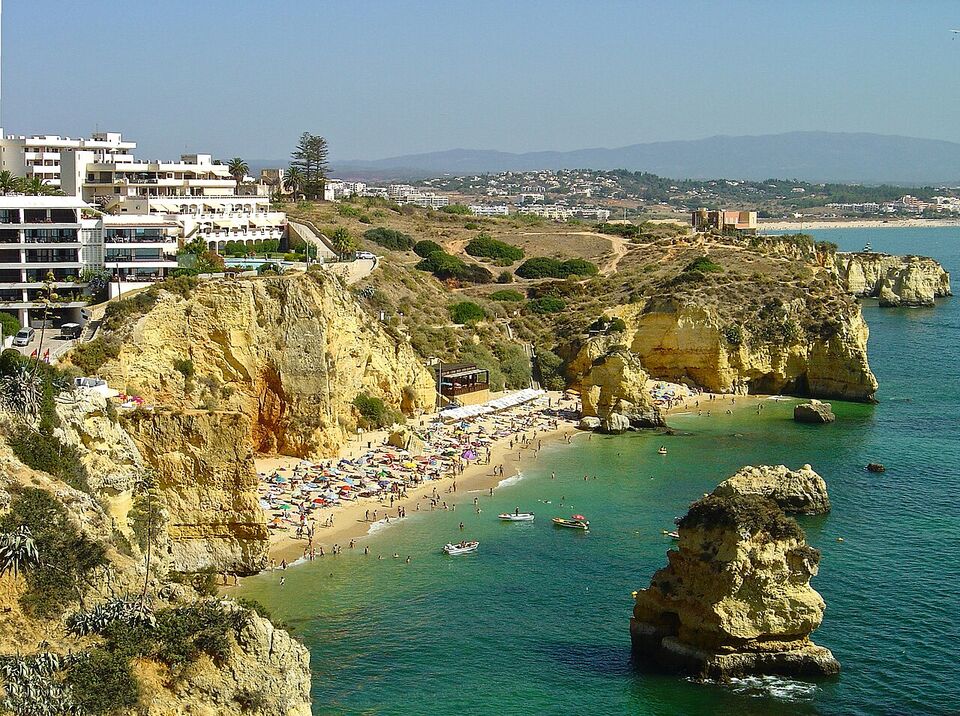
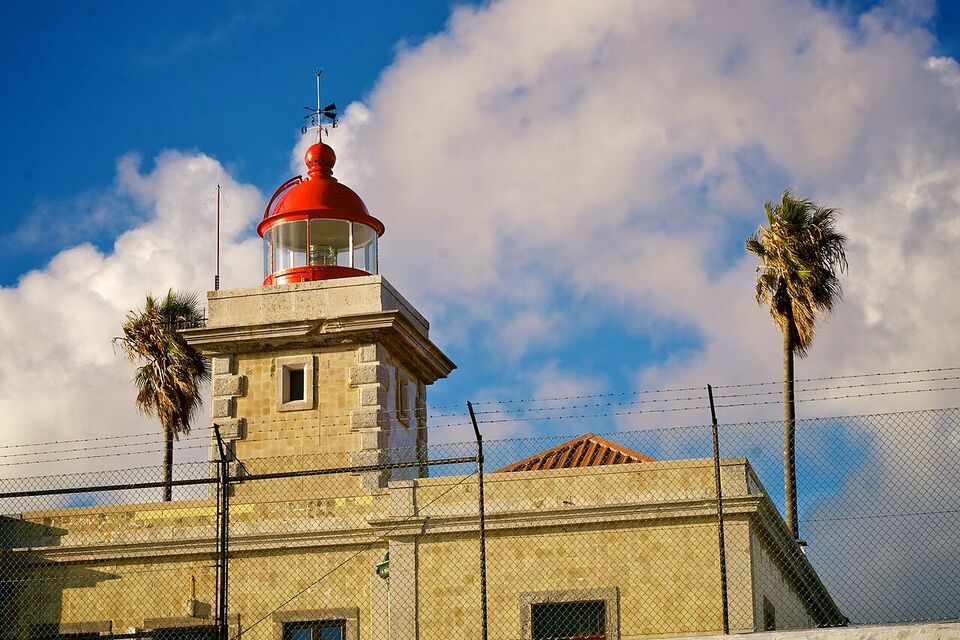
Just south of the old town, Ponta da Piedade is a headland of golden sandstone with arches, stacks, grottoes and a lighthouse. A boardwalk and viewing platforms give views from above, and boat or kayak trips let you glide through the rock formations from the sea. Short trips by small boat or kayak depart from the marina and from nearby beaches. Operators sell tours that last from about one hour to longer.
Check current access rules before you book. Boat and kayak trips in the area are regulated, conditions change with the swell and wind, and trips can be cancelled on rough days. Choose a licensed operator, wear the life jacket provided and follow the guide's instructions. Do not swim into caves or under arches: waves, rocks and sudden swells make these places dangerous. See the beaches page for more on arches and cliffs.
Watch out
The edge of the cliffs at Ponta da Piedade is unstable in places. Stay on the boardwalk and behind barriers, take care with children and avoid walking near the edge in wind. Rules for boats and kayaks in the Algarve have tightened in recent years. Check with the operator and the local port authority.
The beaches near Lagos
Lagos has a good range of beaches for a town of its size. Some are right in town, and others are a short drive or bus ride away.
Praia Dona Ana
A sheltered beach below sandstone cliffs, one of the best-known in the area. It is busy in summer and best early in the day.
Praia do Camilo
A cove reached by a long wooden staircase. The stairs make it hard for strollers and anyone with limited mobility. Take shoes with grip.
Praia da Batata
A town beach beside the fortress and the harbor. It is convenient for a short swim or a quick stop between sights.
Meia Praia
A long, wide beach to the east of town that stays more spacious than the coves. It can be reached by a short drive or by bus; check the schedules.
Luz, Burgau and Salema
Smaller beaches beside fishing villages, with a calmer feel and a few restaurants. They suit a half-day trip or a quiet stay.
On the west coast, Atlantic swell can be strong, and the water is cooler than on the east side of the Algarve. At Faro, the sea temperature is about 61-63°F (16-17°C) in January and 72-75°F (22-24°C) in August and September, and the west coast is often a little cooler. Obey flags and lifeguard signals. See our beaches guide for flags, rip currents and parking.
The Slave Market museum and the history of Lagos
Lagos has a place in a difficult chapter of history. In 1444, according to the chronicler Gomes Eanes de Zurara, captives brought by ship from West Africa were put up for sale in the town, an event often described as the first sale of enslaved Africans in Portugal's age of exploration. Portuguese ships went on to take part in the Atlantic slave trade for centuries, and Lagos was one of the ports that launched voyages along the African coast.
A small museum in the old town, usually called the Slave Market museum (Mercado de Escravos), occupies a building connected to the old customs house and the town's trade. It has been the subject of debate. Visitors and historians have questioned how the history is told, what it should include, and how the town should remember it. Some people feel that the story deserves a more complete treatment, with the voices of the enslaved and their descendants, and others value the museum as a starting point. We suggest going with an open mind, reading widely and treating it as one part of a longer story.
Opening hours and ticket prices are not something we could confirm, so check the municipal website or ask at the tourist office. Visitors who want to know more about Portugal's colonial past will find a fuller context in Lisbon's museums; see our Lisbon guide.
Insider tip
Pair the museum with a walk through the old town, and read the information boards in the squares. Avoid treating the history as a photo stop. Ask the tourist office about local talks and exhibitions, which may add depth.
Sagres and Cabo de São Vicente
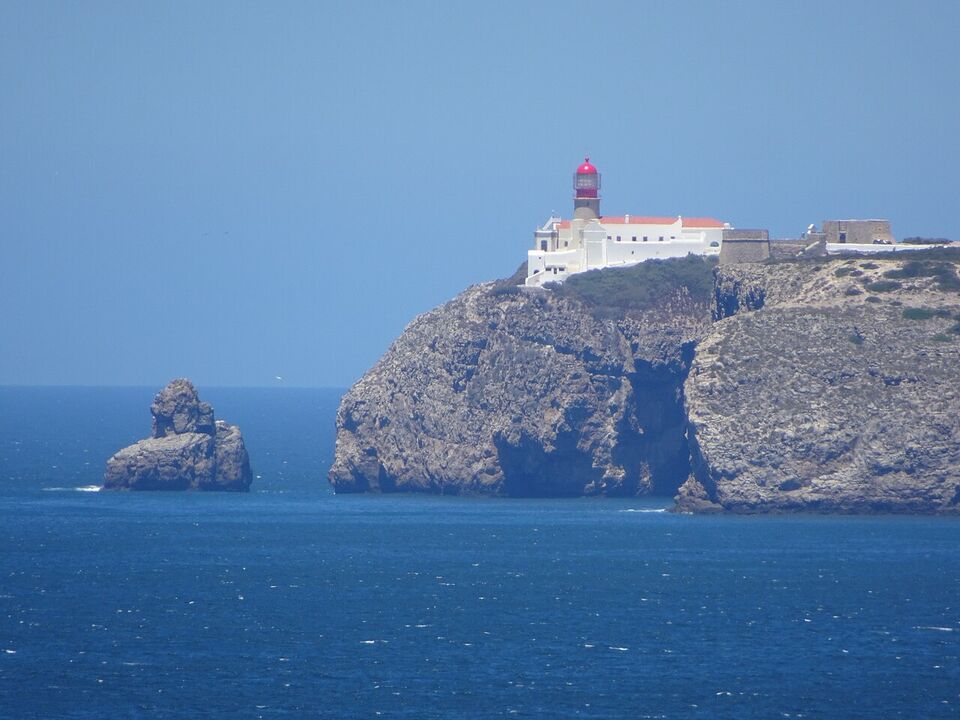
About 20 miles (32 km) west of Lagos, Sagres is a windy, low-key village on a headland, popular with surfers and hikers. Its fortress (Fortaleza de Sagres) stands on a flat cliff-top, and the nearby Cabo de São Vicente, with its lighthouse, is the southwestern tip of mainland Europe. Both are exposed to strong wind and open sky. They are best at sunset, but evening light also means cooler air, so bring a jacket.
Fort tickets are managed by the Portuguese heritage service. We could not confirm the current price or hours, so check the official site (museusemonumentos.pt) before you go. Allow about an hour for the fortress and a short extra stop at the cape. The lighthouse area can be crowded at sunset in summer, so arrive early.
Sagres has no train. Buses run from Lagos, with fewer departures in winter, and a car makes the day far easier. Surf schools operate on the nearby west-facing beaches. Waves and rip currents can be powerful, so beginners should join a school. See our surfing page for more.
Coastal trails and the Rota Vicentina
The Rota Vicentina is a network of walking trails along the southwest coast of Portugal, stretching north from the Algarve into the Alentejo. Its best-known route, the Fishermen's Trail, follows cliff tops and beaches for many days. A shorter section near Sagres and Vila do Bispo can be walked as a day hike. We recommend using this page only as a pointer: check the official Rota Vicentina website for maps, difficulty, water stops and any closures. Sections can close after storms or for fire risk.
Carry water, wear sturdy shoes and avoid cliff edges in wind. In summer, start early, since there is little shade. The trails continue into the Alentejo coast; see our Évora and Alentejo page for the northern end.
Nightlife or quiet
Lagos has a lively night scene from late spring to early autumn, with bars and clubs in the old town and by the marina. It attracts a young crowd, groups and stag and hen parties. Restaurants stay open late, and music can run past midnight in summer.
If you prefer quiet, choose a different base. Meia Praia has hotels and apartments away from the old-town noise, and Burgau, Salema and Sagres are calm, with a few restaurants. For families, the central town can feel busy at night, but the beaches are good by day. Our families page has more tips.
Different from home
Bars and clubs open and close later than in most US towns, and dinner is usually served after 7:30 p.m. In restaurants, bread, olives and cheese may arrive before you order. That is the couvert, charged only if you eat it. Ask the price or decline it.
Getting to Lagos and around
Lagos is the western end of the Algarve railway line, so it is easy to reach by train from Faro and from other towns along the coast. From Lisbon, CP runs services toward Faro and Lagos, though some journeys need a change. Allow roughly 3 hours or more, and check cp.pt for the current timetable. Express buses (Rede Expressos, FlixBus) also run from Lisbon and take roughly 4 to 5 hours.
From Faro airport, Lagos is about 50 miles (80 km) away. EES registration applies at Faro as at other Portuguese airports. Buses and trains run to Lagos, and taxis and rental cars are available. The A22 motorway along the coast is toll-free. Our flights page and getting around guide have more on routes.
Once in Lagos, you can walk to the old town and several beaches. Local buses reach Luz, Burgau, Salema and Sagres, and taxis are useful for coves. A car lets you reach west-coast beaches at your own pace, though parking in the old town is hard in summer. If you drive, use the car park outside the walls.
Best months, money and what to check
May, June, September and October are the sweet spot: warm, long days and fewer crowds. July and August are hot and busy, with the warmest sea. Winter is mild and wet, and some restaurants and operators close. A tourist tax of €1 to €2 (about $1.12 to $2.24) a night applies in many Algarve towns; we did not confirm the rate for Lagos, so check with your lodging.
- Boat and kayak rules for Ponta da Piedade, and your operator's cancellation policy.
- Sagres fortress hours and ticket price on the official heritage site.
- Rota Vicentina trail status after storms or during fire season.
- Train and bus timetables on cp.pt and the bus operators.
- Slave Market museum hours on the municipal website.
For a broader view of the coast, return to the Algarve guide.
Add it to a route in the trip builder, or ask us to plan the hotels, trains and guides for you.