Overview: how to choose a Portuguese beach
Portugal's mainland and island beaches are very different from one another. This page is not a ranking. It helps you match a beach to what you want: warm calm water, surf, space, a family beach with services, or a wild cove. The biggest surprise for Americans is the Atlantic. On the mainland, the sea is cooler, stronger and less predictable than in the Gulf of Mexico or the Caribbean, and the summer wind can matter more than the air temperature.
We organize the page by area, then cover water temperature, wind, flags and lifeguards, hazards, costs, parking, access without a car, the Blue Flag system, nudism and the islands. A table near the end compares beach types. For regional context, see the Algarve guide, the Lagos and West Algarve page and our regions overview.
The best beach areas
The Algarve cliff coves and long sands
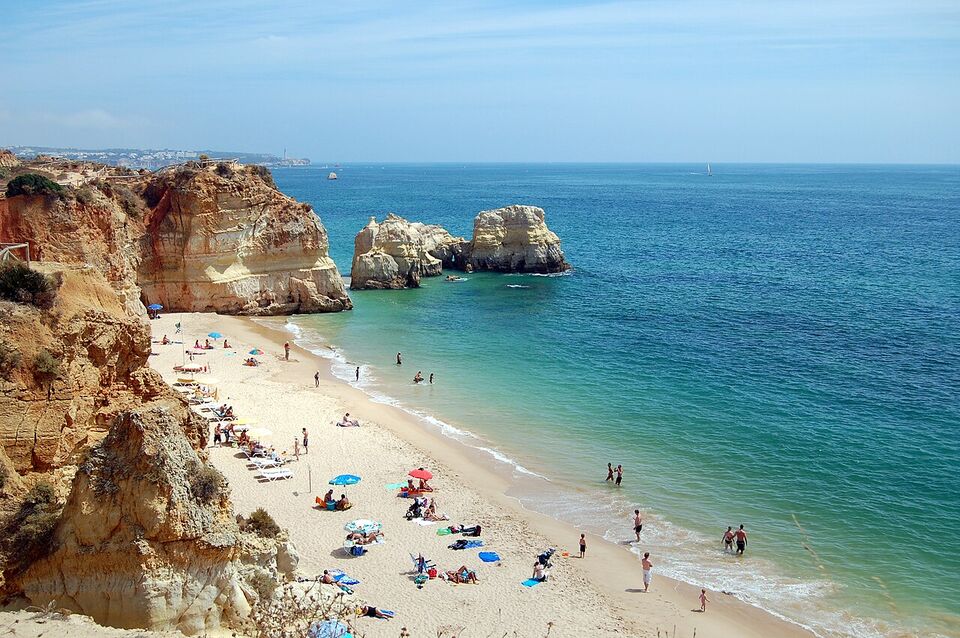
The Algarve is the best-known beach region, with orange cliffs, small coves and long strands. The central and western coast have the dramatic scenery: Lagos, Carvoeiro and Lagoa have small coves reached by steps, and Praia da Rocha and Meia Praia offer long, open sands. The east (Tavira and the Ria Formosa) has long barrier-island beaches reached by a short boat ride and generally calmer water. The Algarve south coast is more sheltered than the west coast, so it is usually the better choice for nervous swimmers and families. See our Algarve guide for bases and boat trips.
The Silver Coast and Peniche
North of Lisbon, the Silver Coast (Costa de Prata) is a long stretch of Atlantic beaches, dunes and fishing towns. Peniche, a peninsula with a fortress, is known for surf, and nearby Baleal is a popular surf spot with a tidal causeway. Nazaré is famous for giant winter waves, but its main beach is a family beach in summer. Foz do Arelho and São Martinho do Porto have calmer water in a lagoon or a sheltered bay. The sea here is cooler than in the Algarve, and the beaches are windy, so they suit surfing and walking more than long swims. See our surfing page and the Óbidos and Nazaré guide.
Cascais, Estoril and Costa da Caparica near Lisbon
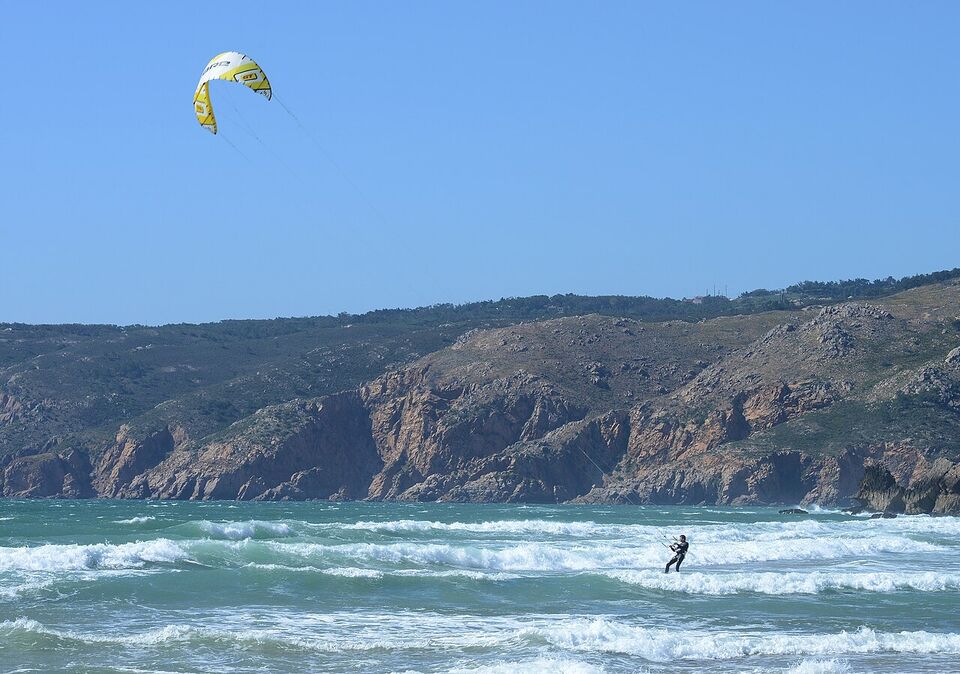
The nearest beaches to Lisbon are on the Cascais line, with Carcavelos, Estoril and Cascais easy to reach by train from Cais do Sodré. They are urban beaches with cafes and promenades. Guincho, west of Cascais, is wide and wild, and it is known for wind and kitesurfing, so it is often unsuitable for casual swimming. South of the Tagus, Costa da Caparica is a long line of beaches, with a seasonal narrow-gauge beach train on some stretches. It is reached by bus from Lisbon or by ferry and bus, and Lisbon residents use it widely on summer weekends. See our Lisbon guide.
The Alentejo coast
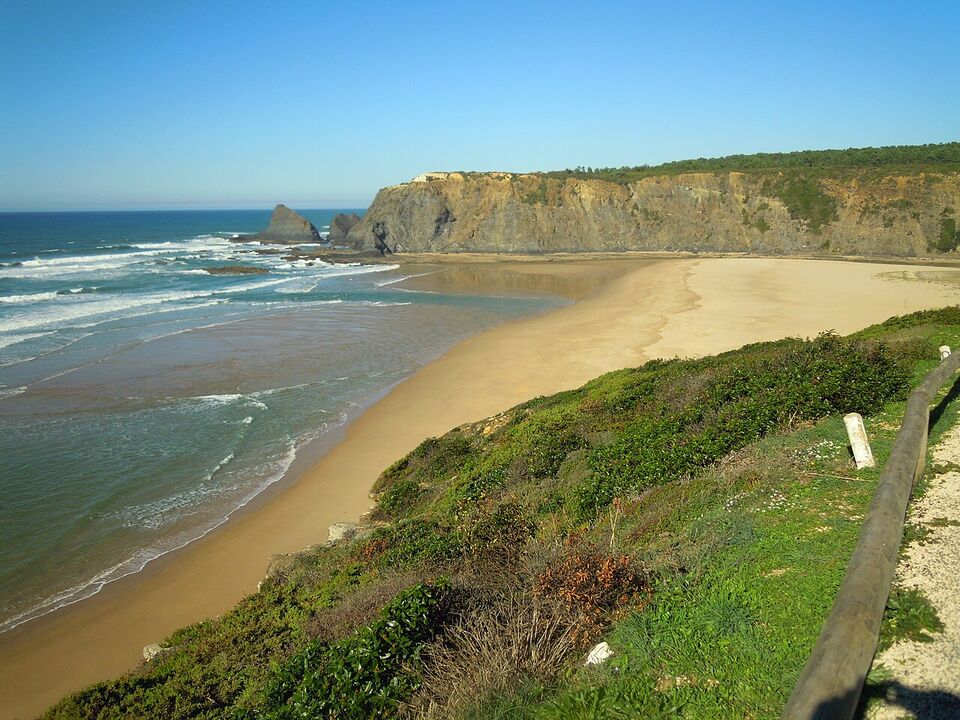
South of Lisbon and the Setúbal peninsula, the Alentejo coast is long, quiet and little built. Towns such as Comporta, Vila Nova de Milfontes, Porto Covo and Zambujeira do Mar have wide sands and dune-backed beaches. The Atlantic here is cold, with strong swell, and the beaches are less supervised than in the Algarve. They suit travelers with a car, who like space and walking. See our Évora and Alentejo page.
Water temperature and the summer wind
Atlantic water is cold by American standards. At Lisbon, the sea is about 61°F (16°C) in winter and about 68°F (20°C) in August. At Faro, it is about 61-63°F (16-17°C) in January and 72-75°F (22-24°C) in August and September. West-coast beaches are often a bit cooler than the Algarve south coast, and we found no confirmed figures for Porto or the Silver Coast; assume they are cooler than Lisbon in summer. Madeira's sea ranges from about 64°F (18°C) in February-March to about 75°F (24°C) from August to October.
The summer wind is the other factor. On the west coast, a persistent north wind (the nortada) can blow on many afternoons from late spring to early autumn. It makes the air feel cool, stirs up the surf and can make a sunny beach uncomfortable. Mornings are calmer. The south-facing Algarve is more sheltered, which is why many families choose it. Bring a windbreaker and a wind shelter, and expect sand in everything on a windy day.
Different from home
Do not expect Florida or Mexican water temperatures. Many Portuguese beachgoers spend more time on the sand and walk or play sports than swim. A thin wetsuit makes sense for surf lessons and cold-water swimmers. The best swimming months in most places are July to September.
Flags, lifeguards and rip currents
Beach flags
Supervised beaches fly colored flags. In general, green means conditions are calm and swimming is allowed, yellow means take care and stay in shallow water or do not go far, and red means swimming is prohibited. A chequered flag usually means there is no lifeguard on duty. Beaches may also post local signs, so follow what is displayed on the day, and ask a lifeguard if you are unsure. Flags can change within hours as the swell rises.
Lifeguard season
Lifeguards work during a bathing season (época balnear) that varies by beach and council. Summer coverage is typical, usually from about June to September, with some beaches covered for longer or on weekends only. We could not confirm 2026 or 2027 dates, so check the local council or a beach's official page. Outside the season, assume you are on your own. Swim near other people, keep within your depth and avoid swimming alone.
Rip currents and strong surf
Atlantic beaches can have rip currents, which are narrow channels of water pulling away from the shore. If you are caught in one, stay calm and do not fight it. Swim parallel to the beach until you leave the pull, then swim in at an angle, and signal for help if you are tired. Never swim at a beach with a red flag, and be especially careful at beaches with big waves, such as those on the west coast.
Watch out
Strong surf can knock adults down at the water's edge and can sweep small children off their feet. Keep children within arm's reach on Atlantic beaches, even in shallow water. Do not turn your back on the waves on rocky coasts.
Cliffs, sea arches and caves
Many Algarve and west-coast beaches sit below sandstone or limestone cliffs. These cliffs can crumble, and rockfalls can seriously injure people. Do not sit or sleep directly under the cliff face, even in the shade. Stay behind barriers and warning signs, and keep to marked paths on cliff tops. Do not climb on the cliffs or lean over the edge for photos.
Sea arches and caves are beautiful but risky. Waves surge unexpectedly, and rocks are slippery and sharp. In some places, such as the Benagil cave in the Algarve, local rules ban swimming in, landing on the beach inside and renting a kayak without a guide, with operator fines from €300 to €216,000 (about $336 to $242,000). Rules differ by place and change, so verify local rules with a licensed boat operator and the local authorities before you go, and do not enter caves on your own.
Costs, parking and facilities
Sunbeds and parasols
On many popular beaches, a concession rents sunbeds and parasols by the day. Prices vary by beach, month and how close to the water you sit, and we found no confirmed 2026 price list. In summer, a set of two sunbeds and a parasol on a busy beach can run to tens of euros a day, with cheaper options in the shoulder season; ask before you sit. Many beaches also have free space where you can put down your own towel and umbrella. Bring cash for small kiosks, as not all take cards.
Parking
Beach parking varies from free dirt lots to paid zones in summer. Popular Algarve and Cascais beaches fill by mid-morning in July and August, and some have limited spaces or paid parking. Never leave valuables in a parked car, as break-ins happen at beach car parks. Check the council website for rules and prices, and consider a bus, taxi or ride-hailing car on the busiest days.
Facilities
Supervised beaches usually have toilets, showers and at least a cafe or kiosk. Remote coves may have nothing, so bring water and food. Some beaches have wheelchair access with ramps or mats; ask the local tourist office. At beach restaurants, the bread, olives and butter placed on the table are the couvert, charged only if you eat them; ask the price or send them back.
Blue Flag and nudism
The Blue Flag is an international label run by an environmental education organization. A beach that flies it has to meet criteria on water quality, safety, services and environmental information, and it is reassessed each year. Portugal has many Blue Flag beaches, and the list changes from season to season, so check the current list before you rely on it. The flag is a useful guide, but it does not mean the sea is calm on the day. Check the daily flag too.
Nudism is tolerated at some designated or informal stretches, mostly away from the main family beaches. Look for signs, follow local customs, and do not take photos of other people. If you prefer a conventional beach, check the signage or ask before you walk to a remote cove. Elsewhere, assume swimwear is expected.
Reaching beaches without a car
You can have a good beach holiday without renting a car if you choose the right base. In Lagos, several beaches are within walking distance of the old town, and boats go to the coves. Tavira has a short ferry or boat link to the barrier-island beaches in season. Albufeira has beaches reached on foot. Praia da Rocha is a short bus or taxi ride from Portimão. In the Lisbon area, trains from Cais do Sodré reach Carcavelos, Estoril and Cascais, and buses reach Costa da Caparica. Check schedules on cp.pt and with the local bus operators.
For wild beaches on the west coast, around Sagres and on the Alentejo coast, a car is much more practical. Buses are infrequent, especially outside summer. A mixed plan, with a walkable base and a rental car for one or two days, works well. See our getting around guide and driving guide.
Insider tip
Arrive early at popular beaches and stay late. Mornings have the calmest wind and the least crowd, and late afternoon is often quiet. Midday in July and August is the busiest and hottest time, with the strongest sun.
Beach types at a glance
| Type | Where | Water and waves | Best for | Car? |
|---|---|---|---|---|
| Cliff coves | Algarve: Lagos, Carvoeiro, Lagoa | Usually calm to moderate; stairs and cliffs | Scenery, short swims, boat trips | Helpful |
| Long south-coast sand | Algarve: Meia Praia, Praia da Rocha | Moderate; more sheltered | Families, walks, space | Optional |
| Barrier islands | Eastern Algarve: Tavira, Ria Formosa | Calm, shallow | Young children, quiet days | Boat needed |
| Surf beaches | Peniche, Baleal, Ericeira, Sagres | Strong waves, rip currents | Surfing, experienced swimmers | Helpful |
| Urban beaches | Cascais, Estoril, Carcavelos | Moderate; cooler Atlantic | Day trips from Lisbon | No |
| Wild coast | Alentejo, Comporta, Vicentine Coast | Cold, strong swell, few lifeguards | Walking, space, surfers | Yes |
| Lava pools and black sand | Madeira, the Azores | Varies; pools are sheltered | Unusual scenery, short dips | Often yes |
Madeira and the Azores
The islands have a different kind of swimming. Madeira has few natural sandy beaches. Funchal's seafront has pebble beaches and swimming areas with ladders, and Porto Moniz on the north coast has natural lava pools filled by the sea, with changing rooms; an entry fee may apply. Seixal has black volcanic sand, and nearby Porto Santo, a short flight or ferry from Madeira, has a long golden beach. We could not confirm entry prices, so check on the spot. Our Madeira guide has more.
The Azores have black sand beaches and ocean pools carved from lava rock, especially on São Miguel. Mosteiros and Ribeira Grande have dark sand and strong surf, while the lava pools are calmer. Some swimming spots are tidal or have hot spring water mixing with the sea. The Azores are one hour behind Lisbon. Sea temperature there is not confirmed in our data, so check local sources, and take the same care with flags and surf as on the mainland. Our Azores guide covers the islands.
Matching a beach to your trip
If you travel with young children, we suggest the sheltered south coast of the Algarve or the calm barrier islands near Tavira, where the water is shallow and the waves are small. Choose a beach with lifeguards, toilets and a cafe, and arrive early to claim shade. Our families page has more on traveling with children.
If you want to surf, the west coast around Peniche, Ericeira and Sagres has consistent waves and surf schools that rent boards and wetsuits. Beginners should take a lesson, because rip currents and heavy shore breaks catch out strong swimmers. If you mainly want scenery, pick the cliff coves around Lagos and Carvoeiro, and go in May, June or September when the paths are quieter.
If you only have a day from Lisbon, the Cascais line is the simplest option. Trains are frequent, and you can swim, walk the seafront and eat dinner before returning. For a wilder day, join a tour or drive to a Setúbal or Alentejo beach and take your own food and water. Whatever you choose, look at the forecast for wind and swell as well as for temperature, and keep a spare plan for days when the flag is red.
Remember that sun and glare are strong even on cloudy days. Wear a shirt and hat for children, and reapply sunscreen after every swim. Bring a bag for trash, since many remote coves have no bins, and take everything out with you.
Safety checklist
- Check the flag and speak to the lifeguard before you swim.
- Swim only on supervised beaches during the season.
- Keep children within arm's reach and use a swim vest for non-swimmers.
- Stay away from cliff edges, cliff bases, arches and caves.
- Use strong sunscreen and drink water; the sun is intense from April to October.
- Wear water shoes on rocky coves and lava pools.
- Do not leave valuables in cars or on the sand.
- Know the emergency number, 112. Our safety page has more.
Mainland Portugal is on Western European Time, five hours ahead of New York most of the year. For month-by-month weather, see When to Go to Portugal.
Add it to a route in the trip builder, or ask us to plan the hotels, trains and guides for you.