What fado is
Fado is a Portuguese song tradition, and the easiest way to describe it is as the music of saudade (a word that sits somewhere between longing, nostalgia and the ache of absence). A singer, called a fadista, performs with a guitar-based ensemble. The songs deal with love and jealousy, the sea, the old neighborhoods, a lost voice, a lost city and fate itself. The word fado most likely comes from the Latin fatum, and it is also the ordinary Portuguese word for fate, which is why so many songs play on the double meaning.
It is not folk dancing, not background music and not a costume show. It is a living tradition, with working singers, new songwriters and a younger generation who treat it as contemporary music. UNESCO added fado to its Representative List of the Intangible Cultural Heritage of Humanity on November 27, 2011. If you go to one evening, go as a listener, and you will almost certainly get more from it.
This page covers the practical side: how Lisbon and Coimbra fado differ, what the instruments are, the etiquette, how to choose between a dinner show and a small tavern, how far ahead to book, what a minimum spend usually means, the Museu do Fado, and how to avoid paying a lot for a poor evening. For the city around it, see the guides to Lisbon, Lisbon's neighborhoods and Coimbra.
Where fado comes from
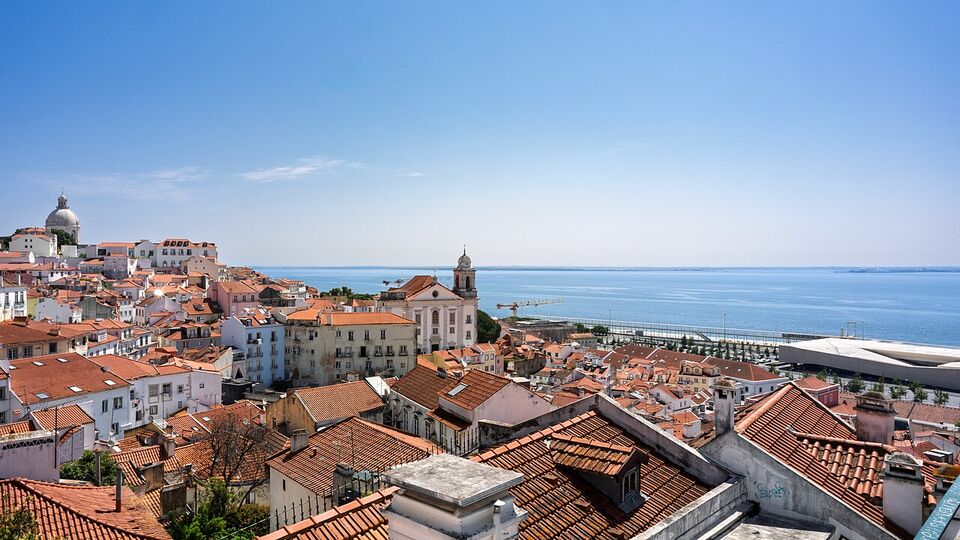
Fado appeared in Lisbon in the early 19th century and is generally linked to the port and bohemian districts of the capital: Mouraria, the Alfama and the Bairro Alto. Its first performers were mostly urban working people, and it was sung in taverns and on the streets. Historians do not agree on exact origins, and several theories (sailors' songs, older medieval song forms, Brazilian influences) are argued about. Treat any tidy origin story you hear in a bar with some caution.
Two names come up in every conversation. Maria Severa, a 19th-century singer, is remembered as the figure who made the genre famous. Amália Rodrigues (1920-1999), known as the Rainha do Fado (Queen of Fado), did the most to carry it around the world. More recent singers who are often named include Carlos do Carmo, Mariza, Ana Moura, António Zambujo and Camané. Listening to a few of them before you go makes it much easier to follow what is happening in the room.
One musical habit is worth knowing before you hear it. A fado singer will often hold the last note of a phrase and let the music pause around it. If you start clapping at that pause, you will be early. Wait for the song to end.
The Portuguese guitar
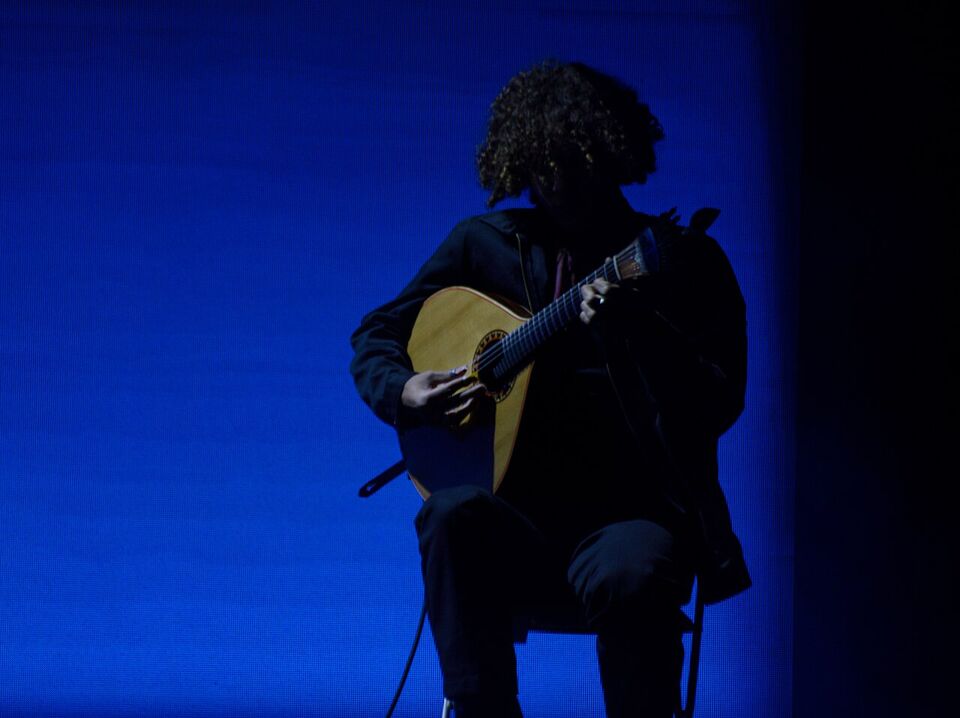
The sound that makes fado recognizable is the guitarra portuguesa (Portuguese guitar). It is a pear-shaped instrument typically with twelve steel strings in six pairs, and its bright, ringing tone sounds almost like a small harp. It is not a Spanish guitar and it is not a mandolin, though people sometimes confuse it with both. In Lisbon fado, the Portuguese guitar usually plays answering phrases around the singer, while a viola (a six-string classical guitar) supplies the harmony and rhythm.
A traditional house will usually have two players, one on each instrument, with the singer between or in front of them. Some venues add a bass or a string quartet for a concert format. The Portuguese guitar of Coimbra has its own tuning, shape and sound, which is one reason a Coimbra performance feels so different.
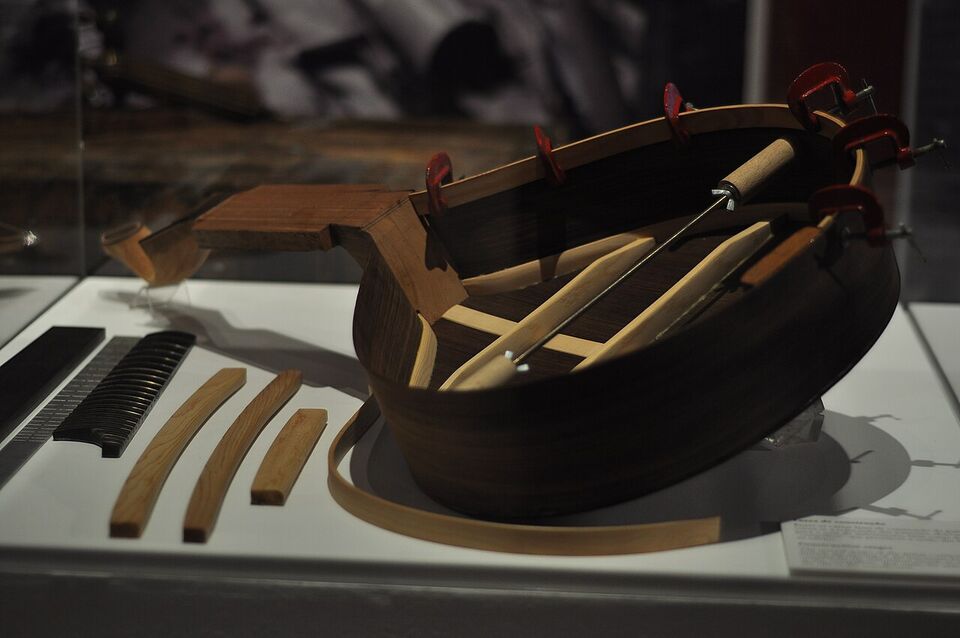
If the instrument interests you, the Museu do Fado (below) shows how it is built and how it changed. A real Portuguese guitar is a serious purchase and a very different thing from a souvenir miniature. Our guide to shopping and taking things home covers souvenirs in general.
Lisbon fado and Coimbra fado
There are two main varieties of fado, tied to two cities, and the difference is worth knowing if you plan to hear both.
| Feature | Lisbon fado | Coimbra fado |
|---|---|---|
| Who sings | Professional and amateur singers, women and men | Traditionally men, linked to the university |
| Dress | Often dark clothing; a shawl is a traditional touch for women | The student's traje académico (dark robe and cape) |
| Where | Fado houses, taverns, concert halls, restaurants | Streets, squares and steps at night; also some concert spaces |
| Mood | Emotional, often dramatic, about fate, love and the city | Serenade tradition, more lyrical and tied to student life and the city |
| Instruments | Portuguese guitar and viola | Coimbra guitar (different tuning) and viola |
| Etiquette cue | Silence once the singer starts; lights are often lowered | Silence and respect; follow the lead of the people around you |
Lisbon fado is the better known and the easier to find. Coimbra fado is traditionally linked to the university and to the old troubadour habit of serenading. It was sung at night in squares and on steps, and the Old Cathedral (Sé Velha) is one of the places linked to it. In the 1950s, Coimbra singers also used the form for politically charged ballads, and some of those names later became prominent around the 1974 revolution.
Coimbra's scene has changed over the years, and where and when you can hear it in 2026 depends on venues and the university calendar. Our Coimbra guide covers the town, and the tourist office or the venue's own site is the place to confirm any performance before you plan a night around it.
Etiquette: silence while the singer sings
The Portuguese phrase you may hear is "Silêncio, que se vai cantar o fado" ("Silence, fado is about to be sung"). It is the rule of the house, and in many places the waiters will stop serving as soon as the music begins. Here is how to behave without thinking about it.
- Stop talking when the singer begins. This includes whispering across the table. If you must speak, wait for the break between songs.
- Silence your phone and keep the screen dark. Do not film or take photos with flash. Many houses ask visitors not to record at all, so look for a sign or ask staff before you raise a camera.
- Do not order or pay during a song. Staff usually serve between sets, and you should let them.
- Applaud at the end of a song, not in the pause. Applause is welcome, and shouting for a favorite song is not.
- Do not sing along unless the room is clearly doing so. At an informal evening, regulars may join a chorus.
- Arrive on time. Many houses do not seat people once a set is under way, and walking in during a song is disruptive.
Different from home
In a US restaurant with live music, talking over a band is normal. In a fado house it is not. If you are with a group that likes to talk through dinner, choose a restaurant first and a fado house for a separate drink or a late set, or ask for a format with the music in a separate room.
For general manners in Portugal, see our guide to Portuguese etiquette, and learn a few words from the phrases page. Obrigado (said by a man) or obrigada (said by a woman) after a song is the right kind of thanks.
Choosing a good house: Alfama and Mouraria versus a tourist show
The most useful decision you will make is whether you want a restaurant that has fado, or a fado house that happens to serve food. Both exist, both use the same word, and they feel different.
The Alfama and Mouraria are the districts most closely linked to fado's history, and they have the densest concentration of small houses, with some in the Bairro Alto and Chiado areas as well. Small houses usually have a handful of tables, a short menu, low lighting and a program of several singers in one evening. A larger dinner show tends to have a set program, a fixed menu and an audience of mostly visitors. Neither is automatically better. A small house can be cramped and a larger one can be well run.
The signs that point to a good evening are practical ones rather than mystical ones. Look for a house that states its format clearly on its own site: when music starts, how long it lasts, how many singers there are, whether the minimum spend or the music charge is separate from the dinner, and what the cancellation terms are. A house that is vague about all of this, or that lists a price with no explanation of what it covers, is a poorer bet.
- Check the venue's own site for the program, the dinner or drink options, the minimum spend, the music charge and the cancellation terms.
- Ask whether the singers perform in sets and how long each set lasts.
- Ask whether the music is live, and whether it is professional fado or an open-mic evening.
- Be wary of someone on the street who invites you into a place with a voucher or a quick deal. Look the venue up yourself.
- Read recent traveler reports for hints about crowding and seating, and compare them with the venue's own description.
Dinner and show, or just a drink
Most fado houses are built around dinner. Fado is a late-evening art, so music often begins after the first courses, and the dinner format keeps the room full and the performers paid. If you eat dinner at a fado house, plan the evening as a whole: arrive when the house asks, expect to stay for a couple of hours, and expect the meal to be Portuguese rather than adventurous. See our Portuguese food guide for what the menu is likely to offer.
The alternative is a drink only. Some venues will seat you at a bar or a table for a drink during a set, often with a minimum spend that is enough to count as a small meal. Others do not allow it, or reserve it for later in the evening. If you want music without a full dinner, say so when you book, and ask what you can order.
| Venue type | What to expect | Good for | Watch for |
|---|---|---|---|
| Small fado house (casa de fado) | A few tables, dinner and several singers; the music is the main event | The classic evening; listeners who want to concentrate | Fills early; reserve; may not seat latecomers |
| Dinner show | Set menu and a fixed program, often with a mix of fado and other Portuguese songs | Groups; people who want a clear plan | A set format and a higher price; check what is included |
| Tavern or bar with fado | Looser, often a drink-only option; singers may be local regulars | A short evening; people who want less of a production | No fixed schedule; hours and days change; call or check the site |
| Concert hall or cultural venue | Seated concert with a fixed start; often more formal | Listeners who want sound quality and a fixed time | Tickets sell out for well-known names |
| Amateur or open session (fado vadio) | Informal; anyone from the community may sing | Seeing the tradition as locals do | Irregular and hard to plan; follow current local listings |
Whatever the format, confirm opening days, the start time and the reservation terms on each venue's own site or by contacting the venue directly. Schedules change by season, and some houses close one or two days a week. Do not rely on a printed list from last year.
How far ahead to book, and what a minimum spend means
For a small house in the Alfama or Mouraria, book a few days ahead in the quiet months and a week or more ahead for summer evenings, weekends and holidays. A very popular house or a named singer can sell out sooner. A short notice reservation is possible at some places, but we would not count on it for a Friday or Saturday in high season. If your trip is built around a single evening, book it before you finalize flights and hotels.
Many fado houses ask for a minimum spend or a separate music charge. The terms differ from venue to venue, so read them. In general, a minimum spend means you agree to order at least a certain amount of food and drink per person, and it is a way to cover the musicians and keep the table. A music charge, sometimes called a cover, is a fixed fee for the show, on top of what you order. A few houses combine them. We cannot give a standard figure, because prices are set by each venue and change, so check the venue's own site and ask exactly what is included before you pay a deposit.
Watch out
Ask what the couvert costs before you touch it. The couvert (bread, olives, butter and cheese put on the table) is charged only if you eat it, and it is normal in Portugal, not a trick. But in a fado house the price can add up, and you can send it back. Ask the waiter to remove it if you do not want it, and check the menu for the price. See our money guide for how this works across the country.
Tipping is optional in Portugal and nothing like US norms. For good service at a fado dinner, rounding up or leaving a few euros is common. If the singers pass around a small collection or sell a recording, a purchase is appreciated but never required.
How to avoid overpriced tourist traps
The routine mistakes are easy to avoid once you know them. First, do not take a seat on a street where staff are calling out to passersby to come in and see fado. A venue that depends on this kind of pitch is not necessarily bad, but the cost of the evening is often higher than the quality justifies. Second, be careful with online packages that bundle fado with a dinner and a transfer. They can be convenient, but the dinner is often priced as an add-on, and the format may be a large room with a fixed program rather than a small house. Compare the package price with what the venue itself charges.
Third, check the total before you commit. Look at the price per person, what is included (drink, dinner, show), whether a minimum applies, whether the price changes with the table, whether there is a fee to change the date, and whether the deposit is refundable. If the answers are not on the venue's site, ask in writing. A venue that replies clearly is a better bet than one that does not reply.
Fourth, be wary of anyone who offers to arrange a venue for you in the street, in a taxi or at your hotel door. Hotels and the tourist office can give you a list of houses, but you should still check the details yourself on the venue's site. Our safety guide covers street solicitation, pickpockets and common scams in busy areas such as the Alfama.
Save money
You do not have to go to a dinner show to hear fado. A concert-format show at a cultural venue, a drink-only seat during a set, or a ticket to the museum with a short performance (if one is on offer when you go) can cost less than a full dinner. Compare formats on each venue's own site, and ask which one fits your budget.
The Museu do Fado
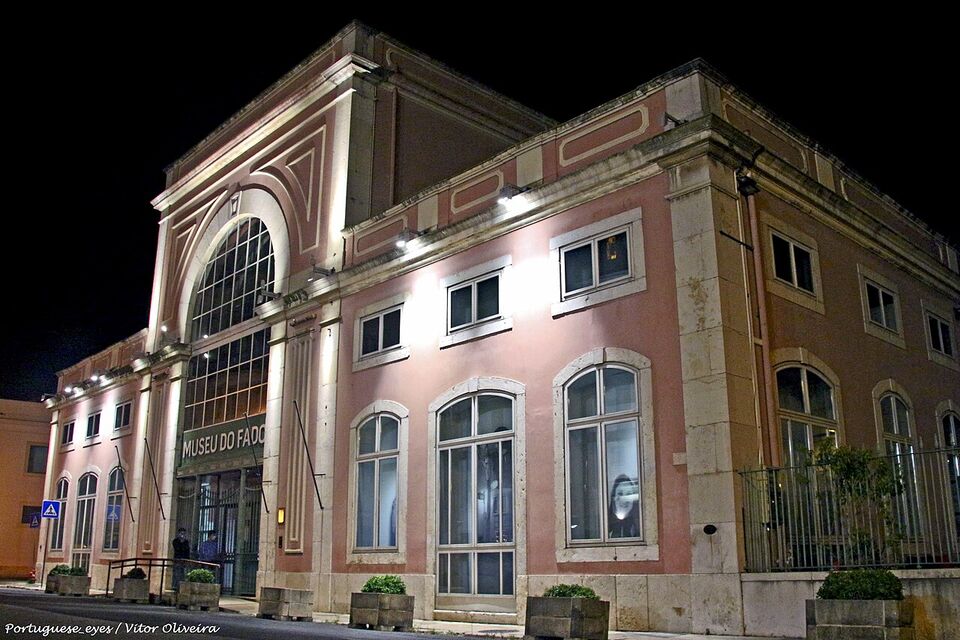
The Museu do Fado (Fado Museum) in Lisbon is the best place to learn what you are listening to. It follows the history of the genre, the major singers, the instruments and the neighborhoods that shaped it, and it is in the Alfama, so it fits well into a walk through the district. Lisbon's fado museum is run as a cultural institution, with an online presence at fadomuseu.pt.
We have not been able to confirm current opening days, hours or ticket prices for 2026, so check the museum's own site before you go. It is worth looking for exhibitions, concerts and any listening or audio guide options, which change over time. Time at the museum can be as short as an hour or as long as half a day if you listen to the recordings.
The museum works well as a first stop. It will tell you who Amália Rodrigues and Maria Severa were, what the Portuguese guitar looks like, and how the genre moved from taverns to concert stages. It also makes an evening at a fado house make much more sense. For other things to see nearby, see things to do in Lisbon, and for a wider look at the culture, our festivals and holidays guide lists events around the year.
Fado in Porto, Coimbra and elsewhere
Fado is rooted in Lisbon and Coimbra, but it is performed elsewhere in Portugal, including Porto. The Porto scene is smaller, and venues tend to be a handful of restaurants, bars and cultural spaces rather than a district full of fado houses. If fado is a priority, make Lisbon the base for it. If you are in Porto anyway, check current listings and the venue's own site, and go with the expectation of a lower-key evening. Our Porto guide covers the city.
In Coimbra, ask about serenades and student fado. The Coimbra tradition is linked to the university, and venues and schedules depend on the academic calendar, so your best planning is to ask the Coimbra tourist office or look at the town's cultural agenda close to your visit. See Coimbra for the rest of the town.
Outside the big cities, fado shows up at festivals, local celebrations and restaurants with occasional live music. These are harder to plan, and are best treated as a bonus rather than an anchor for a trip. Our Portugal by interest page links to the other cultural, food and history guides.
A simple plan for one evening in Lisbon
- Afternoon
Museu do Fado
Visit the museum in the Alfama (check its hours first) to learn the history, hear recordings and see the instruments. Walk down through the neighborhood afterward, and expect hills and cobbles in comfortable shoes.
- Early evening
Book and confirm
If you have not already, confirm your reservation with the venue and ask when the first set starts. If you plan to have a drink, ask about the minimum spend.
- Evening
Dinner and fado
Arrive at the time the house gives you. Order, wait for the music, and then listen. Plan to stay for at least one full set, and ask in advance about the end time so you can book a ride home.
- Late
Getting back
Alfama and Mouraria are hilly and the streets are narrow, so a taxi or ride-hailing pickup at a main street is easier than walking at night. The Metro runs until about 1:00 a.m. See our Lisbon guide for getting around.
Practical notes before you go
- Time zone. Portugal's mainland is on Western European Time, five hours ahead of New York for most of the year. In a few weeks around the March and late-October changes, the gap is four hours, because the US and EU change their clocks on different dates.
- Language. The singing is in Portuguese. Many houses give a printed summary or a short explanation in English, and some singers introduce songs. You do not need to understand every word to feel what is happening.
- Dress. Smart casual is fine. There is no formal dress code in most houses, though a small, serious house may feel more comfortable in dark, neat clothes.
- Children. Late dinners and a silent-room format are hard for small children. If you travel with a family, see Portugal with kids and consider a concert or daytime museum visit instead.
- Accessibility. Many fado houses are in old buildings with steps and narrow rooms. Ask about access when you book.
- Cards and cash. Cards are widely accepted in Portugal, but some small taverns still prefer cash, so ask when you book.
Add it to a route in the trip builder, or ask us to plan the hotels, trains and guides for you.