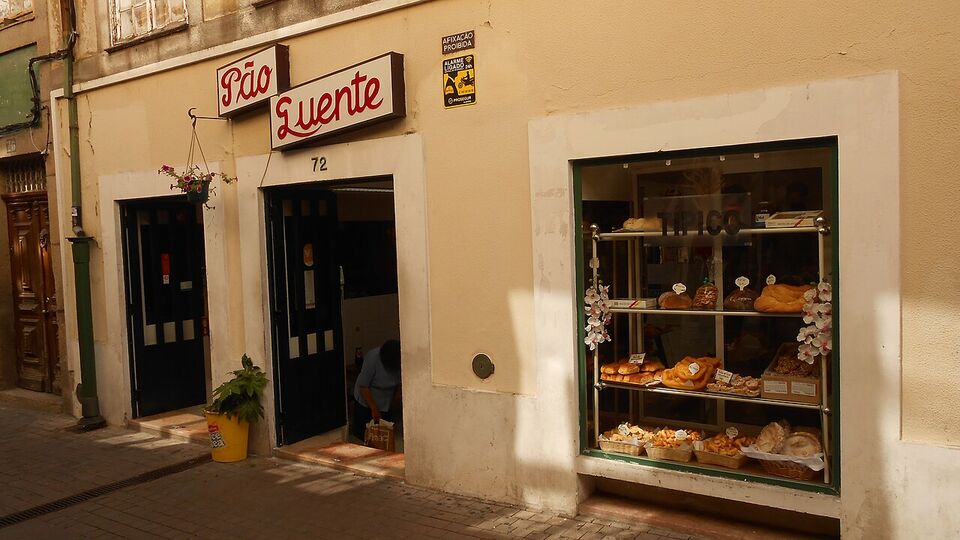
The short answer
You can travel across Portugal with English alone, but ten Portuguese words will change how people treat you. Start with bom dia (good morning), boa tarde, por favor, obrigado or obrigada, desculpe and fala inglês? (do you speak English?). Staff in hotels, tourist restaurants and shops in Lisbon, Porto and the Algarve usually reply in English, but a greeting in Portuguese shows courtesy, as our etiquette guide explains.
This page is a short phrasebook for European Portuguese, the form spoken in Portugal, with pronunciation written for an American ear. The respellings are approximate: Portuguese has sounds English lacks, and no spelling can capture them. Capital letters show the stressed syllable. A silent or very faint vowel is shown without a vowel sign, such as -t at the end of "tarde."
Sounds that trip up Americans
Nasal vowels
Portuguese has vowels pronounced partly through the nose, shown by a tilde (ã, õ) or by an m or n after the vowel. Do not say the n or m as a full consonant. In não (no), the vowel is like the "ow" in "now," pushed through the nose. In pão (bread), it is a similar "pow." Bom sounds like "bõ," a nasal "bo." In the respellings we show this with "ng" or "n," such as nowng, but think of it as nasalizing the vowel rather than adding a sound.
The "sh" sound
Portuguese uses "sh" far more than English speakers expect. A final s or an s before a consonant is "sh": dois (two) is "doysh," Lisboa is "leezh-BOH-ah," and os (the) is "oosh." The letters ch and x are "sh" too, as in chá (tea) and peixe (fish, "PAY-shuh"). The letters j and g before e or i are "zh," like the "s" in "measure": já (already, "zhah"), gelado (ice cream, "zheh-LAH-doo").
Vowels that disappear
European Portuguese swallows unstressed vowels. A final e is nearly silent, and unstressed e and o can vanish or turn into a short "uh" or "oo." Porto sounds like "POR-too"; restaurante sounds roughly like "rsh-tow-RAN-t"; obrigado sounds like "oh-bree-GAH-doo." A tourist who pronounces every letter will still be understood but will sound very different from a local, and a local who speaks quickly may be hard to follow. Brazilian speakers pronounce more of these vowels, which is why Brazilian Portuguese sounds slower and clearer to many learners.
A few other letters
- lh sounds like "ly" in "million" (bilhete, ticket, "bee-LYAY-t"); nh sounds like "ny" in "canyon" (vinho, wine, "VEE-nyoo").
- ç is an "s" (almoço, lunch); qu before e or i is "k."
- r at the start of a word or doubled (rr) is a throaty sound, a little like a French "r" or a gargled "h": rua (street), carro (car).
- ão and õe endings are nasal diphthongs; pão and limões are examples.
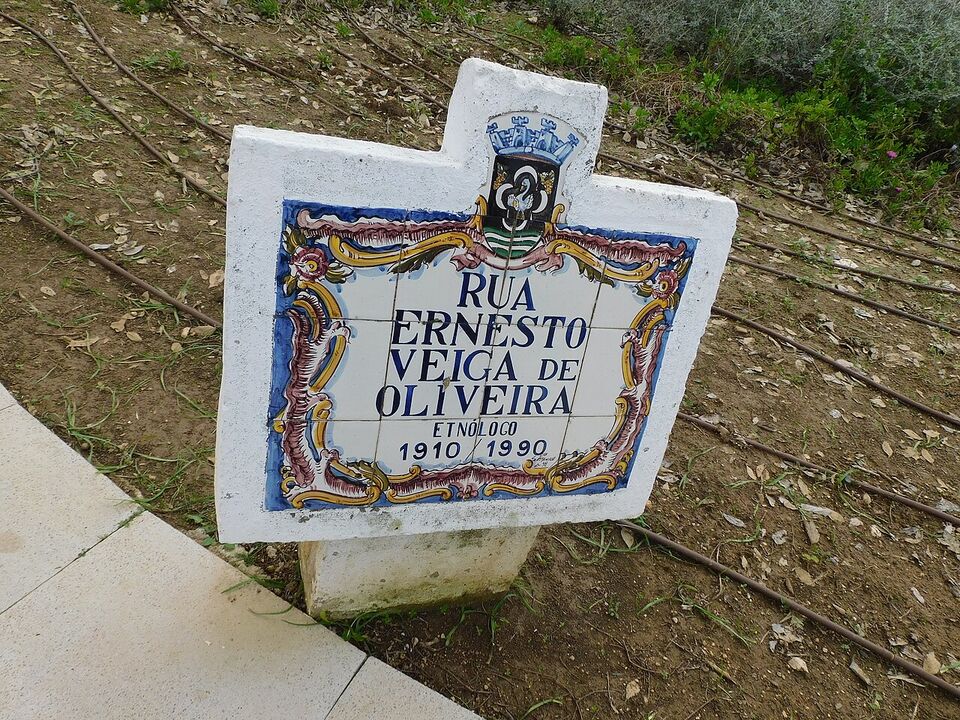
Formal and informal "you"
Portuguese has several words for "you," and the choice signals respect. With friends, family and younger people, speakers use tu. In polite speech with strangers, older people and in business, Portuguese often avoid a pronoun and use the person's title with a third-person verb: o senhor for a man, a senhora for a woman, or the first name preceded by a polite title. Você exists but sounds odd or even rude in Portugal to many speakers, although it is the normal "you" in Brazil.
For a visitor, the simplest approach is to use the polite form with everyone you do not know, which is what every phrase on this page does. Phrases such as pode ajudar-me? ("can you help me?") and queria um café ("I would like a coffee") are polite without any pronoun at all, and nobody expects a visitor to manage the full system. If a waiter or shopkeeper switches to tu, you can follow their lead, but you do not need to.
The phrasebook
These are about fifty phrases, grouped by situation. Say them slowly; the pronunciation is approximate.
Greetings and politeness
| Portuguese | Say it like | Meaning | When to use it |
|---|---|---|---|
| Bom dia | bohm DEE-ah | Good morning | Until about noon; on entering any shop or café |
| Boa tarde | BOH-ah TARD | Good afternoon | From about noon until dark |
| Boa noite | BOH-ah NOY-t | Good evening, good night | After dark; also on leaving at night |
| Olá | oh-LAH | Hello | Casual greeting |
| Adeus / Até logo | ah-DEH-oosh / ah-TEH LOH-goo | Goodbye / see you later | When leaving; até logo is lighter |
| Como está? | KOH-moo shTAH | How are you? (polite) | Greeting someone you do not know well |
| Tudo bem? | TOO-doo bayn | All good? | Casual; the reply is tudo bem |
| Prazer | prah-ZEHR | Pleasure (nice to meet you) | First meetings, with a handshake |
| Por favor | poor fah-VOHR | Please | Every request |
| Desculpe | dish-KOOLP | Excuse me, sorry | To get attention or apologize |
| Com licença | kohm lee-SEN-sah | Excuse me (may I pass) | In a crowd, on a train, at a door |
Thank you and polite refusals
| Portuguese | Say it like | Meaning | When to use it |
|---|---|---|---|
| Obrigado | oh-bree-GAH-doo | Thank you (said by a man) | Always; the ending follows the speaker |
| Obrigada | oh-bree-GAH-dah | Thank you (said by a woman) | Always |
| De nada | duh NAH-dah | You are welcome | Replying to thanks |
| Não, obrigado/a | nowng oh-bree-GAH-doo/dah | No, thank you | Street sellers, menus pushed at you, offers of help |
| Agora não, obrigado/a | ah-GOH-rah nowng | Not now, thank you | A softer refusal |
| Só estou a ver | soh shTOH ah VEHR | I am just looking | Shop assistants |
| Está bem | shTAH bayn | It is fine, OK | Agreeing or accepting |
Restaurants and cafés
| Portuguese | Say it like | Meaning | When to use it |
|---|---|---|---|
| Uma mesa para dois, por favor | OO-mah MAY-zah PAH-rah doysh | A table for two, please | On arrival; change dois to três, quatro |
| A ementa, por favor | ah ee-MEN-tah | The menu, please | O menu also works |
| Queria... | kuh-REE-ah | I would like... | Polite way to order anything |
| Um café / Uma bica | oom kah-FEH / OO-mah BEE-kah | An espresso | Counter or table; bica is the Lisbon word |
| Uma água sem gás / com gás | OO-mah AH-gwah sayn gahsh / kohm gahsh | Still / sparkling water | Ordering water |
| Um copo de vinho tinto / branco | oom KOH-poo duh VEE-nyoo TEEN-too / BRAHN-koo | A glass of red / white wine | Ordering wine by the glass |
| Não queremos o couvert, obrigado/a | nowng kuh-RAY-moosh oo koo-VEHR | We do not want the couvert | When bread and olives arrive and you want them removed |
| Sem carne, por favor | sayn KAHRN | Without meat, please | For vegetarians; add sem peixe (without fish) |
| Tenho alergia a... | TAYN-yoo ah-ler-JEE-ah ah | I am allergic to... | Allergies |
| Está delicioso | shTAH deh-lee-see-OH-zoo | It is delicious | Compliment to the cook |
| A conta, por favor | ah KOHN-tah | The check, please | When you are ready to pay |
Shops and money
| Portuguese | Say it like | Meaning | When to use it |
|---|---|---|---|
| Quanto custa? | KWAHN-too KOOSH-tah | How much is it? | Prices at markets and shops |
| Posso pagar com cartão? | POH-soo pah-GAR kohm kar-TOWNG | Can I pay by card? | Small cafés, taxis, market stalls |
| Aberto / Fechado | ah-BEHR-too / feh-SHAH-doo | Open / closed | Signs on doors |
| Pode ficar com o troco | POH-duh fee-KAR kohm oo TROH-koo | Keep the change | A small tip in cash |
Trains, metro and directions
| Portuguese | Say it like | Meaning | When to use it |
|---|---|---|---|
| Um bilhete para Sintra, por favor | oom bee-LYAY-t PAH-rah SEEN-trah | One ticket to Sintra, please | Ticket office; swap in your destination |
| Ida e volta | EE-dah ee VOHL-tah | Round trip | Buying a return ticket |
| É este o comboio para...? | eh ESH-t oo kom-BOY-oo PAH-rah | Is this the train to...? | On the platform |
| Onde fica a estação? | OHN-duh FEE-kah ah shta-SOWNG | Where is the station? | Asking directions |
| Onde fica a casa de banho? | OHN-duh FEE-kah ah KAH-zah duh BAH-nyoo | Where is the restroom? | Restaurants, stations, museums |
| À esquerda / À direita / Em frente | ah shKAIR-dah / ah dee-RAY-tah / ayn FREN-t | Left / right / straight ahead | Following directions |
| Perto / Longe | PEHR-too / LONZH | Near / far | Asking how far something is |
| Pode ajudar-me? | POH-duh ah-zhoo-DAR-muh | Can you help me? | Any time you are stuck |
| Fala inglês? | FAH-lah een-GLAYSH | Do you speak English? | Before asking anything complicated |
| Não percebo | nowng per-SAY-boo | I do not understand | When you lose the thread |
| Mais devagar, por favor | mighsh duh-vah-GAR | More slowly, please | When someone speaks fast |
Emergencies
| Portuguese | Say it like | Meaning | When to use it |
|---|---|---|---|
| Socorro! | soo-KOH-hoo | Help! | A real emergency |
| Chame a polícia | SHAH-muh ah poo-LEE-syah | Call the police | Theft or danger; the EU emergency number is 112 |
| Chame uma ambulância | SHAH-muh OO-mah am-boo-LAHN-syah | Call an ambulance | Medical emergencies |
| Preciso de um médico | preh-SEE-zoo duh oom MEH-dee-koo | I need a doctor | Illness or injury; SNS 24 is the health line, 808 24 24 24 |
| Fui roubado / roubada | fwee hoh-BAH-doo / hoh-BAH-dah | I have been robbed (man / woman) | Reporting a theft |
| Perdi o meu passaporte | per-DEE oo MEH-oo pah-sah-POR-t | I lost my passport | At a police station or the embassy |
Numbers and days
| Portuguese | Say it like | Meaning | When to use it |
|---|---|---|---|
| um, dois, três, quatro, cinco | oom, doysh, traysh, KWAH-troo, SEEN-koo | 1, 2, 3, 4, 5 | Prices, tickets, tables |
| seis, sete, oito, nove, dez | saysh, set, OY-too, nohv, desh | 6, 7, 8, 9, 10 | Prices, tickets, floors |
| segunda, terça, quarta, quinta | suh-GOON-dah, TAIR-sah, KWAR-tah, KEEN-tah | Monday to Thursday | Timetables; -feira is often added |
| sexta, sábado, domingo | SAYSH-tah, SAH-bah-doo, doo-MEEN-goo | Friday, Saturday, Sunday | Opening hours, weekend closures |
Insider tip
Learn the numbers one to ten before you land. Prices, platform numbers and table numbers are spoken fast, and being able to catch "dois cinquenta" (two fifty) saves guessing.
Place names
Most Americans mispronounce a few Portuguese place names, and locals notice. These are approximate, English-friendly sounds; hear a local say each name once and copy it.
| Place | Say it like | Note |
|---|---|---|
| Lisbon (Lisboa) | leezh-BOH-ah | English speakers say "LIZ-bun"; locals say Lisboa |
| Porto | POR-too | The final o sounds like "oo" |
| Sintra | SEEN-trah | Not "SIN-tra" |
| Belém | beh-LYNG | Nasal ending; lh is "ly" |
| Guimarães | gee-mah-RYNSH | Nasal ending |
| Évora | EH-voo-rah | The first syllable is stressed |
| Óbidos | OH-bee-doosh | Final os is "oosh" |
| Nazaré | nah-zah-REH | Stress on the last syllable |
| Fátima | FAH-tee-mah | Stress on the first syllable |
| Funchal | foon-SHAHL | The ch is "sh" |
| Douro | DOH-roo | Two clear syllables |
Why Spanish does not work
Portuguese and Spanish share much vocabulary and look similar in print, which is why many visitors expect to get by with Spanish. In practice, the sounds are quite different. Portuguese has nasal vowels, "sh" sounds and swallowed syllables that Spanish lacks, so Portuguese often sounds to a Spanish speaker like a different, muffled language, and spoken Portuguese is much harder for a Spanish speaker to follow than printed Portuguese is to read. Many Portuguese people understand a little Spanish, but few enjoy being addressed in it. The two countries share a peninsula and a long and complicated history, and national pride is real.
Keep it simple. If your Portuguese runs out, switch to English rather than Spanish. Use obrigado/obrigada, sim (yes, "seeng") and não (no), and avoid Spanish equivalents of the same words. Our etiquette guide explains how to ask for English politely.
European and Brazilian Portuguese
Brazil has far more Portuguese speakers than Portugal, and many apps, videos and phrasebooks teach Brazilian Portuguese. It is understood in Portugal, and Brazilians are common visitors and residents, but the two varieties differ in a few ways that matter to travelers:
- Pronunciation. European Portuguese swallows unstressed vowels and uses more "sh" sounds; Brazilian pronounces vowels more openly, and many learners find it easier to follow.
- "You." Brazilians use você everywhere; in Portugal, você is avoided and people use titles or tu.
- Vocabulary. Restroom is casa de banho in Portugal and banheiro in Brazil. Bus is autocarro in Portugal, ônibus in Brazil. Train is comboio in Portugal, trem in Brazil. Breakfast is pequeno-almoço in Portugal and café da manhã in Brazil. Juice is sumo in Portugal and suco in Brazil.
- Grammar. Portuguese in Portugal says estou a fazer ("I am doing") where Brazilian says estou fazendo.
If you learned Brazilian Portuguese, you will be understood, but expect to adjust. This page uses the European forms.
Tips for being understood
- Start with a greeting and Fala inglês?; most people will switch to English if they can, and will appreciate the effort.
- Speak slowly, use short sentences, and point to the menu, map or phone. Hearing a name is harder than seeing it written; show the word on your screen.
- Download an offline translation app before you travel in case your phone has no data in the mountains or the islands. See our phones and data guide for staying connected.
- If you do not catch what was said, ask for a repeat with Pode repetir? ("Can you repeat?", POH-duh reh-peh-TEER).
- Say numbers and prices slowly and ask the speaker to write the amount down if you are unsure.
- Do not worry about gender endings and verb tenses. Short, polite phrases are enough.
With these phrases, a little patience and a friendly greeting, you will find most Portuguese people eager to help. For what to say at the table, see our food guide; for emergencies and clinics, see the safety guide.
Add it to a route in the trip builder, or ask us to plan the hotels, trains and guides for you.