Lisbon in one page
Lisbon is a hilly, river-facing capital that rewards slow walking, short rides and a lot of sitting at viewpoints. Most first-timers do well with three full days in the city, a base in or near the Baixa, Chiado or Príncipe Real, and a plan that treats the hills as part of the day instead of a problem to solve.
This page is the hub for the Lisbon guides: how the city is laid out, how to get around, what is running and what is not, the mistakes first-timers make and what to book ahead. For the sights themselves, see Things to Do in Lisbon. For a detailed look at where to sleep, see Lisbon Neighborhoods.
The city (Lisboa in Portuguese) sits on the north bank of the Tagus estuary, in the west of Portugal. It is cheaper than most big Western European capitals, but it is not free of crowds: the central streets, the main viewpoints and the Belém monuments are busy for much of the year. Timing and a little planning make the biggest difference.
Different from home
Lisbon is five hours ahead of New York most of the year (Western European Time). The US and Europe change their clocks on different dates, so the gap is four hours for about two weeks in March and again from late October into early November. If you are calling home or catching a flight, check the date.
How the city is laid out: a map in words
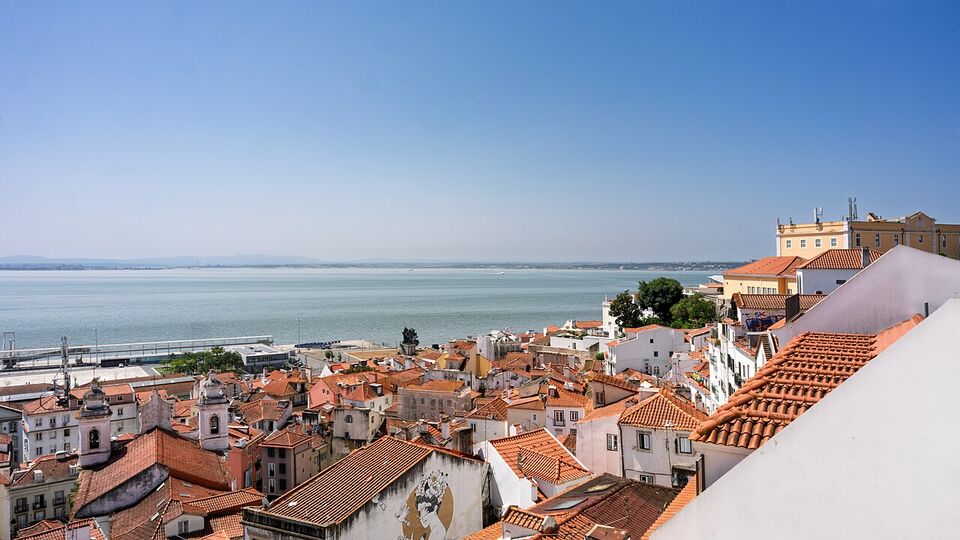
Picture the Tagus as a wide, bright edge along the south of the city. Everything else climbs away from it. You can learn the whole center with a handful of anchors.
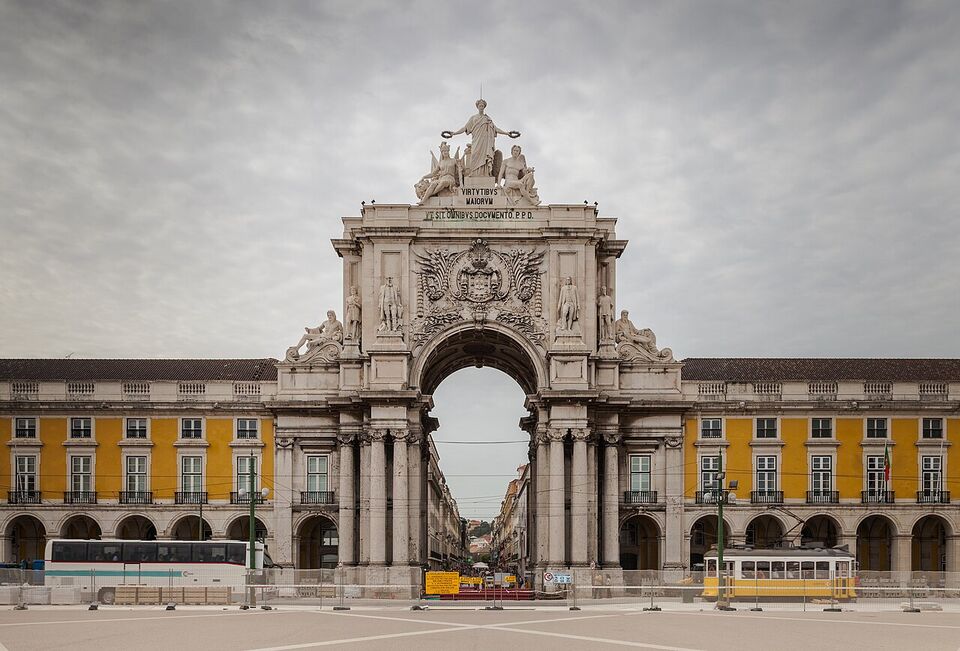
Start at the water. Praça do Comércio is the big riverfront square with a yellow arcade on three sides. Behind it, a flat grid of straight streets runs inland: this is the Baixa ("lower town"), rebuilt on a regular plan after the 1755 earthquake. The grid ends at two squares, Rossio and Praça da Figueira, which are the traffic hub of the center.
To the east of the Baixa, a steep hill rises to São Jorge Castle. The old, tangled streets on its southern slope are the Alfama, the oldest surviving district, which came through the earthquake better than the lower town. North of the castle hill are Mouraria, the old multicultural quarter, and Graça, a residential hilltop with a big viewpoint.
To the west of the Baixa, the opposite hill carries Chiado (shops, cafes, theaters) and, just above it, Bairro Alto ("upper quarter"), a grid of narrow streets that is quiet by day and loud at night. Beyond them are Príncipe Real, with its garden and design shops, and then Estrela, a calmer residential district around a basilica and a public garden.
Follow the river west and you pass Cais do Sodré (the transport hub and bar district), Alcântara (under the red suspension bridge) and finally Belém, about 4 miles (6 km) from the Baixa, with the monastery, the tower and the river promenade. Go the other way, east along the river, and about 5 miles (8 km) from the Baixa you reach Parque das Nações, the flat riverside district built for Expo '98, with the Oceanarium, a shopping center and a long promenade.
About the "seven hills": Lisbon is often said to be built on seven, in the manner of Rome. Locals and books disagree on which seven, and you will count more than seven by the end of the first afternoon. Treat the idea as shorthand for "expect slopes everywhere except the Baixa."
Neighborhoods at a glance
This table is a quick comparison. For fuller profiles, walking routes and noise warnings, see Lisbon Neighborhoods.
| Area | Feel | Hills | Night noise | Best for |
|---|---|---|---|---|
| Baixa | Flat grid, shops, busy squares | Flat | Moderate | First visits, transit, luggage |
| Alfama | Old lanes, stairs, viewpoints | Very steep | Moderate to high | Atmosphere, short stays |
| Chiado | Elegant, central, cafes | Steep in places | Moderate | Couples, first-timers |
| Bairro Alto | Bars and restaurants | Steep | High at night | Nightlife |
| Príncipe Real | Garden, boutiques, calm | Hilly | Low to moderate | Quieter stays |
| Belém | Monuments, river, wide streets | Mostly flat | Low | Sights; not a nightlife base |
| Parque das Nações | Modern, planned, riverside | Flat | Low | Families, airport links, fairs |
How many days in Lisbon
Lisbon is compact, but the hills slow you down, and the best moments (a viewpoint at sunset, a long lunch) are not things to rush. These plans assume you stay in or near the center.
- One day
The essentials
Morning in the Alfama and at the castle, lunch in the Baixa, then a tram or ride-hail to Belém for the afternoon. Skip the interiors you do not care about and keep the viewpoints. It is a full day, not a relaxed one.
- Two days
City and river
Day one for the Alfama, the Baixa and Chiado. Day two for Belém in the morning (the monuments are closed on Mondays) and the riverfront or the Alcântara area after lunch.
- Three days
The comfortable first visit
Add a slow day: a museum such as the Gulbenkian, a market, a ferry across to Cacilhas, or a long evening in Bairro Alto and Príncipe Real. This is the length we suggest for a first trip.
- Four to five days
Add a day trip
Sintra is the obvious choice, but it needs its own full day and advance tickets for the palaces. Cascais, Óbidos and the Arrábida coast are lighter options. See Sintra and Day Trips from Lisbon.
If you are using Lisbon as the first or last stop of a longer trip, see Plan Your Trip for how it fits with Porto and the Algarve.
When to go
Spring and early autumn are the easiest months. The 1991-2020 climate normals for Lisbon show average highs of 66°F (19°C) in March, 74°F (23°C) in May, 84°F (29°C) in August and 73°F (23°C) in October. Rain falls on about 10 days a month from November to January, and almost not at all in July and August.
Summer is bright and hot, and the stone streets hold the heat. Winter is mild, with highs near 59°F (15°C), but wet spells are common and cobbles are slick. Storms do reach the city: Storm Charles on about November 11, 2026 suspended public events in Lisbon and disrupted Web Summit. Check the forecast on ipma.pt before you plan outdoor days. For a month-by-month picture, see When to Go.
Getting around: Metro, trams, buses, ferries and ride-hail
The Metro is the simplest way to cross the city quickly. It runs every day from 6:30 a.m. to 1 a.m. (the last departure from the end stations), has four lines, and has gates that take contactless bank cards. The Baixa-Chiado station connects the lower town to the upper town through the hill, which saves one of the city's hardest climbs.
Fares and cards
The Metro fares valid from January 1, 2026, are €1.92 (about $2.15) for a single ride with a rechargeable card and €1.72 (about $1.93) if you tap a contactless bank card at the gate. A combined Carris and Metro 24-hour ticket costs €7.25 (about $8.12). The rechargeable card, the navegante occasional card, costs €0.50 (about $0.56) and is valid for a year. Older guides still call it the Viva Viagem card; if you see both names, they refer to the same family of tickets. Children up to 3 ride the Metro free.
Contactless bank cards work at the Metro gates but not on buses, trams or ferries, so a rechargeable card is still worth having. A single bus or tram ticket is about €2, but check the current price. Fares, passes and zones are explained on carris.pt, metrolisboa.pt and the regional site transporlis.pt, and they change each January.
Trams and buses
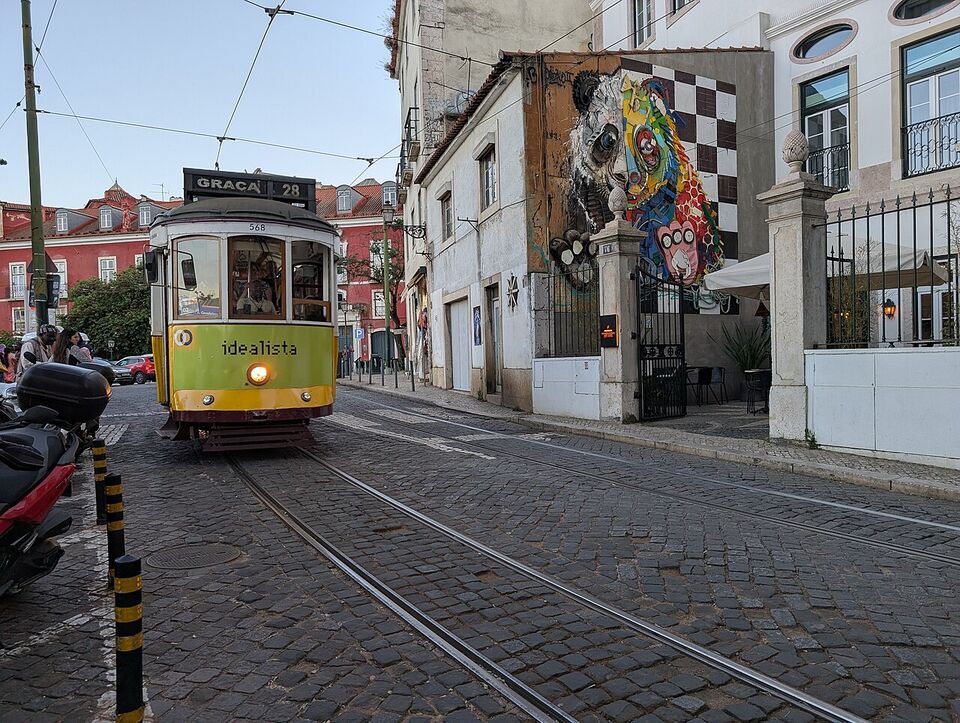
Carris runs the buses and the historic trams. Tram 28 is the famous one and is the most crowded. After a road closure, buses replaced the trams on part of the route from April 13, 2026, and Carris said tram 28 would resume on May 11, 2026. We found no 28E notice on the Carris service-changes list on November 14, 2026, but check before you plan around it. We could not confirm the tram fare, so look it up on carris.pt.
Other trams, such as the route out to Belém, are good for scenery, but a bus or the train from Cais do Sodré is faster. Use trams for the experience, and the Metro, a train or a taxi for getting somewhere on time.
Trains and ferries
Commuter trains from Cais do Sodré run along the river to Belém and on to Cascais. Trains to Sintra leave from Rossio, Oriente and Entrecampos; check cp.pt for times. Ferries cross the Tagus from Cais do Sodré to Cacilhas on the south bank; we could not confirm the current fare or hours, so check the operator before you go.
Taxis and ride-hail
Taxis are plentiful. Uber and Bolt also work in Lisbon, and in Portugal they are classed as TVDE services. A ride-hail car is often the easiest way to cross the hills with luggage. We have no sourced fares, so open the app for a quote before you ride. For transfers from the airport, see Lisbon Airport Transfers. For all of Portugal, see Getting Around Portugal.
Insider tip
Plan your day so you walk downhill. Take the Metro or a ride-hail car to the top of a hill (the castle, Graça, Bairro Alto), then walk down toward the river. It cuts the effort and lets you stop at viewpoints on the way.
Funiculars and lifts: what is running
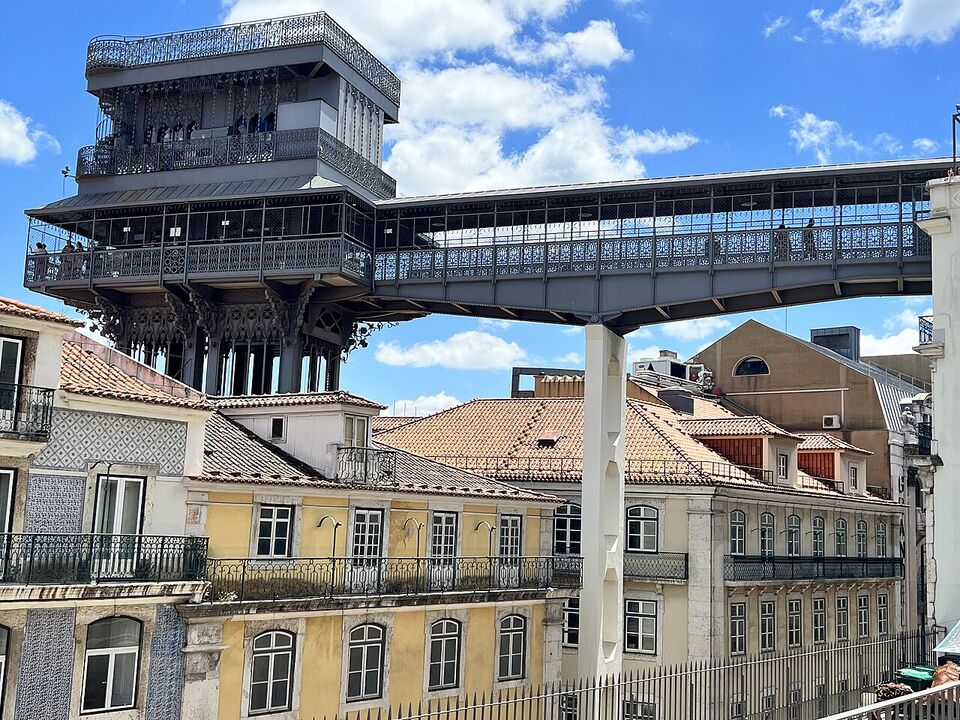
On September 3, 2025, the Glória funicular derailed, killing 16 people and injuring more than 20. The city's other historic hill lifts were stopped for safety checks. As of the latest reports we could confirm, three of the four historic funiculars and the Santa Justa Lift still carry no passengers. The situation can change, so check carris.pt before you travel.
| Lift | Status (November 2026) | What to do |
|---|---|---|
| Glória funicular | Closed; Carris is replacing it with new equipment, targeted for the first half of 2029 | Walk or use the nearby Metro |
| Bica funicular | Treated as closed; one report disagreed, most sources say it is stopped | Do not plan around it |
| Lavra funicular | Closed; no reopening date | Use another route |
| Santa Justa Lift | Closed since September 2025; no reopening date | Use the Baixa-Chiado Metro station |
| Graça funicular | Reopened April 30, 2026; usually daily 7 a.m. to 9 p.m. | Check Carris for same-day status |
The Graça funicular links Rua dos Lagares in Mouraria with Largo da Graça, carries up to 14 people a trip and takes about a minute and a half. A Navegante pass works, and occasional riders pay on board. Carris listed a temporary closure for November 11, 2026, with no reason or end date given, so confirm before you rely on it.
The final accident report is not expected before the end of the first quarter of 2027, and details of the replacements may change. The Lisboa Card pages still list the funiculars and the Santa Justa Lift as included transport; they are not running, so do not buy a card for them.
Watch out
Some tour sites and older guides still show these lifts as open. Believe the operator, not a listing. If a plan depends on a lift, make a second plan that does not.
First-timer mistakes
Most problems in Lisbon come from three things: hills, wet stone and crowded trams. They are easy to avoid once you know about them.
Treating the tram as transport
Tram 28 passes many of the best streets, but it is slow, often full and a favorite working spot for pickpockets. It is not a time-saver. If you ride it, do it for the experience: go early or late, board near one end of the line for a better chance of a seat, keep your bag in front and your phone out of back pockets. Do not carry a wallet in a jacket pocket.
Wearing the wrong shoes
The pavements are made of small limestone and basalt blocks (calçada) that become slippery with rain or after years of foot traffic. Sandals with smooth soles and heels are a bad idea. Bring comfortable shoes with real tread, and expect to wear them every day.
Walking in the wrong direction
Looking at a flat map hides the slopes. A short distance can mean a steep climb. Use a map app that shows elevation, or check how the route climbs before you set out with a rolling suitcase.
Leaving Monday for Belém
The Jerónimos Monastery and the Belém Tower are closed on Mondays. Many travelers arrive on Monday morning and find a locked door. Plan Belém for another day. See Things to Do in Lisbon for hours and closed days.
Booking a room without checking the street
A room in Bairro Alto or Cais do Sodré can be noisy until 3 a.m. at weekends, and a flat in the Alfama may be up a flight of stairs. Read the listing for the floor, the lift and the noise. See Where to Stay in Portugal for how to read a listing.
Watch out
Pickpockets work trams, the Alfama's narrow lanes and crowded sights such as Belém and the castle. Carry only what you need, use a front bag or inside pocket, and keep your phone away from tables on terraces. For more, see Safety in Portugal.
What to book ahead
Lisbon is not a city where everything sells out, but a few things are worth booking.
- Sintra palaces. The Pena Palace is entered at a booked date and time. If you plan a day trip, buy tickets on the official Parques de Sintra site. See Sintra.
- Belém monuments. The Jerónimos Monastery costs about €18 (about $20) and the Belém Tower about €15 (about $17). Buying online avoids the ticket line; confirm prices and any access changes on the official monument sites.
- Fado. If you want a table at a fado house, book ahead and ask about the minimum spend. Fado is a living tradition, so choose a venue that treats it as music, not as background. See Fado.
- Special exhibitions and shows. Check the Gulbenkian, MAAT and the Oceanarium sites for your dates.
- A room in peak months. Book early for May to October, Christmas and New Year, and big event weeks.
Eating, money and small habits
When you sit down in a Portuguese restaurant, a basket of bread, olives, butter and cheese often arrives on the table. This is the couvert. It is charged only if you eat it, and you can send it back; check the menu for the price. It is a normal feature of eating out, not a trick. See Food in Portugal for what to order.
Cards work almost everywhere. Carry a few euros for small cafes, markets and some taxis. Tipping is optional: rounding up or leaving a few euros for good table service is common, and it is nothing like US norms. Pay in euros if a card machine offers to charge you in dollars. See Money in Portugal for more.
Lisbon charges a municipal tourist tax of €4 (about $4.50) per person per night, up to 7 nights, for visitors aged 13 and over. Check lisboa.pt for the current rule, since hotels list it separately from the room rate.
Arrival and entry
Lisbon Airport is close to the center, and the red Metro line goes straight to the city. See Lisbon Airport Transfers for the options. US citizens do not need a visa for short stays. The Entry/Exit System (EES) has been fully operational since April 10, 2026, and it takes fingerprints and a photo at your first entry at Lisbon, Porto, Faro, Funchal and Ponta Delgada airports. Queues at Lisbon have been long at times, so allow extra time, especially on departure days. ETIAS is not required yet; check travel-europe.europa.eu before you go. For the full rules, see Entry Requirements.
Where to go next
For the sights, tickets and closed days, see Things to Do in Lisbon. To pick a base, see Lisbon Neighborhoods. For day trips, see Sintra and Day Trips from Lisbon. For a longer route through the country, see Plan Your Trip.
Add it to a route in the trip builder, or ask us to plan the hotels, trains and guides for you.