Overview: what the Douro Valley is
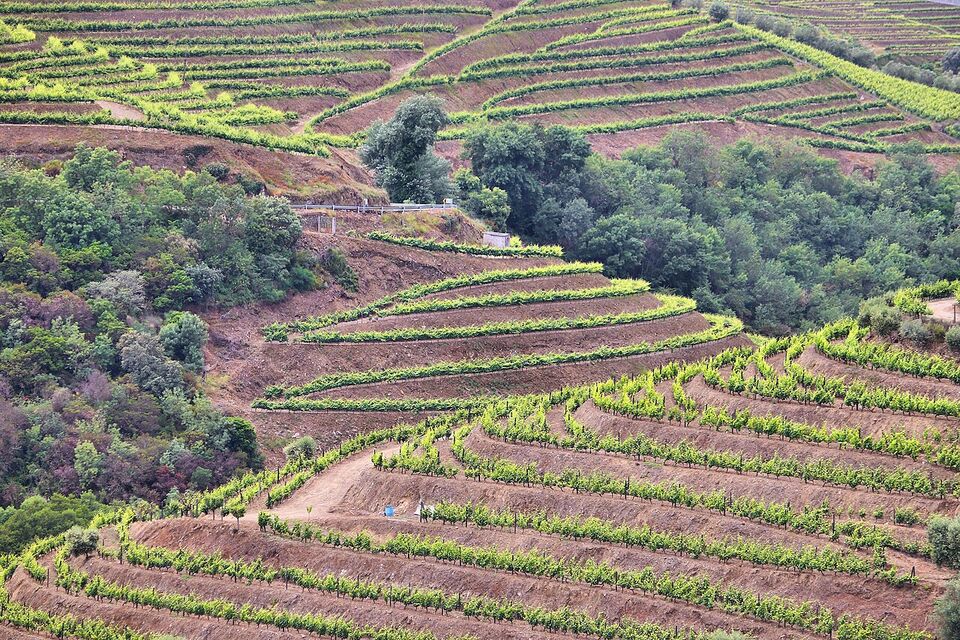
The Douro Valley is the wine country of northern Portugal, a long river gorge of steep, stone-walled terraces where grapes for port and for table wine are grown. Much of the upper valley is a UNESCO World Heritage Site, listed in 2001 as the Alto Douro Wine Region. For visitors it means winding roads, riverside villages, family wine estates called quintas, and views that change with the season. It is a relaxed, scenic trip, not a checklist of monuments.
The question most Americans face is how to see it without ending up stuck on a bus, or worse, driving after a tasting. You can do the Douro by regional train, by river boat, with a guide and driver, or in a rental car. Each has trade-offs of time, cost and flexibility, compared in the table below. The best choice for most first-timers is a train out and a booked quinta visit or boat ride, or a small-group tour if you want to taste several wines.
This page covers how to get there, when to go, whether to stay overnight, tasting etiquette and drink-driving, the roads and tolls, the towns worth stopping in, and the rabelo boat. For the city you will probably start from, see the Porto guide; for background on the wines you will taste, see the wine guide.
The Douro is on Western European Time, the same as Lisbon and Porto: 5 hours ahead of New York for most of the year, and 4 hours for about two weeks in March and again from late October to early November, when the US and Europe change their clocks on different dates.
Geography in brief
The Douro river flows west from Spain across northern Portugal to the sea at Porto. The wine region is not the whole river but a stretch of the valley upstream, sheltered by mountains from the Atlantic weather. It is divided into three zones, which help explain what you see and taste.
- Baixo Corgo is the westernmost zone, centered on Peso da Régua. It is the wettest and coolest, and its wines are generally simpler.
- Cima Corgo lies upstream, centered on Pinhão. It is warmer and drier, and it is where many of the best-known quintas sit.
- Douro Superior is the easternmost zone, running toward the Spanish border. It is the driest and hottest, and it is less visited.
Most visitors from Porto stay in the Baixo Corgo and Cima Corgo, between Régua and Pinhão. The distance is about 15 to 20 miles (25 to 30 km) along the river, but the road is twisty, so allow more time than the map suggests.
Ways to see the Douro, compared
The table gives a quick comparison. It uses relative costs, not prices, because tour and cruise prices change with season and operator and we could not confirm current figures.
| Way | Time from Porto | Cost | Flexibility | Wine tasting? | Best for |
|---|---|---|---|---|---|
| Regional train | About 2 to 2.5 hours each way to Pinhão | Lowest | Medium: fixed timetable | Easy, no driving | Scenery on a budget |
| Day river cruise | A full day with a transfer or train back | Medium | Low: set departure | Some include a tasting | Seeing the river from the water |
| Multi-day river cruise | About 7 nights, ship based | Highest | Low | Included visits | Slow, all-inclusive travel |
| Tour with driver | Pickup in Porto; a full day | Medium to high | Medium | Yes, planned in advance | Tasting without driving |
| Private driver | Your own schedule | High | High | Yes | Small groups, special interests |
| Self-drive | About 1.5 to 2 hours each way to Régua, longer to Pinhão | Medium (car, fuel, tolls) | High | Only with a designated driver | Stopping where you like |
By train from Porto
The Douro Line (Linha do Douro) runs from Porto east along the river valley toward Régua, Pinhão and the end of the line at Pocinho. It is one of the more scenic railways in Portugal, with long sections right beside the water. Trains are operated by CP (Comboios de Portugal). Regional trains start from Porto; check on cp.pt whether your service leaves from São Bento or from Campanhã, since this depends on the timetable. Expect roughly 1 hour 45 minutes to Régua and about 2 hours 30 minutes to Pinhão, but treat these as guides and read the timetable for your date.
Current service status
We could not confirm the current status of every service on the Douro Line for November 2026. The CP site did not load the timetable text for us, and rail lines in northern Portugal have had closures and replacement buses for works in the past. Before you plan a train day, open cp.pt and check the "notices" section for the Douro Line, and look at the last train back. A sensible rule is to confirm both directions at the station before you leave Porto, and to have a backup plan, such as a taxi or a bus, if a late train is cancelled.
How to use the train well
- Buy your return ticket at the same time as the outward one, and note the last departure from Pinhão or Régua.
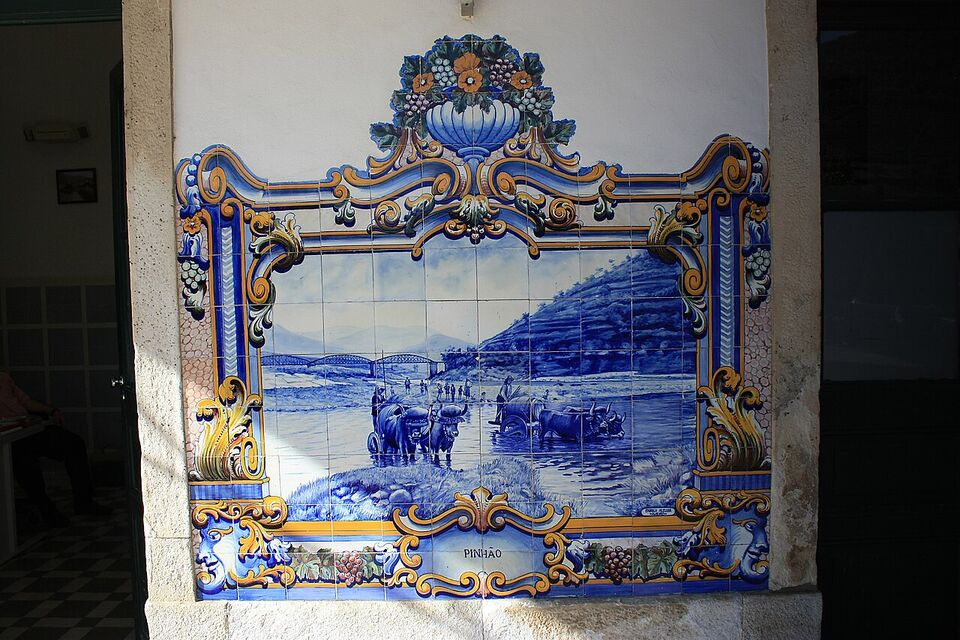
- Pinhão's station is itself a sight, decorated with tile panels of vineyard scenes and harvest work.
- From the station, you can book a short boat ride, walk to the quay and its cafés, or arrange a taxi to a quinta. Book a quinta visit before you arrive, since many are small and visit by appointment.
- Fares on regional services are modest compared with a tour, but check cp.pt for the current price.
For how rail works elsewhere in Portugal, see getting around Portugal.
Boat cruises
Short cruises
The "six bridges" cruise around Porto is a short sightseeing trip that does not go into the wine country. In the Douro Valley itself, day trips by boat typically run between Régua and Pinhão or beyond, sometimes combined with a train or bus transfer back to Porto. The advantage is the angle: from the water you see the terraces rising on both sides. The downside is timing, since you are tied to a fixed schedule and may spend part of the day in a coach.
River cruise ships
The Douro is also a major river-cruise route. Lines catering to Americans offer week-long sailings that start in Porto and travel upstream, often with stops at quintas, Régua, Pinhão and Lamego, and in some itineraries a day trip to Salamanca in Spain. The official AmaWaterways site lists 7-night Douro itineraries, for example. If you travel this way, the cruise handles logistics and transfers; see our cruises guide. Season dates and prices vary by line and offer, so check the operator.
The rabelo
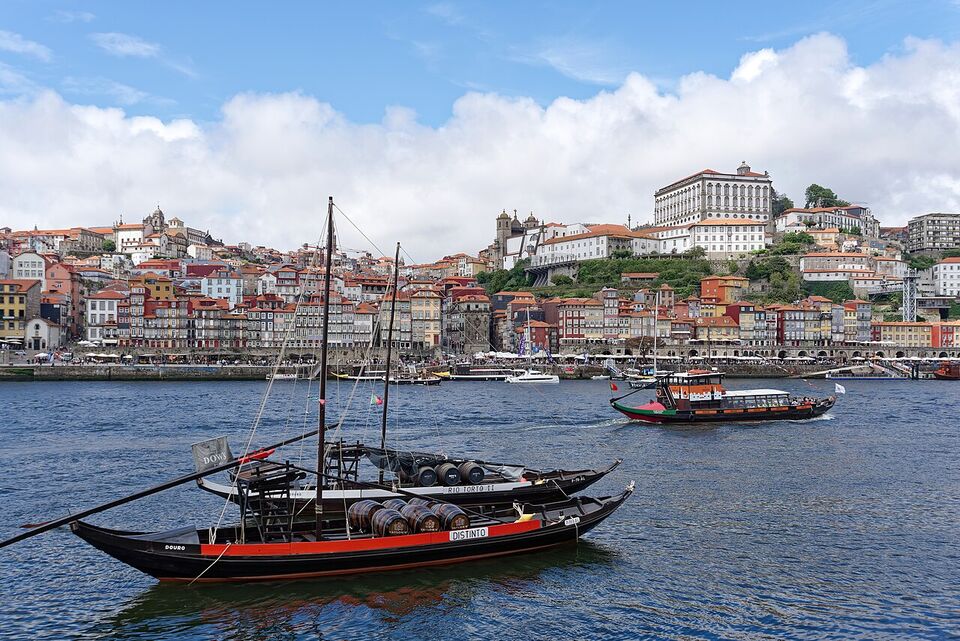
A rabelo is the traditional flat-bottomed wooden boat that carried barrels of wine down the river from the vineyards to the lodges at Vila Nova de Gaia before dams and roads replaced it. It has a single large square sail and a very long steering oar at the stern. Working rabelos are now mostly tourist boats and display vessels, and a few are moored along the Gaia quay with the names of port houses on their sails. The rabelo is also the boat in the traditional regatta held around the Festa de São João in Porto. If a cruise advertises a "rabelo experience", ask whether it is a replica, how long it lasts, and whether the sail is used, since many run on engines.
Tours with a driver
A tour is the easiest way to taste wine in more than one place. A typical day picks you up in Porto in the morning, drives to the valley, stops at two or three quintas for a tasting and a lunch, and returns in the evening. Small-group tours seat from a handful of people to a minibus, while private tours are a car with a driver and guide. Prices vary widely by group size and what is included, and we could not confirm current rates.
When you compare options, check these points:
- Total time on the road. Some tours spend four hours or more in the vehicle in a day.
- Number and length of stops. Fewer, longer stops are more relaxing.
- Whether lunch and tastings are included or paid separately.
- Pickup point and language of the guide.
- What happens in poor weather or if the quinta cancels.
Book through a licensed operator with clear cancellation terms. If the tour includes a boat ride, check how long it is and whether it is on the water or in a stationary boat.
Driving: roads and tolls
Driving gives you the most freedom, and the valley roads are a big part of the appeal. It also requires care. Portugal drives on the right, as at home. Speed limits for cars are 50 km/h (31 mph) in towns, 90 km/h (56 mph) on other roads, 100 km/h (62 mph) on expressways and 120 km/h (75 mph) on motorways. The river road between Régua and Pinhão is narrow and curving, and in places you share it with buses, trucks and slow drivers.
Routes from Porto
The drive from Porto to Peso da Régua is roughly 60 to 80 miles (100 to 130 km), depending on the route, and takes about 1.5 to 2 hours. Motorways lead east toward Amarante and Vila Real, and then branch toward Régua. Several stretches of motorway in the north, including parts of the A4 near the Marão tunnel, the A24 and the A25, became toll-free on January 1, 2025, under a 2024 law. The list may not be complete, so check your actual route on a mapping app and ask your rental company. Many other Portuguese motorways still charge tolls.
Tolls and rental cars
Rental cars in Portugal must carry a Via Verde electronic toll device. The rental company pays the tolls and bills you afterward. One rental company's published fee is €2.21 a day (about $2.48), up to a maximum of €22.14 (about $25) per rental, plus the tolls you use; other firms differ, so ask at booking. Read more in our driving guide.
Different from home
Do not stop to pay tolls in cash at a booth that is not there. Many Portuguese tolls are electronic and have no cash lane. Your rental's transponder handles them, so keep the rental agreement in the car and ask about the toll fee at pickup.
Fuel is expensive. As of November 9, 2026, mainland averages were about €1.92 a liter for gasoline (about $8.15 a gallon) and about €2.14 a liter for diesel (about $9.05 a gallon), and diesel cost more than gasoline in that data. Bring a US license and, to be safe, an International Driving Permit; check with your rental company.
When to go
The Douro changes through the year, and what you see depends on the month.
- Spring (about March to May): Vines leaf out and slopes turn bright green. Weather is mild, days lengthen, and crowds are modest. It is a good time for walking.
- Summer (June to August): The valley is hot and dry, and the hillsides turn brown and gold. Plan visits for the morning and late afternoon, carry water, and avoid midday hikes. Summer is also the busiest period for boats and tours.
- Harvest (the vindima, typically late August to early October): The valley is at its busiest and most atmospheric. Quintas run harvest experiences, and some invite guests to help pick grapes or tread them in stone tanks. Book rooms and tours well in advance, since this is peak season.
- Autumn (October to November): After harvest, the vines turn red and gold. It is quieter, the light is soft, and it is a very photogenic time, although rain becomes more likely.
- Winter (December to February): Bare vines and cool, damp weather. The valley is calm, and some quintas and restaurants close or keep reduced hours. Check opening times before you go.
For a broad guide to seasons across the country, see when to go to Portugal.
Day trip or overnight stay?
A day trip from Porto works if you start early, choose one base such as Pinhão or Régua, and accept that you will spend a lot of the day traveling. A typical rhythm by train is: depart at a morning hour, arrive in time for a quinta tasting and lunch, take a short boat ride or walk, then return by an early evening train.
Staying overnight changes the trip. In the evenings the valley empties of day-trippers and you can have a long dinner overlooking the vines. Many quintas offer rooms, and they range from simple guesthouses ($ to $$) to high-end wine hotels ($$$). A stay at a quinta is often easier with a car, but some are close to a station or can arrange a pickup. Ask before you book.
Insider tip
If you can spare one night, stay near Pinhão and visit the valley on both sides of the river. You avoid the long return journey in the dark and have time for a sunset walk among the vines.
If you only have a day, our suggestion is to pick one tasting, one meal and one view, and let the rest go. Trying to fit in three quintas and a boat in a day, by train or tour, usually leaves you rushed.
Wine-tasting etiquette and drink-driving
Tasting etiquette
- Book ahead. Many quintas are working farms and receive visitors by appointment, particularly outside summer. Walk-ins are not guaranteed.
- Arrive on time. Tastings are small and schedules are tight, especially at harvest.
- Ask what is included. A tasting may be paid separately, or the cost may be credited if you buy wine. Ask when you book.
- Spit or pour out. You are not expected to finish every glass. There is usually a spittoon, and no one will mind if you pour out what you do not want.
- Ask questions. Hosts often enjoy explaining the vines, the grape varieties and the harvest.
- There is no obligation to buy, but buying a bottle is a polite thank-you. Check what you can bring home under customs rules: one liter of alcohol can fall under the US duty-free exemption for travelers aged 21 and over.
- Ask about food. Tastings with snacks are common, and a lunch at the quinta is usually worth booking.
Drink-driving
Do not drive after drinking. Portugal sets a lower legal limit than most US states, and police do carry out checks. We could not confirm the exact current limit for this edition, so check with the traffic authority, ANSR, or your rental company. The practical advice is simple: the person driving does not drink at all. If you are tasting at multiple quintas, use a tour with a driver, the train, a boat, or a taxi arranged in advance. Penalties are serious for visitors and rental-car companies can pass fines on to you.
Watch out
A "small" tasting at each of three quintas, plus wine with lunch, can add up to several glasses of strong wine, and port is fortified. If you plan to self-drive, designate a non-drinking driver, or limit tastings to a single quinta, and spit.
Which towns are worth it
Peso da Régua
The gateway to the valley and the main transport hub, with a train station, river boats and a museum devoted to the region's wine history. It is practical rather than pretty, but it is a good starting point and a reasonable place to base yourself.
Pinhão
A small village in the heart of the best-known wine area. The station's tile panels, the quay, and quintas within a short taxi ride make it the single best stop if you have only one day.
Lamego
A hill town a short drive from Régua, known for the Baroque stairway climbing to the Santuário de Nossa Senhora dos Remédios and for local sparkling wine. It makes a good half-day add-on if you have a car or a taxi.
Vila Real
A larger city north of the river, known for the Baroque Mateus Palace, whose image appears on a famous rosé label. It lies just outside the main wine area and suits drivers who want to see a different side of the north.
Amarante
A pretty town on the Tâmega river, on the road from Porto toward the Douro. It is a pleasant lunch stop if you are driving.
If you are combining the Douro with other northern stops, see Braga and Guimarães and the regions overview.
What you will taste
The Douro produces fortified port and table wines in roughly equal measure. Port comes in many styles. Red ports include ruby and tawny, with aged tawnies labeled 10, 20, 30 or 40 years. There are also white and rosé ports, a good aperitif over ice with tonic. Table wines, called "Douro" wines, range from light reds to rich, oak-aged bottles, and also include whites. Most tastings begin with white or dry wines and move to reds and ports. For a deeper look at styles, see the wine guide.
Food in the valley is simple and regional: grilled meats, roasted kid or lamb, rice dishes, bacalhau and local cheeses. Meals at quintas often start with a couvert of bread, olives and cheese. It is charged only if you eat it, so check the price on the menu or ask.
Practical notes
Allow more time than you think for every step. Drive times are longer than distances suggest, trains can be delayed, and quintas keep to their own hours. Carry some cash for small cafés and village shops, although most larger places accept cards. Cell coverage can drop in the gorges, so download offline maps. Wear sturdy shoes, as terraces and cobbled paths are uneven.
The valley can be very hot in summer, and wildfire danger is a real consideration in dry months. IPMA, the national weather service, publishes daily fire danger levels, so check them before you head out on a hot day. On rainy days, vineyard roads can be slippery.
The US State Department's advisory for Portugal is Level 1, the lowest, as shown on the US Embassy site in November 2026. For general safety and health guidance, see our safety guide. If you are driving, our driving guide explains rental cars and road rules. If you are traveling by public transport from Lisbon, the getting-around guide covers trains and buses.
Add it to a route in the trip builder, or ask us to plan the hotels, trains and guides for you.