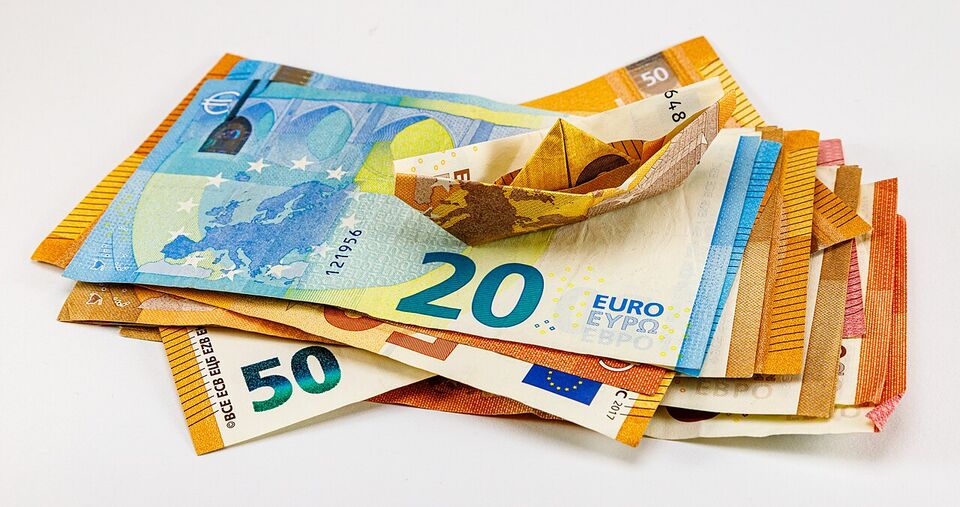
The short answer: pay by card, carry a little cash
Portugal uses the euro, and for an American the easiest way to pay is a contactless debit or credit card, which works in most shops, restaurants, train stations and Metro gates. Keep a small amount of cash for the places that still prefer it: small cafes, market stalls, village restaurants, some taxis and tips. A first-time visitor can usually get by with one or two ATM withdrawals for the whole trip.
This page covers the money questions that trip you up in the first days: the exchange rate, which card to bring, how to use ATMs without paying extra, how little tipping matters, what the couvert on the table is, tourist taxes and VAT refunds, what common things cost, and the money scams worth knowing. It ends with a short plan for your first day. For the wider budget, see Portugal Trip Budget Calculator, and for the practical steps before you fly, see Plan Your Trip to Portugal.
Euros and the exchange rate
Everything in this guide is priced in euros first, then in dollars at one fixed site rate: €1 = US$1.12. That makes the arithmetic simple: a €21 dinner is about $24, and a €100 hotel night is about $112. It is a planning rate, not a quote. The European Central Bank's published reference rate was about US$1.11 on Friday, November 13, 2026, and it moves a little every day, so your real cost will be a few cents either way.
Portuguese prices use a comma for decimals (1,50 € means one euro fifty) and a point or space for thousands, the reverse of what you may expect. We write euro amounts the American way in this guide: €3.50 and €1,250. On a menu or a price tag, read the comma as a decimal point.
Euro coins matter more than they do at home. One- and two-euro coins are the ones you will use for small purchases, public toilets, a coffee at the counter or a tip, so do not throw your change into a drawer at the end of each day. Notes of €5, €10 and €20 are the most useful; some small businesses are reluctant to break a €50 or larger note for a small purchase.
Cards and cash
What works almost everywhere
Contactless payment by card or phone is standard in Portuguese cities. The Lisbon Metro gates accept contactless bank cards directly, and the fare is lower than the paper-ticket fare (see the cost table below). Supermarkets, pharmacies, most restaurants, museums, hotels, petrol stations and many taxis take cards. Visa and Mastercard are the safest bets. American Express is less widely accepted in Europe than at home, so treat it as a backup rather than your main card.
Your card is likely to ask for a PIN on some machines, particularly unattended ones such as train ticket machines and fuel pumps. Know the PIN for the credit cards you bring, and ask your bank whether your card is set up for chip-and-PIN use abroad. Tell your bank or card app that you are traveling so a run of foreign purchases does not trigger a freeze, and keep a second card in a different place from the first.
Where you still need cash
- Small neighborhood cafes and pastry shops, where a coffee and a pastel de nata may be a purchase too small for the card reader, or where the machine is down.
- Street markets, farm stands, flea markets and festival stalls.
- Village restaurants and guesthouses outside the main tourist areas, and some taxis.
- Tips, public toilets and small parking machines.
- Anywhere the card reader or the phone signal fails. It happens, and it happens most in small towns and on islands.
The practical rule: when you sit down at a small place and do not see a card sticker on the door or the till, ask "Aceita cartão?" (ah-SAY-tah car-TOWN?, "Do you accept cards?") before you order. For a few more phrases, see Portuguese Phrases.
Which US cards work and what they cost you
Most US debit and credit cards from the big networks work in Portugal. The things to check are your own bank's terms, not Portuguese rules:
- Foreign-transaction fee. Many cards add a percentage to every purchase made abroad or in a foreign currency; some travel-oriented cards charge none. Look at your card agreement or ask the bank. The fee is yours to avoid, since the shop does not charge it.
- ATM fees. Your bank may charge a fee for using another bank's ATM, an international fee, or both, and the Portuguese ATM may charge its own fee on top. Ask what your bank charges, and whether it reimburses ATM fees.
- Daily withdrawal limits. Check your limit before you leave, and ask for a higher one if you may need a deposit in cash.
- Credit versus debit. A credit card is often the better choice for large bills such as car rentals, because rental companies usually want a credit card for the deposit. A debit card is useful for cash withdrawals.
- PIN and phone wallet. A phone wallet such as Apple Pay or Google Pay works wherever contactless works and keeps your card number off the shop's terminal.
Different from home
Card readers in Portugal are often handed to you or brought to your table. Do not sign anything: you tap or insert your card and, if asked, enter your PIN. At a restaurant, ask for the machine at the table and pay there, rather than letting the card leave your sight. You also will not add a tip on the screen the way you do at home.
ATMs: Multibanco, Euronet and the "pay in dollars" trap
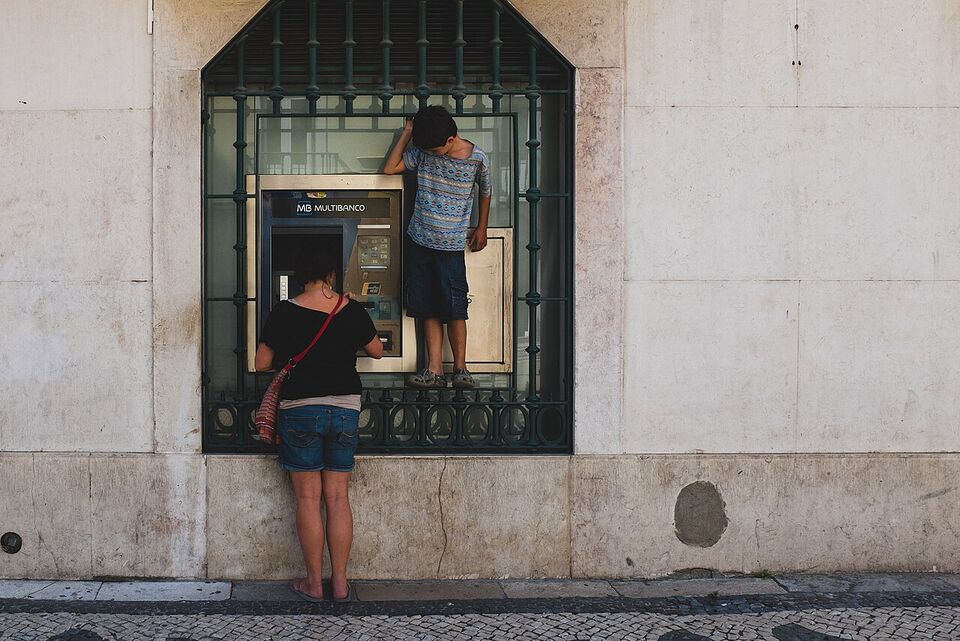
The national ATM network is called Multibanco. You will see an "MB" sign on cash machines outside most bank branches, supermarkets and shopping centers. Multibanco machines also let people pay bills and top up phones, which means you may sometimes see a menu you do not expect: choose "Levantamentos" (withdrawals) and, in the language selection, English.
As a rule, we suggest withdrawing money from a bank's own machine, ideally during opening hours in a safe, well-lit place, and ideally inside or beside a branch. This is the simplest way to keep fees down. We cannot give a verified Multibanco fee, because it varies by bank and it is your own bank that sets most of the cost. Ask your bank before you leave rather than guessing.
Machines to skip
Independent ATMs, sometimes in tourist streets, airport arrival halls and near major sights, are run by companies that are not banks. Euronet is the best-known name in Europe, and a machine of this type is likely to offer a worse deal than a bank's machine: higher fees, a poorer exchange rate, or both. You do not have to memorize brand names. If a machine is freestanding, sits in a shop doorway, or looks different from the bank machines around it, walk a little further and use a bank's ATM instead.
Always choose euros
This is the single most important money tip for any American abroad. When you withdraw cash or pay by card, the machine may ask whether you want to be charged in euros or in US dollars. The dollar option is sometimes called dynamic currency conversion or "guaranteed exchange rate". It sounds helpful, but the rate is set by the machine's operator, usually less favorable than the one your bank or card network would use, and it can hide an extra fee. Choose euros, every time, at ATMs, shops, restaurants and hotels. If a cashier has already put the transaction through in dollars, you can ask for it to be cancelled and run again in euros.
Watch out
If a card machine or ATM asks whether you want to pay in dollars, the answer is no. Pick "EUR" or "€" and decline the conversion. The same goes for a hotel or a restaurant that offers to "convert the bill to dollars for you".
Changing money
You do not need to buy euros before you fly. If you want some cash for the first hour, a small withdrawal from a bank ATM after you land is usually better than the rate offered at a currency booth, particularly at an airport. Exchange booths in tourist areas typically show good-looking headline rates and make their money on fees and spreads. Avoid exchanging money at a hotel desk unless you have no alternative.
Limits apply to carrying large amounts of cash or tobacco and alcohol across the border. We have no verified figures to print here, so check the Portuguese customs authority (Alfândegas) on the tax authority's site, or ask your airline, before you carry a large sum.
Tipping
Tipping is optional in Portugal, and it is nothing like the American norm. No one expects 15 to 20 percent. We cannot point to an official rule, so treat the following as the usual practice rather than a law.
- Restaurants. If service was good, round the bill up or leave a few euros in coins on the table. Leaving nothing is not rude, particularly in a casual place. Check whether a service charge is already on the bill before you add anything.
- Cafes and bars. Leaving small change at the counter is welcome and not expected.
- Taxis and ride-hail. Rounding the fare up to the next euro is common for taxis. With an app, you can add a tip in the app if you want to.
- Hotels and tours. Porters and housekeeping may appreciate a small tip, though it is a gesture, not a requirement. For a guide on a private tour, a tip is welcome if the service was good.
A tip on the card-reader screen is rare. If you want to tip a waiter, leave coins or tell them to keep the change when you pay in cash, rather than looking for a screen option.
The couvert on the table
In many Portuguese restaurants, before you order, the staff bring a small selection of things to the table: bread, butter, olives, a cheese or a spread, sometimes a plate of cured meat or a small salad. This is called the couvert (koo-VAIR). It is not a free gift and it is not a trick: it is a separate item that goes on the bill only if you eat it.
- If you do not want it, say "Não queremos o couvert, obrigado" (no, thank you, we do not want the couvert), or simply do not touch it and ask the waiter to take it away.
- If you eat it, it will be on the bill at the price shown on the menu or the price board. Ask the price if you cannot find it.
- Check the bill. Items you did not eat should not be charged. If an item you did not touch is on the bill, politely ask for it to be removed.
This works the same way at lunch and dinner, and the price varies by restaurant. A basic couvert can add up if several dishes are brought, so decide in advance whether you want it. Plenty of visitors enjoy the bread and olives as a starter. For other questions about eating out, see Portuguese Food.
Tourist taxes and VAT
Tourist taxes
Many Portuguese towns charge a municipal tourist tax per person, per night, on top of your hotel rate. It is often paid at the hotel, and some properties include it in the total while others add it at check-in or checkout. Rates vary and change, so check the council's website for your stay. As of November 2026, the figures we have are:
| Place | Rate | Notes |
|---|---|---|
| Lisbon | €4 (about $4.50) per person per night | Up to 7 nights, visitors aged 13 and over; in force since September 2024; check lisboa.pt |
| Porto | €3 (about $3.40) per person per night | In force since December 1, 2024; reported to apply year-round for about 7 nights, age 13 and over |
| Funchal (Madeira) | €2 (about $2.25) per night, plus a separate €2 for cruise passengers | Per a secondary report from August 2025; check the council |
| Algarve and other towns | Often €1 to €2, sometimes seasonal | Examples include Albufeira, Portimão and Faro; check the council for your dates |
Because these rates come from a mix of official and secondary sources and have been changing, we have not listed any rate for Sintra, Cascais or Évora. Ask your hotel what you will owe, and expect to pay it in addition to the room rate.
VAT refunds for non-EU visitors
Prices in Portugal include value-added tax, called IVA. Visitors who live outside the EU can sometimes reclaim it on goods they buy and take home in their luggage. Visit Lisboa advertises a "Tax Free Portugal" scheme, which is a sign that many shops take part, though not all do. We have not confirmed the current rules, minimum spends or refund methods, so use this as an outline:
- Ask in the shop, before paying, whether it offers tax-free shopping, and what the minimum purchase is.
- Bring your passport. The shop will usually prepare a form that carries your details and the goods.
- Keep the goods unused and in your carry-on or easy to reach, because border staff may ask to see them before they validate the form.
- At the airport, leave extra time for the validation and refund steps, particularly at a busy airport. See Lisbon Airport Transfers for the airport itself.
- Check the Portuguese tax authority's site for the rules in force for your trip. The refund is usually paid to a card or in cash, and the provider may deduct a handling fee.
Save money
A refund is worth the effort for a large purchase, such as leather goods or a piece of jewelry, and often not for a few small items after fees. Ask the shop for the refund provider's fee in advance. For the broader shopping picture, see Shopping and Taking Things Home.
What things cost
We would rather give you a short table of confirmed prices than a long one of guesses. The table below holds only prices we have confirmed from official or operator sources. We do not have confirmed prices for a coffee, a beer, a meal or a taxi ride, and we are not going to invent them: menus are usually posted outside restaurants, so read the board before you sit down. For your own budget, see Portugal Trip Budget Calculator.
| Item | Price | US$ | Notes |
|---|---|---|---|
| Lisbon Metro single trip, contactless bank card | €1.72 | about $1.93 | Tap the same card at the gate |
| Lisbon Metro single trip, ticket | €1.92 | about $2.15 | Valid from January 1, 2026 |
| Carris/Metro 24-hour ticket | €7.25 | about $8 | Buses, trams and Metro |
| Reloadable navegante card | €0.50 | about $0.56 | Valid for one year; children up to 3 ride the Metro free |
| Jerónimos Monastery | €18 | about $20 | Closed Mondays; check the official site |
| Belém Tower | €15 | about $17 | Closed Mondays |
| São Jorge Castle | €17 | about $19 | Check hours on the castle's site |
| Pena Palace, Essential Visit | €20 | about $22 | Timed ticket for a booked date and hour |
| Pena Park only | €12 | about $13 | Park without the palace interior |
| Moorish Castle (Sintra) | €12 | about $13 | Advance booking not required |
| Lisboa Card, 24 hours (adult) | €31 | about $35 | Sold by a private site; check what it covers, since the old funiculars and the Santa Justa Lift are not running |
| Average hotel room, national, Q2 2026 | €130.2 | about $146 | Average revenue per occupied room, all of Portugal; not a Lisbon price |
| Madeira trail permit (per trail) | €4.50 | about $5 | Online booking is mandatory for classified trails |
| Rental-car toll device (Hertz) | €2.21 a day, up to €22.14 a rental | about $2.48 a day, up to $25 | Plus tolls used; other firms differ |
For hotels, think in tiers and check current rates: the national average above is a guide only, since prices vary a lot by city, season and tier. The wider picture of where to sleep is on Where to Stay in Portugal. Sights and passes are in Lisbon and Sintra.
Money mistakes and scams
Portugal is a low-risk destination (the US State Department listed it at Level 1, "Exercise normal precaution", on the US Embassy page in November 2026). Money problems for visitors are usually small and avoidable. Here are the ones worth watching for.
- Dollar conversion. Described above. It is the most common way tourists pay more than they need to.
- Unfamiliar ATMs. Use bank machines, not stand-alone ones. Cover the keypad when you enter your PIN, and be wary of anyone who offers to help at a machine or to "show you how it works".
- Pickpockets. They work trams, crowded streets such as the Alfama and busy sights. Keep your wallet or phone in a front pocket or a zipped bag, and do not leave a phone on a cafe table at the edge of the pavement.
- Unpriced extras. Check the bill for items you did not order, and agree the price first for anything without a meter, such as a tuk-tuk or a private tour.
- Taxis. Ask for the meter, or use an app that shows the price before you ride. We have no verified fare to quote; see Trains and Buses in Portugal and Lisbon Airport Transfers for fares we have confirmed.
- Street sellers and "gifts". If a stranger presses an item into your hand and then asks for money, hand it back. A polite "não, obrigado" is enough.
- Bill traps. Check the date, the total and the card you are charged on a hotel or rental checkout slip, and keep receipts until your card statement arrives.
If a card is lost or stolen, call the number on the back of the card (many banks have a collect number for calls from abroad) and cancel it at once. For emergencies, dial 112. For other safety questions, including what to do after a theft, see Safety in Portugal.
How-to: your first day with euros
- Before you fly. Tell your bank you are traveling. Check the foreign-transaction fee on each card you will bring, add your cards to your phone wallet, and bring a second card kept apart from the first. Ask your bank about ATM fees and your daily limit.
- On the plane. Count your US cash; you do not need to carry much. If you want a few euros, you can order them from your bank at home, though a bank ATM in Portugal is often simpler.
- At the airport. Do not change cash at the first booth you see. If you need euros for the first hour, use a bank's ATM and take out a modest amount, enough for a taxi, tips and snacks. When the machine offers a choice of currency, pick euros.
- Getting into town. In Lisbon, tap a contactless card at the Metro gate or buy a ticket from a machine. For the options, see Lisbon Airport Transfers.
- At your hotel. Ask what tourist tax you will owe and when you pay it. Keep your first receipt.
- First meal. Look for the card sticker on the door, decide whether you want the couvert, and check the bill before you pay. Pay in euros.
- Cash for the week. Withdraw once or twice rather than every day, keep most of it in the hotel safe, and carry what you need for the day.
With cards sorted, the next steps are staying connected and getting there: see Phones, Data and Power, Flights to Portugal and Entry Rules for Americans (EES).
Add it to a route in the trip builder, or ask us to plan the hotels, trains and guides for you.