What an American couple needs to know first
You can marry in Ireland, but you cannot do it on a quick trip. The Irish government says every couple must give three months' notice, in person, at a civil registration service, and this applies to civil, religious and secular weddings alike. For most Americans this is the main fact that shapes the plan: the legal paperwork has a long lead time, and the venue, the guests and the honeymoon follow from it.
Many couples solve this by doing the legal wedding at home and holding a ceremony or celebration in Ireland, which is also simpler for guests. Others plan the Irish legal wedding properly. This page covers both, plus the Northern Ireland rules, venues, costs, seasons and honeymoons. Rules change, so check the sources listed at the end. For entry rules for your own trip see Entry Requirements, and for other trip types see Ireland by Interest.
The legal steps in the Republic of Ireland
The gov.ie page on getting married (last updated June 29, 2026) sets out the process. In order:
- Book a marriage notification appointment with a civil registration service. Book as far ahead as you can, as waiting times vary through the year. You can book online in many areas, and by phone anywhere.
- Give three months' notice. Both of you must attend the appointment and sign a declaration that you know of no legal reason you cannot marry.
- Pay the notification fee of €200 (about $224). It is not refundable.
- Hold the ceremony with a registered solemniser and two witnesses.
- Register the marriage and order your certificate.
If you live outside Ireland, you can contact a civil registration service about giving notice by post. You still need to give three months' notice, and you must meet the registrar at least five days before the ceremony to sign the declaration form. In practice that means arriving a few days early, so build it into your travel dates. Registrars can look into whether an application is genuine, and can refuse a licence, so expect questions.
Watch out
Do not book flights, guests' rooms or a non-refundable venue until your notification appointment is confirmed in writing. The three-month rule is the one that catches people out, and the page does not describe a way to shorten it.
Documents to bring
Both partners should bring the originals and photocopies of:
- a valid passport (the original and a color photocopy of the photo page);
- a birth certificate;
- proof of address dated within the last three months (a utility bill);
- a Personal Public Service (PPS) number, but only if you have, or will have, an address in Ireland, which most visiting couples will not;
- up-to-date evidence of your immigration status, because you are not EU citizens;
- a divorce decree if either of you is divorced, a death certificate and the earlier marriage certificate if widowed, or other papers for previous partnerships.
Foreign divorces are examined by the General Register Office to decide whether Ireland can recognize them, so if either of you divorced in the US, ask the registrar early. If one of you is a foreign national you may also be called to an interview. Documents not in English or Irish need translation. You will also need the name and address of the venue, the type of ceremony, the solemniser's name and your two witnesses' names and dates of birth. Bring the couple's data capture form, which you download from gov.ie and fill in using block capitals.
Civil, religious or secular
A marriage is legal only if it is performed by a solemniser on the Register of Solemnisers. For a civil ceremony the registrar is the solemniser. For a religious or secular wedding you arrange the celebrant yourselves, and you still book the notification appointment with the civil registration service. Afterward, bring the marriage registration form to any civil registration service within one month of the wedding. Registering a marriage is free.
| Type | Who marries you | Where | Notes |
|---|---|---|---|
| Civil | A registrar | A registry office or an approved venue | Extra fee for a venue that is not a registry office; registrars generally only perform ceremonies in their own county |
| Religious | A solemniser on the Register of Solemnisers, such as a member of the clergy | A church or other place of worship | Contact the religious authority; the church's own preparation rules apply |
| Secular (including humanist) | A celebrant on the Register of Solemnisers | Wherever the couple and celebrant arrange | The state's venue rules apply to civil ceremonies; ask the celebrant about their own venue rules |
A civil ceremony can be held in an approved venue, which the registrar may need to inspect. The venue must be a building open to the public or a courtyard, garden or field near to and usually shared with it, with unrestricted access, planning permission, fire safety and public liability cover. It must also be accessible to all and have no recent or current connection with any religion. A hotel or castle garden may qualify if it meets these conditions, but check with the registrar for that county well ahead. A private home or a remote beach usually will not.
Will the marriage be valid at home?
US states generally recognize marriages that were legally performed in another country, but marriage law is set state by state. We could not confirm a single official statement for all fifty, so ask the vital records office in your state or the clerk who would issue your license. Practical steps that help:
- Order several full standard marriage certificates. They cost €20 (about $22) each, and online orders add postage of €2 (about $2) outside Ireland. The office aims to post within 20 working days.
- Ask about authentication. The General Register Office charges €10 (about $11) to authenticate a certificate. Whether your state or bank wants an apostille is for them to say.
- Use the same names throughout. Name changes with the Social Security Administration and passport office need the certificate.
The HSE Civil Registration Service handles certificates: certificates@hse.ie or (01) 863 8200 in Ireland. A blessing, a vow renewal or a symbolic ceremony has no legal effect on its own.

Northern Ireland and UK rules
Northern Ireland is part of the UK and has its own marriage law, separate from the Republic. The Republic's three-month notice rule does not apply there, and the registrars, forms and fees are different. We did not find a current official page on notice periods for non-residents, so check nidirect.gov.uk and the registrar for the district you want before you plan. If you travel there you will need a UK Electronic Travel Authorisation (ETA), which costs £20 (about $27), see Entry Requirements. Pay in pounds sterling, not euros, in Belfast and on the Causeway Coast. See Belfast and the Causeway Coast.
Do not mix the two systems. A wedding in a Belfast venue follows the Northern Ireland rules even if your guests stay in Dublin, and a wedding in Donegal or Dublin follows the Republic's rules.
Venues: castles, hotels and country houses
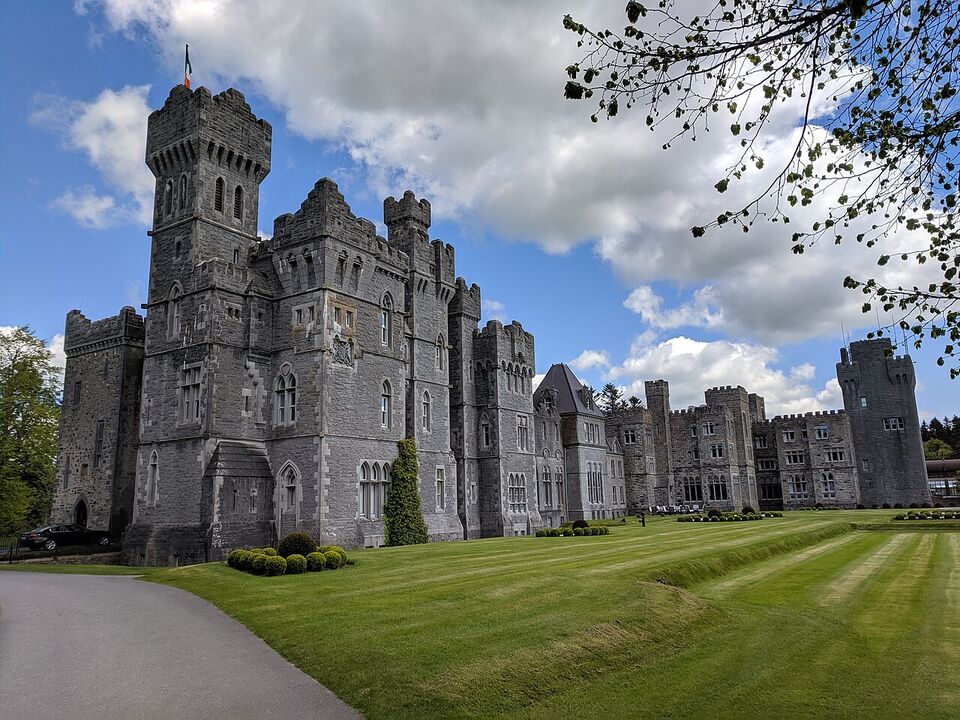
Ireland has many castle hotels, country houses, estates and coastal hotels that host weddings, often with their own wedding coordinator. We do not name individual venues because availability and ownership change; instead, choose by type:
Castle hotels
Dramatic settings and in-house catering. They usually require you to book a block of rooms. Ask whether the grounds count as an approved civil venue.
Country-house hotels
Smaller, quieter, and often available for exclusive use of the whole house for a weekend. Good for guest lists under 60.
City hotels
Easiest for guests flying in, and weather-proof. Less scenic, but near restaurants, trains and tours.
Coastal and island venues
Wonderful settings but long drives, narrow roads and weather risks. Add a rain plan and check ferry or road access.
See Castles and Historic Sites and Where to Stay for the area guides. Dublin Castle is closed until January 2027, so do not count on it for any 2026 or early 2027 event.
Costs
The government fees are small: €200 (about $224) for notification, €20 (about $22) per certificate, and an extra charge, which we could not confirm, if a civil ceremony takes place outside a registry office. The bulk of the budget is the venue, catering and guests' travel, and we could not confirm a reliable average. For a sense of accommodation prices, Fáilte Ireland data show an average hotel daily rate of €174 (about $195) in 2025, up 3% on the year. Wedding venues quote by package or by guest, so ask for written quotes that name what is included: room hire, food and drink, service charge, VAT, the registrar's fee and the celebrant's fee.
Save money
Weekday and off-season weddings, a smaller guest list and a registry office ceremony followed by a hotel dinner cost far less than a full Saturday in July. Keep the legal ceremony simple and put the money into the celebration.
Best months
May to September is the usual window. In Dublin the 1991-2020 averages run from a daytime high of 59°F (15°C) in May to 64°F (18°C) in June, 67°F (19.5°C) in July and 62°F (17°C) in September, with rain on about 10 to 12 days a month in every one of them. Mid-June gives about 17 hours of daylight (check timeanddate.com), which helps garden receptions and photographs. July and August are busiest and dearest. May, June and September are a sensible balance. Winter weddings are possible, but daylight falls to about 7.5 hours in mid-December (check timeanddate.com) and some rural sites close.
Watch the holiday weekends. In the Republic the 2027 bank holidays include Monday, May 3, Monday, June 7 and Monday, August 2, and St Patrick's Day falls on Wednesday, March 17, 2027. See When to Go.
Guest logistics
American guests fly into Dublin (DUB) or Shannon (SNN), both with US preclearance, so they clear US immigration before boarding home. See Flights. Ireland is five hours ahead of New York for most of the year, and four hours for a few weeks in spring and autumn. Send guests a plan covering:
- flights and arrival airport, and how to reach the venue by train, coach or rental car;
- whether a car is essential (see Car Rental and Driving), and a note that Ireland drives on the left;
- a block of rooms and the deadline for releasing them;
- weather and dress, with layers and rain gear;
- an ETA reminder for any guest who will cross into Northern Ireland;
- a travel-insurance reminder, since non-EU visitors are advised to carry cover.
Honeymoons and elopements
Honeymoons in Ireland usually follow a slow loop of country houses: Dublin or Kilkenny, then Killarney and the Ring of Kerry, then Dingle or Galway and the west coast. Allow at least six nights, keep driving days short, and book the best rooms for the quietest, most scenic stays. See Killarney, Dingle and the Wild Atlantic Way. Skellig Michael landings are closed in 2026 and the 2027 dates have not been published, so do not plan a proposal or a trip around it.
Eloping needs the same notice and the same documents, so a spontaneous elopement is not possible. What eloping saves is guest management. A small ceremony with two witnesses at a registry office, followed by a few days of touring, is legally the same as a large wedding. Some couples marry at home first and then hold a private blessing in Ireland.
Mistakes to avoid
- Leaving the three-month notice too late.
- Booking the venue before the registrar confirms it is acceptable for a civil ceremony.
- Assuming a blessing makes you married.
- Forgetting that Northern Ireland has different rules and uses pounds.
- Ignoring weather: bring an indoor plan for any outdoor ceremony.
- Not ordering enough certificates for name changes at home.
Rules and fees may change after November 2026, so confirm each step on gov.ie, hse.ie and nidirect.gov.uk before you pay a deposit.
Add it to a route in the trip builder, or ask us to plan the hotels, trains and guides for you.