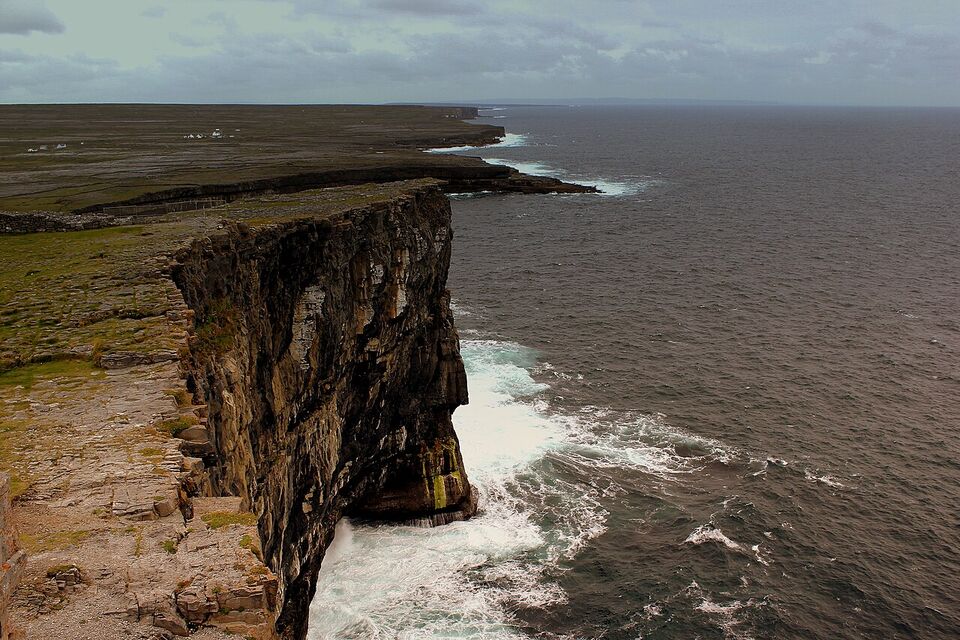
The Aran Islands in brief
The Aran Islands (Oileáin Árann) are three limestone islands at the mouth of Galway Bay, about 18 square miles (46 km²) in all. Most visitors go to Inis Mór, the biggest, for a day: a 40-minute crossing from Rossaveel, a bike or minibus ride, and a walk up to Dún Aonghasa, a prehistoric fort on a sea cliff. If you have more time, a night on any of the three gives you the islands after the day-trippers leave.
About 1,347 people lived on the islands at the 2022 census, and most of them speak Irish as their first language. That shapes the visit: signs may be in Irish only, the pace is slower than on the mainland, and people are living their ordinary lives around you. The islands are a good fit for walkers and anyone who likes open, windy landscapes, and a poor fit for anyone who needs a fixed schedule in rough weather.
This page covers choosing an island, the ferries and flights, Dún Aonghasa, getting around, a one-day plan against staying over, and what to bring. If you are building a wider trip, read the guides to Galway, Connemara and the Cliffs of Moher and the Burren, which you can see from the islands on a clear day.
Choosing an island
The three islands lie in a line from northwest to southeast, and each has a different feel. The ferry company serves all three from Rossaveel, and you book a ticket for the island you want.
Inis Mór (Inishmore)
The best first choice because it has the most to see and the most places to eat, sleep and hire a bike. It holds Dún Aonghasa (dating to about 1100 BC), the ruins of early monasteries, and a network of stone-walled lanes. Expect the most visitors in summer, mostly between late morning and mid-afternoon.
Inis Meáin (Inishmaan)
The least visited of the three, with a small population, a few places to stay and very little else. It suits people who want to walk, read and be left alone. The ruins of Dún Chonchúir, a stone fort, are here, and the playwright J. M. Synge set Riders to the Sea on the island after spending summers in Aran from 1898.
Inis Oírr (Inisheer)
Small enough to walk around in an afternoon, with a ringfort called Dún Formna and a castle built on it around the 15th century by the O'Briens. Its position closest to County Clare gives it good views of the Cliffs of Moher. The winter ferry times we could confirm are for this island (see below), which makes it the easiest to plan in the cold months.
If you can only do one, pick Inis Mór. If you have two or three days, spend a night on one island and a night on another by returning to Rossaveel between them. We could not confirm any island-to-island sailings, so do not plan around them, and check the timetable for each island on your dates.
Ferries and flights
From Rossaveel (year-round)
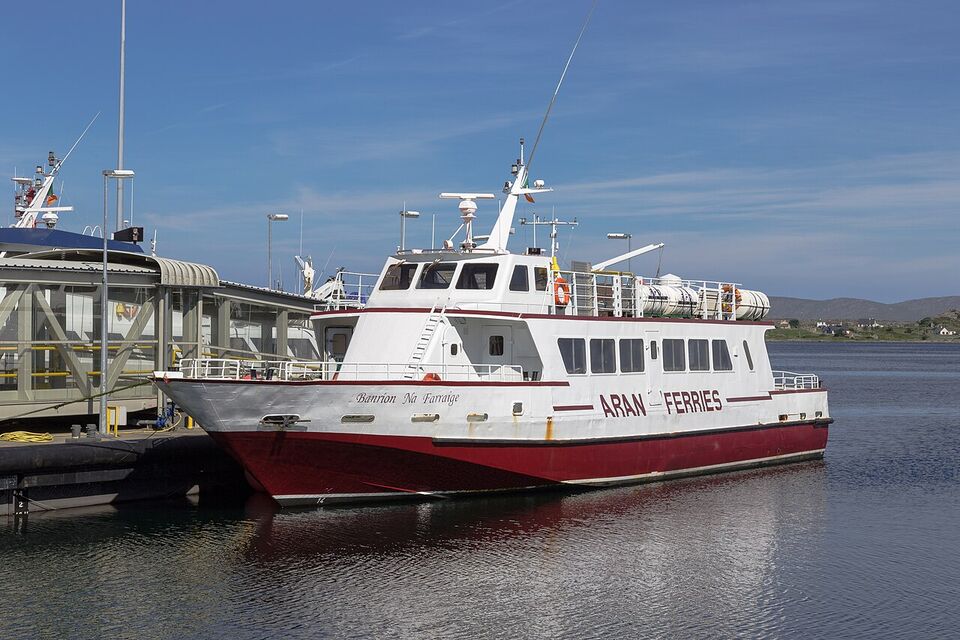
Aran Island Ferries sails all year from Rossaveel in Connemara, 23 miles (37 km) west of Galway city and about an hour by car. The crossing to Inis Mór takes about 40 minutes, the shortest of any route. The boats have a bar and sell tea, coffee and snacks.
| Ticket (Rossaveel) | Return | Single |
|---|---|---|
| Adult | €34 (about $38) | €22 (about $25) |
| Student or senior | €29 (about $32) | €19 (about $21) |
| Child, ages 5 to 12 | €17 (about $19) | €12 (about $13) |
| Galway shuttle bus, adult | €10 (about $11) | €6 (about $7) |
| Bicycle | €15 (about $17) | €8 (about $9) |
These are the ferry company's listed prices as of November 2026. Student fares apply to people over 13 in full-time education, and third-level students need valid ID. Children under 5 travel free but must be added to the booking in advance, or there may be no room. Family rates are not sold online: call or email the office. Parking at the pier costs €8 (about $9) for 24 hours.
The shuttle bus leaves from Victoria Place, just off Eyre Square in Galway, and must be booked at least 12 hours ahead. Be at the stop 20 minutes before departure. The bus cannot carry bicycles, pets or cargo. If you bring a bike on the ferry, book the space with your ticket: space is limited, and the company does not carry electric bikes or any bike over 44 lb (20 kg).
From Galway city and Doolin (seasonal)
In season, Aran Island Ferries also sails from Galway city to Inis Mór with a Cliffs of Moher cruise, with one 9:30 a.m. departure and a crossing of about 90 minutes. A separate seasonal service runs from Doolin in County Clare, which is the shortest way from the Cliffs of Moher side. We could not check the Doolin operators' dates, fares or winter schedule, so look at their sites before you plan around them. Assume that Doolin sailings stop or thin out in winter.
Winter timetable
We could read the Inis Oírr timetable for September 30 to December 23, 2026: a bus leaves Galway at 9:30 a.m. and the ferry leaves Rossaveel at 10:30 a.m. daily, and a ferry leaves Inis Oírr at 4:30 p.m. for the return, which leaves roughly five to six hours on the island. An earlier return ferry runs at 8 a.m. from Monday to Saturday and at 8:45 a.m. on Sunday. There are no sailings on December 25 and 26, 2026, and sailings run again from December 27 to 31. We could not confirm the winter times for Inis Mór and Inis Meáin, so open the timetable page for your island and date before you book anything else.
Flying
Small planes operated by Aer Arann Islands fly from Connemara Airport, near Inverin in County Galway, to the islands. We could not check current fares or schedules. Flying is a useful backup when the sea is rough, and it is not a way to avoid weather, because wind and low cloud ground the planes too.
Watch out
Do not schedule an island day on the day you fly home. Sailings are cancelled in strong wind and swell, sometimes at short notice, and the next boat may be the following day. Build in a spare day before any transatlantic flight, and read the ferry company's refund policy before you pay.
Dún Aonghasa
Dún Aonghasa (Dún Aonghasa, often written Dun Aengus) is a stone fort of the late Bronze Age, dated to about 1100 BC, on the edge of a cliff on the south-west side of Inis Mór. It is one of seven prehistoric forts on the islands. You climb to it on foot from a visitor centre near Kilmurvey, over rough limestone, and it is the main reason most people come to Inis Mór.
It is run by the Office of Public Works (OPW), the state heritage agency, and is on the list of sites at heritageireland.ie, so expect an admission fee and seasonal hours. We could not confirm the current price or the winter hours, so check the site before you go. Heritage Card holders (an annual pass for OPW sites) should be able to enter on the card; see our guide to castles and historic sites for how the card works.
Watch out
The fort stands on a sheer cliff, and the limestone near the edge is slippery when wet. Keep well back from the drop, especially in wind. Do not lie down at the edge for photos, and keep children close.
Allow about two hours for the walk up, the fort and the walk back, and more if you stop for the view back over the island. The path is uneven and gets muddy in rain, so wear shoes with grip. If you cannot manage the climb, tell the staff at the visitor centre: they can advise on what is possible.
Getting around Inis Mór
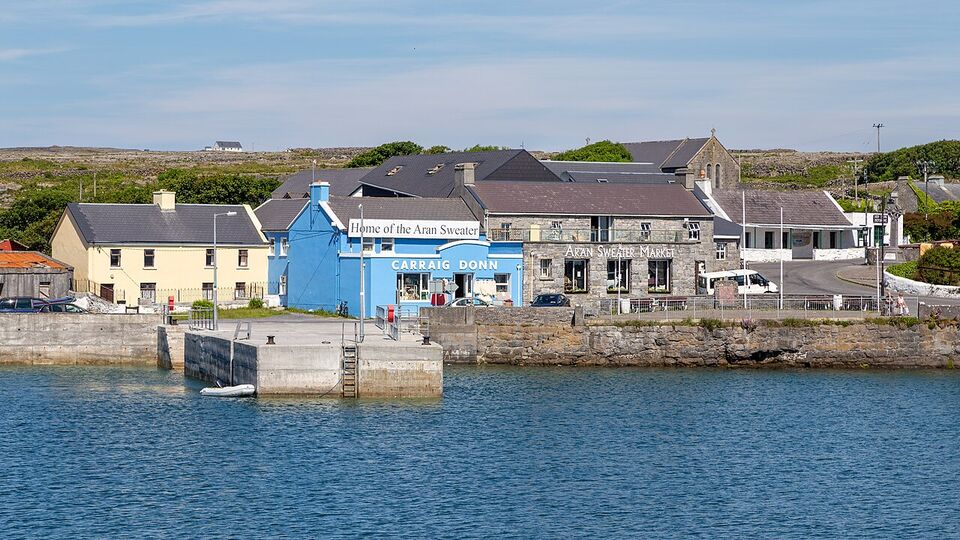
Most visitors do not bring a car to Inis Mór, and we found no public transport schedule to rely on, so you choose between your own feet, a bike, a minibus or a horse-drawn trap. Most ferries arrive at Kilronan, the main village, where bike hire shops and minibus drivers meet the boats.
- Bike. This is the most flexible choice and the most popular. The roads are mostly flat or gently rolling and traffic is light. Hire in Kilronan or bring your own on the ferry (€15, about $17, return). Hire prices change with the season, so ask before you take a bike. Wind can be strong, and a headwind on the way back is common.
- Minibus tour. Local drivers run guided tours of the main sites, with a commentary on the history, the language and the stone walls. The ferry company lists bike hire and minibus tours with a local guide on its site. Prices were not available to us: agree the price and the stops before you board.
- Pony and trap. Horse-drawn traps carry small groups around the island. Expect a slower, shorter route than the minibus, and agree the price for the whole trap, not just per person, before you start.
- On foot. Walking from Kilronan to Dún Aonghasa takes a good part of a day on foot, so it works only if you are staying overnight.
On Inis Oírr and Inis Meáin you can cover the main sights on foot or by bike, and horse traps and small minibuses are also common on Inis Oírr. Ask at the pier.
A day trip or a night on the island
A day trip from Galway works well from spring to early autumn, when the ferries leave early and return late. In winter the days are short (about 7.5 hours of daylight in mid-December, so check timeanddate.com for your date), and the last ferry back may leave in the late afternoon. A night on the island costs more and takes more planning, but you see the place after the boats have gone.
- One day
Inis Mór in a long day from Galway
Take the earliest bus and ferry you can. On arrival, decide before leaving the pier whether you will hire a bike or take the minibus. Ride or travel to Dún Aonghasa first, while the fort is quiet, then have lunch near Kilmurvey. In the afternoon, visit one of the early church ruins, such as Teampall Bhreacáin (the church of St Brecan), and ride back to Kilronan with time to spare for a drink before the last ferry.
- One night
Overnight on Inis Mór or Inis Meáin
Arrive on the morning boat, leave your bags where you are staying, and do the sights at your own speed. Stay for the evening: pubs on the islands often have music, and the sky is dark enough for stars on a clear night. The next morning, walk or ride before the first boat home.
Insider tip
If your plans allow, combine the islands with a Cliffs of Moher cruise: the seasonal Galway sailing runs under the cliffs on the way to Inis Mór. See our Cliffs of Moher guide for the land route and what the cliffs are like in different weather.
Weather and what to bring
The islands are exposed to the Atlantic. The temperature is mild for the latitude (the islands average about 59°F, or 15°C, in July and 43°F, or 6°C, in January), but the wind is the issue. It can turn a dry day cold on the water and on the cliff top. Fog and rain are common at any time of year, and the crossing can be rough.
- Waterproof jacket and layers, plus a hat and gloves outside summer.
- Walking shoes or boots with grip, because the limestone is slippery when wet.
- Cash in euros for small purchases, a bike deposit or a trap driver. Card readers do not always work on the islands, and we could not confirm where cash machines are.
- Water and snacks. Café and shop hours shrink in winter.
- Your ferry and bus tickets or confirmation (printed or on your phone), and a charged phone with a battery pack.
- Motion-sickness tablets if you tend to feel the sea, since the crossing in swell is uncomfortable for many people.
Food, pubs and places to stay
Kilronan on Inis Mór has the most choice, with cafés, pubs, a small shop and a handful of places to stay, and Kilmurvey has a café near the track to Dún Aonghasa. Inis Oírr and Inis Meáin have fewer places, and some of them shut for the winter, so phone ahead if you are visiting between November and March. We have not confirmed which businesses are open in winter 2026-27, so we do not name any; the tourist offices at Galway can tell you.
Expect seafood, soup, brown bread, stew and the island's knitwear in the shops. Pubs are where evening music tends to happen, although in winter sessions may be only a night or two a week. See our guides to Irish pubs and food in Ireland for how pubs work, including ordering at the bar.
Places to stay are small guesthouses, bed and breakfasts and hostels, most at the $ to $$ level, and a night in July or August books out well ahead. Book your room before you buy a ferry ticket in summer.
Language and visiting respectfully
The Aran Islands are part of the Gaeltacht, the areas where Irish is the everyday language of the community. Signs on the islands may be only in Irish, and the name of Inis Mór on road signs may appear as Árainn. People will happily speak English with visitors, but a greeting in Irish is welcome: Dia duit (hello) and go raibh maith agat (thank you) are a good start. Our guide to Irish words and phrases has more.
Different from home
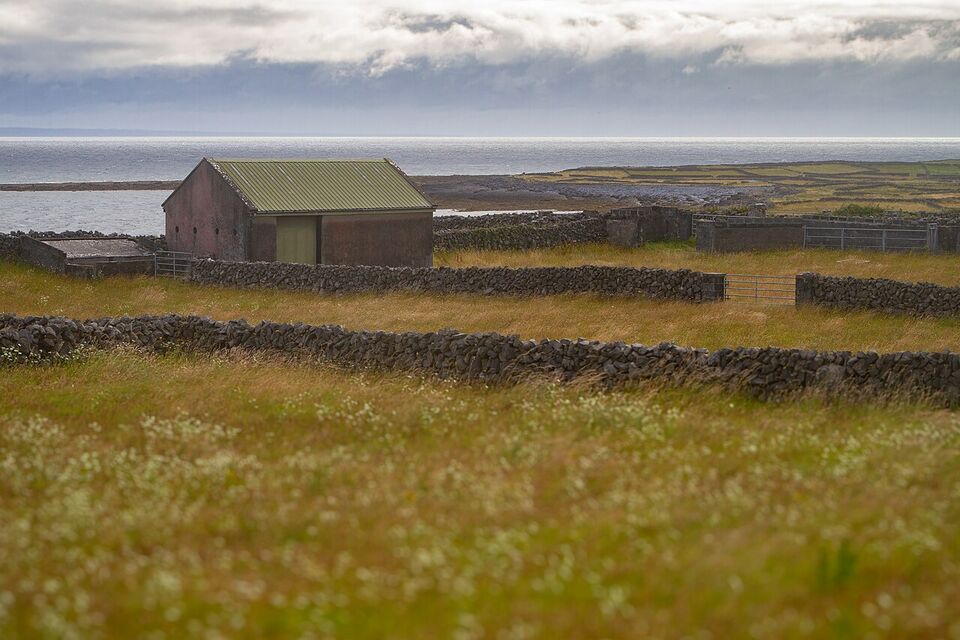
Do not assume the islanders are putting on a show. The fields and the walls (about 1,000 miles, or 1,600 km, of dry stone on the three islands) belong to local families. Close gates, stay on lanes and paths, and do not climb walls or take stones. Ask before you photograph someone, and leave houses and farmyards alone.
Spend money locally where you can: eat on the island, buy from island shops, and tip a driver or guide who gives you a good tour. For more on manners, see Irish etiquette.
Add it to a route in the trip builder, or ask us to plan the hotels, trains and guides for you.