Overview
Ireland offers a wide range of places to stay, from hotels in city centers to bed and breakfasts (B&Bs) in farming villages and castle hotels that cost as much as a good flight. The best choice usually comes down to where you need to be in the morning, how long you stay, and whether you will have a car. This guide covers areas, types of place, how to book, what a room includes, and the booking traps that catch visitors.
We do not name individual hotels or rank them. Properties open, close and change owners, and we cannot confirm which are open in 2026. Instead we explain how to choose by neighborhood and type, and where to check official listings. Pair this guide with planning your trip, regions and trip builder, and with getting around Ireland if you will not have a car.
Prices use tiers: $ is under $120 a night for a double room, $$ is $120 to $300 and $$$ is over $300. They are broad guides for the main season. Fáilte Ireland data reported in the Irish Times says the average hotel daily rate in 2025 was €174 (about $195), up 3% on 2024, with 78.4% occupancy. That is an average across the country and the year; Dublin and peak weeks cost more, and rural or off-season rooms cost less.
Where to base yourself
Most trips use three or four bases rather than a new hotel every night. Each night you spend packing and checking in costs half a day of sightseeing. Two or three nights per base is a good rule for a first visit.
| Base | Good for | Where to look | Typical tier |
|---|---|---|---|
| Dublin | History, museums, nightlife, trains and day trips | St Stephen's Green and the Georgian center; Docklands; Ballsbridge; Smithfield; near Heuston or Connolly stations | $$ to $$$ |
| Galway | Music, food, Connemara, the Cliffs of Moher and the Aran Islands | Latin Quarter, Eyre Square near the station, or Salthill by the sea | $$ |
| Killarney | Killarney National Park, Ring of Kerry, Muckross | Town center, or on the roads toward Muckross and the lakes | $$ |
| Dingle | Slea Head Drive, music pubs, harbor | Dingle town; few other bases on the peninsula | $$ |
| Cork and Kinsale | Food, Blarney, Cobh, coastal drives | Cork city center; Kinsale harbor town (small, with narrow streets) | $$ |
| Belfast | Titanic Belfast, murals, Causeway Coast day trips | Cathedral Quarter, near City Hall, the university area or Titanic Quarter | $$ |
| Rural west | Connemara, the Burren and Cliffs, quiet scenery | Clifden or Letterfrack; Doolin or Lahinch on the Clare coast; villages on the Ring of Kerry | $ to $$$ |
Tiers are our own broad estimates for the main season; we have not confirmed rates for any specific property, so compare current prices for your dates.
Dublin
The city center is compact. The Georgian streets around St Stephen's Green are walkable to Trinity College and many museums. Temple Bar is lively and loud at night, so ask for a quiet room if you want to sleep. Ballsbridge in Dublin 4 is residential and well connected. If you will take a train in the morning, a hotel near Heuston Station (for Cork, Galway and Killarney) or Connolly Station (for Belfast) saves time. For more, see our Dublin guide and things to do in Dublin.
If you land early, a hotel near the airport can be useful for the first night. See Dublin Airport transportation. Dublin Castle is closed to visitors until January 2027, so do not choose a hotel for its closeness to the castle in 2026. Check any event or festival dates; for St Patrick's week in March 2027 (March 13-17), book early.
Galway, Killarney and Dingle
Galway's center is walkable, with the Latin Quarter in the middle and Salthill a short ride or walk to the west. See the Galway guide. Killarney is the base for the national park, the Ring of Kerry and Muckross; stay in town for walkability, and see killarney and ring-of-kerry. Dingle is a small town that fills up quickly in summer, and the peninsula has few other bases; see dingle.
Cork, Kinsale and Belfast
Cork city is a good base for Blarney and Cobh; Kinsale is picturesque but small, so parking and arrival times matter. See cork. Belfast is in Northern Ireland, where rates are quoted in pounds, so check currency on booking. A hotel near the Cathedral Quarter or City Hall is handy for the center; Titanic Quarter suits Titanic Belfast. See the Belfast guide and the Causeway Coast guide.
The rural west
Connemara, Clare and Kerry have beautiful but remote places to stay. In Connemara, Clifden and Letterfrack are practical. On the Clare coast, Doolin and Lahinch are near the Cliffs of Moher. See connemara and the Cliffs of Moher guide. Remote places can be a long way from dinner, so check how far restaurants are and whether the host serves evening meals. A car helps here, but not every rural stay needs one.
Types of accommodation
Hotels
Hotels range from small town properties to large city and resort hotels with restaurants, bars, spas and lifts. They suit travelers who want services, late check-in and flexible cancellation. Breakfast may or may not be included, so check the rate.
B&Bs
A bed and breakfast is a room in a house or small purpose-built guest house, often run by the owner. The rate usually includes a full Irish breakfast. They are a good fit for one or two nights in a village.
Guesthouses
Guesthouses are larger than most B&Bs, with several rooms, a dining room and sometimes a bar. They are common in towns and by the sea.
Castle hotels
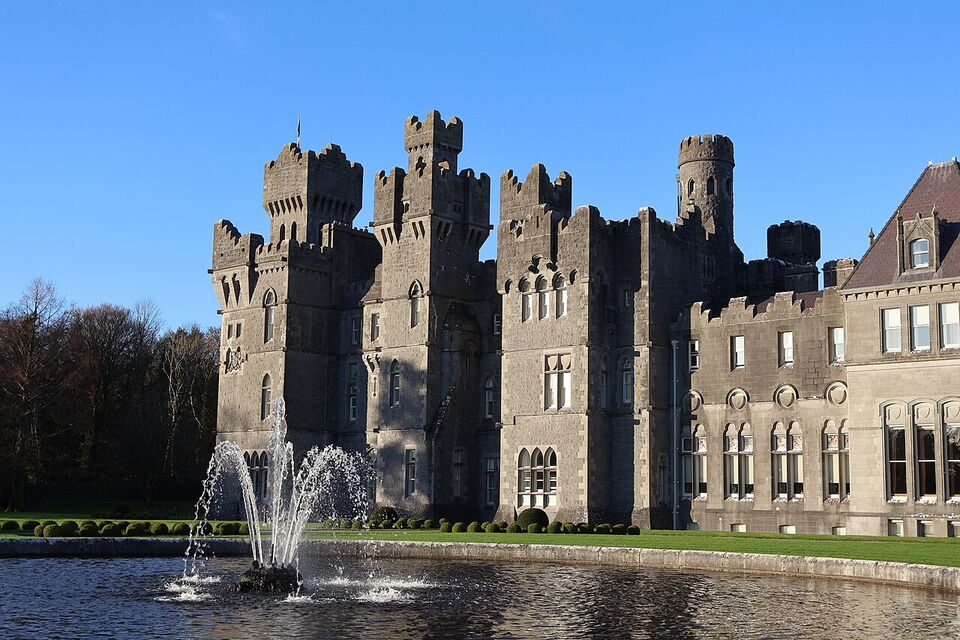
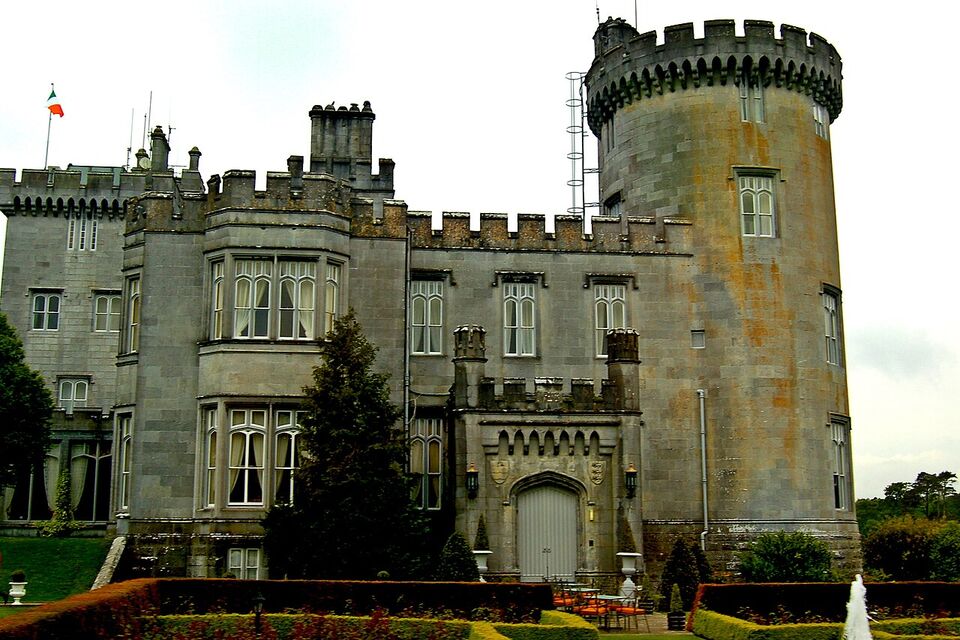
Castle and country-house hotels offer grounds, dining and a splurge night. Many sit in the $$$ tier. Book far ahead, ask what is included, and confirm that access is easy by car.
Self-catering cottages
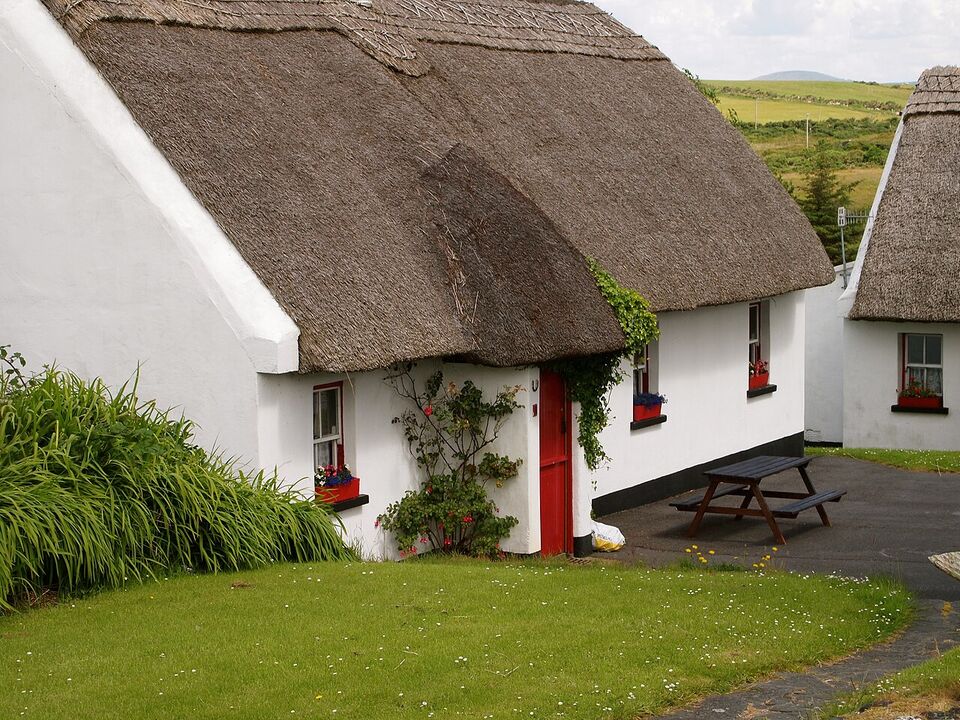
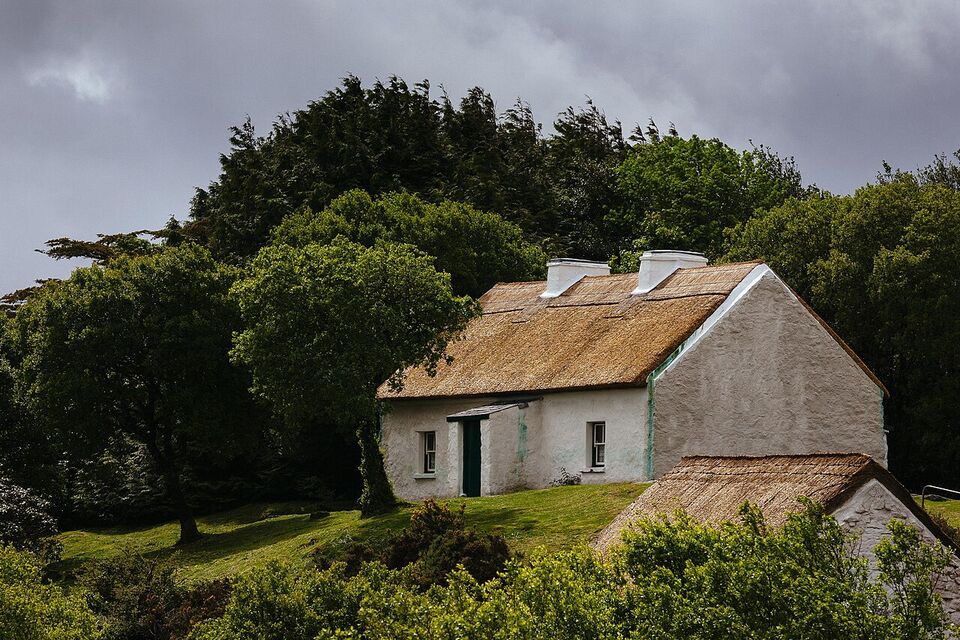
A cottage or house suits families and longer stays with a kitchen and space. Many are rented by the week in summer, often Saturday to Saturday, so check arrival days. You usually need a car.
Hostels
Hostels offer dorm beds and some private rooms at lower prices, and are good for solo travelers and walkers. Check the building, security, lockers and noise.
Farm stays
A farm stay puts you on a working farm, often with home cooking and animals. Children often enjoy them. Check the location and whether there are evening meals.
The B&B and the full Irish breakfast
A full Irish breakfast is a cooked plate with eggs, bacon, sausage, tomato and often black and white pudding (sausage-like slices of blood or oatmeal), served with toast, soda bread and tea or coffee. In a B&B, you normally eat in a dining room at a set time window, and the host may ask the night before what you want. A good breakfast can replace lunch, which is one reason B&B rooms offer value.
A secondary trip-cost source puts B&B and guesthouse doubles at roughly €60 to €150 (about $67 to $168) a night. That range is wide and we have not confirmed it against any provider, so treat it as a rough budget. Many rural B&Bs close for part of the winter, so check opening dates if you travel between November and March.
Insider tip
Tell the host your arrival time and any dietary needs. Small places may not have anyone on site late in the evening, and some will leave a key code. Call or message if your plans change.
How to book
- Official listings. Fáilte Ireland and Discover Ireland list approved and registered accommodation, and are a good place to start. Check the properties you find against their own sites.
- Direct. Booking on the property's own site or by phone or email can give flexible terms and sometimes better rates. Compare the final price, including taxes and fees.
- Booking sites. They help you compare, but read the cancellation terms and total price. We do not link booking sites in this guide.
- Cancellation. Choose free cancellation up to a few days before arrival when you can, especially for a long, multi-stop trip.
- Payment. Many places take a card deposit at booking. Pay in euros in the Republic and in pounds in Northern Ireland. See money in Ireland.
- Confirm. Keep the confirmation and the host's address and phone number, and note the check-in window.
Room rates and what they include
Check whether the rate is per room or per person. Hotel rates are normally quoted per room. B&B rates are sometimes quoted per person sharing a room, which is easy to misread. Check whether breakfast is included, whether taxes are in the price, and what the cancellation terms are. We have not confirmed the hotel VAT rate, so check that the total price is the one you will pay.
Restaurant and bar bills may add a service charge. Under rules reported by the consumer body, any mandatory service charge must be notified in writing on signage and the menu, and optional charges cannot be added without prior consent. Tipping is not required.
Twin or double
A double room has one bed for two people. A twin room has two single beds. If you are not a couple, book a twin. Triple and family rooms exist but are limited, and an extra bed in a small room can leave no space for bags. Ask for the bed arrangement in writing.
Small rooms and lifts
Many Irish rooms are small, especially in older buildings in Dublin, Cork and Galway. Large suitcases can be a struggle. Some older hotels, guesthouses and B&Bs have narrow stairs and no lift, and a ground-floor or lift-served room may be limited. If stairs are a problem, ask before booking and ask for a room number in writing. See getting around Ireland for luggage tips.
Parking, heating and air-conditioning
Parking
Rural B&Bs and guesthouses usually have a car park. City hotels may charge for parking, have a small lot, or not offer any. Ask the price and whether you can reserve a space. In a city, it is often better to leave the car at a car park or not rent until you leave. See driving in Ireland and car rental.
Heating and cooling
Heating is standard but systems vary: radiators, timers and sometimes a separate hot-water switch. Ask how to work them. Air-conditioning is uncommon in B&Bs and many hotels. Dublin's July average high is about 67°F (19.5°C) and the low about 52°F (11.3°C), so summer rooms are rarely hot, but a heat spell can make a top-floor room warm. Ask for a fan or an open window, and ask about street noise before you book a ground-floor room facing a pub.
Power and small things
Ireland uses Type G sockets and 230 V, 50 Hz, which differs from the US 120 V. Bring a Type G adapter, and check that your charger and hair dryer are dual voltage. Many rooms have a kettle and tea. See what to pack.
Short-term lets and Airbnb-style rentals
Ireland is changing its rules for holiday rentals, so check before you book. As of mid-November 2026:
- The government published the Short Term Letting and Tourism Bill on October 6, 2026. It has to pass through the Oireachtas (parliament), so it is not yet law.
- The department said the national register of short-term lettings will open on December 1. The register covers stays of up to 21 nights, and Fáilte Ireland is the authority.
- Hosts will need a registration number and must show it on every advertisement and listing. Online platforms must display the number and remove listings that do not comply.
- Hosts in towns with more than 20,000 people have until December to comply, according to the Irish Times; places under 20,000 get two years to regularize planning.
What this means for you: a listing without a registration number may be removed or may not have the required permission, and a last-minute cancellation is possible. Choose listings from established hosts, keep a copy of the booking, check the cancellation terms and have a back-up plan. In towns where housing is tight, a hotel or B&B is often a more dependable choice. Check the current state of the register and law on failteireland.ie and gov.ie.
Summer and event sell-outs
Ireland's busiest weeks are July and August. Special events add to that. Book as early as you can for these:
- St Patrick's Festival, Dublin: March 13-17, 2027; the parade is on March 17.
- Six Nations rugby at the Aviva Stadium, Dublin: Ireland v England on Friday, February 5, 2027, and v France on Saturday, March 13, 2027.
- Galway Races: Monday, July 26 to Sunday, August 1, 2027 at Ballybrit (dates are listed as liable to change).
- Fleadh Cheoil na hÉireann (the all-Ireland music festival) is in Belfast in early August 2027 (check exact dates).
- Other festivals, including the Galway International Arts Festival, the Rose of Tralee, Lisdoonvarna and Electric Picnic, usually fall in July, August and September; check each year's dates. See festivals.
Christmas markets in Galway (to December 22, 2026) and Belfast (to December 22, 2026) also fill hotels. If you plan a December trip, see Ireland in December.
Families, groups and accessibility
Many hotels and guesthouses offer family rooms, but the number is limited, so ask early. Check the rules on cots and extra beds, the maximum number of people per room and whether children under a certain age stay free. In a B&B, the host may be able to put two rooms next to each other. Self-catering cottages often work out better for a family of four or more, because you get separate bedrooms and a kitchen.
If anyone in your group has limited mobility, say so when you book and ask specific questions: Is there a step-free entrance? Is there a lift, and does it reach the room? Is the bathroom a shower or a bath? How far is the nearest parking? Older buildings, which include many charming places, often have steps and narrow doors. A written reply is better than a general statement on a website. For transport, see getting around Ireland, and for health and travel insurance, see health and insurance.
Check-in, check-out and arriving late
Hotels usually have a check-in window in the afternoon and a late-morning check-out, but exact times vary, so look at your confirmation. In a B&B or a small guesthouse, tell the host when you will arrive. A host who lives on site often wants a time, and an arrival after dark in a rural area can be hard to organize without notice. If your flight lands in the morning, ask whether you can leave luggage with the hotel until the room is ready.
Breakfast hours also differ. Many B&Bs serve between about 8 and 9:30 a.m.; if you have an early train or tour, ask whether a packed breakfast or an earlier start is possible. We have not confirmed typical times, so ask your host. On the day you leave, ask where to park, how to return keys and whether you can settle the bill the night before.
Mistakes to avoid
- Booking too late for peak weeks. Book early for summer, festivals and rugby days.
- Booking a different town to save money. A cheaper room 40 minutes down narrow lanes can cost more in time and fuel.
- Assuming air-conditioning. Ask if you need it.
- Misreading per-person rates. Check whether the price is for the room.
- Forgetting parking. Ask about the price and availability in cities.
- Packing for a lift. Many older buildings do not have one.
- Not telling the host your arrival time. Small places may not have reception late.
- Booking an unregistered short-term let. Look for the registration number once the register opens.
- Mixing currencies. Euros in the Republic, pounds in Northern Ireland.
For budget planning, see budget. For more answers, see faq.
Add it to a route in the trip builder, or ask us to plan the hotels, trains and guides for you.