The short version
Ireland is an easy country for Americans to visit, and most manners will feel familiar. People are friendly, talkative and quick to joke. The differences are small but worth knowing: how a round of drinks works, why nobody pushes for a tip, how to take a tease, and which subjects deserve a gentle approach.
This guide covers everyday manners in the Republic of Ireland and in Northern Ireland, which is part of the United Kingdom. The two share much of the same warmth, but they differ on history and politics, and we note where that matters. For language help, see our guide to Irish words and phrases, and for the pub itself, see pubs and traditional music.
We keep this generalized on purpose. Ireland has about as much variety of character as any country, and a farmer in Donegal, a student in Cork and a taxi driver in Dublin will not behave identically. Treat what follows as a set of useful defaults, not rules.
Greetings and small talk
Greetings are warm but not physical. A handshake is normal when you meet someone for the first time; hugs and cheek kisses are for friends and family. People often start a conversation with a question like "How are you getting on?" or "Are you enjoying yourselves?" and expect a real, if brief, answer.
Small talk comes easily in Ireland. The weather is the classic opener, and it is a useful one because it changes by the hour. Other safe topics include where you are from, where you have been so far, the food, the music and local sport. Many people will ask where your family comes from, because plenty of Americans have Irish roots. That question is friendly, not nosy, and it is a good way into a longer chat. If you want to follow up on your own family history, see tracing your Irish roots.
Shop assistants, bus drivers and B&B hosts will often chat while they work. Chatting back is polite. Rushing through a transaction without a "hello" or "thanks" can come across as cold, even if you meant nothing by it.
Expect a few surprises in how conversations run. People may answer a question with another question, take the long way round to a point, or say "I will, yeah" when they mean "probably not". Understatement is common: "not bad" can be high praise, and "it's grand" can mean anything from "it is fine" to "do not worry about it". Listen to the tone as well as the words.
Humor and teasing
Humor is a big part of Irish social life, and gentle teasing is a sign of friendliness. If a local slags you off about your accent, your sports teams or your choice of rental car, they are usually including you in the conversation. Being able to laugh at yourself and tease back lightly is the best response. Being offended is the most common misreading Americans make.
A few cautions help. Tease about small, shared things such as the weather, sport, food, traffic or your own mistakes. Do not tease about someone's accent, religion, politics, family or appearance until you know them well. Jokes about drinking, the Famine, the Troubles or national stereotypes will fall flat and can hurt. Irish people are happy to tell jokes about themselves, but outsiders get less room.
Sarcasm and irony are common, and they can be hard to read at first. If someone says "great weather we are having" under a gray sky, they mean the opposite. If you are unsure whether someone is teasing, smile and ask "Are you serious?" A good-humored answer usually follows.
Irish speech also includes some words that sound strong to American ears but are used casually, including mild swearing in conversation. You will hear it more in pubs and among friends than in formal settings. Follow the room: if the people you are with do not swear, you should not start.
Queuing and everyday politeness
People queue in Ireland and take it seriously. Join the back of the line at the bus stop, the shop, the ATM and the taxi rank, and wait your turn. Pushing in is one of the quickest ways to annoy people. Some queues are looser than they look, such as a crowd waiting for a bus where people remember who arrived when, so watch for the order and respect it.
At a busy pub bar there is often no formal line, but bar staff are good at remembering who was next. Stand where you can be seen, make eye contact, and do not wave money or shout. If someone who arrived after you is served first, wait; it is almost always a mix-up that the bartender will fix.
Politeness is built into daily speech.
- "Please" and "thanks." Use both freely. People often say "cheers" or "thanks very much" when they get off a bus, and many say "thanks a million" for bigger favors.
- "Sorry." It means "excuse me", "pardon" and sometimes just "hello, I am passing you." You will hear it from people who have done nothing wrong. Use it the same way.
- "Grand." It means "fine", "okay" or "good". "How are you?" "Grand." It rarely means "great."
- "You're welcome." Locals more often say "no bother", "no problem", "not at all" or "you're grand". Do not read these as brush-offs; they are the standard reply.
- "Craic." Pronounced "crack", it means fun, news or a good time. "What's the craic?" means "What's happening?" and the answer is usually "not much" or "grand."
When you leave a taxi or a bus, thank the driver. When you pass a car on a narrow road, a small wave or raised finger is customary. We say more about this in the driving section below.
Pub manners and rounds
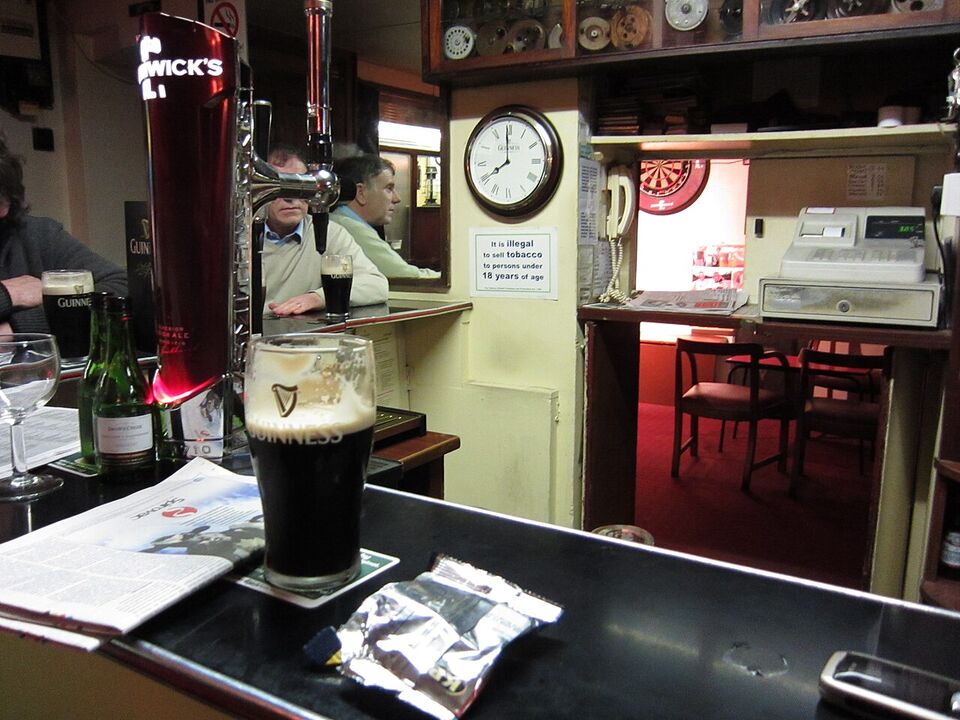
The pub is the center of social life for many people, so it is where most visitors meet Irish manners head-on. Pubs are for conversation, not just drinks, and families are welcome during the day and early evening in many places.
How to order
In most pubs you order at the bar and pay at once; table service is not the norm, though some food-focused pubs and hotel bars have it. Say what you want, wait for the pour (a proper pint of stout takes time to settle), and carry your drinks back. If you are in a group, one person often orders for everyone. Bars are not usually the place to leave a tab for a night, and you should settle up when you leave.
Rounds
If you drink with locals, you will probably be part of a round. One person buys drinks for the whole group, then someone else does the next round, and so on. The rule is simple: when it is your turn, you buy, and you do not leave before your turn comes up. Leaving without buying your round is a classic breach of manners.
A few practical points follow.
- Join the round when you join the group. If you arrive late, ask whether you are in; if you are, take your turn.
- If you do not drink alcohol or want to slow down, tell people. Soft drinks, tea and coffee count, and nobody should pressure you. You can buy a round of whatever you are having.
- If the group is large, a round can be expensive. Rounds work best for groups of two to six. In bigger groups, people often split into smaller rounds.
- Do not argue over a round. If you pay, say "I'll get this." If someone else pays, say "thanks, I'll get the next."
- Refusing a drink can seem unfriendly. Say "I'll pass this one, thanks, but I'll get the next" or ask for a soft drink.
Prices are worth knowing before a round. The national average for a pint of stout was €6.08 (about $7) in November 2025, and Dublin runs higher; in tourist-heavy Temple Bar on St. Patrick's Day 2025, a pint reached €10.45 (about $12), according to a January 2026 RTÉ report on Central Statistics Office figures. A round for five can add up fast.
Music sessions
If you stumble on a traditional music session, be quiet while the musicians play, and clap between tunes, not during them. Sessions are informal gatherings, not performances, so there is usually no cover charge. Do not request songs, do not film at close range without asking, and do not take a seat at the musicians' table. Sit nearby and enjoy it. If you play an instrument yourself, wait to be invited.
Different from home
In the US a server brings your check and a tip is expected. In an Irish pub, you pay when your drinks arrive, and a tip is a pleasant extra, not a duty. You also do not wait to be seated: find a spot, and the staff will not mind.
Tipping
Tipping in Ireland is less fixed than in the US, and it is a bonus for good service, not a duty. Consumer research from the Competition and Consumer Protection Commission (CCPC), reported by RTÉ in January 2026, found that nine in ten people tip at least some of the time, but 58 percent sometimes prefer not to and still feel they have to, and two-thirds say tipping is becoming less voluntary. Cash makes up 89 percent of tips.
The practical advice for a visitor is simple. Check your bill for a service charge first. A mandatory charge must be shown in writing on the menu or signage, and an optional charge must be opt-in, so you should not be charged one without your consent. If a service charge is included, you do not need to add another tip.
If there is no service charge and the table service was good, many people round up the total or leave a little extra in cash. We do not give a percentage because there is no firm Irish standard we can point to. At the bar, nobody expects a tip for a pint, though some people say "and one for yourself" to the bartender, which means a drink for them or a small tip. For a taxi, many people simply round up the fare. Hotel porters and housekeepers may appreciate a small amount, but it is not required.
Be careful with card terminals. The CCPC research found that 26 percent of people who met a standalone tip terminal tapped it by mistake. Check the screen before you tap, and use cash if you want your tip to go directly to the staff; only 29 percent of people think digital tips reach staff. For more on paying, see our money guide.
Save money
Do not add a 20% tip on autopilot. First look for "service charge" on the bill. Large groups sometimes have one added, and tipping on top of it is double-paying.
Religion, history and sensitive topics
Ireland has changed a great deal in recent decades, and attitudes to the Catholic Church, social issues and the past are varied. Do not assume what any one person thinks. Many Irish people are religious, many are not, and many sit somewhere between. Churches are open to visitors and are still active places of worship, so dress modestly, stay quiet, and do not photograph services or people praying.
The Famine
The Great Famine of the 1840s killed and displaced a very large number of people, and it shaped the story of the Irish in America. Many Americans have Famine-era ancestors, and for Irish people it remains a deeply felt part of national memory. Museums and memorials treat it seriously. Go in the same spirit, and do not joke about food, potatoes or starving. If someone raises it with you, listen.
Northern Ireland
Northern Ireland is part of the UK, and its politics and history are still sensitive. Northern Ireland has communities with different identities and loyalties, generally described as unionist and British or nationalist and Irish, and others who identify differently or neither. The Troubles, a period of conflict that began in the late 1960s and largely ended with the 1998 Good Friday Agreement, left many families with painful memories.
Visitors are welcome in Belfast, Derry and across the Causeway Coast, and most people are happy to talk about their city and their lives. The best approach is to be curious and neutral.
- Ask open questions and listen. Do not offer opinions on who was right, and do not assume which community someone belongs to.
- Do not use jokes, stereotypes or slang about either community.
- Be careful with flags, emblems, murals and symbols. They are meaningful to the people who display them, so look and photograph respectfully but do not take sides.
- Even the name of the second city is contested: some people say Derry and some say Londonderry. Use the name the person you are talking to uses.
- Black taxi tours and guided walks of the political murals are common in Belfast, and the guides are generally good at giving a balanced picture. See our Belfast guide for the city itself.
Remember too that the two parts of the island use different money and different rules. Say "Ireland" for the Republic and "Northern Ireland" for the part in the UK, and avoid saying "Southern Ireland" or implying that Northern Ireland is part of the Republic. For the practical side of crossing, see our guide to entering Ireland and Northern Ireland.
Saying "I'm Irish" and talking about your roots
This is the one point of manners that surprises Americans most. In Ireland, "Irish" means someone who is a citizen, who was born or raised there, or who lives there. If you say "I'm Irish" because your great-grandfather came from Cork, a local may smile politely but think it is a stretch. Some will be amused, and a few will feel it ignores their own experience.
Say what you mean instead. "I'm Irish American" is natural and widely understood. "My family is from County Clare" or "my grandmother's people were from Mayo" is even better because it starts a conversation about the place. Most Irish people love to talk about where their families come from, and they are far more interested in a real place name than a general claim.
Avoid a few things too:
- Do not say you are "Irish" if you are not a citizen, and do not say "I'm more Irish than you."
- Do not wear or point to green plastic hats, "kiss me I'm Irish" slogans or the clichés of a St. Patrick's Day costume, which Irish people usually find odd outside the holiday itself.
- Do not claim a clan or a coat of arms from your surname without research. See tracing your Irish roots for why these claims are often marketing.
- If you do hold or are applying for Irish citizenship through a grandparent, that is a different matter, and you can say so. Our ancestry guide explains how it works.
Dress, weather and punctuality
Irish dress is casual and practical. A waterproof jacket matters more than a smart outfit, and layers help because the weather can shift from sun to rain and back within an hour. Walking shoes or boots that handle wet ground are a better choice than white sneakers. Smart casual is acceptable in nearly all restaurants and pubs. Dress more formally only for a wedding, a funeral, a theater night or a fine-dining room. Shorts and swimwear belong at the beach and the pool, not in towns or churches.
Weather is a topic of talk, not an excuse to cancel. Tours and walks usually go ahead in light rain, and locals will assume you are prepared. Check the Met Éireann forecast, and see our packing guide and when to go pages for what to bring by season.
Punctuality depends on the setting. For a tour, a ferry, a train, a ticketed attraction, a restaurant booking or a pickup from your B&B, be on time or a few minutes early. For a social meal in someone's home, arriving 10 to 15 minutes after the stated time is normal and often expected. For a pub meet-up, "around eight" really means around eight, give or take. If you will be late, send a message. Irish drivers and trains also run late sometimes, so build in buffer time on any day with a fixed deadline.
Staying in a B&B or someone's home
A B&B is usually a family home or a small business, so manners that apply in a house apply there. The host will often greet you at the door, show you the room and chat for a few minutes. Tell them your arrival time, and let them know if you will be late; hosts usually plan around you and are happy to have a call or message.
- Breakfast is typically served at set times, often between 8 and 9:30 a.m. Tell your host about food allergies and preferences when you book or on arrival, not at the table.
- Keep noise down late at night and early in the morning. Walls can be thin.
- Ask before you move furniture, use the kitchen or bring in food. Do not expect to check in at any hour without arrangement.
- If you leave early, say so the night before. Pay any balance at the time the host asks.
- Leave the room tidy but do not worry about stripping beds. A small thank-you note or a few kind words is more than enough.
- If you are invited to a meal at someone's home, bring a small gift such as flowers, chocolates or a bottle of wine. Offer to help clear up, and expect to be offered tea more than once.
Offers of tea are an Irish ritual. Saying yes is friendly; saying no is fine if you say it politely, but you may be asked a second time. See our where to stay guide for how to choose between a B&B, a hotel and a self-catering rental.
Driving courtesy
Driving in Ireland follows its own etiquette on top of the rules. Cars drive on the left in both the Republic and Northern Ireland. Road signs show speeds in km/h in the Republic and mph in Northern Ireland. The default speed on narrow rural local roads in the Republic has been 60 km/h (about 37 mph) since February 2025, and posted signs take priority. Our driving guide and car rental guide cover the rules.
The courtesy points are these:
- Thank people. A raised hand or two fingers off the steering wheel is the standard thanks when someone lets you pass or pulls over. Do it too.
- Pull in for others. On narrow roads, use a passing place or a wide spot to let oncoming cars and local drivers go by. If a driver behind you is clearly in a hurry, pull over and let them pass. Locals know the roads and will be grateful.
- Do not stop on the road for photos. Park in a lay-by or car park. A parked car on a one-lane road can block everything for miles, and gates and field entrances are for farm vehicles.
- Give way to livestock. Sheep and cattle sometimes use the road. Slow down, stop, wait and do not honk.
- Watch for cyclists and walkers. Many rural roads have no footpath. Give room and slow down.
- Do not drink and drive. The legal limit is low, and the simplest rule for a visitor is to have none. Taxis and designated drivers are the norm after pubs.
- Toll courtesy. The M50 toll around Dublin has no booth, so you must pay online or by the deadline. See the driving guide.
Watch out
Tour buses use the same narrow roads as you, especially on popular routes like the Ring of Kerry in summer. Do not try to pass them on a bend, and be ready to reverse to a wide spot if you meet one head-on.
Photography and phones
Photography is fine almost everywhere in public, but a few places deserve care.
- Churches and cathedrals: many allow photos of the building when it is empty, but not during a service. Do not take photos of people at prayer, and turn off your flash.
- Newgrange: photography is not permitted in the passage, according to the Office of Public Works. Staff will tell you the rules before you enter.
- Museums, castles and historic houses: some rooms or objects may be marked no photography. Look for signs and ask a guide.
- People: ask before taking close-up photos of strangers, especially children, and do not post photos of people without their permission. Be even more careful at funerals, weddings you are not part of and religious events.
- Pubs and music sessions: a quick photo of the room is usually fine. Filming a musician at close range, or posting a video, is better done after you ask.
- Drones: Irish rules apply to drones, and many sites and events ban them. Check the Irish Aviation Authority's rules before you fly one.
On phones, step out of a pub or a restaurant to take a long call. Keep ringtones low in churches, on trains and on tours. Treat the quiet carriage on trains and buses the same way you would at home.
Mistakes to avoid
- Do not tip 20% by reflex. Look for a service charge first.
- Do not skip your turn in a round, and do not leave before it.
- Do not take teasing as an insult. Tease back, lightly.
- Do not say "I'm Irish" when you mean "Irish American" or "my family is from Ireland".
- Do not joke about the Famine, the Troubles or drinking, and do not take sides on Northern Ireland politics.
- Do not call Irish people British, or say the Republic is part of the UK. It is not.
- Do not wave money at the bar or shout your order.
- Do not stop in the middle of a narrow road for a photo.
- Do not use St. Patrick's Day clichés such as "St. Patty's" (the shortened form is "Paddy's Day"), plastic shamrock hats or "kiss me" slogans, which will mark you as a tourist.
- Do not expect shops, kitchens and attractions to stay open late, especially outside Dublin and on Sundays and bank holidays. Check opening hours, and see our festivals and holidays guide for dates.
If you do slip up, a friendly "sorry about that" settles most things. Irish people forgive visitor mistakes readily when you are polite and good-humored about them.
Add it to a route in the trip builder, or ask us to plan the hotels, trains and guides for you.