Overview
Ireland is small, and most main towns are within a few hours of each other by road, but it is not always quick to cross. The best way to get around depends on where you are going. Dublin, Belfast, Cork and Galway are easy without a car. The west coast, the Dingle Peninsula, Connemara and the Causeway Coast are easier with one, or with a tour that does the driving.
This page compares the options, then gives typical journey times between the main places. If you decide to drive, read driving on the left for the left-side basics and renting a car for how renting works for an American. If you want help choosing a route, trip builder and Ireland by region show how the country divides up.
Two points shape most plans. First, the railway was built around Dublin, so trips that skip the capital are the awkward ones. Second, rural bus services are thin: a bus will get you to Dingle town or Clifden, but not to a trailhead or a beach down a lane. Fares, timetables and some routes change, so check each operator's own site before you buy (all are listed in the Sources at the end).
The main options at a glance
| Option | Best for | Main drawback |
|---|---|---|
| Rental car | Wild Atlantic Way, Dingle, Connemara, small villages, flexible days | Left-side driving, narrow roads, parking and insurance costs |
| Irish Rail (intercity train) | Dublin to Cork, Galway, Limerick, Kilkenny, Killarney, Belfast | Few cross-country links; stations are not always in the town center |
| Bus Éireann Expressway | Intercity trips, including routes with no train | Slower than rail on some routes; fewer evening and Sunday departures |
| Citylink and Dublin Coach | Galway, Clifden, Limerick, Cork and airport coaches; M7 and M9 corridors from Dublin | Routes are mostly motorway-to-town; not scenic-road services |
| Translink (Northern Ireland) | Belfast, Derry and Causeway Coast by bus and train | Separate fares, cards and apps from the Republic |
| Domestic flights | Rarely needed; a few regional routes | Short distances, airport time and routes that change |
| Day tours and private drivers | Cliffs of Moher, Giant's Causeway, Ring of Kerry without driving | Fixed schedules; less time at each stop |
Driving
Most visitors who want to see the Wild Atlantic Way (about 2,500 km, or 1,550 miles, of coast route through nine counties) end up with a car for part of the trip. A car lets you stop at a ruined abbey, turn back to a view, or stay in a village with no bus. The costs are real: rental, insurance, fuel (petrol was about €1.97 a liter, or about $8.35 a US gallon, and diesel about €2.12 a liter, or about $8.99 a gallon, in early November 2026), tolls and parking.
The most useful rule is to rent for the part of the trip that needs it. A common pattern is Dublin by foot and public transport, then a car from the airport or a city depot on the day you leave for the west. renting a car covers pick-up and drop-off choices, and driving on the left covers the road rules. Do not rent a car for days in Dublin, Belfast or the center of Cork or Galway: parking is expensive and the cities are compact.
Different from home
Ireland and Northern Ireland drive on the left, and many rental cars are manual. Road signs in the Republic use kilometers and km/h. In Northern Ireland signs use miles and mph. Read driving on the left before you pick up keys.
Irish Rail intercity trains
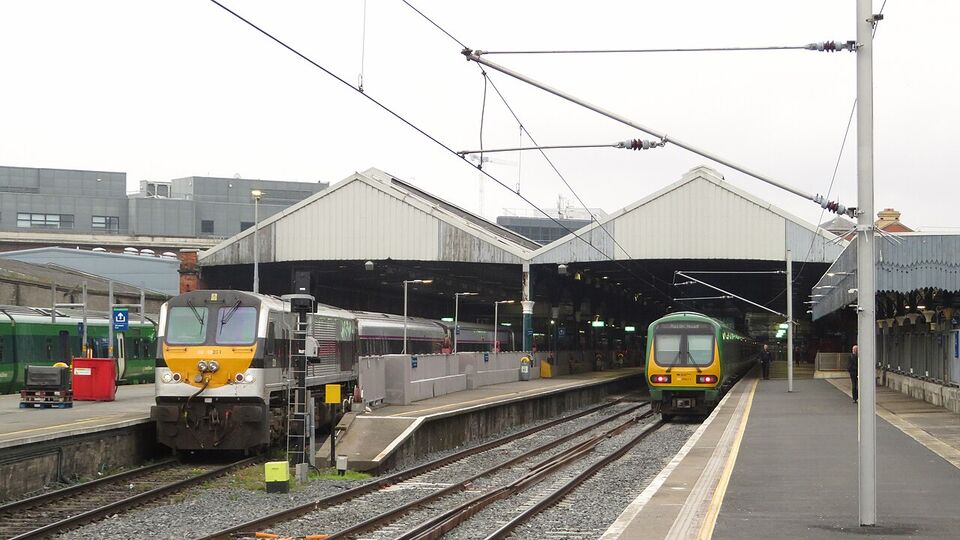
Irish Rail (Iarnród Éireann) runs the national network. Most lines start at one of two Dublin stations: Heuston for Cork, Killarney and Tralee, Limerick, Galway, Kilkenny and Waterford, and Connolly for Belfast and Sligo. Check which station your train uses before you leave your hotel, because they are on opposite sides of the Liffey and not within an easy walk of each other with luggage.
What the Dublin-centered network means for you
Because the lines radiate from Dublin, going from one region to another often means returning toward Dublin or changing at a junction. Dublin to Cork is a single line. Cork to Killarney usually means a change at Mallow. Galway to Cork or Killarney is awkward by train and is usually faster by bus or car. Dingle, the Cliffs of Moher, Doolin, most of Connemara, the Aran Islands ferry ports and the Causeway Coast have no train station. Plan the rail legs along the spokes (Dublin to Cork, Dublin to Galway, Dublin to Belfast) and use buses, tours or a car for the rest.
As of mid-November 2026, Irish Rail's site says the Enterprise service to Belfast runs up to 15 trains a day, and the railway was running an autumn timetable adjusted for leaf fall. Timetables shift with the season, so check irishrail.ie for your date.
Tickets
Buy intercity tickets online at irishrail.ie or in the app. Fares are dynamic and vary by day and time; we have not confirmed current fare amounts, so check the route fare calculator. Irish Rail's site lists family fares, tourist tickets and discounts for young adults and students with the right Leap card, so check which apply to you. Tickets are issued as QR codes. Collect a reserved ticket at the station only if your booking says to.
Stations, luggage and bikes
Irish Rail has pages on luggage, bicycles and on-board Wi-Fi and power. Luggage rules and space for large bags differ by train, so check before you travel with several suitcases. At peak times, reserve a seat if the booking allows it.
Insider tip
Book the Dublin-Belfast Enterprise and the Dublin-Cork and Dublin-Galway trains early for weekends, bank holiday weekends and match or concert days. The Six Nations home games at the Aviva Stadium in Dublin (February 5 and March 13, 2027) and the St Patrick's Festival (March 13-17, 2027) fill trains and hotels.
Buses and coaches
Where there is no train, there is usually a coach. The main operators are below. Each sells tickets online, and buying ahead is usually cheaper than paying on board, if the operator offers it.
Bus Éireann Expressway
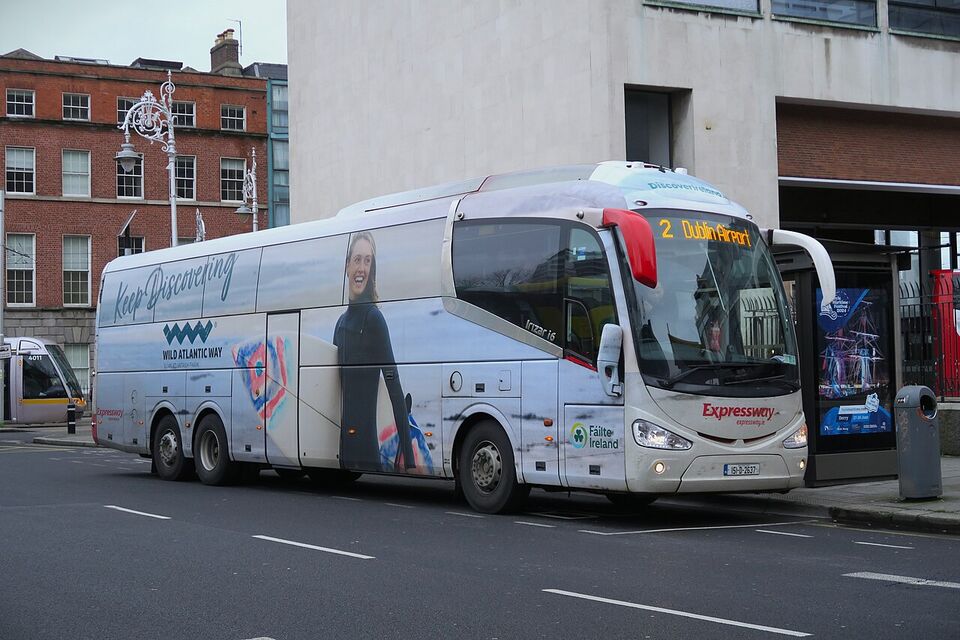
Bus Éireann runs the Expressway intercity routes and many local and regional services. Its site sells tickets and has a fare finder and timetables. Use Expressway for trips like Galway to Cork, Dublin to Killarney or Dublin to Donegal where rail is slow or absent.
Citylink
Citylink serves Galway, Clifden, Limerick, Cork, Ennis, Athlone, Castlebar, Ballina and both Dublin City and Dublin Airport. It is a practical way to reach Connemara's main town without a car. Check its travel updates page: some routes were affected by disruption in early November 2026.
Dublin Coach
Dublin Coach runs express routes on the M7 (route 300) and M9 (route 600), the N7 service (route 726) and a Dundrum-Dublin Airport service (route 750). It is useful for the M7 and M9 corridors out of Dublin; check the route page for the towns each serves.
Dublin Express and Aircoach
These run between Dublin Airport and the city. Aircoach route 700 runs as often as every 15 minutes, 24 hours a day, and takes about 20 to 40 minutes. Dublin Express now also runs direct coaches from Dublin to Belfast. See Dublin Airport guide for details.
Translink (Ulsterbus and Goldline)
Translink runs buses and trains across Northern Ireland, including Belfast and the Causeway Coast route via Coleraine. Fares are in pounds. Check translink.co.uk for the route you need and for any seasonal Causeway services.
On any coach, expect space for a normal suitcase in the hold, with a smaller bag allowed on your seat. Dublin Express states a luggage allowance of two 20 kg bags plus one soft hand bag at no extra charge. Other operators set their own limits.
Watch out
Buses and trains are much thinner on Sundays, public holidays and late evenings, especially in the west. As of mid-November 2026, 2026 Christmas timetables were not confirmed on tfi.ie. Expect no buses or trains on December 25 and check tfi.ie in December.
Dublin: Leap card, TFI and local transit
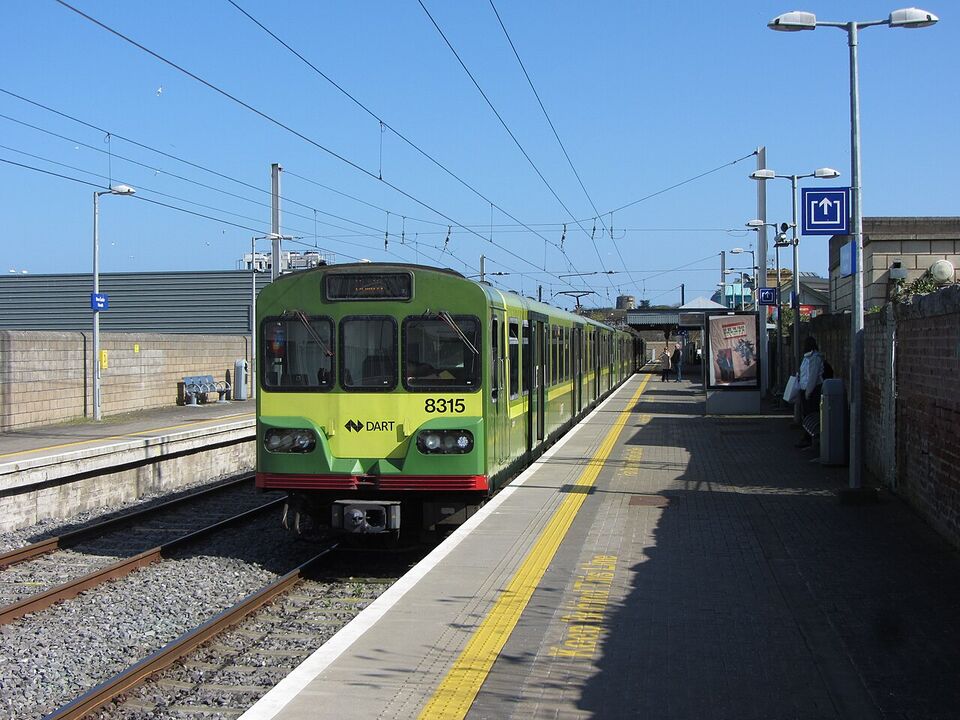
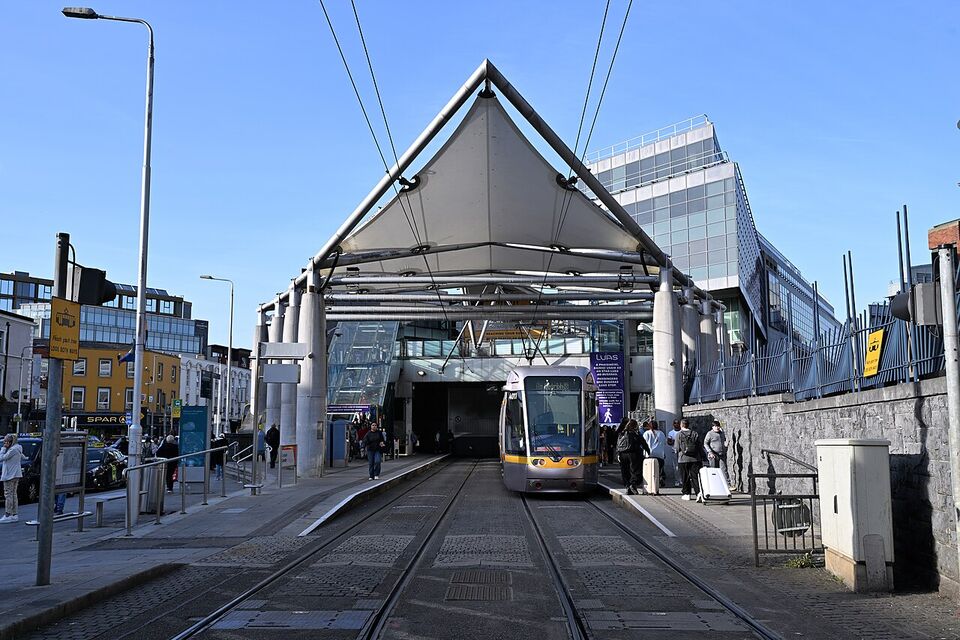
In Dublin, a Leap card is the simple way to pay for buses, Luas trams, DART and suburban trains. Transport for Ireland (TFI) sets the fares. Tap on when you board a bus, and tap on and off for Luas, DART and commuter rail. Check tfi.ie for what happens if you forget to tap off.
| Fare (Dublin area, November 2026) | Adult | Young Adult (19-25) / Student | Child (5-18) |
|---|---|---|---|
| 90 Minute Fare | €2.00 (about $2) | €1.00 (about $1) | €0.65 (about $1) |
| Daily cap | €6.00 (about $7) | €3.00 (about $3) | €1.95 (about $2) |
| Weekly cap (Monday to Sunday) | €24.00 (about $27) | €12.00 (about $13) | €7.80 (about $9) |
The 90 Minute Fare covers Dublin Bus, Go-Ahead Ireland city buses, Luas and DART or commuter rail in Zone 1. Express and Nitelink buses are separate: €2.40 (about $3) for adults. Children from 0 to 4 travel free, and children from 5 to 8 travel free with a Child (5-8) Leap card. Cork city buses use the same card: the adult 90-minute fare there is €1.70 (about $2), with a daily cap of €5.10 (about $6).
Fares rise in 2027. The National Transport Authority has said adult fares will go up an average 15% from January 2027, and that the 90 Minute Fare will go from €2 to €2.30 (about $3). We have not confirmed the exact start day, so check tfi.ie. There is also a Leap Visitor Card; we have not confirmed its current price, so check tfi.ie. A regular Leap card works for any visitor, and you can top it up at shops and machines.
The Luas has two main lines (Red and Green) and is handy for Heuston Station and the city center. For trips that start at the airport, see Dublin Airport guide. For what to see once you are in town, see Dublin and Dublin sights. MetroLink, the planned Swords-to-Charlemont line, is not under construction yet: enabling works are expected from 2027 and tunneling and stations from about 2028, so it does not affect a 2026 or 2027 trip.
Save money
Use a Leap card rather than cash on Dublin buses, and let the daily cap work for you: after about €6.00 (about $7) of travel in a day, further journeys in the area are free. Walking the compact center is also free. A taxi from Dublin Airport to the city center is roughly €30 to €45 (about $34 to $50), more evenings, weekends and bank holidays, so the bus is far cheaper for one or two people.
Taxis and ride-hailing
Taxis are metered and licensed. In cities you can hail one, find a rank, or use an app. Taxi apps operate in Dublin and some other cities; which apps work, and how far they reach, changes, so check on your phone before you rely on one in a small town. In rural areas, taxis are few and may need to be booked ahead, and some operate as local hackneys. Transport for Ireland has a page to check a taxi licence and to find a wheelchair-accessible vehicle. We have not confirmed current taxi flag-fall prices.
A private driver for a full day can make sense for a group, especially if nobody wants to drive. Ask for a written quote that includes fuel, parking and tolls, and for the driver's license details.
Domestic flights and ferries
Ireland has very few useful domestic flights. A small number of routes link Dublin with airports in the west and northwest, flown by regional carriers, but the routes and operators change, and with trains and coaches covering most journeys there is rarely a reason to fly. If you are considering a flight inside Ireland, check the airline's own schedule and compare the total door-to-door time, including airport check-in, with a train or drive.
Ferries matter more than flights. For the Aran Islands, Aran Island Ferries sails from Rossaveel, about 23 miles (37 km) west of Galway, with a shuttle bus from Victoria Place in Galway. As of November 2026 the return fare to Inis Mór was €34 (about $38) for adults, and the shuttle bus was €10 (about $11) return. Rossaveel to Inis Mór takes about 40 minutes. There are no sailings on December 25 and 26, 2026. Winter timetables differ by island, so check aranislandferries.com. See the Aran Islands for the full plan.
For the Skelligs, boat trips from Portmagee and other harbors only run when the site is open; Skellig Michael is closed until 2027. See the Ring of Kerry. To reach Britain by sea with or without a car, see travel beyond Ireland.
Tours and private drivers
If you do not want to drive, a tour covers the places buses do not reach. Day tours from Dublin visit places such as the Cliffs of Moher, Giant's Causeway, Wicklow and Glendalough, and Newgrange; see day trips from Dublin. From Galway and Killarney, day tours cover the Cliffs, Connemara and the Ring of Kerry. Small-group multi-day tours do a loop with a guide-driver.
The trade-off is time: a tour sets your schedule and spends hours on the road for a short stop. A tour is a good choice for the Cliffs, the Giant's Causeway and the Ring of Kerry, which are crowded and where parking can be a headache. Ask what is included (entry fees, lunch, hotel pick-up) and the cancellation policy. We list no prices because they vary by season and operator. Only book a tour that names its company, its pick-up point and what is included.
Insider tip
Mix modes. Take the train from Dublin to Galway or Cork, base yourself in town, then join a day tour or rent a car for one or two days in the countryside. This avoids paying for a car while it sits in a hotel car park.
Typical journey times between main places
The table gives typical times, not guarantees. Road times are for driving without stops on good roads; narrow rural roads are slower than a satnav suggests. Train and bus times vary by service and by season, and some trips involve a change. Always check irishrail.ie, buseireann.ie or citylink.ie, and a route planner such as the one on tfi.ie, for your date.
| Trip | By car (distance) | By train | By bus or coach | Best mode |
|---|---|---|---|---|
| Dublin to Galway | About 2.5 hr (130 miles, 210 km) | About 2.5 hr | About 2.5 to 3 hr | Train or coach |
| Dublin to Cork | About 3 hr (160 miles, 260 km) | About 2.5 hr | About 3.5 hr | Train |
| Dublin to Killarney | About 4 hr (190 miles, 305 km) | About 3.5 to 4 hr, may change at Mallow | About 5.5 to 6 hr | Train, then a local car or tour |
| Dublin to Kilkenny | About 1.75 hr (75 miles, 120 km) | About 1.5 hr | About 2 hr | Train |
| Dublin to Belfast | About 2 hr (105 miles, 170 km) | About 2 hr 15 min (Enterprise) | About 2.5 to 3 hr | Train |
| Cork to Killarney | About 1.25 hr (55 miles, 90 km) | About 2 hr with a change | About 1.5 to 2 hr | Car or bus |
| Killarney to Dingle | About 1.5 hr (45 miles, 70 km) | No train to Dingle | Local buses; check service | Car or tour |
| Galway to the Cliffs of Moher | About 1.5 hr (50 miles, 80 km) | No train to the Cliffs | Tour or seasonal bus | Tour or car |
| Galway to Clifden | About 1.25 hr (50 miles, 80 km) | No train | Citylink to Clifden | Citylink or car |
| Cork to Kinsale | About 30 to 40 min (17 miles, 27 km) | No train | Local bus | Car or bus |
| Belfast to the Giant's Causeway | About 1.25 to 1.5 hr (60 miles, 95 km) | Train to Coleraine, then a bus | Translink buses via Coleraine | Tour or car |
For the Ring of Kerry, the official route is 179 km (111 miles) from Killarney and takes about 3.5 hours without stops; allow 7 to 8 hours with stops. See the Ring of Kerry. Check each place's own page (Killarney, Dingle, Cork, Galway, Belfast, the Causeway Coast) for how to arrive.
Northern Ireland differences
Northern Ireland is part of the United Kingdom. You will not see a border post or a passport check on the road between the Republic and Northern Ireland. Still, there are practical differences:
- Money. Pay in pounds sterling. A bus ticket, a parking meter and a taxi fare are all in pounds, so £20 is about $27 at £1 = US$1.33. See money in Ireland.
- ETA. A US citizen needs a UK Electronic Travel Authorisation to enter the UK, and Northern Ireland is in the UK. The fee is £20 (about $27), and gov.uk says it allows up to six months in the UK. There is no check on the land border, but it is a legal requirement, and checks on flights and ferries to Britain have been stricter since February 2026. See entry rules.
- Transport. Translink, not Irish Rail or Bus Éireann, runs local trains and buses, and uses its own fares and smart cards. The Enterprise train and several coaches link Dublin and Belfast.
- Roads. Distances and speeds are in miles and mph, and the national limits follow UK rules. Check gov.uk before you drive.
- Rental car. A car rented in the Republic needs the rental company's permission, and often a fee, to cross into Northern Ireland. See renting a car.
- Phones. The network is a UK network, so check your plan's UK roaming. See phones and internet.
Accessibility
Ireland's transport is improving, but access varies a lot. Irish Rail has an accessible travel section and a disability assistance service; contact them in advance if you need a ramp or assistance at a station, and check how much notice they ask for. Bus Éireann lists wheelchair-accessible routes and has a page on how to book wheelchair-accessible transport. TFI also has a register of wheelchair-accessible vehicles for taxis, and notes lift and escalator alerts at stations.
In older towns, pavements can be narrow and kerbs high, and many historic buildings have steps. Rural buses may not be accessible, so call ahead. For a rental car, an automatic with a high seat can help; book early. See health and safety for more on staying well on the road.
Luggage tips
- Pack in one carry-on-size bag and one medium suitcase if you can. Lifts in older hotels are small, and some B&Bs have stairs only.
- On a train, keep your bag within sight. On coaches, label the hold bag and keep valuables, medication and chargers with you.
- If you will rent a car, count the bags first. Many compact cars hold two large suitcases, plus a few soft bags, with the rear seat in use.
- Pack a small day bag for a long travel day and send the heavy case ahead by choosing a base town with day trips.
- Bring a plug adapter: Ireland uses Type G sockets and 230 V, which differs from the US 120 V. See what to pack.
Mistakes to avoid
- Assuming a train goes everywhere. It does not. Dingle, the Cliffs and Connemara have no station.
- Planning too much driving. A map can make Ireland look small. Narrow roads, tour buses and photo stops mean you should allow more time than the satnav says.
- Going to the wrong Dublin station. Heuston and Connolly are different stations.
- Relying on Sunday and holiday service. Check timetables for public holidays and the December 25-26 period.
- Using the Republic's money in Northern Ireland (or the reverse). Euros and pounds are not interchangeable. Pay in euros in the Republic and in pounds in Northern Ireland.
- Booking a car before you need it. Rent it on the day you leave the city, not the day you land, if you plan to start in Dublin.
For a wider plan, see planning your trip, when to go and the FAQ.
Add it to a route in the trip builder, or ask us to plan the hotels, trains and guides for you.