Overview
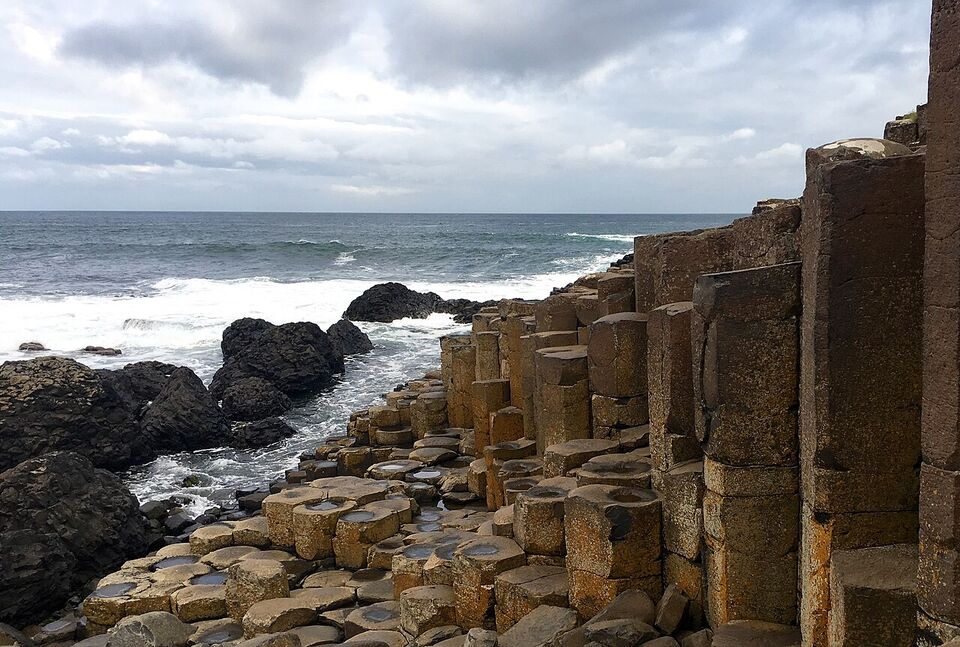
The Giant's Causeway is Northern Ireland's first UNESCO World Heritage Site: more than 40,000 interlocking basalt columns on the north Antrim coast, formed by volcanic activity some 60 million years ago, according to the National Trust. It is one of the best-known sights in Northern Ireland, and the stretch of coast around it adds castles, a rope bridge, a famous avenue of beech trees and a whiskey distillery within a few miles of each other.
The coast is about 60 miles (100 km) from Belfast, so it works as a long day trip from there; read our Belfast guide for the city and base. It is part of the United Kingdom, not the Republic, so prices are in pounds (£1 = US$1.33 in this guide) and a US citizen is expected to hold a UK ETA (£20, about $27). See our entry requirements guide for the ETA, and our money guide for how to pay.
The coast is a place where plans change with the weather. The best approach is to book the Causeway itself, keep the rest flexible and put outdoor stops in the middle of the day, especially from November to February, when daylight is short and some sights run reduced hours.
Different from home
The Giant's Causeway is run by the National Trust, a UK charity, not a government park. Tickets are sold by the charity, mainly online. Prices are in pounds and speed limits on the roads are in miles per hour.
The Giant's Causeway: tickets, parking and free walking
There are two ways to see the stones, and the difference matters when you plan.
Visitor Experience ticket
The National Trust sells a Visitor Experience ticket. It includes reserved on-site parking, guided tours that leave every hour, a hand-held audio guide in 11 languages, and entry to the visitor centre's exhibition, shop and café. An electric shuttle bus also runs from the visitor centre to the stones; we could not confirm whether it costs extra. Prices on the National Trust website, checked in mid-November 2026, are:
| Ticket | Price |
|---|---|
| Adult (18+) | £15 (about $20) |
| Child 5-17 | £7.50 (about $10) |
| Family (2 adults and up to 3 children) | £37.50 (about $50) |
| One-adult family | £22.50 (about $30) |
| Under 5 | Free |
National Trust members get in free, though pre-booking is strongly recommended for everyone. The site says pre-booking is essential and the best rates are online. Tickets are sold on nationaltrust.org.uk; book there, not through a reseller, unless you are on a guided tour that includes admission.
Walking to the stones without a ticket
The National Trust says you can walk to the stones for free. What you cannot do for free is park in its car park: the on-site car park beside the visitor centre is reserved for ticket holders, members and Neighbour Pass holders. If you want to see the stones without a ticket, you have two options:
- Walkers' car park. The Causeway Coast Way car park at Innisfree Farm, 60 Causeway Road, costs £12 per vehicle (about $16) via the JustPark app, and is open 5 a.m. to 8 p.m. It gives access to the coastal path network.
- Park and Ride from Bushmills. Leave the car in the Dundarave car park (postcode BT57 8SE), buy a discounted Park and Ride ticket from the Bushmills Visitor Information Centre, and take the Translink bus. The National Trust says the ticket covers your bus fare and admission to the Visitor Experience.
If you are arriving by car, the Visitor Experience is the simplest option because it includes parking, a guided tour and the exhibition in one booking. Walkers, and anyone already based in Bushmills or on the coast path, can skip it and still reach the stones.
On the stones
Four walking trails cover the 5 km (3 mile) World Heritage Site. The Blue Trail is the direct route, under a mile (0.8 mile, 1.3 km) to the stones. The Green Trail is an accessible clifftop path of about a mile (1.6 km) with views toward Scotland. The Red Trail is a clifftop loop of 0.8 to 2 miles (1.3 to 3.2 km), and the Yellow Trail is a 1.8-mile (2.9 km) clifftop section of the Causeway Coast Way. The Trust also lists a guided five-mile clifftop hike run with a partner; ask the Trust for current dates and prices. Allow about two hours for the visitor centre and the stones.
Dogs on leads are welcome throughout the site, including inside the visitor centre. The visitor centre and Green Trail are accessible, and wheelchairs and mobility scooters are available to ticket holders and members at no extra charge.
Watch out
Do not wedge coins into the stones. The National Trust says the ritual is damaging the World Heritage Site and is running a coin-removal project. Treat the rocks as you would a museum exhibit: they are old and the surface is wet.
Getting there from Belfast or Dublin
The Causeway is on the B147 Causeway Road, 2 miles (3 km) from Bushmills, 11 miles (18 km) from Coleraine and 13 miles (21 km) from Ballycastle. The postcode for a sat nav is BT57 8SU. Parking near the stones is limited, so do not arrive without a plan.
By car from Belfast
It is about 60 miles (100 km), roughly 1.5 hours without stops. Most visitors take the M2 and A26 toward Ballymena and Coleraine, or the scenic coast road via Larne (see the route section below). Remember that Northern Ireland road signs are in miles and mph, and you drive on the left. If you picked up a rental car in the Republic, you must have permission to take it north: ask for it when you book. Read our car rental guide and our guide to driving on the left before you set out.
By public transport from Belfast
The National Trust says trains run from Belfast or Derry/Londonderry to Coleraine, where you change to the Ulsterbus 172 to the Causeway. It also lists the Goldliner 221, the Causeway Rambler 402, the open-top Causeway Coast bus 177 and the Antrim Coaster 252; some of these are seasonal. Allow about three hours each way for the rail-and-bus trip, and check times on translink.co.uk because winter services are thinner and the last bus back can leave early in the afternoon.
From Dublin
The drive is about 190 miles (300 km) and takes roughly 3.5 to 4 hours or more each way, so treat a same-day return as a stretch. We suggest taking the Enterprise train to Belfast (up to 15 a day, roughly two hours), spending a night there and doing the Causeway on the second day. A few Dublin tours do it in one day, with very long hours; check the pickup time and the Causeway time before booking.
Insider tip
If you are renting a car in Dublin just for the north, ask the rental company how they handle cross-border use. Some include it, others charge a fee, and it is often cheaper to rent in Belfast for the Causeway day. See our getting around guide.
The Causeway Coastal Route
The Causeway Coastal Route is a signed scenic drive of roughly 120 miles (190 km) from Belfast to Derry/Londonderry. It is not a single road but a collection of coastal roads, and you can drive all of it or pick the best bits. The coast between Larne and Ballycastle runs through the Glens of Antrim, nine green valleys that reach the sea; further west it passes the Causeway, Portrush and Portstewart, and ends at the Mussenden Temple on the cliff at Downhill.
The coast is a good place to slow down. A realistic day takes in a stop in the Glens, the rope bridge, the Causeway and Dunluce Castle. A sunrise or sunset at the cliffs is better in summer than in the short days of winter. Rathlin Island, off Ballycastle, is reached by a small ferry; we could not confirm winter sailings, so check them if you want to go.
- Narrow roads. Many coast roads are single track with passing places and no pavement. Expect farm vehicles and cyclists.
- Parking. Roadside car parks fill by late morning at the famous stops.
- Fuel. Top up in a large town before leaving the main road; prices are in pounds per liter or per gallon at UK pumps.
- Weather. Strong wind and rain can close coastal paths and make roads slick.
Carrick-a-Rede rope bridge
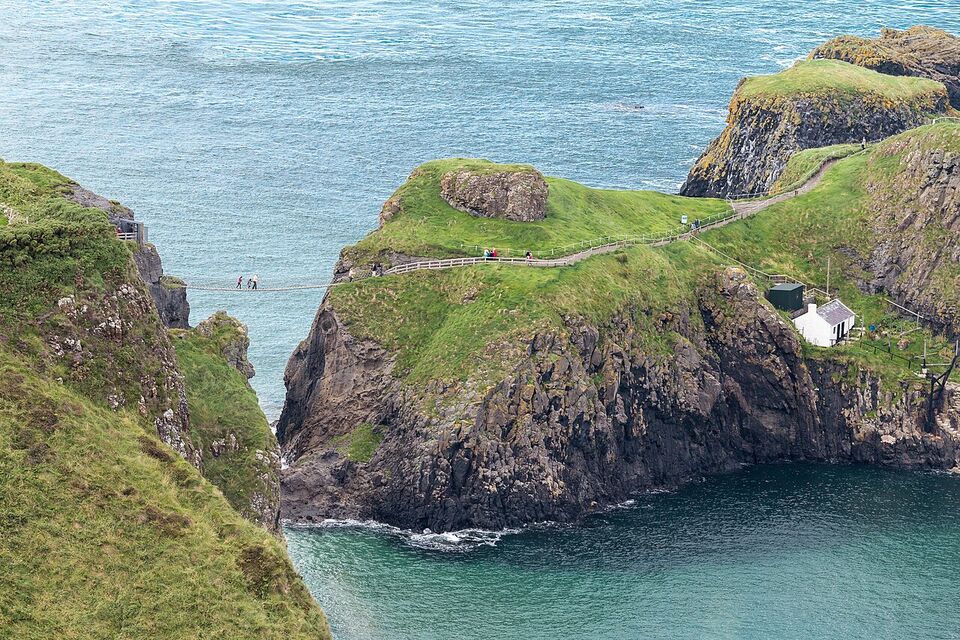
Carrick-a-Rede is a rope bridge that links the mainland to a small rocky island off the coast near Ballintoy, roughly 8 miles (13 km) east of the Causeway. The National Trust describes it as a 200-year-old bridge first used by fishermen. The walk to the bridge along a clifftop path is part of the experience, and the sea views are good in clear weather.
Entry is by timed ticket, normally booked in advance on nationaltrust.org.uk, and the bridge closes in high winds, so a booked slot can be lost to weather. We could not confirm the winter 2026-27 schedule, ticket price or any closure for maintenance from a fetched page, so check the National Trust Carrick-a-Rede page before you plan your day around it. If it is closed, the clifftop and the nearby Ballintoy Harbour, a small harbor used as a filming location for Game of Thrones, are still worth a short stop.
Wear sturdy shoes. The path has steps, and a head for heights helps. The crossing itself takes minutes, and the queue and the walk take longer, so allow 1.5 to 2 hours in all.
Dunluce Castle, the Dark Hedges and Game of Thrones
Dunluce Castle
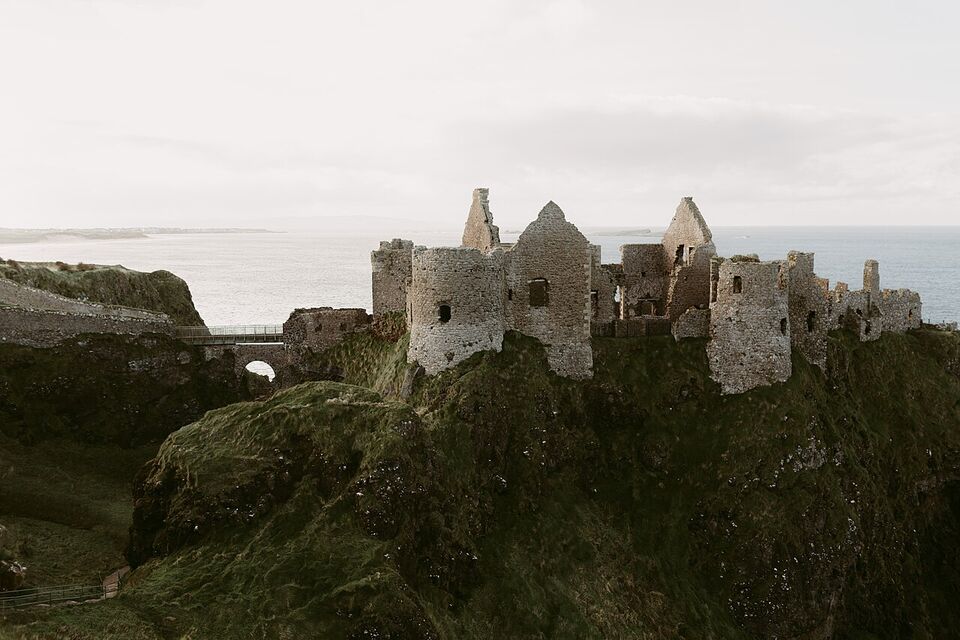
Dunluce Castle is a ruined medieval fortress on a cliff edge between Bushmills and Portrush, a few miles west of the Causeway. It is run by the Northern Ireland government, not the National Trust. We could not confirm its 2026-27 opening hours or ticket price, so check with Discover Northern Ireland or the castle's page before you go. Even when the castle is closed, you can see it from the road and from nearby viewpoints. Parking is limited, so pull off only where it is safe.
The Dark Hedges
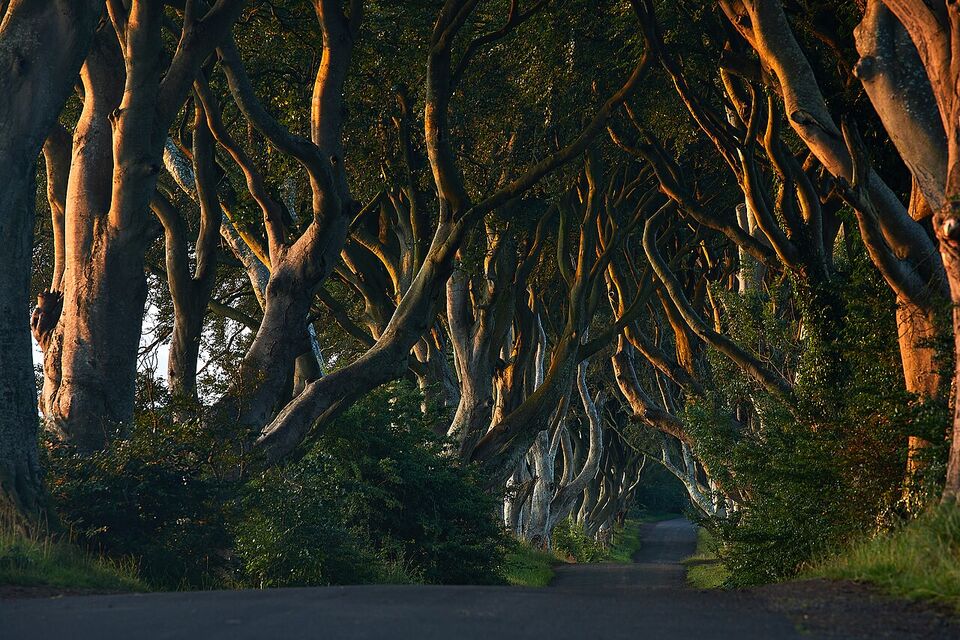
The Dark Hedges is an avenue of beech trees on the Bregagh Road near Armoy, a short drive inland from the Causeway (check a map for your route). The trees were planted in the 18th century as an approach to Gracehill House, which is a private residence. Storms Isha and Éowyn damaged the avenue, and the Causeway Coast and Glens Heritage Trust says 13 trees have been lost since November 2023. The Trust took over management of the site in March 2025.
The avenue is a short stop, not a destination on its own. Parking arrangements have changed over time, and we could not confirm current rules, so follow signs and park legally rather than on the road. For a quieter visit, go early or late in the day; busloads arrive in the middle of the day.
Game of Thrones sites
The series was filmed across Northern Ireland, and several sites are on this coast: the Dark Hedges (the Kingsroad), Ballintoy Harbour and the beach at Downhill Strand. Tours from Belfast tie these together with the Causeway. If you are choosing between a tour and a car, a car gives you time at each stop; a tour gives you a guide and no parking worries. Read our Belfast guide for tours that start in the city.
Bushmills and the distillery
Bushmills is a village about 2 miles (3 km) from the Causeway and a useful stop for lunch, fuel and the Park and Ride. It is also the home of Bushmills whiskey, a name you will see in pubs across the island. The distillery runs visitor tours, and in winter the schedule can be shorter. We could not confirm 2026-27 tour times or prices, so check the distillery's own website, and book ahead if you want a tasting.
If you plan to drink, do not drive. The drink-driving limit in Northern Ireland is not the same as in the Republic, so the safest approach is to take a taster home or sample it at your hotel, or book a driver. See our safety guide for more.
Village cafes and pubs serve soup, sandwiches and the Ulster fry. They get busy with tour groups at midday, so eat early or late.
Portrush, Portstewart and the golf coast
Portrush is a seaside resort town roughly 8 miles (13 km) west of the Causeway, with beaches, arcades, pubs and a train link from Coleraine. It is also the home of Royal Portrush, whose Dunluce Links has hosted The Open Championship. Summer 2026 green fees, as reported by National Club Golfer, were £420 for the Dunluce course (about $559). Tee times are hard to get and visitors usually book months ahead through the club. For more, read our golf guide.
Portstewart, a few miles west, has a long strand and a cliff walk. Both towns make a good base if you want a night on the coast rather than a day trip from Belfast, with a wider range of hotels and guesthouses than the Causeway itself. Hotels in this guide are shown as tiers: $ under $120 a night for a double, $$ $120 to $300, $$$ over $300. Summer and weekends cost more, and golf weeks fill the coast. See our where-to-stay guide for how to choose.
Tours versus driving yourself
A full-day coach or minibus tour from Belfast is the simplest way to see the coast if you do not want to drive on the left. Tours leave in the morning and return in the evening, typically covering the Causeway, the rope bridge or the Dark Hedges, and sometimes Dunluce. Before you book, ask:
- Is Giant's Causeway admission included, or do you pay on the day?
- How long do you get at the stones?
- Does the tour cross the Carrick-a-Rede bridge, or only photograph it?
- What happens if the bridge or a site is closed that day?
- How large is the group, and where does the tour start and end?
Driving gives you more time at each stop and lets you leave early, but you take on narrow roads and parking. For a first visit in winter, when daylight is short, a tour removes some of the stress. Prices for tours vary, and we could not confirm current rates, so compare operators and read what is included.
Save money
Book the Giant's Causeway Visitor Experience online for the best rate, and if you are on a guided tour that includes admission, do not buy a second ticket. Families can use the £37.50 (about $50) family ticket. National Trust members get in free, and a short-term membership may pay for itself if you visit several National Trust sites in the UK.
Weather, safety and winter hours
The North Antrim coast is exposed to the Atlantic, and the weather changes quickly. A day can bring sun, wind and sharp showers in an hour. Belfast, about 60 miles (100 km) away, has January highs near 47°F (8°C) and July highs near 67°F (20°C), and the coast is often windier and cooler. Bring a waterproof jacket, a warm layer and shoes with grip in any season.
- Wet rocks. The basalt is slippery when wet, and spray reaches the lower stones. Stay on the paths and keep children close.
- Waves. Never turn your back on the sea at the water's edge. Large waves can arrive without warning.
- Cliffs. Keep behind the barriers on the clifftop trails and take care in high wind.
- Daylight. In mid-December daylight is about 7.5 hours, so check sunset and plan to be on the road before dark.
- Emergencies. Dial 999 or 112 in Northern Ireland.
In winter, the National Trust visitor centre has shorter hours (10 a.m. to 4 p.m. on November 13, 2026), the coastline is open from dawn to dusk, and the dates and times can change by day. Check the opening calendar on nationaltrust.org.uk for the day you plan to go. We could not confirm Christmas Day, Boxing Day or New Year hours. Northern Ireland bank holidays include December 25, 2026 and Monday December 28, 2026, and buses run reduced services on holidays. For month-by-month planning, see our when-to-go guide.
Sample plans
- Day trip
Belfast to the Causeway and back
Leave Belfast by 8 a.m. Stop first at the Dark Hedges if you want the avenue before the buses. Reach the Causeway for a late-morning slot, allow two hours, then lunch in Bushmills. If the rope bridge is open and you have a booked slot, go in the afternoon; otherwise see Dunluce Castle from the road and head back before dark.
- Day 1
Belfast to the north coast
Drive the Antrim coast road via Larne and the Glens of Antrim, with stops at the villages. Stay in Ballycastle or Portrush.
- Day 2
The Causeway and the coast
Visit the Causeway in the morning, then the rope bridge or Dunluce Castle, and drive back to Belfast via the Dark Hedges. See our regions guide for how this fits with the rest of the island.
If you are building a wider trip, the north fits as a break between Dublin and the Wild Atlantic Way; for crossing to Scotland from Belfast, see our guide to Britain and beyond.
Add it to a route in the trip builder, or ask us to plan the hotels, trains and guides for you.