Overview
Yes, Ireland is a safe country for American travelers. The State Department advisory is at Level 1, the lowest of its four levels, and the wording shown on the US Embassy in Dublin's website in mid-November 2026 is "Exercise normal precautions in Ireland." Most trips pass with nothing worse than a wet jacket.
What goes wrong is usually ordinary: a phone lifted from a café table in Dublin, a bag taken from a rental car left at a popular viewpoint, a sprained ankle on a muddy trail, a driver who forgot which side of the road to look at. The more serious risks are physical, not criminal: sea cliffs, cold water, fast-changing mountain weather and narrow rural roads. This page covers all of them, plus Northern Ireland, emergency numbers and what to do if something does go wrong.
Ireland (the Republic) and Northern Ireland (part of the UK) share the island but have separate police forces, separate health systems and different rules. Where it matters, we say which one we mean. For the insurance and medical side, see health and medical care. For the road itself, see driving in Ireland.
Insider tip
Before you leave, put three things in your phone: the emergency number (112 works from any phone, even without a local SIM in many cases), the US Embassy line (+353 1 668-8777) and the name and address of your first night's lodging. Screenshot your booking confirmation so it works without a signal.
The US State Department advisory in plain English
The State Department rates every country from Level 1 ("Exercise normal precautions") to Level 4 ("Do not travel"). As of mid-November 2026, the US Embassy's Ireland pages show Level 1 for Ireland. It does not mean "no risk." It means the department sees no unusual danger beyond what you would meet at home.
We could not open the State Department's own Ireland page in mid-November 2026, so we are relying on the Embassy's banner. Advisories can be reissued at any time, and the page also carries general notes (for example, on the risk of terrorism worldwide and on personal security). Read the current version at travel.state.gov in the week you fly, and again if news breaks while you are away.
Northern Ireland is covered by the United Kingdom page, not the Ireland page, so look up both if your trip crosses the border. For the entry side of that crossing, including the UK Electronic Travel Authorisation (ETA) that US citizens need, see entry requirements.
What actually goes wrong
Pickpocketing and phone theft
Dublin city center is where most visitors lose things. The pattern is the familiar one: crowded streets, busy pubs, packed buses and the Luas tram, and the busiest sightseeing areas around Grafton Street, O'Connell Street and Temple Bar. Phones left on café tables near the pavement, bags hung over chair backs and back pockets are the usual targets. We could not find a current police statistic to quote, so treat this as ordinary big-city advice: keep your phone in a front pocket or a zipped bag, carry a cross-body bag in front of you in crowds, and never leave a bag unattended at a pub table.
Belfast, Cork, Galway and the other cities are smaller, and the same habits cover them. In small towns and villages, petty theft is rare, though it is still wise not to leave a wallet in plain view.
Thefts from parked cars
Thieves look for tourist cars at viewpoints, trailhead car parks, beaches and the car parks of popular sights, because a rental car often carries luggage, cameras and passports. The advice from rental firms and tourist offices is consistent: take everything with you, and do not leave anything visible, including coats and charging cables. If you are moving between towns with all your bags, plan stops so someone stays with the car, or leave luggage at your lodging first. Do not leave passports in the car under any circumstances.
Watch out
The most common way a trip is spoiled is a bag stolen from a locked rental car at a scenic stop. Rental cars are easy for thieves to spot. Hire-car paperwork often says you are responsible for loss, and travel insurance may exclude items left unattended in a vehicle. Read your policy, and carry valuables with you.
Scams and tickets
The scams in Ireland are the standard tourist ones: fake ticket sellers, unofficial "charity" clipboards, and overpriced taxis from the airport. Buy tickets only from the official site of an attraction or its stated agent. The Kilmainham Gaol museum, for example, says only its official sites sell valid tickets. Use a licensed taxi or a bus for the airport (the fare guide is in the Dublin Airport guide), and if a metered taxi costs much more than a rough guide of about €30 to €45 (about $34 to $50) from Dublin Airport to the center, ask the driver to explain the extra charges. Check restaurant bills for a service charge before you add a tip: a mandatory charge must be shown on the menu or signage, and an optional one cannot be added without your consent.
Drink spiking and nights out
Drink spiking is a risk in any city nightlife area. Do not leave drinks unattended, do not accept a drink you did not see poured, and keep an eye on friends who seem suddenly very drunk or ill. If you or a friend feels unexpectedly dizzy or drugged, go to a staff member, get to a safe place and call 112 or 999. Crowds spilling out of pubs and clubs on weekend nights, especially in Dublin, can be rowdy. Walk in a group, stay on lit streets, and take a licensed taxi rather than walking alone through quiet areas.
Emergency numbers and who answers
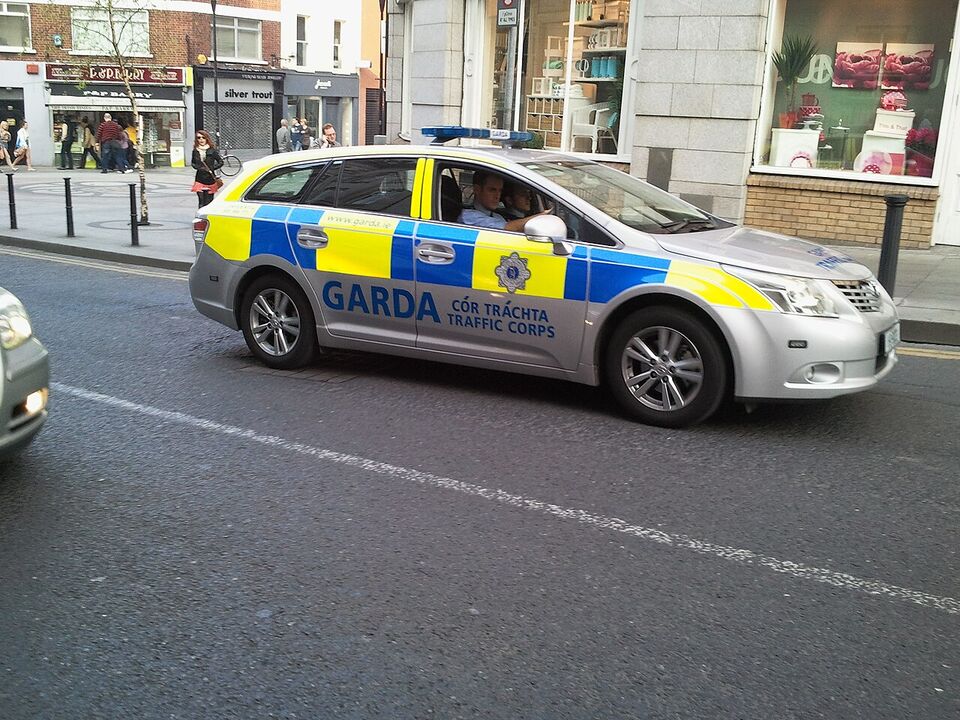
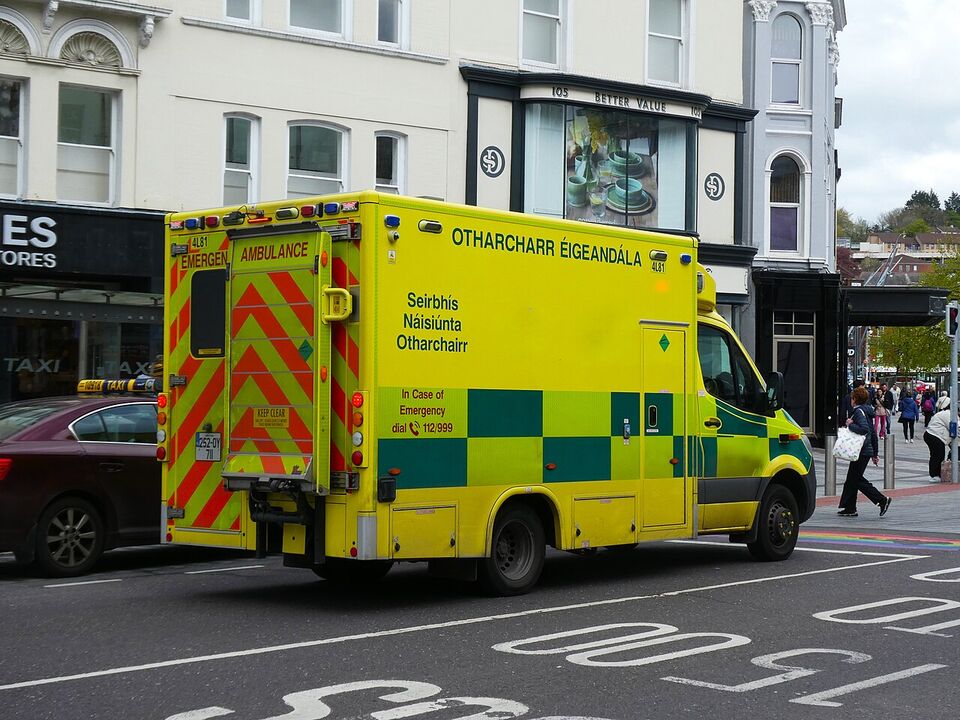
In the Republic of Ireland, dial 112 or 999. Both connect to the same emergency service, according to the Health Service Executive (HSE). Calls are free. You tell the operator which service you need: Garda Síochána (the national police, usually just the Gardaí or a Garda officer), ambulance, fire brigade, Coast Guard or Mountain Rescue.
In Northern Ireland, dial 999 (112 also works) and ask for police, fire, ambulance or the Coast Guard. The police are the Police Service of Northern Ireland (PSNI). For non-urgent police matters in Northern Ireland, the PSNI is usually reached on 101 (check psni.police.uk). For non-urgent matters in the Republic, find the local station number on garda.ie, because there is no single non-emergency line we could confirm.
| Situation | Who to call | Notes |
|---|---|---|
| Medical or police emergency, Republic | 112 or 999 | Free; ask for Garda, ambulance, fire, Coast Guard or Mountain Rescue |
| Medical or police emergency, Northern Ireland | 999 (or 112) | Ask for PSNI, ambulance, fire or Coast Guard |
| Lost at sea, cliff, beach or shoreline | 112 or 999, ask for the Coast Guard | Give a landmark and tell them if anyone is in the water |
| Injured or lost on a mountain | 112 or 999, ask for Mountain Rescue | Stay put if you cannot navigate; give a grid reference or a clear landmark |
| US citizen needs help, any hour | +353 1 668-8777 | US Embassy Dublin emergency line, same number out of hours and from abroad |
| Lost or stolen passport | Garda or PSNI report, then the US Embassy | Get a written police report first; the Embassy can issue an emergency passport |
If you do not have a signal, 112 can often connect through any available network. It also works on a locked phone. Call, then give the operator your location, which service you need and what has happened, and stay on the line until they say you can hang up.
Different from home
Americans are used to 911, which does not work in Ireland. Use 112 or 999. A US cell plan roaming abroad usually still reaches 112, but check your plan and consider getting a local eSIM or a data plan before you go (see the phones and internet guide).
Road safety
The driving itself is the most dangerous thing most visitors do. Both the Republic and Northern Ireland drive on the left, the driver sits on the right, and roundabouts go clockwise. Rural roads in the west can be narrow, with stone walls or hedges close on both sides and no shoulder. Since February 7, 2025, the default limit on rural local (L) roads in the Republic is 60 km/h (about 37 mph), down from 80 km/h (50 mph), according to RTÉ. Posted signs overrule defaults, and Republic signs are in km/h while Northern Ireland uses miles and mph.
Three habits cut your risk more than any gadget. First, take the first day slowly and do not drive straight from a transatlantic flight. Second, rent an automatic, so your left hand is not busy shifting while you get used to the road. Third, drive to the conditions: sheep, tractors, cyclists and walkers share roads in the countryside, and tour coaches come around bends in the middle of the road. The full guide, including speed limits, tolls and fuel, is in driving in Ireland, and the rental side is in renting a car.
Drinking and driving is not an area for experimenting. A secondary source (an Irish motoring guide, April 2026) gives the Republic's limit as 50 mg of alcohol per 100 ml of blood (22 micrograms per 100 ml of breath), with lower limits for learner, novice and professional drivers, and heavy penalties. The only safe approach is not to drink if you are driving. If your group will spend an evening at a pub, nominate a driver or take a taxi.
Watch out
Looking the wrong way is the classic error. Pedestrians make the same mistake: in both the Republic and Northern Ireland the nearest lane's traffic comes from your right, so look right first, then left. Painted "Look Left" or "Look Right" reminders appear on many Dublin and Belfast crossings.
Cliffs, coast, tides and water
Ireland's coast is its most dramatic scenery and its most unforgiving hazard. Cliffs are high, edges are often unfenced, grass near the edge can be wet and slippery, and wind can be strong enough to knock an adult off balance. At the Cliffs of Moher in County Clare, the official visitor information says the weather can be foggy one minute and bright the next, and the visitor centre follows Met Éireann warnings and evacuates in high winds. Stay behind barriers and walls where they exist. Walking beyond them is dangerous, and rescues from cliff edges happen.
The sea needs the same respect. Even in summer the Atlantic is cold, and sudden immersion can cause cold-water shock before swimming ability matters. Swim only at beaches that have lifeguards on duty and flags in use, which means mainly summer months, and follow the lifeguards' instructions. Rip currents and strong undertows can form on open Atlantic beaches. Never swim alone, never swim after drinking, and keep children within arm's reach.
Tides matter on rocky shores and on causeways, sand flats and islets that are reachable at low tide. A rising tide can cut off a route faster than it looks. Check a tide table for the day, note the time of high water, and leave the shore well before it. At places such as the Giant's Causeway in Northern Ireland, the basalt stones can be slippery when wet, and waves can surge higher than expected. Stay well back from the water's edge in rough weather.
If anyone is in trouble in the water, do not enter after them. Call 112 or 999 and ask for the Coast Guard. If you are on a boat trip (for example, an Aran Islands ferry or a puffin cruise), listen to the safety briefing and wear a life jacket if asked. Sailings can be cancelled in rough conditions, so build slack into your plans; the Aran Islands guide explains how ferries and weather interact.
Hiking safety and mountain rescue
Ireland's hills are not high by Alpine or Rocky Mountain standards, but the weather turns fast, paths can be boggy or vague, and cloud can drop to ground level in minutes. People get into trouble most often because they set out late, wear the wrong shoes, run out of daylight or lose the path in mist. In mid-December, daylight is only about 7.5 hours; in mid-June, about 17. Check sunset on timeanddate.com for your day, because we cannot confirm exact hours here.
- Tell someone your route and return time, and do not change it without telling them.
- Carry a map and know your position. Do not rely on a phone alone: signal is patchy in valleys and cold drains batteries.
- Dress in layers with a waterproof shell and carry a hat, gloves, a warm layer, water, food, a headlamp and a small first-aid kit, even for a "short" walk.
- Check the mountain forecast from Met Éireann (met.ie) and pay attention to wind and visibility, not only rain.
- Turn back if cloud is down, the path is not clear, or you are running out of time.
If you or someone in your group is injured or lost in the hills, call 112 or 999 and ask for Mountain Rescue. Mountain rescue in Ireland is largely run by volunteer teams, and the standard advice from rescue organizations is to stay where you are if you cannot find the path, keep warm and keep your phone on. The Department of Transport keeps the list of mountain rescue teams. For trail-by-trail planning, see the hiking and outdoors guide.
Bog is a hazard of its own. A path across wet bog can look firm and be a foot deep in mud, so keep to waymarked boardwalks and paths and wear waterproof boots.
Weather warnings
Met Éireann, the national weather service, issues yellow, orange and red warnings in the Republic. Closures follow the colors: the grounds of Connemara National Park close during orange and red warnings, the Cliffs of Moher visitor centre can evacuate in high winds, and the Rock of Cashel can close at short notice in bad weather. Ferries and boat trips are cancelled, and some roads and car parks close.
Winter brings the biggest risks: storms, short days and flooding of low-lying roads. Dublin Airport's recorded averages (1991 to 2020) show a daily high of 46°F (8°C) in January and 51°F (10°C) in November, with rain on about 12 days in each of those months. The west and southwest coasts are wetter. Valentia Island in County Kerry, the nearest weather station to Killarney, averages about 203 rain days a year. Pack waterproofs year-round and check the forecast daily. More on conditions month by month is in when to go.
Insider tip
Download the Met Éireann app or check met.ie before any coastal or mountain day, and look at the warnings page rather than only the daily forecast. If an orange warning is in effect for your county, move outdoor plans indoors, even if the morning looks calm.
Solo and women travelers
Ireland is a popular destination for solo travelers, including women. Pubs are social places where chatting with strangers is normal and generally friendly. The usual precautions apply: tell someone where you are staying, watch your drink, avoid walking alone late through poorly lit parts of cities, and use licensed taxis. In rural areas, buses can be infrequent in the evening, so check the last service before you set off and have a plan for getting back.
When hiking or cycling alone, share your route and expected return time, keep to waymarked trails, and be strict about daylight. If someone makes you uncomfortable, you can leave and speak to staff, a bartender, a hotel reception or a Garda. For harassment or assault, call 112 or 999. Women who need non-emergency support can contact local services through the Garda or the US Embassy.
LGBTQ+ travelers
Ireland and Northern Ireland are generally welcoming. As we understand it, same-sex marriage is legal in both, and major cities such as Dublin, Cork, Galway and Belfast have visible LGBTQ+ venues and community organizations. Attitudes can be more conservative in some rural areas, and individual incidents of harassment do occur anywhere, so use judgment. The State Department publishes country-specific information for LGBTQI+ travelers; read it on travel.state.gov before you go. If you experience a hate crime, report it to the Garda or PSNI and call 112 or 999 if you are in danger.
Northern Ireland
Northern Ireland is part of the United Kingdom, and visitors routinely go to Belfast, the Titanic Belfast museum, the Giant's Causeway and the Causeway Coast. The Troubles, the conflict over the region's constitutional status, largely ended with the 1998 Good Friday (Belfast) Agreement, and the area is generally peaceful for visitors as of November 2026. Some divisions remain, and being aware of them is part of traveling well.
- Politics and identity. Communities in Northern Ireland have different national and religious identities, and the history is painful for many families. Listen more than you talk. Do not joke about it, and avoid wearing clothing that points to a side, such as certain football shirts, flags or emblems, in neighborhoods where you do not know the local meaning.
- Murals and "peace walls." Murals in parts of Belfast and walls that separate some neighborhoods are visited by tourists. Visit in daylight, preferably with a licensed local guide or taxi tour, and treat them as places where people live.
- Marching season. Parades, bonfires and related events are concentrated in summer, especially around July 12. The bank holiday for 2026 was Monday, July 13, and the 2027 holiday is Monday, July 12. They are mostly peaceful but can cause road closures and crowds; check local news and avoid them if you are unsure.
- Money and phones. Northern Ireland uses pounds sterling (£1 = US$1.33 on this site), not euros. See the money guide.
- Crossing the border. There are no checks at the land border, but the UK ETA is still a legal requirement for US visitors, and airlines check it for flights to Britain. See the Belfast guide and the Causeway Coast guide for the details.
Police are the PSNI, and the emergency number is 999. Rental cars from the Republic may need written permission and a fee to be driven in Northern Ireland, so tell the rental company before you cross.
Protests, strikes and disruptions
Large demonstrations happen in Dublin and Belfast from time to time, and they are normally peaceful. The State Department's usual advice is to avoid demonstrations and follow local news. Ireland holds the EU Council Presidency from July to December 2026, which has brought extra security and road closures around Dublin during meetings; the European Political Community summit in Dublin on November 12, 2026 brought transport disruption from November 10 to 13, which has now ended.
Strikes by transport staff can cancel trains or buses with little warning. Staff action closed some Connemara National Park visitor centres on October 14, 2026. Check operator websites and the day's news before you travel, and keep some flexibility on days with a hard deadline, such as a flight home. Over Christmas, expect no buses or trains on December 25 and check tfi.ie for the 2026 holiday timetable in December.
Travel insurance, the Embassy and STEP
Medicare does not pay for care abroad, and many US health plans cover little outside the United States. Emergency care in the Republic is provided regardless of insurance or residency, and the bill follows. The HSE charges €100 (about $112) to attend an emergency department unless you have a medical card, a referral letter from a doctor or an injury unit, and other exemptions apply. Settle.ie, an Irish guide updated in August 2026, advises non-EU visitors to carry travel insurance because an admission or ambulance transfer can cost thousands of euro. Buy a policy that includes medical care, emergency evacuation and trip interruption, and read the exclusions for adventure activities (hiking above a set height, boat trips) and for items left in cars. The full health picture is in health and medical care.
The US Embassy in Dublin handles emergencies for US citizens at +353 1 668-8777, 24 hours. We could not confirm the Embassy's street address from the pages we fetched, so check ie.usembassy.gov before you go. The Embassy can help replace a lost passport, assist after a serious accident or arrest, help contact family and provide a list of local lawyers and doctors. It cannot pay your bills, get you out of local legal trouble or intervene in a normal dispute with a hotel.
Enroll your trip in the free Smart Traveler Enrollment Program (STEP) before you leave. You receive alerts and the Embassy can reach you in an emergency. Leave a copy of your itinerary and passport photo page with someone at home, and keep a photo of your passport on your phone.
Mistakes to avoid
- Leaving bags, cameras or coats visible in a parked car.
- Walking beyond the barriers at a cliff edge, or turning your back on the sea on a rocky shore.
- Setting out on a hill walk late, without a map, in cotton clothes and sneakers.
- Driving on the first day straight after an overnight flight.
- Assuming 911 works. Use 112 or 999.
- Skipping travel insurance because "Ireland is safe."
- Swimming alone, or at unsupervised beaches, in cold Atlantic water.
- Leaving a drink unattended in a pub or club.
- Wearing sports shirts or emblems that signal a side in parts of Northern Ireland.
- Carrying all your cards, cash and your passport in one bag.
If something does go wrong, the order is the same everywhere: get to safety, call 112 or 999 if anyone is hurt or in danger, report a crime to the Garda or PSNI and get a written report for your insurer, and then call the Embassy line if you have lost a passport or need more help.
Add it to a route in the trip builder, or ask us to plan the hotels, trains and guides for you.