Overview
Cork city and the coast around it make an easy, rewarding stop for Americans heading from Dublin toward Kerry or the west. Cork (Corcaigh) is Ireland's second city, with about 220,000 people in the city and its suburbs. It has a covered market that traces back to 1610, a steeple that has become the city's symbol, and a food scene that is serious without being stiff. From there, three day trips cover most of what people want: Blarney Castle, Cobh and its Titanic and emigration story, and Kinsale on the south coast.
Locals call it "the Rebel City" and joke about Cork as "the real capital." The humor is part of the welcome, and you will hear it more than once. The accent and slang can surprise visitors who have only heard Dublin voices; people are happy to repeat themselves.
This page covers the city, Blarney, Cobh (including a cruise-day plan), Kinsale, nearby day trips, getting here from Dublin, where to stay and winter hours. For nearby regions see the Kilkenny and the Southeast guide and the Killarney guide, and for the bigger picture the Wild Atlantic Way guide, which ends at Kinsale.
Different from home
Cork has two layers of place names: the English forms on maps and the Irish forms on some signs. Neither is wrong. In the city and the main towns, signs are bilingual. City buses charge a low flat fare: the Cork city 90-minute adult fare was €1.70 (about $2) as of November 2026, and national fares are due to rise in January 2027.
Getting to Cork
Trains run from Dublin Heuston to Cork Kent station. The Irish Rail website (irishrail.ie) lists the timetable, and fares are dynamic: the cheapest fares go first, so book ahead if you are traveling on a Friday, Sunday or holiday. Blarney Castle's own directions describe the drive from Dublin as taking 3 to 4 hours, and a train is a calmer alternative if you do not plan to drive elsewhere.
If you fly into Cork Airport, you can start in the city directly. Cork Airport sits a short distance from the center, and a bus connection runs between them. We could not confirm the fare or timetable, so check the airport or Bus Éireann before you arrive. Shannon Airport, in Clare, is a different gateway, reached from Cork by bus or car; see the getting around guide for how buses and trains compare.
Within Cork city, buses use the Leap card or cash. The Cork city 90-minute fare was €1.70 (about $2) for adults, with a daily Leap cap of €5.10 (about $6) and a weekly cap of €20.40 (about $23). National fares are due to rise by an average of about 15% from January 2027, so check tfi.ie if you travel then. The commuter rail line to Cobh and Midleton is separate and priced by distance.
Driving gives more flexibility for Blarney, Kinsale and the Old Head, but parking in central Cork is limited and expensive. Many visitors drop the car at their hotel and use feet and taxis in the city. Read the driving guide and the car rental guide before you drive on the left for the first time.
Cork city
The center sits on an island between two channels of the River Lee, which keeps it walkable. A good first day on foot takes in the English Market, the shopping streets, the quays and the hill of Shandon on the north side. Allow half a day for the sights, and extra time for food.
English Market
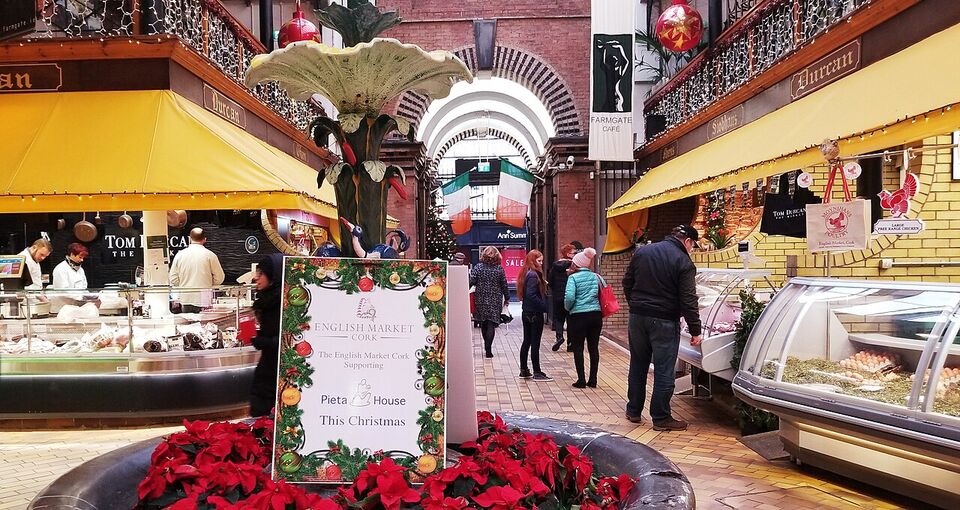
A covered food market whose origins go back to 1610, in a building from 1786. Stalls sell fish, meat, cheese, baked goods and prepared food. Hours vary by stall and day, and many stalls wind down by late afternoon, so go in the morning and plan lunch there. Check the market's opening days before you go.
St Anne's Shandon
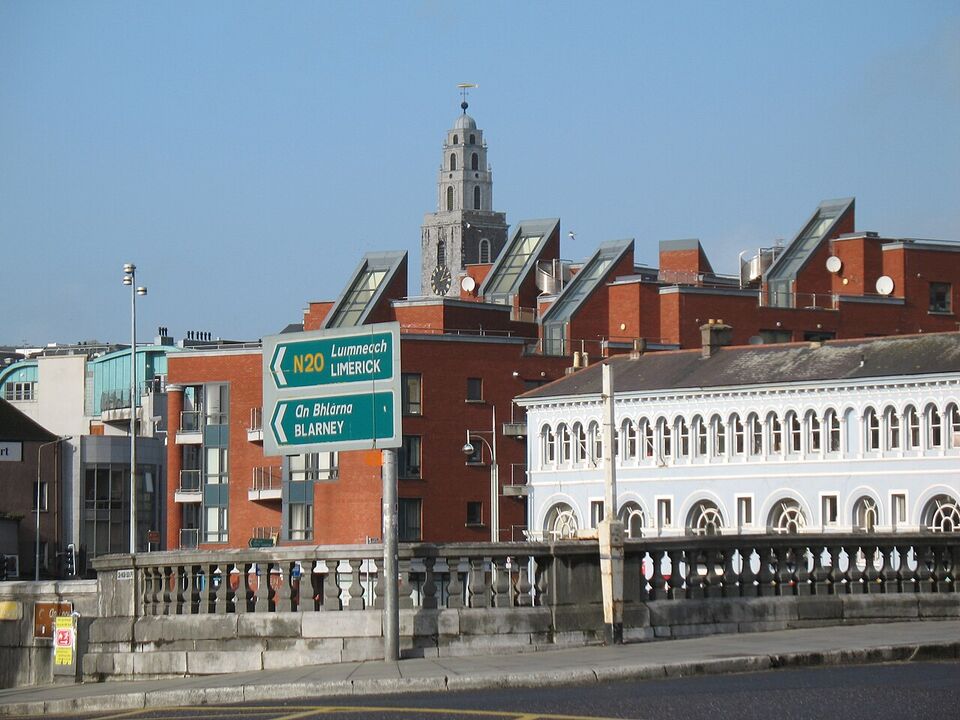
The church tower of St Anne's, with red sandstone on two sides and white limestone on the others, is the city's best-known landmark. The area around it has steep streets and good views back over the center. Check opening hours and the tower fee locally.
St Fin Barre's Cathedral
One of the city's two cathedrals, a Gothic Revival building. Check hours before going, as visitor times and special events vary.
University College Cork
The campus has a historic quadrangle and sits beside the river. The grounds are pleasant for a short walk, and Fitzgerald's Park nearby houses the Cork Public Museum.
Women's Gaol, Sunday's Well
A former prison turned visitor attraction on the north bank. Confirm that it is open when you visit.
Eating in Cork
Cork's food reputation is built on local produce: fish, dairy, meat and baking. The English Market is the obvious starting point for a casual lunch, and the streets around it have cafés and restaurants at all price points. Book dinner for Friday and Saturday, especially in the center. Traditional Cork dishes such as tripe and drisheen, a type of blood pudding, are an acquired taste and are served in some places as a curiosity. See the food guide for what to order, and the pubs guide for how Irish pubs work.
Insider tip
Cork has its own rivalry with Dublin, and its own taste in stout and beer. Ask for a local drink at the bar and let the bartender recommend. Many pubs have live music at weekends, and some have it midweek.
Blarney Castle and Gardens
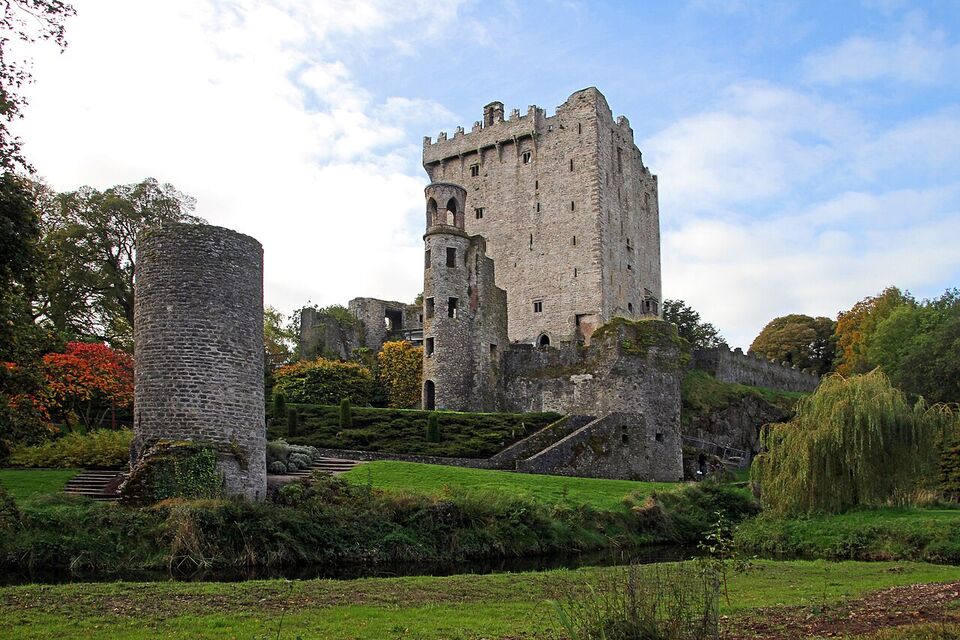
Blarney Castle is about 5 miles (8 km) northwest of Cork city, and the Blarney Stone sits at the top of the tower. According to the castle, Cormac MacCarthy built it nearly six hundred years ago. The tradition is that kissing the stone gives you the gift of eloquence, which is where the English word "blarney" comes from. To reach the stone you climb steps inside the tower, and then lean backward to kiss it, with a staff member helping. If heights or narrow stairs worry you, you can skip the stone and still enjoy the rest of the site.
The gardens are the reason to give Blarney time. The grounds include a poison garden, a rock close with mossy rock formations, a herbaceous border, specimen trees and walking trails. Many visitors spend three hours or more, and the castle says the site is open all year.
Blarney tickets and hours
| Ticket | Price | Notes |
|---|---|---|
| Adult | €24 (about $27) | Pay online or at the ticket office |
| Student or senior (65+) | €19 (about $21) | Carry ID |
| Child 6-16 | €12 (about $13) | Accompanied by an adult |
| Child 5 and under | Free | |
| Family (2 adults, 2 children) | €65 (about $73) |
There are no timed slots, so there is no reservation to make, though the castle offers advance online tickets. Hours are 9 a.m. to 5 p.m. in January to March (last admission 4 p.m.), 9 a.m. to 5:30 p.m. in April (last 4:30 p.m.), 9 a.m. to 6 p.m. from May to September (last 5 p.m.), 9 a.m. to 5:30 p.m. in October (last 4:30 p.m.), and 9 a.m. to 5 p.m. in November and December (last 4 p.m.). It is closed on December 24 and 25, and opens 10 a.m. to 5 p.m. on December 26 and January 1. Check blarneycastle.ie before you go, since the castle says nothing about the year on its page.
From Cork, drive the N20 toward Limerick and take the exit signed for Blarney, about 5 miles (8 km) from the center. Buses also run to the village. Blarney is on the north side, away from the harbor towns, so combine it with a morning start and head to Kinsale or Cobh in the afternoon.
Watch out
Do not turn up late in the day in winter. The last admission is at 4 p.m. from November to March, and you want at least two to three hours. Arrive by about noon in winter to do the castle, gardens and walks without rushing. Ice and rain can make the tower steps slippery.
Cobh, the Titanic and emigration
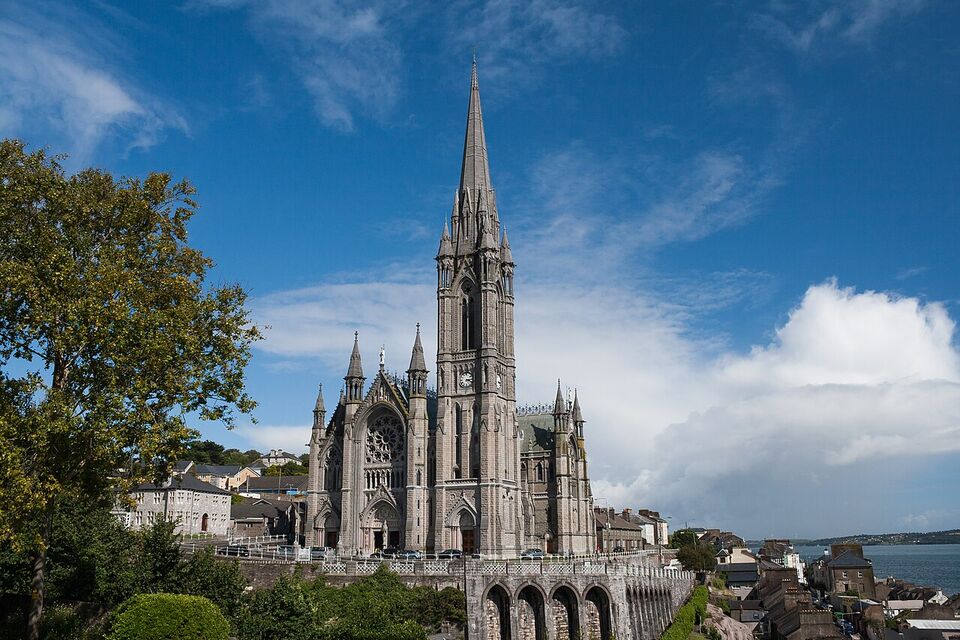
Cobh (pronounced "cove") sits on an island in Cork Harbour, with a hillside of colored houses above the waterfront and a cathedral that dominates the skyline. It was once called Queenstown, and it matters to American visitors because it was the main port of departure for emigrants leaving Ireland for America, and the last stop of the Titanic in April 1912. Many families with Irish roots begin their search here; see our ancestry guide for how to trace records.
The town has a heritage center and Titanic-themed attractions on the waterfront. We could not confirm 2026-27 opening hours or prices for them, so check their official websites and the Cobh tourist information before you go, and expect shorter hours in winter. The town is also easy to enjoy without a ticket: the seafront walk, the cathedral, the steep streets and the cafés.
Getting to Cobh
Commuter trains run from Cork Kent station to Cobh, calling at Fota on the way. The timetable is on irishrail.ie. By car it is a short drive, but parking can be tight on busy ship days.
A cruise-day plan for Cobh
Cruise ships dock at Cobh, and the town can be crowded when one or two are in. Check your ship's all-aboard time before you plan anything, and give yourself a margin. The cruises guide covers port days in more detail.
- Easy day
Stay in Cobh
Walk the waterfront, visit the cathedral and one heritage attraction, have lunch, and be back on board early. This is the low-stress option.
- Medium day
Cobh plus Fota or Midleton
Take the train to Fota (Fota Arboretum and Gardens is an Office of Public Works site) or on to Midleton. Check the return train times and your all-aboard time before you leave.
- Ambitious day
Blarney or Cork city by organized excursion
Book a ship excursion or a private tour that guarantees return to the ship. If you go independently to Blarney, allow a long margin; delays on the road or at the castle can cost you the ship.
Kinsale and the south coast
Kinsale is a harbor town with narrow streets, colorful shopfronts and a reputation for restaurants. It is a short drive from Cork city, and buses also run from the city; check the timetable at buseireann.ie or tfi.ie. The Wild Atlantic Way, a signed driving route of about 1,550 miles (2,500 km) along the west coast, begins in Donegal and ends at Kinsale, so many people use the town as a finish line or a start.
The town's attractions are modest: the harbor, the lanes of shops and galleries, and two historic military sites run by the Office of Public Works, Desmond Castle and Charles Fort. We could not confirm opening hours or prices, so check heritageireland.ie. Food is the bigger draw, and the restaurants fill on summer weekends, so book ahead. A walk along the waterfront and the harbor path is pleasant if you have time.
The Old Head of Kinsale
The Old Head of Kinsale is a headland south of the town, with a well-known golf links. A round there cost about €500 (about $560) in summer 2026, according to a golf survey, and tee times need booking well ahead; the golf guide has more. Offshore lies the site of the Lusitania sinking in 1915. Access to the headland is controlled, so confirm what non-golfers can visit before you drive out.
Ballycotton and the east coast
Ballycotton is a small fishing village east of Cork with a lighthouse on an island offshore and a clifftop path. It is a good half-day if you want a quiet coastal walk and a lunch stop, and you can combine it with Midleton.
Save money
Skip the car if you are staying in Cork city: trains reach Cobh and Fota, buses reach Blarney and Kinsale, and the city center is walkable. You can add a one-day car rental only for the days you need it, which saves parking and insurance costs.
Fota, Midleton and other day trips
The Cork area has several easy half-day trips beyond the big three.
- Fota. A short train ride from the city. Fota Arboretum and Gardens is an Office of Public Works site, and Fota House and Gardens and a wildlife park are also on the estate. Check each website for hours and prices, and note that they are separate attractions.
- Midleton. Jameson's Midleton Distillery Experience starts from €28 (about $31), takes 75 minutes, and is for over-18s with ID; children aged 7 and under are free. Tours start at 11:00, 12:00, 13:00, 14:00, 15:00 and 16:15, and you taste three whiskeys. Book online, as the days it runs are not stated on the page.
- Charles Fort and Kinsale. Combine with an afternoon in Kinsale.
- West Cork. Towns such as Clonakilty and Skibbereen lie farther west and need a full day or an overnight stay. See the regions guide.
Where to stay
Choose between three bases. Cork city is best if you are using trains and buses, want restaurants and nightlife, or are arriving by train. Kinsale suits food lovers who have a car. Cobh works for cruise passengers or for a quiet stay near the harbor.
| Base | Tier | Good for |
|---|---|---|
| Cork city center | $$ | Trains and buses, food, nightlife; hotels near the river and the station |
| City B&B or guesthouse | $ to $$ | Breakfast included, lower prices; B&Bs often run roughly €60 to €150 a double (about $67 to $168) |
| Kinsale | $$ to $$$ | Dinner in town, harbor setting; book early for summer weekends |
| Cobh | $ to $$ | Cruise passengers, quiet evenings |
Prices spike on cruise days and during large events such as the Cork Jazz festival, which is usually held over the late October bank holiday weekend (check the date for 2027). Book accommodation early for those weekends. Our where to stay guide explains the tiers.
When to go and winter hours
Cork is mild and wet. Cork Airport's long-term averages show January highs near 47°F (8.2°C) and lows near 38°F (3.2°C), July highs near 65°F (18.6°C), and about 162 rain days and 1,239 mm (about 49 inches) of rain a year. November highs are about 51°F (10.3°C). Pack a waterproof jacket in any month.
In winter, major sites stay open but with shorter hours. Blarney's last admission is at 4 p.m. from November to March, and it closes on December 24 and 25. Smaller attractions, boat trips and some restaurants in Kinsale and Cobh may close or open fewer days from November to March. Public transport may not run on December 25, and 2026 timetables had not been published when we checked, so see tfi.ie in December. For more, see our when to go guide.
A sample three-day plan
- Day 1
Cork city
The English Market for lunch, then Shandon and the quays, with dinner and a pub in the center.
- Day 2
Blarney and the gardens
Arrive in the morning, climb the tower, then walk the gardens and poison garden. Return to Cork for the evening.
- Day 3
Cobh and Kinsale
Take the train to Cobh in the morning for the harbor, the cathedral and the emigration story, then continue to Kinsale by road for dinner.
Moving on? The route from Cork toward Kerry is covered in the Killarney guide, and toward Dublin by way of the southeast in the Kilkenny guide.
Add it to a route in the trip builder, or ask us to plan the hotels, trains and guides for you.