
Overview
You do not need much to stay healthy in Ireland, but you do need a plan for what happens if you are not. Ireland has high-quality hospitals and doctors, no required vaccines for US visitors as we read it, safe tap water and few of the tropical hazards that worry travelers elsewhere. The things that actually send visitors to a doctor are ordinary: a fall on a wet trail, a cold or stomach bug, a cut hand, a flare-up of a chronic condition, a forgotten medication.
The main difference from home is how you pay and where you go. Medicare does not cover you here, your US insurer may cover little or nothing, and Irish care for visitors works on a "see the doctor, pay, claim later" basis. A good travel insurance policy is therefore the single most important item on this page. For safety hazards, emergency numbers and the US Embassy, see safety in Ireland.
The Republic of Ireland and Northern Ireland have different health systems. In the Republic, the Health Service Executive (HSE) runs the public system. In Northern Ireland, health care is part of the UK's National Health Service (NHS). We say which one we mean throughout.
Travel insurance and why you need it
Medicare generally does not pay for care outside the United States. Medicaid does not either, and many private US plans cover emergencies abroad only in a limited way, with out-of-network rules, high deductibles and refunds that take months. Call your insurer before you go and ask three things: what is covered abroad, whether you must pay up front and claim later, and whether it will cover medical evacuation.
Emergency care in the Republic is provided regardless of your insurance or residency, and the bill follows. Settle.ie, an Irish guide updated in August 2026, advises non-EU visitors to carry travel insurance because an admission or an ambulance transfer can cost thousands of euro. We could not confirm specific daily rates for a hospital bed, so we do not quote one.
A policy worth buying covers:
- Emergency medical care and hospital stays, with a limit of at least several hundred thousand dollars.
- Emergency medical evacuation and repatriation, which is the expensive part if you are seriously ill.
- Trip interruption and cancellation, including for illness before you leave.
- Activities you plan to do, such as hiking, cycling and boat trips. Read the exclusions.
- Pre-existing conditions, which often need to be declared or covered by a waiver bought soon after your first trip payment.
Save money
Compare a stand-alone travel medical plan with a cancellation-plus-medical policy. If you only need medical and evacuation cover, the cheaper stand-alone version may do. Check whether your credit card's travel benefits include medical cover. Many do not, and those that do often cover only part of the cost.
Keep your policy number and the insurer's 24-hour assistance number in your phone. Many insurers ask you to call them before or soon after any major treatment, so they can direct you to a hospital and arrange payment.

How care works in the Republic of Ireland
GPs (family doctors)
A general practitioner, or GP, is the first stop for non-emergency problems: infections, rashes, a persistent cough, a prescription. Most Irish GPs are private practices and charge visitors a fee on the day. We could not confirm a typical fee, so ask the price when you book and keep the receipt for your insurer. Some surgeries take only registered patients, so phone ahead. Many hotels know a local doctor and will make the call for you. Out-of-hours GP services also operate in many regions; ask your hotel or the pharmacy.
Pharmacies
Pharmacists in Ireland are qualified to advise on colds, coughs, sore throats, minor skin problems, insect bites, stomach upsets and many other minor ailments, and they will tell you if you need a doctor. It is the cheapest way to deal with a small problem. We could not confirm opening hours, which vary by town; city and large-town pharmacies are usually open daytimes and some stay later, while small villages may close at lunchtime or on Sundays. Ask locally. In an out-of-hours emergency, the pharmacy's door often lists the nearest late-night pharmacy.
Emergency departments (A&E)
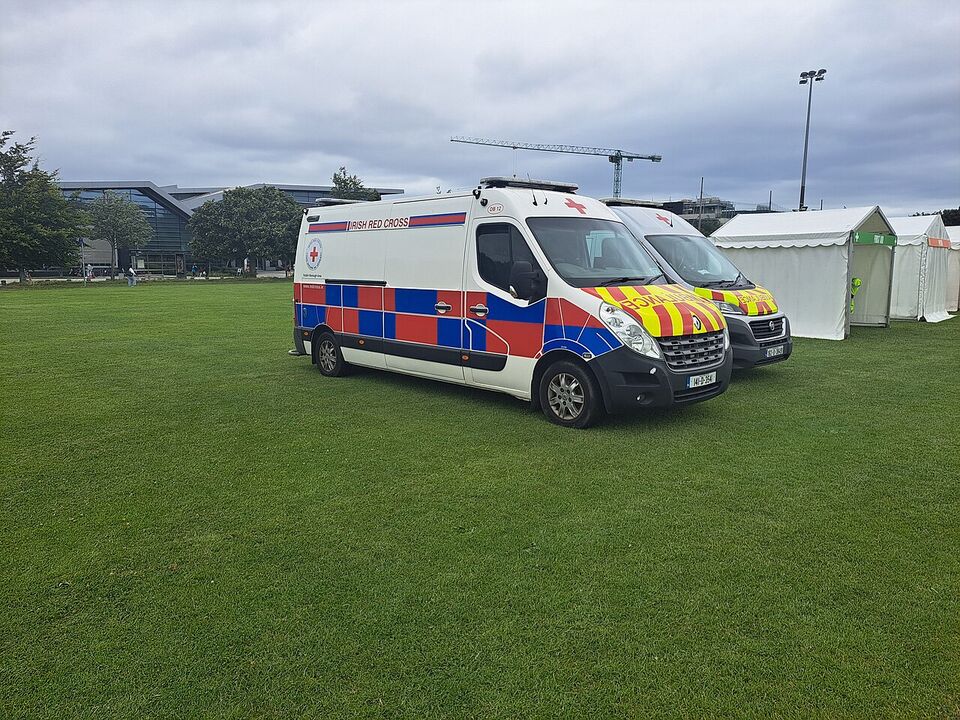
For serious injuries and illness, go to the nearest hospital emergency department, often called A&E, or dial 112 or 999 for an ambulance. The HSE lists a €100 (about $112) charge to attend an emergency department unless you have a medical card, a referral letter from a GP or a medical professional, or a referral from an injury unit. Emergency departments can be busy; patients are seen in order of seriousness, not arrival, so a minor problem may mean a long wait. Further charges can apply for admission or treatment, and you will be billed afterward.
Injury units and urgent care
Some regions have local injury units for minor injuries such as sprains, cuts and suspected simple fractures, and they can shorten the wait compared with a big emergency department. Opening hours and age limits vary by unit, so check hse.ie or ask your GP or hotel. An injury-unit referral is one of the exemptions to the emergency department fee.
Public and private care
Ireland has a public system and a large private sector. Residents pay different rates depending on eligibility, but visitors from outside the EU are generally treated as private or self-paying patients for non-emergency care. If you have insurance, your insurer will often tell you which providers to use and whether you must pay first. Ask for an itemized receipt and any medical report, because you will need them for the claim.
Different from home
There is no "urgent care clinic on every corner." Expect to phone a GP or pharmacy first, and to pay at the time of service rather than receive a bill in the mail. Get itemized receipts, diagnosis codes if available and a short report in English. Always ask for the price before treatment that is not an emergency.
Emergency numbers
In the Republic of Ireland, dial 112 or 999 for ambulance, Garda, fire, Coast Guard or Mountain Rescue. Both numbers connect to the same service, according to the HSE. In Northern Ireland, dial 999 or 112. 911 does not work. If you need to help someone on a hillside or the shore, say clearly which service you need and describe your location. The safety guide has a table of who to call in what situation. The US Embassy in Dublin has an emergency line for American citizens at +353 1 668-8777. It can help you contact family, find a doctor or hospital and deal with a lost passport, but it cannot pay medical bills.
Medical care in Northern Ireland
Northern Ireland uses the UK's National Health Service, organized locally as Health and Social Care. Visitors from outside the UK and the EU are not treated like residents. Accident and emergency treatment at a hospital is the main entry point, and charges can apply to further hospital care, outpatient treatment and some prescriptions for overseas visitors. Because the rules for visitors change, check nidirect.gov.uk before you travel and carry your travel insurance details. If you take a prescription, the same advice applies as in the Republic: bring enough from home. Northern Ireland uses pounds, so any charge is in sterling (see the money guide). For a visit to Belfast or the Causeway Coast, see the Belfast guide and the Causeway Coast guide.
Vaccines and CDC advice
As far as we can determine, no vaccines are required for US citizens entering Ireland, and there are no entry health forms that we know of. We could not open the CDC's Ireland page in mid-November 2026, so read the current version at the CDC's travelers' health pages before you go. The CDC's general advice for any international trip is to be up to date on routine vaccines (for example measles-mumps-rubella, tetanus-diphtheria-pertussis and the annual flu shot) and to see your doctor four to six weeks before you leave if you have a medical condition.
COVID-19 entry rules: we found no current entry requirement, but rules can change. Check the entry guide and your airline before you fly (see entry requirements).
Prescriptions and medicines
Bringing your own
- Bring enough for the whole trip plus a few extra days in case of delay.
- Keep medicines in their original labelled containers, in your carry-on bag, not in checked luggage.
- Carry a letter from your doctor on letterhead with your diagnosis, the generic name of each drug and the dose. A printout of your pharmacy record helps.
- Know the generic names. Irish pharmacies use international non-proprietary names, which can differ from US brand names.
- For controlled medicines such as strong painkillers, ADHD stimulants or sleep aids, ask the Irish regulator, the HPRA (hpra.ie), or the Irish Embassy in the US about the rules before you fly. We could not confirm a rule list, so check the official source rather than assume.
Getting a refill or a new prescription
Irish pharmacies fill prescriptions from doctors registered in Ireland, so a US prescription generally cannot be filled on its own. If you run out, see a local GP, explain your medicine, bring your letter and pay for the visit, then take the Irish prescription to a pharmacy. Prices for a medicine can differ from the US. Keep receipts for your insurer.
Over-the-counter medicines: names that differ
Many common drugs are sold under different names. This table covers the usual ones, but ask the pharmacist to confirm the right product and dose.
| US name | What you ask for in Ireland | Notes |
|---|---|---|
| Acetaminophen (Tylenol) | Paracetamol (brands such as Panadol or Calpol for children) | Same drug; do not combine products that contain it |
| Ibuprofen (Advil, Motrin) | Ibuprofen (often Nurofen) | Same drug; take with food |
| Epinephrine (EpiPen) | Adrenaline auto-injector (EpiPen, Jext) | Bring your own; carry a doctor's letter |
| Albuterol inhaler | Salbutamol inhaler (Ventolin) | Bring spares in original packaging |
| Diphenhydramine (Benadryl) | Antihistamine (such as cetirizine or loratadine) | Ask the pharmacist about drowsiness |
| Acid reducers (Tums, Pepto-Bismol) | Antacids; ask the pharmacist | Brands vary |
| Cough and cold products | Ask the pharmacist | Ingredients and names differ from the US |
Some strong painkillers, including products with codeine, are restricted in Ireland and may need a prescription or be handled only by a pharmacist, so do not assume you can buy the same product you use at home. The exact rules are not something we could confirm.
Tap water, food and drink
Tap water is generally safe to drink in Irish towns and cities, and restaurants will give you tap water on request. Occasional boil-water notices are issued for local supplies after contamination or treatment problems. If one covers your area, follow the notice from the water utility or your host and use bottled or boiled water for drinking and brushing teeth. Do not drink from streams, even clear mountain ones, unless you have treated the water, because livestock use much of the countryside.
Food standards are similar to those in the US and the EU. Seafood chowder, oysters and other shellfish are common on the coast; if you have a shellfish allergy, ask staff and say so clearly. Pregnant travelers and anyone with a weak immune system should follow their doctor's advice on unpasteurized cheese and raw seafood. Restaurants are generally expected to be able to tell you about allergens in their dishes; ask before you order, and say whether it is a severe allergy or a preference.
Ticks, midges and the outdoors
Ticks live in long grass, bracken and woodland across Ireland, and some carry Lyme disease. The simplest protection is to wear long trousers tucked into socks when walking through vegetation, use an insect repellent that contains DEET or a similar active ingredient, and check yourself, children and pets after a walk, especially in warm months. If you find a tick, remove it with fine-tipped tweezers close to the skin, clean the area, and see a doctor if you develop a rash or fever in the following weeks. Tell the doctor you were in Ireland.
Midges are tiny biting flies, mostly a nuisance in the west and in damp, still, shady spots from late spring to early autumn, especially at dawn and dusk. A hat, long sleeves and repellent help. A midge net is cheap and small to pack. The hiking and outdoors guide covers where and when they are worst. Nettles, brambles and bracken can scratch bare legs, so shorts are not the best choice for off-trail walks.
Weather, sun and walking hazards
Ireland's weather is mild but changeable. Dublin Airport's averages (1991 to 2020) show a daily high of 46°F (8°C) in January, 67°F (19.5°C) in July and rain on about 137 days a year. The west is wetter than the east. Hypothermia is possible on windy, wet days even when it is not cold by US standards, especially in the hills and on the coast. Wear layers and a waterproof, and turn back if you are chilled and wet.
The sun can be strong on clear days, even when the air is cool. Use sunscreen and sunglasses from spring to early autumn. Wet grass, sheep tracks, cobblestones and slippery rock cause many sprains and falls, so choose shoes with grip. Cliff edges and tides carry greater risks; see safety in Ireland for those.
Watch out
Jet lag and a rental car are a poor mix. If you arrive on an overnight flight, rest first, and do not drive with a sleepy head. Fatigue, driving on the left and narrow roads are a bigger health risk than any disease in Ireland. The driving guide explains how to ease in.
Allergies and chronic conditions
Pollen season runs through spring and summer, and mold can be a trigger in damp weather. Bring your usual antihistamines in original packaging, or ask a pharmacist for the Irish equivalent. If you carry an epinephrine auto-injector (called an adrenaline auto-injector in Ireland), bring two, keep them in your carry-on and carry a doctor's letter. If you have diabetes, take enough insulin and supplies for the whole trip plus extra, keep them in your hand luggage, and carry a letter. If you use oxygen or other equipment, check with your airline well ahead. Plan for 230-volt sockets and Type G plugs if you use powered devices (see the phones and power guide).
For accessibility or mobility needs, many older buildings, cobbled streets, small ferries and historic sites are hard to navigate. Contact attractions before you go.
Mental health
Travel is stressful, and a long trip away from home can affect anyone. If you feel anxious, low or overwhelmed, talk to someone: a friend, a GP or a pharmacist. The US 988 line is a US number and does not work from Ireland. Samaritans operates a free helpline in both the Republic and the UK (we believe 116 123, but confirm at samaritans.org before you travel), and you can call 112 or 999 in an emergency. Many travel insurance policies include a helpline. If you are on medication for a mental health condition, treat it like any other prescription: carry enough, keep it in original packaging and bring a letter.
A short health packing list
- Travel insurance policy number and the 24-hour assistance number, saved offline.
- Prescription medicines in original packaging, plus a doctor's letter and generic names.
- A basic first-aid kit: plasters (Band-Aids), blister pads, antiseptic wipes, tweezers, pain reliever and an antihistamine.
- Insect repellent, a midge net and sunscreen.
- Waterproof jacket, warm layers, a hat and waterproof boots with grip.
- Contact lens supplies and a spare pair of glasses.
- Copies of your passport, insurance card and a list of medical conditions and allergies.
- A reusable water bottle (tap water is fine).
Before you go, also read the entry steps in entry requirements and the weather notes in the packing guide.
Add it to a route in the trip builder, or ask us to plan the hotels, trains and guides for you.