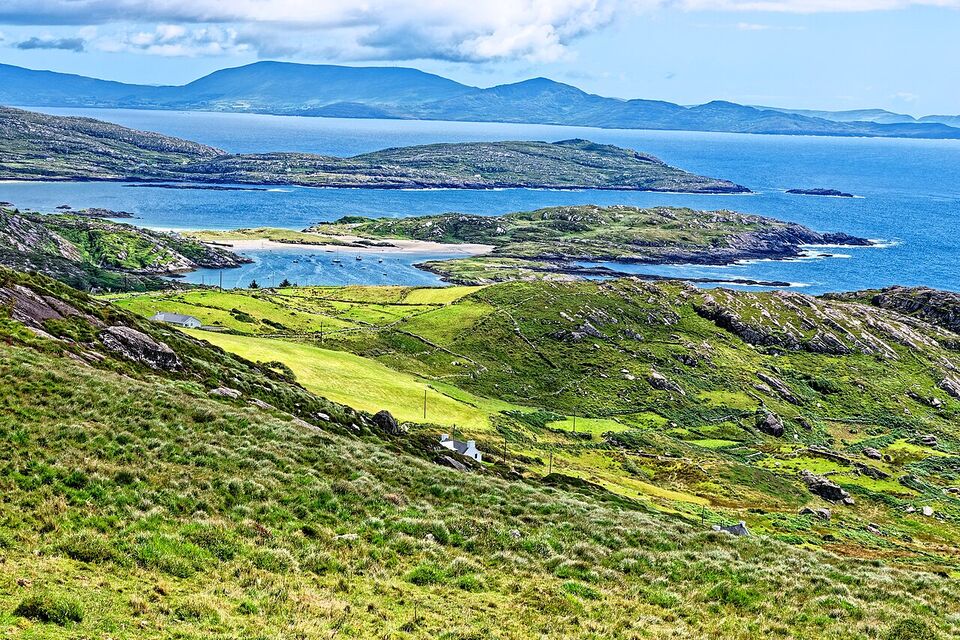
How to plan a trip to Ireland
Start with three decisions: how many days you have, whether you will rent a car, and which season you will travel in. Everything else (bases, routes, bookings) follows from those. For most first-time visitors from the United States, the best plan is 7 to 10 days built around Dublin and the west coast, with a base of two or three nights in each of two or three places and a short list of things to book ahead.
This page is the hub for the planning guides. Season and weather are in When to Go to Ireland, passports and borders in Entry Requirements and Preclearance, euros and cards in Money in Ireland, phones and plugs in Phones, Data and Power, nonstop routes in Flights to Ireland and Britain or Europe add-ons in Ireland, Britain and Beyond. Details of prices and hours are dated November 2026 and need a recheck before you book.
One term to get straight first: Ireland (the Republic, capital Dublin) and Northern Ireland (part of the United Kingdom, capital Belfast) are two countries on one island. The Republic uses euros and kilometers. Northern Ireland uses pounds sterling and miles. You can cross the land border without a check, but the rules about entry, money and phone networks differ.
How long to stay and how to split your time
| Time | What fits | Pace |
|---|---|---|
| 3 to 4 days | Dublin only, with one half-day trip (Kilmainham Gaol, Guinness, Trinity, a pub night) | Easy |
| 5 to 6 days | Dublin plus either a day trip to Newgrange or Wicklow, or two nights in Galway with the Cliffs of Moher | Moderate |
| 7 to 10 days | Dublin, the west coast (Galway, Cliffs, and either Connemara or Kerry), and a stop such as Kilkenny | Moderate, with some long driving days |
| 11 to 14 days | A full loop with Kerry, Cork and Northern Ireland, or a slower pace with more nights in each base | Comfortable |
A good rule is two nights minimum in any base, three in Dublin, and no more than one night in a place you will only use to sleep. Drive times in Ireland are longer than the map suggests because most roads outside motorways are narrow, winding and shared with tractors and tour coaches. As a rough guide (use a route planner for real numbers), Dublin to Galway takes about 2.5 to 3.5 hours by road or train, Dublin to Killarney longer, about 4 to 5 hours by road, and the Ring of Kerry alone is a 111-mile (179 km) loop that takes 3.5 hours without stops and 7 to 8 hours with them.
A sensible split by region
- Dublin (2 to 3 nights): museums, pubs, Kilmainham Gaol, the Book of Kells, and the start of most day trips. See Dublin and Things to Do in Dublin.
- The west (3 to 5 nights): Galway, the Cliffs of Moher, Connemara or the Aran Islands, and perhaps Dingle and Killarney. See the regions and the Wild Atlantic Way.
- The north (2 nights, optional): Belfast, Titanic Belfast and the Giant's Causeway. It adds a country, a currency and a UK ETA. See Belfast and the Causeway Coast.
Choosing your bases
A base is the town where you sleep for two or more nights and make day trips. Pick bases for what you can do from them on foot or by short drive, and for how easy they are to reach.
| Base | Best for | Without a car? | Watch for |
|---|---|---|---|
| Dublin | First and last nights; museums, pubs, day trips east and north | Yes: walkable, with buses, Luas and DART | Higher room prices than elsewhere; Dublin Castle is closed until January 2027 |
| Galway | Pubs and music, the Cliffs of Moher, Connemara and the Aran Islands | Yes in town; day tours reach the Cliffs and Connemara | Rooms sell out in summer and during festivals |
| Killarney | Killarney National Park, Muckross House, the Ring of Kerry | Limited: tours and jaunting cars help | Very busy June to August; Ross Castle closed until 2027 |
| Dingle | Slea Head Drive, music, a distillery tour | No: a car or a tour is needed | Small town with few rooms; many places close or cut hours in winter |
| Cork | Food, Blarney Castle, Kinsale and Midleton | Yes in town; trains and buses to nearby sights | Check which attractions are seasonal |
| Kilkenny | Medieval streets, Kilkenny Castle, the Rock of Cashel nearby | Yes by train from Dublin; Cashel needs a car or tour | Small, so one or two nights is enough |
| Belfast | Titanic Belfast, murals and politics history, the Causeway Coast | Yes: Enterprise trains from Dublin and local buses | Pounds sterling; UK ETA; the Giant's Causeway needs a tour or car |
For rooms, B&Bs and guesthouses often run roughly €60 to €150 a double (about $67 to $168), which falls in our $ to $$ tiers, and hotels in Dublin cost more. Fáilte Ireland data put the national average hotel rate in 2025 at €174 (about $195) a night. Our guide to where to stay in Ireland covers neighborhoods and how to choose. Look for a registration number on short-term rentals: a register run by Fáilte Ireland was due to open on December 1, 2026, though the law behind it was still going through parliament in mid-November.
Rental car, trains and buses, or tours
| Option | Best for | Main limits |
|---|---|---|
| Rental car | The west coast, Dingle, Kerry, Connemara, anywhere with few buses | Driving on the left, narrow roads, insurance costs, parking and the M50 toll near Dublin |
| Trains and buses | Dublin, Belfast, Cork, Galway, Kilkenny and links between them | Fewer services on rural routes and on Sundays; holiday gaps; timetables change by season |
| Organized day tours | Cliffs of Moher, Newgrange or Wicklow from Dublin; Connemara from Galway | Fixed times, crowded stops; check what each ticket includes |
| Mix: car for the west, public transport for cities | Most first trips of 7 to 10 days | Plan to pick up and drop off at an airport or city office |
A mixed plan is usually best. Spend Dublin days car-free (a rental car there is more cost than help), then pick up the car when you leave the city. The Irish Rail Enterprise service runs up to 15 trains a day between Dublin and Belfast, and Dublin Express and other coach companies also serve the city. Outside Dublin, Transport for Ireland (TFI) lists bus and rail routes. See Getting Around Ireland.
If you rent a car
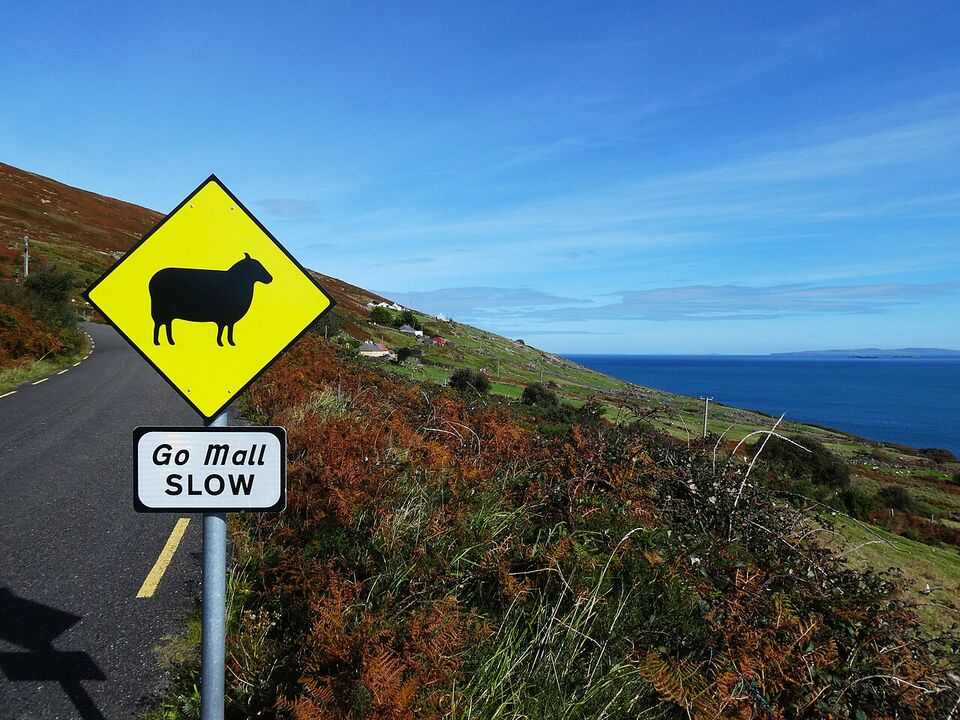
- Ireland and Northern Ireland drive on the left. Motorway limits are 120 km/h (75 mph) in the Republic, and the default on rural local roads is 60 km/h (about 37 mph) since February 2025. In Northern Ireland, signs are in miles and mph.
- Ask your credit card issuer for a written letter of coverage if you plan to rely on card insurance, because many US cards exclude Ireland. Otherwise buy the rental company's collision cover. One large company lists basic excess of €2,000 to €3,500 (about $2,240 to $3,920) and needs a letter, a fee and a card hold if you decline its cover.
- Rental companies set their own age limits and fees. One lists a minimum age of 21 with the licence held for four years, with higher limits for some cars, and requires a medical certificate for drivers over 75. Cards must be in the driver's name.
- Automatics cost more and sell out first. A rental guide puts typical daily rates at €40 to €80 (about $45 to $90) in peak season and €25 to €50 (about $28 to $56) off-peak, with automatics about €10 to €20 (about $11 to $22) a day more. Treat these as typical figures, not quotes.
- Petrol cost about €1.97 a liter (about $8.35 a US gallon) and diesel about €2.12 (about $8.99 a gallon) in early November 2026.
- The M50 ring road around Dublin has a barrier-free toll between Junctions 6 and 7: €2.60 (about $3) with a tag, up to €3.80 (about $4) if unregistered. Pay by 8 p.m. the next day at eflow.ie or ask how your rental company handles it.
- Driving into Northern Ireland needs written permission from the rental company, usually with a fee.
Read Driving in Ireland and Renting a Car in Ireland before you book. If you do not want to drive on the left on your first day, take the airport coach to your hotel and collect the car later.
Three sample routes
Route 1: the first-timer loop (9 nights)
Dublin, the south and the west in a clockwise loop, with a rental car after Dublin.
- Nights 1-3
Dublin
Trinity College and the Book of Kells, Kilmainham Gaol, the Guinness Storehouse and a pub with live music. If you land in the morning, keep day one light.
- Night 4
Kilkenny
Collect your car in Dublin, stop at the Rock of Cashel and sleep in Kilkenny or nearby. See Kilkenny.
- Nights 5-6
Killarney
Killarney National Park, Muckross House and the Ring of Kerry on the second day. See Killarney and the Ring of Kerry.
- Night 7
Dingle
Slea Head Drive and a harbor evening. Skip it in winter or in a week with bad weather. See Dingle.
- Nights 8-9
Galway and the Cliffs
Cliffs of Moher on the way north, then Galway for music and food. See the Cliffs of Moher and Galway.
- Day 10
Return to Dublin
Take the train or drive back and fly home, leaving time for US preclearance (arrive 3 hours before departure).
Route 2: the west-coast route (8 nights, fly into Shannon)
- Night 1
Doolin or Lahinch, Co. Clare
Land at Shannon, collect the car and go to the Clare coast. Visit the Cliffs of Moher the next morning.
- Nights 2-4
Galway, Connemara and the Aran Islands
Day trip to Connemara by car (the National Park visitor centre is open Wednesday to Sunday only) and a ferry from Rossaveel to Inis Mór, about 40 minutes in good weather. See Connemara and the Aran Islands.
- Nights 5-6
Dingle
Drive south through Clare and Limerick. Do Slea Head and a music night.
- Nights 7-8
Killarney
National park, Muckross and the Ring of Kerry, then back to Shannon for the flight home.
Route 3: Dublin plus day trips (5 days, no car)
- Day 1
Arrive and walk
City center, St Stephen's Green, Temple Bar for a look but not for dinner.
- Day 2
Trinity and museums
Book of Kells, the free National Museum of Ireland (Archaeology) and St Patrick's Cathedral.
- Day 3
Newgrange and the Boyne Valley
A guided tour from Dublin or by rental car; book the Newgrange time online. See Newgrange and the Boyne Valley.
- Day 4
Wicklow or Kilkenny
Glendalough and the Wicklow Mountains, or the train to Kilkenny. See day trips from Dublin.
- Day 5
Kilmainham Gaol and Guinness
Book the Gaol tour first, then the Storehouse. Add Belfast by Enterprise train as a separate trip.
The trip builder turns these into a day-by-day plan.
What to book, and when
| Booking | When | Notes |
|---|---|---|
| Flights | As soon as dates are set; earlier for summer | Nonstops run from many US cities. See flights to Ireland |
| Rental car | Months ahead for summer; automatics first | Get written card coverage, or buy the company's cover |
| Newgrange (Brú na Bóinne) | Tickets release at midnight Irish time: 30 days ahead for April 1 to November 1, and 7 days ahead for November 2 to March 1 | Every visitor, including infants, needs a ticket; official OPW site only; cancellations re-released about 8:30-9:30 a.m. and 3-4 p.m. |
| Kilmainham Gaol | As soon as your date opens | Guided tour only; adult €8 (about $9); pre-booking essential; official sites only |
| Book of Kells (Trinity) | Several days to weeks ahead in peak months | Timed entry, from €25 (about $28); non-refundable |
| Guinness Storehouse | Online, a day or two ahead in busy months | Adult from €26 (about $29), about €2 more at the door and not guaranteed if sold out |
| Cliffs of Moher | Online, same day to a few days ahead | 2026 gate price adult €15 (about $17); online is cheaper; ticket covers parking and a 2-hour visit |
| Skellig Michael | Not before the OPW and licensed boat operators publish 2027 dates | Closed for the rest of 2026 |
| Rooms in Dingle, Killarney, Galway | Months ahead for July and August and for bank holiday weekends | Many small places close in winter |
| ESTA for a non-US companion flying home | At least 72 hours before departure | Only for travelers who are not US citizens; you need just your US passport |
| UK ETA for Northern Ireland | Before you travel | £20 (about $27) on gov.uk; legally required though rarely checked on the road |
Watch out
Only the official Office of Public Works (OPW) and attraction websites sell valid tickets for Newgrange and Kilmainham Gaol. Third-party and resale tickets are refused at the door. Look for the heritageireland.ie web address or the museum's own domain.
Getting from the airport
Most US flights land at Dublin Airport (DUB) or Shannon Airport (SNN), with Belfast International (BFS) for the north. From Dublin Airport the Aircoach 700 runs to the city center as often as every 15 minutes, 24 hours a day, in 20 to 40 minutes depending on traffic, with a one-way fare of about €9 (about $10) booked online (check the price on the day). Dublin Express coaches also run from the airport to the city every few minutes, with stops that include Heuston Station and Trinity College; check its site for fares. A metered taxi to the center costs roughly €30 to €45 (about $34 to $50), more evenings, weekends and bank holidays. See Dublin Airport Transportation.
Different from home
On the way back, you clear US immigration, customs and agriculture in Dublin Terminal 2 (and at Shannon) before you board, and land in the US as a domestic arrival. Dublin Airport advises arriving 3 hours before a long-haul flight, and the morning peak at Terminal 2 security runs 5 a.m. to noon. Food bought before preclearance may be restricted: carry it in hand luggage and declare it.
The practical basics in brief
- Entry: US visitors can stay in Ireland for less than 90 days for a holiday. The State Department advises a passport valid for your whole stay; confirm on travel.state.gov. Ireland is not in the Schengen area, and the EU's new Entry/Exit System does not apply to Ireland-only trips. ETIAS, the EU's visa-waiver system, was not running as of mid-November 2026 and covers Schengen countries. Full detail in Entry Requirements and Preclearance.
- Money: euros in the Republic, pounds sterling in Northern Ireland, at €1 = US$1.12 and £1 = US$1.33. Tipping is not required, though most people round up or tip for good table service; check the bill for a service charge. See Money in Ireland.
- Phones and power: Ireland uses Type G sockets and 230 V, so you need an adapter and, for some devices, a voltage converter. Ask your carrier about a daily pass or buy an eSIM. See Phones, Data and Power.
- Safety and health: dial 112 or 999 for emergencies. An emergency department visit costs €100 (about $112) unless you have a referral, and travel insurance is wise. See staying safe and health.
- Time: Dublin is 5 hours ahead of New York for most of the year, 4 hours for a few weeks in spring and autumn.
- Packing: a waterproof jacket in every season. See the packing list.
What a trip costs: the building blocks
We do not give a single daily number, because rooms and cars drive most of the cost and swing with the season. Use these published figures as building blocks, then see the budget guide:
- Rooms: the 2025 national average hotel rate was €174 (about $195) a night, with August about €202 (about $226). B&Bs often run roughly €60 to €150 (about $67 to $168) for a double.
- Car: €25 to €50 (about $28 to $56) a day off-peak and €40 to €80 (about $45 to $90) in peak season as typical rental figures, plus insurance, fuel and tolls.
- Sights: Kilmainham Gaol €8 (about $9), Rock of Cashel €8 (about $9), the Cliffs of Moher €15 (about $17) at the gate, Guinness Storehouse from €26 (about $29). A Heritage Card for OPW sites is €40 (about $45) for an adult.
- Food and drink: a pint of stout averaged €6.08 (about $7) nationally in late 2025, and more in Dublin. Food in pubs and restaurants has had a lower VAT rate since July 1, 2026, but the pub trade says drinks did not get cheaper.
- Northern Ireland: Titanic Belfast adult £24.95 online (about $33), the Giant's Causeway Visitor Experience £15 (about $20), and the UK ETA £20 (about $27).
Save money
Travel in the shoulder months, book Cliffs of Moher tickets online (they cost less than at the gate), take the airport coach instead of a taxi, and use the Dublin Leap daily cap (adult €6.00, about $7) on city transport. Public transport fares rise by an average 15% from January 2027, so a late-2026 trip is still on the old fares.
What to skip if you are short on time
- Dublin Castle: closed to visitors in 2026, with reopening due in January 2027.
- Skellig Michael: closed until the 2027 season.
- The Aran Islands and Dingle: both need extra time and good weather. Choose the Cliffs of Moher and Galway instead on a trip under a week.
- The Ring of Kerry on a day trip from Dublin: too far. Base in Killarney or skip.
- Northern Ireland: add it only with 8 or more days. It involves a separate currency and a UK ETA.
- Several one-night stops: a lap of seven towns in seven days wastes daylight.
Also see the budget guide for what the trip will cost in dollars, and where to stay, once your route is set.
Add it to a route in the trip builder, or ask us to plan the hotels, trains and guides for you.