What to expect from food in Ireland
Irish food today is built on good raw ingredients: dairy and butter, beef and lamb, fish and shellfish from cold Atlantic water, potatoes, and bread baked without yeast. The old cliche of boiled bacon and a pile of potatoes is only part of the picture. Since the late twentieth century, cooks have gone back to those traditional ingredients and handled them in new ways, and dishes such as stew, coddle, boxty and the full Irish breakfast have all enjoyed a revival.
For a visitor, that means two kinds of meal. The first is simple and filling: a cooked breakfast, a bowl of soup with brown bread at lunch, a pub plate of stew or fish and chips. The second is a modern restaurant meal built around local produce, which in cities and towns on the coast can be as good as anywhere in Europe. Most trips include both.
This guide covers the dishes, where to eat, how menus and kitchens work, dietary needs, tipping and a short list of regional specialties. For drinks, see our drinks guide, and for the pub itself see our pubs guide. For a trip budget, see our budget guide and our money guide.
Different from home
The price on an Irish menu is the price you pay. Sales tax (VAT) is already included, and shops and restaurants are not allowed to add VAT at the register. There is no "plus tax" step as in the US. The only extra to watch for is a service charge, which must be stated in writing on the menu or signage.
The dishes to know
These are the dishes you will meet again and again. Most appear on pub menus, at cafes and in hotel dining rooms. Portions are often generous, so one main course is usually enough.
Full Irish breakfast
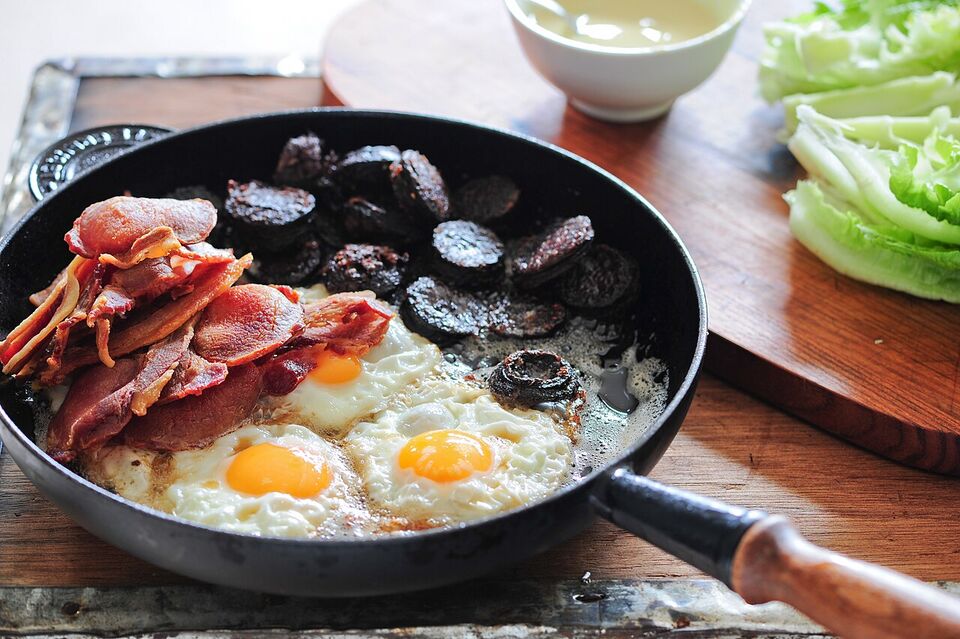
Bacon rashers, sausages, fried or scrambled eggs, black pudding, white pudding, grilled tomato and mushrooms, with toast or soda bread. Black pudding is made from pig's blood, barley and seasoning, and white pudding from suet, oatmeal or barley and pork. Both are worth a taste, and you can leave them off if you prefer.
Soda bread and brown bread
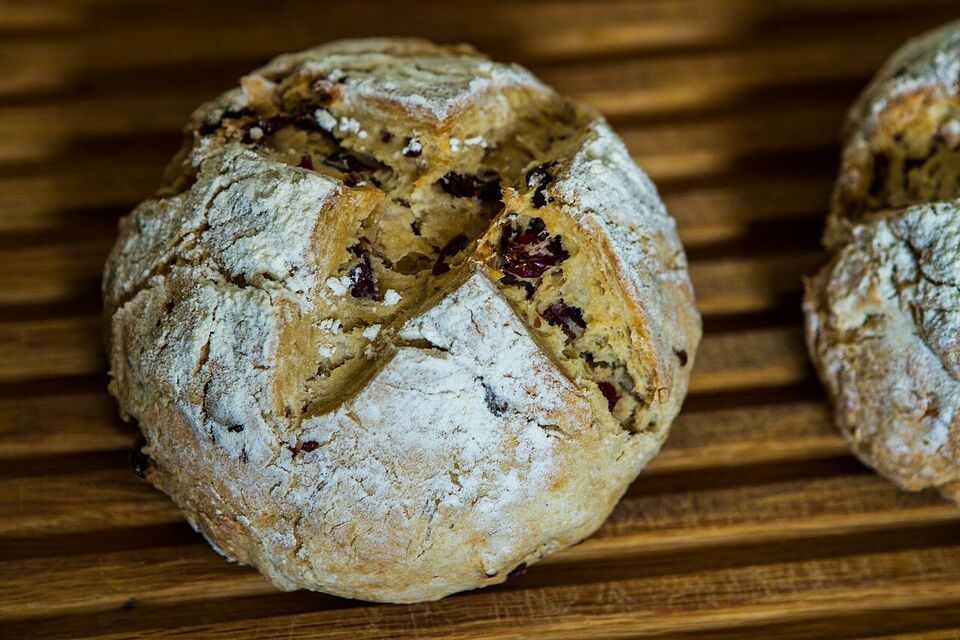
A yeast-free bread raised with baking soda and buttermilk. In the south it is often called brown bread, and soda bread is the term more used in Ulster. It arrives warm with butter beside soup, chowder or smoked salmon, and many guesthouses bake their own.
Irish stew
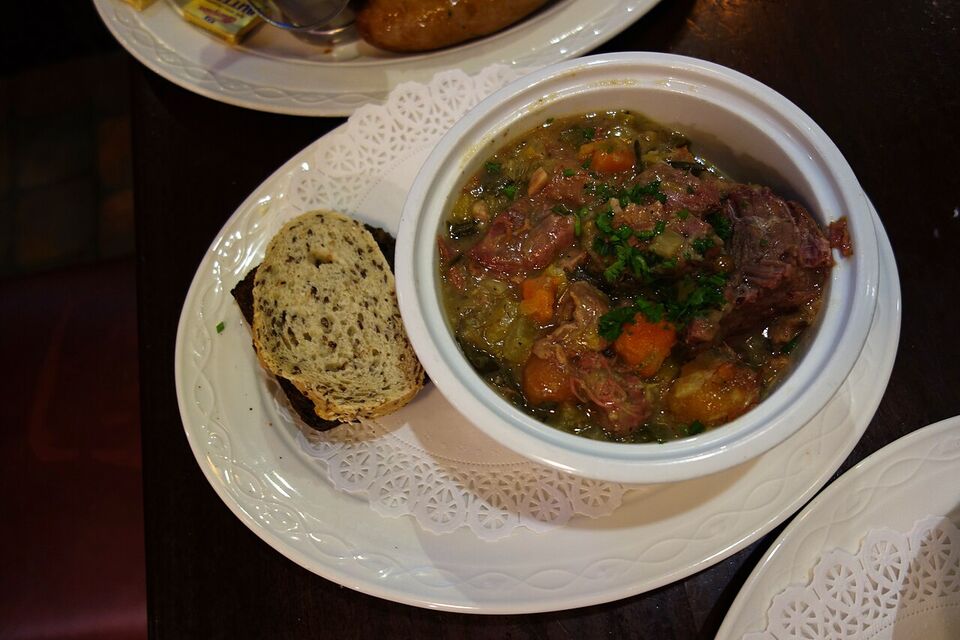
A slow-cooked stew of meat, potatoes, onions and carrots, traditionally lamb or mutton, though some places use beef. It suits a wet day, and it is one of the easiest dishes to find in a pub.
Seafood chowder
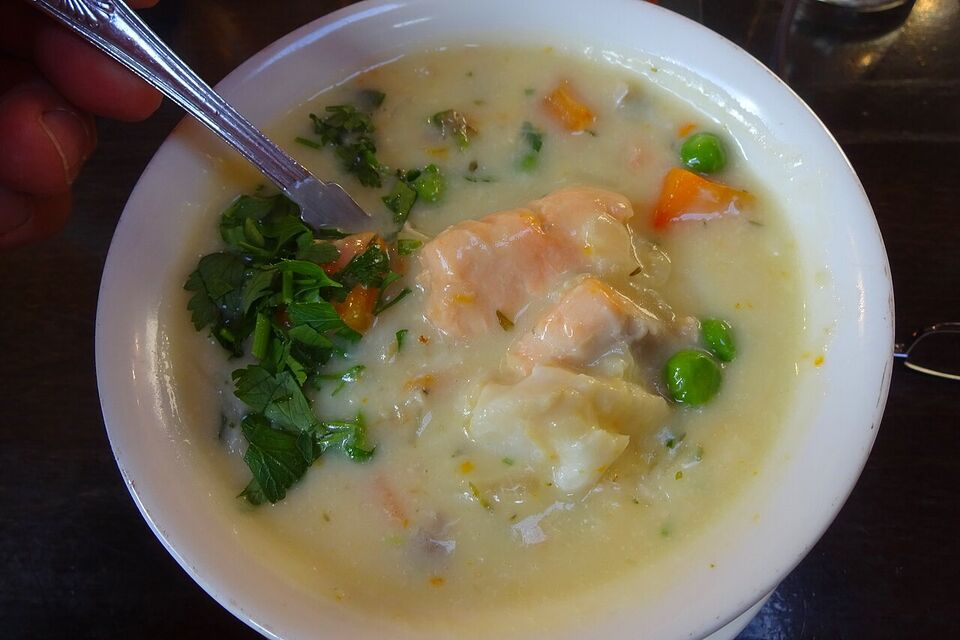
A thick, creamy soup of fish and shellfish, usually served with brown bread. Along the west coast it is often the lunch to order. Recipes vary, and a good one is full of fish rather than potato.
Boxty
A potato pancake, made with grated and mashed potato, that may be folded around a filling such as chicken, mushrooms or seafood. It is associated with the northwest of the island and the border counties.
Coddle
A Dublin dish of pork sausages, back bacon and potatoes, cooked slowly in a pot. It looks plain and tastes better than it looks, and it is easiest to find in traditional Dublin pubs and restaurants.
Bacon and cabbage, colcannon and champ
Boiled bacon and cabbage, usually with mashed potato, is a classic. Colcannon is mashed potato with kale or cabbage, and champ is mashed potato with scallions (green onions), butter and milk. These potato sides turn up with many main courses.
Barmbrack is a currant bread traditionally eaten around Halloween, and you may see it in bakeries in autumn. Crubeens (pigs' trotters) and skirts and kidneys are old dishes you are less likely to meet unless you go looking.
Seafood, salmon, oysters and cheese
Ireland's coastline is long, and fish and shellfish are central to the modern food scene. Look for mackerel, cod, hake, haddock, mussels, oysters, lobster and crab, along with freshwater salmon and trout. Smoked salmon is a good lunch or breakfast, usually served on brown bread with a squeeze of lemon. Smoked haddock and smoked trout also turn up.
Oysters
Galway Bay is the best-known oyster country, and the oyster is a traditional partner for a glass of stout. Oysters are often described as at their best in the months with an "r" in the name, running roughly from September to April, but seasons and supply vary by area, so ask the restaurant what is in. We have not confirmed current oyster season dates or the dates of the next Galway oyster festival; if that matters to your trip, check with Fáilte Ireland (failteireland.ie) or the festival's own page. See our Galway guide and our festivals guide for more.
Fish and chips
Fish and chips is a fixture in coastal towns, and most places serve cod, haddock or another white fish in batter. In Ireland "chips" are what Americans call fries, so a "chipper" is the takeaway shop. If you want the Irish version of a meal on a harbor wall, buy it from a local chipper and ask what fish is freshest that day.
Cheese and dairy
Grass grows for much of the year, cattle can stay outdoors for most of it, and Ireland has long made good butter and cheese. In the last few decades a wide range of farmhouse cheeses has appeared. A cheese plate or a cheese toastie is an easy lunch, and farm shops and markets are the places to buy a wedge to take with you. Ask staff to point out local makers.
Insider tip
Order the soup of the day with brown bread for lunch. It is usually one of the cheapest and most local items on the menu, it arrives fast, and it is often made on the premises. The same goes for a "toastie" or a ploughman's-style plate of cheese, bread and relish.
Tea, scones and afternoon tea
Tea is not just a drink in Ireland. It is a custom: a pot of tea arrives with a plate of scones, jam and cream, or with a slice of cake. Black tea with milk is the default. If you want it differently, ask. Many hotels and cafes serve a formal afternoon tea, with sandwiches, scones and pastries on a tiered stand, which is usually booked ahead and priced as a small meal. A simple tea and scone at a cafe costs much less.
In older Irish usage, "tea" can also mean the evening meal. If someone invites you for "your tea" at six, they may be offering dinner. For more on tea and coffee, see our drinks guide.
Where to eat
Pubs
Pub food was rare until the 1970s, when it became part of the pub trade, and today it ranges from sandwiches and soup to full meals. Pubs are a good bet for lunch and an early dinner, and a lot of them stop serving food earlier in the evening than a US restaurant would. Always ask the bar when the kitchen closes. See our pubs guide for how ordering works.
Cafes and bakeries
Cafes serve breakfast, soup, sandwiches and baking through the day, and they are the best value for a light meal. Many close by mid-afternoon in small towns and on Sundays, so do not count on a cafe lunch after 3 p.m. in the countryside.
Farm shops and markets
Farm shops, farmers' markets and food markets are worth building into a day on the road, especially in Cork, Kilkenny, Galway and Dingle (see our Cork guide, our Kilkenny guide, our Galway guide and our Dingle guide). They sell bread, cheese, smoked fish, cooked food and baking, and they are good for a picnic. Market days and hours change by town and season, so check the town's tourism page, because a market on Saturday morning may not run the rest of the week.
Restaurants
Restaurants range from casual to formal, and the best of them focus on local fish, meat and vegetables. In popular towns on weekends and in summer, book dinner ahead, and expect small places in the countryside to open for fewer days in winter. We do not name individual restaurants on this page, because openings, closures and ownership change often. Use the town's tourism office, Fáilte Ireland (failteireland.ie) or the venue's own site, and check the hours before you go.
Prices and the 2026 VAT change
From Wednesday, July 1, 2026, VAT on food served in restaurants, cafes, pubs and other hospitality outlets returned to 9% from 13.5%, according to Irish press reports of the change. The pub trade said most pubs do not serve food and would not benefit, so do not expect drinks to be cheaper. Standard VAT is 23%, and all of these taxes are already in the menu price.
We do not have a confirmed price for a full Irish breakfast, a coffee or a typical main course, because we could not check current menus. Travel-cost blogs suggest roughly €12 to €18 (about $13 to $20) for a pub lunch and roughly €35 to €55 (about $39 to $62) for a mid-range dinner, but treat those as a rough guide, not a quote. The best way to budget is to read the menu posted at the door, which almost every restaurant and pub shows, and to compare it with what you plan to spend.
For reference, the national average for a pint of stout was €6.08 (about $7) in November 2025, up 18% from November 2022. Prices are higher in Dublin, and a pint in tourist-heavy Temple Bar cost up to €10.45 (about $12) on St Patrick's Day 2025. That is a useful reminder that tourist areas charge more for everything, not only drinks.
Save money
Lunch is usually the cheapest meal. A bowl of soup and brown bread, a sandwich, or a lunch special costs less than the same food at dinner, and portions are often similar. Eating your main meal at lunch and a lighter dinner can cut a day's food bill noticeably. A big hotel breakfast also holds you until mid-afternoon.
Meal times and when kitchens close
Ireland eats at roughly the times Americans do, but kitchens do not always stay open as late. Hotels and B&Bs usually serve breakfast in the morning until about mid-morning, and cafes open early and close in the afternoon. Many pubs serve lunch from late morning and may stop food in the early evening, while restaurants open for dinner from around 5 or 6 p.m. We have not confirmed these patterns against a single official source, so treat them as typical, not guaranteed.
- Ask the time of last food orders, not just closing time. They can be hours apart.
- In small towns and out of season, expect fewer open days; Monday and Tuesday are common days off.
- On Sundays, some restaurants offer a set Sunday lunch; book it ahead.
- On Christmas Day, many restaurants and pubs are closed, so book or buy supplies in advance. See our December guide.
- If you arrive late in a rural town, a petrol station shop, a chipper or a supermarket sandwich may be your only option.
Reading an Irish menu
Most of the vocabulary is plain English, but some words differ from American use. Knowing them avoids surprises.
| On the menu | What it means to an American |
|---|---|
| Starter | Appetizer |
| Main course | Entree |
| Chips | French fries |
| Crisps | Potato chips |
| Rasher | A slice of back bacon, which is meatier than American streaky bacon |
| Jacket potato | Baked potato |
| Scallions or spring onions | Green onions |
| Prawns | Shrimp |
| Courgette and aubergine | Zucchini and eggplant |
| Biscuit | Cookie or cracker |
| Mineral or minerals | A soft drink, in older usage |
| Pudding or sweet | Dessert |
"Sausage" means a pork sausage, usually plain and mild. "Pudding" on a breakfast plate is black or white pudding, not dessert. A "toastie" is a grilled sandwich. A "carvery" is a counter where staff carve a roast joint and serve it with potatoes and vegetables, popular at lunch in pubs and hotels.
Vegetarian, vegan, allergies and gluten
Vegetarian dishes are common in cities and tourist towns, and many menus mark vegetarian, vegan and gluten-free items. Vegan choices are now easy to find in Dublin, Cork, Galway and Belfast, and harder in small villages, where a vegetarian main may be a single dish. Traditional Irish food leans on meat, so ask whether soup, stew bases and sauces contain meat stock or dairy.
On allergies, say clearly and early what you cannot eat, and ask the server rather than assuming a dish is safe. Soda bread, batter, pastry and most beer contain gluten, and a small kitchen may use shared fryers and surfaces. In Ireland, coeliac disease is known as "coeliac", and staff will recognize the word. A restaurant that offers a gluten-free menu in a larger town is usually better prepared than a small pub kitchen. We have not confirmed the legal rules on allergen information for this guide, so ask each venue directly, carry any medication you need, and see our health guide for medical basics.
Watch out
"Gluten-free" on a menu does not guarantee a cross-contamination-free kitchen. If you have coeliac disease or a serious allergy, tell the server it is medical, ask how the dish is prepared, and phone ahead for places you are relying on. In the countryside, bring a few safe snacks as a backup.
Tipping and service charges
Tipping in Ireland is not required, and the American 18 to 20 percent rule does not apply. Research by Ireland's consumer protection body (the CCPC), reported in January 2026, found that nine in ten consumers tip at least some of the time, and that cash makes up 89% of tips. It also found that 58% sometimes would rather not tip but feel they have to.
Check the bill for a service charge first. A mandatory charge must be notified in writing on the menu or signage. An optional charge cannot be added without your prior consent. If a charge on the bill was not displayed, you can ask for it to be removed. If there is no charge, locals usually round up or add a little for good table service. At a pub bar, no tip is expected.
Tipping screens and separate tap-to-tip terminals are now common. In the CCPC survey, 26% of people who met a standalone tip terminal tapped it by mistake, so look before you tap, and tip in cash if you prefer. For more on money, see our money guide.
Regional specialties
- Dublin: coddle, plus seafood at harbor towns such as Howth. See our Dublin guide.
- Cork and the south: a strong market and farm-shop scene; blaa (a soft white bread roll) is a Waterford specialty. See our Cork guide.
- Galway and the west: oysters, mussels and chowder. See our Galway guide.
- Kerry and the Dingle Peninsula: fresh fish, local lamb and small producers. See our Dingle guide and our Killarney guide.
- The northwest: boxty, closely linked to Leitrim and the border counties.
- Northern Ireland: the Ulster fry, which adds soda bread, potato bread and often a soda farl to the breakfast plate. Prices there are in pounds sterling, for example £10 (about $13). See our Belfast guide.
Planning your meals
A simple plan works for most trips. Take the hotel breakfast, which often covers you until afternoon. Have soup, a sandwich or a lunch special in a pub or cafe. Book one good dinner per town where you want a restaurant, and eat a lighter meal on travel days. Keep snacks in the car for rural stretches, because long drives on narrow roads often pass few cafes. If you plan to stay in rural areas, see our where-to-stay guide for choosing a base.
If you enjoy cooking, bring home butter, smoked salmon or cheese only after checking US import rules on cbp.gov, because meat and dairy have restrictions. Biscuits, tea, jam and sealed baked goods are the easiest souvenirs. For help with the language you will see on menus and signs, see our guide to Irish words.
Add it to a route in the trip builder, or ask us to plan the hotels, trains and guides for you.