Overview
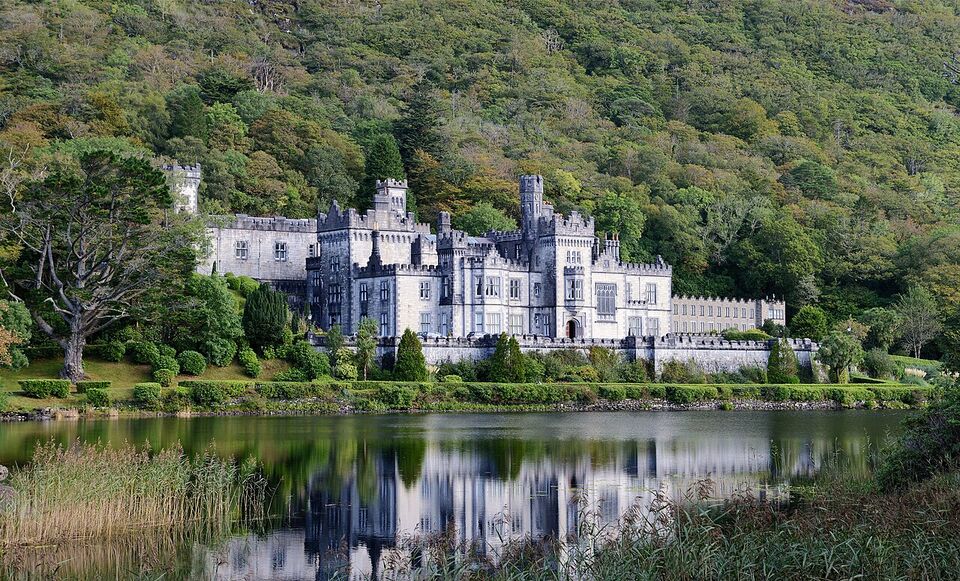
Connemara is the wild, boggy, mountainous western part of County Galway, and the easiest way to see it is a loop by car from Galway city. A long day takes in Kylemore Abbey, Connemara National Park, Clifden and the Sky Road, with Killary Harbour on the way back. Anyone who prefers not to drive can use a day tour, or the buses to Clifden and Letterfrack. The area has no sharp boundary, but it is roughly the country west of Lough Corrib.
It is also one of the Irish-speaking areas known as the Gaeltacht, which means you will hear Irish in shops and pubs, and some road signs show only the Irish place name. English is spoken everywhere you are likely to go. See Irish words and phrases for a few that help.
The landscape is bog, small lakes, quartzite mountains and a long, ragged coast. It rains often, and the weather changes fast, so we suggest treating the views as a bonus and planning stops that work in any conditions. This page covers the loop, each stop, how to see it by car or tour, narrow-road driving, winter closures and mistakes to avoid. Connemara sits on the Wild Atlantic Way and fits well with Galway.
The Connemara loop from Galway
The classic loop leaves Galway on the N59, passes Oughterard and Maam Cross, and heads to Clifden on the coast. From Clifden you can do the Sky Road, then drive north through Letterfrack (for the national park) and Kylemore Abbey, along the shore of Killary Harbour to Leenane, and back toward Galway through the Maam valley. We estimate the circuit at roughly 125 miles (200 km), or about 5 hours of driving before stops. That is our arithmetic, not an official figure.
Two official distances help. The national park says Letterfrack is about 93 km from Galway by way of Clifden, or about 82 km by way of the Inagh Valley, a quieter and more scenic route that turns right after Recess. Kylemore Abbey gives its own times: about 1 hour 25 minutes from Galway, 20 minutes from Clifden and 50 minutes from Westport.
- Morning
Galway to Kylemore
Leave by 8:30 a.m. in winter, and drive the N59 or the Inagh Valley to Letterfrack. Book Kylemore for the first or last slot if the site offers timed entry.
- Midday
Kylemore and the national park
Visit the abbey and gardens, then walk part of Diamond Hill if the weather is clear. Lunch at a café in Letterfrack or at the abbey.
- Afternoon
Clifden and the Sky Road
Drive the 15 km (9 miles) to Clifden, then take the Sky Road loop for the view over Clifden Bay while there is daylight.
- Evening
Return
Drive back to Galway by the N59, or stay overnight and take the Killary Harbour road in the morning.
Kylemore Abbey
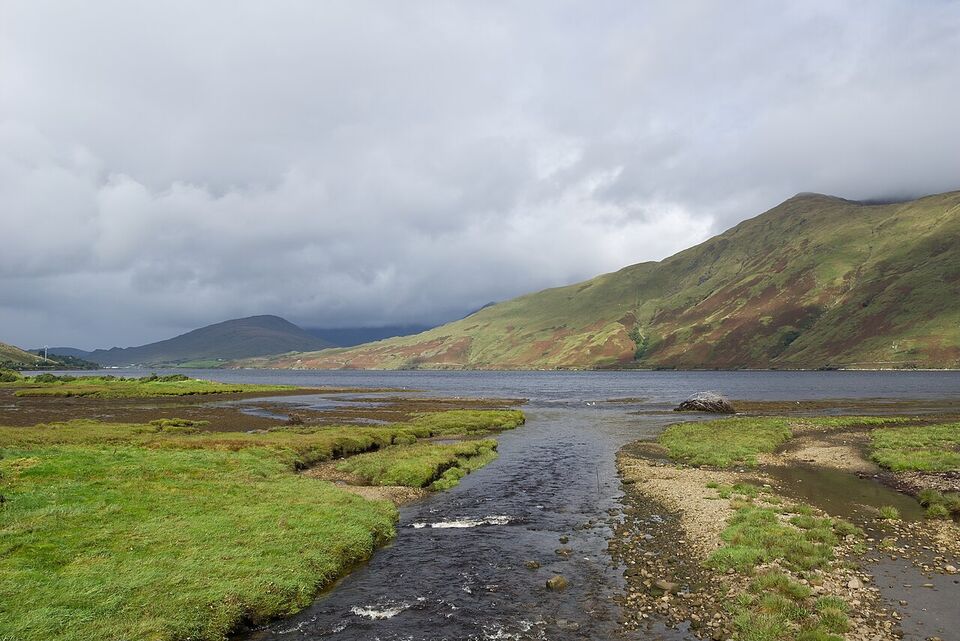
Kylemore Abbey is a Victorian castle-like house set beside a lake, and it has been home to Benedictine nuns for over a century. The estate covers about 1,000 acres. The visitor experience includes the abbey rooms, a 6-acre Victorian walled garden, a neo-Gothic church a short walk away, a mausoleum for Mitchell and Margaret Henry (who built the house) and woodland and lakeshore paths. A ticket includes the estate, and the abbey says it also includes complimentary history talks and music recitals.
Opening and booking
The abbey's site lists the visitor centre and estate as open seven days, 10 a.m. to 5 p.m., with last admission to the visitor experience at 4 p.m. The shop is open 10 a.m. to 5 p.m. and the Kylemore Kitchen restaurant 10 a.m. to 4:30 p.m. The site also lists closures on November 19 and December 24, 25 and 26. An asterisk after the opening time on the home page is unexplained, so confirm the hours when you book.
We could not confirm current ticket prices. Tickets are sold on the abbey's own site, kylemoreabbey.com, and booking online ahead is the safest approach in July and August. Allow two to three hours for the abbey and gardens, which is our estimate, plus more if you want to walk to the church and the lakeshore trails.
Insider tip
Tour buses reach Kylemore in late morning. Arriving at opening time, or in the last two hours, gives you the garden and lake with fewer people. If you plan to walk the woodland trails, wear shoes you do not mind getting muddy.
Connemara National Park
Connemara National Park covers about 2,000 hectares (almost 5,000 acres) near Letterfrack and takes in part of the Twelve Bens range. Entry and parking are free. The national park says it is open all year, but its visitor centre is open Wednesday to Sunday, 9 a.m. to 5:30 p.m. "until further notice" as of mid-November 2026, and closed Mondays and Tuesdays since July 1, 2026, except bank holiday Mondays. It is also closed on Christmas Day and St. Stephen's Day. The park itself stays open on the days the centre is closed, with trails and a café.
The park's grounds are closed during orange and red weather warnings. On October 14, 2026, industrial action closed national park visitor centres for the day. That sort of thing can happen again, so check the park's notices before you go.
Walks
The park has four marked trails: the Ellis Wood Nature Trail, the Sruffaunboy Trail and the Lower and Upper Diamond Trails. The highlight is Diamond Hill. Its summit gives views of Tully Mountain, Kylemore Abbey and the Twelve Bens, but only on clear days. Benbaun, the highest peak in County Galway, is part of the Twelve Bens, at 725 m (2,379 ft). The park says that only experienced hikers should go into the hills away from marked trails. If the cloud is low, the Lower Diamond Trail is the lower-commitment choice; check the trail board at the visitor centre for times and difficulty.
- Check the weather before you set off, and bring waterproofs, water and a map.
- Keep dogs on a lead; dogs are welcome in the park.
- No fires of any kind are allowed.
- Start the Upper Diamond Trail by early afternoon, since there are only about 7.5 hours of daylight in mid-December.
Watch out
Do not plan a Monday or Tuesday around the National Park Visitor Centre. It is closed on those days, apart from bank holidays. The trails stay open, but toilets and services may be limited, so confirm on the park's website.
Clifden and the Sky Road
Clifden (An Clochán) is the main town of western Connemara, a small place of shops, pubs and restaurants around a few streets. It is the best base for the coast, and it has bus links to Galway. In summer it is lively. In winter many seasonal businesses close, so check before you rely on a restaurant or a shop being open.
The Sky Road is a loop from the town's west end that climbs above Clifden Bay for views of the islands and the Atlantic. It has an upper road with wider views and a lower road nearer the shore. It is narrow in places, so take it slowly, and do not stop in the road for photos. On a day with low cloud or rain, you may see little, and it is better to save it for the next clear spell.
West of Clifden is the Derrygimlagh bog, a discovery point on the Wild Atlantic Way. It is the area where Alcock and Brown landed in 1919 after the first nonstop transatlantic flight, and where an early transatlantic wireless station stood. Signed walks and monuments mark the sites.
Killary Harbour and Leenane
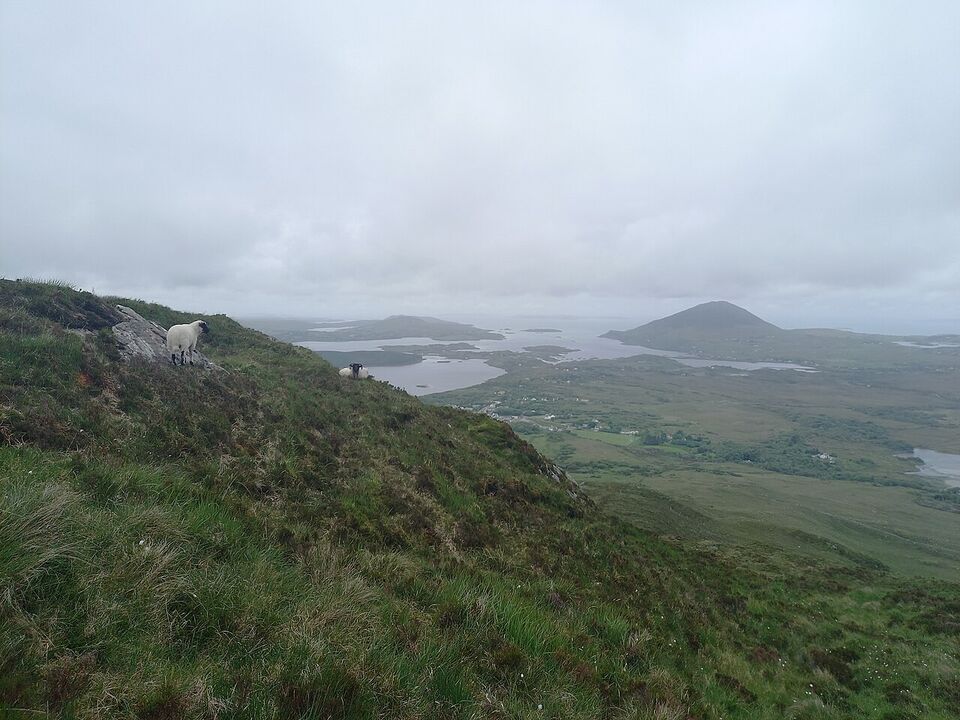
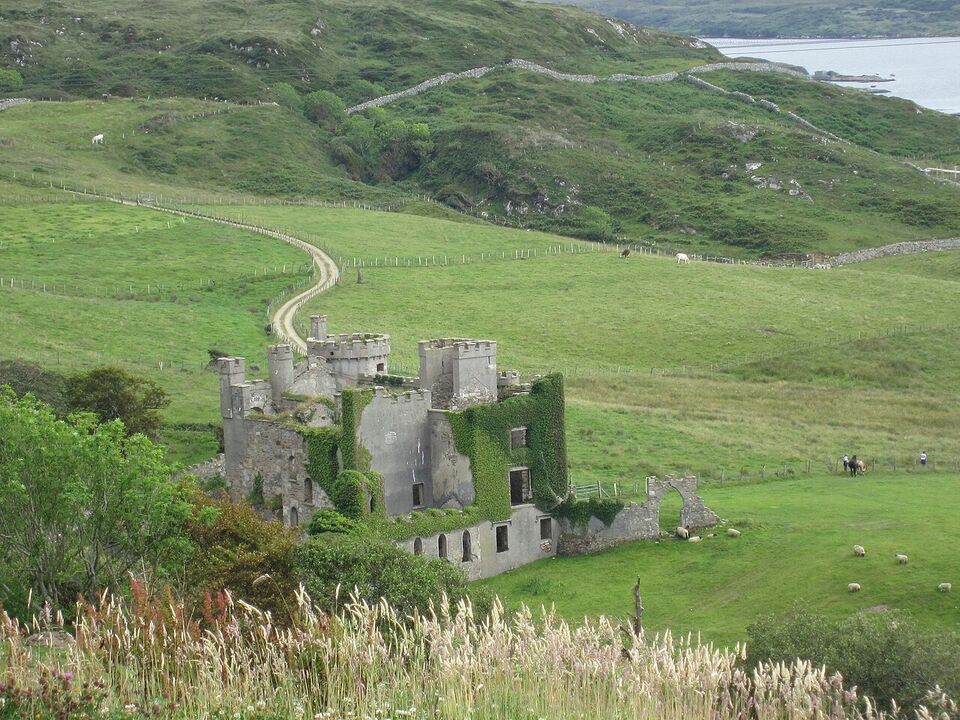
Killary Harbour is a long, narrow inlet on the border between County Galway and County Mayo. It is often described as Ireland's fjord. The village of Leenane (An Líonán) sits at its head, about 20 km from Letterfrack on the N59. The drive along the water, with mountains on the Mayo side, is one of the best in the area, and in clear weather it is worth a stop at a lay-by for photos. Boat trips on the harbor operate in the warmer months; check an operator for dates, since we have not confirmed any.
To return to Galway from Leenane, you can drive south through the Maam valley and Maam Cross. At Maam Cross there is a replica of the cottage from the 1952 film The Quiet Man. The film was shot in Mayo and Galway, and a related museum is in Cong, just across the county line in Mayo.
Roundstone and the beaches
Roundstone (Cloch na Rón) is a harbor village on the south coast of Connemara, roughly 30 minutes from Clifden. Dog's Bay and Gurteen Bay, nearby, are well-known white-sand beaches on either side of a narrow isthmus. In summer they are popular. In winter they are empty and exposed, and good for a short walk if the wind is not too strong. Tides and currents on the Atlantic coast are real: swimming is only for confident swimmers and is not advised in winter.
Roundstone is a detour from the main loop, so it suits visitors with more than a day. Adding it to the day trip makes the loop too long.
Ponies, bog and weather
The Connemara pony is a local breed, and the national park keeps heritage breeds, including the pony, as part of its conservation work. You may see ponies at the park or in fields along the road. The Connemara Pony Show is held in Clifden each year in summer, usually in August, though we have not confirmed the 2027 dates. Horse-riding and trekking operators are based around Clifden, and you should compare what they offer and confirm winter availability.
Bog covers much of the land, and the soft, wet ground is not safe to walk on away from tracks. Turf (cut peat) is still used as fuel in some houses, and you may smell it in the air in the evening. Stay on marked paths and do not drive onto a verge that looks firm.
The weather deserves respect. Galway records roughly 170 rain days a year, and the mountains tend to be wetter and windier. Daytime highs run from about 48°F (9°C) in winter to about 67°F (19.5°C) in July, which is the Galway average, and the hills can be colder. Layers, a waterproof shell and a spare pair of socks cover most outcomes. See packing and when to go.
Self-drive or tour from Galway
| Option | Good for | Trade-offs |
|---|---|---|
| Self-drive | Flexible stops, photo breaks, hiking, extra time at Kylemore | Narrow roads, left-side driving, parking and fuel; needs a full day |
| Day tour from Galway | Nervous drivers, solo travelers, no parking worries | Fixed stops and times; prices and winter schedules vary, so check the operator and what is included |
| Bus | Reaching Clifden or Letterfrack on a budget | Limited times; you cannot reach the Sky Road or Killary Harbour easily |
| Stay overnight | Hiking, the Sky Road in good light, evenings in Clifden | Fewer choices in winter; book ahead in summer |
On the bus option: the national park lists Bus Éireann route 419 and Citylink route 923 for Letterfrack from Clifden and Galway, and Bus Éireann route 423 from Westport. Check Citylink and the national timetable for the winter schedule, since frequencies drop. For the Aran Islands, which many people combine with a Connemara day, ferries leave from Rossaveel (Ros a' Mhíl) at the southern end of Connemara. See the Aran Islands.
Save money
Connemara is mostly free: the national park, parking and the Sky Road cost nothing, and the Letterfrack and Killary drives are scenery. Kylemore Abbey is the main paid stop, so check its current ticket price and book online. If you rent a car for only this trip, compare it with a day tour, and see car rental for insurance and automatic costs.
Driving the narrow roads
The N59 is a national road and is the main route through Connemara, but it is narrower and slower than a US highway. Regional (R) roads have an 80 km/h default limit (about 50 mph), and rural local (L) roads default to 60 km/h (about 37 mph). You will rarely reach those speeds. The Inagh Valley road, the Sky Road and the roads to the beaches have narrow stretches and few places to pass. Posted signs rule.
- Look for passing places and pull in on the left to let oncoming vehicles pass. A wave is the thank-you.
- Expect sheep on the road, often around blind bends. Slow down and let them move.
- Watch for coaches in summer on the N59 and at Kylemore. Do not try to pass on a bend.
- Fill the tank in Galway or Clifden. Petrol was around €1.97 a litre (about $8.35 a US gallon) in early November 2026, and stations are far apart in the west.
- Download offline maps. Mobile signal can disappear in the hills and valleys.
- Do not rely on estimated journey times from a map app, which can be optimistic on these roads.
Different from home
In the Gaeltacht, road signs may show only Irish names, for example An Clochán for Clifden or Leitir Fraic for Letterfrack. Distances on signs are in kilometers and limits in km/h. A map app with place names in both languages helps. Read driving in Ireland before you pick up a car.
Where to stay and eat
For an overnight, the usual bases are Clifden, Letterfrack, Leenane, Roundstone and Oughterard, and Galway city for a day-trip approach. We do not name hotels or restaurants because opening times and quality change. Use the tiers as a guide: $ under $120 a night for a double, $$ $120 to $300 and $$$ over $300. In Connemara, B&Bs and small guesthouses are common and often cheaper than hotels, at roughly €60 to €150 a double (about $67 to $168). See where to stay.
Food in the area leans on seafood, lamb and simple pub meals. Chowder and brown bread is the standard lunch. Many places stop serving food early, and some close one or two days a week outside summer, so book a table if you want a specific dinner. The national park also runs a café at the visitor centre area, and Kylemore has a restaurant and teahouse. See food.
What is closed in winter
- Connemara National Park: open year-round, but the visitor centre is open Wednesday to Sunday and closed December 25 and 26. The grounds close in orange and red warnings.
- Kylemore Abbey: listed as open daily in mid-November 2026, but closed on November 19 and December 24 to 26 (the site gives no year, so confirm when you book). Winter hours may change.
- Aran Island ferries: run in winter, with no sailings on December 25 and 26, 2026.
- Small businesses: B&Bs, cafés, riding stables and boat trips in Clifden and Roundstone often close or cut hours between November and March. We have not confirmed any specific one, so call ahead.
Daylight is the bigger limit. In mid-December there are only about 7.5 hours, and the sun sets before 5 p.m. A winter day trip should be planned around a late-afternoon return, with the Sky Road earlier in the day than you would choose in summer. Check sunrise and sunset on timeanddate.com.
Mistakes to avoid
- Starting too late. A 10 a.m. departure in winter leaves you driving the narrow roads in the dark.
- Trying to see everything. Pick Kylemore, one walk and the Sky Road. Save Roundstone and the Maam valley for a second day.
- Counting on the national park visitor centre. It is closed on Mondays and Tuesdays. The park is still open.
- Booking nothing in summer. Kylemore tickets, rooms in Clifden and day tours fill up in July and August.
- Ignoring weather alerts. The grounds close in orange and red warnings, and some roads flood.
- Stepping off the path onto bog. The ground looks firm and is not.
- Expecting English-only signs. Learn a few place names or use an offline map.
For other Galway-based days, see the Cliffs of Moher guide, and for walks across Ireland, outdoors. If you are driving from Dublin or Shannon to Connemara, Ireland's destinations shows how it fits among other regions.
Add it to a route in the trip builder, or ask us to plan the hotels, trains and guides for you.