Overview
Dingle is a small harbor town on the south side of the Dingle Peninsula in County Kerry, on Ireland's southwest coast. It is worth the effort if you want a lived-in fishing port with live traditional music most evenings, plenty of fresh fish, and the Slea Head Drive on your doorstep. If you only have time for one peninsula in the southwest, many visitors pick Dingle over a second day on the Ring of Kerry because it is smaller and the scenery is concentrated.
The town's Irish name is Daingean Uí Chúis, and you will see "An Daingean" on road signs. Much of the western half of the peninsula (Corca Dhuibhne) is a Gaeltacht, an area where Irish is the everyday language of many residents. Signs there have been in Irish only since 1970, so a map app that shows both names will save you confusion. People are used to visitors, and English works everywhere.
This page covers the town, the Slea Head Drive and its stops, boat trips, the Blasket Islands, music and food, the Conor Pass, where to stay, how to get here, what closes in winter, and one-day and two-day plans. For the wider region see the Killarney guide, the Ring of Kerry guide and the Wild Atlantic Way guide.
Different from home
Distances look short on a map and feel long on the ground. Many roads on the peninsula are narrow, lined with stone walls or hedges, and shared with tour coaches, tractors and sheep. Rural local roads default to 60 km/h (about 37 mph) and regional roads to 80 km/h (about 50 mph), and posted signs rule. Plan on the slow side and never trust a navigation app's time estimate.
Getting to Dingle
There is no train to Dingle. The nearest rail stations are in Tralee and Killarney, and from there you continue by bus or car. Dingle is a long way from Dublin and from Dublin Airport: expect most of a day of driving with stops, and check a route planner for the day you travel because rural roads are slower than apps predict. From Killarney, plan roughly 1 to 1.5 hours; from Tralee, a little less. Our getting around guide explains the trains and buses, and the driving guide covers left-side driving and road types.
By car you have more freedom, which matters on the peninsula because the best stops are scattered. If you rent, read the car rental guide first, especially about insurance and automatic transmissions, which are fewer and cost more. Narrow roads are easier in a smaller car.
By public transport, long-distance buses link Tralee and Killarney with Dingle, and a local service runs between villages on the peninsula. Frequencies drop in winter and on Sundays. Check Bus Éireann (buseireann.ie) and the Transport for Ireland journey planner (tfi.ie) for the exact season, and do not assume you can reach the outlying sites on Slea Head by bus in November or February.
Where to park
In town, parking is mostly pay and display and fills in summer. Sort the car out first and walk: the harbor, the main streets and most pubs and restaurants are within a few minutes of each other. Many guesthouses have their own parking, so ask when you book.
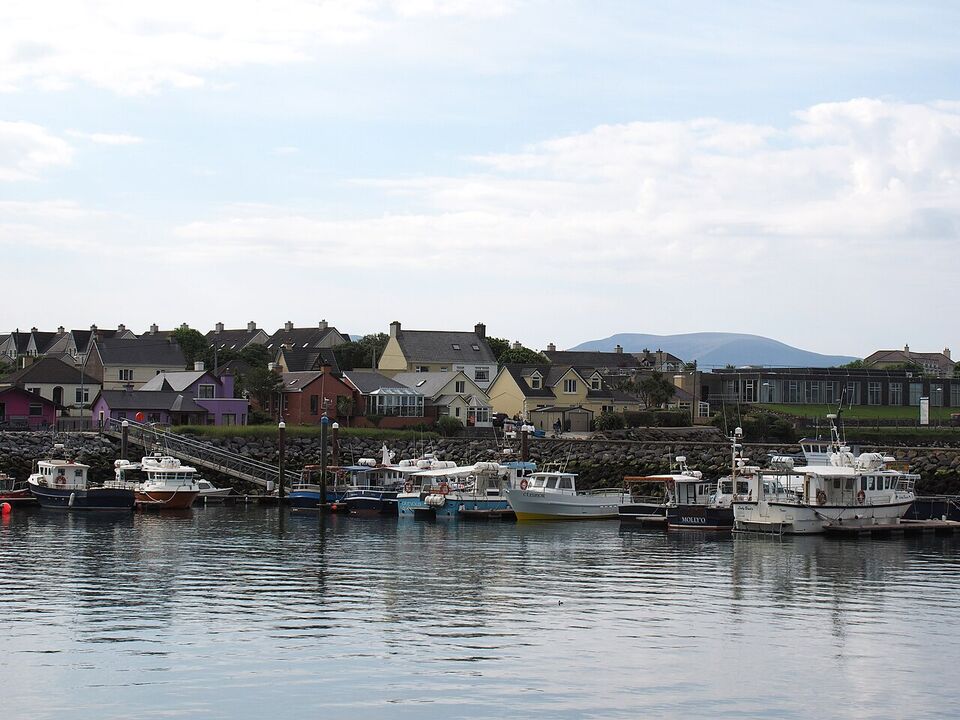
Dingle town
The town works as a base because everything useful is walkable. The harbor is the center of life: fishing boats, boat-trip operators, restaurants and a small marina. Two or three hours is enough to see the town itself. The rest of your time goes to the peninsula.
Things to do in town
- Walk the harbor and the streets above it. Shops sell wool, crafts, books and Irish-language material. Several shops double as pubs or other businesses, which is a local quirk worth a look.
- Dingle Distillery tour. The distillery offers a Distillery Tour at €25 (about $28), or €22 (about $25) for students and seniors, lasting 75 minutes and open to over-18s only. A Distillers' Selection Tour with five whiskeys is €50 (about $56), and a private tour is €450 (about $504). Production may not run on some days or afternoons, and photo ID is needed at check-in. Hours vary through the year, so check dingledistillery.ie before you go.
- Festivals. A Dingle literary festival (Dingle Lit) and a food festival are held in the year. A listing we reviewed gave Dingle Lit as November 20-22, 2026 and the food festival as likely in early October, but festival dates change, so check before building a trip around them. An arts festival, Féile na Bealtaine, is held around the start of May.
Slea Head Drive
Slea Head Drive (Fán na Sléibhe) is the loop around the western tip of the peninsula, running from Dingle through Ventry, past Slea Head and Dunquin, through Ballyferriter, and back toward town via the Gallarus area. As a rough guide it is a loop of about 30 miles (50 km), but the point is the stops, not the distance. Allow at least half a day, and a full day if you want to walk, eat and see the Blasket Centre. Check the exact length and signed route on dingle-peninsula.ie or in a map app.
The road is narrow, with tight bends and few places to pass. Local advice is to take it slowly, pull in to let faster vehicles and buses by, and ask at your accommodation which direction coaches run on the day so you are not meeting them head-on on the tightest sections. Pull into a signed viewing point or car park to take photos; do not stop in the road.
Slea Head and Dunmore Head
Dunmore Head, near Slea Head, is the westernmost point of the Irish mainland. Pull into a designated viewpoint for the Atlantic and the islands offshore. Cliff edges are unfenced in places, and the wind can be strong, so keep children and dogs close.
Coumeenoole Beach
A small, steep cove under the road, reached by a path. Atlantic swells and currents here are dangerous for swimmers, and the path is slippery in wet weather. Treat it as a viewpoint rather than a swimming spot.
Beehive huts (clocháns)
Stone dry-built huts, shaped like beehives, stand beside the road. Several groups are on private farmland, and the landowner often collects a small fee. Bring coins or a card and check the sign at the gate, as arrangements vary.
Dunquin and the Blasket Centre
Dunquin is where boats leave for the Blasket Islands. The Blasket Centre (Ionad an Bhlascaoid) is run by the Office of Public Works and tells the story of the islanders, their language and their writers. Check its hours before you go, particularly in winter.
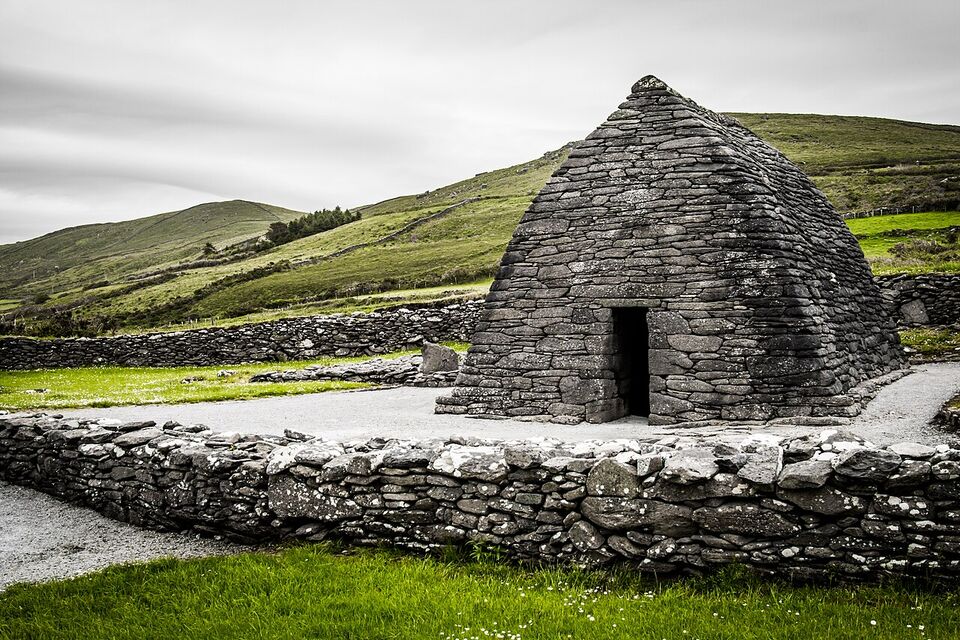
Gallarus Oratory
A small boat-shaped chapel of dry stone, often dated to the early Christian period, which has stood for many centuries. Check whether there is an entry fee or visitor center charge and the opening hours before you go.
Ventry and Ballyferriter
Ventry has a long beach on the south side of the peninsula. Ballyferriter is a small Gaeltacht village with a few places to eat. Both are good for a coffee or lunch break away from the busiest viewpoints.
Watch out
Do not drive Slea Head Drive after dark or in dense fog if you can avoid it. Road edges are unlit, there are no sidewalks, and cyclists and walkers share the carriageway. In winter, daylight is short (about 7.5 hours in mid-December), so start the loop in the morning and check timeanddate.com for sunset.
Boat trips, dolphins and the Blasket Islands
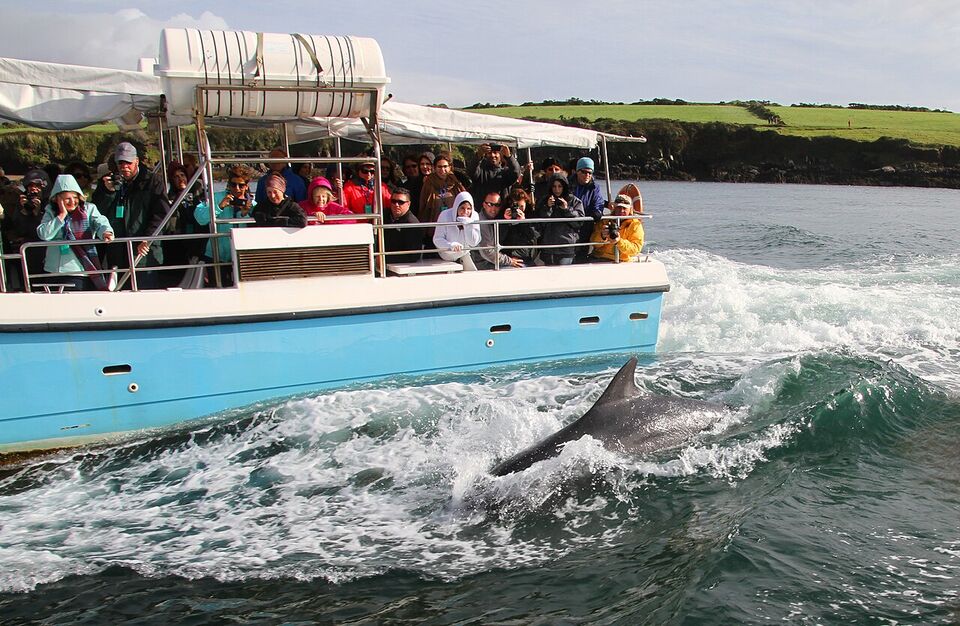
Boat trips leave from Dingle harbor, and some Blasket crossings leave from Dunquin pier. Sailings depend on weather and sea state and are mostly seasonal, so book with an operator that lets you reschedule, and confirm the day before. Ask whether the trip is a wildlife cruise, a harbor trip or a fishing trip, as they differ in length and price. We could not confirm 2026 or 2027 prices or schedules, so use the operator's own website.
Dolphins and wildlife
The town was long famous for a single resident dolphin, which disappeared in 2020. Boat trips now look for wild dolphins, seabirds, seals and, on some days, larger marine life. No operator can guarantee a sighting, so treat anything you see as a bonus. If you get seasick, take medication before you board, not after.
The Blasket Islands
The Blaskets lie off the western tip of the peninsula. The last islanders were relocated to the mainland in the 1950s, and the islands are known for the Irish-language writing that came out of them. Crossings depend on the sea and are normally limited to the warmer months. As of mid-November 2026 we could not confirm an operating ferry or the Blasket Centre's winter hours, so check with the operator and the centre before building a day around it. If crossings are not running, the Blasket Centre and the views from Slea Head and Dunquin give you much of the story.
Insider tip
Book boat trips with a refund or reschedule policy and put them early in your stay. If a swell cancels day one, you still have day two to try again. Wear layers and waterproofs, even in summer, because it is colder and wetter on the water than in the town.
Music, pubs and food
Dingle has a reputation for traditional music sessions, and many pubs offer live music, often most nights in summer and fewer in winter. Sessions usually start in the evening and are informal, so there is typically no cover charge; if a hat or box goes around, a coin or two is a courtesy. For how pub etiquette works, from ordering at the bar to rounds, see our pubs guide, and our drinks guide covers whiskey and beer.
Seafood is the main reason to eat well here. Fish is landed in the harbor, and menus feature chowder, whole fish, crab, mussels and local oysters in season. Expect fish dishes to be the highest priced items on pub and restaurant menus. A national average pint of stout was about €6 (about $7) in a late 2025 survey, and prices in tourist towns can run higher. VAT on food served in restaurants and pubs fell back to 9% from 1 July 2026, but pub owners say most pubs do not serve food, so do not assume drinks got cheaper. Read more in the food guide.
- Book dinner in summer. The best-known restaurants fill in July and August and on weekends in shoulder months. Reserve a day or two ahead, or earlier for groups.
- Eat early or late. Many kitchens close earlier in winter than in summer, so check closing times.
- Ask about the catch. Staff can tell you what came in that day.
The Conor Pass
The Conor Pass (An Chonair) is a mountain road linking Dingle with the north side of the peninsula, with high viewpoints over both coasts on a clear day. It is also narrow, has steep drop-offs and short stretches that are effectively single lane, so you may need to reverse to a pull-in. Large vehicles and caravans should avoid it, and you should check rental company terms if you are driving a larger van.
Weather decides everything. On a clear, calm day it is a highlight and takes less than an hour to cross without stops. In low cloud you see nothing and the road is stressful. In high wind, heavy rain or ice, skip it and use the lower coastal roads. Ask your host in the morning, since local people will tell you what the cloud is doing.
Insider tip
If you are nervous about heights, skip the pass. The coast roads give you good scenery without the drop-offs, and a route planner will show how much time the alternative adds.
Where to stay
Dingle town is the practical base: walkable, full of food and music, and the starting point for Slea Head. Staying in Dunquin, Ballyferriter or Ventry puts you in a quieter, more Irish-speaking setting but you will need a car for dinner.
| Type | Rough tier | Good for |
|---|---|---|
| B&B or guesthouse in town | $ to $$ | Breakfast included, local advice, short walk to music; B&Bs often run roughly €60 to €150 a double (about $67 to $168) |
| Hotel in or near town | $$ | Parking, a bar and restaurant on site; the 2025 national average hotel rate was €174 (about $195) |
| Self-catering cottage | $$ | Stays of three nights or more, families, groups |
| Hostel | $ | Solo travelers and walkers |
Book July and August rooms well ahead, and ask about minimum stays on weekends in peak season. Winter rates drop, but some guesthouses close from November to March, so confirm they are open for your dates. Short-term rental rules are changing: a registration scheme is due to open on December 1, 2026, and hosts will need a registration number on every listing, so check any listing shows one. Our where to stay guide explains tiers and how to choose.
When to go and winter closures
May to September is the driest and brightest stretch, but also the busiest, with traffic on Slea Head Drive and full pubs. April, May, September and early October are a good balance. The nearest official weather station we could confirm is Valentia, on the coast to the south across Dingle Bay. It averages 203 rain days a year and 1,646 mm (about 65 inches) of rain, with November the wettest month. Mean daily highs there run about 53°F (11.8°C) in November and 51°F (10.4°C) in December. Expect wind, rain and short days from November to February.
In winter many boat trips stop, some restaurants and guesthouses close for weeks, and the Blasket crossings are unlikely to run. The roads and the views are still there, and the town feels more local. Call ahead for anything you want to do, and carry a rain jacket. For month-by-month planning see the when to go guide.
Save money
Visit in May or September rather than July and August. Rooms cost noticeably less, restaurants are easier to book, and the loop is less crowded. Many self-catering cottages also offer lower rates for longer winter stays.
One-day and two-day plans
These plans assume you have a car and good weather. Adjust for rain: the loop is still worthwhile in showers, but the viewpoints and beaches are not.
- One day
Slea Head Drive and the town
Leave town in the morning and do the Slea Head loop in whichever direction your host recommends. Stop at Dunmore Head, the beehive huts, Dunquin and the Blasket Centre (if open), then Gallarus Oratory. Be back in Dingle for an early dinner and a music session. If you are driving on to Killarney, leave in daylight.
- Day 1
Town, boat trip and music
Walk the harbor, take a morning boat trip if the weather allows, and tour the distillery in the afternoon. Book dinner and find a pub with live music later.
- Day 2
Slea Head Drive at an easy pace
Do the loop with time for a walk, a long lunch in a Gaeltacht village, and the Blasket Centre. Add the Conor Pass on the way out if the weather is clear and you are comfortable with the road.
If you are linking Dingle with other stops, our regions guide shows how the southwest fits together. The Cork and Kinsale guide covers the south coast, and the Cliffs of Moher guide is the logical next stop north.
Practical tips
- Download an offline map before you leave Dingle; mobile coverage can be patchy on the peninsula.
- Carry cash for small fees at private sites such as the beehive huts, and for parking.
- Check the weather forecast at met.ie, and keep a rain jacket in the car.
- Call ahead for boat trips, the Blasket Centre and any attraction you have planned in winter.
- Know your emergency numbers: dial 112 or 999 for police, ambulance and coast guard.
For safety on cliffs, beaches and mountain roads, read the safety guide.
Add it to a route in the trip builder, or ask us to plan the hotels, trains and guides for you.