Overview
Leticia is Colombia's gateway to the Amazon: a river port at the very south of the country where Colombia, Brazil and Peru meet. In practice you reach it only by air, so plan your flights first, then book a licensed guide or lodge, get your health plan in order and decide how far you want to go into the forest. Three to four nights is a good first trip.
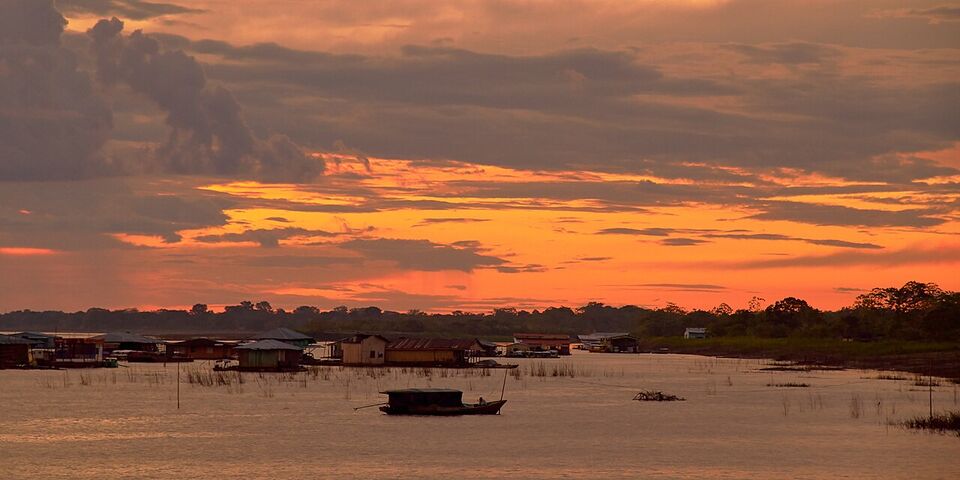
The setting is unusual. According to Wikipedia, Leticia sits on the left bank of the Amazon at the Tres Fronteras ("three borders") area, at 315 ft (96 m) above sea level. It is next to the larger Brazilian city of Tabatinga, and across the river lies Santa Rosa de Yavarí in Peru. The whole urban area has more than 120,000 residents. Leticia itself is the largest Colombian settlement in the Southern Hemisphere.
The climate is hot and humid all year, with frequent rain. Our when to go page shows how different the Amazon is from the Andes and the coast, and regions compares the main areas. Colombia Time (UTC-5) applies all year, with no daylight saving.
Watch out
The border towns blend together, but the rules do not. A short walk or boat ride can take you into another country, and entry rules for US citizens in Brazil and Peru are different from Colombia's. Do not cross, or go deeper than the border towns, without checking the rules and getting the right stamps.
How to get there
Leticia is reached by plane or by river. Wikipedia lists the Vásquez Cobo International Airport as the largest in southern Colombia, and the Bogotá airport list shows Avianca and LATAM Colombia flying to Leticia. Schedules and fares change, so check the airlines directly. Baggage limits on small aircraft can be tight, which matters for jungle gear; see domestic flights for advice, and flights for getting to Colombia first.
No road links Leticia to the rest of Colombia, so the plane is the practical choice for visitors. River routes exist between Leticia and Peru and Brazil, but they take much longer and we could not confirm current services, so we do not list them. If you want to see more of the region, ask a licensed operator rather than assembling a route yourself.
Expect the heat to hit as soon as you step off the plane. Arrive with a rain jacket in your hand luggage, and keep your first day light. Leticia has a tourist card: Wikipedia (citing Timatic) lists COP 30,000 (about $9) for visitors over 6, bought on arrival. News in 2026 suggested that card prices and formats changed elsewhere, so check the current amount and whether it is now digital. The airline or the airport can tell you.
What the Colombian Amazon offers
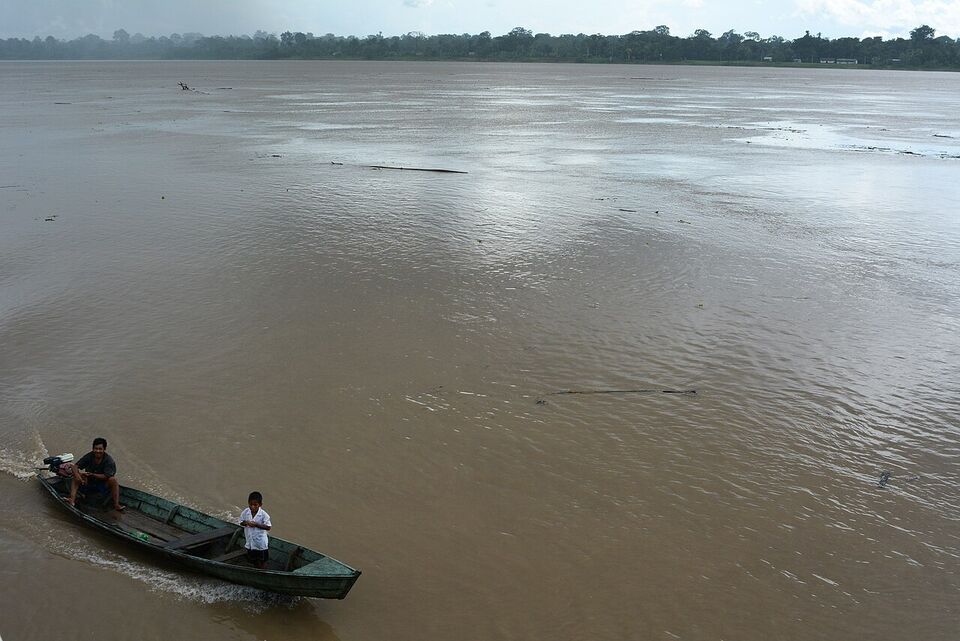
Leticia is a base for river trips, short forest walks and visits to nearby communities and parks. Wikipedia lists attractions around the town, including Amacayacu National Park, Isla de los Micos (Monkey Island), Lago Yahuarcacas, Lago Tarapoto (where river dolphins can be seen), and the Parque Ecológico Mundo Amazónico. Puerto Nariño, the only other municipality in the Amazonas department, is a quiet river village reached by boat.
Amacayacu National Park
A protected area of river and rainforest with guided walks and boat trips. We could not confirm the current rules; see the park fee and entry notes below and check parquesnacionales.gov.co.
Puerto Nariño
A small, quiet settlement on the river, used as a base for dolphin watching, lakes and forest walks. Services are simple, so bring cash and book ahead.
Lago Tarapoto and the pink dolphins
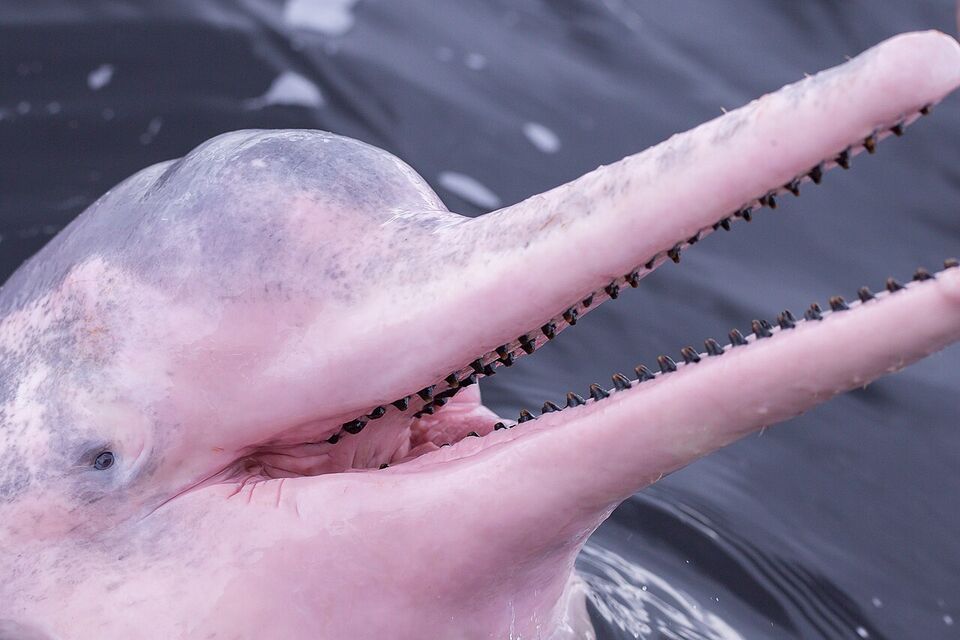
Wikipedia names Lago Tarapoto as a place where river dolphins (botos) can be seen. Sightings are never guaranteed. Choose a guide who keeps a respectful distance and does not feed or chase animals.
Isla de los Micos
Known for monkeys. Do not feed or handle them, and avoid operators that let you hold animals. Keep your bags zipped.
Tabatinga and Santa Rosa
Tabatinga is next door to Leticia and Santa Rosa lies across the river. They give a taste of Brazilian and Peruvian life, but US citizens must check the entry rules first (see below).
Mundo Amazónico and the Leticia waterfront
An ecological park and the town's plazas and waterfront. Good for an easy first afternoon, and the town's museum and parks are close together.
Birdwatching is excellent in the Amazon region; see our birdwatching guide. We could not confirm opening hours or prices for the town attractions, so check locally.
Leticia and getting around
Leticia is small and easy to walk, with plazas, a cathedral, a waterfront and a Banco de la República museum listed among its sights. Short hops usually go by motorcycle taxi or taxi, and boats serve the river. Agree the fare before you start, ask your hotel for a trusted driver or boatman, and keep your documents on you, because police and military checks are common near the borders. We could not confirm local fares or boat prices, so ask your hotel.
The waterfront is pleasant at dusk, but do not walk alone after dark. Mosquitoes are strongest at dawn and dusk, so cover up then. Keep electronics in sealed bags and carry a small flashlight, since power cuts can happen in remote places.
Trip types by length
The table shows common ways to structure a trip. Operators set their own itineraries and prices, so confirm what is included.
| Length | What you can do | Best for | Trade-offs |
|---|---|---|---|
| One day (day trip) | Boat to Isla de los Micos, a short river cruise, Leticia's parks and a border-town stroll | A tight schedule or a stopover | Little forest time; you spend half the day on logistics |
| Two to three days | Leticia plus Puerto Nariño, Lago Tarapoto and a forest walk | A short first taste of the river | Fast pace; rain can cut it short |
| Four to five days | Amacayacu or a lodge, a night walk, community visit and dolphin trip | Most first-time visitors | More cost; the boat is the main travel mode |
| Six to eight days | A remote lodge or expedition, with several river outings, plus time in the border towns | Wildlife and birding enthusiasts | Needs fitness, health planning and a trusted operator |
Allow a buffer day at each end for flight delays and storms. If you are pairing the Amazon with the rest of Colombia, a flight via Bogotá is the usual route, and beyond Colombia covers onward trips.
Health: yellow fever, malaria and insects
The Amazon has more health risks than the cities, so see a travel clinic four to six weeks ahead. The CDC page for Colombia recommends yellow fever vaccination for all travelers aged 9 months and older, except those limited to certain cities, areas above 7,550 ft (2,300 m), San Andrés and Providencia, or Bogotá. The Amazon is not on the exempt list, so the recommendation applies. The CDC's Level 2 notice on yellow fever in Colombia was updated on October 16, 2026, because of an increased number of cases.
The CDC page also lists a yellow fever entry requirement for all arriving travelers aged 1 year and older, updated July 9, 2025, and subject to change. We could not confirm this on an official Colombian source, so check the Colombian health ministry (minsalud.gov.co) and your airline, and carry your International Certificate of Vaccination. Ask your clinic how long before departure the vaccine must be given for the certificate to count.
The CDC recommends prescription malaria prevention in areas below 5,600 ft (1,700 m), and Leticia, at 315 ft (96 m), is well below that line. Your doctor will choose a drug; the CDC lists atovaquone-proguanil, doxycycline, mefloquine and tafenoquine as options, and says starting dates vary by drug. Dengue is a year-round risk in many places (CDC Level 1 notice, updated November 10, 2026), the CDC notes elevated chikungunya risk, and Zika can harm a pregnancy, so pregnant travelers should talk to a doctor before booking.
- See a travel clinic early and ask about yellow fever, malaria, hepatitis A and typhoid
- Pack repellent with DEET or picaridin, and long, light sleeves and trousers
- Sleep under a net if your lodge provides one
- Bring prescription medicines in their original packaging, plus a basic first-aid kit
- Buy travel insurance with medical evacuation and read the exclusions
Many travelers drink bottled or filtered water; ask your lodge. See health for more.
Crossing the borders
Leticia, Tabatinga and Santa Rosa sit so close that locals move between them daily. For an American, the rules are less simple. Brazil has required US citizens to have a visa, an e-visa applied for online, since April 10, 2025; apply only on Brazil's official e-visa site, and do not pay a third-party site or a street agent. US citizens do not need a tourist visa for short stays in Peru. Check each country's immigration site and the State Department country page for the current rules. We could not confirm how a short visit to Tabatinga or Santa Rosa is handled in practice, so ask the Brazilian and Peruvian consulates and your tour operator:
- Does my Brazil e-visa cover a short visit to Tabatinga, and is it checked at the crossing?
- Does Peru require a stamp or a form to visit Santa Rosa?
- Do I need a Colombian exit stamp when I cross, and an entry stamp when I come back?
- What happens if I go farther than the border town, such as to Manaus or Iquitos by river?
Migración Colombia says the online Check-Mig form is not needed at land border posts, but that does not tell you what the other two countries require. Keep your passport with you, as the border towns have police and military checkpoints. See entry rules for Colombia's own rules, and give yourself time to sort out stamps. Brazil's Amazonas state may also be on a different time (UTC-4); check before you book a boat or a flight.
Different from home
In the US you cross a border at a clear checkpoint. Here, three countries meet at a river town, with no obvious line on the street. That does not mean you can ignore the rules. Being in the wrong country without the right entry stamp can cause trouble when you leave.
Parks, fees and entry requirements
Amacayacu National Park is one of the park system's units, and news about the 2026 fees reported about COP 27,500 (about $8) for it, without saying which visitor category that applies to. We could not confirm the fee for foreign visitors or the entry requirements, such as whether you must go with an approved guide or buy insurance, from an official source. Check parquesnacionales.gov.co and ask your operator. Parks sometimes close or limit access for community or conservation reasons.
See money for how prices are written. Bring pesos in small notes for river villages, since cards and ATMs may be limited outside Leticia. We could not confirm ATM availability in Puerto Nariño. Many restaurants add a suggested 10% tip that is voluntary; check the bill. Our money page has more.
Best season: high water and low water
Leticia is wet all year. Wikipedia's data (from IDEAM) show about 3,390 mm (133 in) of rain a year and 249 rain days. The driest months are June to September (about 158-221 mm), and the wettest are January to April (about 355-376 mm), with 22-25 rain days a month from November to March. Highs run 85-89°F (29-32°C), lows 70-73°F (21-23°C), and humidity sits at 85-88%.
River levels follow the rains, but not in step with them. As a general rule, the Amazon is higher in the wetter half of the year and lower later in the year, though the exact timing varies by year and tributary, so ask your operator. At high water, boats can glide into flooded forest and reach more places. At low water, beaches and forest trails appear, and you walk more and paddle less.
IDEAM said on November 12, 2026 that a strong El Niño would last until early 2027, with less rain and higher temperatures expected, so conditions may be drier and hotter than the averages. Do not take this as a guarantee, and check local forecasts.
Choosing a lodge or tour operator
The Amazon has many tour sellers, from licensed operators to street offers. We do not name any lodge or operator, because standards change and we could not confirm which are open in 2026. Use this checklist.
- Ask for the company's tourism registration number and check it with the authorities.
- Ask who owns the lodge, who guides and whether local communities benefit.
- Get the itinerary, inclusions, group size and cancellation rules in writing.
- Ask about boat safety: life jackets, a radio or phone, and a plan for medical evacuation.
- Ask what happens in heavy rain or low water, and whether prices change.
- Avoid operators that sell animal encounters, hold wild animals for photos or sell animal products.
- Check recent reviews on independent sites, not only the company's pages.
Hotels in Leticia range from simple $ rooms to $$ lodges with river access. Remote lodges often include meals and guides in a package. Compare what is included before you compare prices, and book ahead for holiday weeks. See where to stay.
Respectful visits to communities
The Amazon is home to indigenous communities, and a visit should be arranged with the community, not imposed on it. Ask your operator how the community is involved and whether it benefits from the visit. Do not expect a show; be ready to listen, ask before taking photographs and follow your guide's advice about what is private or sacred.
Dress modestly, keep your voice down, do not hand out sweets or money to children, and buy crafts directly from makers at fair prices. Avoid products made from animals or protected plants, which may be illegal to export and to bring into the US. Declare food and plant items when you return, as the CBP page explains. See etiquette for wider guidance.
Safety and practical points
The US State Department rates Colombia Level 3: Reconsider Travel (as of November 2026), and lists some areas at Level 4: Do Not Travel; check travel.state.gov for the current list. The reports we read name areas such as Arauca, parts of Cauca and Valle del Cauca, and Norte de Santander, and the border strip with Venezuela. We did not see Amazonas among them, but the list can change. The advisory warns of crime, kidnapping, drugging and extortion, so use licensed guides and boats, keep valuables out of sight and stay in the towns after dark.
Drugs are illegal in Colombia, and the Amazon region is a transit area for illegal trade. Do not buy, carry or use drugs, and do not accept offers from strangers. Our safety guide has the advisory and the US Embassy's contact details.
For packing, bring lightweight quick-dry clothes in neutral colors, a rain jacket, sturdy shoes, sandals, a hat, sunscreen, repellent, a headlamp, binoculars and dry bags. Lodges often lend rubber boots; ask. See packing and hiking and nature.
- Book flights first, then the lodge, and keep a buffer day
- Get the yellow fever and malaria advice from a travel clinic
- Check Brazil and Peru entry rules before you cross
- Carry pesos in small notes
- Choose a licensed operator and read the cancellation terms
Add it to a route in the trip builder, or ask us to plan the hotels, trains and guides for you.