Overview
Colombians are warm, talkative and polite, and most visitors find the manners easy to learn. The main points for Americans are small: greet people when you walk in, use the formal "you" (usted) and courtesy titles, ask before you take a photo, treat a no from a seller as a normal part of the day, and stay away from a few sensitive topics. If you get something wrong, a smile and qué pena (sorry) fix most things.
This page covers greetings and forms of address, personal space and handshakes, timekeeping, dress, tipping, bargaining and street sellers, photography, talking about politics, the armed conflict and drugs, Pablo Escobar tourism, religious sites, noise and music, and how to treat vendors. A do and do-not table sums it up. For the words, see our Spanish phrases page.
Greetings and forms of address
Greet first. When you enter a shop, a small restaurant, an elevator or a taxi, say buenos días (morning), buenas tardes (afternoon) or buenas noches (evening), or the short buenas. When you leave, say gracias and hasta luego or chao. Walking in and starting with a request, without a greeting, can seem abrupt.
Use usted (the formal "you") with strangers, hotel and restaurant staff, officials and older people. Colombians also use it with friends and family, especially in Bogotá, so it is rarely wrong. Address people as señor (Mr. or sir), señora (Mrs. or ma'am) and señorita (for a younger woman), and use doctor or doctora for professionals, who like the title. Staff may call you señor, señora, mi amor or mi reina in a friendly way; the last two are affectionate, not romantic, among Colombians, and you can take them as kindness. First names come later, after you are introduced.
In some regions you will also hear vos (around Medellín and Cali) and sumercé (around Bogotá and Boyacá). You do not need to use them. Slang such as parcero (friend) is for friends; if someone says it to you, enjoy it, but do not use it on officials or people you have just met.
Handshakes, cheek kisses and personal space
At a first meeting, a handshake with eye contact and a smile is the safe choice for everyone. Among people who know each other, women often greet women, and women and men, with a single kiss on the cheek (a light touch of cheeks, with a kissing sound), and men often shake hands or clasp forearms or shoulders. If someone leans in, lean in too. If you would prefer a handshake, offer your hand first. Business meetings usually start with handshakes and a few minutes of small talk before the subject.
Personal space is smaller than in much of the United States. People may stand closer in conversation, touch your arm and stay close in a line. This is friendliness, not a sign of anything else. Step back politely if it makes you uncomfortable, and do not take offense.
In a crowded Bogotá bus or Medellín metro station, people are used to close contact, but this is also a reason to keep your bag in front of you and your phone out of sight; see our safety page.
Timekeeping and "Colombian time"
Colombia Time is UTC-5 all year with no daylight saving. That is the same as New York in winter, and one hour behind New York during US summer time.
The idea of "Colombian time" (hora colombiana) is real in social life: a dinner or party at someone's home may start well after the time you were given, and arriving a little late is usual. Do not arrive early at a private home, as the host may not be ready. In business and for formal appointments, be on time, as you would at home, and expect the other side to be on time or a little late.
It does not apply to flights, long-distance buses, tours, farm visits, timed entry tickets and boats: those leave when they say they will, and a late arrival means you miss them. Allow generous time for traffic in Bogotá and Medellín, and in many cities rain and holiday weekends add delays. If you are not sure whether a plan is "Colombian time" or a real deadline, ask: ¿A qué hora exactamente? (At what time exactly?). Colombian holidays often create long weekends with heavy road traffic, so see our festivals and holidays page.
Dress
Dress depends on where you are, because the climate depends on altitude. Bogotá is cool at 8,660 ft (2,640 m), and people dress in layers: long pants, closed shoes, jackets and a rain layer. Locals in Bogotá dress more formally than in Medellín or on the coast, and residents often look neat even for casual outings. In Medellín and Cali, dress is smart casual, lighter, with warmer weather. On the Caribbean coast, in Cartagena, Santa Marta and on San Andrés, people wear light cotton clothing, shorts and sandals in daytime, but a shirt and cover-up is expected away from the beach and in restaurants.
A few simple rules:
- Beachwear is for the beach and pool. Cover up when you walk through town, enter a shop or go into a restaurant.
- For churches and religious sites, cover shoulders and knees, and take off hats.
- For nights out, many bars and clubs in the big cities expect neat, not dressy, clothes; restaurants of a higher price may expect more.
- Do not wear expensive jewelry, a visible watch or a camera strung on a strap in city streets. It is advice for safety, not manners; Colombians call carelessness dar papaya.
Tipping
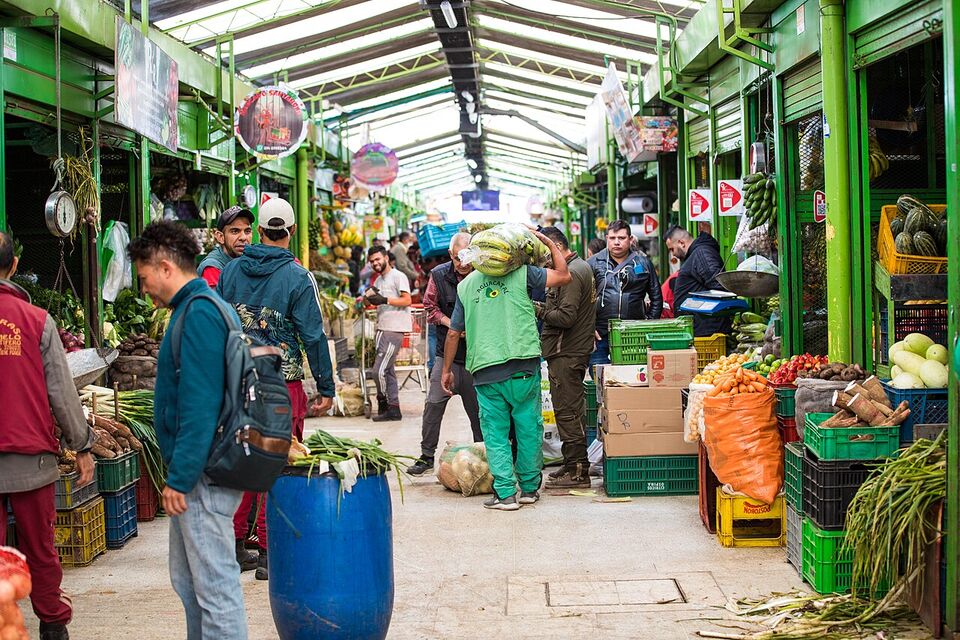
Many restaurants add a suggested tip (propina) of about 10% to the bill. It is voluntary, so check the bill, and you can accept it, change it or decline it. At a market stall, a coffee cart or a casual lunch counter, a tip is not expected, though people sometimes round up or leave a coin. We could not confirm tipping norms for taxis, hotels and guides, so we give no percentages: in general, a small thank-you to porters and drivers who help is appreciated, and many guides and drivers on private tours count on tips from visitors. If a guide has done a good job, ask your tour company what is customary. See our food page and money page.
Bargaining and street sellers
Prices are fixed in shops, restaurants, supermarkets and on ticket counters, so do not bargain there. Bargaining is possible at craft markets and with street sellers of souvenirs, where the first price is often high. Do it politely, with a smile and a fair offer, and walk away calmly if you cannot agree; do not bargain over a price that is already small. Settle the price before you accept a service, such as a tour from a street seller, a boat or a taxi without a meter. Our money page explains how pesos are written.
Street sellers are part of daily life, selling water, snacks, hats, sunglasses, souvenirs, massages and tours, especially in Cartagena's walled city, Santa Marta and the beaches. Sellers can be persistent. A calm no, gracias, a smile and a hand on your chest, without stopping, is the usual way to decline. Do not shout, do not take things into your hands that you do not want and do not agree to see something "just to look" if you are not interested. If you want to buy, ask the price before you accept.
Insider tip
Say no, gracias once, clearly and kindly, then keep walking. If you stop to explain or argue, the seller will think there is a chance. The same applies to any offers of illegal drugs, which are not something to consider at all: a quick no and a step away.
Watch out
Do not buy gemstones, such as emeralds, from a street seller or a stranger who approaches you. If you buy jewelry or stones from a licensed shop, keep the receipt and declare them at US customs.
Photography and Indigenous communities
Ask before you photograph a person. A smile and a raised camera with ¿puedo tomar una foto? (may I take a photo?) is enough, and if the answer is no, respect it. Be especially careful with children (ask the parent), with market sellers (a purchase makes it easier) and with anyone in a religious setting. Some street performers and costumed sellers will expect a tip for a photo; it is their income, and you can decline politely before you take the picture. Do not photograph police, soldiers or security installations.
Colombia has many Indigenous peoples. The Sierra Nevada de Santa Marta, which includes the Tayrona area and the route to Ciudad Perdida (Teyuna), is the territory of the Kogui, Arhuaco and other peoples, and the tour guides and the community set rules for visitors. Follow them. Do not enter areas that are closed, and do not photograph ceremonies, sacred places or people unless your guide says it is allowed. The Tayrona park is closed for several weeks each year for Indigenous ceremonies, and the traditional closures are February 1-15, June 1-15 and October 19 to November 2 (2026 dates; 2027 dates are not published, so check before you go). The path to El Pueblito has been closed to visitors since 2019 at the wish of Indigenous residents. These rules are part of respect, not a nuisance.
If you fly a drone, check the rules with the civil aviation authority (Aerocivil) before you do, and never fly over people, in parks or near military or police sites.
Politics, the armed conflict and drugs
Politics is a lively topic in Colombia, and many people have strong opinions. Do not take sides or ask people to say who they voted for. Listen if someone shares their view, and ask about daily life rather than parties.
The country has a long armed conflict that began in the 1960s, with a peace agreement with the FARC in 2016, and some violence continues in certain regions, which is why the US State Department lists parts of the country as Do Not Travel areas. Many Colombian families have been affected by it, and by the drug war, through losses, displacement or kidnapping. Do not ask a person whether they were affected, do not bring up the war as a topic of curiosity and do not ask about the drug trade, the cartels or armed groups. If a Colombian chooses to tell you their story, listen respectfully and thank them.
A closely related point: do not call Colombia "dangerous" in conversation, and do not start with a question about whether the person feels safe. Many Colombians are tired of the country being reduced to its worst years, and they take pride in how much has changed in cities such as Medellín, whose Comuna 13 neighborhood has gone from the site of military operations in 2002 to a place known for its graffiti and its escalators. If you have concerns, read the advisory yourself (it is Level 3: Reconsider Travel as of November 2026) and our page on whether Colombia is safe, and ask your hotel for local tips in practical terms.
On drugs: do not buy, use or ask about illegal drugs. They are illegal, the US government warns Americans of the legal and personal risks, and drug offers from strangers are linked to scams and to tourists being drugged and robbed. Sexual exploitation of minors is a serious crime in Colombia, and US law allows US authorities to prosecute Americans for sex crimes against minors abroad. Our guide does not give tips on either subject.
Pablo Escobar tourism
Pablo Escobar led the Medellín Cartel, and the violence of that period (bombings, assassinations and the war between cartels) killed many Colombians. The city's crime rates fell dramatically after he died in December 1993. For many Medellín residents, the memory is painful, and the city's story now is about change, not about him.
Tours about Escobar are sold in Medellín and elsewhere. We do not rate them. If you choose to go, pick a company or guide that talks about the victims and the impact on the city, not one that treats him as a celebrity. Do not wear Escobar T-shirts or buy memorabilia, do not joke about the cartel or cocaine, and do not ask your guide or a local to take you to meet people in that world. The best way to learn about the period is through a museum or a tour that centers the history of the city, and through Colombians who want to tell it. See our Medellín sights page.
Religious sites and holidays
Most Colombians are Catholic, and churches are active places of worship, not only sights. Dress modestly (shoulders and knees covered), remove your hat, keep your voice low, switch off your phone and do not photograph people who are praying. If a service is going on, stay at the back or come another time. Monserrate in Bogotá, at 10,341 ft (3,152 m), is both a pilgrimage site and a view point; the climb takes breath at that altitude, and many visitors there are praying, so keep the noise down. During Holy Week (in 2027 Holy Thursday is March 25 and Good Friday is March 26) there are processions in many towns, including Popayán, which UNESCO recognizes; expect crowds, closures and a serious mood.
Noise and music
Colombia is a musical country. Salsa in Cali, vallenato and cumbia on the coast, reggaeton everywhere: you will hear music from buses, taxis, shops, street parties and neighbors' windows. Volume is usually higher than at home, and many people do not mind it. If it keeps you awake, ask the hotel for a quieter room, away from the street or the pool, and carry earplugs. Complain calmly and in person. Dancing is a social activity, and an invitation to dance is usually just that; accept or decline with a smile. See our page on salsa and music.
How to treat vendors and service staff
Colombians who work in service are proud of their work. Greet them, say please and thank you (por favor, gracias), and wait your turn. Do not snap your fingers; a raised hand and a disculpe (excuse me) works. Pay with small bills where you can, as many small sellers cannot change a large note, and ask ¿tiene cambio? (do you have change?) first. If a price is a surprise, ask politely and explain you did not expect it. Tip as discussed above, and be patient: service can be slower than in the United States, and a table is yours for the evening.
Do and do not
| Do | Do not |
|---|---|
| Greet people with buenos días or buenas tardes when you enter a place. | Start with a request, with no greeting. |
| Use usted, señor and señora with strangers and older people. | Use parcero or other slang with officials or people you do not know. |
| Shake hands, and follow the other person's lead on a cheek kiss. | Back away sharply or take offense at friendly closeness. |
| Be on time for flights, tours and buses. | Arrive early at a private home, or expect a party to start on time. |
| Dress for the altitude and the place; cover up away from the beach. | Wear beachwear in town, churches or restaurants, or flash expensive items. |
| Check whether the bill includes a suggested 10% tip, which is voluntary. | Assume a tip is required or that there is none. |
| Say no, gracias kindly to sellers, once, and keep walking. | Argue, shout or take items you do not want. |
| Ask before photographing people, and follow guides on Indigenous land. | Photograph ceremonies, children, police or soldiers without permission. |
| Talk about food, music, family, football and places. | Ask about the drug trade, cartels, the conflict or whom someone voted for. |
| Talk about the country's positive changes. | Call Colombia dangerous, or joke about Pablo Escobar. |
| Keep quiet in churches and at religious events. | Take photos of people praying, or wear hats and revealing clothes inside. |
Add it to a route in the trip builder, or ask us to plan the hotels, trains and guides for you.