Overview
Spanish is the national language of Colombia, and it is the language of almost every restaurant, taxi, bus and shop. English is common in hotels, tour offices and some restaurants in tourist districts of Bogotá, Medellín and Cartagena, but it is much less common in neighborhood restaurants, taxis, markets, pharmacies and small towns. The country also has many Indigenous languages, and on San Andrés and Providencia you will hear an English-based Creole, but visitors will mostly use Spanish.
Colombian Spanish is generally considered clear and easy to follow, and Bogotá's educated speech has a good reputation for clarity across the Spanish-speaking world. The coast speaks faster and drops some endings, and the Paisa region around Medellín has its own rhythm and slang. You do not need to be fluent. A handful of polite phrases, and the willingness to try, go a long way. This page gives you greetings, ordering, directions, taxis, emergencies, shopping, the phrases for a pharmacy, a hotel and an airport, and the Colombian words you will hear. For food words, see our food page, and for manners, our etiquette page.
Pronunciation in plain English
Spanish is spelled almost exactly as it sounds. The respellings below put the stressed syllable in capitals. These are the rules that matter most:
- Vowels are short and pure: a as in "father", e as in "bet", i as in "machine", o as in "go", u as in "rule". Each vowel is said separately.
- h is silent: hotel is oh-TEL, hola is OH-lah.
- j (and g before e or i) is like an English "h": jugo is HOO-go, gente is HEN-teh.
- ll and y sound like an English "y": calle is KAH-yeh, Medellín is meh-deh-YEEN.
- ñ is "ny": señor is seh-NYOR.
- rr is a rolled r; a single r between vowels is a quick tap, like the "tt" in "butter".
- c before e or i, and z, sound like "s", as in all of Latin America: gracias is GRAH-see-ahs. Do not use the Spain "th".
- v sounds like a soft "b": vino is BEE-no.
- qu is "k": queso is KEH-so. gu before e or i is a hard "g": guitarra is gee-TAH-rrah.
- Stress: if a word has an accent mark, stress that syllable. If not, words ending in a vowel, n or s are stressed on the next-to-last syllable, and other words on the last.
Place names
| Place | Say it like |
|---|---|
| Bogotá | boh-goh-TAH |
| Medellín | meh-deh-YEEN |
| Cartagena | kar-tah-HEH-nah |
| Cali | KAH-lee |
| Barranquilla | bah-rrahn-KEE-yah |
| Guatapé | gwah-tah-PEH |
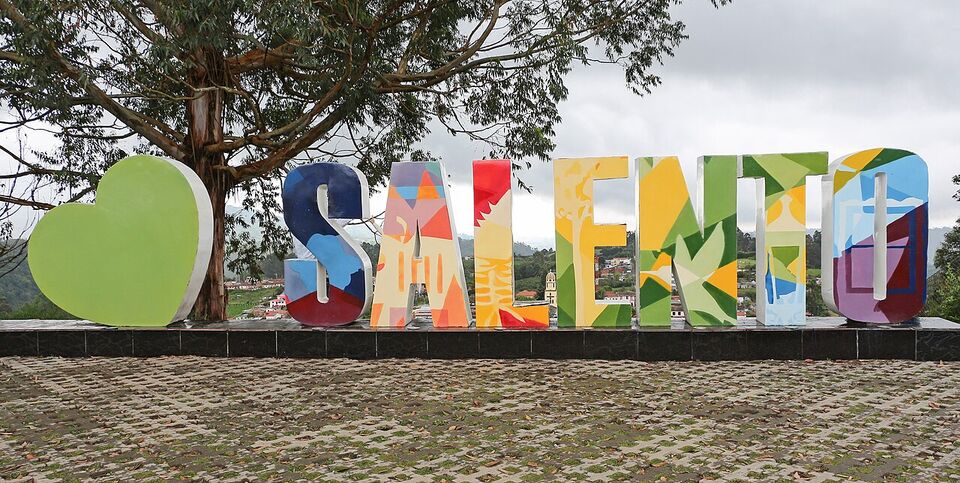
| Salento | sah-LEN-toh |
| Cocora | koh-KOH-rah |
| Tayrona | tigh-ROH-nah |
| Popayán | poh-pah-YAHN |
| Zipaquirá | see-pah-kee-RAH |
| San Andrés | sahn ahn-DRES |
Usted, tú and vos
Spanish has several words for "you". In much of Colombia, usted (the formal "you") is used far more than in many other countries. Colombians use it with strangers, staff, officials and older people, and, especially in Bogotá, even with friends, family and children. As a visitor, use usted and you will never offend anyone. Tú (informal) is used among younger people and in some regions, and you can use it if the other person does first.
You will also hear vos, an informal "you" with its own verb forms, in the Paisa region (Medellín and around) and in the Cali area (Valle del Cauca). In parts of Cundinamarca and Boyacá, around Bogotá, you may hear su merced or its short form sumercé, a very polite form. You do not need to use vos or sumercé; just understand them.
Different from home
If you learned Spanish from Spain, set aside vosotros (the plural "you all"): in Colombia it is ustedes. Also avoid coger (to take or catch), which can be vulgar in parts of Latin America: use tomar (to take) or agarrar. Replace vale (okay) with listo or claro, ordenador with computador, móvil with celular, zumo with jugo and patata with papa.
Greetings and basic politeness
| Situation | Spanish | Say it like | Meaning |
|---|---|---|---|
| Hello (morning) | Buenos días | BWEH-nos DEE-ahs | Good morning |
| Hello (afternoon) | Buenas tardes | BWEH-nahs TAR-dehs | Good afternoon |
| Hello (evening) | Buenas noches | BWEH-nahs NOH-chehs | Good evening and good night |
| Hello (short) | Buenas | BWEH-nahs | A quick greeting at any time of day |
| How are you? | ¿Cómo está? / ¿Qué más? | KOH-moh es-TAH / keh MAHS | How are you? (Qué más is a friendly "what's up") |
| Nice to meet you | Mucho gusto | MOO-choh GOOS-toh | Pleased to meet you |
| Please | Por favor | por fah-VOR | Please |
| Thank you | Gracias / Muchas gracias | GRAH-see-ahs / MOO-chahs GRAH-see-ahs | Thanks / thank you very much |
| You're welcome | Con gusto / De nada | kon GOOS-toh / deh NAH-dah | With pleasure / you're welcome |
| Excuse me / sorry | Qué pena / Perdón / Con permiso | keh PEH-nah / pehr-DOHN / kon pehr-MEE-soh | Sorry, pardon me; con permiso is what you say to pass someone |
| Excuse me (to get attention) | Disculpe | dees-KOOL-peh | Excuse me, to call a waiter or ask a stranger |
| Yes / no | Sí / No | see / noh | Yes / no |
| Goodbye | Chao / Hasta luego | CHOW / AHS-tah LWEH-goh | Bye / see you later |
| I do not speak much Spanish | No hablo mucho español | noh AH-bloh MOO-choh es-pah-NYOL | Say this first, with a smile |
| Do you speak English? | ¿Habla inglés? | AH-blah een-GLEHS | Do you speak English? |
| Slower, please | Más despacio, por favor | mahs dehs-PAH-see-oh por fah-VOR | More slowly, please |
| I do not understand | No entiendo | noh en-tee-EN-doh | I do not understand |
Greet people when you walk into a shop, a taxi or an elevator: a quick buenas or buenos días is expected. Skipping it can seem cold.
Ordering food and drink
| Situation | Spanish | Say it like | Meaning |
|---|---|---|---|
| A table | Una mesa para dos, por favor | OO-nah MEH-sah PAH-rah dohs | A table for two, please |
| The menu | ¿Me trae la carta? | meh TRAH-eh lah KAR-tah | Could you bring me the menu? |
| To order | Quisiera... / Me regala... | kee-see-EH-rah / meh reh-GAH-lah | I would like... (regalar here just means "give me", not a gift: you pay) |
| The set lunch | ¿Hay almuerzo del día? | eye al-MWEHR-soh del DEE-ah | Is there a lunch of the day? |
| Coffee | Un tinto, sin azúcar | oon TEEN-toh seen ah-SOO-kar | A small black coffee, no sugar |
| Water | Agua sin gas / con gas | AH-gwah seen gahs / kon gahs | Still water / sparkling water |
| I am a vegetarian | Soy vegetariano (m) / vegetariana (f) | soy veh-heh-tah-ree-AH-noh / -nah | Add no como carne, ni pollo, ni pescado |
| Allergy | Soy alérgico (m) / alérgica (f) al maní | soy ah-LEHR-hee-koh / -kah al mah-NEE | I am allergic to peanuts (swap in the food) |
| Not spicy | Sin picante / El ají aparte | seen pee-KAHN-teh / el ah-HEE ah-PAR-teh | No spice / the hot sauce on the side |
| To go | Para llevar | PAH-rah yeh-VAR | To take away |
| The check | La cuenta, por favor | lah KWEN-tah por fah-VOR | The check, please (the waiter will not bring it until you ask) |
| Tip | Con propina / Sin propina | kon proh-PEE-nah / seen proh-PEE-nah | With the tip / without the tip |
See our food page for the menu glossary and the tipping habit.
Numbers, shopping and prices
Numbers matter because prices are in the thousands. Colombians write pesos with a "$" sign and a point for thousands, so a price tag that reads "$25.000" is COP 25,000 (about $7.50). They say it as veinticinco mil (25 thousand).
| Number | Spanish | Say it like |
|---|---|---|
| 1, 2, 3, 4, 5 | uno, dos, tres, cuatro, cinco | OO-noh, dohs, trehs, KWAH-troh, SEEN-koh |
| 6, 7, 8, 9, 10 | seis, siete, ocho, nueve, diez | sayss, see-EH-teh, OH-choh, NWEH-veh, dee-EHS |
| 20, 50, 100 | veinte, cincuenta, cien | VAYN-teh, seen-KWEN-tah, see-EN |
| 1,000 | mil | meel |
| 20,000 | veinte mil | VAYN-teh meel |
| 1,000,000 | un millón | oon mee-YOHN |
| Situation | Spanish | Say it like | Meaning |
|---|---|---|---|
| Price | ¿Cuánto cuesta? / ¿Cuánto vale? | KWAHN-toh KWES-tah / KWAHN-toh VAH-leh | How much is it? |
| Too expensive | Es muy caro | es mooy KAH-roh | It is very expensive |
| Discount | ¿Me puede hacer un descuento? | meh PWEH-deh ah-SEHR oon dehs-KWEN-toh | Can you give me a discount? (polite; do not push) |
| Card or cash | ¿Aceptan tarjeta? / efectivo | ah-SEP-tahn tar-HEH-tah / eh-fek-TEE-voh | Do you take cards? / cash |
| Change | ¿Tiene cambio? | tee-EH-neh KAHM-bee-oh | Do you have change? (useful with large bills) |
| Just looking | Solo estoy mirando, gracias | SOH-loh es-TOY mee-RAHN-doh | I'm just looking, thanks |
| No, thank you | No, gracias | noh GRAH-see-ahs | A calm, polite way to turn down a street seller |
| Receipt | La factura / el recibo | lah fahk-TOO-rah / el reh-SEE-boh | The invoice / the receipt |
Directions, taxis and buses
| Situation | Spanish | Say it like | Meaning |
|---|---|---|---|
| Where is...? | ¿Dónde queda...? | DOHN-deh KEH-dah | Where is...? (the usual Colombian phrasing) |
| Left / right | a la izquierda / a la derecha | ah lah ees-kee-EHR-dah / ah lah deh-REH-chah | Left / right |
| Straight ahead | siga derecho / recto | SEE-gah deh-REH-choh / REK-toh | Keep going straight |
| Block, corner | la cuadra, la esquina | lah KWAH-drah, lah es-KEE-nah | The block, the corner |
| Is it far? | ¿Queda lejos? | KEH-dah LEH-hos | Is it far? |
| To the airport | Al aeropuerto, por favor | al ah-eh-roh-PWEHR-toh por fah-VOR | To the airport, please |
| To this address | A esta dirección, por favor | ah ES-tah dee-rek-see-OHN | Show the address on your phone |
| Meter | ¿Puede prender el taxímetro? | PWEH-deh pren-DEHR el tahk-SEE-meh-troh | Can you turn on the meter? |
| Stop here | Aquí está bien / Pare aquí, por favor | ah-KEE es-TAH bee-EN / PAH-reh ah-KEE | Here is fine / stop here, please |
| Does this bus go to...? | ¿Este bus va a...? | ES-teh boos vah ah | Does this bus go to...? (bus or buseta, a small bus) |
| Where do I get off? | ¿Dónde me bajo? | DOHN-deh meh BAH-hoh | Where do I get off? |
| Ticket | Un tiquete / un boleto | oon tee-KEH-teh / oon boh-LEH-toh | A ticket (tiquete is the common Colombian word) |
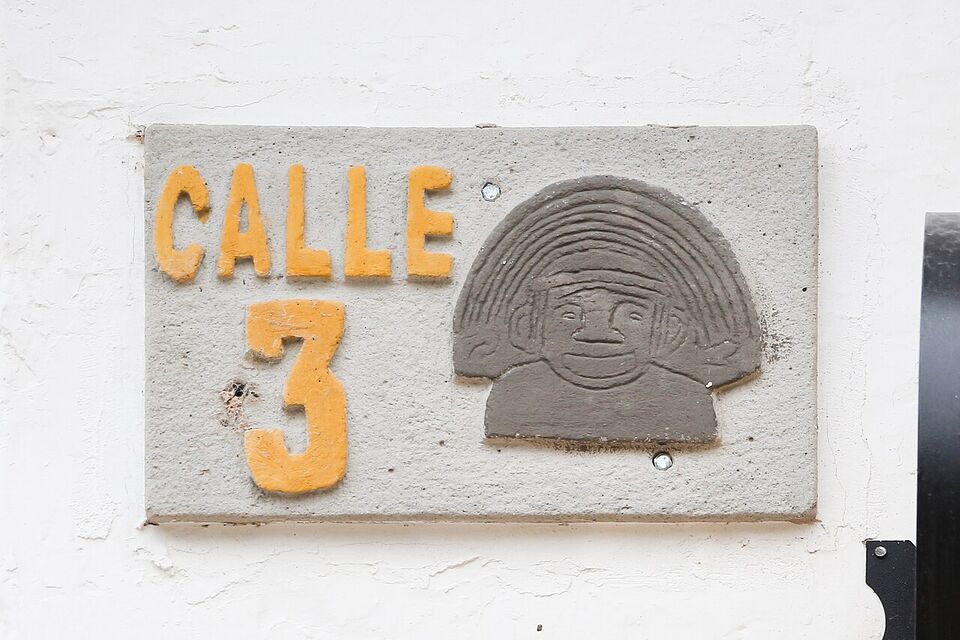
Streets in many cities have numbers, not names: Calle 72 # 10-34 is on Calle 72, near the corner of Carrera 10, at building number 34 (a calle and a carrera run in opposite directions). Show addresses on your phone to avoid mispronunciation. For transport details, see getting around.
Pharmacy, hotel and airport
| Where | Spanish | Say it like | Meaning |
|---|---|---|---|
| Pharmacy | una farmacia / una droguería | oo-nah fahr-mah-SEE-ah / droh-geh-REE-ah | A pharmacy (droguería is common in Colombia) |
| Pharmacy | Necesito algo para el dolor de cabeza | neh-seh-SEE-toh AHL-goh PAH-rah el doh-LOR deh kah-BEH-sah | I need something for a headache |
| Pharmacy | ¿Tiene algo para el malestar estomacal? | tee-EH-neh AHL-goh PAH-rah el mah-les-TAR es-toh-mah-KAHL | Do you have something for an upset stomach? |
| Pharmacy | Soy alérgico a la penicilina | soy ah-LEHR-hee-koh ah lah peh-nee-see-LEE-nah | I am allergic to penicillin (swap in the drug) |
| Pharmacy | ¿Necesito receta? | neh-seh-SEE-toh reh-SEH-tah | Do I need a prescription? |
| Pharmacy | protector solar, repelente de insectos | proh-tek-TOR soh-LAR, reh-peh-LEN-teh deh een-SEK-tohs | Sunscreen, insect repellent |
| Hotel | Tengo una reserva a nombre de... | TEN-goh OO-nah reh-SEHR-vah ah NOHM-breh deh | I have a reservation under the name... |
| Hotel | ¿Cuál es la clave del wifi? | kwahl es lah KLAH-veh del WEE-fee | What is the Wi-Fi password? |
| Hotel | ¿A qué hora es el desayuno? | ah keh OH-rah es el deh-sah-YOO-noh | What time is breakfast? |
| Hotel | No hay agua caliente / El aire no funciona | noh eye AH-gwah kah-lee-EN-teh / el EYE-reh noh foon-see-OH-nah | There is no hot water / the air conditioning does not work |
| Hotel | ¿Pueden guardar mi equipaje? | PWEH-den gwar-DAR mee eh-kee-PAH-heh | Can you store my luggage? |
| Airport | ¿Dónde está la puerta de embarque? | DOHN-deh es-TAH lah PWEHR-tah deh em-BAR-keh | Where is the boarding gate? |
| Airport | Mi maleta no llegó | mee mah-LEH-tah noh yeh-GOH | My suitcase did not arrive |
| Airport | migración, aduana, equipaje de mano | mee-grah-see-OHN, ah-DWAH-nah, eh-kee-PAH-heh deh MAH-noh | Immigration, customs, carry-on bag |
| Airport | El vuelo está retrasado / cancelado | el VWEH-loh es-TAH reh-trah-SAH-doh / kahn-seh-LAH-doh | The flight is delayed / canceled |
If your flight has been delayed or you have missed a connection, an airline desk is the place to ask, and a translation app on your phone can help. For the entry form, see our page on entry rules.
Emergencies
| Situation | Spanish | Say it like | Meaning |
|---|---|---|---|
| Help | ¡Ayuda! | ah-YOO-dah | Help! |
| Call the police | Llame a la policía | YAH-meh ah lah poh-lee-SEE-ah | Call the police |
| Doctor | Necesito un médico | neh-seh-SEE-toh oon MEH-dee-koh | I need a doctor |
| Ambulance | Llame una ambulancia | YAH-meh OO-nah ahm-boo-LAHN-see-ah | Call an ambulance |
| Robbed | Me robaron | meh roh-BAH-rohn | I was robbed |
| Lost passport | Perdí mi pasaporte | pehr-DEE mee pah-sah-POR-teh | I lost my passport |
| American | Soy estadounidense | soy es-tah-doh-oo-nee-DEN-seh | I am a US citizen; ask for the embassy |
| Feel ill | No me siento bien | noh meh see-EN-toh bee-EN | I do not feel well |
In an emergency, dial 123, Colombia's national emergency number (police, ambulance and fire). The US Embassy's 24/7 line for US citizens is +1-202-501-4444 from abroad. Save both on your phone before you travel. If you are in a bar or a taxi and you suddenly feel strange, say me siento mal (I feel bad), get help from staff you trust and see our safety page.
Colombian words you will hear
Qué pena
Used for "excuse me", "sorry" and to soften a request: qué pena, ¿me puede ayudar? Colombians use it often and it makes you sound polite.
Con gusto
The usual answer to "thank you" and to a request when someone agrees to help.
A la orden
Vendors and staff say it as a greeting to a customer. You can answer with your request, or gracias if you are only looking.
Regalar
In shops and restaurants, ¿me regala un tinto? means "could I have a coffee". It is a polite request, not a request for a free gift.
Parcero, parce
Slang for a friend, very common around Medellín. You may hear it said to you in a friendly way; avoid using it with strangers or officials.
Chévere, bacano
Informal words for something that is good: ¡qué chévere! (how nice!). Easy to use with friendly people.
Listo
The Colombian word for "okay" or "all set", used instead of Spain's vale.
Dar papaya
Literally "to give papaya", meaning to make yourself an easy target, such as by leaving a phone on a table. Locals use it as a safety warning, and it is good advice.
Slang changes from one region to the next, and some words that are friendly among Colombian friends can be insulting from a stranger. Listen first and avoid copying words you are not sure about. Also, do not use drug-related slang or jokes; see our etiquette page.
Tips for practicing
- Download the Spanish language pack for your phone's translation app before you leave, so it works without data.
- Save the address of your hotel in Spanish and on your phone's offline map.
- Greet first, ask second, and say gracias at the end: that order works everywhere.
Add it to a route in the trip builder, or ask us to plan the hotels, trains and guides for you.